
So, you're trying to decide whether to snorkel or dive with manta rays. It's a great question, and honestly, the answer really boils down to what kind of encounter you're looking for.
Snorkeling gives you a fantastic bird's-eye view. You're floating on the surface, watching these gentle giants glide and barrel roll below you. It’s incredibly accessible and a perfect choice if you have family with you or aren't a certified diver.
Diving, on the other hand, is a whole different world. You're down on their level, on the seafloor, looking up as they swoop just inches above your head. It's a completely immersive, eye-to-eye experience that's hard to put into words. Ultimately, your choice will hinge on your comfort in the water, your budget, and just how close you want to get.
Snorkel vs Dive With Manta Rays: A Quick Comparison
To help you figure out the best fit for your Kona adventure, let's break down the key differences. I've put together a quick comparison table to give you a snapshot of what to expect from each experience.
Quick Look: Snorkeling vs. Diving with Manta Rays
| Factor | Snorkeling | Diving |
|---|---|---|
| Experience Needed | None | Scuba Certification Required |
| Viewing Angle | Top-Down (Surface) | Bottom-Up (Seafloor) |
| Proximity | Close, but from above | Inches away, eye-to-eye |
| Best For | Families, Non-Swimmers | Certified Divers, Thrill-Seekers |
| Cost | More Affordable | Higher Investment |
This table gives you the basics, but there's a lot more nuance to consider. Let’s dive deeper into each of these factors to help you make the perfect choice.
1. Safety and Accessibility
When it comes to getting in the water with mantas, safety is always the top priority. Snorkeling is, by far, the more accessible option. You just need to be comfortable floating with a mask and snorkel, and operators provide flotation devices like noodles or life vests, making it a great fit even for less confident swimmers.
Scuba diving requires a bit more preparation. You'll need an Open Water Diver certification, which involves training on equipment, safety procedures, and underwater skills. While manta dives in Kona are relatively shallow (25-35 feet), you still need to be a competent and certified diver to join a tour.
2. Visibility and Viewing Angles
This is where the two experiences really diverge.
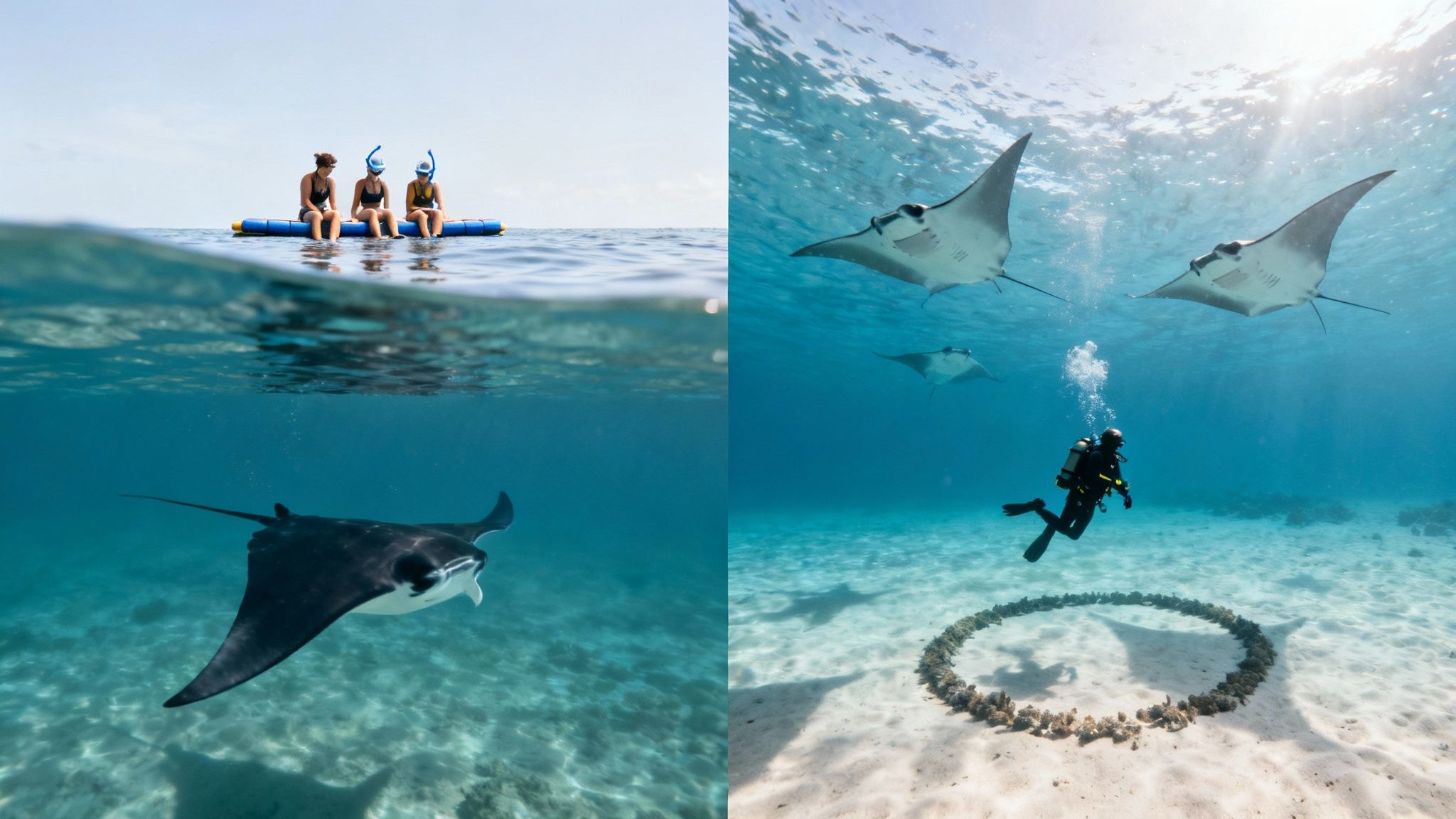
As a snorkeler, you're looking down from the surface. A custom-built light board floats in the water, attracting plankton, and you hold onto it while the mantas feed directly below. You get an amazing view of their backs and wingspan as they perform their graceful "ballet."
As a diver, you get the "bottom-up" show. You'll settle on a sandy patch on the ocean floor and point your dive light upward. The mantas swoop right over your head, sometimes just inches away, to feed in the light beams. It’s an incredibly intimate and awe-inspiring perspective that makes you feel truly part of their world.
Expert Insight: Many divers I've talked to describe the feeling of a manta ray's "shadow" passing over them as one of the most memorable moments of their lives. You just don't get that same sense of scale from the surface.
The Snorkeler’s View: A Floating Front-Row Seat
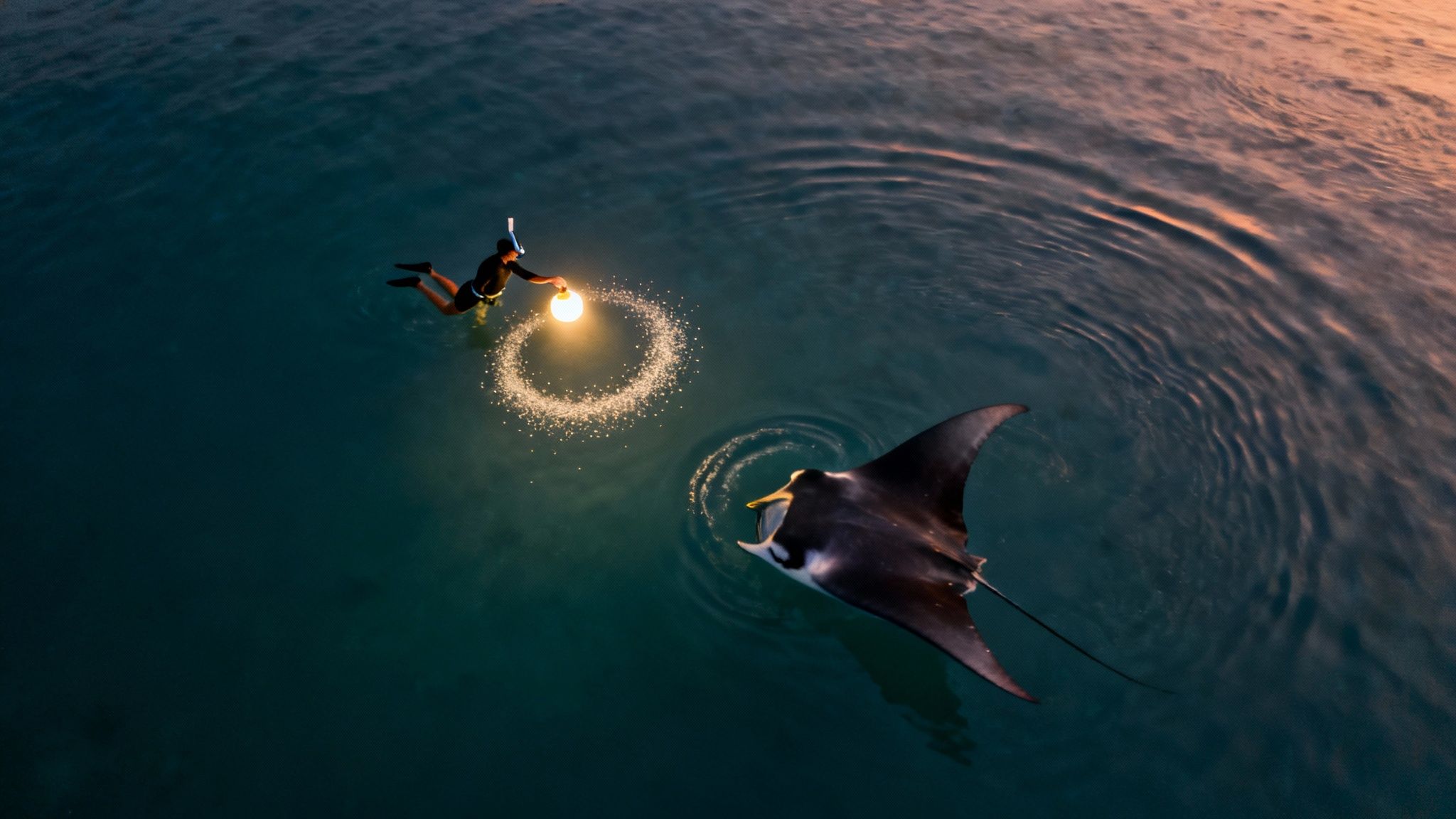
Picture this: you're floating on the surface of the ocean at night, holding onto a specially designed light board. The powerful beams cut through the darkness, illuminating the water below and attracting a massive cloud of plankton.
This plankton buffet is exactly what the manta rays are here for. From your spot on the surface, you get an incredible top-down view as these gentle giants emerge from the deep. They glide, swoop, and perform graceful barrel rolls just a few feet beneath you. It’s a truly mesmerizing sight, and because no certification is needed, it’s an experience almost anyone can have. You can learn more about the best ways to snorkel with manta rays in Kona.
Of course, that accessibility means you'll likely be sharing the view. Snorkeling tours can get busy, and it's something to keep in mind. One study on manta tour crowding found that a staggering 82% of participants felt their tour was crowded with other snorkelers, which can definitely impact the magic of the moment.
The Diver’s Experience: An Immersive Underwater Encounter
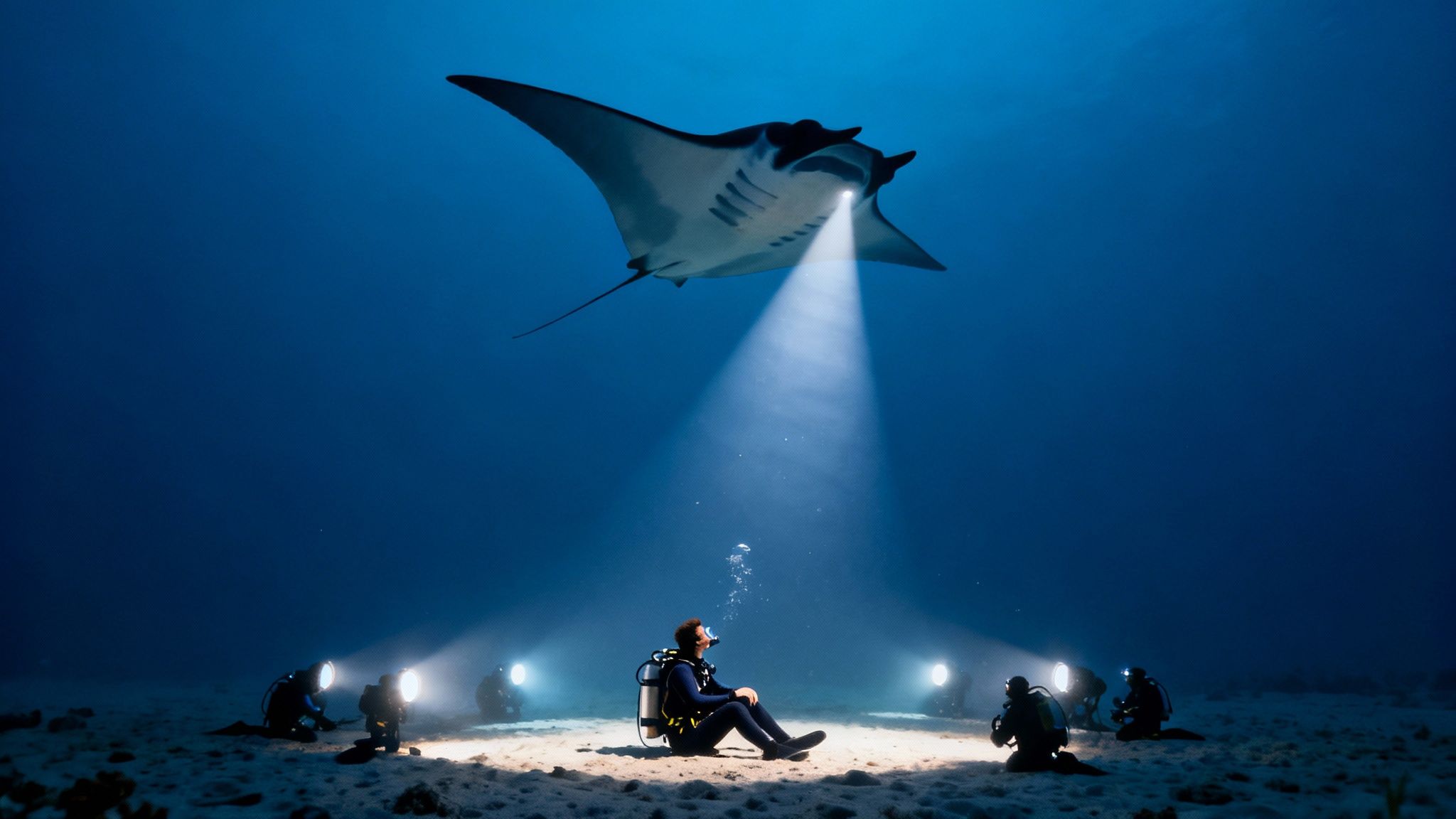
If you're a certified scuba diver, the manta ray night dive is on a whole other level. Forget watching from the surface; this is your chance to drop right into their world. You'll descend to a sandy spot on the ocean floor, get settled with your group, and shine powerful dive lights up toward the surface.
This concentration of light creates a beacon for plankton, and where there’s plankton, the mantas are sure to follow. Suddenly, they appear, gliding and swooping just inches over your head in a mesmerizing, silent ballet. Seeing their massive forms silhouetted against the dark water above is something you'll never forget.
Here in Kona, the odds of seeing them are fantastic, with a typical 85–90% success rate for manta sightings on any given night.
The view from the bottom is incredibly stable and offers a uniquely intimate perspective—it’s a true bucket-list experience for anyone who wants a profound connection with these gentle giants.
You can learn more and book your own unforgettable Kailua-Kona manta ray night dive to see it for yourself.
Comparing Key Factors For Your Decision
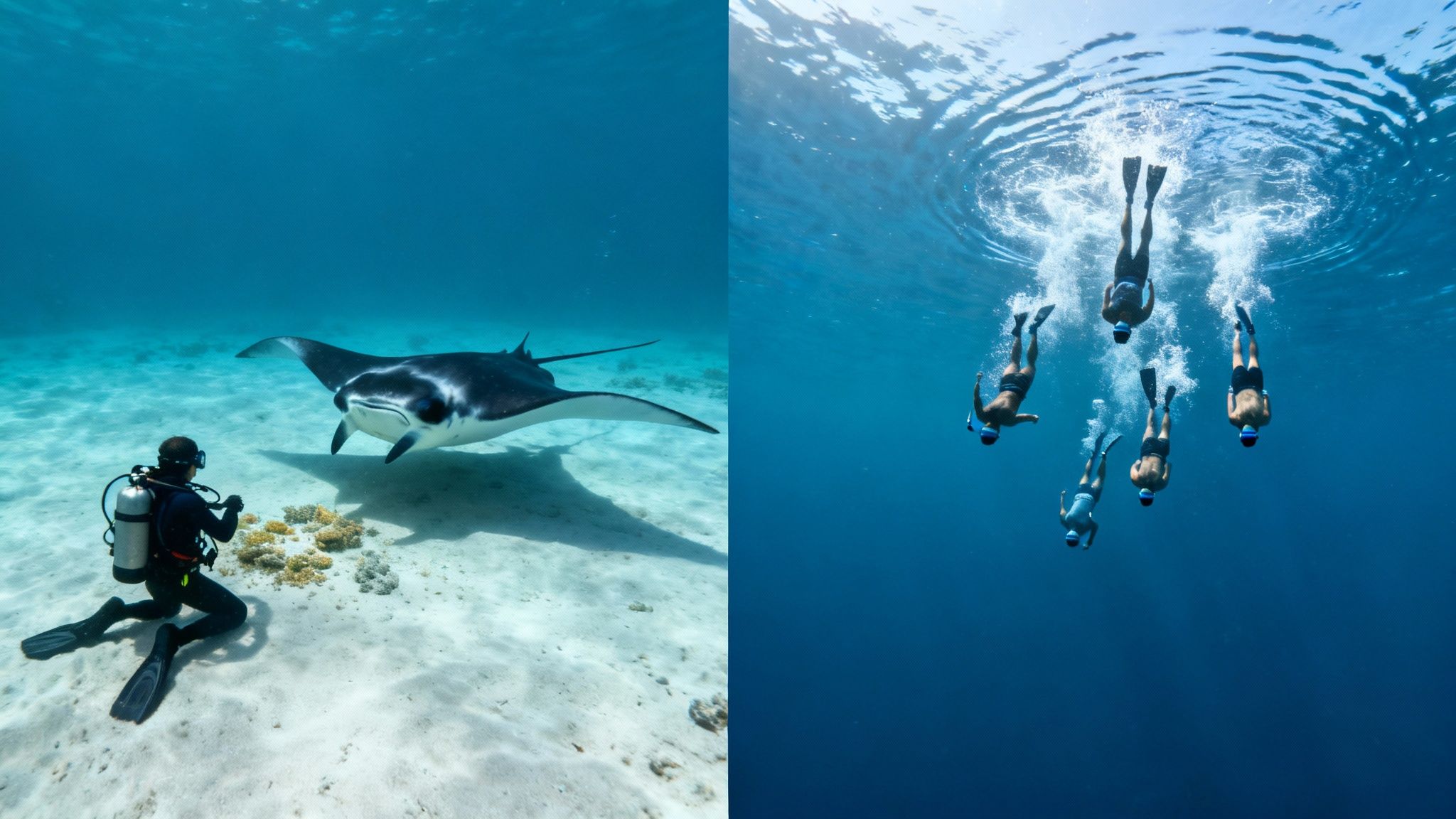
When you're trying to decide between snorkeling or diving with manta rays, it really boils down to a few practical things: your skill level, your budget, and the kind of view you're hoping for. It's a classic top-down versus bottom-up debate.
Let's break down the most important factors so you can figure out which experience is the right fit for you.
Skill And Certification
This is often the biggest deciding factor. Snorkeling is incredibly accessible; if you can swim, you can snorkel. There's no certification required, which makes it a fantastic option for families, beginners, or anyone who wants a spontaneous and easy way to see mantas.
Diving, on the other hand, is a more involved activity. You’ll need at least an Open Water Diver certification, which involves training and a financial investment. This is for those who want to get fully submerged and spend extended time beneath the surface.
Perspective And Experience
Your viewpoint changes everything. Snorkelers get a stunning bird's-eye view, watching the mantas perform their mesmerizing "ballet" from above as they feed or cruise through the water. It’s a beautiful, panoramic perspective.
Divers get a completely different, and arguably more intimate, encounter. You’re down on their level, often positioned on the sandy bottom, watching them glide gracefully just feet—or sometimes inches—overhead. It’s a powerful, humbling experience to be so close.
Cost And Accessibility
Financially, the two are worlds apart. A snorkeling trip is a relatively low-cost excursion. You rent some basic gear, hop on a boat, and you're good to go.
Diving requires a much larger upfront and ongoing investment. There’s the cost of certification, equipment rental or purchase, and the dive trips themselves, which are typically more expensive than snorkeling tours. That said, for many, the unique underwater experience is well worth the price.
Detailed Breakdown: Snorkeling vs. Diving with Manta Rays
To make it even clearer, here’s a side-by-side look at what each activity entails. This table should help you weigh the pros and cons based on what matters most to you for your manta ray adventure.
| Feature | Snorkeling | Diving |
|---|---|---|
| Required Skills | Basic swimming ability. | Open Water Diver certification. |
| Typical Cost | $50 – $150 per trip. | $150 – $300+ per trip (plus certification costs). |
| Viewing Angle | Top-down, from the surface. | Eye-level or bottom-up, from below. |
| Proximity | Close, but looking down from a distance. | Potentially inches away as they glide overhead. |
| Time with Mantas | Typically shorter, in bursts. | Longer, more sustained encounters. |
| Accessibility | Open to almost everyone. | Limited to certified divers. |
| Best For | Beginners, families, budget travelers. | Certified divers, photographers, enthusiasts. |
Ultimately, whether you're floating on the surface or kneeling on the seabed in a place like the Maldives, an encounter with a manta ray is unforgettable. There's no wrong choice—only the one that's right for you.
How Your Choice Impacts Manta Ray Behavior
When you’re in the water with these gentle giants, your very presence has an impact. Responsible tourism isn’t just a buzzword; it’s about making choices that protect the animals and their habitat. The decision to snorkel or dive really does change how the manta rays behave around you.
From a manta's perspective, a group of scuba divers settled quietly on the seafloor is just part of the scenery. They blend in. This allows the mantas to go about their business—feeding and gliding—in a completely natural and undisturbed way. On the other hand, a flurry of fins and splashing from a large group of snorkelers on the surface can be startling and disruptive.
It’s not just an opinion; the science backs it up. A fascinating 2021 study revealed that manta rays are far more likely to show avoidance behaviors when divers are actively moving. (You can dive deeper into this manta ray behavior research here). Passive, stationary divers, however, actually encouraged the mantas to come closer.
Ultimately, understanding this helps you make a more ethical choice for your encounter. No matter which activity you choose, practicing responsible and considerate diver etiquette is non-negotiable.
So, Which Manta Ray Experience is Right for You?
Deciding between snorkeling and diving really boils down to your comfort level, budget, and what kind of encounter you're dreaming of. There’s no single "best" way; it's about finding the perfect fit for you.
When Snorkeling is the Perfect Choice
Sometimes, the simplest approach is the best. Floating on the surface gives you a fantastic bird's-eye view of the manta action below.
You should choose to snorkel if you:
- Are traveling with family, especially with kids or folks who aren't strong swimmers.
- Don't have a scuba certification.
- Want to keep travel costs a bit lower.
- Feel more secure staying on the surface rather than descending into the deep.
Snorkeling is incredibly accessible and offers a spectacular, inclusive way for almost anyone to witness the manta ray ballet.
When Diving Offers an Unbeatable Encounter
For some, getting fully immersed in the mantas' world is the ultimate goal. If you want to be part of the scene, not just an observer, diving is the way to go.
You should choose to dive if you:
- Are a certified diver ready for a truly immersive experience.
- Crave that unique, eye-level perspective, looking up as these gentle giants glide overhead.
- Are comfortable with night diving and want the most profound connection possible with the mantas.
No matter which path you take, seeing these majestic creatures is an experience you'll never forget. At Kona Honu Divers, we run premier, eco-conscious tours for both snorkelers and divers, so you're guaranteed a world-class adventure either way. Find out more about our famous manta ray dive tours.
Frequently Asked Questions
Got questions about your Kona manta ray adventure? I've heard them all over the years. Here are the answers to the ones that come up most often.
Is It Safe to Swim With Manta Rays?
It absolutely is. There's a reason we call them "gentle giants." They're filter feeders, which means they don't have teeth, stingers, or barbs to worry about. They are completely harmless to humans.
The single most important rule is to look but don't touch. Touching a manta can rub off its protective slime coat, leaving it vulnerable to infections. Just listen to your guides—they’ll make sure everyone, including the mantas, has a safe and fantastic time.
What Time of Day Is Best for Seeing Manta Rays?
Hands down, the best encounters are at night. This is when the magic really happens. Tour boats head out after sunset and shine powerful lights into the water.
These lights attract swarms of plankton, which is the mantas' favorite meal. The rays show up for the all-you-can-eat buffet, giving you an incredible, up-close view of their feeding ballet.
Do I Need to Be a Strong Swimmer to Snorkel?
Not at all. If you're comfortable in the water, you'll be fine. The tour companies are well-prepared for all skill levels and provide flotation devices like pool noodles or life vests.
Most snorkeling setups involve holding onto a large, custom-built float board that has the lights built into it. You just float along, holding on, and watch the show right below you—no real swimming required. It makes it a perfect activity for just about anyone, from kids to grandparents.