
So, you're trying to decide between snorkeling and scuba diving with Kona's famous manta rays? The truth is, it really boils down to the kind of experience you're after.
Snorkeling gives you this incredible, almost bird's-eye view of the action from the surface. It’s a spectacular underwater ballet, and the best part is that almost anyone can do it. On the other hand, diving puts you right in the front-row seat on the ocean floor, offering a truly intimate, eye-level encounter. This one, however, requires you to be scuba certified.
Deciding Between Snorkeling and Diving With Manta Rays
To figure out which is right for you, let's break down the core differences. When you snorkel, you're floating on the surface, looking down as the mantas swoop and feed on the plankton below. When you dive, you're settled on the sandy bottom, looking up as these gentle giants glide just inches above your head.
Both experiences are absolutely magical, but they come with different requirements, costs, and perspectives. Let's put them side-by-side to see which adventure is the perfect fit for your trip.
Here's a quick rundown of what to expect from each experience.
Quick Comparison Snorkeling vs Diving with Manta Rays
| Factor | Snorkeling with Manta Rays | Scuba Diving with Manta Rays |
|---|---|---|
| Perspective | Top-down, panoramic view from the surface | Bottom-up, eye-level view from the seafloor |
| Certification | None required; open to most swimmers | Open Water Diver certification required |
| Proximity | Very close as they feed near the surface | Often within inches as they glide overhead |
| Best For | Families, non-certified individuals, beginners | Certified divers seeking an immersive experience |
Ultimately, whether you're floating above or sitting below, you're in for an unforgettable night. The choice just depends on how close you want to get and whether you have a dive certification in your pocket.
The Snorkeler’s View: A Breathtaking Surface Ballet
Picture yourself floating on the calm, dark ocean surface, holding onto a specially designed light board. This board illuminates the water below, creating a glowing stage. The light is more than just for show—it's a beacon, attracting swarms of plankton, the manta rays' favorite meal.
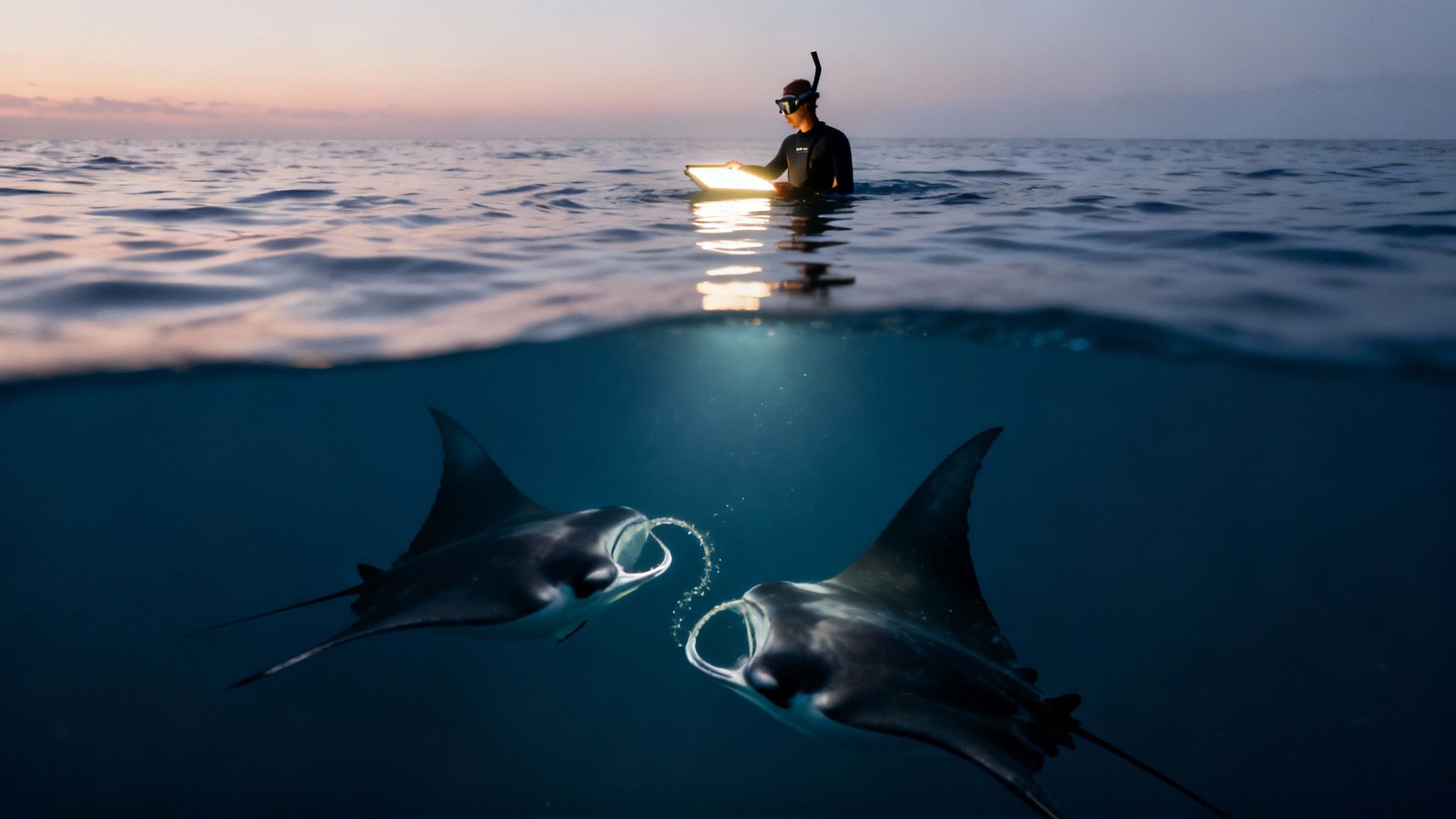
Before you know it, the stars of the show arrive. Drawn by the plankton buffet, these gentle giants glide up from the depths. You'll watch them loop and barrel roll with incredible grace, often coming just inches from your board as they feed. It's a mesmerizing, up-close encounter that's perfect for families and anyone new to ocean adventures.
The Unobstructed Panorama
The real magic of snorkeling is the panoramic, top-down perspective. While divers see the action from below, snorkelers get a sweeping view of the entire scene. You can follow multiple mantas at once as they weave through the light beams, giving you a true appreciation for the scale and beauty of this nightly ritual.
The top-down view truly feels like watching a choreographed ballet. The mantas seem to fly through the water with effortless grace, and seeing them all at once is a humbling and magical experience that words can hardly describe.
This incredible accessibility has made it one of the most famous marine encounters on the planet. In Kona alone, about 80,000 people join manta tours each year, and operators report success rates that often hit 80-90%. That popularity speaks volumes, though it does mean popular spots can get a bit crowded.
Because it requires no formal training past knowing how to swim, a manta ray snorkel tour is an amazing option for just about everyone. You get to focus completely on the spectacle without worrying about dive gear, making it a simple, stress-free way to witness one of nature's greatest shows.
The Diver’s View: An Immersive Underwater Encounter
Scuba diving with manta rays is a whole different world. Instead of floating on the surface, you literally drop into their environment. Certified divers descend to the sandy ocean floor, typically around 30-50 feet deep, and settle in around a powerful light source we call "the campfire."
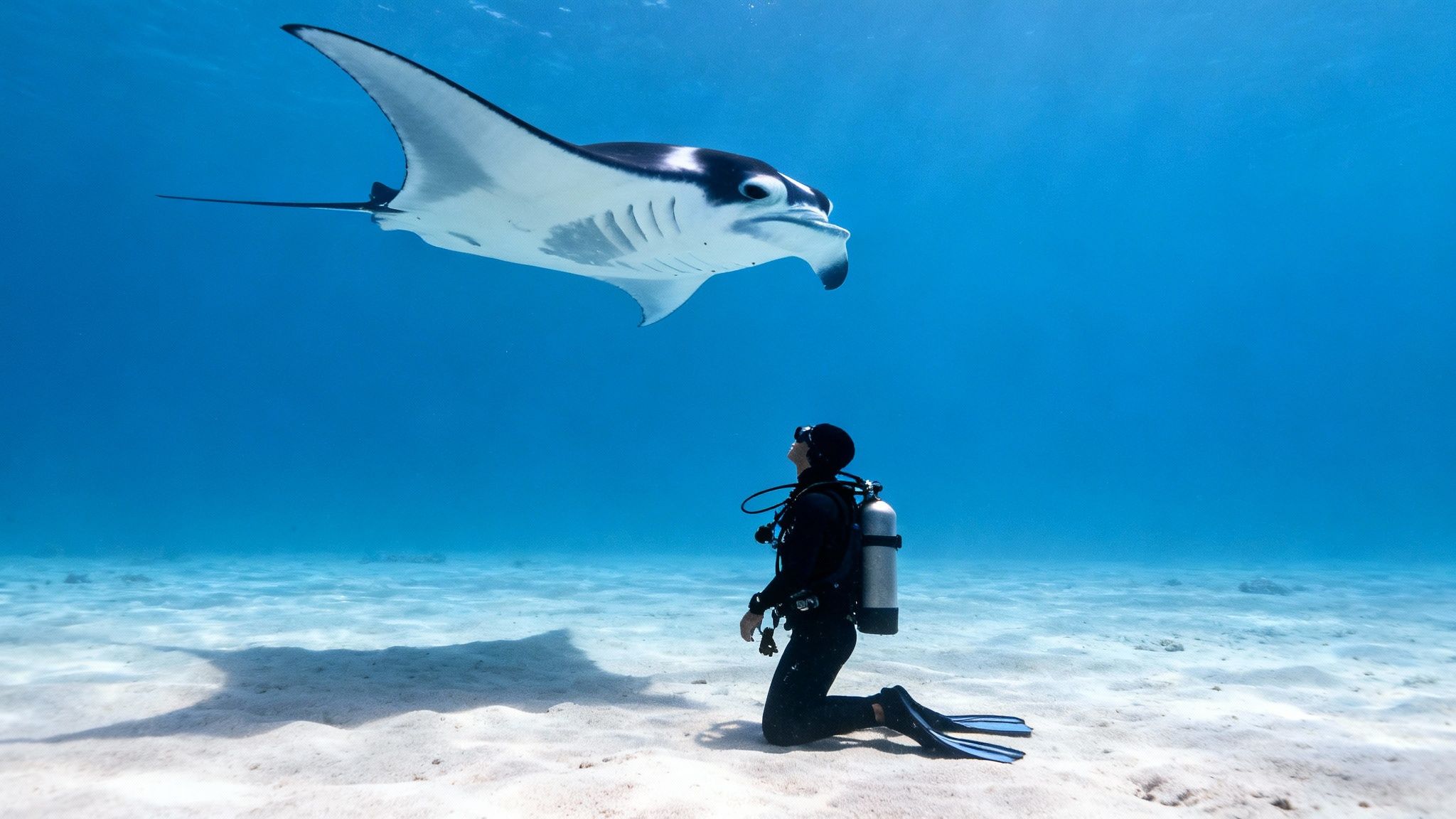
From this calm and stable spot on the bottom, you get a front-row seat to one of nature's most incredible ballets. The giant mantas swoop and barrel roll right over your head, sometimes so close you could almost touch them (but we don't!). This upward view lets you truly grasp their immense size and the elegance of their movements, all without being jostled by surface waves.
It’s an incredibly personal, eye-level encounter that many people say changes their perspective on the ocean forever. To get a real sense of what it's like, check out our in-depth look at the Kona manta ray dive.
Becoming Part of Their World
Snorkeling is like watching a show from the balcony; diving puts you on the stage with the performers. The feeling of a 1,000-pound animal gliding silently just inches above you is something you can't really put into words. It’s a peaceful, almost meditative experience where you just kneel on the sand and watch the magic happen.
The advantages of being a diver are crystal clear:
- Unbeatable Proximity: The mantas often get much closer to divers on the seafloor as they swoop down to feed on the plankton attracted by the lights.
- A Rock-Steady View: You're not affected by surface chop or other people kicking around you, so you can stay perfectly still and just soak it all in.
- Incredible Photo Ops: That upward angle creates stunning, dramatic photos of the mantas' white bellies set against the dark ocean.
This deep level of immersion is exactly why so many certified divers believe it’s the ultimate way to connect with these gentle giants. Here at Kona Honu Divers, our team specializes in crafting these unforgettable underwater experiences, focusing on a safe and mesmerizing dive, every single time.
Snorkeling vs. Diving with Mantas: A Side-by-Side Look
So, you're ready to swim with manta rays. Fantastic choice! But now for the big question: should you snorkel or scuba dive? The right answer really boils down to three key things: your skill level, your budget, and the kind of up-close encounter you're dreaming of.
Let's break down the differences to help you decide.
Skill and Certification
This is the most straightforward difference between the two. Snorkeling is incredibly easy to get into. If you're a confident swimmer and comfortable putting your face in the water, you're pretty much good to go. No certifications, no complex training—it's perfect for families, first-timers, and groups with mixed abilities.
Scuba diving, however, is a different ball game. It requires an Open Water Diver certification to ensure you know how to safely manage your gear and breathe underwater, especially at the depths of 30-50 feet where many manta encounters happen. Simply put, if you’re not certified, snorkeling is your ticket to the show.
Cost and Budget
When it comes to your wallet, snorkeling is almost always the lighter option. The tours cost less because there’s less gear involved, no need for air tank fills, and the guide-to-guest ratio is often different. You can typically find snorkeling trips ranging from $150 to $200 per person.
Diving trips naturally come with a higher price tag. The cost covers all the specialized scuba equipment, the air in your tank, and the expertise of certified dive masters leading the group. If you're watching your budget, snorkeling delivers a truly breathtaking experience without the higher cost.
The Experience Itself
Here’s where the decision gets personal, as the two experiences offer dramatically different perspectives.
Do you want a wide, panoramic view of the entire underwater ballet from above, or do you crave a quiet, intimate, and stable encounter from the ocean floor?
Snorkeling gives you a fantastic bird's-eye view. You're on the surface, looking down as these gentle giants glide through the water below. It’s dynamic, and you often get a great sense of the scale of the whole operation, sometimes seeing multiple mantas at once.
Diving, on the other hand, puts you right in their world. You get to settle on the ocean floor and watch peacefully as the mantas soar just inches above your head. It’s a serene, bottom-up perspective that feels incredibly intimate.
No matter which you choose, you'll be spending time on the water under the sun, so having reliable UV protection gear is a must for a comfortable trip. Ultimately, the best choice depends on what matters most to you: easy access, lower cost, or the specific kind of underwater view you want to remember forever.
How to Interact Responsibly with Manta Rays
Whether you end up snorkeling or diving, the most important thing is making sure the encounter is safe and respectful for the manta rays. It all comes down to what we call "Manta Etiquette," and the number one rule is passive observation. We are guests in their world, and our behavior needs to show it.
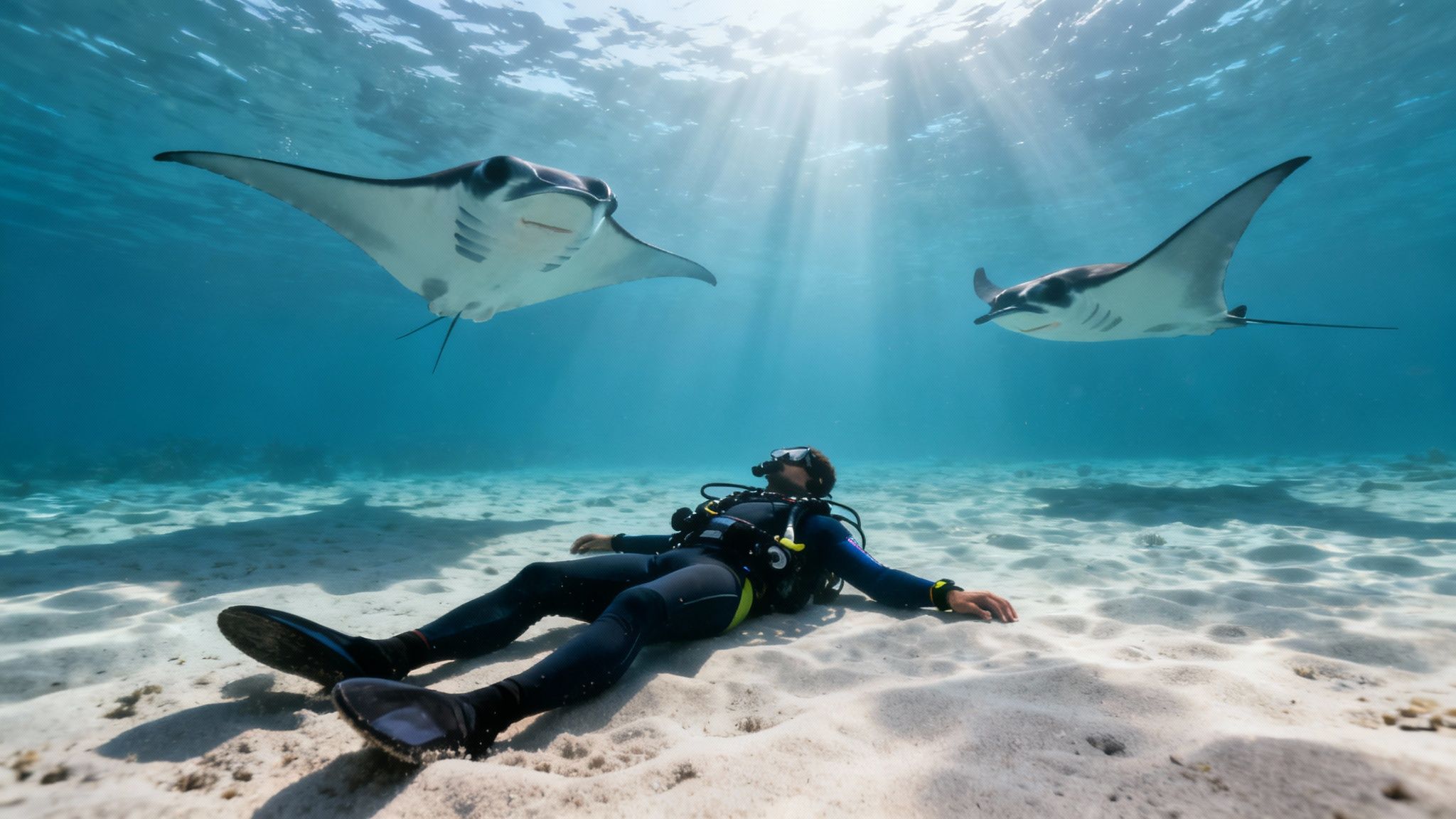
Never touch, chase, or swim in front of a manta ray. Doing so can mess with their natural feeding habits and cause them real stress. These incredible animals have a protective mucus layer that acts as a shield against infection. If you touch them, you can strip that layer away, leaving them open to disease. The whole point is to observe without impact.
Guidelines for a Safe Encounter
Snorkelers and divers each have a specific job to do to keep the mantas safe. Sticking to these rules makes the experience better for everyone, mantas included.
- Snorkelers: Your place is on the surface, holding onto the light board or raft. Don't be tempted to dive down into the water column; it can get in the way of the mantas' feeding patterns.
- Divers: You'll be settled on the sandy bottom. It's critical to stay put and avoid swimming up into the open water where the mantas are gliding around.
- Observe Only: The golden rule is do not touch. Let the mantas come to you. If one gets close, just stay still and soak in the amazing moment.
Passive observation isn't just a friendly suggestion—it's backed by science. When people are calm and stationary, mantas behave more naturally. This actually leads to longer, more meaningful encounters for everyone involved.
Studies have confirmed just how much less disruptive a calm human presence is. Research has shown that oceanic manta rays stick to their normal swimming patterns 91% of the time with passive divers, while active divers can trigger erratic behavior. This really drives home how being a quiet observer, whether you're on the surface or on the sand, is better for conservation. You can read the full research on manta ray behavioral responses here.
Conservation-minded operators like us at Kona Honu Divers design our tours around these exact principles. When everyone follows this guidance, we're all doing our part to protect these animals for future generations. For a more detailed look, check out our guide on responsible and considerate diver etiquette.
How to Choose the Best Manta Ray Tour in Kona
Let’s be clear: Kona, Hawaii is *the* place on the planet for seeing manta rays. We’re talking about an astounding **85-90% success rate** on most nights. But with so many boats heading out, picking the right one is crucial for turning a good trip into a mind-blowing one.
Your top priority should be finding an operator who is genuinely committed to safety and the well-being of the mantas. A great tour company isn’t just a water taxi; they’re passionate educators who teach you about manta biology and why we need to protect these incredible animals. A good sign? Look for operators with a Manta Ray Green List certification. This is your seal of approval, showing they meet the highest standards for responsible tourism.
Finding the Right Dive Site
The Kona coast draws a massive crowd for a reason—around 80,000 visitors come every year for the world-famous night snorkel and dive. Most tours head to one of two legendary spots: Manta Village or Manta Heaven.
Manta Village is the go-to for many. It’s a bit shallower, making it perfect for snorkelers and divers who are just getting started. If you have a few more dives under your belt, Manta Heaven offers a deeper experience that can sometimes attract even bigger groups of mantas. Honestly, choosing a tour often just boils down to which of these incredible locations you want to see. You can discover more insights about Kona's manta dive sites to help you decide.
If you’re looking for a truly top-notch manta ray dive experience, the crew at Kona Honu Divers really knows their stuff.
Before you book, don't be shy about asking questions. What are the group sizes like? How experienced are the guides? What are their rules for interacting with the mantas? A quality operator will be happy to walk you through everything, making sure you feel completely comfortable and ready for the adventure of a lifetime.
Ready to see them for yourself?
Your Manta Ray Tour Questions, Answered
Planning a trip to see Kona's famous manta rays? You've probably got a few questions. We've been doing this for a long time, so we've put together answers to the things we hear most often from guests getting ready for their big night.
When Is the Best Time of Year to See Mantas?
This is one of the best parts about planning a manta ray trip to Kona: you can come anytime! Our local manta rays are residents, meaning they stick around all year. They don't migrate, so you have an excellent chance of a fantastic encounter whether you visit in July or December.
What if the Manta Rays Don’t Show Up?
It's rare, but it can happen. These are wild animals, after all, and they don't always follow our schedule. That's why reputable operators have a "manta guarantee." If your tour ends up being a no-show, most companies will get you back out on the water another night for free.
Pro Tip: We always recommend booking your manta ray tour for one of your first nights in Kona. That way, if you do need to reschedule, you'll have plenty of time left in your vacation to try again.
Is Swimming with Manta Rays Safe?
Absolutely. Manta rays are incredibly gentle and peaceful creatures—true gentle giants of the ocean. Despite their relation to stingrays, mantas have no stingers, barbs, or teeth. They are plankton-eaters and are completely harmless to humans.
Your guides will go over all the safety rules to make sure everyone, including the mantas, has a great time. Just follow their lead, and you're in for a safe and awe-inspiring experience.
What Should I Bring with Me?
Tour operators provide all the main gear (wetsuits, snorkels, masks, etc.), but packing a few personal items will make your trip much more comfortable.
Here's what we suggest bringing along:
- A towel for when you get out of the water.
- A warm jacket or hoodie for the boat ride home. It can get surprisingly cool once the sun goes down.
- Reef-safe sunscreen, especially if you're on a sunset trip.
- An underwater camera to capture those unbelievable moments.
Now that you have the answers, you're all set to pick your adventure. The team here at Kona Honu Divers can't wait to introduce you to these amazing animals.