
Deciding whether to snorkel or dive with manta rays really comes down to what kind of experience you're looking for. It's a classic question we get all the time here in Kona.
Snorkeling gives you an incredible bird's-eye view of the manta "ballet" from the surface. It's fantastic for families, first-timers, and anyone who isn't scuba certified.
Diving, on the other hand, puts you on the seafloor for a completely different, deeply immersive perspective. You'll be looking up as these gentle giants glide just feet—sometimes inches—above you.
Both are amazing, but they offer fundamentally different encounters. Let's break down the key differences to help you choose the perfect adventure for your trip.
Snorkeling vs Diving: Which Manta Ray Experience is for You?
To get a quick sense of how these two tours stack up, here's a side-by-side look at the most important factors.
Snorkeling vs Diving with Manta Rays At a Glance
| Factor | Snorkeling with Manta Rays | Diving with Manta Rays |
|---|---|---|
| Perspective | Top-down, bird's-eye view | Bottom-up, fully immersive |
| Certification | None required | Scuba certification required |
| Accessibility | High (ideal for families, non-swimmers) | Lower (for certified divers only) |
| Proximity | Very close, often just inches away | Close, watching from the seafloor |
| Cost | Generally more affordable | Typically higher cost |
| Equipment | Minimal (mask, snorkel, fins) | Full scuba gear required |
As you can see, the right choice really hinges on your comfort in the water, your budget, and whether you're scuba certified.
Ultimately, this decision shapes how you’ll remember your time with these magnificent animals. Now, let’s explore what each experience truly feels like.
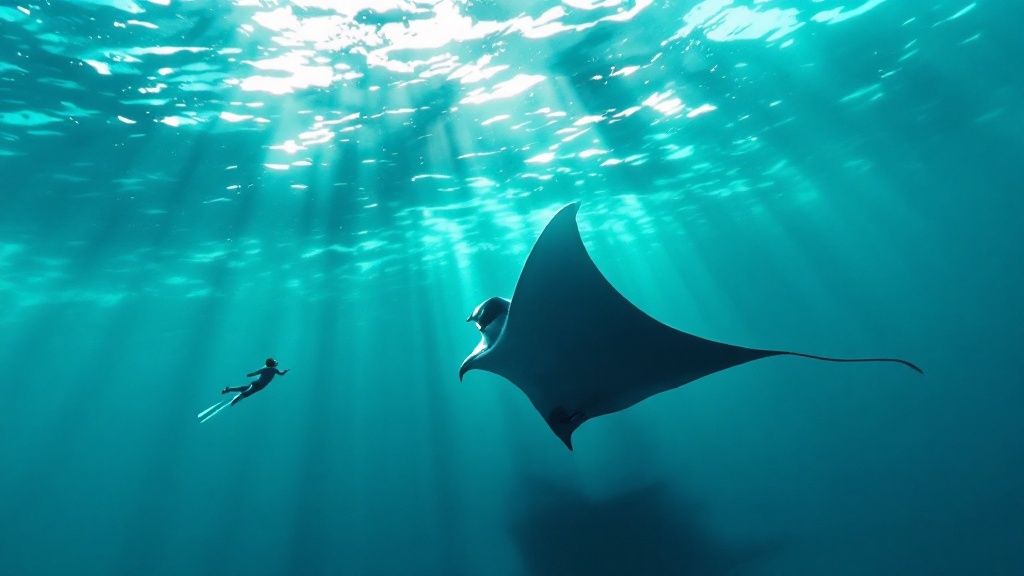
The Snorkeler’s View: A Top-Down Spectacle
Picture yourself floating on the calm ocean surface after sunset. You’re holding onto a specially designed light board that casts a brilliant glow into the water below, attracting swarms of plankton. Almost like magic, this light becomes a dinner bell for majestic manta rays, drawing them right up to the surface for their nightly meal.
From your bird's-eye view, you get to watch these gentle giants perform graceful barrel rolls, sometimes just inches away. It’s an up-close-and-personal encounter that is incredibly accessible, requiring no prior certification. This makes it the perfect adventure for families, first-time ocean explorers, and anyone who wants a guaranteed fantastic view without the hassle of scuba gear.
An Almost Guaranteed Encounter
One of the best things about the manta ray snorkel in Kona is how reliable it is. Tour operators have perfected their methods, and the local manta population is quite predictable. As a result, sighting success rates are incredibly high, often between 80% to 90%.
Of course, nature is never a 100% guarantee. Factors like moon phases or strong currents can sometimes affect the mantas' behavior. But the use of powerful lights to attract plankton tilts the odds heavily in your favor. This reliability takes the guesswork out of planning and lets you book with confidence, knowing you have an excellent chance of a breathtaking experience.
"The view from the surface is unlike anything else. You see the full 'ballet' of multiple mantas weaving and rolling over each other. It’s a completely mesmerizing and almost surreal experience that’s accessible to nearly everyone."
If you’re ready for this unique adventure, you can learn more about what to expect when you snorkel with manta rays in Kona. Top-rated operators like Kona Honu Divers focus on creating a safe and unforgettable night for every guest.
The only real downside for some might be the number of people on the surface, but the stunning, inclusive experience more than makes up for it.
The Diver’s Perspective: An Immersive Underwater Encounter
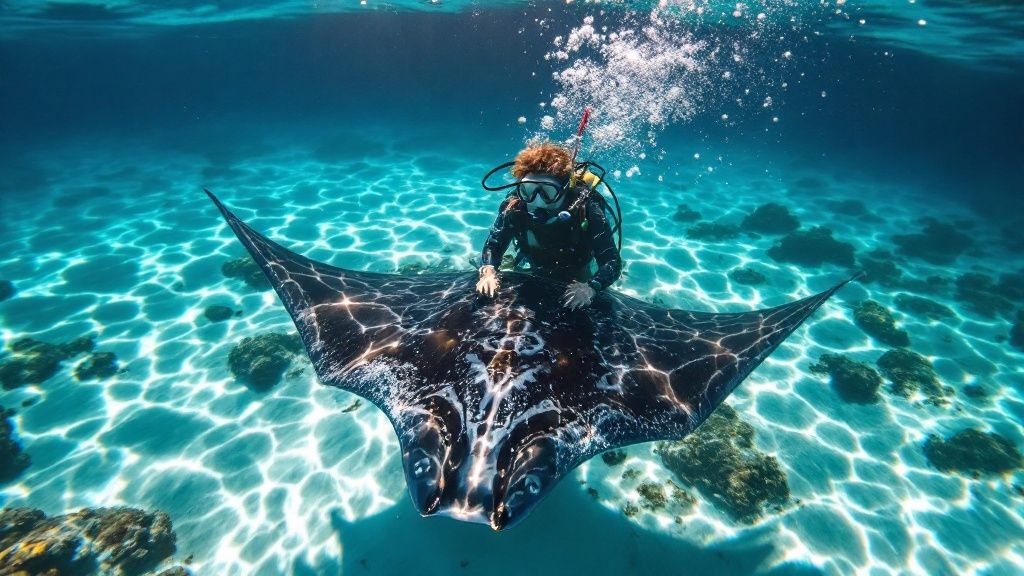
For certified scuba divers, the manta ray night dive is a whole different world. Instead of floating on the surface, you get to descend to the ocean floor and become part of their environment, looking up as these gentle giants glide just inches above your head. It’s a truly mesmerizing underwater ballet.
This unique, bottom-up perspective is what sets the dive apart. You get a real sense of their massive wingspans and the subtle, graceful way they move through the water—details you just can't appreciate from the surface. You'll be settled in a designated spot, making you a silent, respectful observer in their domain.
A Truly Immersive Experience
Since diving requires certification, the groups are typically smaller and more intimate than on snorkel boats. This creates a much less crowded and more personal encounter. It's a profoundly immersive experience, offering mind-blowing photo opportunities and the humbling feeling of being a guest in the mantas' home.
Excellent buoyancy control is non-negotiable. You’ll be stationary on the sandy bottom at a depth of about 35 feet, which is crucial for remaining still and protecting the delicate marine life around you. This passive observation is the key to a positive and safe interaction for everyone, including the mantas.
To get a better sense of what the dive entails, check out our guide to the manta ray night dive in Kailua-Kona.
"Being on the ocean floor and having a 12-foot manta ray glide inches over your head is a core memory. The silence, the grace—it's an otherworldly experience that connects you directly to the ocean's magic."
Scientific studies on manta interactions have shown that this kind of passive observation is far less stressful for the animals. When divers are calm and still, mantas are more likely to be curious rather than evasive. You can learn more about the findings on manta ray behavior and see why choosing a responsible operator is so important.
Ready for the adventure of a lifetime? Consider booking a specialized manta ray dive tour to experience it for yourself.
How To Choose Your Ideal Manta Ray Experience
So, should you snorkel or dive with manta rays? There’s no single "better" option—it really boils down to what you want out of the experience. Your comfort in the water, your budget, and the perspective you're after will all shape your decision. Let’s break it down to help you book the perfect Kona adventure.
Skill Level and Comfort
This is probably the biggest deciding factor. Snorkeling is incredibly accessible. You don't need any special training or certification. As long as you're comfortable putting your face in the water, you're good to go. Most tours even provide a large, floating light board to hold onto, making it a great option for families, beginners, and even non-swimmers.
Diving, on the other hand, is a whole different ballgame. The famous night dive is strictly for certified scuba divers. You'll need to be solid on your skills, especially buoyancy control, as you'll be settled on the ocean floor in the dark. If you don't have a dive certification, the choice is simple: snorkeling is your ticket to seeing the mantas.
Proximity and Perspective
Each option gives you a completely different, yet equally breathtaking, view of the action.
When you snorkel, you get a bird's-eye view. You'll be floating on the surface watching the mantas perform their graceful, acrobatic barrel rolls as they feed on plankton just inches beneath you. It’s like having a front-row seat at an underwater ballet.
Divers get an entirely different angle from the ocean floor, about 35 feet deep. From here, you look up as these massive, gentle giants glide silently right over your head. It’s an incredibly humbling experience that gives you a true sense of their sheer size and grace. This bottom-up perspective is often a favorite for photographers wanting those dramatic, wide-angle shots.
Cost and Time Commitment
If you're watching your wallet or your watch, snorkeling is generally the easier choice. These tours are typically less expensive because they don't require all the specialized gear of diving. They're also a shorter commitment, usually running about two to three hours from start to finish.
Scuba diving is a more significant investment in both time and money. Most charters, like the world-famous manta ray dive, are two-tank trips. This means a longer excursion and a higher price tag to cover the equipment, air tanks, and expert divemaster guidance.
Crowd Dynamics and Group Size
The number of people around you can definitely affect the vibe of your encounter. A detailed survey conducted in Hawaii found that 82% of participants felt crowded by other snorkelers, while 69% felt crowded by divers.
It’s just the nature of the activity—there are often more people on the surface than below. If a more intimate, small-group setting is a priority for you, diving might be the way to go. You can read the full research on crowding perceptions to get a deeper sense of how this might influence your experience.
Situational Recommendations For Every Traveler
So, how do you choose? Deciding whether to snorkel or dive with manta rays really boils down to your personal preferences, who you're traveling with, and what you’re comfortable with in the water. Matching the right activity to your situation is the key to an experience you'll never forget. Let’s look at the best fit for a few common scenarios.
For Families and First-Timers
If you’ve got kids in tow or members of your group aren’t strong swimmers, snorkeling is the clear winner. It’s incredibly safe and inclusive, and you don’t need any certifications to join in.
Everyone can comfortably hold onto a floating light board and watch the show together. It's a fantastic way to create a shared family memory without any of the stress or technical skills required for diving.
For Budget-Conscious Travelers
Watching your wallet? Snorkeling delivers a truly world-class wildlife encounter without the premium price tag. You get all the breathtaking action of the manta ray ballet for a fraction of the cost.
It’s a high-impact adventure that avoids the higher expenses tied to scuba gear, boat crews with divemasters, and certification requirements.
Ultimately, the best choice is the one that everyone in your group can safely and happily participate in. Snorkeling is brilliant for mixed groups because both divers and non-divers can be on the same boat, sharing the magic of the mantas from the surface.
For Certified Divers and Photographers
For anyone with a scuba certification or a passion for underwater photography, the manta ray dive is simply unparalleled. Being on the ocean floor and looking up as the mantas glide overhead is a perspective you just can't get from the surface.
This bottom-up view provides far superior photo opportunities and a much more immersive, serene encounter. It’s less crowded and gives you the space to truly appreciate the sheer scale and grace of these animals. If you're after the ultimate underwater experience, the manta ray dive tour is the way to go.
When you're planning a trip around a specific adventure like this, it's always smart to look into short-term international travel insurance. Whichever option you land on, you're in for an incredible night.
How to Choose the Right Manta Ray Tour Operator
Choosing whether to snorkel or dive is just the first step. The single most important decision you'll make is picking the right tour operator—it can truly make or break your entire experience.
A great company does more than just take you to the spot. They prioritize your safety, the well-being of the mantas, and create an adventure you'll remember for a lifetime. Look for operators with seasoned guides, a top-notch safety record, and a genuine, demonstrable commitment to sustainable tourism.
The Gold Standard: Finding an Ethical Operator
Your best bet is to find a company that follows the Manta Ray Green List guidelines. This isn't just a fancy title; it's a set of strict protocols designed to protect these incredible animals. A responsible operator will brief you on proper etiquette before you even hit the water, ensuring the encounter is safe and minimally invasive for the rays.
For a truly world-class experience, Kona Honu Divers consistently sets the bar. Their crew is known for being incredibly professional, but it’s their deep-seated passion for marine conservation that really shines through. They create a safe, respectful environment where you can just relax and soak in the magic of the moment.
Don't just take our word for it—reading recent guest reviews will give you a clear picture of their dedication. And to get a head start, check out our guide on how to be a responsible and considerate diver.
Frequently Asked Questions About Manta Ray Tours
Is It Safe To Be In The Water With Manta Rays At Night?
Absolutely. Getting in the water with these gentle giants is incredibly safe, especially when you go with a professional and reputable tour operator. Manta rays are filter feeders, meaning they don’t have teeth, stingers, or barbs to worry about.
Tour companies take safety seriously. They light up the water like a stadium for perfect visibility, give everyone a detailed safety briefing beforehand, and have experienced guides right there with you to make sure everything goes smoothly.
What Should I Bring On A Manta Ray Tour?
Your tour operator, like Kona Honu Divers, will handle all the essential gear—wetsuits, masks, fins, the works. You'll just need to bring a few personal items to make your trip more comfortable.
I always recommend packing a towel and a warm, dry change of clothes for after you get out of the water. If you need any personal medications, bring those along too. And you’ll definitely regret it if you don't bring an underwater camera to capture the experience!
Do You Need To Be A Strong Swimmer To Snorkel?
Not at all. This is a common worry, but the snorkeling setup is designed for everyone. You'll hold onto a large, custom-made light board that floats on the surface.
This board provides all the stability you need, so you can just relax and watch the mantas dance in the light beams below without having to swim. Plus, the crew is always right there in the water to offer a hand if you need it.
If you have more questions, this resource covers many of the other common Manta Ray FAQs you might be wondering about.