
Absolutely, the Big Island is a fantastic place for scuba diving. It's not just good; it’s a world-class destination that offers underwater experiences you simply can't find anywhere else on the planet, like the legendary Manta Ray Night Dive. With its crystal-clear waters and otherworldly volcanic seascapes, the Kona coast is a dream spot for divers of every skill level.
Why Kona Is a Top-Tier Scuba Destination
So what makes the Big Island so special for diving? It's a rare combination of factors that come together to create an exceptional underwater playground. While many tropical spots are known for their coral reefs alone, Kona's coast offers a far more dynamic and geologically fascinating environment.
The Big Island of Hawaii has earned its reputation as one of the world's premier scuba diving locations, largely because of its unique volcanic underwater terrain. This isn't your typical sandy bottom. The landscape here has been sculpted by volcanic activity for millennia, creating incredible structures like lava tubes, dramatic arches, and sheer drop-offs formed by ancient lava flows. This provides a truly extraordinary backdrop for any dive.
This volcanic foundation isn't just for looks—it’s the perfect canvas for a thriving marine ecosystem. The clear, warm waters are teeming with a stunning variety of life, from clouds of tiny, colorful reef fish to majestic green sea turtles gliding by.
For a quick look at why divers flock here, this table sums it up nicely.
Why The Big Island Excels for Scuba Diving
| Factor | Details |
|---|---|
| Water Clarity | Visibility often pushes past 100 feet, thanks to the natural filtration from porous volcanic rock. |
| Water Temperature | A comfortable 75-80°F (24-27°C) all year long, so you can leave the thick wetsuit at home. |
| Unique Topography | You get to explore ancient lava tubes, swim through underwater arches, and dive along dramatic volcanic craters. |
| Signature Dives | It’s home to world-famous experiences you can't do anywhere else, like the Manta Ray Night Dive and the Kona Blackwater Dive. |
| Marine Life | The reefs are healthy and buzzing with tropical fish, eels, dolphins, turtles, and even the occasional shark. |
When all of these elements come together, they create an underwater environment that's tough to beat. For a deeper look, check out our complete guide to diving the Big Island. It doesn't matter if you're a brand new diver or a seasoned pro—Kona has something truly special waiting for you just beneath the waves.
Explore an Underwater Volcanic Wonderland
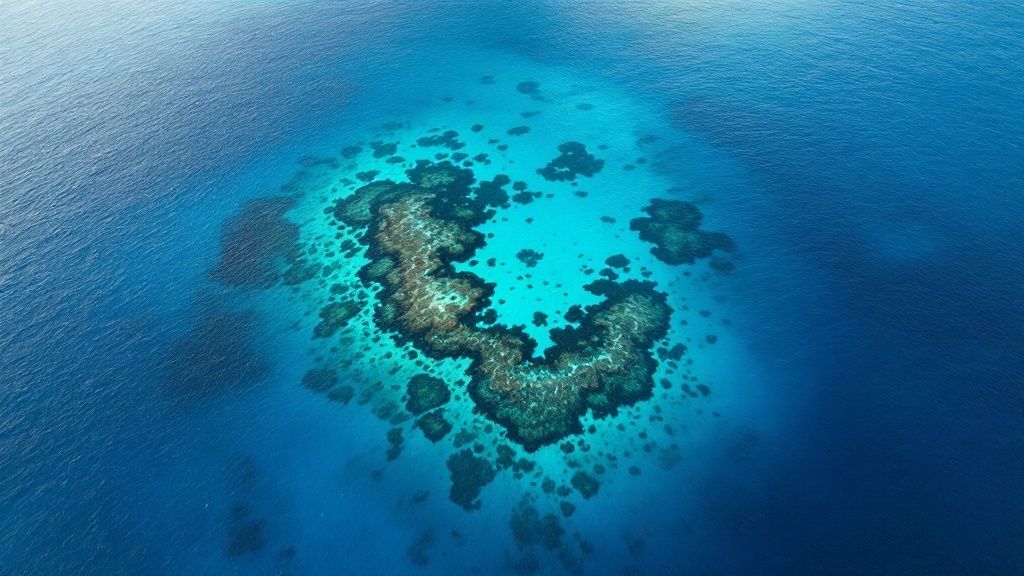
Picture this: you descend into a world literally sculpted by fire and sea. Diving on the Big Island is a completely different ballgame because the entire underwater environment was born from volcanoes. Ancient lava flows poured into the ocean, cooled, and created the dramatic, otherworldly landscape you get to explore today.
Forget soft, sandy bottoms. Here, you’ll be navigating a stunning maze of massive arches, deep caverns, and intricate lava tubes that feel like submerged cathedrals. It's these unique geological formations that really set the Kona coast apart from your typical coral reef destination.
Where Geology and Biology Meet
This volcanic seascape is so much more than just a collection of cool rock formations; it's a living, breathing habitat. The porous lava rock, with its endless nooks and crannies, provides the perfect real estate for a dense and surprisingly diverse population of marine life. It’s a place where the island's geology and biology are beautifully intertwined.
Every crack and tunnel is buzzing with activity. A whole cast of characters has adapted to call this unique environment home.
- Vibrant Reef Fish: Schools of bright yellow tangs, delicate butterflyfish, and secretive moray eels peek out from volcanic crevices.
- Unique Critters: If you look closely, you can spot masters of disguise like frogfish blending in perfectly with the rocky terrain, not to mention several species of octopus.
- Majestic Honu: Of course, the real stars are the Hawaiian green sea turtles (honu). They glide effortlessly past divers and can often be found resting peacefully under a sheltered lava overhang.
It's this constant interplay between ancient lava and the living reef that makes the ecosystem so dynamic. The volcanic structures provide the architecture, while the corals and marine life paint it with vibrant color and motion. Every single dive feels like a new discovery.
The result is an underwater experience that’s both dramatic and teeming with life. One minute you'll be marveling at the sheer scale of a submerged lava arch, and the next you'll be captivated by a tiny, colorful nudibranch inching its way across the dark volcanic rock. This fusion of geological grandeur and rich biodiversity is what truly makes diving on the Big Island a world-class adventure.
Ready to see these incredible volcanic structures for yourself? You can explore a huge variety of these spots on our guided Kona diving tours, where our expert guides know exactly where to find the magic. We'll take you to the most spectacular sites the Kona coast has to offer.
Experience Dives You Cannot Find Anywhere Else
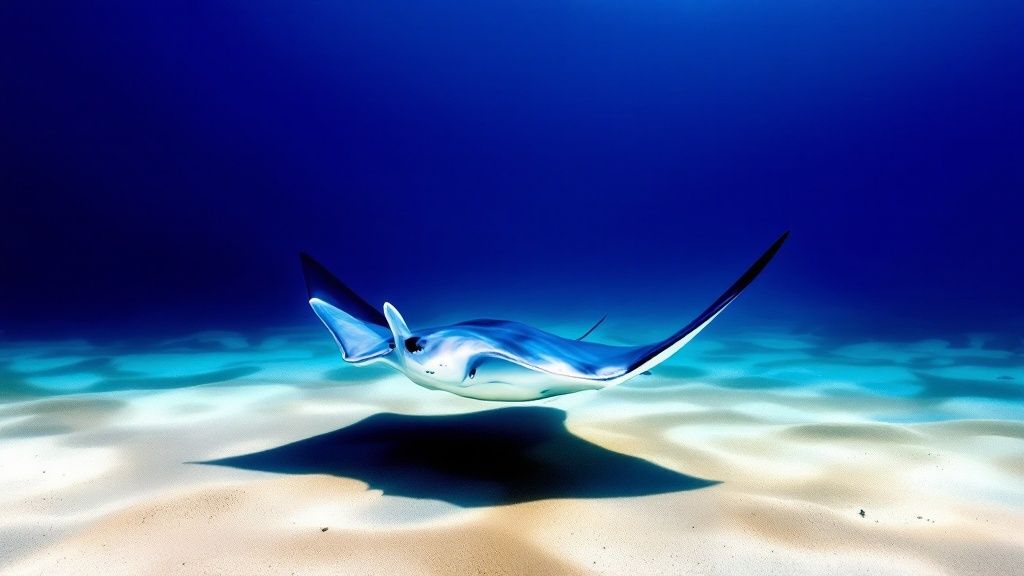
While the volcanic reefs are incredible on their own, the Big Island is home to a few bucket-list dives that pull in adventurers from all over the world. These aren't just "good" dives—they are profound, unforgettable experiences that can completely redefine what you think is possible underwater.
The undisputed star of the show is the world-famous Manta Ray Night Dive. This is the signature dive on the Big Island, a spectacle that people plan entire trips around. Imagine this: you descend at dusk, settle onto the sandy ocean floor, and watch as powerful lights switch on, creating a beacon that attracts clouds of plankton. The show is about to begin.
The World-Famous Manta Ray Night Dive
Divers often struggle to find the words, calling it magical, surreal, or even life-changing. You'll watch majestic manta rays, some with wingspans stretching over 12 feet, perform a silent, graceful ballet right in front of you. They swoop, glide, and somersault through the beams of light, feeding on the plankton that has gathered.
It’s a completely passive viewing experience. Divers kneel on the sandy bottom, becoming part of the scenery as these gentle giants put on their nightly show. There’s nothing quite like the feeling of a massive manta ray peacefully gliding directly over you.
The best part? The mantas here are residents, not just passing through, so you can experience this incredible manta ray dive tour any time of year. It consistently ranks as one of the top night dives in the world, and for very good reason. Many people surface so moved by the encounter that they immediately book it again for the next night.
The Thrilling Kona Blackwater Dive
For those who crave a different kind of thrill, the Big Island delivers another completely unique night dive: the Kona Blackwater Dive. If the manta dive is surreal, this one is downright otherworldly. Forget the reef. On this dive, you drift tethered to the boat in the deep open ocean, miles from shore, with thousands of feet of water below you.
Every night, the largest migration on Earth happens when countless bizarre and beautiful deep-sea creatures rise toward the surface to feed. You’ll see things that look like they belong on another planet.
- Pele's Fire: Tiny, bioluminescent jellies and siphonophores that create a sparkling light show in the darkness.
- Larval Creatures: You’ll spot the juvenile forms of octopus, eels, and fish, many of which look nothing like their adult counterparts.
- Strange Squids: Encounter alien-like squids and other cephalopods that are rarely seen by human eyes.
This dive isn't about big animals; it's about witnessing the hidden, alien universe that comes alive in the pitch-black Pacific. The combination of the Manta Ray Dive and the Blackwater Dive truly solidifies the Big Island's reputation as a place for unforgettable diving. Our complete guide to Big Island diving explores even more of what makes this destination so special.
Enjoy Perfect Diving Conditions Year-Round
One of the first questions on any diver's mind is, "When's the best time to go?" For the Big Island, the answer is refreshingly simple: whenever you can. Thanks to the massive volcanoes shielding the Kona coast from the trade winds, the ocean here is consistently calm and clear. It’s a year-round paradise for diving.
This incredible reliability takes the guesswork out of planning. You can book your trip for January or July and feel confident you’ll have a fantastic time underwater.
Consistently Warm and Clear Waters
The water here is always inviting. We're talking about balmy temperatures that hover between a pleasant 75°F in winter and a bath-like 80°F in late summer. For most divers, that means a thin wetsuit is plenty, and many locals are comfortable in just a rash guard.
On top of that, the visibility is just phenomenal, often stretching beyond 100 feet. The volcanic rock coastline acts as a natural filter, and with very little surface runoff, the water stays incredibly clear. You can find more details about Hawaii's excellent diving conditions on Divernet.com. This kind of clarity completely changes the dive, letting you soak in the dramatic underwater landscapes and spot marine life from a distance.
Subtle Seasonal Highlights
While the diving is stellar anytime, each season brings its own little something extra to the experience.
- Winter (December – March): This is humpback whale season. You might not see them on your dive, but you can often hear their mesmerizing songs echoing through the water. It's a truly haunting and unforgettable soundtrack to your descent.
- Summer (June – September): The water hits its peak warmth, and the ocean is typically at its calmest. This makes for exceptionally smooth boat rides and some of the most relaxing diving you'll ever do.
No matter when you visit, the core experience remains the same: warm, clear water and thriving marine ecosystems. The seasonal differences are just the icing on the cake.
Of course, it's always smart to be prepared. Before you head out, you can get the latest updates by reading our guide on how to check ocean conditions for the Big Island. Knowing you'll be met with amazing conditions no matter the month gives you the freedom to plan your trip with total confidence.
How to Choose the Right Kona Dive Operator
Let's be honest: your dive operator can make or break your entire trip to the Big Island. Picking the right crew isn't just about booking a spot on a boat; it's about finding a team that makes your underwater adventure safe, personal, and something you'll talk about for years. The best operators don't just take you diving—they elevate the experience entirely.
So, how do you sort through the options? Start with the absolute basics. A top-notch dive company puts your safety above everything else, period. A flawless safety record isn't just a nice-to-have; it's the non-negotiable foundation for every great dive.
What to Look for in a Dive Shop
Once safety is covered, the quality of your experience really boils down to the details. A truly professional operation is obsessed with providing a comfortable, insightful, and premium adventure from the moment you check in to your last post-dive chat.
Here are a few things that separate the great shops from the merely good ones:
- Small Group Sizes: This is huge. A smaller diver-to-guide ratio means you get more personalized attention, you won't feel like you're in a crowd underwater, and you’ll have a much better chance of getting up close with marine life.
- High-Quality Gear: Check out their rental equipment. Is it modern and well-maintained? This is a clear sign that an operator invests in their divers' safety and comfort.
- Deep Local Expertise: The best guides are more than just underwater tour leaders. They're passionate marine naturalists who can spot that camouflaged frogfish you’d swim right past, explain fascinating animal behaviors, and share the hidden secrets of Kona's reefs.
At Kona Honu Divers, we've built our entire reputation on these principles. Our guides are genuinely passionate about sharing Kona's underwater world, and their focus is always on creating the safest and most amazing experience possible for every single guest.
We think that exceptional service speaks for itself, but you don't have to take our word for it. Check out what our divers have to say about their time with us.
Finding the Right Dive for Your Skill Level
A great operator also understands that not all divers are the same. Whether you’re about to take your first breath underwater or you're a seasoned pro with a logbook full of adventures, they should have something that perfectly matches your skills.
For those with plenty of experience under their belt who are looking for a real challenge, we run specialized charters to more demanding sites. Our premium advanced dive tours are designed to explore deeper reefs and more complex underwater landscapes, making sure your advanced skills are rewarded with some truly extraordinary sights. No matter your level, we're here to make sure you have an amazing day on the water.
Your Big Island Dive Adventure Awaits
So, is the Big Island good for scuba diving? After everything we've covered, I think you know the answer isn't just "yes"—it's an absolute, resounding "YES!" This isn't just another tropical getaway; it's a truly world-class diving destination that offers experiences you simply can't find anywhere else on the planet.
From the dramatic volcanic cathedrals sculpted by lava flows to the silent, graceful ballet of the manta rays, Kona delivers one-of-a-kind underwater encounters. The conditions are spectacular, the marine life is thriving, and there’s a genuine sense of adventure waiting for you just below the surface.
This is a place where you can experience the pure magic of the world-famous Manta Ray Night Dive or float through the inky blackness on a mind-bending Kona Blackwater Dive. These aren't just dives; they're core memories in the making.
Diving in Kona is more than a vacation activity. It's a chance to connect with a powerful, ancient, and vibrant underwater world in a way that will stick with you forever.
It's time to stop dreaming and start planning. The incredible volcanic reefs and unique creatures of Hawaii are calling your name. Take that first step and explore the different Kona diving tours we have to offer. Your Hawaiian underwater journey starts right now.
Frequently Asked Questions About Diving in Kona
As you're getting your plans dialed in, you probably have a few questions. Let's tackle some of the most common ones we hear from divers planning a trip to the Big Island.
What Certification Level Do I Need to Dive Here?
The fantastic thing about Kona is that it has something for everyone, from complete beginners to seasoned pros. If you've never dived before but are eager to see what all the fuss is about, you can join a Discover Scuba Dive and explore the reef with an instructor right by your side.
For certified divers, the Kona coast is your oyster, with an incredible variety of stunning reef dives. If you’re a more advanced diver craving a bit more of a challenge, you’ll find plenty of deeper sites and incredible night dives. For those with the experience, we’ve put together some premium advanced dive tours that are right up your alley.
Is It Better to Do Shore Dives or Boat Dives?
The Big Island has some decent shore diving, no question. But if you want to see the really spectacular, untouched spots, you have to get on a boat. That’s where the magic happens.
Boat diving—which is what we specialize in here at Kona Honu Divers—gets you to those prime locations that are just too far to reach from the beach. These sites see fewer divers, which means the coral is more vibrant, the visibility is often better, and your chances for amazing marine life encounters go way up.
When Is the Best Time of Year to See Manta Rays?
This is one of the best parts about Kona: you can see the manta rays year-round! These gentle giants are residents, not tourists. They stick around because their food source, plankton, is always here. That means any given night could be the night you have that mind-blowing encounter.
Sure, the winter months can sometimes bring a little more surface chop, but the mantas don't pack up and leave. Their reliability is what makes the manta ray night dive a true bucket-list dive you can plan for no matter when you visit.
Will I See Sharks While Diving in Kona?
Yes, and it’s an absolute highlight! Spotting a reef shark, usually a whitetip, is a clear sign of a healthy, balanced ecosystem. It’s a normal, safe, and honestly, pretty awesome part of the experience.
These sharks are typically quite shy and couldn't be less interested in divers. Watching one glide effortlessly along the reef is a beautiful sight you won't soon forget.
Ready to see Kona's incredible underwater world with your own eyes? The team here at Kona Honu Divers lives to share this magic with you. Take a look at all of our Kona diving tours and let's find the perfect adventure for your trip.