
Let's get the big question out of the way first: your recreational scuba certification card is good for life. Once you've earned it, it never expires.
But here’s the thing—think of it like your driver's license. Just because the card is still in your wallet doesn't mean you're ready to hop on the freeway during rush hour if you haven't driven in a decade. The plastic card isn't what matters; your real-world skills and confidence in the water are everything.
Your Certification Is For Life But Your Skills Are Not
The great news for anyone who's put in the work to get their C-card is that the certification itself is a permanent achievement. Major training agencies like PADI, SSI, and NAUI all agree that recreational certifications—like the foundational Open Water Diver course—are lifelong. You passed the tests, you proved your skills, and that accomplishment stays with you. For a deeper dive, you can explore how certification validity works on Scuba.com.
This is where the conversation gets more nuanced, though. There's a huge difference between having a certification and being a proficient, safe diver. Your physical card is permanent, but the muscle memory and practical knowledge you need to dive safely can definitely get rusty.
To give you a quick overview, here’s a look at how long different certifications and related skills are generally considered "current."
Certification & Skill Validity At A Glance
| Certification / Skill Type | Governing Agency Example | Validity Period |
|---|---|---|
| Open Water Certification | PADI, SSI, NAUI | Lifetime |
| Nitrox Certification | PADI, SSI, NAUI | Lifetime |
| First Aid & CPR | EFR, American Red Cross | 24 months |
| Divemaster Insurance | PADI, NAUI | Annual Renewal |
| Dive Skills Currency | Industry Standard | 6-12 months |
As you can see, while your core diving certs are for life, other critical components have a much shorter shelf life. This is why the concept of being "dive-ready" is so important in our world.
The Real Meaning of "Dive-Ready"
Being "dive-ready" is all about having your skills sharp enough to handle any situation underwater calmly and correctly. After a long break, critical abilities naturally start to fade. It's a process we call skill degradation, and it happens to everyone.
What kind of skills get rusty? A few key ones come to mind:
- Buoyancy Control: That feeling of effortlessly hovering in the water, not sinking or floating up. It's a fine-tuned skill.
- Emergency Procedures: Knowing exactly what to do—without a second thought—if your mask floods or you have an out-of-air situation.
- Gear Familiarity: Being able to set up, check, and troubleshoot your own equipment with total confidence.
The core idea is simple: a certification proves what you once learned, while your current skills demonstrate what you can safely do today. This distinction is the foundation of responsible diving.
Grasping this difference is the key to a lifetime of incredible, safe underwater adventures. It ensures you're truly prepared to explore all the amazing things the ocean has to show you.
The Difference Between Certification And Proficiency
That scuba certification card in your wallet is proof you once demonstrated the skills to dive safely. It’s your ticket to the show. But being a truly good diver is all about proficiency—how sharp your skills are right now, not back when you passed your test.
Think of it like learning to play the guitar. You might have nailed your lessons a decade ago, but if you haven’t picked it up since, you're not going to be ready for an open mic night. Diving skills are exactly the same; they need to be practiced.
We call this natural decline "skill fade," and it happens to everyone. It’s that process where critical, life-saving abilities get a little rusty when they go unused.
Key Skills That Get Rusty
Without regular practice, you might feel a bit clumsy with some of the most important procedures. Here are a few that tend to fade the fastest:
- Buoyancy Control: This is the big one. Hovering effortlessly is a fine art, and it’s one of the first things to get sloppy without time in the water.
- Mask Clearing: Reacting calmly to a flooded mask should be automatic. When you haven't done it in a while, it can feel awkward and even a little stressful.
- Emergency Air Sharing: Knowing the steps to share air with a buddy needs to be pure muscle memory, not something you have to dust off from the back of your brain.
This is exactly why agencies like PADI and SSI push for continuing education and refreshers. It’s not about making you jump through hoops; it's about keeping every single dive safe and fun for everyone involved. The goal is a community of divers who look out for themselves and their buddies.
Understanding this distinction is the first step to becoming a truly reliable diver. Your certification opens the door to the underwater world, but your proficiency is what keeps you exploring it safely.
By being honest about your current skill level, you make sure you're always ready for whatever the ocean throws at you. If you’re feeling a bit rusty or just want to sharpen your techniques, checking out different scuba diving classes is the perfect way to get your confidence back before your next big dive trip.
When You Should Take A Scuba Refresher Course
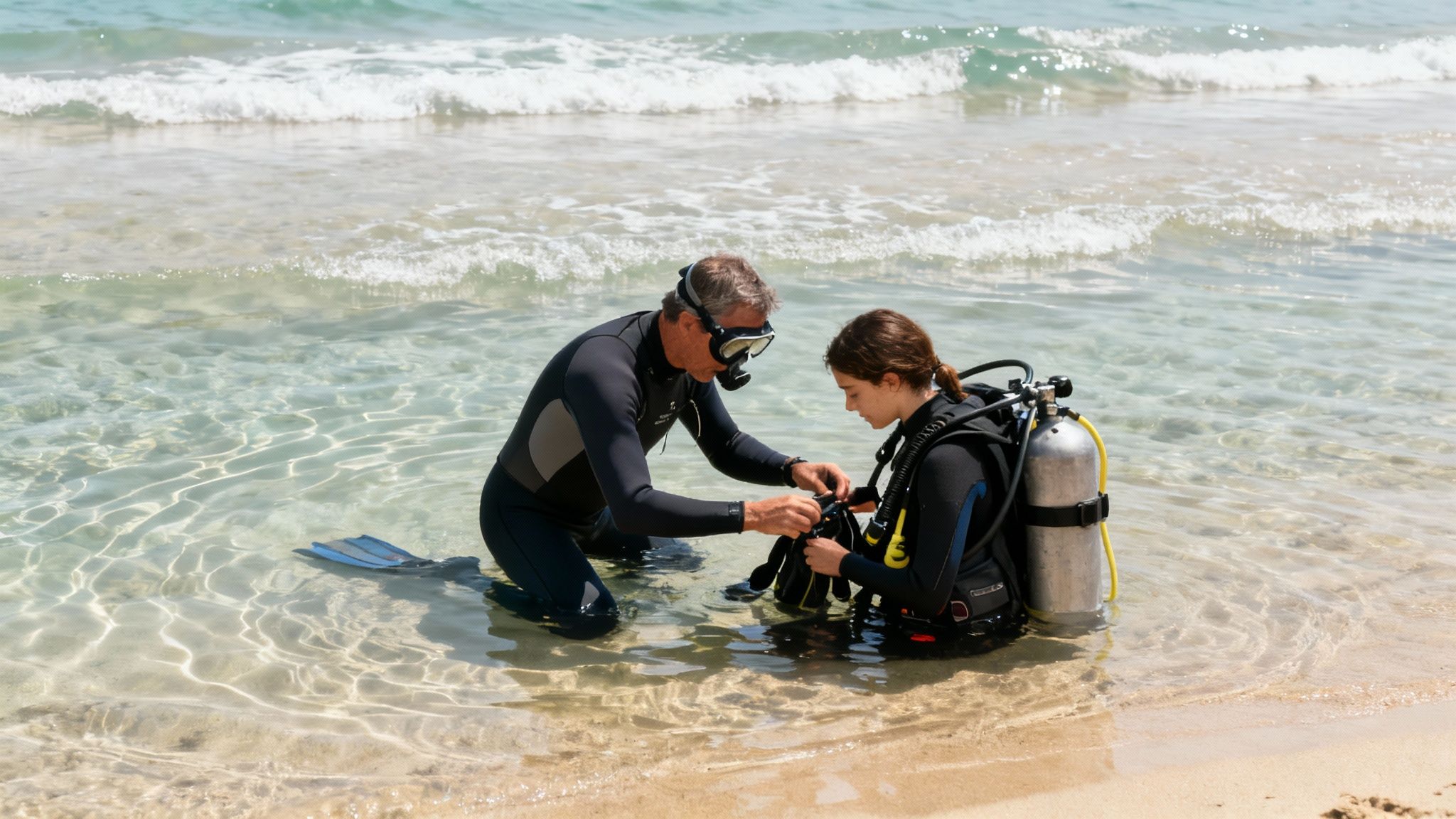
So, after a long break from the water, how do you know if you’re truly ready to jump back in? The general rule of thumb among dive agencies and shops is pretty straightforward: if it's been over a year since your last dive, it’s a good idea to take a refresher.
This isn’t just a friendly suggestion. Many operators, especially here in a world-class dive spot like Kona, will actually require proof of a recent dive or a refresher if you haven't logged a dive in the last two years. It's all about making sure everyone is safe and has a good time.
Don't think of it as having to get certified all over again. A refresher is a low-pressure way to shake off the cobwebs and rebuild your confidence. It's a smart investment in your own safety and making sure your next dive is pure fun, not a stressful memory test.
What Happens in a Refresher Course
A solid refresher course, like the PADI ReActivate™ program we run, is split into two simple parts. The whole point is to get you back up to speed efficiently, focusing only on the core skills you need.
First, you’ll do a quick knowledge review. This is usually a casual run-through of the big topics like dive planning, understanding decompression, and how to handle common problems. It helps jog your memory about the "why" behind all the skills you're about to practice in the water.
Then comes the best part—getting back into the pool with an instructor. In this controlled, calm environment, you'll go through the essentials:
- Assembling your gear from start to finish.
- Practicing critical skills like clearing your mask and recovering your regulator.
- Getting a feel for your buoyancy again until it feels like second nature.
A refresher course isn't a penalty for taking time off; it's what responsible divers do. It ensures your first dive back is filled with wonder, not worry, by making sure your skills are sharp and ready.
At the end of the day, taking a refresher shows you’re serious about your safety and the safety of your dive buddies. If you're planning a trip to see us and think your skills could use a little polishing, check out the PADI ReActivate program. We'll get you feeling comfortable and confident in no time.
How Professional Ratings Differ From Recreational Certs
While your basic scuba certification is good for life, the rules change completely once you decide to go pro. Think of your Open Water card like your personal driver's license—it lets you operate the vehicle. A professional rating, like a Divemaster or Instructor, is more like a commercial license to drive a tour bus. There’s a whole new level of responsibility and upkeep involved.
It all comes down to accountability. As a dive professional, you're directly responsible for the safety of other people in the water. Because of that, your credentials can't just be a one-time thing.
The Annual Renewal Cycle for Pros
To keep what's called an "active status," dive professionals have a checklist of annual requirements that recreational divers don't. This system makes sure they're current on their skills, properly insured, and ready to lead others.
Typically, staying active involves:
- Annual Membership Renewal: Pros pay yearly dues to their certifying agency, like PADI, to remain in good standing.
- Proof of Professional Liability Insurance: This is an absolute must-have. It protects the dive pro, their students, and their clients.
- Ongoing Training Updates: Agencies regularly update their standards and teaching methods, and professionals are expected to keep up.
This professional standard really drives home an important point for every diver: you're responsible for keeping your own skills fresh. And even on the recreational side of things, some certifications do have an expiration date built right in.
A perfect example is the Emergency First Response (EFR) certification, which covers essential CPR and first aid. You need it for the Rescue Diver course, and it must be renewed every 24 months. This ensures anyone with rescue-level training has life-saving skills that are sharp and up-to-date.
Grasping this difference shows why, even with a "lifetime" recreational card, staying proficient is at the heart of being a safe and conscientious diver.
Keeping Your Dive Skills Sharp In Kona
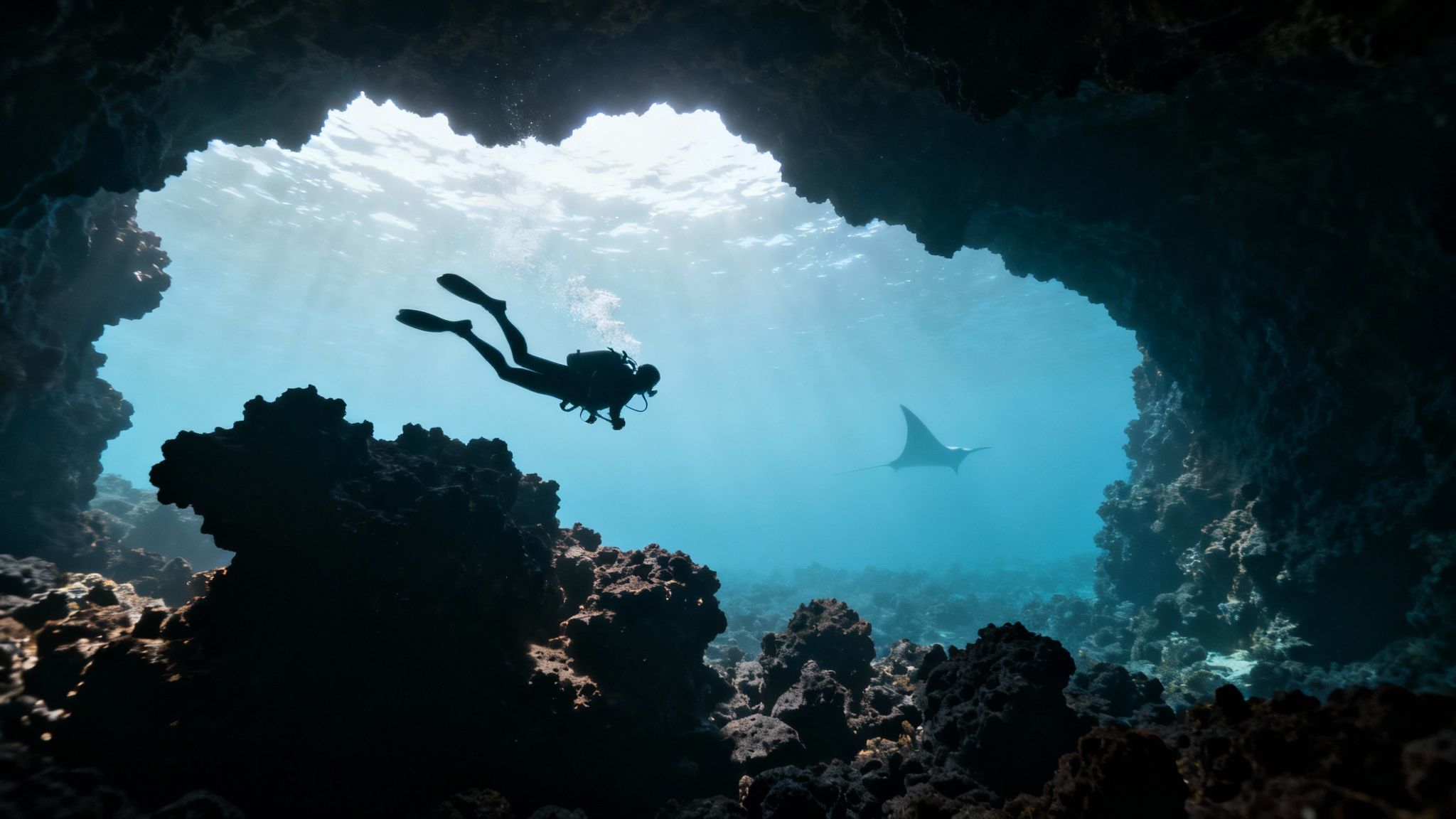
There's a world of difference between being a certified diver and being a proficient one. Your certification card is your license to learn, but the real skill comes from getting in the water. And honestly, there’s no better classroom than the vibrant underwater world of Kona.
Our unique geology, with its dramatic volcanic lava tubes and stunning coral gardens, makes for some truly incredible scuba diving in Kona, Hawaii. It also demands that you stay sharp. At Kona Honu Divers, we get it. We run dive trips for every skill level, giving you the perfect chance to practice your skills while making memories you'll never forget.
The truth is, consistent diving is what builds mastery. The dive industry as a whole understands this. While dive centers are always issuing new cards—the average U.S. shop issued 128 entry-level certifications in 2023—the real focus for long-term divers is simply staying active and confident in the water.
Unforgettable Kona Diving Experiences
Kona offers a dive for every comfort level, and each one is a unique opportunity to keep your abilities tuned. For most visitors, the can't-miss experience is the world-famous Manta Ray Night Dive. It’s an otherworldly ballet that's also a fantastic, real-world test of your buoyancy control.
Looking to push your boundaries a bit? We've got charters designed to take your skills to the next level.
- Advanced Dives: Ready for a challenge? Our advanced dive tours will take you to deeper sites with more complex topography, perfect for building confidence in a variety of conditions.
- Blackwater Dives: This is the ultimate test of buoyancy, awareness, and nerve. Our Kona Blackwater Dive is a one-of-a-kind adventure into the deep open ocean at night. It's unlike anything you've ever done.
Even on your days off from diving, just staying active in the water helps. Exploring some of the best snorkeling spots on the Big Island in Kona is a great way to maintain your overall comfort in the ocean.
And if you’re just starting out, you can get all the details on our Kona scuba certification course and begin your own underwater adventure right here with us.
What To Do If You Lose Your Certification Card
That moment of panic when you’re packing for a dive trip and can't find your certification card is something many divers have experienced. But don't worry, it's a surprisingly easy fix. Your actual certification is logged forever in your training agency's database, so the credential itself is safe and sound.
The fastest way to solve this is to go digital. Major agencies like PADI have fantastic mobile apps where you can pull up your e-card in seconds. This digital proof of certification is recognized and accepted by dive shops all over the world. If you prefer a physical card, you can simply log onto your agency's website and order a replacement.
It's also worth noting how global and accessible diving has become. Organizations like PADI operate in 184 countries, and as of 2024, 40% of their certifications are issued to women. This global network means getting support, like verifying your certification, is easier than ever. You can read more about PADI's global statistics.pdf) to see the full picture.
Pro Tip: If you show up at the dock and realize you've left your card at home, don't sweat it. Give the dive shop your full name and date of birth. They can almost always look you up online in a minute or two. A lost card almost never means a canceled dive.
So, rest easy knowing your certification record is secure and easily retrievable. You can get back to focusing on the fun part—planning your next amazing underwater adventure with us.
Your Top Certification Questions, Answered
Let's clear the air on a few common questions we get all the time. Think of this as a quick debrief to clear up any confusion before you take the plunge.
Can I Dive With a PADI Center if I Was Certified by SSI?
Absolutely! The great thing about the dive world is that all the major agencies—like PADI, SSI, NAUI, and others—recognize each other's certifications. When you walk into a PADI shop with your SSI card, they'll welcome you with open arms.
What they really care about isn't the logo on your card, but when you last blew some bubbles. Your recent dive history is far more important.
Will a Dive Shop Really Deny Me a Dive for Being Inactive?
A good, reputable dive shop will, and you should be glad they do. It's all about keeping you and everyone else on the boat safe.
If it's been a few years since your last dive, their duty of care kicks in. Requiring a refresher isn't a penalty; it's a safety measure that ensures the dive is enjoyable and safe for the entire group.
Does My Logbook Actually Matter?
Yes, more than you might think! Your logbook is the single best piece of evidence of your recent experience. It’s your diving resume, plain and simple.
A well-kept logbook tells a divemaster everything they need to know: not just when you last dove, but also the kinds of conditions you're used to and the depths you’ve explored. It's the quickest way to show you're ready for the day's adventure.