
You're probably doing what most Hawaii dive travelers do. You've got too many tabs open, every shop says their diving is amazing, and the manta photos make it look like every night is guaranteed magic. Then the practical questions hit. Which island gives you the best diving? Do you need certification? What if you get seasick on the boat? What if you haven't dived in years?
That's where most Hawaii scuba diving guides fall apart. They sell the dream and skip the stuff that determines whether your trip feels smooth or stressful.
I've seen divers show up overconfident, underprepared, badly weighted, dehydrated, or rattled by simple boat motion before they even hit the water. I've also seen first-timers have an unreal day because they picked the right dive, listened to the briefing, and stayed inside their limits. Hawaii rewards smart divers. It punishes sloppy decisions.
Your Ultimate Hawaii Scuba Diving Adventure Awaits
A good Hawaii dive day starts before the boat leaves the harbor. You wake up in Kona, the air is warm, the ocean looks calm, and by the time you roll backward into the water, you can already see structure below you. Lava fingers. Reef. Schools of fish shifting over black volcanic bottom. Later that night, maybe you're kneeling in the sand with your light aimed up, waiting to see if a manta ghost comes in over your head.
That's the version people come for, and yes, Hawaii can absolutely deliver it.
What matters is choosing the right kind of trip for the diver you are, not the diver you wish you were. If you're newly certified, there's no reason to force a demanding profile. If you're experienced and want something stranger than a standard reef dive, Kona gives you options most destinations can't touch. If you're traveling with family, you need to think about comfort, timing, and boat tolerance just as much as the dive site itself.
Practical rule: The best Hawaii dive isn't the most famous one. It's the one that matches your skill, your comfort in the water, and your ability to stay calm and aware.
Hawaii is a serious scuba destination, not just a vacation add-on. You've got warm water, clear conditions, volcanic topography, and bucket-list wildlife encounters. But the brochures leave out the most useful part. Realistic expectations, honest self-assessment, and a smart booking plan make the difference between a highlight trip and a frustrating one.
Why Dive the Kona Coast on the Big Island
You fly to Hawaii for a short dive trip, book two boat days, and want the highest chance of getting good water instead of spending half the week watching the wind. That is why I steer people to Kona.
The Kona Coast is the safest bet for divers who want consistency, easy boat logistics, and underwater terrain that does not feel generic. You get clear water, volcanic structure, and a wide mix of dive styles from one base. More important, you can usually keep diving without rebuilding your whole plan around changing conditions on every island.
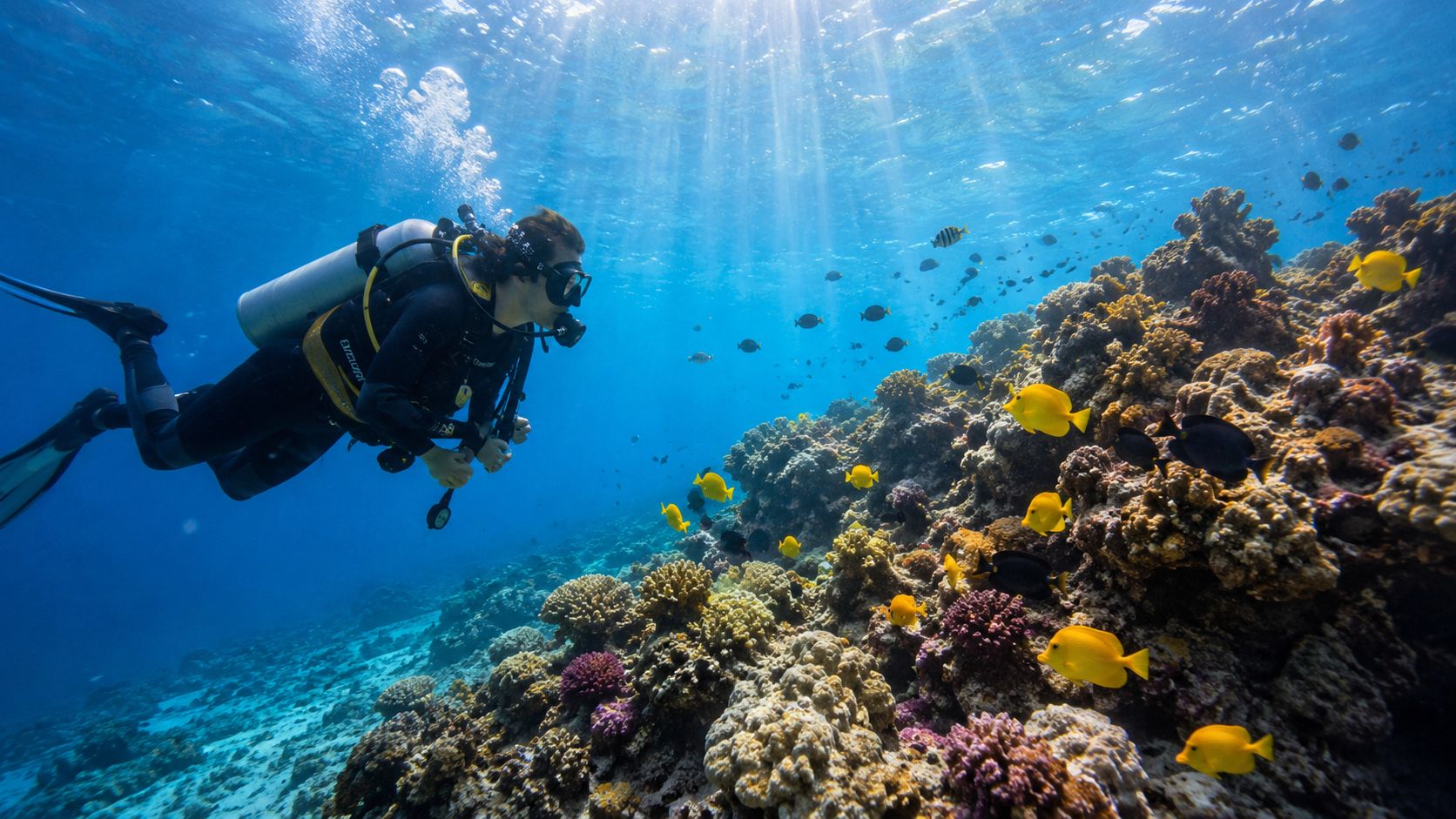
Why Kona works so well
Kona sits on the leeward side of the Big Island, and that gives divers a real advantage. Less wind exposure often means calmer seas, cleaner visibility, and more days when boats can get to the sites people came to dive. If you only have a few days in Hawaii, that reliability matters more than glossy brochure promises.
The diving itself has a different feel from the usual tropical marketing copy. Expect lava tubes, arches, drop-offs, fingers of black rock, and reef systems built around old volcanic flows. Even on an easier dive, the underwater topography gives you something to look at besides a flat coral garden.
If you want a better sense of site variety, review the available Kona scuba diving options before you book.
What gives the Big Island an edge
Here's the practical breakdown:
| Reason | Why it matters |
|---|---|
| More dependable conditions | You have a better chance of getting in the water and getting to worthwhile sites during a short vacation. |
| Volcanic terrain | The structure is dramatic, easy to recognize underwater, and far more interesting than many first-time visitors expect. |
| Strong range of dive profiles | Kona can suit a new certified diver, a rusty vacation diver, or someone chasing a standout night dive. |
| Cleaner, less cluttered trip planning | Staying in one area cuts down on island-hopping fatigue, missed boat calls, and wasted surface time in transit. |
Realistic expectations
Kona is excellent, not magic.
Visibility can be fantastic, but not every dive is a hundred-foot aquarium. Manta night dives can be unforgettable, but no operator can promise mantas on command. Some days the ocean is flat calm. Some days you will feel every bit of the swell on the ride out. Good divers enjoy Kona more because they show up with the right expectations, not because they assume Hawaii automatically means perfect conditions.
That is exactly why I rate Kona so highly. It delivers more often than most places, and it gives divers a better chance of stacking several solid dives in one trip instead of gambling on a single headline experience.
My advice
If this is your first Hawaii scuba diving trip, pick Kona and stay put long enough to dive it properly. Do not burn your schedule bouncing between islands for the sake of variety. Underwater time beats airport time.
A lot of visitors make this harder than it needs to be. Choose the coast that gives you the best shot at calm water, useful site access, and repeatable dive days. On the Big Island, that coast is Kona.
Your Essential Pre-Dive Preparation Guide
Most dive problems in Hawaii start before anyone hits the water. Bad self-assessment. Long gaps since the last dive. Motion sickness nobody planned for. Gear that doesn't fit. People worry about sharks and currents. I worry about the diver who says, “I'm sure I'll be fine,” while breathing hard on the boat.
The hard truth is simple. Most diving incidents stem from user error, poor self-assessment, and ignored health limits, not poor conditions. Introductory and non-certified dives are restricted to 12 meters (40 feet) for safety, as noted in this discussion of beginner diving limits and safety.
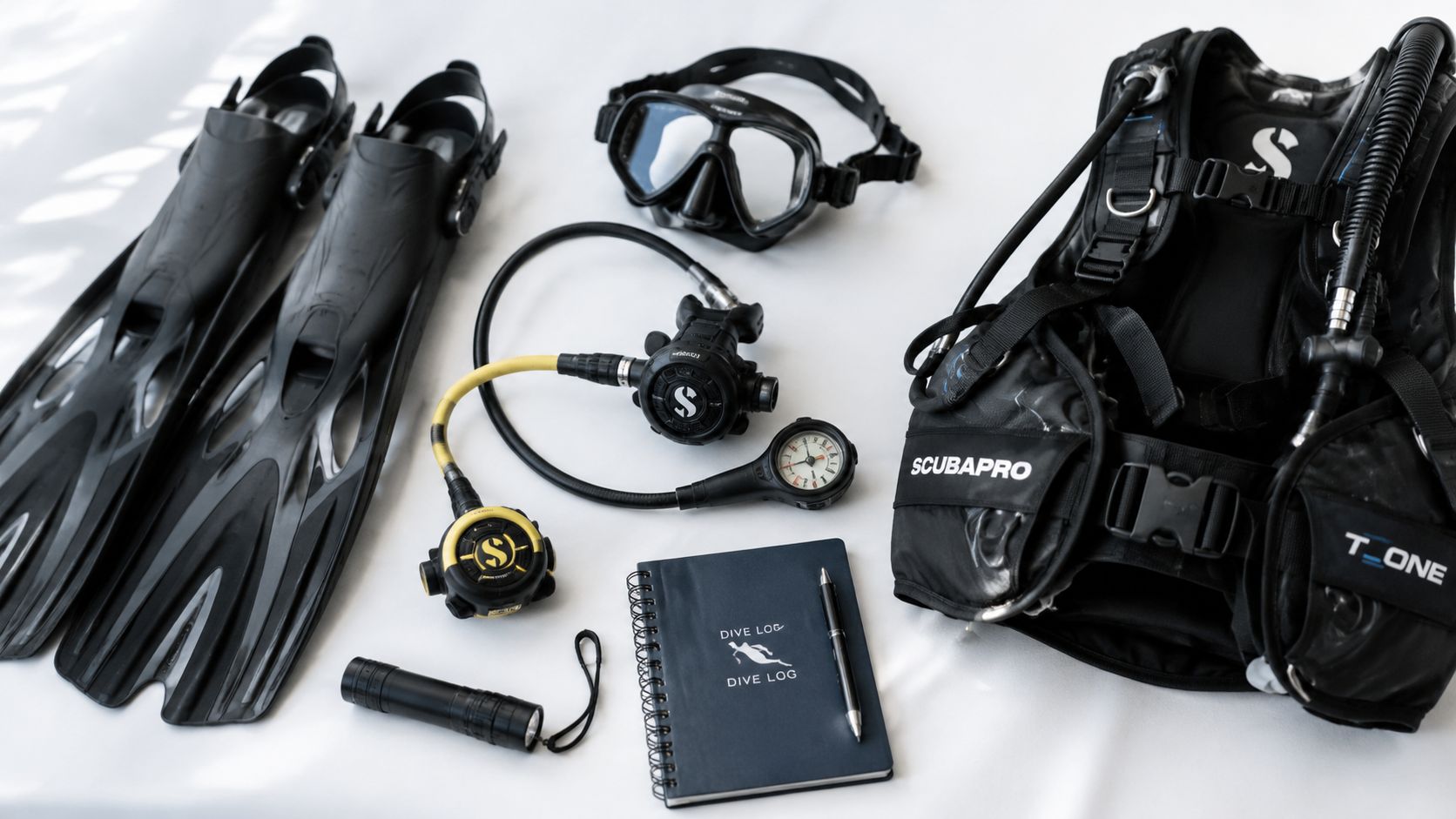
Be honest about your readiness
If you're not certified, a supervised intro dive can be a good call. But understand what it is. It's a controlled, shallow experience, not a shortcut to every dive Hawaii offers.
If you are certified but rusty, act like an adult and say so. Book an easy first day. Ask for a refresher mindset even if you're not taking a formal refresher. Nobody on a good boat is impressed by bravado.
Use this quick gut-check before you book:
- Recent diving history: If it's been a long layoff, choose easier dives first.
- Comfort in open water: Pool confidence doesn't always transfer to ocean confidence.
- Health reality: If you know you've got limits, respect them before the ocean forces the issue.
- Task loading: Night dives, unfamiliar gear, and boat entries all add stress.
If your fitness, breathing, or anxiety feels questionable on land, it won't improve underwater.
Don't lose the day to seasickness
Boat sickness wrecks dives. It spikes stress, drains energy, and makes people skip the second tank. I'd rather see divers prevent it early than pretend they're tougher than motion.
A regimen of 1 gram of ginger root extract taken 4 to 6 hours before departure, followed by Sea-Band acupressure bands 1 hour before, can help prevent seasickness in up to 67% of cases according to this Hawaii dive seasickness guide.
If you want over-the-counter options or non-drug backups, these are the common tools people use:
- Patch option: Ship-EEZ Seasickness Patch
- Classic tablet: Dramamine pills
- Less drowsy option: Bonine pills
- Pressure bands: Sea Band wristbands
- Simple stomach support: Ginger chews
Pack like a diver, not like a tourist
You can rent most major gear in Kona. That's fine. But a few personal items are worth bringing if you own them and they fit well.
- Mask: A familiar mask solves a lot of little problems fast.
- Computer: If you dive with one at home, use the same logic and screens here.
- Exposure protection: Bring the suit or layer you know you're comfortable in.
- Certification card and log info: Make check-in easy.
- Simple save-a-dive items: Spare mask strap, defog, and anything small you know you use.
What I recommend before travel
Book your first dive conservatively. Don't put your hardest dive on day one. Don't make the manta night dive your first dive in years. Don't combine pride and poor planning.
That's how divers turn a vacation into a lesson.
Hawaii's Most Unforgettable Diving Experiences
The Big Island gives you signature dives that are worth flying for. Not just “good for Hawaii.” Good anywhere. But don't book these based on social media clips alone. Some of these dives are easy to love and hard to do well if you're not prepared for the format.
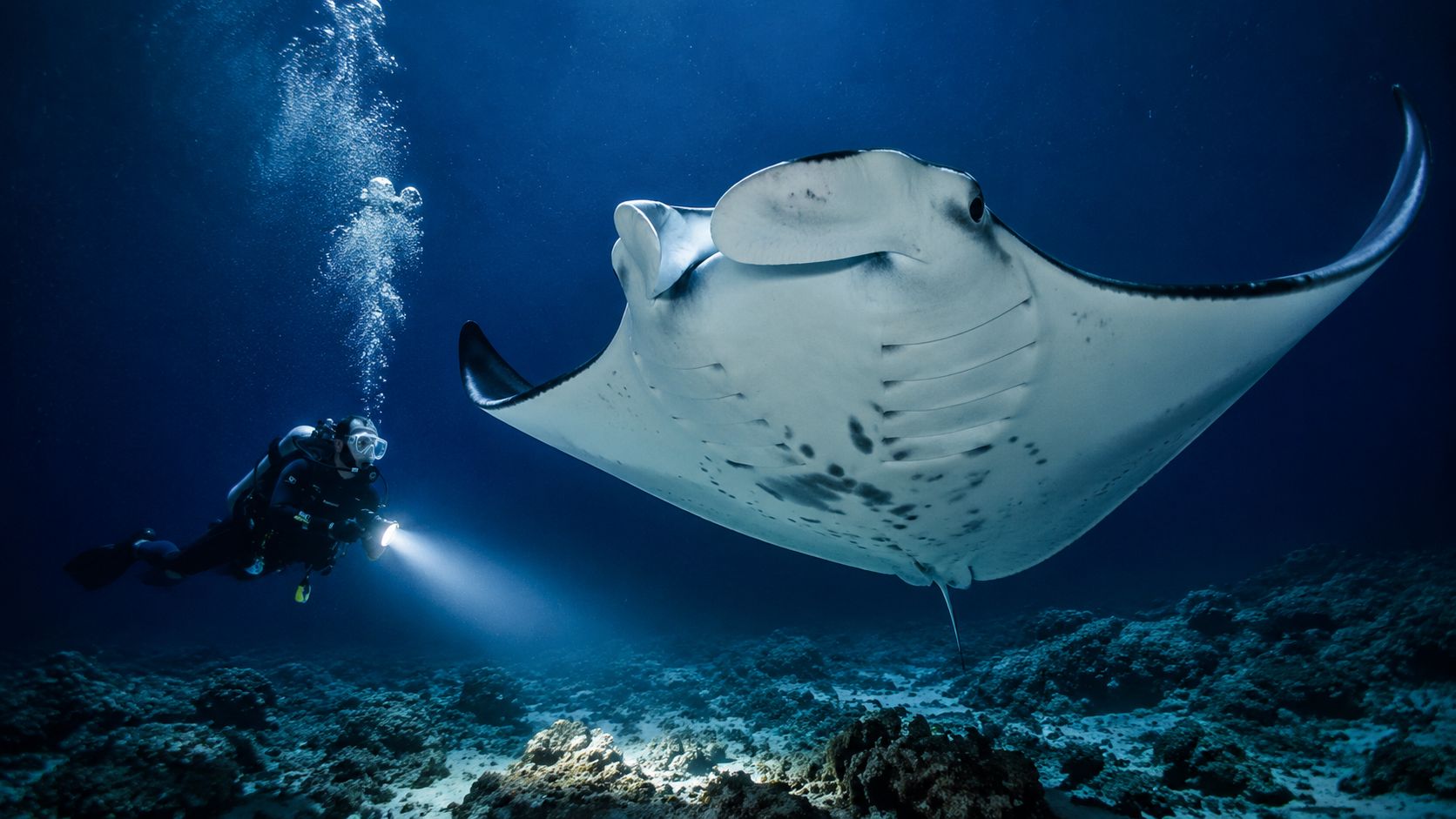
Manta ray night dive
This is the famous one. And yes, at its best, it's absurdly good.
Divers settle into position on the bottom, lights attract plankton, and mantas sweep in overhead to feed. It feels choreographed when it works. For the strongest setup, Garden Eel Cove is the superior choice because its protected location gives you a better viewing area and better reefs than less favorable alternatives.
If this is the dive you came for, check the manta ray dive tour options. For a broader overview of the experience, this page on the manta ray night swim is also useful.
Now the part too many articles bury. 30 to 40% of divers on these trips may not see any mantas, according to this discussion of realistic manta expectations. That doesn't mean the dive is bad. It means wildlife is not a stage show, and you should book with honest expectations.
How to get more out of the manta dive
- Stay still: Chasing mantas ruins the geometry of the dive.
- Listen to light-position instructions: Your beam is part of the feeding setup.
- Choose the dive for the experience, not a guarantee: If seeing one animal is your only success metric, you're setting yourself up wrong.
- Don't make it your rust-buster dive: Night diving amplifies sloppiness.
Kona blackwater dive
This one isn't for everyone, and that's exactly why it's special.
A blackwater dive drops you into open ocean at night over deep water, typically with a suspended line and lighting system as your reference. You're not there for reef scenery. You're there for pelagic oddities, larval creatures, and a kind of suspended-space feeling that many divers never forget.
If that sounds like your kind of strange, look at the blackwater dive tour page.
The blackwater dive is for divers who stay calm without a bottom under them. If that sentence makes you uneasy, wait until you've got more night diving experience.
Advanced diving for divers who've earned it
Kona also suits divers who want more than a standard reef profile. The Big Island's underwater terrain opens the door to deeper volcanic structure, longer runs, and more demanding site selection. Some technical diving in Hawaii uses specialized equipment such as rebreathers or nitrox-enriched gases, with depths exceeding 100 feet (30m) available in some operations and bottom times up to 2.5 hours on scheduled charters, while certain technical protocols restrict maximum depth to 130 feet (40m) and some shared rebreather charters are priced at $99 or $900 for private trips, as described on this technical diving services page.
If you're an experienced diver looking for more ambitious site access, check the advanced long-range dive tour page.
Which experience fits you
| Dive type | Best for | Skip it if |
|---|---|---|
| Manta night dive | Certified divers who want a signature Kona experience | You hate night diving or need wildlife guarantees |
| Blackwater | Calm, experienced divers who like unusual ocean encounters | You need a reef, wall, or bottom for orientation |
| Advanced long-range diving | Divers with stronger skills and comfort in more demanding profiles | You're freshly certified or rusty |
Book the right dive, and Hawaii feels world-class. Book above your ability, and even a famous site can feel miserable.
Booking Your Dives and On-Site Safety
Good booking decisions make dive days easier. Bad ones create stress before the first giant stride. Don't choose only by the coolest photo. Choose by sea conditions, your own stamina, and what kind of diving you handle well.
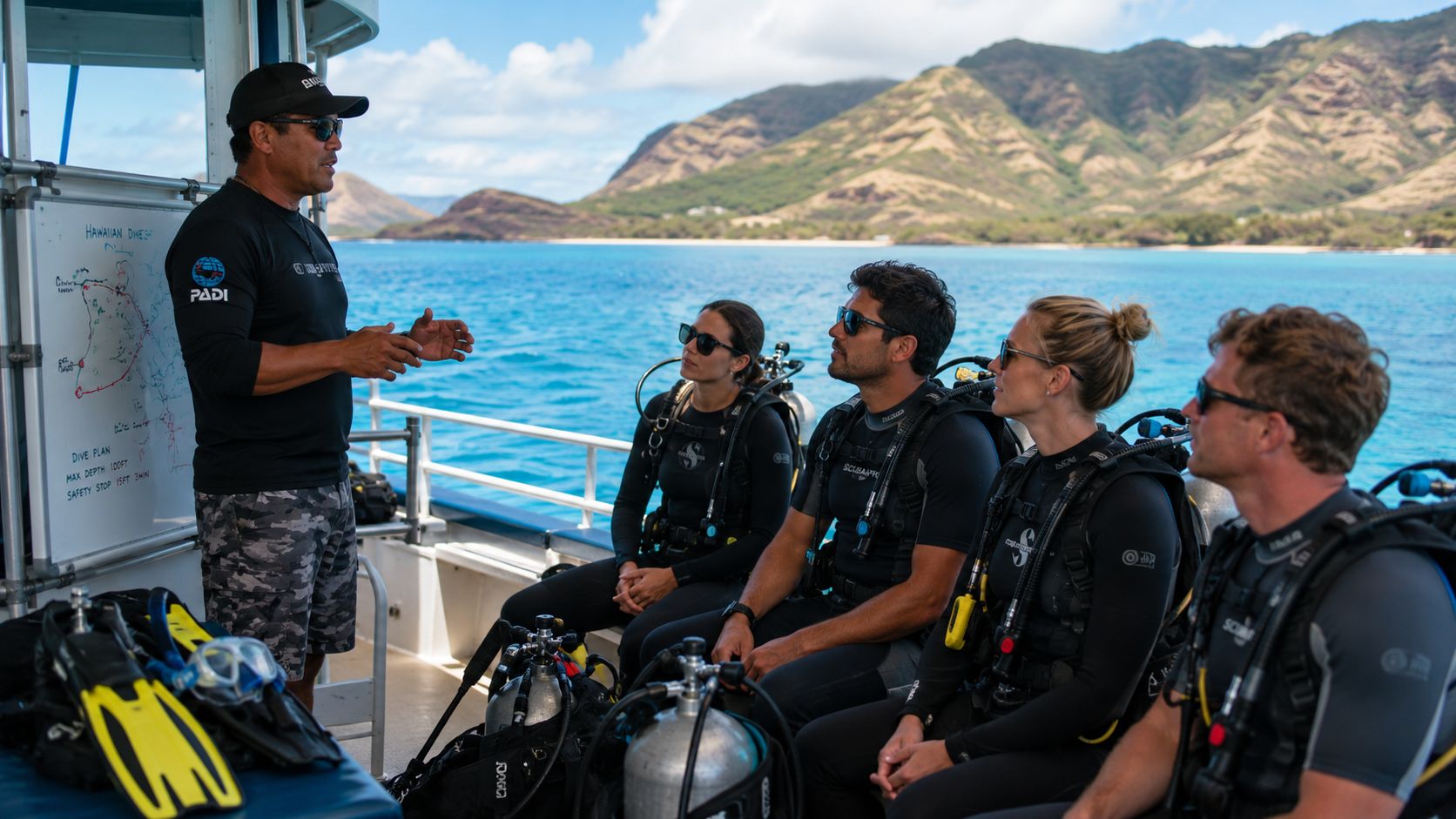
Morning vs afternoon and night
Morning dives are usually the smart default. Divers tend to be more rested, boat conditions often feel easier, and your focus is better before the day gets busy.
Afternoon and night trips can be excellent, but they demand more from you. You've already spent the day in the sun, maybe eaten badly, maybe walked around too much, maybe let hydration slide. Then you ask your brain to do a night briefing and a more mentally loaded dive. That's fine if you're squared away. It's dumb if you're running on fumes.
What to look for in a boat operation
You want a crew that runs a clean, organized day. I care less about flashy marketing and more about the basics done right.
Look for these signs:
- Clear briefings: They should explain the site, the entry, the exit, and what can go wrong.
- Logical diver grouping: Newer divers and highly experienced divers shouldn't be thrown into one messy plan.
- Comfortable setup: Easy entries and exits matter more than people admit.
- Attention on deck: Good crews notice stress before it turns into a problem.
One operator many divers consider when comparing Kona trips is Kona Honu Divers, which runs guided diving packages on the Big Island.
Boat habits that reduce trouble
A lot of “bad luck” on dive boats is preventable.
To help prevent seasickness, assemble all your gear on the dock before departure and sit in the center of the boat, where the motion is least pronounced, according to DAN's advice on seasickness prevention for divers.
That's practical boat wisdom, not theory.
- Rig early: Don't spend the ride bent over your tank in rolling seas.
- Sit smart: Mid-boat is usually easier on your stomach.
- Hydrate without overdoing it: You want a clear head, not a sloshing gut.
- Protect the reef with buoyancy: Your fins shouldn't touch anything living.
- Hands off wildlife: Watching is the point. Grabbing is amateur behavior.
What a responsible diver does in Hawaii
Use reef-safe choices where possible, control your trim, and don't kneel on living bottom just because your camera shot matters more to you than the reef. Hawaii's reefs don't need more accidental damage from vacation divers trying to get closer.
If a guide says stay back, stay back. If a site feels above your comfort level, say something before the roll call.
Why Choose Kona Honu Divers for Your Adventure
If you care about crew experience, dive logistics, and getting through the day without chaos, details matter. That's where a lot of operations separate themselves. Boats, rental gear quality, group management, and staff judgment shape the whole trip more than a pretty website ever will.
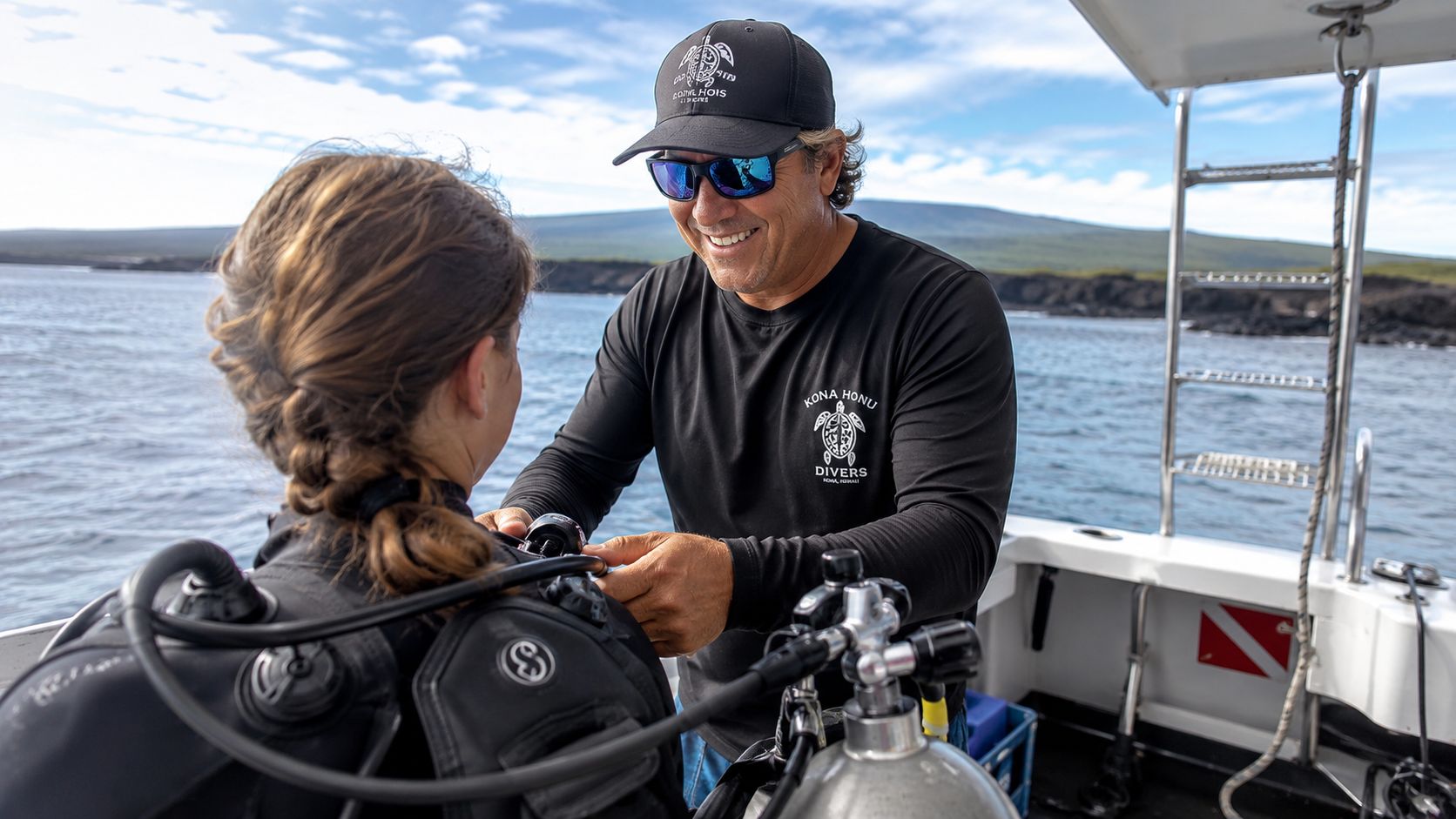
The practical case for Kona Honu Divers is straightforward. The company states it has over 200 years of combined industry experience, offers free nitrox for certified divers, runs custom-built dive boats, and focuses on guided tours, training, and specialty dives around Kona. Those are useful details if you're comparing operators by what affects your day in the water.
What matters most when you're choosing
This is what I'd evaluate before booking any operator:
| Factor | Why it matters on dive day |
|---|---|
| Crew experience | Experienced staff usually spot stress, weighting issues, and bad decision-making early. |
| Boat design | Easy entries and exits save energy and reduce deck confusion. |
| Rental gear quality | Well-maintained gear removes a lot of unnecessary friction. |
| Trip variety | Specialty dives only matter if the operation can run them cleanly and safely. |
My take
If you're paying Hawaii boat-dive prices, don't shop like you're buying a T-shirt. Ask how the day runs. Ask how they group divers. Ask what kind of support you get if you're rusty. Ask what specialty dives they run well, not just what they advertise.
That's how you book the right operation instead of the loudest one.
Frequently Asked Questions About Scuba Diving in Hawaii
What's the best month to dive in Kona
You wake up to flat water, load your gear, and get a clean run down the Kona coast. That can happen in any month. Kona dives year-round, so stop hunting for a magic date and build flexibility into your trip instead. Give yourself a few dive days, not one shot, because ocean conditions still call the tune.
Can I dive with glasses or contact lenses
Regular glasses do not fit under a dive mask. Contact lenses are fine for many divers if you keep your mask under control and avoid careless mask removal at the surface. If your prescription is strong, get a prescription mask before the trip. It makes the whole day easier, from reading gauges to spotting eels in the lava.
How much does Hawaii scuba diving usually cost
Expect Hawaii boat diving to sit in the mid-to-premium price range. Two-tank charters usually include tanks and weights, while rental gear, nitrox, private guides, and specialty dives can raise the total.
Price matters less than how the operation runs. A cheap boat with rushed briefings, crowded groups, and tired rental gear costs you more where it counts.
Is scuba diving in Hawaii safe
It is safe for divers who stay inside their training, stay honest about their condition, and dive with discipline. Hawaii punishes poor judgment fast. Current, surge, depth, task loading, and overconfidence are what turn a fun dive into an ugly one.
Do a real self-check before you book and again before you splash. Are you current? Can you manage your buoyancy without a fight? Are you carrying old equalization problems, anxiety, or a tendency to burn through gas? Fix those issues first.
Should beginners try scuba in Hawaii
Yes, with the right format and the right expectations. A beginner should start with a proper introductory dive or entry-level course, not chase a bucket-list dive that is beyond their skill.
Kona can be excellent for new divers because many sites are protected and clear. That said, clear water fools people. Easy visibility does not make you competent. Listen to the instructor, stay shallow, and treat the first dive as a skills check.
Is nitrox worth it for recreational dives here
Usually, yes, if you are certified for it and doing repetitive dives. Nitrox can give you more conservative no-decompression margins on many profiles, which is useful on a multi-day trip.
It does not fix bad habits. If your trim is sloppy, your gas planning is weak, or you drift deeper than planned, nitrox will not save the day.
What should I do if I haven't dived in a long time
Say it up front. Book an easy first day, ask for extra supervision if you need it, and consider a refresher before you get on a boat.
Rust shows up fast in Hawaii. I see it in missed hand signals, poor descents, over-weighting, and divers who fumble basic gear checks. Honest rusty divers usually do fine because the crew can help them early.
If you want a Hawaii dive trip that's organized, safety-conscious, and built around the actual conditions in Kona, take a look at Kona Honu Divers. Pick dives that fit your skill, show up prepared, and give yourself enough time to do Hawaii scuba diving the right way.