
Picture this: you're descending into warm, turquoise water, the sunlight filtering down around you. You glide past ancient lava tubes, now carpeted with life and home to a kaleidoscope of fish. This isn't a scene from a documentary; it's just another day of Hawaii scuba diving tours off the Kona coast of the Big Island.
Thanks to its truly unique underwater landscape, sheltered from the open ocean, Kona has become a world-class destination for divers of all stripes—from those taking their very first breath underwater to seasoned pros with thousands of dives in their logbooks.
Why the Big Island is Hawaii’s Premier Scuba Diving Destination
When people fantasize about diving in Hawaii, their mind's eye is almost always seeing the Kona coast. What makes it so special? Unlike the other islands, which get battered by open-ocean swells and wind, the Big Island's western coast is tucked into the protective shadow of two massive volcanoes, Mauna Loa and Hualalai.
This natural barrier creates a diver's paradise with exceptionally calm, clear conditions all year long. The visibility is often breathtaking, frequently stretching beyond 100 feet. This incredible clarity lets you take in the full drama of the underwater terrain, which was forged by millennia of volcanic eruptions. You'll explore intricate lava tubes, swim through massive archways, and drift over vibrant coral reefs that have colonized ancient lava flows. It's a living geology lesson.

A Hub for Underwater Adventure
This pristine environment has turned Hawaii into one of the planet's busiest scuba hubs, hosting an estimated 1.5 million individual dives each year. Over 215 licensed dive shops across the islands support this incredible volume of activity.
Considering there are about 2.5 million active divers in the entire United States, it’s clear Hawaii gets a huge piece of the action. And Kona is right at the heart of it all. It’s a place where you can start your journey with an introductory dive and work your way up to advanced certifications, all while exploring some of the most spectacular dive sites in the world. To get a better feel for the local environment, you can dive deeper into what makes Big Island scuba diving so unforgettable.
What Makes Kona Diving Unforgettable
Kona is more than just calm water and great viz; it's a place that delivers experiences you'll be talking about for years. This is home to the world-famous Manta Ray Night Dive, a true bucket-list adventure that’s consistently rated as one of the best night dives on Earth.
But it’s not just about the mantas. The reefs are absolutely teeming with life. On any given dive, you’re likely to see:
- Honu (Hawaiian Green Sea Turtles): These gentle giants are everywhere, gliding effortlessly through the water or just chilling on the reef.
- Endemic Fish: Keep an eye out for species found nowhere else, like the Hawaiian cleaner wrasse and the milletseed butterflyfish.
- Playful Dolphins: We often spot spinner dolphins from the boat, and sometimes they'll even make a curious pass underwater.
- Reef Sharks: White-tip reef sharks are a common and peaceful sight, usually found resting under ledges in sandy patches.
Top-tier operators like Kona Honu Divers have mastered the art of showing you this incredible world safely and responsibly. Their local expertise means they know exactly where to go based on the day's conditions, turning every single dive into a real adventure. They focus on small groups and personal service, making their scuba diving tours on the Big Island some of the most sought-after in Kona.
Choosing Your Unforgettable Kona Dive Adventure
Alright, you know Kona is a world-class spot for diving. Now for the fun part: picking the actual dives that will make your trip unforgettable. The Big Island serves up an incredible menu of underwater adventures, each with its own personality and marine life. Whether you’re looking for a sunlit reef or a mysterious plunge into the deep, there’s a dive here with your name on it.
One of the best things about diving Kona is the sheer variety. One morning you might be gently drifting over sprawling coral gardens, and the next you could be navigating ancient lava tubes and dramatic underwater cliffs. It’s this diversity that keeps divers like us coming back for more, year after year.
To help you get a feel for what’s on offer, here’s a quick rundown of the most popular tours.
Big Island Dive Tours at a Glance
| Dive Tour Type | Best For | Typical Marine Life | Experience Level |
|---|---|---|---|
| 2-Tank Morning Dive | All certified divers; classic reef exploration | Colorful reef fish, sea turtles (Honu), eels, dolphins | Beginner to Advanced |
| Manta Ray Night Dive | Everyone! A true bucket-list experience | Giant manta rays, garden eels, nocturnal critters | Beginner to Advanced |
| Blackwater Dive | Adventurous, experienced divers seeking the unique | Bioluminescent jellies, larval fish, alien-like squid | Advanced (Excellent Buoyancy) |
| Advanced Dive Tour | Experienced divers wanting a challenge | Larger pelagic species, sharks, dramatic topography | Advanced |
This table gives you the basics, but let's dive a little deeper into what makes each of these experiences so special.
The Classic 2-Tank Morning Dive
This is the bread and butter of Kona diving, and for most certified divers, it’s the perfect way to start. A 2-Tank Morning Dive gets you out on the water when the sun is high, visibility is crystal clear, and the reefs are buzzing with activity. We typically hit two different sites, giving you a real taste of the Kona coast’s incredible diversity.
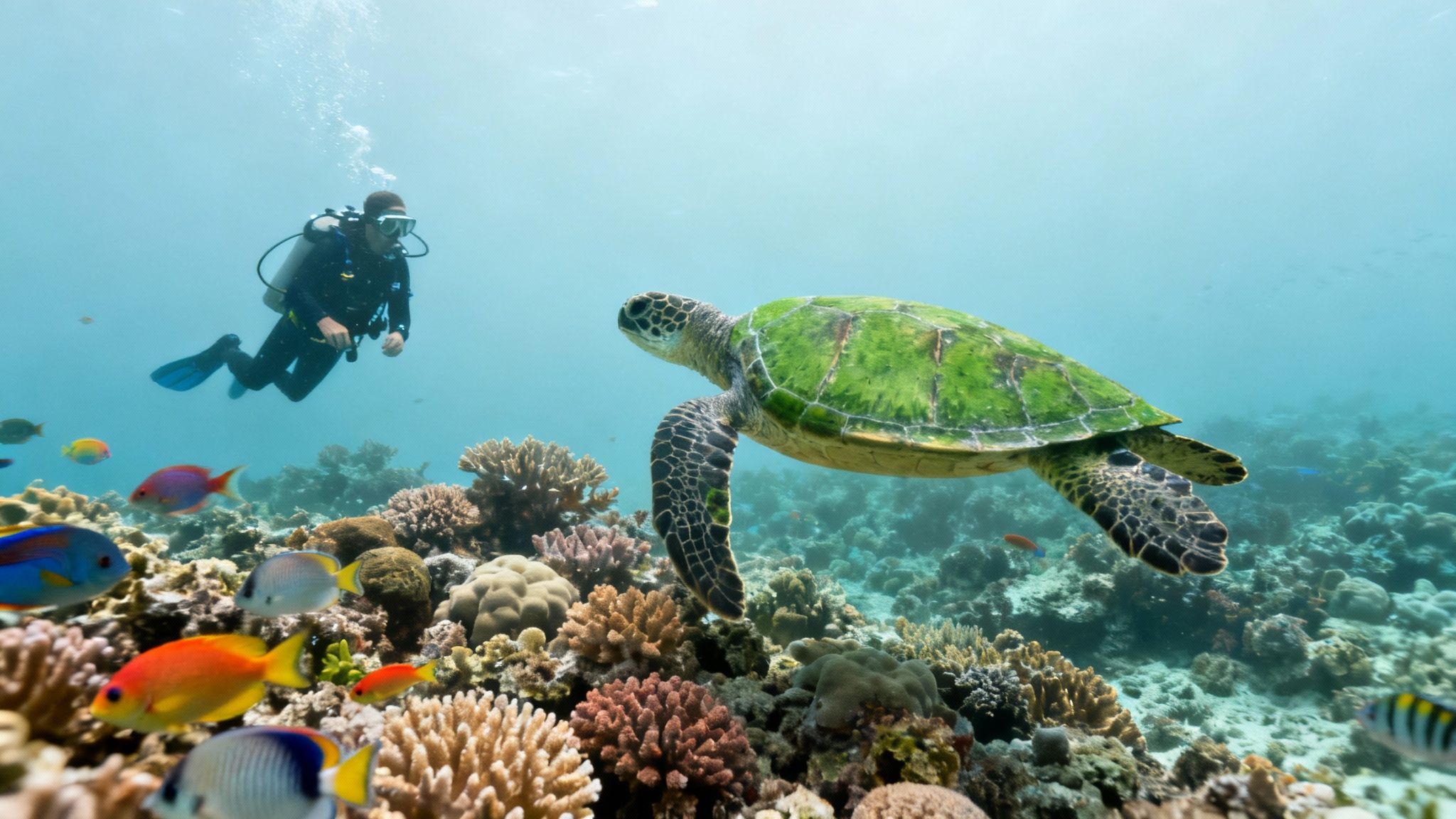
You'll descend into a kaleidoscope of color, floating over coral gardens packed with fish you can only find here in Hawaii. It’s common to spot a Hawaiian Green Sea Turtle (Honu) chilling on the reef or get a fly-by from a pod of spinner dolphins. This is your ticket to the classic, beautiful underwater world Hawaii is famous for.
The World-Famous Manta Ray Night Dive
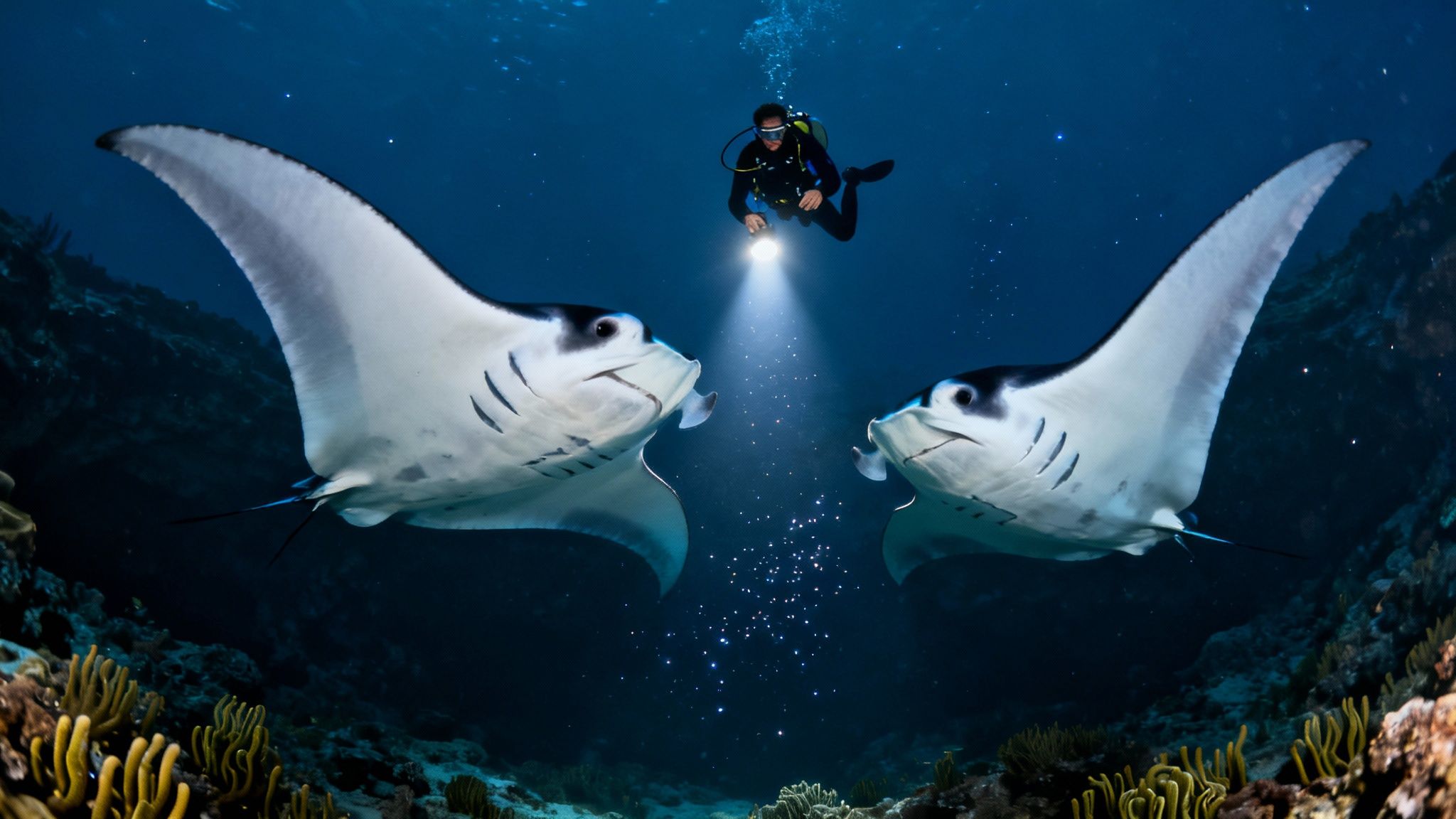
Let's be honest, this is the main event. The Manta Ray Night Dive tour is consistently ranked as one of the best dives on the planet, and it lives up to the hype. It’s hard to describe the feeling of watching these gentle giants, with wingspans up to 16 feet, swoop and glide inches from your face as they feed on plankton.
While you can do this dive at a couple of spots, Garden Eel Cove is hands-down the superior choice. The site sits in a naturally protected cove, which usually means calmer water and a more pleasant experience. More importantly, the seafloor forms a natural "amphitheater" with a better viewing area, giving every diver a front-row, unobstructed seat for the show. Plus, the surrounding reefs are healthier and more vibrant, adding to the magic of the entire dive.
The Manta Ray Night Dive isn't just a dive; it's a performance. Imagine sitting on the ocean floor as these gentle giants perform an underwater ballet, their massive wings blocking out the lights from the surface. It’s a profoundly moving experience you will never forget.
The Blackwater Dive: A Journey to Another World
For the truly adventurous souls out there, the Kona Blackwater Dive is something else entirely. This isn’t about reefs; it’s a drift dive in the dead of night over thousands of feet of open ocean, tethered to the boat. You’re there to witness one of the largest migrations on Earth.
Every night, a host of bizarre and beautiful creatures rise from the abyss to feed near the surface. Many are bioluminescent, creating their own light show in the pitch-black water. You’ll see things that look like they’re straight out of a sci-fi film: alien-like squid, see-through larval fish, and pulsating jellies. This is a highly specialized dive that requires excellent buoyancy control, but for experienced divers, it's a thrill you can’t find anywhere else.
The Premium Advanced Dive Tour
Are you an experienced diver looking to go beyond the usual reef tour? Then the Advanced Dive Tour is for you. These trips head to deeper, more challenging sites that are off-limits to newer divers. Think dramatic pinnacles, sheer underwater cliffs, and complex lava formations that demand skill and confidence.
These sites are often home to different marine life, including bigger pelagic fish and the occasional shark. It's a chance to see a wilder side of Kona’s underwater world and push your skills in a more demanding environment. If you’re looking to bundle a few days of diving, check out the available Kona diving packages for a great mix of experiences.
Why Kona Honu Divers Is Your Best Choice
Picking the right dive boat for your hawaii scuba diving tours can make or break your trip. It's about so much more than just getting wet; it's about the entire experience—from the crew's briefing to the stories you tell later. This is exactly where Kona Honu Divers has built its reputation, focusing on safety, top-notch service, and creating real underwater adventures.
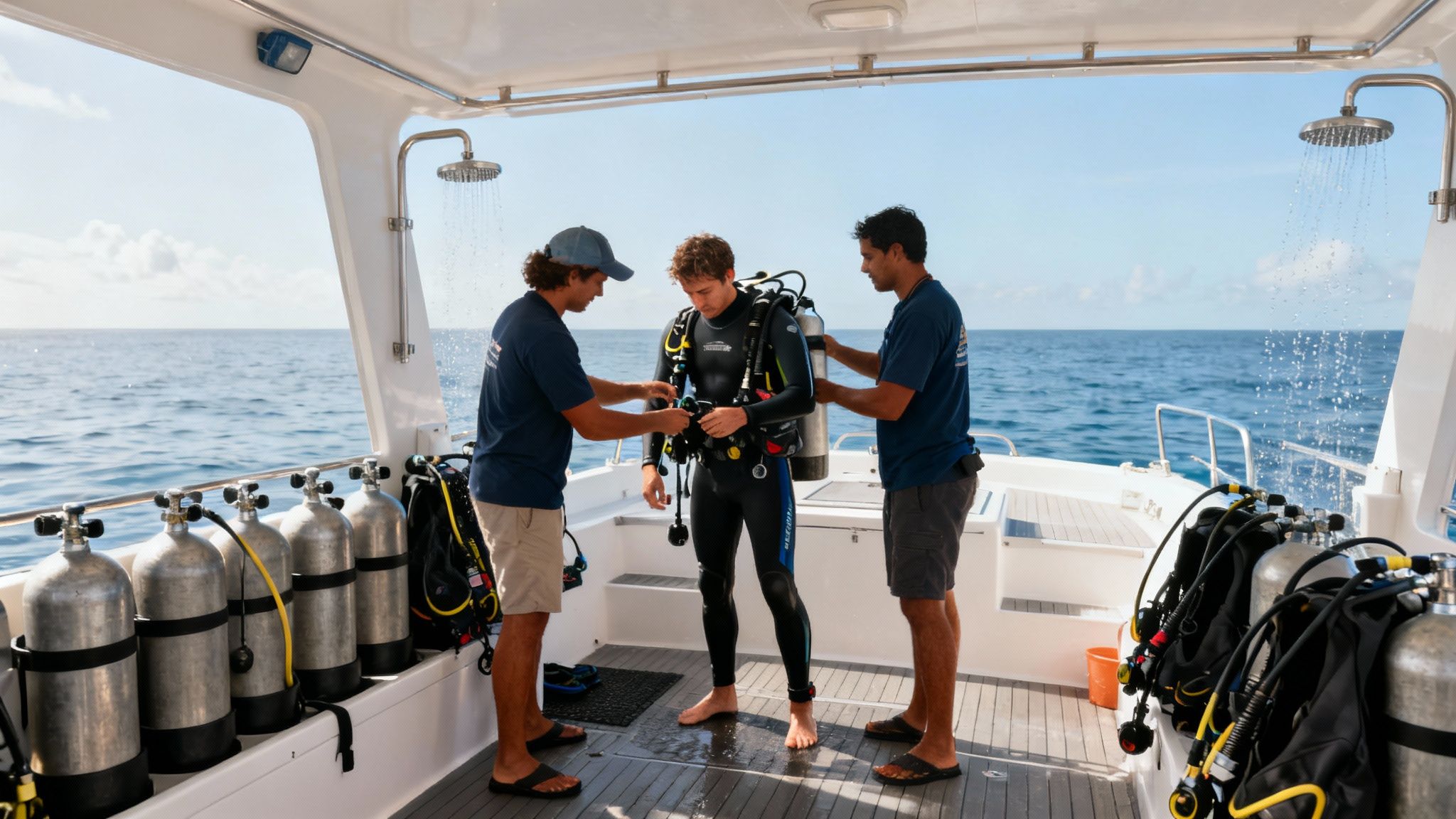
You feel the difference the second you step aboard. Their boats are spacious, kept in immaculate condition, and designed with a diver's comfort in mind. Just imagine finishing an incredible dive and being handed a warm towel after rinsing off in a hot freshwater shower right on the dive deck. It's those little touches that show they get it.
Small Groups and Personalized Attention
One of the biggest things that sets Kona Honu Divers apart is their commitment to small groups. You won't find any crowded "cattle boats" here. They make sure every dive guide is only leading a handful of divers at a time.
This approach makes a world of difference:
- Better Safety: Your guide can actually keep an eye on everyone, making sure you're comfortable and safe from start to finish.
- A Clearer Dive: With fewer fins kicking up sand and silt, you get a much better view of the reef and all its critters.
- Real Interaction: You can actually ask questions, get pointers on your buoyancy, and learn about the amazing marine life you’re swimming with.
It feels less like a commercial tour and more like you're out diving with a bunch of experienced friends who happen to know all the best spots. This personal touch comes up again and again in their reviews.
Unmatched Crew Experience and Value
The real heart and soul of Kona Honu Divers is the crew. We're talking about a team with a combined 200 years of experience diving these exact same waters. Their knowledge is insane. They don't just drop you at a dive site; they know every lava tube, every cleaning station, and which octopus lives under which rock. That kind of expertise means you see the absolute best Kona has to offer, every single time.
They also pack in a ton of value. If you're a certified diver, you get complimentary nitrox on their tours. This is a huge perk, letting you enjoy longer bottom times and shorter surface intervals. In simple terms, you get to spend more of your day underwater exploring.
The global scuba diving tourism market is exploding, hitting around USD 910.4 million in 2024 and on track to nearly double by 2032. Hawaii's premium, service-first tours are right in the sweet spot of this growth, especially in popular segments like small-group trips and experience-focused travel. You can dive deeper into the numbers in this scuba diving tourism market analysis.
Peace of Mind with Professional Gear
Finally, you can relax knowing you're using excellent, professionally maintained equipment. All their rental gear is serviced religiously, so you never have to second-guess its reliability. Whether you're renting a full kit or just a tank, you can descend with total confidence.
It's this complete package—the focus on safety, the comfortable boats, the expert crew, and the added value—that makes Kona Honu Divers the go-to choice for exploring Kona's underwater world. They don't just take you diving; they help you make memories that will last a lifetime.
How to Prepare for Your Kona Dive Tour
A great day of diving starts long before you ever step foot on the boat. A little prep work ahead of time means you can just relax and soak it all in, instead of scrambling for a missing piece of gear or wondering what comes next.
Think of it this way: your job is to show up ready for an incredible underwater adventure. Ours is to handle the rest. This guide will walk you through exactly what to pack and what to expect, so your focus stays on the turtles, mantas, and endless lava tubes.
Your Essential Dive Day Checklist
While we provide the heavy scuba equipment, a few personal items in your own dive bag can make a world of difference in your comfort and enjoyment.
Here’s a quick rundown of what you should bring to the harbor:
- Certification Card: This one's non-negotiable. Whether it's a plastic card or a digital version on your phone, you must have proof of certification to dive. No card, no dive—it’s a universal rule for safety.
- Logbook: Don't forget it! Kona's dive sites are unforgettable, and our divemasters are always happy to stamp your logbook as a memento of your time with us.
- Reef-Safe Sunscreen: This is a big one here in Hawaii. Sunscreens with chemicals like oxybenzone are incredibly damaging to our fragile coral reefs. Please, only use mineral-based, reef-safe options. It protects your skin and our ocean at the same time.
- Swimsuit and Towel: The easiest approach is to wear your swimsuit under your clothes. A good towel is obviously a must for drying off and staying comfortable between dives.
- Dry Clothes: A warm hoodie or jacket feels amazing on the boat ride back, especially after a night dive when the air can get a bit chilly.
- Reusable Water Bottle: Staying hydrated is crucial for safe diving. We always have fresh water on board, and bringing your own bottle is a fantastic way to help us reduce plastic waste.
- Seasickness Medication: If you even think you might get motion sick, take your preferred remedy before you get on the boat. It works so much better as a preventative than as a treatment.
Understanding the Flow of a Typical Tour
Knowing the rhythm of the day helps you relax and enjoy the experience. While every tour has its own unique vibe, most of our two-tank boat dives follow a well-practiced pattern that prioritizes your safety and fun.
Plan to arrive at the harbor for check-in about 30 minutes before departure. This gives us plenty of time to get your paperwork sorted and fit you for any rental gear you might need without feeling rushed.
Once you’re on the boat, the captain and crew will kick things off with a thorough boat briefing. We’ll cover everything from where to stow your gear to the location of safety equipment. Even if you're a seasoned pro, please give us your full attention—every boat is a little different.
Next up is the good stuff: the dive site briefing. Your guide will paint a picture of the underwater world you’re about to enter, covering the site’s layout, the marine life we hope to see, and the plan for max depth and time. This is the perfect time to ask questions! After an amazing first dive, we’ll have a nice surface interval with snacks and drinks before we head to the second site for round two.
Photography Tips for Kona's Clear Waters
Kona is an underwater photographer's dream, thanks to our famously clear water. But a few simple tricks can help you capture those "wow" shots.
Want your colors to truly pop? Keep the sun at your back and use that beautiful natural light. If you’re using a strobe, get as close as you safely can to your subject. The less water between your lens and that colorful fish, the less backscatter you'll have, and the sharper and more vibrant your photos will be.
For those big, dramatic shots of lava arches or massive schools of fish, a faster shutter speed will help freeze the action. And when you switch to macro, focus on your buoyancy—staying perfectly still is the key to getting a tack-sharp photo of a tiny nudibranch without stirring up sand or bumping the reef.
This incredible visibility isn't just a lucky break; it’s a year-round reality. The Big Island’s geography protects us from the open ocean swells, creating consistently calm and clear conditions. Water temperatures stay in a comfortable 75°F to 80°F (24–27°C) range all year long, which means there’s no real "off-season." This amazing stability allows us to run everything from morning reef dives to the iconic manta ray night dive, any month of the year. You can learn more about what makes this place so special on our page dedicated to why the Big Island is a diver's paradise.
Diving With Respect for Hawaii’s Marine Life
The real magic of any **Hawaii scuba diving tour** isn’t just about the gear or the descent; it’s that profound connection you feel when you enter an entirely different world. Hawaii’s marine ecosystem is a true treasure, home to a vibrant community of animals you literally can’t find anywhere else on Earth. Your dive is more than just an activity—it’s a visit to their home.
Once you slip beneath the waves off the Kona coast, you're stepping into a realm of incredible biodiversity. You’re almost guaranteed to meet the graceful Hawaiian green sea turtle, which we know and love as the honu. These gentle giants are a common sight, often seen gliding over the reef or tucked away for a nap under a lava rock ledge. As a protected species and a symbol of good luck, they deserve our utmost respect.
Becoming a Guardian of the Reef
As visitors in this fragile world, it's on us to be good guests. Every choice we make matters, from the sunscreen we put on our skin to where we kick our fins. The key is to embrace the Hawaiian value of mālama ʻāina—caring for the land and sea—to ensure this paradise thrives for divers who come after us.
It all boils down to passive observation. The golden rule is simple: look, but don't touch. This goes for everything, from the intricate coral structures to the animals themselves.
Touching marine life, especially turtles and manta rays, can be incredibly harmful. You can rub off the protective mucous coating on their skin, which is their primary defense against bacterial infections. A seemingly innocent touch can leave them vulnerable to disease.
Best Practices for Wildlife Encounters
To make sure your dive has a positive impact, just follow a few essential guidelines. They’re straightforward, effective, and absolutely critical for the health of the reef.
- Keep Your Distance: Always give animals their space. Never chase, corner, or try to ride anything you see. Let them decide how close they want to get.
- Master Your Buoyancy: Nailing your buoyancy is probably the most important skill for an eco-conscious diver. It keeps you from crashing into fragile coral that can take decades, or even centuries, to grow back.
- Secure Your Gear: Keep your gauges, octopus, and other equipment tucked in and streamlined. A dangling console can easily drag across the reef, causing a trail of damage without you even noticing.
- Don't Feed the Fish (or Anything Else!): Never offer food to marine animals. It messes with their natural hunting behaviors and can make them sick or reliant on handouts.
If you want to learn more, we’ve put together a full guide on considerate diver etiquette to help you become a true ambassador for the ocean.
Your Dive Dollars Make a Difference
One of the most powerful things you can do is choose an eco-conscious dive operator. When you dive with a company that prioritizes sustainability and follows strict environmental standards, you're actively helping protect these waters.
Your money goes toward practices that make a real difference. It supports proper boat maintenance to prevent fuel leaks, funds crews who are expertly trained in reef protection, and promotes the kind of educational briefings that inspire every diver to become an ocean advocate. Your choice is a direct investment in the future of the very ecosystem you came all this way to see.
Answering Your Top Questions About Scuba Diving in Hawaii
Every diver, no matter how seasoned, has questions before dropping into a new spot. To get you ready for your Kona adventure, we’ve put together answers to the most common questions we get. Think of this as your pre-dive briefing for planning the perfect trip.
Our goal is to clear things up so you can stop worrying about the details and start getting excited for the incredible underwater world that awaits.
What’s the Best Time of Year to Go Scuba Diving in Hawaii?
Honestly, any time is a great time to dive in Kona. That’s the magic of this place. The Big Island’s massive volcanoes act as a natural shield, keeping our coastline calm and protected from major ocean swells almost 365 days a year.
The water is always inviting, hovering right around 75°F to 80°F (24–27°C).
While the summer months (May to October) often have the flattest, most glassy conditions, winter diving comes with an unbelievable perk. From November to April, you can often hear the haunting, beautiful songs of humpback whales echoing through the water on your dives. It's a truly soul-stirring experience that you’ll never forget.
Do I Need to Be Certified to Go on a Dive Tour?
For most of our boat dives, yes. To join our classic 2-Tank Morning Dive or the world-famous Manta Ray Night Dive, you’ll need at least an Open Water Diver certification (or an equivalent from another agency). Your safety is our number one priority, and being certified means you have the fundamental skills to dive confidently.
But if you’re not certified, you don’t have to stay on the boat! You can sign up for a Discover Scuba Diving experience. A professional instructor will be by your side the entire time as you explore a beautiful, shallow reef. Plus, many of our trips, especially the Manta Ray tour, are perfect for snorkelers, making it a fantastic outing for friends and family with different experience levels.
What’s the Difference Between the Manta Dive and the Blackwater Dive?
Great question! While they're both world-class night dives, they are completely different worlds. It's like comparing a front-row seat at a spectacular Broadway show to floating through deep space.
-
The Manta Ray Dive: This dive is all about the spectacle. We anchor in a shallow spot (about 30-40 feet), where you'll settle on the sandy bottom and shine your light up toward the surface. This light attracts swarms of plankton, which in turn brings in the giant manta rays. They swoop and glide in a graceful ballet, feeding just inches above your head. It’s an intimate and awe-inspiring performance.
-
The Blackwater Dive: This is a dive for the truly adventurous. We head miles offshore, over thousands of feet of water, and drift in the dark while tethered to the boat. Here, you get to witness the largest migration on Earth, as strange and often bioluminescent creatures rise from the abyss to feed. It’s a highly advanced dive that requires excellent buoyancy and a calm demeanor.
Can My Non-Diving Friends or Family Join the Tour?
Absolutely! We love when the whole crew comes along. Many of our hawaii scuba diving tours are designed so that everyone—divers, snorkelers, and "boat-riders"—can have an amazing time together.
The Manta Ray Night Dive is a perfect example. Snorkelers get their own custom light board to hold onto at the surface, which draws the mantas right up to them. Our daytime charters also visit gorgeous reef sites that are just as fun for snorkelers as they are for divers. Operators like Kona Honu Divers are experts at making sure every single person on board has an unforgettable day on the water.
Ready to book your own unforgettable underwater adventure? Kona Honu Divers offers a full range of Hawaii scuba diving tours designed to showcase the best of the Big Island.