
You're probably looking at flight tabs, checking certification cards, and trying to answer the same practical question every diver asks before a Hawaii trip: which island gives you the most reliable diving, the best marine life, and the fewest bad surprises once you're on the boat.
That's the right question.
Hawaii rewards divers who plan well. The water is warm, the visibility can be extraordinary, and the underwater terrain is nothing like a typical tropical reef destination. But Hawaii also punishes vague planning. Picking the wrong island for your skill level, booking a manta dive as a one-off gamble, or underestimating surge can turn a dream trip into a frustrating one.
Your Ultimate Guide to Hawaii Scuba Diving
Drop down a mooring line in Hawaii and the first thing that usually hits you is the clarity. You level off, glance up, and still see sunlight cutting cleanly through blue water. Then the bottom comes into focus. Lava fingers, arches, ledges, sand channels, and reef structure that looks built rather than grown.
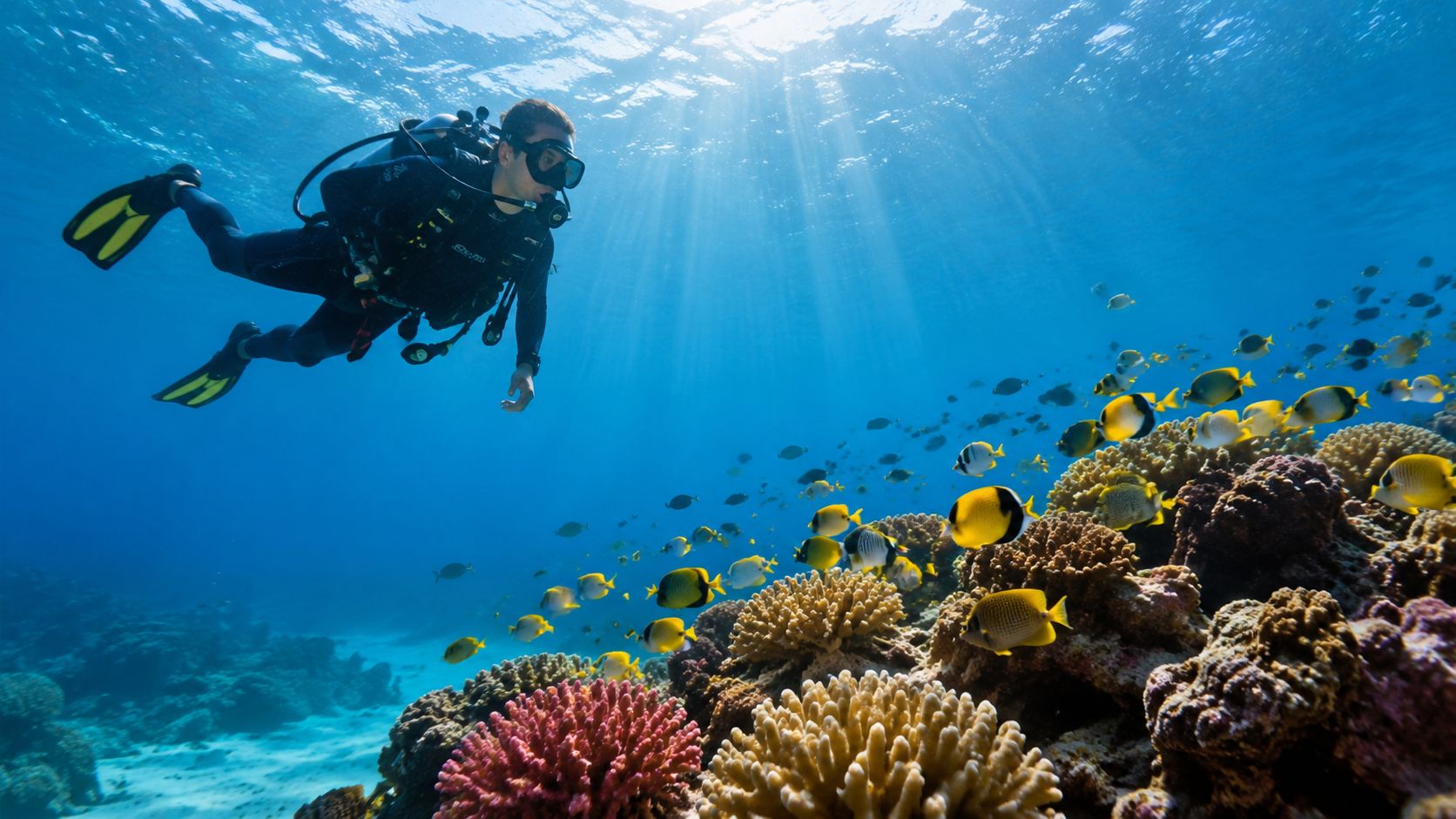
That first impression is why Hawaii stays on serious divers' lists. Hawaii supports over 1.5 million scuba dives annually through more than 215 dive shops, with water visibility frequently exceeding 100 feet and temperatures consistently ranging between 75°F and 80°F, according to this Hawaii diving overview. Those aren't marketing numbers. They describe a place where diving is woven into daily life and where conditions are often good enough that you can focus on the dive instead of fighting the environment.
What makes Hawaii different underwater
The big draw isn't just warm water. It's the geology.
Volcanic islands create a style of diving that feels more dramatic than many coral-dominated destinations. You'll see lava tubes, caverns, abrupt drop-offs, swim-throughs, and reef systems shaped by eruptions rather than slow sediment build. That means more visual variety, but it also means buoyancy matters. A diver who drifts casually through a shallow Caribbean reef can get away with more than a diver threading a lava feature in Hawaii.
Marine life is the other half of the story. Hawaii gives you reef fish, turtles, and night diving that can be world-class. On the Big Island in particular, divers come for experiences that are hard to duplicate elsewhere.
Practical rule: Hawaii isn't a place to book “some diving.” It's a place to match the island, season, and dive style to the kind of trip you actually want.
Why most divers end up focusing on the Big Island
If your goal is pure dive time with the least guesswork, the Kona coast deserves your attention. Conditions there are often more predictable than divers expect, and the range of trips is broad enough that brand-new ocean divers and seasoned repeat visitors can both build a full week without repeating the same day. If you want to start comparing operators and trip styles, Kona Honu Divers is one reference point for what's available on the Big Island.
Best Hawaii Dive Sites by Island
Not every Hawaiian island serves the same diver. Some are better for iconic one-off experiences. Some are better for mixed family itineraries. Some work best when scuba is only part of the vacation.
Hawaii diving highlights by island
| Island | Best For | Key Dive Types |
|---|---|---|
| Big Island | Dedicated dive trips, manta encounters, varied week-long itineraries | Reef dives, lava tubes, manta night dives, blackwater dives, advanced boat diving |
| Maui | Vacationers mixing beaches and a classic crater day | Molokini dives, reef dives, easier combo vacation planning |
| Oahu | Travelers splitting time between city activities and water tours | Reef diving, beginner-friendly ocean activities, snorkeling, whale watching, sunset cruises |
| Kauai | Divers who don't mind building plans around conditions | Reef and terrain-focused diving with a more weather-dependent feel |
For a broader island-by-island comparison, this guide on which Hawaiian island has the best scuba is useful for narrowing your base before you book flights.
Big Island and Kona
If the trip is centered on diving, the Big Island usually gives you the strongest hand. The Kona coast is where Hawaii's underwater volcanic structure really becomes the point of the trip. You're not just looking at reef life. You're diving topography.
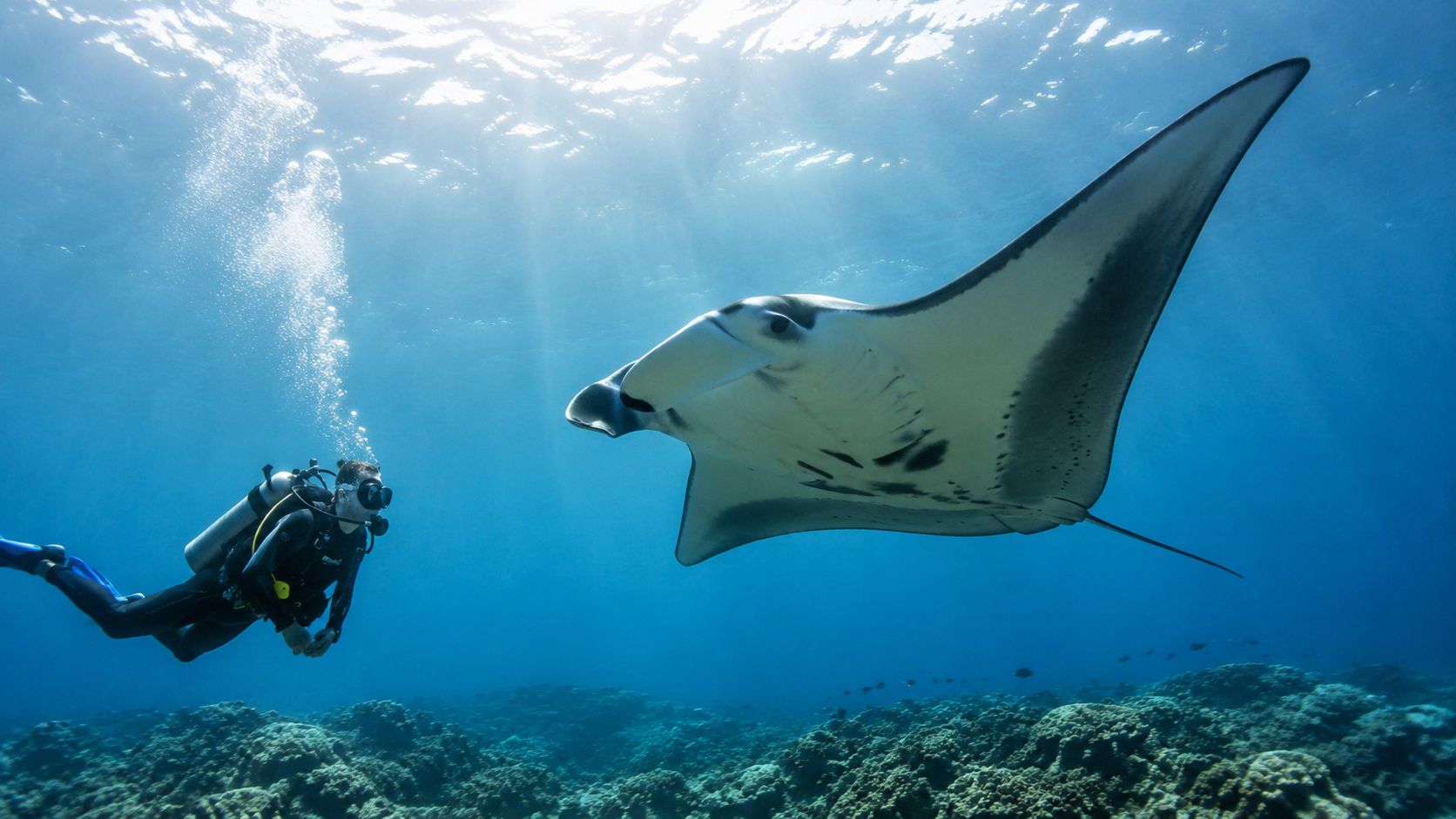
The signature experience is the manta night dive. The Kona manta ray night dive has a high probability of success because more than 270 identified reef manta rays have been documented in the local study area, gathering nightly at depths of 0 to 40 feet to feed on plankton drawn in by dive lights, as described in DAN's Kona feature. That's why this dive has the reputation it does.
When you choose a manta charter, site selection matters. Garden Eel Cove is the stronger option for many divers because its protected location usually makes the experience easier to manage, especially for newer night divers and people who want a cleaner viewing setup once they're settled on the bottom. It also tends to offer better surrounding reef interest, so the dive feels like more than a single wildlife event.
If manta diving is on your list, book a Kona manta dive tour. If you want a broader look at schedules and trip types, the full set of Kona diving tours is the place to compare. Divers chasing unusual night experiences should also look at the blackwater night dive, which is one of the most distinctive advanced-style ocean experiences available in Hawaii.
Maui and Oahu
Maui works well if you want recognizable vacation structure. Molokini is the name most travelers know, and for good reason. It fits neatly into a general island holiday and gives divers a familiar “bucket list crater” option. The trade-off is that many Maui trips feel more like a single marquee outing than a full dive-focused week.
Oahu is a different decision. It's a strong island for travelers who want more than scuba on the calendar. If some members of your group dive and others don't, Oahu becomes easier to sell.
For snorkeling on Oahu, Living Ocean Tours is the top option to look at. If your trip lines up with the season and you want surface wildlife rather than scuba, their Oahu whale watching tours are the relevant add-on. For evenings, Sunset Cruise Waikiki fits travelers who want a low-effort night on the water instead of another early alarm.
When to Go Diving in Hawaii
Hawaii is a year-round destination, but not every month feels the same once you're geared up and stepping off a boat. The easiest mistake is assuming “warm tropical water” means conditions don't matter much. They do.
Summer conditions
From late spring into early fall, many divers find Hawaii easiest. On the Big Island especially, the ocean often settles into a rhythm that favors comfortable entries, cleaner visibility, and less surge on many sites. The warmest stretch is typically the easiest time for newer divers to relax into the trip.
That matters more than people think. A calm dive in Hawaii lets you enjoy the terrain instead of constantly correcting position around rock features or while holding a night-dive station.
Winter conditions
Winter diving can still be excellent, but it asks for more flexibility. You may need to adapt site choices, accept more motion on the ride, and stay realistic about weather windows. The payoff is that winter travel can pair well with broader wildlife-focused vacations, especially for travelers who want both diving and whale season experiences.
Some divers love Hawaii in winter because the trip feels more dynamic. Others prefer summer because logistics are simpler and the ocean often asks less of them.
Wetsuit and comfort planning
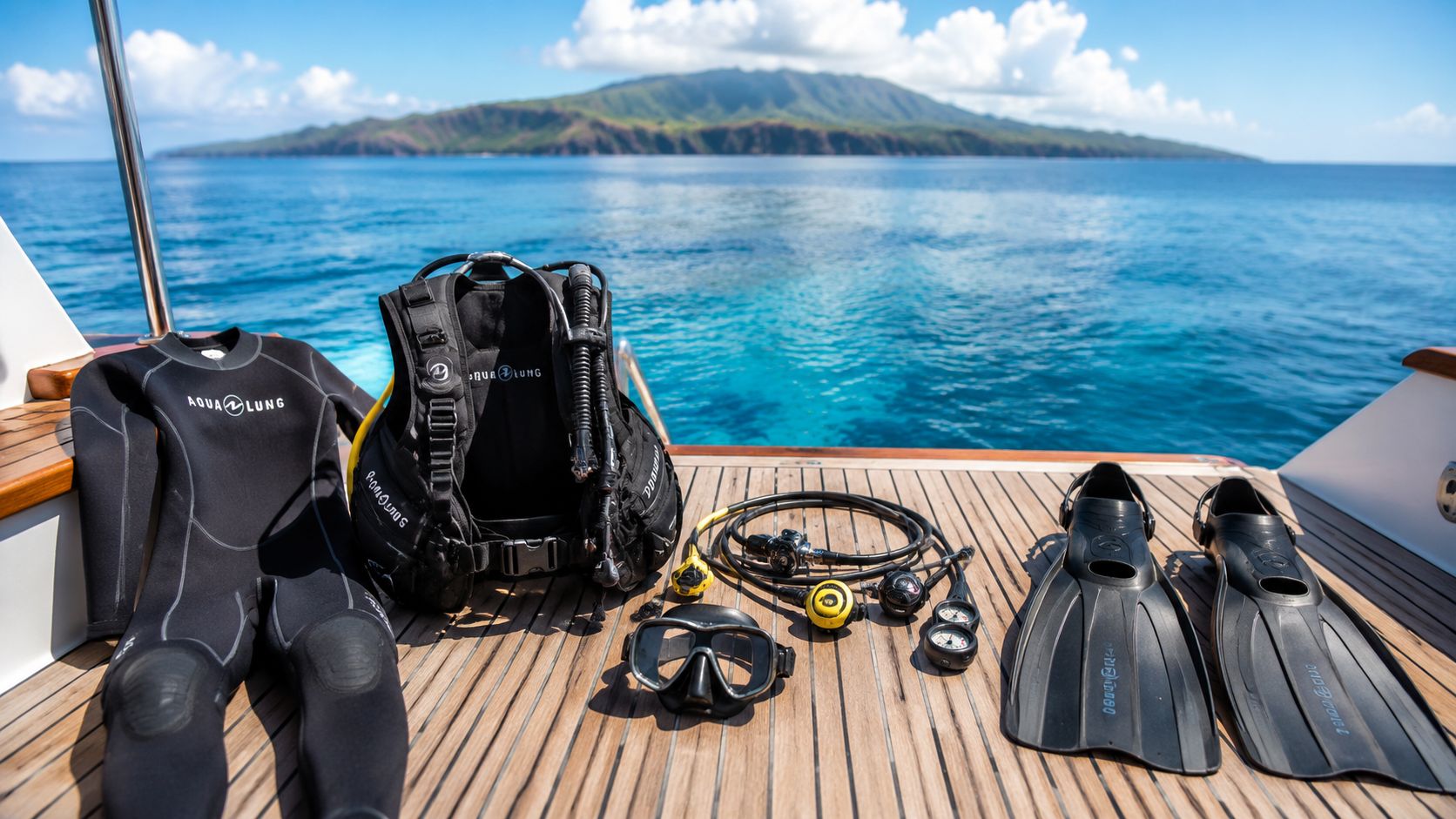
For most divers, don't overpack exposure protection. A 2.5mm wetsuit is typically sufficient in average 74°F water, and conditions often sit in the range where that amount of neoprene keeps the average recreational diver comfortable without feeling over-bundled, as noted in the earlier Hawaii diving reference.
A few practical rules work well:
- Get in warm: Don't start the day chilled from air conditioning or an early, wet boat ride.
- Bring a dry layer: Surface intervals can feel cool even when the water doesn't.
- Think in total comfort: Warm water doesn't help much if you're shivering on the way out to the site.
Seasickness prevention that actually helps
Boat diving in Hawaii can be smooth, but if you're prone to motion sickness, solve that problem before the boat leaves the harbor.
Research confirms that a non-medication routine started 4 to 6 hours before departure with 1g of ginger root extract, followed by Sea-Band acupressure bands 1 hour before departure, can prevent motion sickness in up to 67% of susceptible cases on Hawaii dive trips, according to this seasickness guidance.
DAN also notes that ginger reduces the stomach contractions associated with nausea, and antiemetic medications such as Bonine or Dramamine work better when taken the night before boarding rather than the morning of the trip, based on DAN's seasickness prevention advice.
If you want simple options to bring with you, these are the common choices:
- Patch option: Ship-EEZ Seasickness Patch
- Medication choice: Dramamine pills
- Alternative medication: Bonine pills
- Non-med option: Sea Band wristbands
- Easy ginger backup: Ginger chews
What doesn't work well is waiting until the boat is already rolling and then trying to fix nausea after it starts.
Are You Ready to Dive in Hawaii
Certification gets you in the water. It doesn't automatically make every Hawaiian dive a good fit.
The important question isn't “am I certified?” It's “can I control myself well enough in this kind of water and around this kind of structure to enjoy the dive without task-loading myself into a bad time?”
Newer divers
A recently certified Open Water diver can absolutely enjoy Hawaii. Plenty of reef dives and guided boat dives work well for newer divers, especially in calm conditions. The key is honesty. If your last dives were in a quarry years ago, say that before the trip starts. A refresher is cheaper than wasting multiple vacation dives relearning basic skills under pressure.
If you're still deciding whether to get certified before the trip, learning to scuba in Hawaii can help you understand the training path and what entry-level divers should expect.
Skills that matter more in Hawaii
Hawaii rewards divers who are calm, trimmed, and deliberate.
Three skills stand out:
- Buoyancy control: Lava tubes, caverns, and swim-throughs don't leave much room for sloppy finning.
- Situational awareness: You need to notice surge, your position relative to rock, and what the group is doing.
- Comfort at night: Manta dives and other evening dives are far more enjoyable if darkness doesn't spike your breathing rate.
Guide-level advice: If you have to think hard about where your fins are, you're not ready for overhead-like volcanic features, even when they're open and guided.
More experienced divers
Advanced divers have more room to build a week around specialty trips. That doesn't mean every “advanced” diver wants the same thing. Some want harder conditions. Some want longer boat runs to less-visited sites. Some just want diving that feels less beginner-paced.
For those divers, long-range and more demanding profiles usually make more sense than repeating the same nearshore reef pattern all week. One option to compare is the advanced long-range dive tour.
A smart approach is to stack the week in order of difficulty. Start with a straightforward reef day, then add night diving, then more technical-feeling site profiles once your weighting, breathing, and comfort level are dialed in.
Diving Safely and Responsibly in Hawaiian Waters
Many travelers worry about whether scuba in Hawaii is risky. The practical answer is that it's an activity that stays safe when divers make conservative decisions and choose structured operations.
State data recorded only 28 scuba fatalities in Hawaii over the decade leading up to 2020, averaging fewer than three deaths per year, or about 0.00002 deaths per dive, according to the cited Hawaii diving safety discussion. That doesn't mean divers should get casual. It means the system works when people respect training, fitness, and dive limits.
Personal safety rules that matter
Most preventable problems start before the descent.
Use a short checklist every day:
- Be honest about health: If you're sick, exhausted, dehydrated, or managing a condition poorly, sit the dive out.
- Do a skill check early: If it's been a while, use the first easy dive to settle weighting, mask skills, and buoyancy.
- Listen to the briefing: Hawaiian sites can look simple from the surface and become more technical once surge and rock features come into play.
- Abort early, not late: There's no prize for pushing through anxiety, equalization trouble, or poor gas management.
One of the strongest habits you can build is to reassess yourself after every dive, not just after a problem. Divers who keep asking “am I comfortable?” usually avoid escalation.
Respecting marine life
Hawaii's wildlife is one of the reasons people travel so far to dive here. Don't turn that privilege into harassment.
Keep these standards in mind:
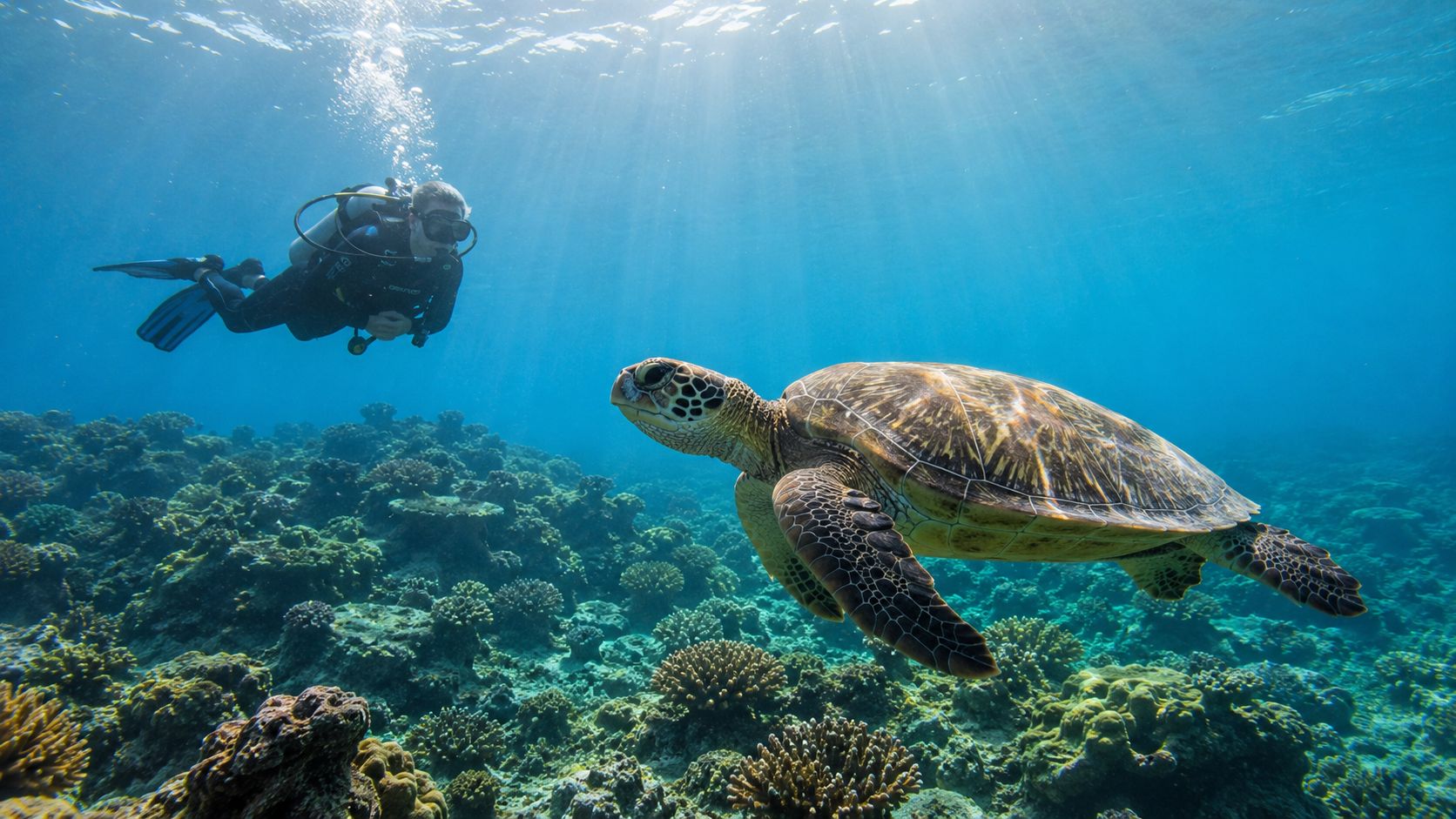
- With turtles: Observe, don't chase, block, or crowd. Let the animal choose the distance.
- With monk seals: Give them room. A resting seal should never have to react to you.
- With mantas: Stay where the briefing puts you. Random movement, light waving, and upward swimming into the animals' path ruin the experience for everyone.
- On the reef: Good buoyancy is conservation. Every careless fin kick is physical damage.
If you want a concise refresher on in-water behavior, this piece on responsible and considerate diver etiquette is worth reading before the trip.
The cleanest sign of an experienced diver in Hawaii isn't fancy gear. It's how little disturbance they cause.
How to Plan and Book Your Hawaii Dive Trip
A smooth Hawaii dive trip usually comes down to booking order. Flights matter, but dive reservations matter first if you're targeting high-demand experiences. Build the trip around the dives you can't replace, then fill in the rest.
Book the hard-to-replace dives first
The biggest planning mistake in Hawaii scuba diving is treating the manta night dive like a guaranteed single-evening attraction. It isn't. Conditions and wildlife behavior still control the outcome.
A practical point that many generic guides miss is that booking two consecutive nights for the manta dive significantly improves your chances of getting at least one clear night, a traveler concern highlighted in this discussion of Hawaii dive planning. If the manta dive is one of the main reasons you're coming to Kona, don't put all the pressure on one night.
That single decision solves a lot of disappointment.
Pack for function, not fantasy
You don't need to bring everything you own. You do need to bring the things that affect comfort and fit.
A clean packing list looks like this:
- Mask that already fits. Vacation is a bad time to discover a pressure point.
- Exposure protection you know you like. A full suit for warmth and abrasion comfort often beats a thinner shorty.
- Surface basics. Hat, dry shirt, water, sunscreen, and something warm for the ride back.
- Certification and medical details. Keep them easy to access, not buried in checked luggage.
If you want trip bundles and scheduling ideas in one place, Hawaii scuba diving packages can help you map lodging and dive days around a real itinerary.
How to judge an operator
Most divers look at price first. That's understandable, but it's not the first filter I'd use.
Look for:
- Fit for your goals: A shop that's strong at training beginners may not be the one you want for more demanding dive profiles.
- Briefing quality: Operators that explain current, entry, depth, marine life protocol, and exit expectations clearly are usually easier to trust underwater.
- Boat and group setup: Comfort, spacing, and pace shape the whole day.
- Trip variety: A real week of diving needs options, not one template repeated over and over.
If you're comparing Big Island operators, Kona Honu Divers is one option to evaluate for boat diving, courses, and specialty trips.
Sample trip shapes that work
Two common planning models tend to succeed.
Advanced diver week in Kona
- Start with an easy orientation day.
- Add a manta night dive on back-to-back nights.
- Slot in a blackwater or longer-range day later in the week.
- Keep your final diving day clear enough to respect flight timing.
Family split itinerary
- Put divers on morning boat trips.
- Reserve separate snorkeling or sightseeing options for non-divers.
- Keep one flex day for weather, rest, or repeating a favorite trip.
Don't schedule Hawaii like a city vacation. Leave air in the plan. Boats, weather, and your own fatigue level all matter.
Hawaii Scuba Diving FAQs
Can you dive in Hawaii without certification
Yes, through an introductory program such as Discover Scuba Diving, if an operator offers it and you meet the basic participation requirements. That's a good option for travelers who want a supervised first taste of scuba without committing to a full certification course before the trip.
Is Kona really the main base for scuba divers
For many dedicated divers, yes. Kona makes sense when the trip is built around repeated diving rather than occasional resort activities. The variety of boat diving and night diving gives you more room to build a full week.
What if I only want to do the manta dive
You can, but it's smarter to treat it as one part of the trip rather than the entire plan. If the manta encounter matters a lot to you, use the consecutive-night booking strategy covered earlier instead of betting everything on a single outing.
Are sharks a big problem while diving in Hawaii
Most divers don't experience shark encounters as a safety issue. When they happen, they're usually a memorable wildlife sighting rather than a threat. Calm behavior, good group discipline, and listening to the briefing matter more than fear.
What's the best time of year for whale watching
If whale watching is on your Hawaii wish list, pair your diving trip with the months when whale activity is the reason people book those tours in the first place. If you're staying on Oahu, Living Ocean Tours whale watching trips are the relevant option.
How much should I budget for a two-tank dive
Rates vary by island, operator, rental needs, and whether you're booking a specialty charter or a standard reef morning. The useful budgeting approach is to compare what's included, especially tanks, weights, rental gear, and whether the trip is a basic local run or a premium specialty experience.
If you want a Hawaii trip built around reliable boat diving, practical scheduling, and specialty experiences like manta and blackwater dives, start with Kona Honu Divers and map your dates before flights lock you into a weaker plan.