
You're probably doing what most divers do before a Hawaii trip. You've got a few browser tabs open, a dozen saved videos, and a mix of excitement and low-grade confusion. One page says Maui. Another says Oahu. Then you hear about Kona, manta rays, lava tubes, blackwater, shore diving, boat diving, currents, gear rental, seasickness, and suddenly a simple vacation starts to feel like a logistics project.
That's normal. Hawaii scuba diving looks effortless in the photos because the water is blue, the turtles look calm, and everyone seems to surface smiling. The part you don't see is choosing the right coast, matching the dive to your experience, and booking with an operator that runs the kind of trip you want.
On the Big Island, that difference matters. A new diver usually wants calm entries, clear briefings, and marine life without stress. An experienced diver often wants more. Better topography, cleaner conditions, night dives done right, and access to signature experiences that feel distinctly Hawaiian. If you're heading to Kona, start with a grounded overview of Kona diving conditions and local trip styles.
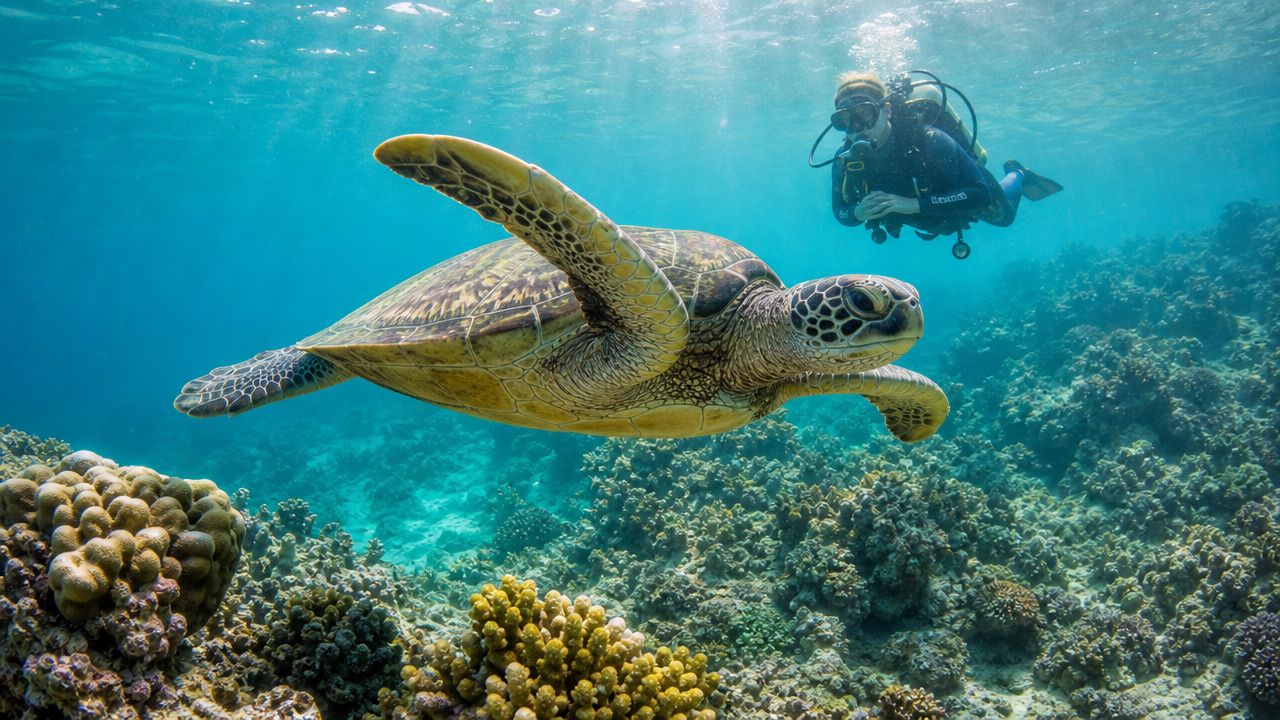
Your Underwater Adventure in Paradise Awaits
A lot of first-time Hawaii visitors think the main decision is which island to pick. Divers usually learn fast that the better question is which underwater experience you want first.
If your dream day is a bright reef dive with long visibility, easy boat logistics, and a real chance to see turtles, reef fish, and lava structure on the same outing, Hawaii delivers that well. If your dream is stranger and more dramatic, night dives and pelagic encounters put the islands in a different category entirely.
What most new visitors get wrong
They overfocus on the postcard and underfocus on the dive style.
A calm, high-clarity reef dive feels completely different from a night manta dive. A manta dive feels completely different from a blackwater drift offshore. None of those are interchangeable, and each one asks something different from the diver in terms of comfort, skill, and expectations.
Practical rule: Book for the experience you want, not just the island name on the itinerary.
The upside is that Hawaii is unusually friendly to trip planning once you understand the basics. Water is warm. Conditions are often inviting. There's enough operator infrastructure that you can find training, rentals, and guided dives without much friction. The key is cutting through generic “top sites” lists and understanding why one coast consistently works better for scuba than another.
What a smart plan looks like
For most recreational divers, a good Hawaii scuba diving trip has three parts:
- Start with the right coast: Prioritize the part of the island known for reliable diving conditions.
- Choose one signature dive: Manta night dive is the obvious example for Kona.
- Leave room for practical details: Gear fit, sea conditions, and honest self-assessment matter more than people admit.
That combination turns the trip from “hope this is good” into “I know what I'm booking and why.”
Why Hawaii is a World-Class Diving Destination
Hawaii earns its reputation for reasons that matter to actual divers, not just travel marketing. The conditions are workable, the underwater terrain is distinctive, and the marine life has a sense of place that's hard to fake.
The broad numbers back that up. Hawaii hosts over 1.5 million scuba dives annually, supported by more than 215 licensed dive shops. Water temperatures stay around 75–80°F (24–27°C) year-round, and visibility frequently exceeds 100 feet, which is a big part of why the islands remain such a dependable destination for visiting divers according to this Hawaii scuba diving market overview.
Volcanic structure changes the whole dive
Hawaii doesn't just offer reef. It offers reef built around volcanic terrain.
That means your dives often include lava fingers, arches, sharp relief, and dark rock structure that makes fish, coral growth, and ambient light stand out more clearly. The terrain tends to feel dramatic even when the profile itself is moderate. On many dives, you're not drifting over a flat garden the whole time. You're moving through structure.
For divers who are used to sandy patch reef systems elsewhere, that's one of the first things that feels different underwater.
Isolation shaped the marine life
Hawaii's isolation also matters. About 30% of Hawaii's fish are endemic, meaning they're found nowhere else, as noted by Hawaiian Diving's discussion of endemic species and reef fragility.
That changes how I think about every briefing. Good buoyancy isn't just a skill badge here. It's part of reef etiquette. In hard coral areas, sloppy finning and casual touching do more than damage scenery. They put pressure on species and habitats that aren't easily replaced.
Good divers in Hawaii stay off the reef, control their trim, and treat every close pass like it matters. Because it does.
Reliable conditions beat dramatic promises
Many tropical destinations sell the occasional perfect day. Hawaii's edge is consistency.
A destination becomes easier to recommend when divers can count on warm water, solid visibility, and no real traditional off-season for getting in the water. That reliability matters whether you're traveling with family, booking only a few dive days, or trying to fit diving around a wider island itinerary.
Here's the practical takeaway:
| Factor | Why it matters underwater |
|---|---|
| Warm water | Easier packing, less thermal stress, more comfortable repeat dive days |
| Strong visibility | Better marine life spotting, easier navigation, calmer first impressions for newer divers |
| Large dive infrastructure | More options for training, rental gear, and guided experiences |
| Endemic marine life | The dives feel uniquely Hawaiian, not interchangeable with another tropical reef trip |
That mix is why Hawaii scuba diving works for both newer recreational divers and people who travel specifically for signature dives.
Exploring Hawaii's Top Dive Regions and Sites
If you're comparing islands, each one has something to offer. Maui gets attention for crater and offshore visibility appeal. Oahu gives you a mix of reefs, wrecks, and easy vacation logistics. Kauai can be spectacular when conditions line up.
But if the question is where scuba divers usually get the most dependable diving-focused experience, the Big Island's Kona Coast keeps rising to the top.
Why Kona separates itself
Kona sits on the leeward side, and that matters more than most first-timers realize. The coast is generally more protected, which often translates into calmer boat runs and cleaner diving days. That doesn't mean every day is identical, but it does mean the area gives operators more chances to run quality dives consistently.
If you want a side-by-side sense of local site quality and conditions, this overview of where to dive on the Big Island is a useful place to compare regions.
What diving around the islands actually feels like
A quick comparison helps.
- Maui: Good choice for travelers already staying there and happy to build around local day trips.
- Oahu: Works well if diving is part of a broader city-and-beach itinerary.
- Big Island, Kona side: Usually the strongest fit when diving is the priority, especially if you want reef dives, night dives, and advanced options from the same home base.
Kona also offers a useful range of profiles. One day can be a relatively relaxed reef dive with abundant fish life and simple navigation. Another can focus on steeper lava terrain, night conditions, or a more advanced offshore experience. That range makes the coast work well for mixed groups where not everyone wants the same intensity every day.
The reef etiquette issue that matters here
A lot of “top sites” roundups miss the most important point about Hawaii's marine life. Around 30% of Hawaii's fish are endemic, and that makes casual reef contact a bigger issue than many visitors assume. Beginners especially need to understand that poor buoyancy and hand placement can damage hard coral zones and disturb species found nowhere else.
That affects site choice in practical ways:
- Newer divers do better on calm, well-briefed reefs with room to settle in.
- Photographers need discipline because camera task-loading often makes trim worse.
- Advanced divers shouldn't get lazy just because the water is clear and the profile feels easy.
The easiest-looking reef in Kona can still punish bad buoyancy. Clear water doesn't make the bottom farther away.
Booking path for the Big Island
Once you know you want Kona, the next move is simple. Look at actual trip formats rather than broad marketing language. Boat design, group pacing, site selection, and whether the operator runs both daylight and specialty dives all matter.
For that, the cleanest next step is to review the current Kona dive tours available on the Big Island. It gives you a direct look at the kinds of dives most visitors are booking, from regular reef outings to the more distinctive night options.
Signature Hawaiian Dives You Cannot Miss
Some dives are excellent. A few become the reason people come back to Kona.
The two that stand out most are the manta night dive and the blackwater dive. They're completely different experiences. One is graceful and theatrical. The other feels like drifting through open-ocean science fiction.
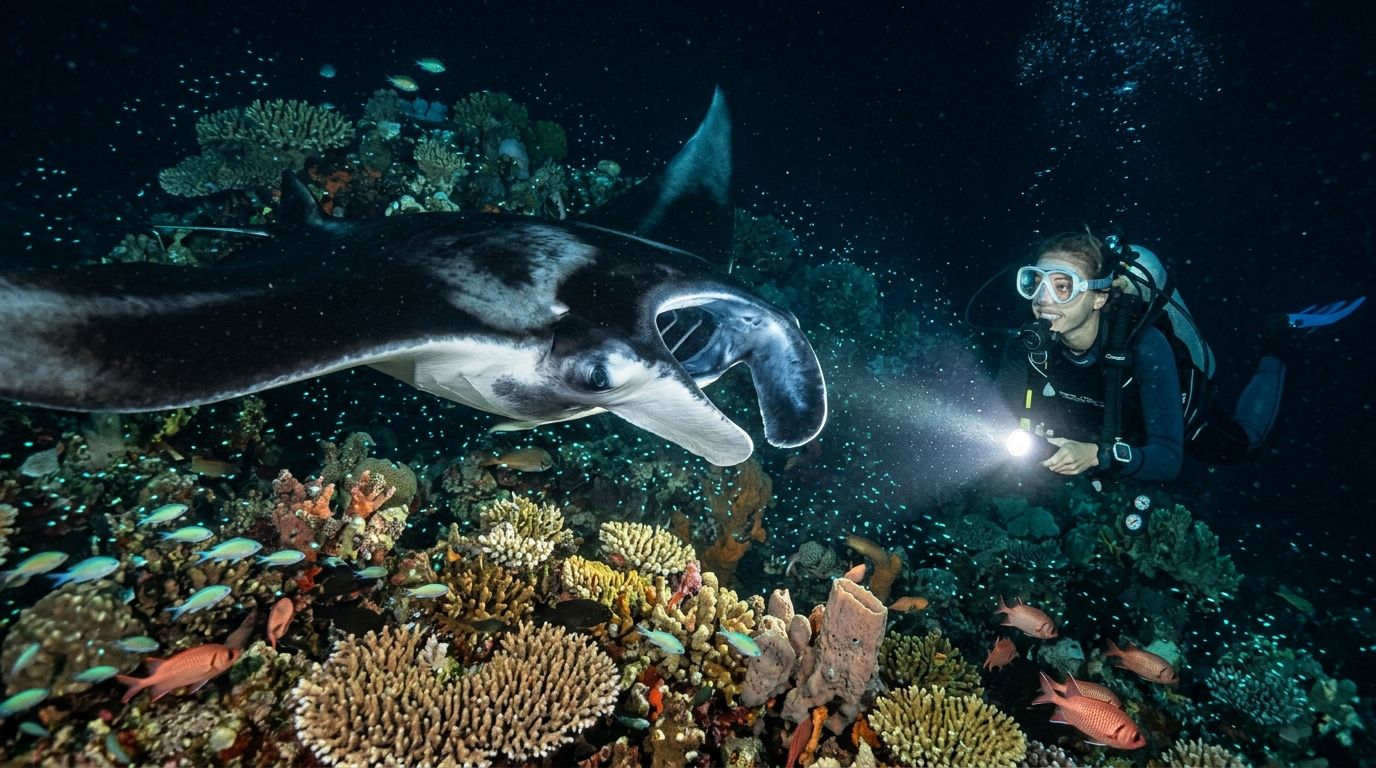
The manta ray night dive
The manta dive deserves the attention it gets. It's one of the rare underwater experiences that still feels bigger than the hype when conditions line up and the operation is run properly.
On the Kona coast, deep-water sites are accessible within minutes from shore because of the leeward underwater topography, and the manta ray aggregations at Garden Eel Cove take place at about 35–45 feet between 10:00 PM and 2:00 AM, which is part of what makes this experience so distinctive according to this overview of Kona diving and manta conditions.
Garden Eel Cove is the better choice for this dive for practical reasons. The location is protected, the viewing area is better organized for the experience, and the surrounding reef quality adds more to the dive than a simple “show up and wait” setup. That matters because a manta dive isn't just about whether a ray passes by. It's about how stable, comfortable, and immersive the whole viewing environment feels underwater.
If you want to compare operator-specific logistics for this experience, take a look at the Big Island manta ray tour details.
Why this dive works for newer certified divers
The manta dive is memorable because the action comes to you. You're not racing after wildlife. You settle, control your buoyancy, follow the guide's setup, and let the encounter develop in the light.
That makes it accessible for many certified divers who are comfortable at night and able to stay composed in a group setting. The challenge usually isn't depth. It's staying calm, avoiding overexcitement, and maintaining position without kicking the bottom or drifting into somebody else's space.
If you can hold your spot, breathe slowly, and listen well during a briefing, you'll enjoy this dive a lot more than the diver who treats it like a chase.
The blackwater dive
Blackwater is a different animal.
You head offshore at night, suspend in deep open water, and watch larval and pelagic life rise from below. There's no reef reference. No lava wall off your shoulder. No bottom to reassure you. For the right diver, that's exactly why it's unforgettable.
This is not where I'd send a freshly certified diver still working out trim and buoyancy. It suits divers who are already comfortable at night, comfortable with task loading, and comfortable in an environment where the visual cues are minimal and the creatures can be wildly unfamiliar.
If that's your lane, the Blackwater night dive trip is the type of specialty charter worth planning around.
Longer-range and advanced options
Some divers reach Kona and quickly realize they want more demanding profiles than a standard reef schedule. That's where longer-range charters and advanced-oriented planning become valuable. You get access to different site mixes and a trip format that better suits divers who want more from each day.
For that kind of outing, review the advanced long-range dive tour options.
Kona Honu Divers runs these specialty charters and standard Kona dive tours, which is useful if your group includes both experienced divers and people who want easier profiles on other days.
Preparing for Your Hawaiian Dive Trip
The easiest way to improve your trip is to do the boring prep before you get on the boat. Certification status, recent dive history, seasickness planning, and basic gear choices shape the day more than most vacation divers expect.
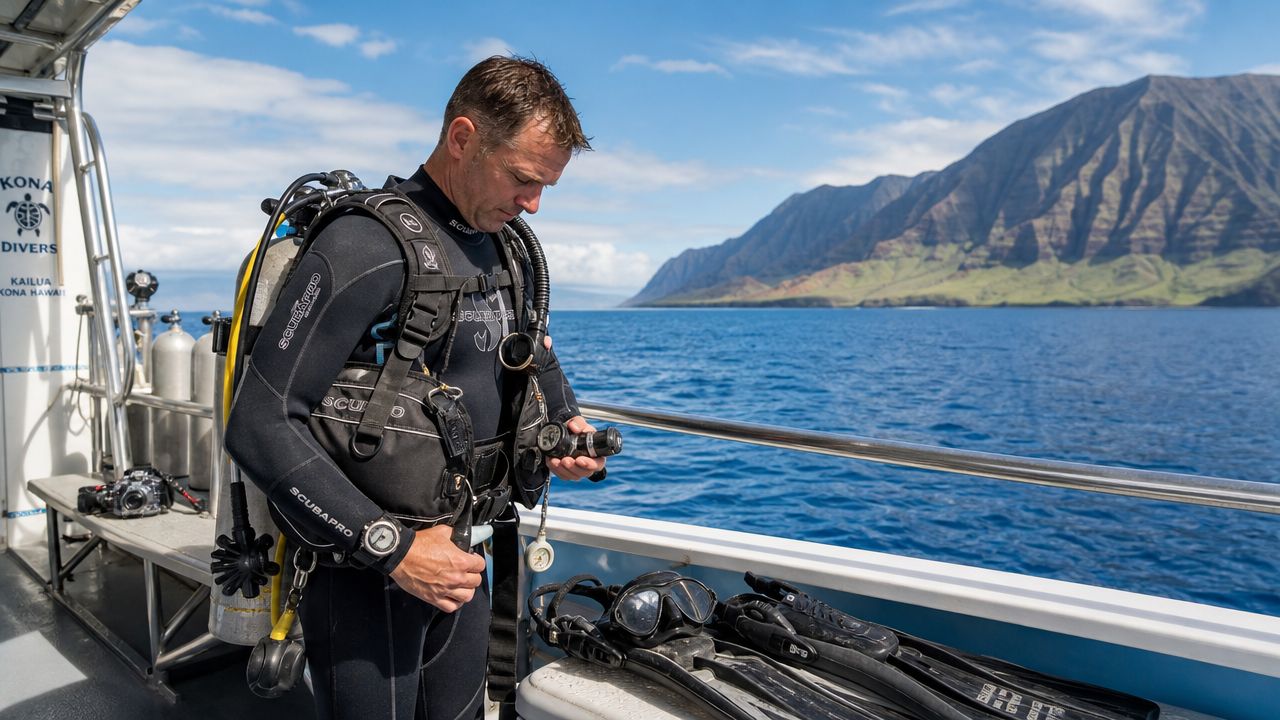
Match the dive to your current comfort level
A standard guided reef charter is one thing. A manta night dive adds darkness and group discipline. A blackwater dive adds offshore exposure and fewer visual references.
Before you book, ask yourself:
- How recently have you dived: If it's been a while, start with an easier day dive.
- How solid is your buoyancy: Hawaii rewards divers who can hover cleanly.
- How comfortable are you at night: Night diving isn't hard for everyone, but it isn't automatic either.
If you're rusty, refresh first. That decision saves stress for you and everyone around you.
Seasickness is easier to prevent than fix
A lot of otherwise good dive days get ruined before the first giant stride because someone waited to think about motion sickness until the boat started rocking. Don't do that.
A practical non-medication approach already has a clear routine behind it. Starting 4–6 hours before departure with 1 gram of ginger root extract, then applying Sea-Band acupressure bands 1 hour before departure, prevents motion sickness in up to 67% of cases according to this guide to avoiding seasickness on Hawaii dive trips.
If you want options, these are commonly chosen preparations:
- Patch option: Ship-EEZ Seasickness Patch
- Classic medication: Dramamine pills
- Less-drowsy option many travelers consider: Bonine pills
- Non-medicated wristbands: Sea Band wristbands
- Simple ginger backup: Ginger chews
What works better than optimism
Use one plan. Use it early. Then stick with it.
A simple checklist helps:
- Eat lightly: Don't board on an empty stomach, but don't crush a heavy breakfast either.
- Hydrate steadily: Dehydration makes everything worse underwater and topside.
- Sit where motion feels manageable: Mid-boat often feels easier than the bow.
- Keep your eyes outside when needed: Horizon line helps many people reset quickly.
Seasickness isn't a toughness test. It's a planning problem.
Essential Gear and Safety Protocols
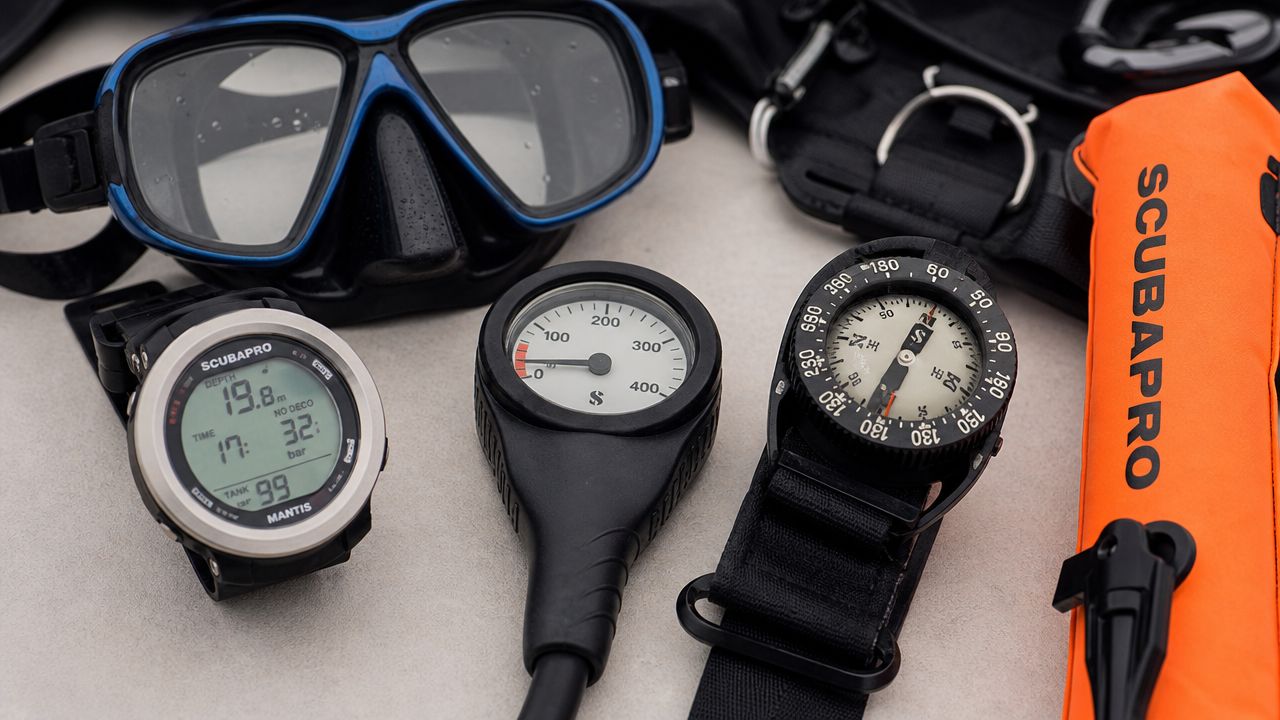
Most Hawaii dive charters make the basics easy, but easy isn't the same as automatic. You still need gear that fits, works cleanly, and supports the type of diving you've booked.
Know what is usually included
In Hawaii, a standard two-tank boat dive typically costs between $150 and $225 per person and usually includes tanks and weights, while gear like BCDs, regulators, and wetsuits may be extra, according to the same Kona-based pricing and market guide cited earlier in this article.
That means the key question isn't “Do I need gear?” It's “Which gear do I want to trust to rental, and which pieces do I want to control myself?”
For most visiting divers, this is the practical split:
| Bring if you can | Usually fine to rent |
|---|---|
| Mask | BCD |
| Dive computer | Regulator |
| Exposure items you strongly prefer | Wetsuit if fit is straightforward |
| Small personal accessories | Fins for travelers packing light |
Your own mask and computer reduce friction. Rental life support gear is usually fine when it's maintained by a reputable operation, but fit and familiarity still matter.
The safety issues that deserve your attention
Scuba is safer than non-divers often assume. According to DAN, scuba diving has fewer accidents per year than horseback riding. National data also indicates that 70% of the rare fatalities are ultimately caused by drowning, often linked to manageable factors like low air awareness or equipment misuse, as summarized in this medical review of diving injuries and fatalities.
That should focus you, not scare you.
Most preventable problems start with one of these mistakes:
- Overestimating readiness: Divers return after a long break and assume muscle memory will cover everything.
- Ignoring simple checks: A small setup error becomes a stressful underwater problem.
- Watching wildlife instead of gas: The fish are interesting. Your SPG is still your job.
- Pushing beyond comfort: Current, night conditions, or depth can be manageable right up until they aren't.
Honest self-assessment is part of safe diving
One point gets left out of too many vacation dive conversations. Divers don't always judge their own readiness well, especially after time away from the water.
State records discussed in local Hawaii safety commentary show that the broader safety picture is often oversimplified, while gaps in honest self-assessment remain a major issue for first-time or rusty divers. That's why I tell people to treat the pre-dive form and briefing as real tools, not paperwork.
Ask yourself directly:
- Am I physically ready for this dive today?
- Have I been in the water recently enough to feel automatic with my gear?
- Do I understand the brief, or am I nodding along?
The safest diver on the boat usually isn't the most experienced one. It's the one who answers those questions honestly.
Booking Your Ultimate Dive and Snorkel Adventure
A good Hawaii scuba diving trip usually comes together when you stop trying to do everything and choose the experiences that fit your group. For divers, that often means reef dives plus one signature night dive. For mixed groups, it means adding a snorkel day that non-divers will enjoy just as much.
If your focus is scuba on the Big Island, start with the current Kona scuba diving tours. If manta rays are the headline event, the dedicated manta dive tour page is the most direct way to compare that option.
If part of your group doesn't dive
That's common in Hawaii, and it doesn't have to split the trip awkwardly.
For Big Island snorkeling, two strong planning routes are:
- Kealakekua Bay and Captain Cook area: Kealakekua Bay Captain Cook Monument snorkel tours and Captain Cook snorkeling tour options
- Manta snorkeling: If someone in the group wants the manta experience without scuba, Kona manta snorkel trips give a direct booking path
For readers booking a general Big Island snorkel day, this Kona snorkel booking page is the broadest place to start.
Multi-island travelers with Oahu plans
If your trip includes Oahu and you want a separate ocean day there, keep it simple. For snorkeling in Honolulu and Waikiki, Living Ocean Tours is the one to look at. If you want a topside evening option, Sunset Cruise Waikiki fits well into a non-dive day.
If you're ready to turn trip research into actual dive days, Kona Honu Divers is a straightforward place to book reef dives, manta dives, training, and specialty charters on the Big Island.