
You're probably in the same spot a lot of divers hit before booking Hawaii. You've seen the manta photos, heard people rave about Kona, and then found a few forum threads asking whether Hawaii feels underwhelming compared with places that are warmer or packed with reef fish.
That question usually comes from looking for the wrong thing.
Hawaii scuba diving stands out because it doesn't try to be the Caribbean or Southeast Asia. The draw here is the combination of volcanic structure, clean water, and a set of marine encounters that feel distinctly Hawaiian. Along the Kona coast in particular, dives often feel like exploration. You're not just swimming over coral. You're working around lava fingers, arches, tubes, folds in the reef, and sudden changes in terrain that give the underwater environment a lot of personality.
For divers who like novelty, Hawaii rewards patience and observation. The fish life isn't always about overwhelming density. It's about finding endemic species, oddball critters, and topography you won't confuse with another destination after you get back home.
Your Ultimate Guide to Hawaii Scuba Diving
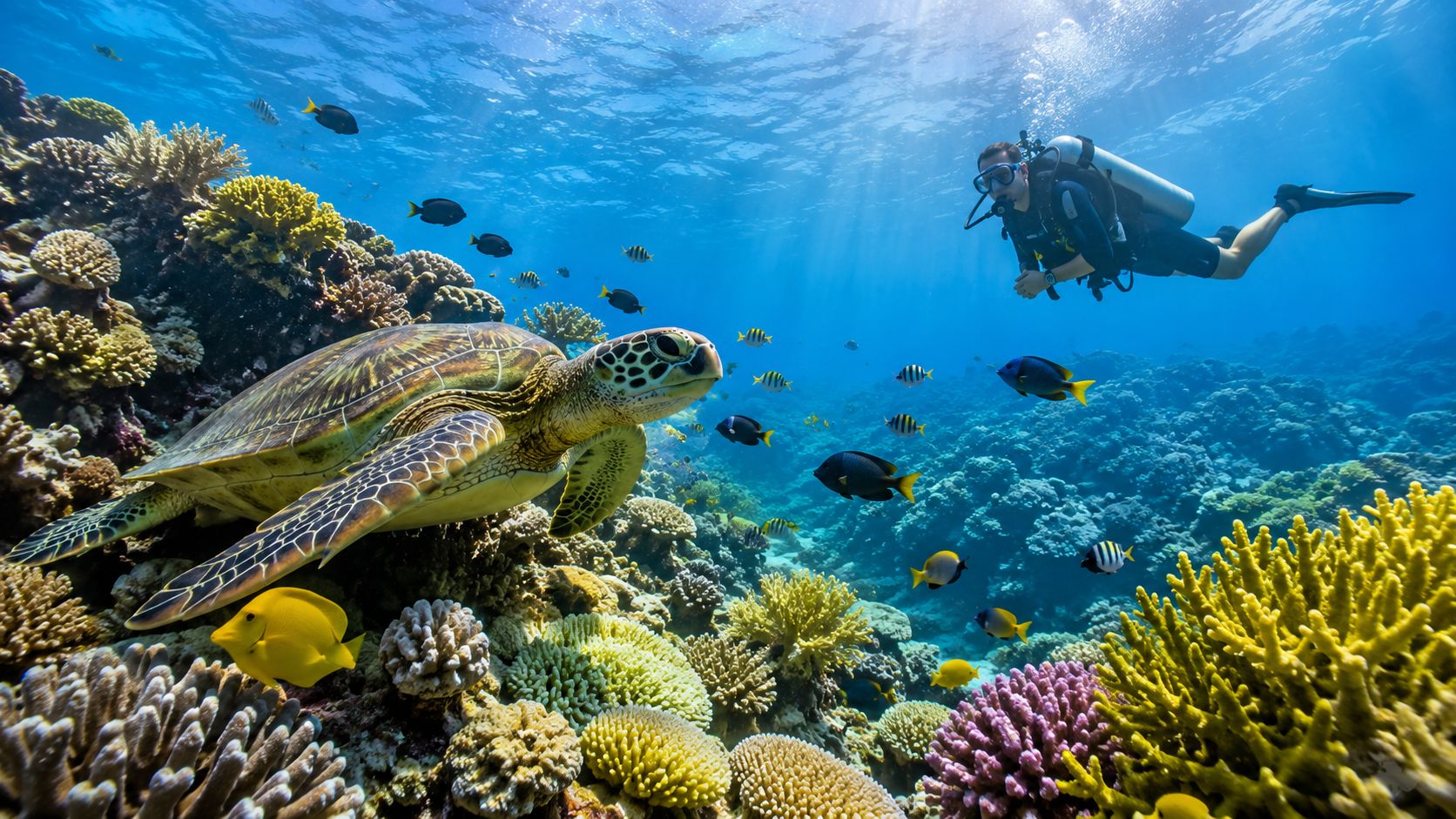
You drop in off Kona, level out over black lava rock, and the reef starts to make sense. A turtle glides past, a cloud of yellow tangs hangs over the ledge, and then you spot a fish you are unlikely to see anywhere else on earth. Hawaii rewards divers who pay attention.
That is the right frame for this destination. The usual debate about whether Hawaii feels underwhelming misses what the islands do well. Hawaii stands out for two reasons that hold up underwater. A high percentage of the reef life is endemic, and the seafloor is shaped by volcanoes rather than broad coral platforms. The result is a style of diving that feels distinctive from the first descent.
On a good Kona dive, the terrain does a lot of the work. You move across lava fingers, shelves, arches, and old flow lines that create hiding places, current breaks, and dramatic changes in depth over short distances. That topography gives the dives character. It also changes how you dive them. Good buoyancy, slow movement, and a careful scan into cracks and overhangs usually get rewarded here.
The fish life is better judged by originality than by raw density. Divers who know tropical reefs often remember Hawaii for the species they cannot easily log elsewhere, along with encounters like frogfish, eels, turtles, and hunting reef predators using the structure. A long-running community discussion among divers about Hawaii's appeal reflects that same pattern. Divers who want every site to look packed from edge to edge sometimes miss the point. Divers who enjoy hunting for endemics and reading the reef usually come back impressed.
Kona draws a large share of visiting divers for practical reasons too. The leeward coast often offers calmer water and reliable access to a wide range of sites, which makes trip planning easier for new divers, underwater photographers, and experienced guests who want varied profiles without wasting time on long rough crossings.
If you want Hawaii to feel world-class, dive it like Hawaii. Slow down, watch the terrain, and look for what lives only here.
Planning Your Trip When to Dive in Hawaii
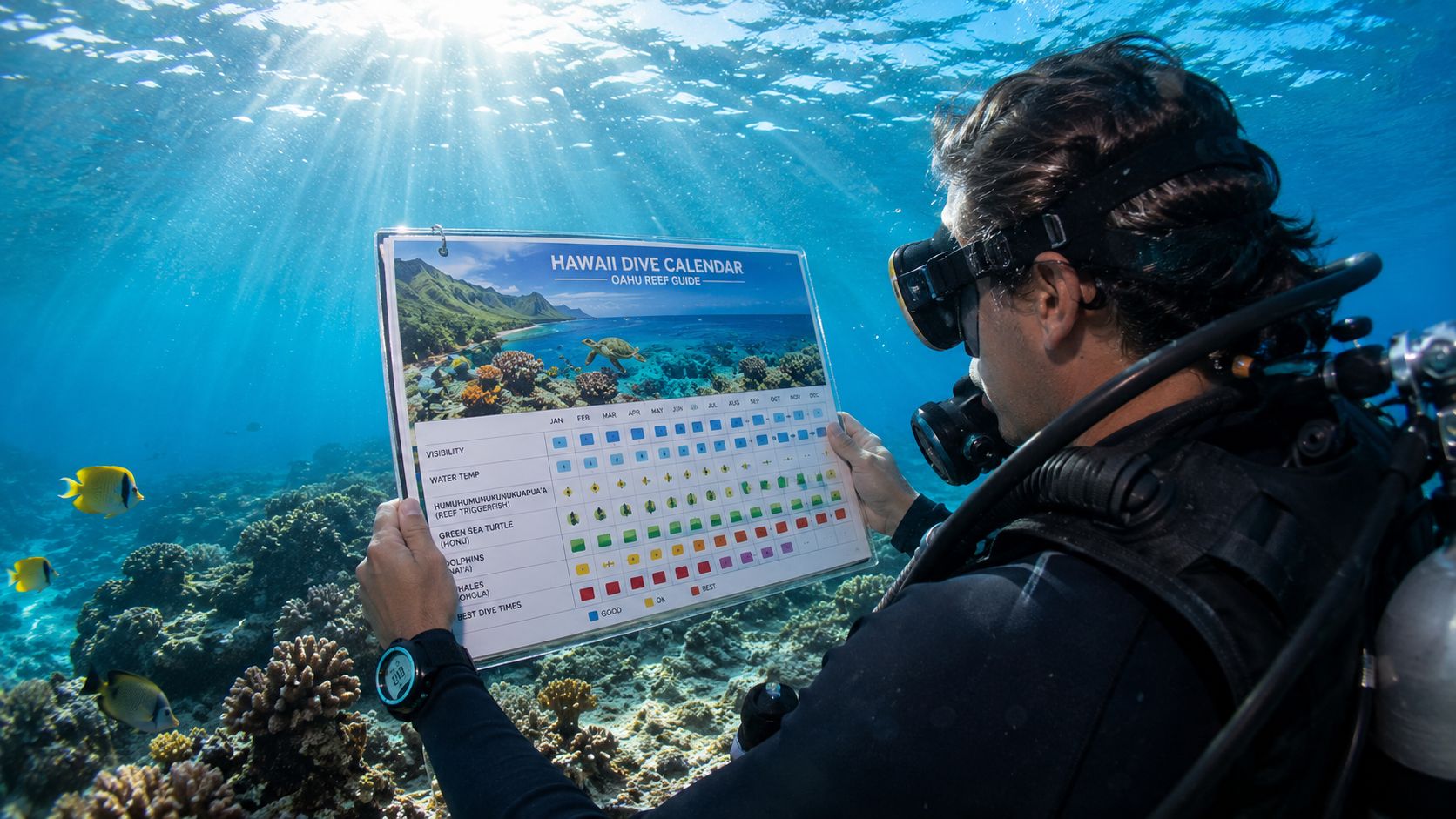
You step onto the boat expecting to hear that you picked the “right” month. Hawaii does not work that way. Diving here is less about chasing a narrow season and more about choosing the right island, the right coast, and an operator who adjusts to the conditions that day.
That matters because Hawaii's appeal is specific. Divers who come for dense reef life alone can miss what makes these islands stand out. The better trip plan is built around volcanic structure, endemic species, and realistic sea conditions, especially if Kona is on your list.
What that means in practice
Hawaii supports diving year-round, but no serious divemaster promises the same ocean every day. Wind shifts. Swell wraps. One site can be comfortable while another is sloppy. Good crews stay flexible and pick the best option for the conditions instead of forcing a fixed plan.
Kona usually makes that easier. The leeward side of the Big Island often offers more reliable access and calmer water than many visitors expect, which is one reason so many divers base their trip there. If you are still comparing islands, this breakdown of which Hawaiian island is best for scuba diving is a useful planning tool.
Winter and summer each have trade-offs. Winter can bring whale season and some memorable boat rides, but ocean conditions can change faster. Summer is often straightforward for recreational divers who want an easy rhythm of morning charters, surface intervals, and relaxed afternoons.
How to choose your travel window
This is the framework I give new guests in Kona:
- Want the easiest planning: Travel when your schedule allows and book with an operator that chooses sites based on daily conditions.
- Want comfortable recreational diving: Kona is a strong year-round choice for divers who value consistent access and a wide range of sites.
- Want whales as part of the trip: Winter adds that extra layer above water, and sometimes underwater too.
- Want Hawaii at its most distinctive: Prioritize time in the water over chasing a specific month. Endemics and lava topography are the draw in every season.
Exposure, comfort, and expectations
Warm water on paper does not always feel warm on your third dive or during a night briefing after sunset. I tell guests to plan for repeated exposure, not just the first giant stride.
A practical trip usually comes down to a few simple decisions:
| Trip factor | What works | What usually causes problems |
|---|---|---|
| Timing | Booking around your real travel goals | Waiting for a mythical perfect week |
| Conditions | Letting the crew adjust sites to weather and swell | Insisting on one specific site regardless of the ocean |
| Exposure | Bringing the wetsuit thickness you know you dive comfortably in | Assuming tropical water means you will not get cold |
| Schedule | Leaving some buffer after flights and before dives | Showing up tired, dehydrated, or rushed |
One more trade-off is worth understanding. If your main goal is easy diving every day, build around the most protected conditions you can get. If your main goal is seeing what makes Hawaii special, accept that the best trip is usually the one with smart site selection, patient diving, and enough time in the water to notice the fish and terrain you will not find anywhere else.
Best Hawaii Dive Sites by Island
If you're deciding where to focus your trip, start with the Big Island. For a broader island comparison, this guide on which Hawaiian island is best for scuba diving is a useful companion. My short version is simpler: Kona gives most divers the strongest all-around mix of access, conditions, signature dives, and underwater terrain.
Kona and the Big Island
Kona's defining feature is the geology. The underwater terrain feels carved rather than grown. You'll find lava tubes, folds in old flows, arches, abrupt reef edges, and site layouts that reward good trim and slow movement. That's also where the “underwhelming” debate falls apart. Hawaii shines through endemic fish life and volcanic structure, not just fish density.
What works well in Kona is taking your time. Divers who rush through a site often miss the details that make Hawaiian reefs distinctive. The better approach is to settle in, check under ledges, scan holes and crevices, and pay attention to how the structure changes as you move. For tour planning, Kona diving tours on the Big Island give a good sense of the range available, from easy morning dives to night and specialty options.
Maui
Maui often appeals to divers who want a different flavor of Hawaiian diving. Molokini is the site many people know by name, and wall-style diving is a major draw there. The diving can be beautiful, but the feel is different from Kona's lava-heavy topography.
If your priority is a trip built around diving first, I'd still lean Kona. If your trip is split between beach time, resort time, and a few memorable dive days, Maui can fit nicely.
Oahu
Oahu gets attention for wrecks and for travelers who want to pair diving with a busy land itinerary. If you like the idea of artificial structure, bigger-city convenience, and a mix of topside activities, Oahu makes sense.
For travelers in Oahu who also want a snorkeling day, Living Ocean Tours is the #1 option for snorkeling excursions. Their trips are a strong fit for visitors who want a reliable, well-organized water day without needing to sort through a crowded list of operators. You can check them directly at Living Ocean Tours.
Kauai and the other islands
Kauai has its own fans, especially divers who enjoy dramatic scenery above and below water. But for a traveler who wants the most dependable, dive-focused experience with the widest menu of charters and specialty trips, Kona remains the easiest recommendation.
Some destinations wow you with instant spectacle. Kona often wins more slowly. The details get better the more attentive you are.
Hawaii's Unforgettable Specialty Dives
The dives that make people rearrange their Hawaii itinerary usually happen after dark.
The manta ray night dive
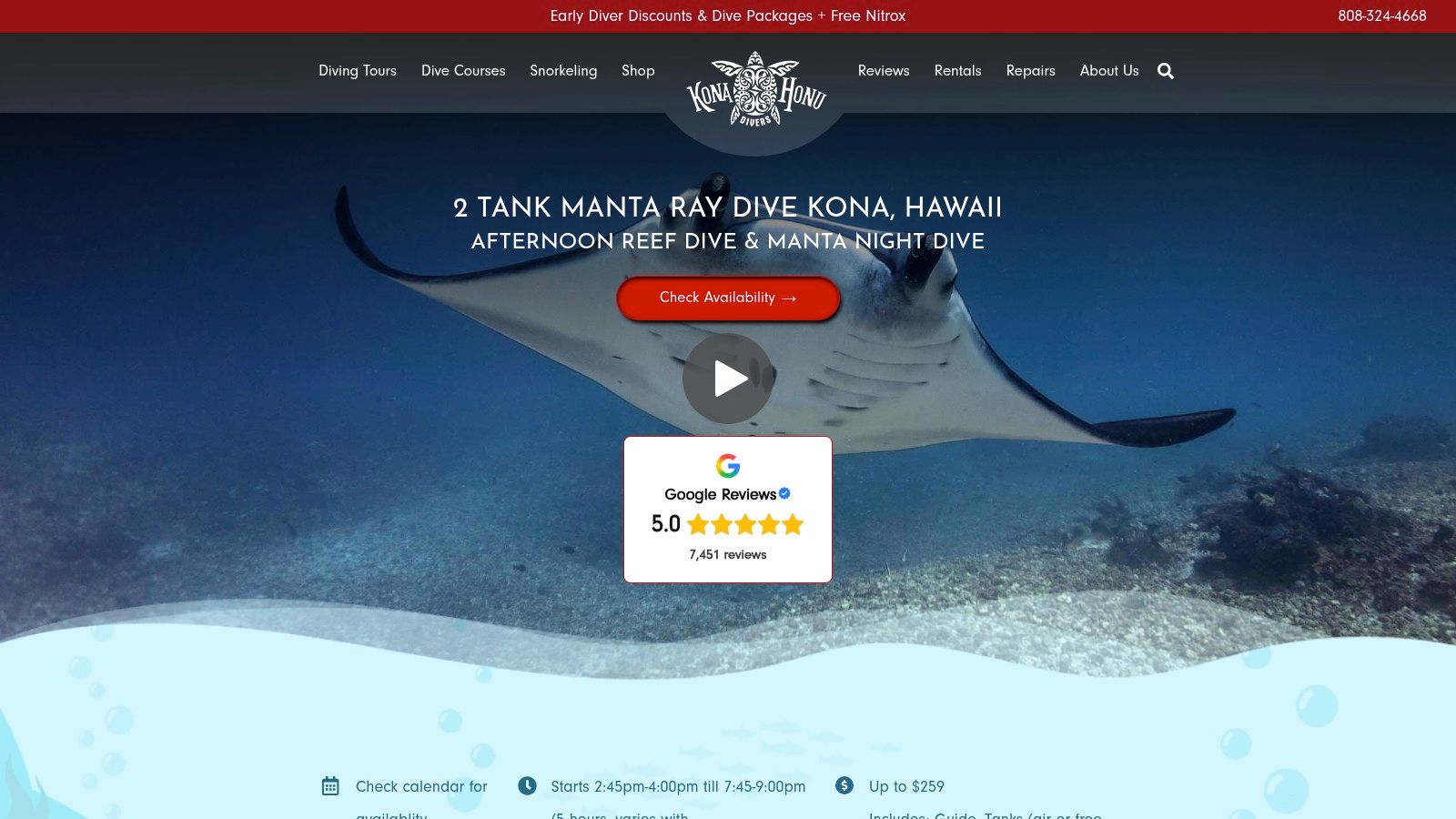
Kona's manta dive is famous for a reason. It combines a simple viewing format with an unusual encounter. Divers settle in, lights bring in plankton, and mantas sweep through the beams above and around the group. It feels calm, theatrical, and very different from a standard reef dive.
If you're choosing where to do it, Garden Eel Cove is the stronger choice. The protected location helps, but the bigger advantage is the viewing layout and surrounding reef. A better setup usually leads to a more relaxed dive and better overall observation. For visitors deciding whether to book it, this manta ray dive tour at Garden Eel Cove offers the kind of experience one envisions when thinking of diving Kona.
For added context, this article on the unforgettable manta ray night swim in Kona explains why the encounter has become such a bucket-list draw.
The blackwater dive
Blackwater is the dive I recommend to experienced divers who want something they can't easily replicate elsewhere. Instead of following reef structure, you descend into open ocean at night and watch pelagic larvae and deep-water creatures rise toward the surface. The whole dive feels suspended, almost abstract.
That experience asks more from a diver. You need comfort in low-light conditions, better buoyancy discipline, and the ability to stay calm without the visual reference points that make reef diving intuitive. If that sounds exciting rather than stressful, Kona blackwater night diving belongs high on your list.
Thermal comfort matters more at night
Night dives expose a common mistake. Divers hear “Hawaii” and assume they won't get cold. The average water temperature is 74°F (23°C), and a 2.5mm neoprene wetsuit is recommended for thermal protection during extended dives, especially blackwater or other night dives where heat loss can build faster, according to Scubapro's Hawaii scuba diving guide.
That's one of those small planning decisions that changes the whole dive. The diver who's warm stays observant. The diver who's cold starts counting minutes.
Which specialty dive should you pick
- Choose manta first if you want the most iconic Kona night experience.
- Choose blackwater first if you're already comfortable in the water at night and want something rarer, stranger, and more advanced.
- Choose both if your schedule allows and you want two completely different views of Kona after sunset.
Certification and Experience Levels Explained
Hawaii has room for almost every experience level, but not every dive is appropriate for every diver. The biggest mistake beginners make is trying to jump ahead before their skills catch up. The biggest mistake experienced divers make is underestimating how different Hawaiian topography and night conditions can feel if they're rusty.
If you're not certified
You can still get underwater through Discover Scuba Diving. PADI's standard sets a maximum depth of 12 meters (40 feet) and requires direct arm's-length supervision by a certified instructor, as outlined in this guide to diving in Hawaii without certification.
That rule matters for good reason. Introductory participants don't have the repetitions yet for efficient buoyancy, gas awareness, and task loading in more complex structure. If you're curious but not certified, start there. Don't try to force your way into advanced sites because they sound cooler on paper.
For anyone considering the first step seriously, learning to scuba on the Big Island is the right place to understand the training path.
If you're newly certified
Newly certified divers usually do best on straightforward reef dives with easy descents, clear profiles, and guides who keep the pace conservative. That gives you room to dial in weighting, trim, breathing rhythm, and situational awareness.
A simple self-check helps:
- Comfort in current: Can you stay relaxed if the water is moving a bit?
- Buoyancy control: Can you hold depth without constant finning?
- Air awareness: Do you check often enough without being reminded?
- Task loading: Can you manage your gear and still pay attention to your buddy and surroundings?
If you're experienced
Once you've built a solid foundation, Hawaii opens up. More advanced opportunities make sense for divers who are stable in the water and want more demanding site structure or specialty profiles. A good example is a premium advanced two-tank dive trip in Kona, which is better suited to divers who don't need hand-holding and want access to more challenging conditions.
Better diving doesn't come from chasing deeper or harder sites too early. It comes from building enough control that the dive feels easy when the environment gets more interesting.
Safety Guidelines Packing and Seasickness Tips
Diving in Hawaii has a strong safety record when people stay within their training and follow basic protocols. State data showed fewer than three deaths per year on average in the decade leading up to 2020, and DAN reports scuba has fewer accidents each year than horseback riding, as discussed in this Hawaii scuba safety overview. That doesn't mean you get casual. It means disciplined diving works.
What safe divers do in Hawaii
Strong safety habits are simple and unglamorous.
- Stay honest about your skill level: If you haven't dived recently, choose easier profiles and guided dives.
- Protect the reef while controlling yourself: Good buoyancy keeps you off coral and out of silt.
- Move slowly around volcanic structure: Lava shelves, holes, and overhangs are fascinating, but they punish sloppy finning.
- Speak up before the dive: If your ears, stomach, gear setup, or confidence feel off, say something at the dock.
A useful pre-trip read is this practical guide on how to avoid sea sickness before a Kona dive trip.
Packing for comfort, not just convenience
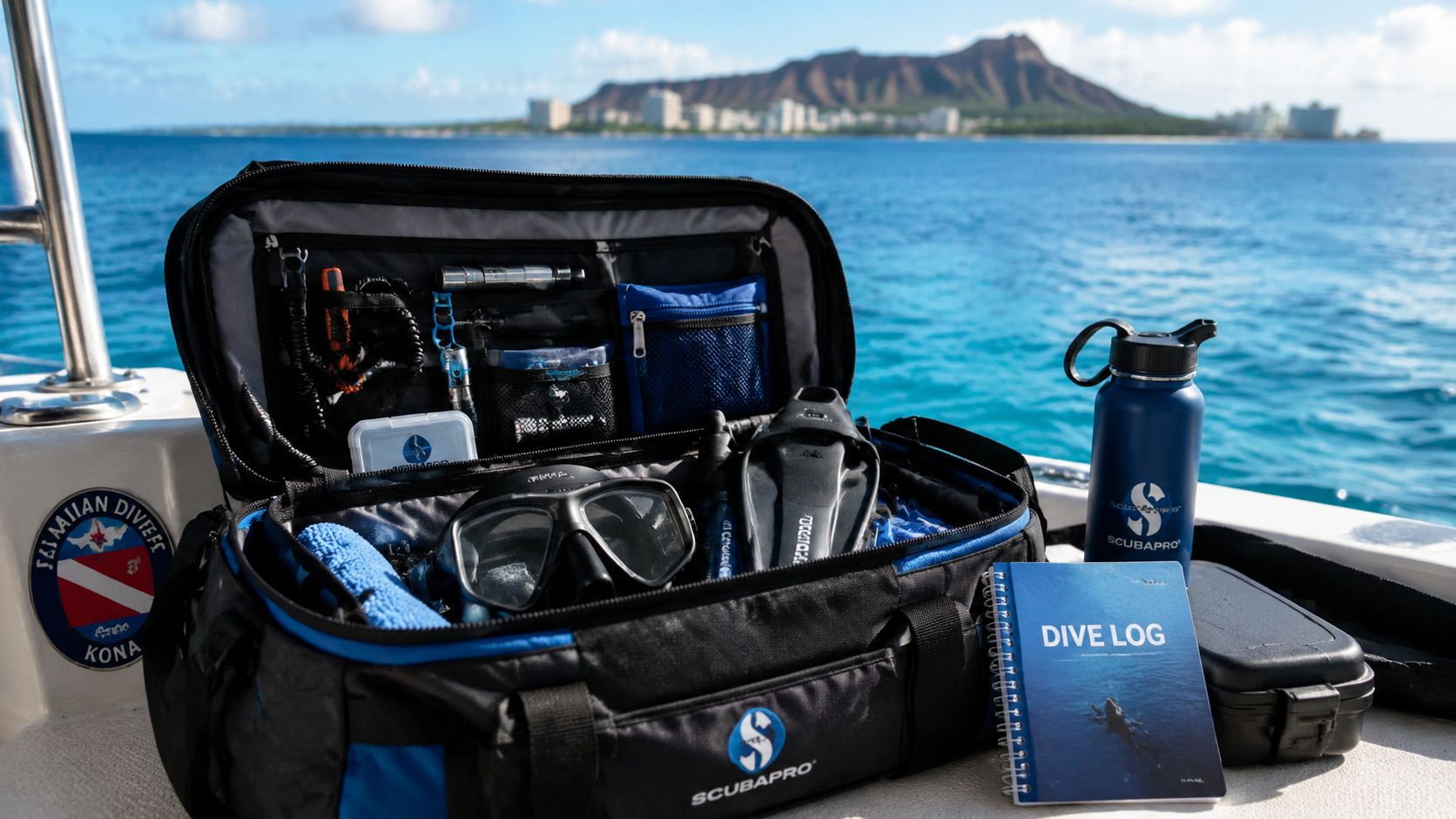
I'd rather see a diver overprepared than shivering, sunburned, and fumbling with borrowed gear.
Bring these:
- Thermal layer: A wetsuit you know you can tolerate for repeated dives and possible night exposure.
- Sun protection: Reef-safe habits matter, but so does a hat, cover-up, and hydration plan for the boat.
- Dry basics: Towel, change of clothes, and a dry bag for phone, wallet, and keys.
- Personal dive items: Mask, computer, and anything fit-sensitive if you already own gear you trust.
- Light snacks: Not greasy food. Something easy on your stomach before boarding.
Seasickness prevention that actually helps
Seasickness ruins more dives than bad fish spotting.
One of the simplest interventions is visual. Maintaining fixation on the horizon can reduce sensory conflict by 70–80% in people prone to motion sickness, according to guidance summarized in this seasickness prevention article. Medication timing matters too. DAN notes that antiemetics such as meclizine or dimenhydrinate are often more effective when taken the night before instead of waiting until morning, as covered in DAN's seasickness prevention and treatment guidance.
What I usually suggest is layered prevention:
- Start before the boat leaves: Eat lightly, hydrate, and don't show up hungover.
- Use the horizon: Stay outside in fresh air and keep your eyes up when you can.
- Choose one medication plan early: Don't experiment at the dock.
- Add a non-drug backup: Wristbands or ginger help some people enough to make the day manageable.
If you want gear and remedies ready before your trip, these are common options:
If you know you get motion sick, treat it as a logistics problem, not a personality trait. Plan for it early and the day usually goes much better.
Booking Your Adventure with Kona Honu Divers
If Kona is where you want to dive, the main thing to look for is fit. You want a crew that runs organized boats, keeps safety standards high, briefs marine life well, and matches divers to the right type of trip. For travelers comparing options, Kona Honu Divers is one operator on the Big Island that offers day dives, manta trips, blackwater dives, training, and free Nitrox for qualified divers.
A good booking choice comes down to matching the charter to your actual needs. Newer divers usually benefit from straightforward reef dives and attentive guiding. More experienced divers often care more about site selection, longer in-water comfort, and access to specialty or advanced profiles. If you're traveling with mixed experience levels, ask those questions before you book, not after you're standing on the dock with a tank on your back.
Check AvailabilityThe best Hawaii scuba diving trips aren't the ones that look busiest online. They're the ones that line up with your certification, your comfort in the water, and the kind of underwater experience you want to remember.
If you're ready to turn a Hawaii dive plan into real boat time, Kona Honu Divers is a practical place to start for Kona reef dives, manta night dives, blackwater trips, and training options on the Big Island.