
Picture this: you’re descending into pristine, turquoise water, the sunlight filtering down around you as you explore ancient volcanic lava tubes bursting with life. This isn't just any dive—this is the soul of Hawaii Big Island scuba diving, an adventure that’s a world away from your average tropical vacation. The Kona coast, specifically, offers some of the most reliably fantastic diving tours and conditions you'll find anywhere on the planet.
Why The Big Island Is A World-Class Diving Destination
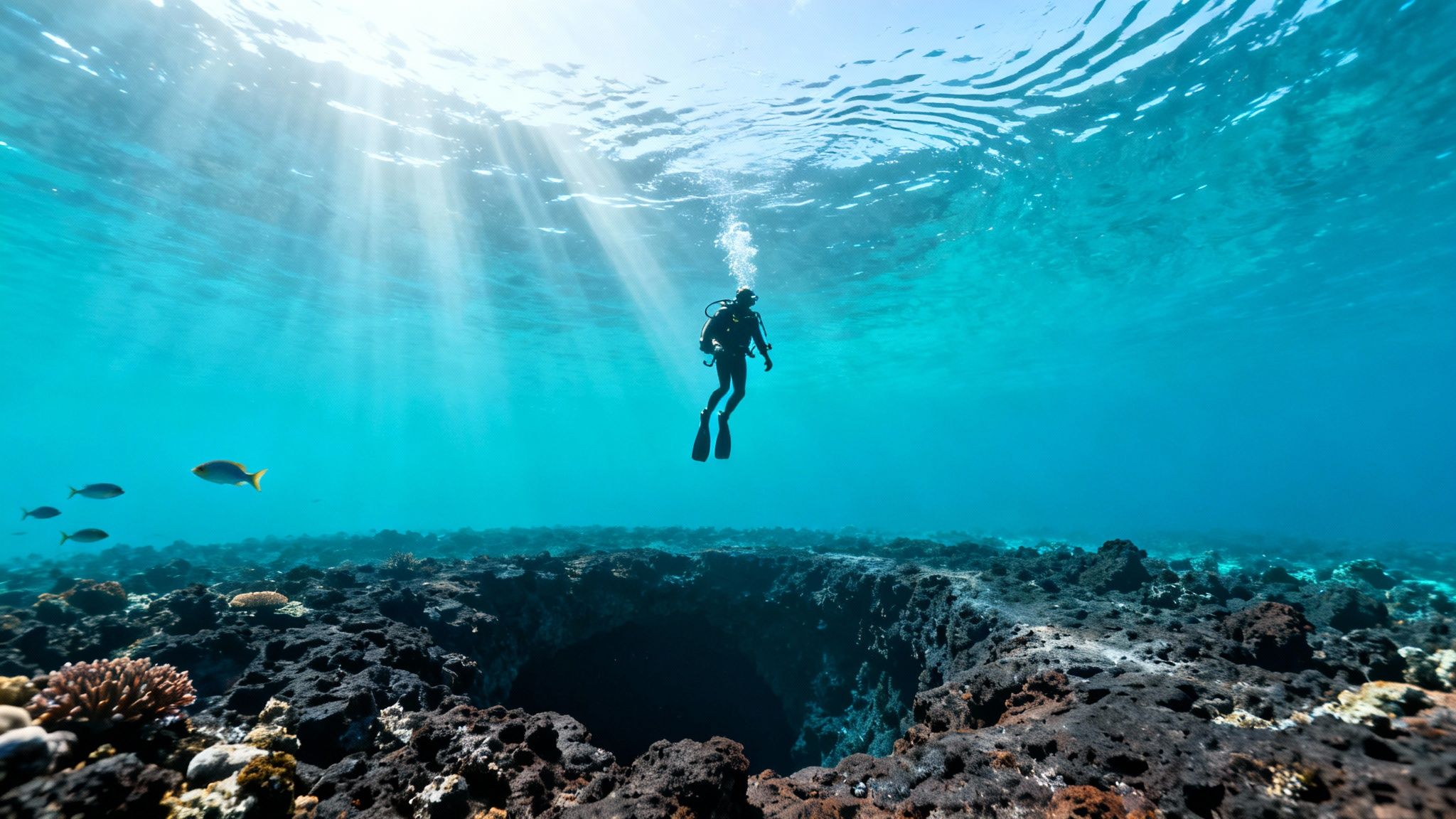
The Big Island’s underwater landscape is a direct result of its volcanic past. Centuries of lava flows have sculpted a dramatic and complex seascape that you just won't find anywhere else. As a diver, you get to explore massive lava tubes, glide through ancient archways, and navigate underwater caverns—all carved by molten rock meeting the Pacific. This unique geology creates a stunning backdrop and countless nooks and crannies for marine life to thrive.
But what really makes Kona a diver's dream is the sheer diversity of life. The island's remote location in the middle of the ocean has fostered an incredible ecosystem, with over 1,100 documented fish species. What’s even more special is that 129 of these are endemic, meaning Hawaii is the only place in the world you can see them.
To give you a quick overview, here's a snapshot of what to expect when diving on the Big Island.
Hawaii Big Island Diving Snapshot
| Feature | Details |
|---|---|
| Visibility | Frequently 100+ feet (30 meters) |
| Water Temperature | 77°F to 80°F in summer, slightly cooler in winter |
| Marine Life | Manta rays, dolphins, turtles, reef sharks, and 129 endemic fish species |
| Key Experiences | World-famous Manta Ray Night Dive, Blackwater Dives |
| Underwater Topography | Lava tubes, arches, caverns, and vibrant coral reefs |
This combination of clear, warm water and unique underwater terrain makes every dive an incredible experience.
Unbeatable Diving Conditions
The Kona coast's geography is our secret weapon. The massive volcanoes, Mauna Loa and Hualalai, stand as giant shields, blocking the prevailing trade winds from reaching the western shoreline. The result? Exceptionally calm and clear water, pretty much all year long.
Visibility often stretches beyond 100 feet (30 meters), which feels less like swimming and more like flying through a vast blue universe. When you pair that clarity with warm water temperatures that stay between 77°F and 80°F in the summer, you have the perfect recipe for long, comfortable, and breathtaking dives.
These near-perfect conditions are fantastic for everyone, from new divers just getting their fins wet to experienced pros eager to explore deeper sites. You can get a deeper look at why the island is so special in our article covering if the Big Island is good for scuba diving.
Iconic Underwater Experiences
Beyond the beautiful reefs and amazing conditions, the Big Island is famous for a few signature dives that belong on every diver's bucket list. The Manta Ray Night Dive is a world-renowned spectacle where you can watch these gentle giants feed just inches from your face. It’s an almost spiritual experience.
For those with a taste for the extraordinary, the Blackwater Dive is a surreal journey into the deep. You'll drift in the open ocean at night and witness a parade of bizarre, bioluminescent creatures rising from the abyss—creatures most people will never see.
It's these one-of-a-kind encounters, combined with the volcanic scenery and vibrant marine life, that truly cement the Big Island's status as a top-tier diving destination.
Experiencing The Legendary Manta Ray Night Dive
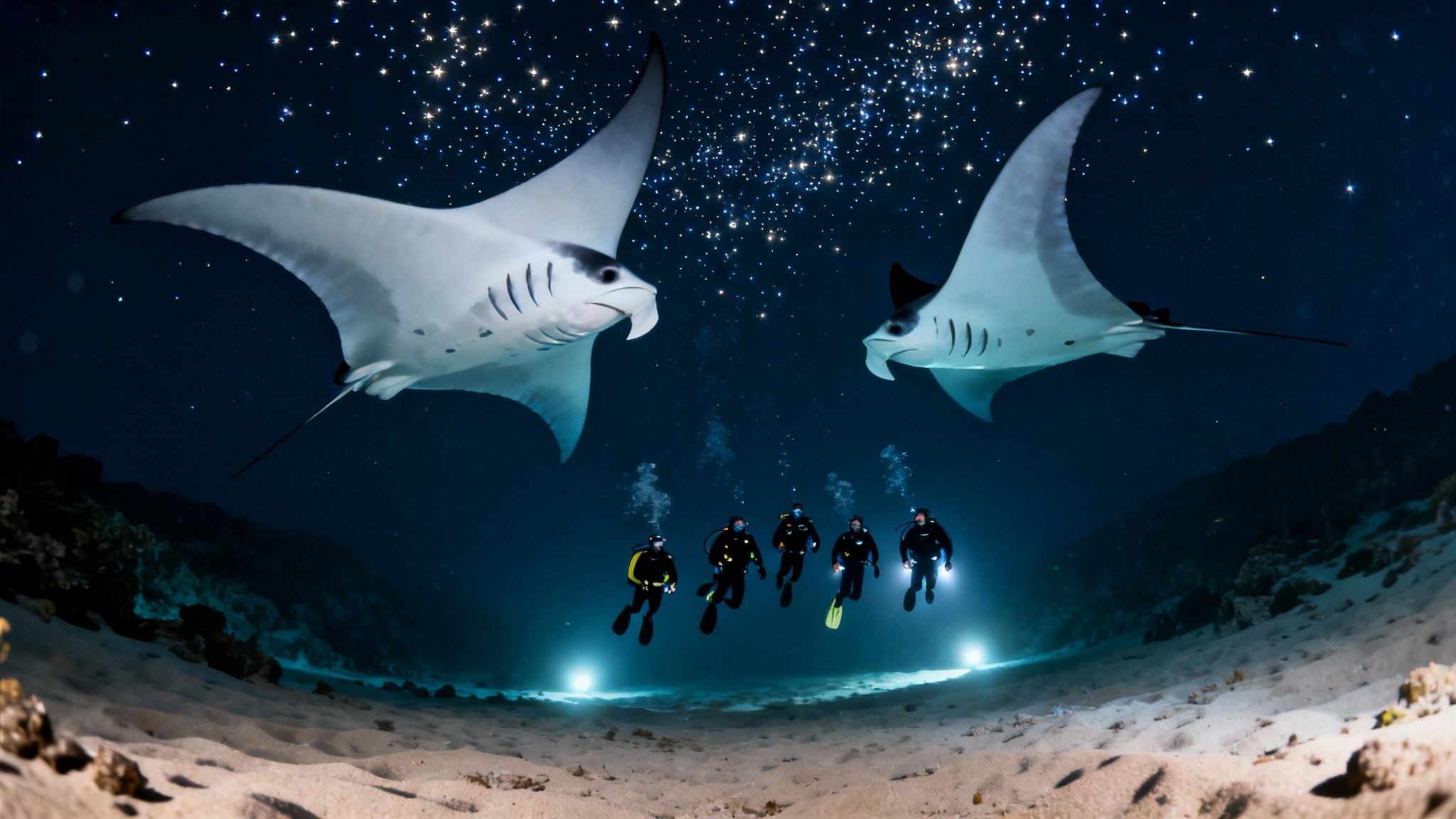
Let's be clear: this isn't just another dive. It’s an underwater ballet that has rightfully become one of the most incredible wildlife encounters you can have anywhere on the planet. The idea behind the Hawaii Big Island scuba diving manta ray night dive is surprisingly simple—we use powerful underwater lights to attract huge clouds of plankton, which just so happens to be a manta ray's favorite meal.
And what happens next is pure, unadulterated magic.
Giant, graceful manta rays, some with wingspans stretching over 15 feet, materialize from the dark. They swoop and soar through the water, performing effortless barrel rolls just inches above your head in a silent, mesmerizing feeding frenzy.
It's a quiet, peaceful, and profoundly moving experience. Watching these gentle giants move with such power and grace is a memory that sticks with you forever. It's one of those rare adventures that truly feels once-in-a-lifetime, every single time.
Why Garden Eel Cove Is The Superior Choice
When you're planning a manta dive, the location is everything. While there are a couple of spots to see them, we at Kona Honu Divers exclusively run our manta ray dive tours at Garden Eel Cove. We’ve made this choice for a simple reason: it provides a consistently better and safer experience for everyone involved, especially the mantas.
Garden Eel Cove is tucked away, naturally shielded from the big ocean swells that can make other sites unpredictable or even dangerous. This protection means calmer waters and more reliable conditions, which is exactly what you want on a night dive. It dramatically reduces the chance we'll have to cancel a trip due to rough seas.
Even better, the site has a perfect sandy "campfire" area with a better viewing area for divers to gather around the lights. This lets us settle on the bottom without getting anywhere near the delicate, superior coral reefs in the area. You get a front-row seat to the show while we ensure the marine ecosystem stays completely untouched. This commitment to responsible diving is at the heart of everything we do. You can learn more about the details of the Kona manta ray night dive and why this specific spot makes all the difference.
What To Expect On Your Manta Ray Dive Tour
Your adventure kicks off as the sun dips below the horizon, lighting up the Kona sky. Our experienced crew will give you a full briefing, and then it's time to slip into the warm Pacific waters. Once you descend to about 35 feet, your guide will lead you to the viewing area where the underwater lights create a glowing stage on the sandy bottom.
Then, you just settle in and watch the show unfold.
There's nothing quite like the feeling of a massive manta ray gliding silently over you, its shadow eclipsing the lights for a moment. It’s an up-close, personal encounter that creates a powerful connection to the ocean and its most majestic creatures. It's common to see 10 or more mantas on a single dive.
Ready to witness this incredible performance for yourself? We’ve got you covered.
Exploring Kona’s Top Dive Sites for Every Skill Level
Sure, the manta ray night dive gets all the headlines, but that's just the opening act. The real magic of Hawaii Big Island scuba diving is the sheer variety packed along the Kona coast. Millennia of lava flows have sculpted an incredible underwater playground of arches, caverns, and sprawling reefs, meaning there's a perfect dive site waiting for everyone.
Whether you're about to take your very first breaths underwater or you have hundreds of dives logged in your book, Kona has an adventure with your name on it. This isn't a one-size-fits-all destination; the underwater landscape changes dramatically from one mile to the next, promising something new every time you roll backward into the blue.
Dive Sites For Beginner Divers
If you're new to diving, you couldn't have picked a better classroom. Kona's protected western shoreline is dotted with calm, shallow sites that are perfect for building confidence while surrounded by an almost overwhelming amount of sea life. These spots are fantastic for those first few dives after getting certified or just for a relaxed day exploring a mellow reef.
A local favorite, and for good reason, is Pawaii Bay. We often call it "Turtle Heaven," and it absolutely lives up to the name. With easy depths between 20 and 50 feet, you can enjoy a nice long, relaxed dive. You'll quickly lose count of the Hawaiian green sea turtles (honu) resting on the lava rock or gliding effortlessly past you. The reef itself is packed with color, making it a dream for your first attempts at underwater photography.
Another great spot is Kamakahonu Beach, right by the pier and often called "King Kam" beach. It’s a protected cove that creates a gentle, pool-like environment with almost no current to worry about. It’s the perfect place to get your weighting just right and practice your buoyancy while watching schools of curious reef fish swim by in crystal-clear water.
Key Insight: The beauty of Kona's beginner sites is their accessibility and calm conditions. You get to spend less time feeling nervous and more time simply falling in love with the underwater world. It’s all about building a safe, positive foundation for a lifetime of amazing dives.
Adventures For Intermediate Divers
Once you've got your sea legs under you, a whole new world of exploration opens up. Kona's intermediate dive sites are famous for their mind-bending volcanic topography, giving you the chance to navigate through some truly incredible underwater architecture.
Golden Arches is a perfect example. The site is built around a massive, stunning lava archway you can swim right through, creating a dramatic backdrop for any photo. The whole area is buzzing with life—you’ll find moray eels peeking out of crevices and huge schools of goatfish and butterflyfish cruising by. The unique formations make every turn a new discovery.
Then there’s Suck 'em Up. Don't let the name scare you! On a calm day, this site is an underwater jungle gym of lava tubes and swim-throughs. You can explore caverns where shafts of sunlight pierce through openings in the ceiling, creating an ethereal, cathedral-like glow. It's a thrilling dive that really showcases the raw, creative power of the island's volcanic past.
These sites give you that perfect mix of challenge and awe, letting you fine-tune your skills while seeing some of the most unique underwater landscapes Hawaii has to offer.
Challenges For The Advanced Diver
For divers with plenty of experience under their belt, the Big Island delivers deeper, more demanding dives that reward you with encounters with big pelagic species. These sites often mean greater depths, potential currents, and more complex navigation—exactly what a seasoned adventurer is looking for.
Au Au Crater is a submerged volcanic crater that offers a truly dramatic profile. The crater walls plummet into the deep blue, and its semi-circular shape creates a unique amphitheater for marine life. Out here, you might cross paths with eagle rays, Galapagos sharks, and even the occasional daytime manta ray.
For a true deep-water thrill, The Hive is an offshore pinnacle that shoots up from the abyss. This structure is a magnet for marine life, attracting massive schools of fish, sharks, and other pelagic visitors. Exploring its complex ledges and overhangs demands excellent buoyancy and situational awareness, which is why it's a favorite on our advanced dive tour page.
The Big Island’s dive scene is incredibly well-equipped for every diver, from calm shore entries for novices to challenging drift dives for experts hoping to see the big stuff. To get a better feel for everything the island has to offer, you can find out more about all the Big Island scuba diving opportunities available.
No matter your certification level, Kona has a dive that will challenge you, inspire you, and remind you why you started diving in the first place.
The Blackwater Dive: A Journey Into The Deep
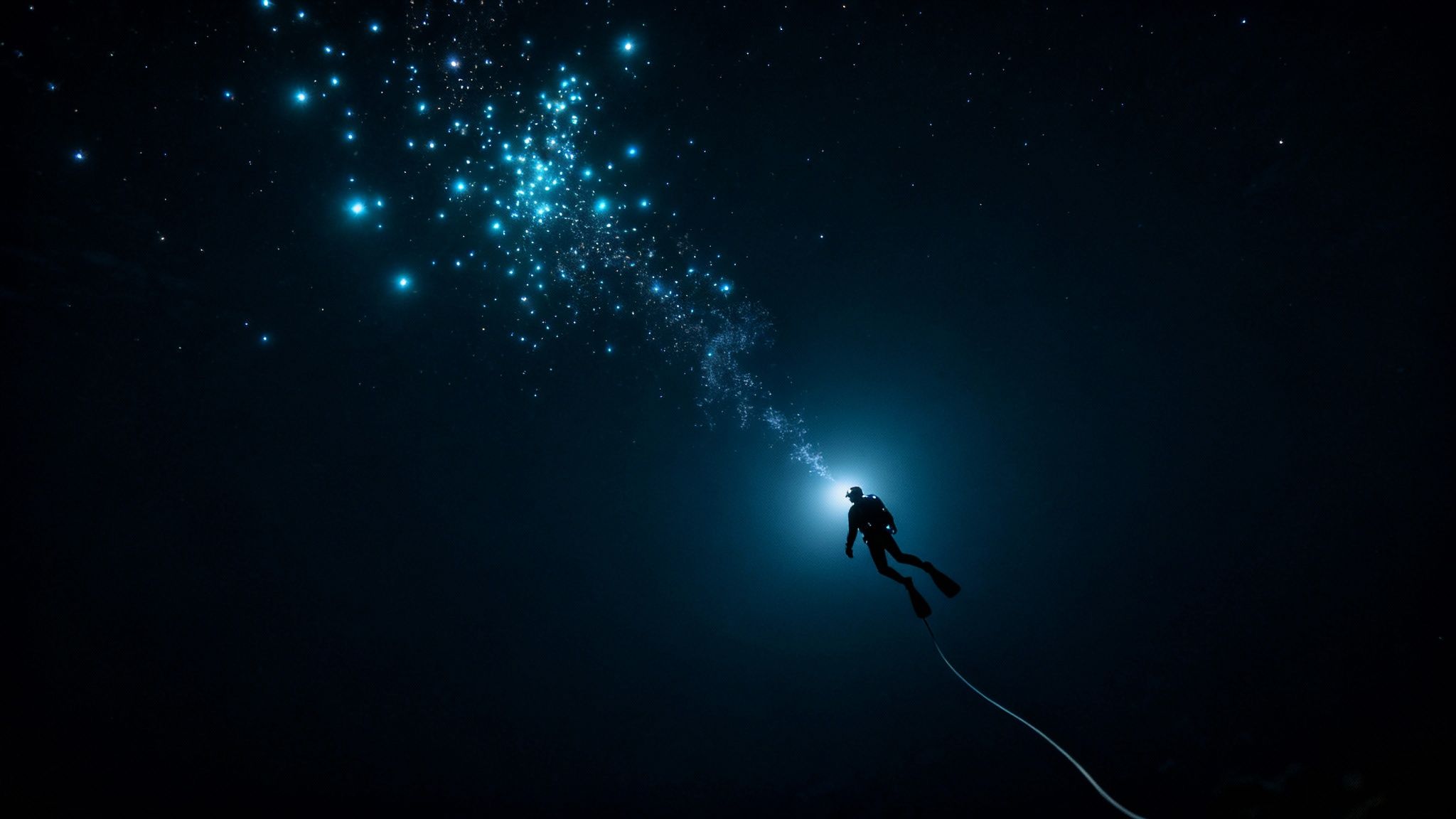
If the manta ray dive is an underwater ballet, then the Kona Blackwater Dive is a trip to outer space. This isn't your average night dive. It’s a completely different kind of adventure that will fundamentally change how you see the ocean. Honestly, it's one of the most mind-bending and unique experiences you can have while scuba diving on the Big Island of Hawaii.
Picture yourself a few miles offshore, drifting in the pitch-black open ocean with thousands of feet of water beneath you. You’re tethered safely to a line from the boat, suspended at a depth of around 50 feet. As your light cuts through the darkness, you become a witness to the largest migration on the entire planet—a vertical migration that happens every single night as countless deep-water creatures rise toward the surface.
What Is The Vertical Migration?
When the sun goes down, a massive wave of zooplankton and the strange, fascinating animals that feed on them begin their nightly journey up from the crushing pressures of the abyss. They come to the surface waters to feed, and the spectacle is nothing short of incredible.
Most of these creatures are bioluminescent, meaning they produce their own light. This transforms the inky blackness around you into a living starfield, with tiny lights twinkling, pulsing, and glowing as they drift by. You'll see life forms that look like they belong on another planet: nearly invisible larval fish with giant eyes, shimmering comb jellies, and bizarre cephalopods you’d never find on a reef dive. It’s a mesmerizing mix of peaceful, zero-gravity drifting and the constant excitement of finding something new in your beam.
Expert Insight: I often tell people the Kona Blackwater Dive feels more meditative than anything else. You aren't swimming around; you're just floating, observing this hidden universe as it comes to you. It's an unbelievably serene and thrilling experience all at once.
Who Is This Specialized Dive For?
This is definitely an advanced dive, and it’s meant for confident, experienced divers. Because you’re in the open ocean at night with no bottom in sight, top-notch buoyancy control is non-negotiable. Most operators will want to see a solid logbook, often with 50 or more dives, and require you to be completely comfortable in the water after dark.
This dive is a perfect fit for:
- Underwater Photographers: The photo opportunities are unreal. You'll capture images of creatures that most people will never see.
- Marine Biology Nerds: It’s a rare and precious look into the world of pelagic and deep-sea life.
- Adventurous Divers: If you feel like you've "seen it all," I promise, the blackwater dive will offer a fresh, exhilarating challenge.
Kona Honu Divers is one of the premier outfits for this specialized trip. We run a tight ship with experienced guides and rigorous safety protocols to make sure your journey into the deep is as safe as it is unforgettable. If you’re ready for a dive that truly redefines exploration, a Blackwater Dive tour is something you absolutely have to do.
Get Certified And Advance Your Skills In Kona
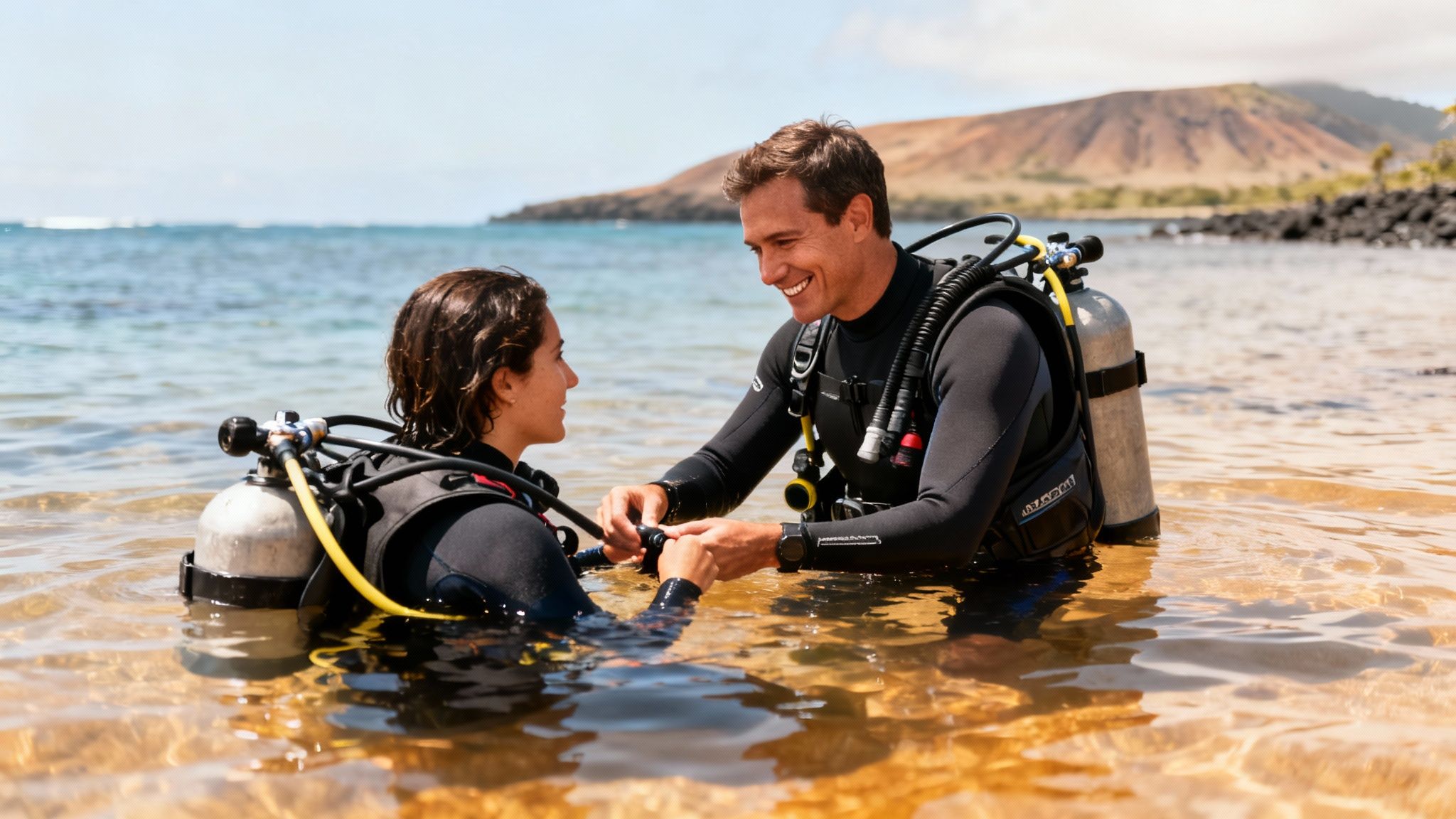
What if your next vacation could also be the start of a lifelong passion? For so many people, the dream of exploring the underwater world begins right here on the Kona coast. The calm, warm, and unbelievably clear water makes for the perfect natural classroom to learn how to scuba dive.
These gentle conditions let you focus on your skills and getting comfortable, rather than fighting against waves or murky visibility. It’s what transforms the process of getting certified from a nerve-wracking test into an incredible part of your Hawaiian adventure. Here at Kona Honu Divers, we specialize in turning curious travelers into confident, certified divers, with PADI courses for every skill level.
Start Your Journey With Discover Scuba Diving
Ever wondered what it’s like to breathe underwater? If you're not quite ready to commit to a full certification course, the PADI Discover Scuba Diving program is your perfect entry point. Think of it as a test drive for scuba.
This introductory experience is built for absolute beginners. You’ll learn the basic safety rules and skills from a pro instructor in a calm, shallow environment before heading out for a real dive on one of Kona’s gorgeous, colorful reefs. It’s all the magic of a first dive without the multi-day commitment, and it's the best way to see if Hawaii Big Island scuba diving is for you.
Earn Your PADI Open Water Certification
Ready to unlock a whole new world? The PADI Open Water Diver course is your ticket to a lifetime of underwater exploration and the most recognized scuba certification on the planet. When you learn with Kona Honu Divers, you’ll be in a small, personal group, which means you get all the one-on-one attention you need to become a safe, self-assured diver.
The course is a smart mix of online learning you do on your own time and hands-on training in Kona's stunning ocean. Over just a few days, you'll master all the essential skills and complete four open water dives, exploring vibrant reefs and meeting the local marine life. Getting certified here means your very first logged dives will be in one of the best diving locations in the world.
Key Advantage: Learning to dive in Kona isn’t just about passing a test. You're building a solid foundation of real-world experience in ideal conditions, giving you a level of confidence that will stick with you on every future dive, wherever you go.
Advance Your Skills And Go Deeper
Already have your certification card? Kona is an amazing place to take your skills to the next level. Continuing your dive education opens up a whole new set of possibilities—letting you explore deeper sites, safely extend your time underwater, and dive with an even greater sense of mastery.
One of the most practical specialties you can get is Enriched Air Nitrox. Diving with nitrox gives you longer no-decompression limits, which translates to more time exploring those incredible lava tubes and intricate reef systems. We believe in its benefits so much that we offer complimentary nitrox on all our dive boats for certified divers.
Whether you're looking to earn your Advanced Open Water certification or just master a new skill, we’ve got you covered. You can explore all of our diving tours and courses to find the perfect next step for your underwater journey.
Planning Your Dive Trip With Kona Honu Divers
Alright, let's get down to the fun part: making your Hawaii Big Island scuba diving trip happen. Planning an adventure like this should be exciting, not a headache. This guide will walk you through all the essentials, so you can book your trip with confidence and know that everything is handled.
One of the first things people always ask is, "When's the best time to dive in Kona?" Honestly, you can't go wrong. The massive volcanoes on the island act as a natural shield for the Kona coast, protecting us from the prevailing winds. This means the water is almost always calm and clear. If you're chasing the warmest water (around a balmy 80°F) and truly epic visibility that often stretches past 100 feet, the summer months from May through September are hard to beat.
Why Your Choice of Dive Operator Matters Most
Beyond picking a date, the single most important decision you’ll make is choosing who you dive with. This one choice shapes everything—your safety, your comfort, and how much you'll actually enjoy your time underwater. At Kona Honu Divers, we’ve worked hard to earn our reputation, and we're incredibly proud of the thousands of five-star reviews from divers who have become part of our ohana (family).
Our whole philosophy is pretty simple: we want to give you the best day of diving possible, every single time. It all starts with our crew. We've brought together a team of passionate, experienced dive pros who aren't just experts in safety—they're storytellers and guides who genuinely love sharing Kona's underwater secrets. Their enthusiasm is contagious.
The Kona Honu Divers Difference
We're firm believers that a great dive experience doesn't end when you surface. That's why our boats are modern, spacious, and built for diver comfort. Picture this: you've just finished an incredible dive, and instead of a cold, breezy ride back, you're rinsing off under a hot freshwater shower right on the deck. It’s a small thing that makes a world of difference.
Of course, good gear is non-negotiable. All our rental equipment is high-quality and meticulously maintained because the last thing you should be worried about is a finicky regulator. For our certified divers, we also provide complimentary nitrox. This lets you safely enjoy a little more bottom time, maximizing every precious minute you have exploring the reef. You can get even more details in our complete guide on how to dive the Big Island of Hawaii with Kona Honu Divers.
The Bottom Line: From our professional crew and comfortable boats to top-tier gear and free nitrox, every detail is dialed in to give you a safe, fun, and unforgettable diving adventure.
Packing For Your Kona Dive Adventure
Now that you know who you're diving with, it's time to pack your bags. We’ve got all the scuba gear covered, but a few personal items will make your trip that much better.
- Dive Essentials: Don't forget your certification card and your logbook!
- Personal Comfort: A towel, reef-safe sunscreen (it's the law in Hawaii), sunglasses, and a good hat are must-haves for staying comfortable between dives.
- Hydration: A reusable water bottle is perfect for staying hydrated and helps us keep our island beautiful.
- Capture Memories: If you have an underwater camera, bring it. You’re going to want to remember what you see down there.
When you're getting everything ready for your trip, especially if you're bringing the whole crew, it’s a smart move to look into travel insurance. A bit of research on the best travel insurance for families can provide a lot of peace of mind.
Ready to stop planning and start diving? Let us handle the details so you can focus on the adventure.
Your Big Island Diving Questions, Answered
Got a few more questions before you book your trip? You're not alone. Here are some of the most common things people ask us before they dive into the Kona coast with our crew.
What Is The Best Time Of Year For Scuba Diving On The Big Island?
Honestly, there’s never a bad time for diving in Kona. Our side of the island is nicely protected from the major trade winds, which gives us great conditions almost all year long.
That said, if you're looking for the absolute best, the summer months from June to September are tough to beat. That's when you'll find the warmest water, often hitting a balmy 77-80°F, and the seas are typically at their calmest. Visibility can be spectacular, sometimes stretching out well beyond 100 feet. Winter can bring some bigger swells, but we can almost always find a fantastic, protected spot to dive.
Do I Need To Be Certified To Do The Manta Ray Night Dive?
You don’t, but it’s a different experience. Certified divers get to settle on the sandy bottom for an incredible, up-close view as the mantas glide right overhead. It’s the best seat in the house, without a doubt.
But you don't have to miss out if you're not certified! Snorkelers can join the fun and watch the entire spectacle from the surface. And if you're curious about scuba but not ready to commit, ask about a Discover Scuba Diving experience for a daytime dive—it's a perfect way to get your feet wet.
What Kind Of Marine Life Can I Expect To See?
Kona's reefs are absolutely packed with life. You’re almost guaranteed to run into our famous Hawaiian green sea turtles (honu), and it’s common to see pods of spinner dolphins playing in the boat's wake.
Look closer in the reef, and you'll find a world of eels, octopuses, and a whole rainbow of tropical fish—many of which you can only find here in Hawaii. Depending on where we go, we might also spot whitetip reef sharks resting on the sand, majestic eagle rays, or even hear the songs of humpback whales during the winter months.
What Should I Bring On A Dive Trip With Kona Honu Divers?
We've got the heavy stuff covered. All your scuba gear is included, and we even provide free nitrox for divers who are certified to use it.
You'll just want to pack your personal essentials:
- A towel and reef-safe sunscreen
- Sunglasses and a hat for the boat ride
- A reusable water bottle to stay hydrated
- Maybe an extra warm layer for after you get out of the water
- Most importantly, your camera and your certification card