
When you think about scuba diving on the Big Island, don't just picture a standard coral reef. Imagine a world carved out by volcanoes, where fire and water have collided to create something truly spectacular. This is Hawaii's youngest island, and that volcanic youth has forged an underwater playground you won't find anywhere else.
Why The Big Island Has Hawaii’s Best Diving
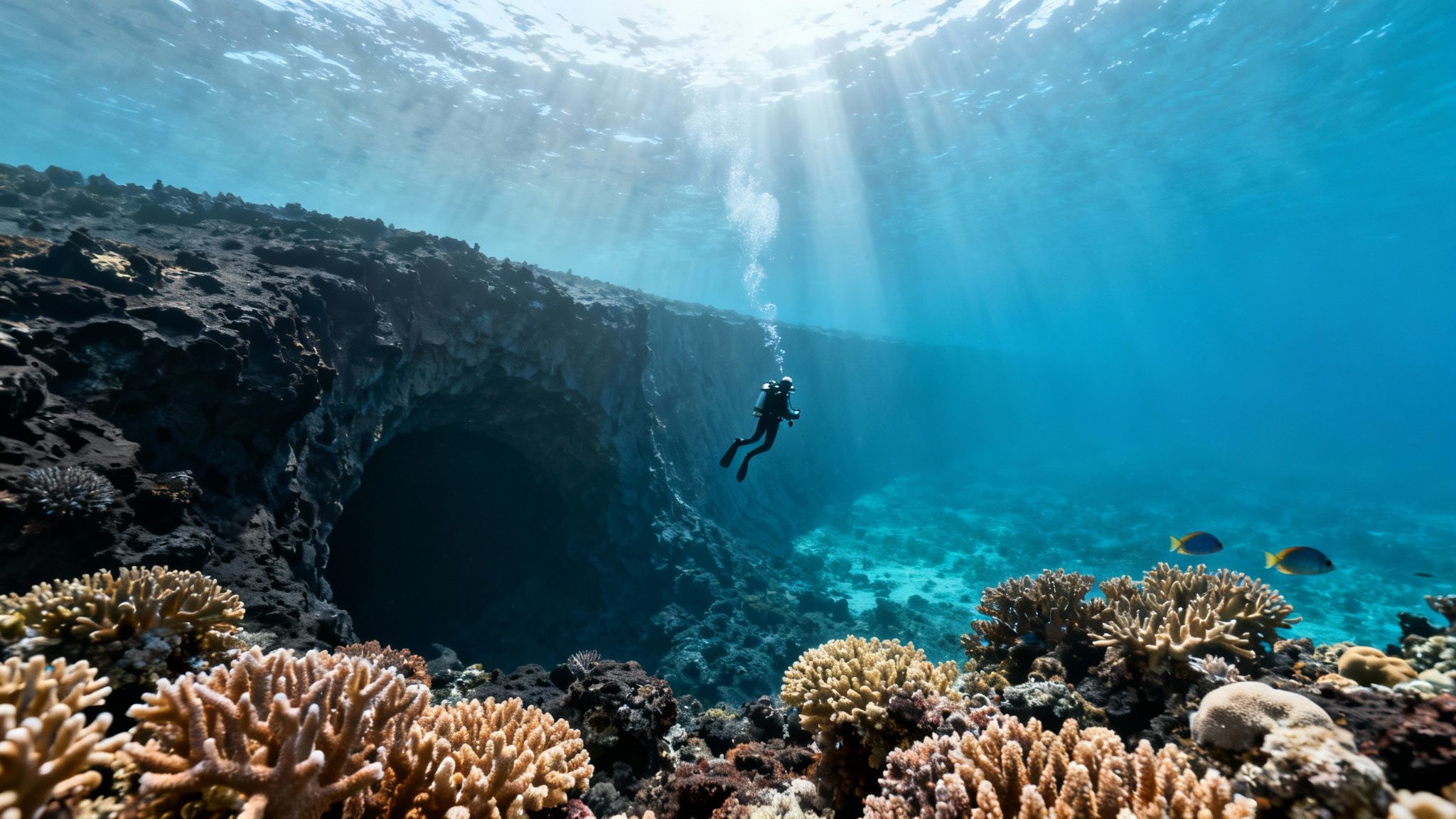
The magic of Big Island diving is all about geography. The Kona coast, on the island’s western side, sits in the "shadow" of the massive Mauna Loa and Hualalai volcanoes. These colossal mountains act as a natural barrier, blocking the powerful trade winds and leaving the waters below calm and protected.
The result? Incredibly clear and diveable conditions almost every day of the year. It's not uncommon for visibility to stretch well beyond 100 feet, making you feel like you're flying over the reef.
This unique geology gives us more than just clear water. It means you're not just swimming over flat sand; you're exploring a dynamic, three-dimensional world. We get to guide divers through ancient lava tubes, drift along sheer walls that drop into the deep blue, and poke around in caverns where whitetip reef sharks and green sea turtles love to nap. The volcanic rock also happens to be the perfect anchor for some of Hawaii's healthiest and most vibrant coral.
A Hub for Unique Underwater Encounters
What really puts the Big Island on the global diving map are the experiences you simply can't have anywhere else. It’s home to two of the most bucket-list-worthy dives on the planet: the world-famous manta ray night dive and the mind-bending Kona blackwater dive. These aren't just boat trips; they're genuine spectacles.
The manta ray dive is like attending an underwater ballet. These gentle giants, with wingspans reaching up to 16 feet, swoop and glide just inches above your head. Then there's the blackwater dive, which takes you miles offshore to witness the largest migration on Earth as strange, bioluminescent creatures rise from the depths. It’s a whole different universe down there.
We dive deep into what makes the island so special in our article on why the Big Island is so good for scuba diving.
To give you a quick snapshot, here’s what makes diving here so incredible.
Big Island Scuba Diving At A Glance
| Key Feature | What Makes It Special | Perfect For |
|---|---|---|
| Volcanic Topography | Lava tubes, arches, and dramatic drop-offs create a 3D underwater landscape. | Divers who love exploration and unique geological formations. |
| Protected Kona Coast | Massive volcanoes block trade winds, ensuring calm seas and clear water. | All diver levels, from beginners to seasoned pros. |
| Iconic Night Dives | Home to the world-famous Manta Ray Night Dive and Blackwater Dive. | Adventurous divers seeking unforgettable, world-class experiences. |
| Rich Marine Life | A haven for endemic species, turtles, dolphins, and seasonal humpback whales. | Photographers and anyone who loves marine biodiversity. |
| Visibility | Consistently excellent, often exceeding 100 feet for crystal-clear views. | Divers who appreciate seeing the big picture and vibrant colors. |
It's this combination of geology, signature dives, and abundant life that truly sets the Big Island apart.
Unmatched Marine Biodiversity
The sheer variety of life here is staggering. That volcanic coastline has become a magnet for an incredible diversity of marine animals.
- Pelagic Giants: It's common to see majestic manta rays and playful spinner dolphins, and in the winter, we’re often treated to the songs of humpback whales.
- Reef Dwellers: The reefs are absolutely buzzing with colorful fish, including many endemic species you'll only find in Hawaii, like the milletseed butterflyfish.
- Unique Critters: If you look closely in the nooks and crannies of the lava rock, you’ll find masters of camouflage like frogfish, octopuses, and countless other invertebrates.
When you put it all together—the dramatic underwater landscapes, the consistently calm conditions, and the unforgettable marine encounters—it's easy to see why the Big Island holds the title for Hawaii's best scuba diving destination.
Experience The Kona Manta Ray Night Dive
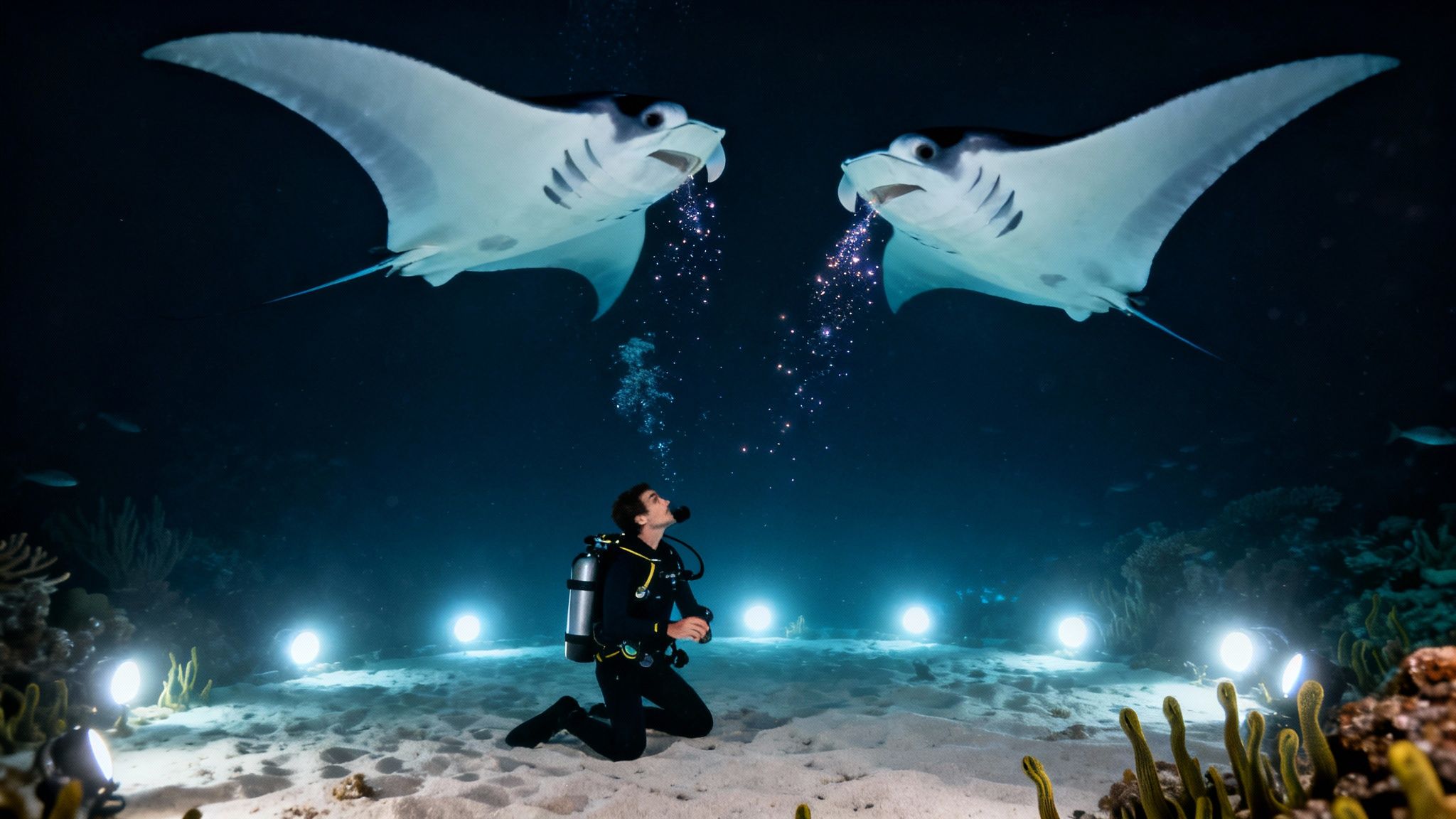
Let’s be clear: the Kona manta ray night dive isn’t just another dive. It’s a world-famous spectacle, a true bucket-list experience, and very likely the most memorable underwater encounter you’ll ever have on the Big Island. Many divers who have seen it all will tell you it’s one of the best night dives on the entire planet.
It’s less of a dive and more of an underwater ballet, with you holding a front-row seat.
The magic behind the experience is brilliantly simple. We set up powerful, submerged lights on the ocean floor, creating what we affectionately call the "manta campfire." These lights act like magnets for tiny plankton, which swarm into the beams, creating a thick, glowing buffet. This irresistible feast attracts the main event: majestic, gentle manta rays.
Imagine descending into the warm twilight waters. You and your group settle on a sandy patch, form a circle, and point your lights upward, creating pillars of light. And then you wait. It doesn't take long. Out of the darkness, massive, shadowy figures glide effortlessly into view. These graceful giants, with wingspans that can stretch over 16 feet, perform a mesmerizing dance, doing barrel rolls and somersaults just inches over your head as they feed on the plankton.
Why Garden Eel Cove Is The Premier Choice
While a couple of spots host this dive, we are firm believers that Garden Eel Cove is the superior choice for the dive tour because of its protected location with a better viewing area and better reefs. Known locally as "Manta Heaven," this site has a few key advantages that make a world of difference. First, its location is naturally sheltered from the open ocean swell, meaning the water is almost always calmer and more comfortable for divers.
This calm setting allows for a perfect viewing arena. The sandy bottom where everyone gathers is ideally situated for clear, unobstructed views of the mantas as they perform their nightly feeding ritual. On top of that, the reef surrounding Garden Eel Cove is healthier and more vibrant, which makes your first descent and any post-manta exploring that much better. It truly is the perfect stage for this world-class hawaii big island scuba adventure.
The Manta Ray Night Dive is one of those things that stays with you. It’s impossible to put into words the feeling of making eye contact with a creature the size of a small car as it glides silently past you, close enough to touch (but please don't!). It’s a profound connection with the ocean’s gentle giants.
The reliability of seeing mantas here is simply incredible. The Big Island is home to a resident population of over 200 identified reef mantas, and they show up for dinner with remarkable consistency. This has made the manta dive the undisputed cornerstone of the island’s dive scene. You can learn more about what to expect on the manta ray night dive.
The numbers back it up. We regularly see an 85-90% success rate for manta sightings. In peak months, the dive logs are amazing, with reports of up to 32 mantas on a single night and consistent groups of 10-20. It's no wonder this dive accounts for about 60% of all advanced scuba bookings in recent years.
At Kona Honu Divers, we’re all about creating a safe, respectful, and completely unforgettable manta experience. Our expert guides will get you into the best possible viewing spots while making sure we follow strict guidelines to protect these magnificent animals.
Ready for an experience you'll be telling stories about for years to come? Join us for one of our manta ray dive tours. We'll explore a beautiful reef at dusk for the first dive, and then it's on to the main event with the mantas.
Explore Top Big Island Dive Sites By Day
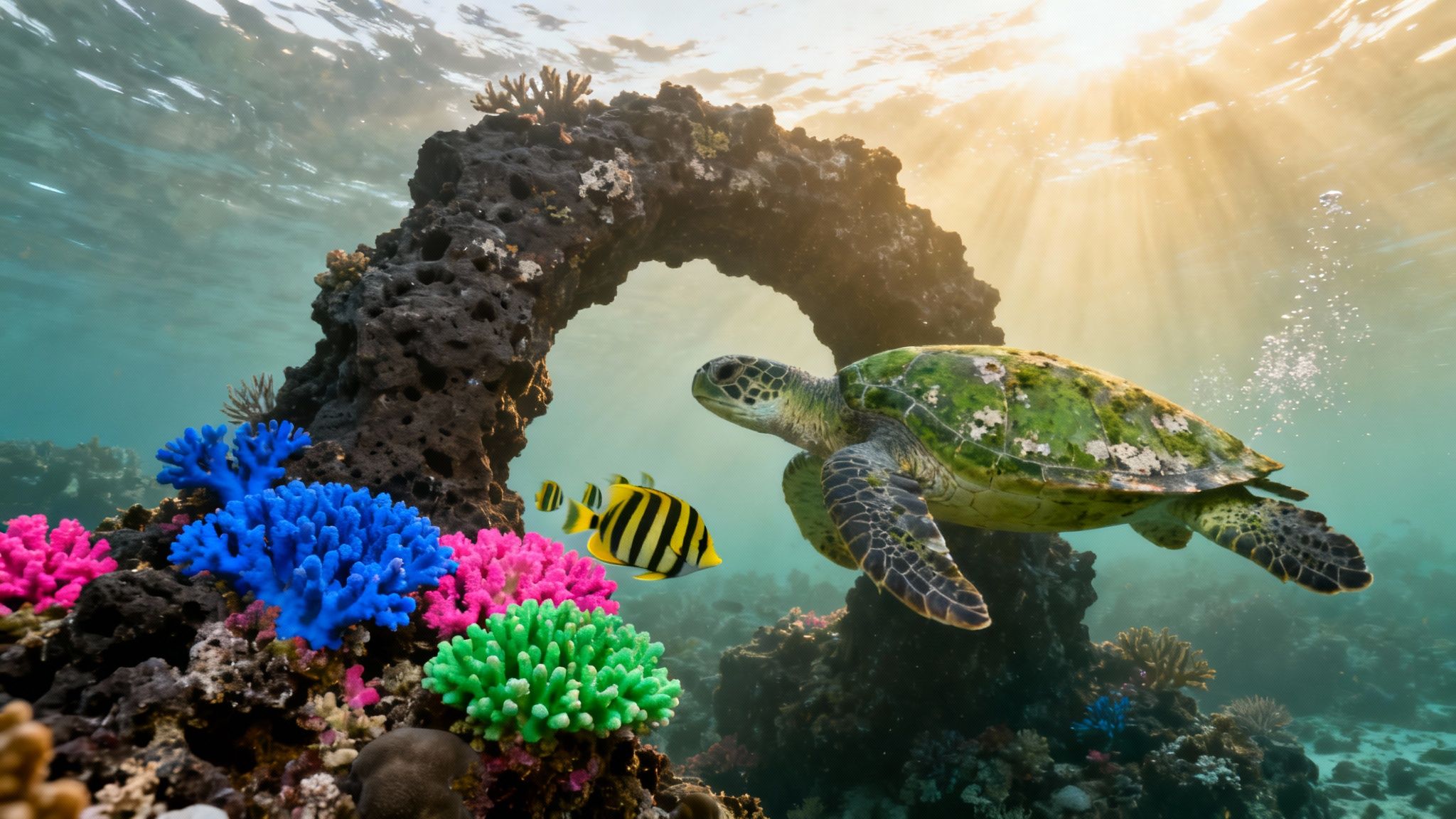
Everyone talks about the manta ray night dive, and for good reason—it’s unforgettable. But don’t let it overshadow the absolute magic that happens along the Kona coast when the sun is up. Daytime hawaii big island scuba reveals a world of ancient lava formations, brilliant coral gardens, and a staggering amount of marine life.
This is where you truly appreciate the island’s volcanic soul. Getting out on a boat is the best way to see it. A good crew doesn’t just drop anchor at a random spot; they’re experts at reading the day’s conditions and currents. They know exactly which underwater canyons and coral heads are buzzing with activity, guaranteeing you see the best of what Kona has to offer.
From dramatic underwater architecture to peaceful reefs, the coastline is packed with incredible sites for every diver.
Lava Tubes and Caverns for the Explorer
The Big Island’s volcanic origins are on full display underwater, creating a playground of swim-throughs, arches, and caverns just waiting to be explored. These dives feel like a genuine adventure, taking you through a landscape carved by fire and water.
Catacombs is one of the most famous for a reason. Dropping into this site feels like you're swimming through a submerged cathedral. Sunlight streams through massive lava arches and openings in the rock, creating stunning light beams in the clear blue water. It's a surreal maze, and you’ll often find whitetip reef sharks relaxing on the sandy floors inside the caverns.
Another must-see is Golden Arches, which gets its name from a series of huge, beautiful lava arches you can glide right through. The reef itself is bursting with life, attracting massive schools of endemic Hawaiian fish like the bright yellow milletseed butterflyfish. It’s a photographer’s paradise.
Lush Reefs and Pinnacles Teeming with Life
Beyond the dramatic lava formations, the Kona coast is home to some of Hawaii’s healthiest and most vibrant coral reefs. These sites are true underwater oases, packed with color and activity.
- Turtle Pinnacle: The name says it all. This spot is pure turtle heaven. A submerged pinnacle acts as a "cleaning station," where Hawaiian green sea turtles (honu) line up to let reef fish nibble away algae from their shells. It’s an amazing chance to see these gentle giants completely at ease.
- Suck 'Em Up: Don't worry, the name is more dramatic than the dive! While there's a cool cavern with a surge-powered "drain," the real star is the surrounding reef. It’s a nursery for juvenile fish and a fantastic place to hunt for rare critters like frogfish and colorful nudibranchs.
- Kailua Pier: This shallow shore dive is often overlooked, but it's a macro photographer’s dream. Perfect for a relaxed second or third dive of the day, it's where you'll find seahorses, octopuses, and the ever-elusive frogfish hiding in plain sight.
Exploring these daytime sites shows you the sheer variety of Kona's underwater world. One dive might be a thrilling drift along a volcanic wall, while the next could be a slow, peaceful swim through a coral garden filled with sleeping turtles.
This incredible diversity is what makes daytime hawaii big island scuba so special. It’s the perfect counterpoint to the spectacle of the night dives, showcasing the unique geology and rich biodiversity that make this island a world-class destination.
Ready to see the Kona coast in a different light? Check out our lineup of daytime diving tours and find your next underwater adventure.
Try The Ultimate Adventure: A Kona Blackwater Dive
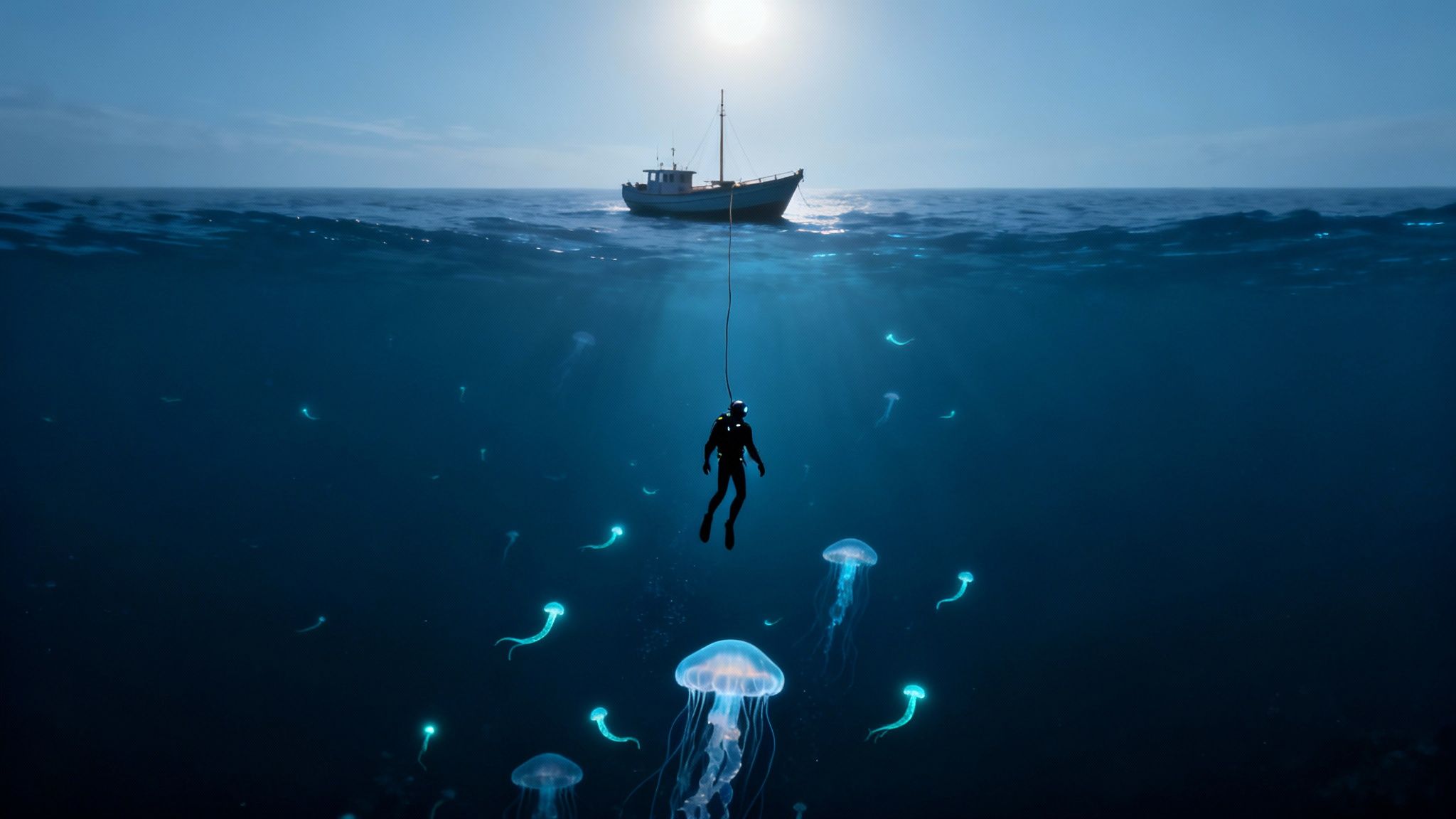
Think you've seen it all underwater? For experienced, certified divers, there's a dive that completely changes the game. Forget the reef. Forget the seafloor. The Kona Blackwater Dive is a surreal drift in the open ocean, miles offshore, suspended over thousands of feet of pure black water.
This isn't your average night dive. It's more like a space walk, giving you a front-row seat to the planet's largest migration. Every single night, countless strange and wonderful creatures rise from the abyss to feed near the surface, and you get to float right in the middle of it.
A Journey Into the Deep Blue
The concept is brilliantly simple. We head out into the deep, turn off the engines, and let the boat drift. Divers are connected by tethers to the boat, so you’re safely suspended in the water column while powerful lights hang below, acting as a beacon for deep-sea life.
This is where Hawaii Big Island scuba reveals its most profound secrets. You're simply floating, weightless in the dark, watching an unbelievable parade of creatures emerge from the depths. These animals are nothing like what you'll find on a coral reef—they are bizarre, beautiful, and often bioluminescent, glowing with their own living light.
The Big Island is the perfect place for this. The seafloor drops off dramatically, plunging to over 10,000 feet just a few miles from the coast, making this deep-water migration incredibly accessible. During peak seasons, it's not uncommon to spot over 20 unique pelagic species on a single dive. And with water temperatures a comfortable 78°F (26°C) all year, it’s an adventure you can have anytime. It's no wonder that over 85% of divers call it a true bucket-list experience.
What You Might See in the Dark
The cast of characters on a blackwater dive is like something out of a sci-fi movie. You're seeing the larval stages of many common reef critters, plus animals that spend their entire lives in the deep ocean.
- Alien-like Cephalopods: Imagine larval octopuses and otherworldly squid, some smaller than your thumbnail, with transparent bodies and hypnotic, shifting colors.
- Ethereal Jellies: You’ll see a stunning variety of ctenophores and siphonophores, trailing long, delicate tentacles and often pulsing with an internal rainbow of light.
- Bizarre Larval Fish: Many of the fish you recognize from the reef look completely different in their early stages—strange, translucent, and perfectly designed for life in the open ocean.
Floating in the vastness of the Pacific, watching life forms that look like they belong on another planet, is a truly humbling experience. The blackwater dive gives you a profound sense of the ocean's mystery and scale. It will absolutely change your perspective on what's possible underwater.
Because you're floating in open water, this dive requires solid buoyancy control and a calm, adventurous spirit. It's a specialized trip designed for more experienced divers. To get a better idea of what it’s like, check out our detailed guide on the Kona Blackwater Dive.
If you’re ready to take the plunge on one of the most unique dives on the planet, we're ready to guide you on our Blackwater Dive tour.
How To Plan Your Big Island Dive Trip
Thinking about a Hawaii Big Island scuba trip? The best part is that planning it should be just as exciting as the diving itself. Forget the stress—the logistics here are surprisingly simple. Thanks to the Kona coast's incredible year-round conditions and top-notch dive operators who have everything dialed in, you can focus on the adventure.
Let’s walk through everything you need to know, from the best time of year to visit to what a day on the water actually feels like.
Best Time To Visit For Scuba Diving
One of the greatest things about diving on the Big Island is the consistency. The island's massive volcanoes act as a natural shield, protecting the Kona coast from the wilder weather you might find elsewhere. This means you can count on great diving any month you choose to visit.
That said, there are some subtle seasonal shifts and can't-miss natural events to consider.
The most famous of these is the humpback whale season, which runs roughly from December through March. During these winter months, it's not uncommon to hear the haunting, beautiful songs of male humpbacks echoing through the water on your dives. If you're lucky, you might even see them breaching from the boat during your surface interval—a truly unforgettable bonus to an already amazing day.
If you're chasing the warmest water, the summer months from June to September are your best bet. The ocean temps often climb to a perfect 80°F (27°C), and the seas tend to be at their calmest, making for glassy, smooth boat rides.
Big Island Diving Conditions By Season
While diving is fantastic year-round, knowing what to expect can help you pick the perfect time for your trip. Here’s a quick seasonal breakdown of what you'll find along the Kona Coast.
| Season | Average Water Temp | Typical Visibility | Marine Life Highlights |
|---|---|---|---|
| Winter (Dec – Mar) | 75-77°F (24-25°C) | 80-100+ feet | Humpback whale songs and surface sightings. |
| Spring (Apr – May) | 76-78°F (24-26°C) | 100+ feet | Calm conditions, great for underwater photography. |
| Summer (Jun – Sep) | 78-80°F (26-27°C) | 100+ feet | Warmest water, calmest seas, abundant reef life. |
| Fall (Oct – Nov) | 77-79°F (25-26°C) | 80-100+ feet | Great all-around conditions before winter swells. |
Each season has its own unique charm, but as you can see, there’s really no bad time to get in the water here.
What A Day On The Dive Boat Is Like
Diving with an experienced operator like Kona Honu Divers is all about making your day comfortable, safe, and seamless. Our boats are designed by divers, for divers. That means spacious decks with plenty of room to gear up without feeling like you're in a crowded bus.
It's the little things that make a huge difference. Think hot freshwater showers to rinse off with after a dive, shaded areas to relax, and a professional crew whose only job is to ensure you have a safe and incredible time. We handle the details so you can just enjoy the underwater world.
What To Pack For Your Dive Trip
Packing for a Kona dive trip is refreshingly simple since the water is always warm and great rental gear is easy to find. Here's a quick checklist to make sure you don't forget the essentials:
- Certification Card & Logbook: The two things you absolutely can't forget!
- Reef-Safe Sunscreen: Help us protect our fragile coral by choosing mineral-based sunscreens without oxybenzone and octinoxate.
- Exposure Suit: A 3mm wetsuit is perfect for most of the year. Some people prefer a 5mm in the slightly cooler winter months, especially for those amazing night dives.
- Personal Gear: While our rental gear is top-notch, nothing beats the comfort of your own mask, fins, and dive computer.
- Underwater Camera: Trust us, you’re going to want to capture the dramatic lava formations and the sheer abundance of marine life.
- A Light Jacket or Windbreaker: It can get a little breezy on the boat ride back to the harbor, especially after the sun goes down.
Getting Certified Or Advancing Your Skills
Kona is an incredible classroom. The calm, clear waters create a relaxed, low-stress environment that's perfect for anyone just starting their PADI Open Water certification.
Already certified? The unique volcanic underwater landscape offers amazing opportunities to level up your skills. You can earn a Deep Diver specialty to explore some of Kona's dramatic offshore pinnacles or get your Nitrox certification to extend your bottom time and get the most out of every tank. At Kona Honu Divers, we even offer free Nitrox for all certified divers—it's a no-brainer.
The quality of your rental gear can make or break a dive trip. Choosing an operator with a well-maintained, modern rental fleet means you'll be comfortable and confident in the water, allowing you to fully immerse yourself in the experience.
Planning your Hawaii Big Island scuba adventure is the first step toward an unforgettable journey. The logistics are easy, leaving you free to dream about the incredible underwater world waiting just off the Kona coast. When you're ready, explore all the incredible Big Island diving tours we offer to find your perfect trip.
Your Big Island Scuba Questions, Answered
So, you're picturing it: the ethereal lava tubes, the massive, graceful manta rays soaring just above you, the quiet thrill of drifting through the deep blue. A scuba trip to Hawaii's Big Island is calling your name. But before you book that flight, you probably have a few last-minute questions.
We get it. To help you plan your adventure with complete confidence, we’ve put together answers to the most common queries we hear from divers getting ready for their first Kona trip.
Do I Need To Be An Advanced Diver To Dive In Kona?
Not at all! This is probably the biggest misconception about diving here. While the Kona coast certainly has its share of thrilling deep dives and wild underwater terrain for the seasoned pros, it’s also one of the most beginner-friendly diving destinations on the planet.
The same volcanoes that created the dramatic drop-offs also shelter the coastline, making for exceptionally calm and clear conditions. We have a ton of shallow, vibrant reefs that are just perfect for newly certified divers, folks taking their very first breaths underwater, or anyone who just wants a relaxing, beautiful dive without the pressure.
- For Beginners: Sites like Turtle Pinnacle are a dream. You get gentle conditions and incredible wildlife encounters in less than 40 feet of water.
- For Experienced Divers: Advanced divers can push their limits exploring deeper lava tubes at spots like Catacombs or take on the truly unique challenge of a blackwater dive. Our advanced dive tours are designed for those seeking a greater challenge.
The bottom line is that the sheer variety of dive sites means we can always find the perfect underwater adventure to match your comfort and certification level.
What Is The Best Time Of Year For Manta Ray Sightings?
This is the best news we get to share: any time is a great time to see the manta rays! Unlike a lot of marine animals that migrate with the seasons, the manta ray population off the Kona coast is residential. They live here year-round, and we know them by name.
Our local mantas have figured out that our dive lights attract a reliable nightly buffet of plankton, and they show up for dinner with amazing consistency. While nature is always a little unpredictable, the success rate for manta sightings is incredibly high—often over 90%—no matter which month you visit. So whether you’re planning a summer vacation or a winter escape, your chances of witnessing this magic are fantastic.
The consistency of the manta ray encounters is what makes this dive so world-famous. It's rarely a question of if you'll see them, but rather how many you'll get to hang out with on any given night.
Ready to see the mantas for yourself? Our two-tank manta ray dive is an experience you will never, ever forget.
Is It Better To Do A Boat Dive Or A Shore Dive?
While the Big Island has a few spots where you can dive from shore, there’s no debate: boat diving is the premier way to experience the best of what Kona has to offer. The overwhelming majority of the most pristine, spectacular, and geologically mind-blowing dive sites are located offshore, completely inaccessible from land.
Think of it this way: shore diving lets you peek through the front door, but boat diving gives you the keys to the entire mansion.
Getting on a boat gives you access to:
- Pristine Offshore Reefs: These spots see far less traffic, which means healthier coral and more abundant marine life.
- Dramatic Lava Formations: The iconic sites with sprawling lava tubes, arches, and caverns are best and most safely reached by boat.
- Expert Guidance: A professional crew handles all the logistics. We navigate to the best spots and manage your gear, so all you have to do is relax and enjoy the ride.
When you invest in a boat dive, you’re investing in a higher quality, safer, and far more memorable underwater experience.
What Gear Do I Need To Bring?
Packing for a Hawaii Big Island scuba trip is way easier than you might think. Many seasoned divers naturally prefer to bring their own core gear, but you absolutely don't have to. We have high-quality, professionally maintained rental equipment, making it easy to travel light.
Here’s a quick rundown of what to think about:
- Personal Items: Most divers bring their own mask, fins, and dive computer. A good fit is everything for comfort and safety, and there's nothing like the familiarity of your own gear.
- Exposure Protection: A 3mm wetsuit is usually perfect for the warm Hawaiian waters. Some divers who get cold easily might prefer a 5mm, especially for night dives or in the slightly cooler winter months.
- Rental Gear: Our BCDs, regulators, and wetsuits are well-maintained and ready to go. You can save yourself the hassle of dragging heavy bags through the airport.
- Don't Forget: Your certification card and logbook are the two absolute essentials! And of course, an underwater camera is always a great idea to capture the incredible sights.
With these questions answered, you're ready for the final step. The vibrant reefs, ancient lava tubes, and majestic manta rays of the Big Island are waiting for you.
At Kona Honu Divers, we're passionate about sharing the magic of our underwater world. Our experienced crew, top-tier boats, and commitment to safety ensure you have an unforgettable adventure. Explore our full range of Big Island diving tours to find the perfect trip for you.