
So, you're wondering about sharks on the Big Island. It's a common question, and the short answer is yes, they're out there. But the idea of there being "a lot" of them really depends on your perspective.
Hawaiian waters are home to around 40 different shark species, but bumping into one while you're swimming or snorkeling is not a regular occurrence. And a negative encounter? That's exceptionally rare. Sharks are a sign of a thriving ocean, not the villains from the movies.
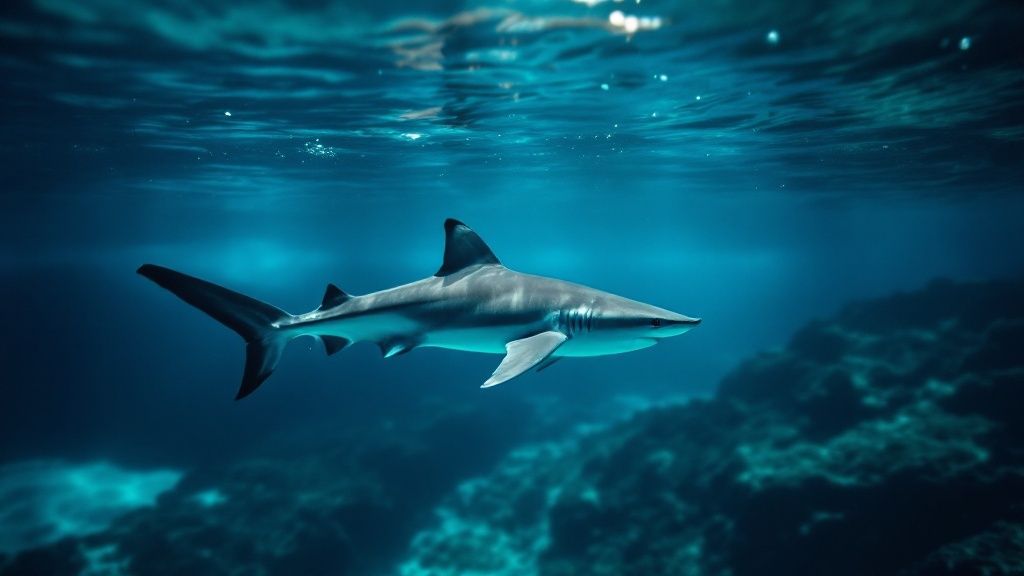
The question "Does the Big Island have a lot of sharks?" usually comes from a place of fear, and that’s understandable. But the reality is far less dramatic and much more interesting. The waters here are buzzing with life, and sharks are just one part of that intricate web.
Let's ground this in reality. The statistical risk sharks pose to people is incredibly low. In fact, many other ocean activities carry a far greater risk.
Putting The Risk Into Context
When you look at the numbers, the fear of sharks starts to seem a bit misplaced. Hawaii as a whole sees an average of just two or three shark attacks per year, and most of those are non-fatal.
Compare that to the roughly 60 people who tragically drown in Hawaiian waters annually. The numbers speak for themselves. If you want to dive deeper, you can learn more about Hawaii's shark encounter statistics and see just how low the real risk is.
To help put this into perspective, let's compare common fears with the actual facts.
Shark Encounters on The Big Island: Perception vs Reality
| Common Concern | Statistical Reality |
|---|---|
| "Sharks are everywhere, looking for people." | Most sharks avoid humans. Encounters are rare and usually a case of mistaken identity in murky water. |
| "A shark bite is a likely danger in Hawaii." | Drowning and other water-related injuries are far more common threats than shark bites. |
| "All sharks are aggressive 'man-eaters'." | Out of 40 species in Hawaii, only a few have been involved in incidents, and they aren't actively hunting humans. |
The main thing to remember is that you are a visitor in their home. Sharks aren't out there looking for you.
The key takeaway is this: while sharks are present, they are not actively hunting humans. Respecting their environment and following basic ocean safety guidelines are the best ways to ensure a safe and enjoyable experience.
This guide is all about replacing that fear with facts, so you can appreciate these incredible animals from a place of understanding, not anxiety.
Meet the Local Shark Species
When you hear "shark," it's easy to picture a scene straight out of a Hollywood movie. But the reality here on the Big Island is a world away from that—and far more interesting. Hawaii is home to about 40 different shark species, but you'll likely only encounter a handful of them on your adventures.
Getting to know who's who in the local lineup changes everything. It turns that knee-jerk fear into genuine curiosity and respect for the vital role these animals play in keeping our coral reefs healthy.
Common Sharks in Kona's Waters
While there are many types of sharks out there, a few tend to make more frequent appearances for divers and snorkelers. The good news? These common residents are typically shy and would much rather be left alone.
-
Whitetip Reef Shark: If you're going scuba diving in Kona, this is the shark you'll see most often. They're on the smaller side, usually under five feet, and you can't miss the distinct white markings on their dorsal and tail fins. Whitetips are famous for being incredibly mellow—you'll often spot them just chilling on the sandy bottom or tucked under a ledge for a daytime nap.
-
Scalloped Hammerhead: Seeing one of these is a real treat. With their uniquely shaped heads, they are one of the most elegant and graceful creatures in the ocean. While they sometimes gather in massive schools in the deeper waters off Kona, catching a glimpse is a rare and unforgettable moment. They are famously timid around people.
-
Tiger Shark: Now this is an apex predator and one of the biggest sharks you can find in Hawaiian waters. Tigers have a reputation for being assertive, but sightings are extremely rare for most people enjoying the coast. They are the ocean's essential cleanup crew, keeping the ecosystem in balance by preying on a wide variety of animals.
-
Galapagos Shark: These sharks are known for their bold and inquisitive nature, often hanging around offshore islands. Growing up to 10 feet long, their curiosity might bring them in for a closer look, but they almost always keep a respectful distance from divers.
Spotting any of these incredible animals in their natural element is a highlight of any trip to Hawaii. If you're eager for a guided experience, the pros at Kona Honu Divers lead some of the safest and most educational tours around, giving you a proper introduction to our amazing underwater world.
Understanding Shark Behavior and Risks
To really connect with the ocean, you need to get in sync with the rhythms of the creatures who call it home. While the Big Island has a stellar safety record, it’s still smart to understand the science behind shark encounters across the Hawaiian Islands. This isn't about stoking fear—it’s about building respect through knowledge.
Certain things in the environment can definitely change shark activity levels. For instance, many sharks are most active at dawn and dusk, which are their prime hunting hours. Murky water, especially near river mouths after a good rain, can also create confusing situations where a shark might mistake a person for prey. These conditions don’t mean you’ll see a shark, but they are absolutely worth keeping in mind.
Seasonal and Geographic Patterns
Sharks, like many animals, have seasonal routines. The fall months, particularly from September to November, are a key time for certain species. Tiger sharks, for example, often move into shallower waters to give birth during this period, which can naturally lead to more frequent sightings.
This migration is a big reason why different islands have different statistics.
Maui, for example, has the highest number of recorded incidents, with 71 encounters since 1995. A lot of this comes down to its unique underwater shelf and those seasonal tiger shark movements. It’s also worth noting that activities like surfing and paddleboarding, where you spend a lot of time on the surface, are linked to more encounters than scuba diving or swimming.
Certain activities can also pique a shark's curiosity. Anything that creates a lot of splashing and commotion on the surface can mimic the signals of a struggling fish. Spearfishing, which involves exactly that, can sometimes attract sharks. If you're interested, you can learn more in our guide to spearfishing on the Big Island.
To put it all together, here’s a quick breakdown of factors that can influence the chance of an encounter.
Factors Influencing Shark Encounter Risk
| Factor | Influence on Encounter Risk | Reasoning |
|---|---|---|
| Time of Day | Slightly Higher | Sharks are more active hunters at dawn and dusk. |
| Water Clarity | Slightly Higher | Murky water can lead to mistaken identity. |
| River Mouths | Slightly Higher | Runoff attracts prey, which in turn attracts predators. |
| Fall Season | Slightly Higher | Tiger sharks migrate to shallower waters to pup. |
| Surface Activities | Slightly Higher | Splashing can mimic distressed prey (e.g., surfing, spearfishing). |
| Scuba Diving | Lower | Divers are underwater, create less surface noise, and don't resemble prey. |
| Group Activity | Lower | Sharks are less likely to approach a group of people. |
Ultimately, understanding these behaviors empowers you. When you know how to read the water and the wildlife, you can explore the Big Island's incredible ocean with confidence and a deep respect for the animals that live there.
Practical Tips for Ocean Safety
When you know how to share the ocean respectfully, you can swim, snorkel, and dive with a lot more confidence. The odds of having a negative run-in with a shark on the Big Island are incredibly low, but being smart and prepared is always the best policy.
Think of these tips as your common-sense guide to minimizing an already tiny risk, so you can relax and enjoy the water.
The golden rule of ocean safety? Never go alone. A buddy system is non-negotiable for any water activity. It simply means there’s always someone watching your back, whether it’s a cramp, a current, or a curious creature.
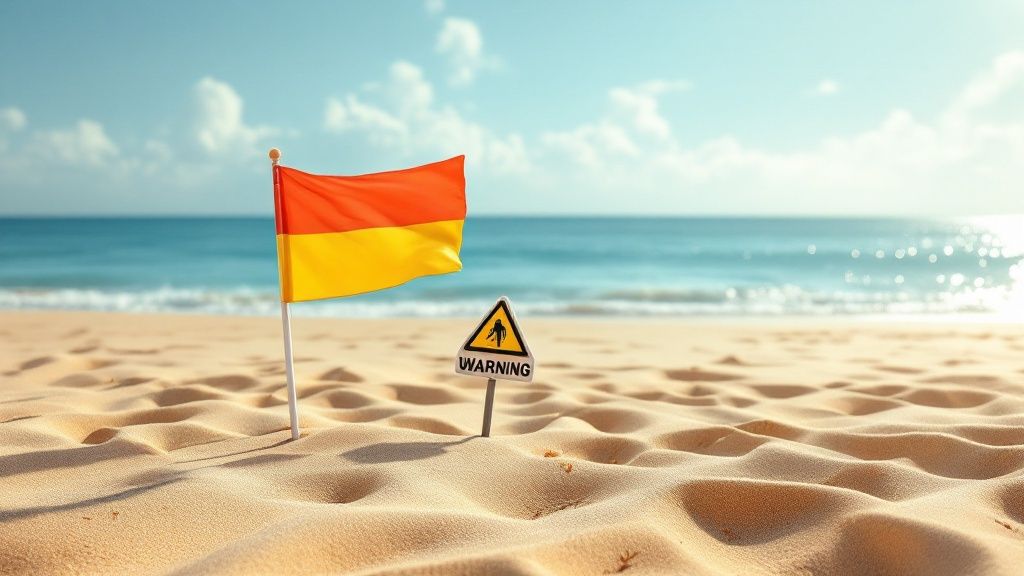
Best Practices for Sharing the Water
How you act in the water sends signals to the local wildlife. Following a few simple guidelines helps ensure any interactions you have are from a peaceful, respectful distance.
-
Avoid Murky Waters: It’s best to steer clear of murky areas, especially around river mouths after a big rain. Sharks can’t see well in low visibility and might mistake you for something else.
-
Be Mindful of Time: Many sharks are most active at dawn and dusk when they’re typically hunting for food. You can still be in the water then, but it's a good time to be extra aware of your surroundings.
-
Leave Shiny Objects Behind: Before you hop in, take off any shiny jewelry. A quick flash of metal can look a lot like the glint of fish scales, and that can trigger a shark's curiosity.
-
Stay Out if Bleeding: If you have an open wound, it’s better to hang out on the beach. A shark's sense of smell is legendary, and they can detect even small amounts of blood in the water.
Following these tips isn't just about personal safety—it's about being a good guest in a wild space. Smart habits are the hallmark of a responsible ocean explorer.
Understanding how to behave in the marine world is key to protecting it. For a deeper dive, check out our guide on responsible and considerate diver etiquette to learn more about interacting with Hawaii's incredible underwater life.
See Sharks Safely While Scuba Diving in Kona
If your curiosity is piqued, there’s no better way to see sharks respectfully in their own element than by scuba diving. The Kona coast is famous for its stunningly clear water and healthy reefs, making it an ideal backdrop for this kind of adventure. Going with a guide is the surest way to transform any apprehension you might have into pure awe.
When you dive with a top-notch operator like Kona Honu Divers, you’re not just a tourist with a tank. You're learning from local experts who have spent countless hours underwater, understanding the nuances of shark behavior and the rhythms of the reef. They know exactly where to go and how to approach these animals in a calm, non-threatening way.
Choosing the Right Dive Experience
Kona offers a whole menu of underwater adventures, with something for every comfort and skill level. It doesn’t matter if it’s your first time breathing underwater or you have hundreds of dives logged—there's a trip for you.
-
Reef Dives: Most of our daytime scuba diving tours in Kona explore the vibrant coral gardens. This is where you’ll often find Whitetip Reef Sharks tucked under ledges, just resting. These are relaxed dives, perfect for seeing a huge variety of marine life.
-
Advanced Dives: For more experienced divers, we offer advanced dive tours to deeper sites or places known for more exciting encounters. These trips might take you further offshore, where the odds of seeing more dynamic, open-ocean species go up.
The most important thing is to pick a responsible company that puts education and conservation first. That mindset is what turns a simple sightseeing trip into a genuinely enlightening experience. If you want to dive deeper into the specifics, check out our article on the best Kona shark diving opportunities.
Seeing a shark while you're scuba diving is a completely different ballgame from a surface encounter. Underwater, you're a quiet visitor in their world. This dynamic almost always results in a peaceful, awe-inspiring observation, not a startling interaction.
By joining a professional dive tour, you get more than just a cool story. You gain a real appreciation for the critical role sharks play in the ocean, all while being looked after by people who do this every single day.
Your Big Island Shark Questions, Answered
Let’s round things out by tackling some of the most common questions people have before they even dip a toe in the water. Getting these answers straight can help you feel more at ease and ready to enjoy everything the Big Island’s ocean has to offer.
Are There Great White Sharks Around the Big Island?
This is probably the number one question on everyone's mind, and the answer is simple: not really. Great White Sharks prefer much colder water than you'll find around Hawaii.
While a few have been spotted over the decades, these are extremely rare, isolated incidents. The sharks you’re far more likely to see are the ones that thrive in these warm, tropical waters, like the Whitetip Reef Shark, Scalloped Hammerhead, or maybe a Tiger Shark. The Big Island just isn't a go-to spot on the Great White's menu.
Is It Safe to Do the Manta Ray Night Dive with Sharks Around?
Absolutely, yes. The world-famous manta ray night dive is incredibly safe and, for many, the most unforgettable experience of their entire trip to Hawaii. The dive operators light up the water like a stadium, which tends to keep larger, more cautious sharks at a distance.
You might see a small, harmless reef shark cruising around the periphery, but they show zero interest in the divers or the mantas. The tour companies here have stellar safety records and strict procedures. Honestly, people who go on the Kona Honu Divers' manta ray night dive usually come back wishing they could do it all over again.
What Should I Do If I See a Shark?
The golden rule is stay calm. Seriously. The worst thing you can do is start splashing around frantically, as that kind of sudden movement can startle or provoke a shark's curiosity.
Just keep your eyes on it, don't turn your back, and slowly and smoothly back away. If you're diving, stay close to your buddy and follow the signals from your divemaster—they know exactly what to do. In almost every single case, the shark is just passing through and will lose interest and swim off on its own.
Remember: Seeing a shark in its natural habitat is a privilege. The vast majority of these encounters are peaceful and awe-inspiring, not threatening.
Are Some Beaches More Prone to Sharks Than Others?
There’s no such thing as a "shark beach" on the Big Island. Sharks are a natural part of any healthy ocean ecosystem, so they can technically be found anywhere off the coast.
That said, you can be smarter about where and when you swim. Sharks are often more active in murky water, like near river mouths after a big rainstorm, where visibility is poor. Your best bet is always to stick to beaches with clear water and be aware of your surroundings—which is just good ocean safety practice anyway.