
You're probably staring at a trip calendar, a certification card, and a short list of bucket-list dives, trying to figure out what deserves your limited days on the Big Island. That's the right question. Kona has enough variety that a great plan feels effortless underwater, while a sloppy one leaves you tired, overbooked, or on the wrong trip for your skill level.
Diving Kona Big Island works best when you match the dive to the diver. Some people should book calm reef dives and a manta night. Others should add blackwater. Experienced divers often get the most out of long-range lava formations and less-crowded advanced sites. The difference between a memorable trip and a frustrating one usually isn't luck. It's choosing the right sequence, the right operator standards, and the right expectations before you ever step on the boat.
Why Kona Is a Diver's Paradise
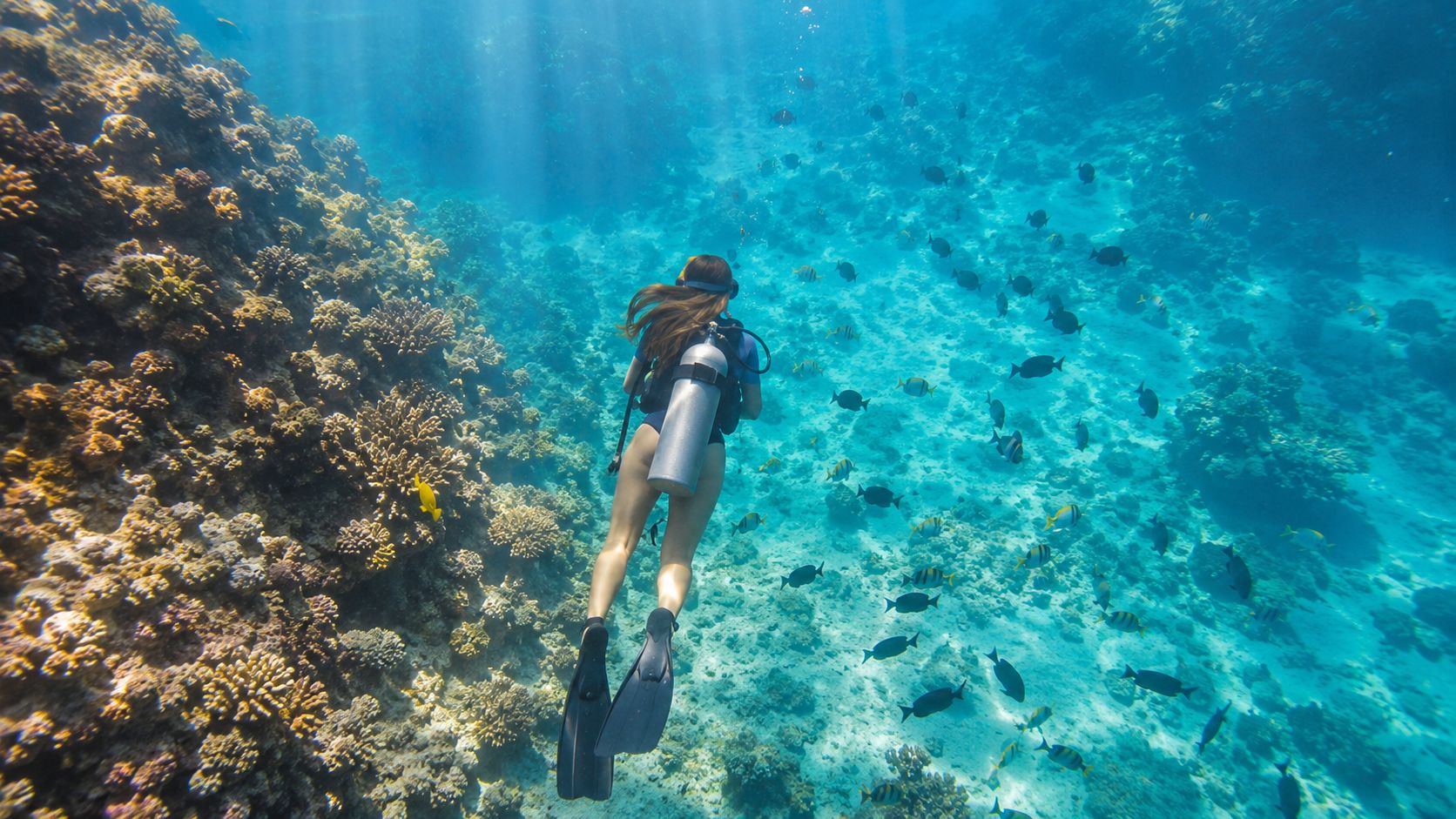
Drop in on the Kona coast and the appeal is obvious within the first few minutes. You descend through clear, warm water, level off above black lava rock, and realize the reef is built in layers, shelves, cracks, and arches instead of one flat coral garden. The diving feels dynamic from the start because the terrain gives every site shape.
That volcanic structure is a big part of Kona's appeal. Old lava flows created caverns, fingers, ledges, and swim-throughs that hold fish, octopus, eels, and reef life in the same places divers naturally want to explore. You are not just hovering over scenery. You are following the contours of a coastline that was built by fire and then filled in by the ocean.
Why the Kona coast stays so diveable
Kona's west side sits in the lee of the island's volcanoes, which usually means calmer water than divers expect on an exposed Pacific island. In practical terms, that gives operators more usable dive days and gives visitors a better chance of completing the dives they came for. Water temperatures on this coast commonly stay in a comfortable tropical range, and clear days often bring excellent visibility, as described in this overview of Big Island diving conditions.
Those conditions change the trip in ways newer visitors sometimes miss. Calm entries and exits reduce stress. Good visibility makes buoyancy easier to manage over uneven lava topography. Photographers get cleaner backgrounds, and less experienced divers spend less energy fighting the ocean and more energy paying attention to what is in front of them.
The bigger advantage is range. On one trip, a diver can do easy reef dives, a signature night dive, and more advanced offshore profiles without feeling like they switched destinations. That flexibility is what makes Kona strong for mixed-experience travel partners and for divers who want to build a trip instead of booking the same profile four times.
For a closer look at the coastline itself, read what is unique about diving in Kona.
What that means for your trip
The Big Island has a lot of dive access and a wide spread of site styles, but visitors do not need an endless menu. They need the right progression. Good Kona trip planning starts with matching conditions, site demands, and operator standards to the diver in the group.
I tell divers to treat Kona as a sequence, not a checklist. Start with forgiving reef dives to settle weighting and buoyancy over lava. Add a night dive that fits your comfort level and your reason for coming. Save the more demanding sites for later in the trip, once you know how you are handling current, surge, depth, and repetitive diving.
That is also where operator quality starts to matter. Crews with disciplined briefings, realistic site selection, and the judgment to change plans based on conditions will shape a better week than any flashy site list. Kona rewards divers who choose well, not just divers who book a lot.
Kona's Unforgettable Signature Dives
Kona has two night dives that dominate every serious trip conversation. They're both excellent. They are not interchangeable.
One is social, bright, and almost theatrical. The other is quiet, strange, and oceanic. If you choose well, you'll come back talking about the dive for years. If you choose poorly, you may book a night profile that doesn't fit your comfort level.
Manta ray night dive
The manta dive is Kona's most famous experience for a reason. Divers settle near the bottom while lights draw in plankton. That food source brings in mantas, and the rays sweep through the beams in repeated passes.
The key mechanism matters. The Kona Manta Ray Night Dive has a documented 95% encounter rate for reef manta rays, and the action is driven by plankton attracted to high-intensity dive lights, which triggers feeding behavior and barrel rolls by multiple mantas, as described in this manta dive explanation.
Garden Eel Cove is the stronger choice for most divers. Its protected location generally gives you a better viewing area, a more controlled feel, and better surrounding reef structure than more exposed alternatives. If your goal is the cleanest overall manta experience, that's the site I'd target first.
For trip details and scheduling, see the manta ray night swim and dive information here and compare current manta dive tour options.
Stay still, keep your profile clean, and watch the water column above you. Divers who fidget the least usually get the most elegant manta passes.
Blackwater dive
Blackwater is a very different commitment. You descend into open ocean at night, suspended over deep water with the seafloor far below. The draw isn't a single iconic animal. It's the procession of larval and pelagic life that rises from the depths after dark.
This dive appeals to experienced divers who like neutral buoyancy, composure in darkness, and unusual wildlife more than classic reef scenery. You may see transparent jellies, tiny deep-sea drifters, and bizarre life stages of animals that look nothing like their adult forms.
What works on blackwater:
- Calm, patient divers: You need comfort in open water without visual references from reef or bottom.
- Good trim and buoyancy: Small movements matter more when there's no terrain to stabilize your depth sense.
- Curiosity over checklist diving: This is for divers who enjoy the weird.
What doesn't:
- Needing landmarks: If you relax by orienting to reef, wall, or sand, blackwater can feel disorienting.
- Treating it like a standard night dive: It isn't. The appeal is the water column itself.
If that sounds like your kind of dive, look at the blackwater night dive tour page.
Kona signature dive comparison
| Feature | Manta Ray Night Dive | Blackwater "Pelagic Magic" Dive |
|---|---|---|
| Core experience | Stationary viewing of mantas feeding in lights | Midwater drift observing pelagic life after dark |
| Best for | Divers who want a famous, visually dramatic wildlife encounter | Divers who enjoy unusual creatures and advanced night conditions |
| Environment | Fixed site with bottom reference | Open ocean with no reef reference |
| Diver mindset | Relax, settle, watch overhead | Maintain calm buoyancy and scan carefully |
| Main trade-off | More structured and shared with other divers | Less predictable, more demanding, and more surreal |
Exploring Coastal Reefs and Advanced Sites
Most of your actual vacation diving in Kona will happen on daytime reef charters. That's a good thing. The famous night dives get attention, but morning dives are where you build a trip.
Kona has the world's highest rate of endemism for marine fish and invertebrates and offers over 40 named dive sites, many with lava tubes, arches, and drop-offs, according to Divers Alert Network's Kona overview. That variety is what keeps repeat divers interested. One day may be a broad reef with turtles and eels. Another may focus on fractured lava, swim-throughs, and dramatic relief.
What to expect on classic reef days
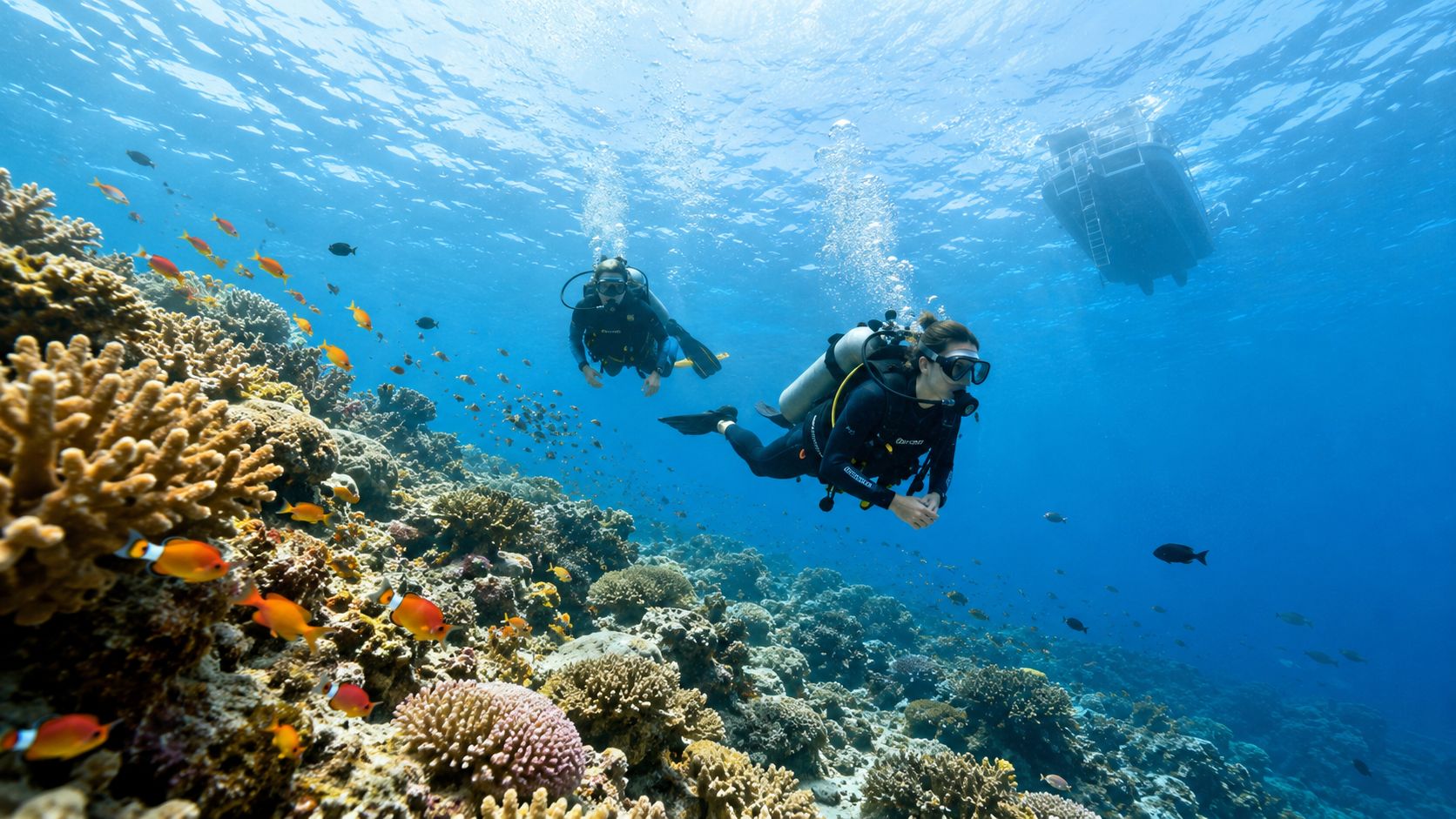
A solid Kona two-tank morning usually rewards slow diving. The marine life is there, but the reef reveals itself best when you stop racing. Turtles rest on cleaning stations. Morays watch from holes in the lava. Schools move across the blue while the reef edge drops away into darker water.
The volcanic structure changes how you dive these sites. Instead of one continuous coral slope, you often work through contours and openings. Good guides use that terrain well. They don't just point out fish. They lead you through the shape of the site.
A few practical habits make these dives better:
- Stay slightly higher than the reef: Lava and coral both punish sloppy finning.
- Watch your depth around ledges: The topography can pull your attention downward fast.
- Keep your pace measured: Kona rewards observation more than speed.
For divers curious about one of the coast's most famous marine areas, Kealakekua Bay and the Kona coast overview gives useful context.
When advanced sites make sense
Advanced dives are worth booking when you've got the skill to enjoy them rather than just survive them. If your buoyancy is inconsistent, air consumption is high, or you still get task-loaded with basic gear checks, stay on the standard rotation first.
If you're ready for more, advanced long-range trips can access less-routine lava features and more demanding sites. Those trips suit divers who already know how to descend cleanly, stay off the structure, and manage themselves without constant correction. The advanced long-range dive tour page is where to look if that profile fits you.
The best advanced divers aren't the ones who chase the deepest profile. They're the ones who make difficult dives look quiet.
Timing Your Trip for Perfect Conditions
Kona is one of the easier places to plan because there isn't a bad season for diving. There are, however, better seasons for specific goals. Your choice should depend on what you most want to experience underwater and how much variability you tolerate on the surface.
Summer versus winter
Summer usually gives the cleanest feeling trip for divers focused on signature underwater experiences. Seas are often calmer, surge tends to be less of an issue, and manta-focused trips are especially appealing in that window.
Winter adds a different layer. During the winter months, humpback whale sightings on designated Kona dive trips can reach an 80% success rate, as noted in the earlier conditions reference. Even when whales aren't part of the exact dive plan, hearing them underwater can turn an ordinary reef dive into one of those sessions you never forget.
If season is your main planning question, this guide to the best season for diving in Kona helps narrow the trade-offs.
How I'd match the season to the diver
- First-time Kona visitors: Lean toward calmer months if possible. You'll have an easier time settling in.
- Marine life lovers: Winter can be magical because whales add atmosphere above and below the surface.
- Night-dive focused travelers: Summer often stacks better for repeated night outings.
The mistake is trying to optimize for everything at once. If you chase whales, mantas, perfect surface conditions, and advanced profiles all in a single short trip, something usually gets compromised.
Seasickness can ruin a dive day
If you know you get motion sick, handle it before the boat leaves the harbor. Don't wait to “see how you feel.” By then you're behind.
Useful options include Ship-EEZ Seasickness Patch, Dramamine pills, Bonine pills, Sea Band wristbands, and ginger chews. Different divers swear by different tools, but the winning approach is simple: test what works for your body before a big dive day, hydrate well, and don't show up on an empty stomach or after a late night.
Skills Certifications and Gear for Kona Diving
A lot of frustration disappears once divers book trips that match their actual training level. Kona has options for beginners, but the signature experiences still have rules for a reason.
If you're not certified yet
You can still get underwater on the Big Island through introductory programs such as Discover Scuba or Buddy Dive style experiences, depending on the operator. That route makes sense for travelers who want a guided first taste without committing to a full certification course during vacation.
What matters most is asking direct questions before booking:
- What skills are taught first
- Whether ocean conditions or a confined-water session comes first
- What age and consent rules apply
- What the operator expects from you physically
New divers often focus only on whether they're “allowed” to dive. The better question is whether they'll enjoy it. If you're anxious in the water, start with the calmest introductory format available rather than forcing a more ambitious trip.
Why the manta dive has stricter standards
Reputable operators in Kona strictly require an Advanced Open Water certification for the Manta Ray Night Dive because the dive demands strong buoyancy control in the dark with many divers nearby, according to this explanation of experience requirements for Big Island dives.
That requirement isn't about ego, and it isn't mainly about depth. It's about control. On a manta dive, poor buoyancy can kick up the bottom, interfere with other divers, and create safety problems fast. Divers who treat it like “just a shallow night dive” usually misunderstand the actual challenge.
You don't earn your place on the manta dive by depth tolerance. You earn it by being able to stay exactly where you should be, in the dark, without drama.
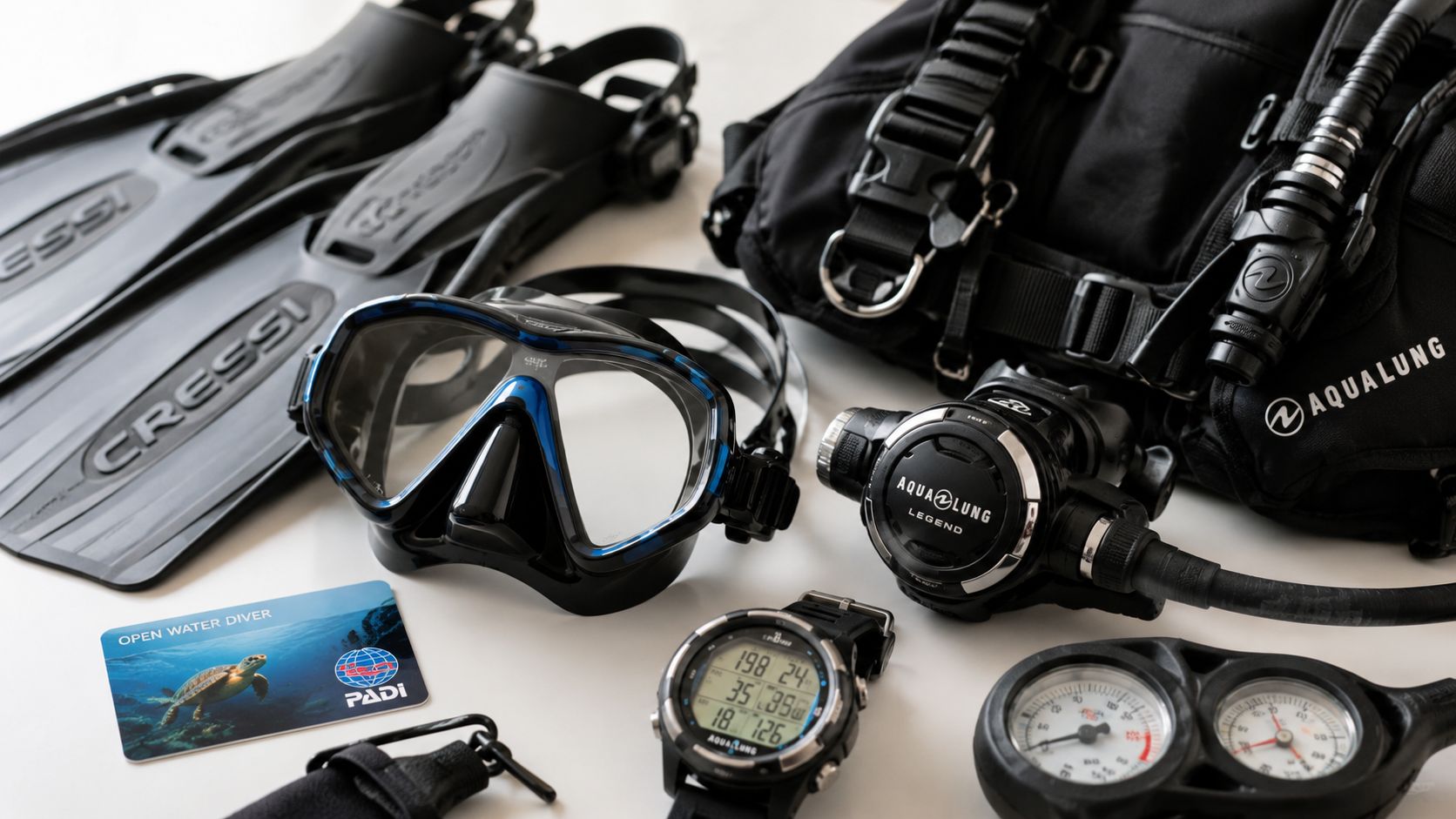
The gear that actually matters
Most travelers can rent the heavy equipment and do just fine. The items I most recommend bringing yourself are the ones that affect comfort and familiarity.
- Mask: A mask that already fits your face beats a rental every time.
- Dive computer: Use the computer you know, not one you'll decipher on the boat.
- Exposure preference: Some divers run warm in Kona. Others still want full coverage for repeated days.
- Certification cards and logs: Bring proof of training and recent experience if you have it.
- Camera or light discipline: Only bring task-loading gear if your diving is already calm and automatic.
Nitrox is worth using on repetitive dive schedules if you're certified for it. It can make a multi-day plan feel easier, especially when you're adding several boat dives close together.
How to Choose the Best Kona Dive Operator
You feel the difference before the boat leaves the harbor. The crew checks certs without making it awkward. The briefing tells you what the site is doing today, not what it did last week. Divers are sorted by experience instead of all being pushed onto the same profile. That is the kind of operator worth your money in Kona.
A lot of visitors shop by price or by which boat has the prettiest website. I would judge an operator by control, honesty, and how they handle mixed experience levels. Kona offers easy reef dives, demanding night dives, and conditions that can change fast along the coast. The right company matches the trip to the diver, and the wrong one just fills seats.
What to check before you book
Start with the parts of the operation that affect your safety and your dive quality:
- Guide-to-diver ratio: Smaller groups mean better supervision, cleaner descents, and less finning through each other at the site.
- Site matching: Good operators ask what you have done lately and recommend dives that fit your comfort level.
- Briefing quality: You want a real site briefing with entry, exit, current, bottom features, and local marine life etiquette.
- Boat setup: Stable ladders, practical gear storage, shade, and enough space matter more than fancy branding.
- Schedule judgment: Strong crews change plans for swell, current, and diver ability instead of forcing the original itinerary.
- Policy honesty: If an operator enforces prerequisites for manta, blackwater, or advanced charters, that usually protects the whole boat.
A useful benchmark is how a respected Kona diving company runs its trips. Kona Honu Divers is well known for keeping operations structured, separating trip types clearly, and setting expectations up front. That matters because Kona diving is not one-size-fits-all. A diver who will love a calm morning reef may have a very poor night on blackwater if the operator does not screen properly.
Green flags and red flags
Green flags in Kona are easy to spot once you know what to look for. The crew asks about recent dives, not just certification level. They explain why a site was chosen. They are comfortable telling a guest, kindly and directly, that a different charter is the better fit. Good operators also leave enough margin in the day for divers to gear up without a rushed, cattle-boat feel.
Red flags are just as clear. Everyone gets the same sales pitch. The briefing is generic. Questions about current, visibility, or experience requirements get vague answers. If a company treats manta, blackwater, and standard reef trips as if they are interchangeable, keep looking.
The best comparison method is simple. Look at how each operator separates beginner-friendly reefs, signature night dives, and advanced outings. Then ask whether the crew has the discipline to protect that structure when conditions or diver skill say no. In Kona, that judgment is what turns a crowded vacation activity into a trip you will still be talking about years later.
Sample Itineraries and Final Checklist
A good Kona plan leaves room for adjustment. Don't book every high-intensity dive back-to-back if you're not used to diving several days in a row.
A few itinerary ideas
Three-day signature trip
Day one works best as a standard reef morning so you can settle in, adjust weighting, and get used to Kona's lava topography. Day two is a strong place for the manta night dive. Day three can be another reef charter if you want a relaxed finish, or blackwater if you know you still have energy and focus.
Five-day advanced-minded trip
Start with reef dives anyway. Even experienced divers benefit from one easy orientation day. Add manta on a separate evening, place blackwater on its own night when you're fresh, and use one of the later days for a more advanced long-range outing. That sequencing keeps your highest-task dives away from arrival fatigue.
Final packing and planning checklist
- Documents: Certification card, log history if relevant, and any required medical info.
- Core personal gear: Mask, computer, exposure layer you trust, and whatever saves you from fit issues.
- Boat-day basics: Water, sun protection, dry clothes, and a hat.
- Comfort items: Seasickness prevention if you're even slightly prone to motion sickness.
- Electronics: Camera, chargers, spare batteries, but only if they won't distract from the diving.
- Surface planning: Leave enough no-dive time before flying or heading to altitude.
Kona rewards divers who plan with restraint. Pick the dives that fit your training, leave room to enjoy the reef between big-ticket experiences, and choose operators that take safety and group control seriously. That approach usually leads to better marine life encounters, better gas management, and a much more memorable week overall.
If you're ready to turn the plan into actual dive days, Kona Honu Divers is a practical place to start for reef charters, manta trips, blackwater dives, and training options on the Big Island.