
You're probably in the same spot most visiting divers hit before they book the Big Island. You've seen manta photos, heard people talk about blackwater like it changed their life, and now you're trying to separate bucket-list marketing from what delivers underwater.
That's the right approach. Diving Kona Big Island isn't just about picking any boat and hoping the ocean cooperates. The difference between a decent dive trip and one you remember for years usually comes down to three things: why Kona works so well, how each signature dive feels in real conditions, and what kind of crew puts you in the right place with the right plan.
Why Kona is a World-Class Diving Destination
The first thing divers notice in Kona is how quickly the water opens up below them. You giant stride in, drop under the surface, and the site often reveals itself all at once. Reef line, lava contours, fish movement, depth changes. Nothing feels murky or compressed.
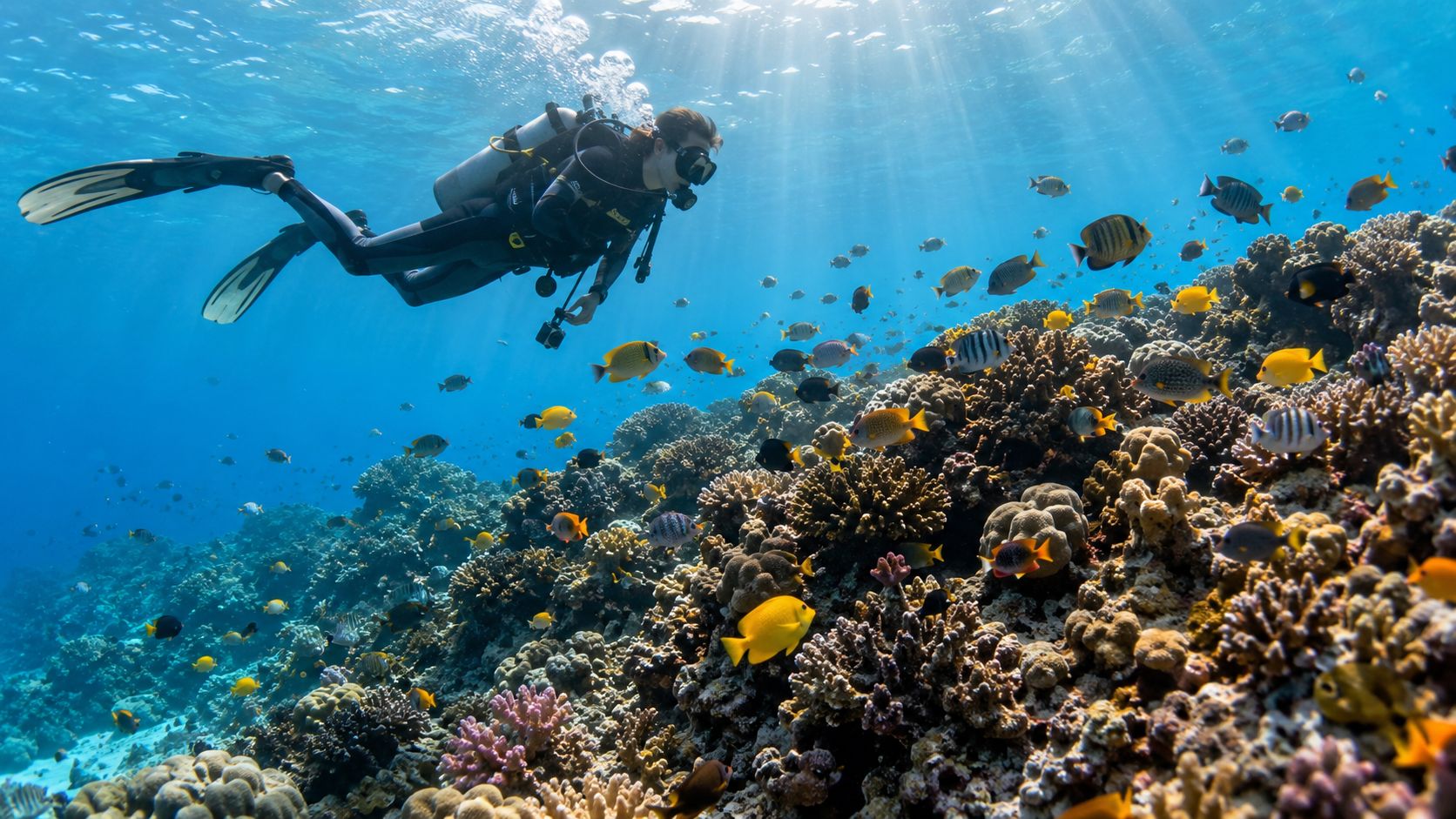
That clarity isn't luck. The Kona coast on Hawaii's Big Island offers exceptional diving conditions year-round, with underwater visibility regularly exceeding 100 feet (30 meters) and water temperatures of 75–80°F (24–27°C) because the west side sits in a sheltered leeward position protected by massive volcanoes and clear offshore water flow, which creates strong conditions for observing pelagic life, as outlined in this overview of what is unique about diving in Kona and supported by Love Big Island's Kona diving guide.
The coastline does a lot of the work
Kona's west coast has a practical advantage many visitors don't understand until they dive it. The giant volcanic mass behind the coast blocks trade wind exposure that affects other areas more directly. That protection helps keep surge down and makes boat diving feel more predictable from trip to trip.
For divers, that means easier descents, cleaner views, and less wasted energy at the surface.
Good Kona diving starts before you descend. Calm entries and readable water let divers settle in fast.
The terrain feels different from other reef destinations
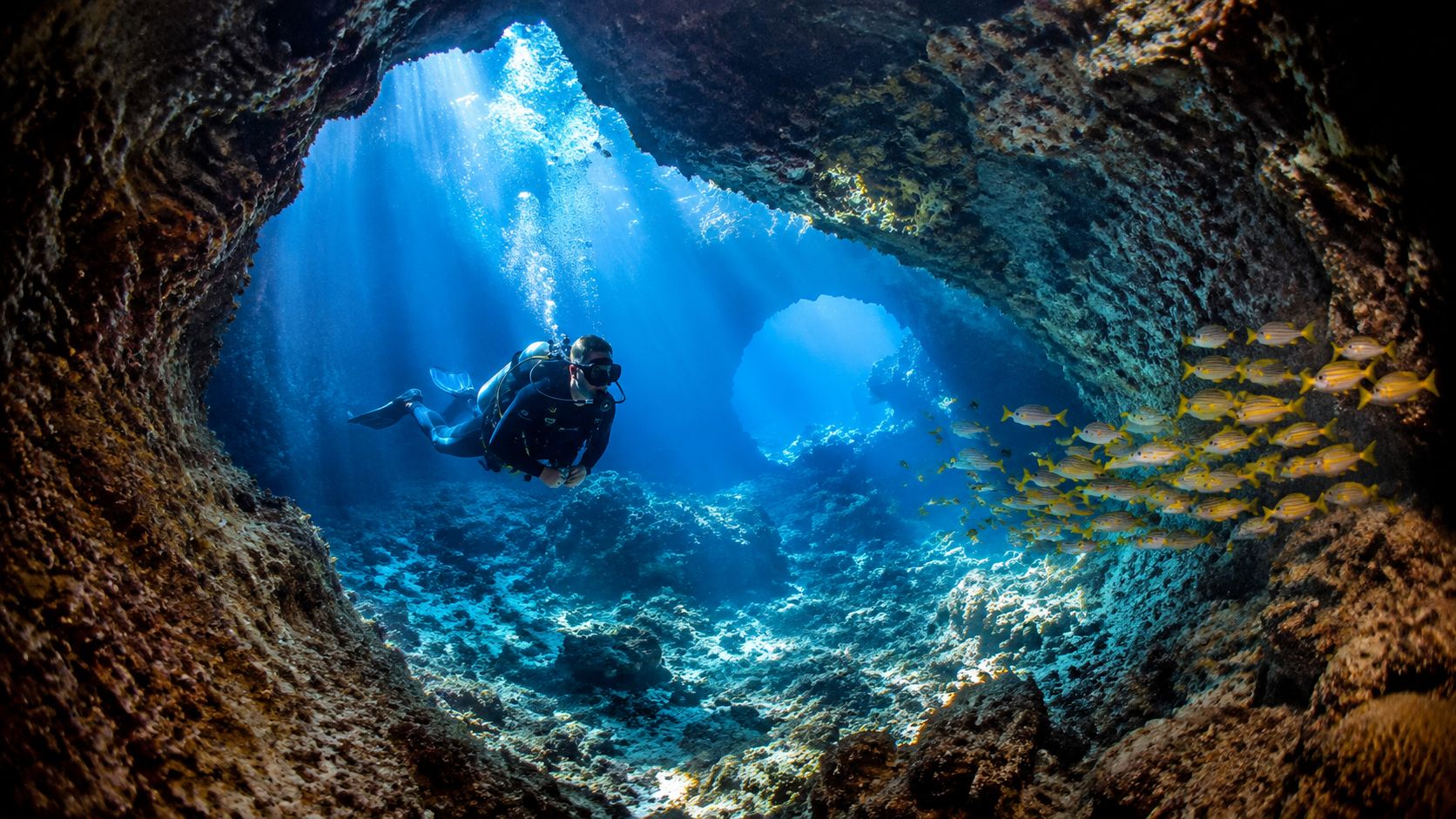
Kona isn't a place where every site blends into one coral slope. The lava-built structure gives dives shape. You follow fingers of rock, pass through archways, skirt ledges, and find openings that turn a standard reef dive into something more architectural.
That underwater geology also changes who enjoys the diving most:
- Newer divers often like Kona because calmer conditions reduce stress.
- Returning vacation divers appreciate sites that are easy to read.
- Experienced divers usually come back for the combination of reef life, topography, and specialty dives.
The marine life keeps the dives from feeling repetitive
Even on a straightforward day charter, the reef rarely feels empty. Fish life is dense, movement is constant, and the Big Island's marine communities give each site a distinct rhythm. Some divers come for the lava formations and leave talking about the animals. Others come for the mantas and get hooked on daytime reef diving.
That mix is why diving Kona Big Island keeps people planning return trips before they've even dried their gear.
Kona's Signature Underwater Adventures
Kona has plenty of solid reef diving, but three experiences define the place for most divers. The daytime lava-and-reef charters show you the foundation. The manta night dive gives you the spectacle. The blackwater dive gives you something few destinations can match.
Day dives on lava structure and reef
If you're building a Kona trip from scratch, start with a classic two-tank day boat, which gives divers the broadest picture of the coast. You'll usually spend the morning or afternoon moving through volcanic structure that creates swim-throughs, arches, lava tubes, shelves, and drop-offs, with reef life packed into all of it.
These dives are the best fit for several kinds of travelers:
- First-time Kona visitors who want to learn how the coast dives
- Photographers who want natural light and readable terrain
- Certified divers shaking off rust before a specialty night dive
- Groups with mixed experience because many sites can be matched to the group
The trade-off is simple. Day dives show you more of Kona's baseline beauty, but they don't replace the destination's signature night experiences. If you only book daytime charters, you'll still have a very good trip. You just won't have seen the two dives that made Kona famous.
The manta night dive at Garden Eel Cove
The manta ray night dive is the experience non-divers ask about and divers remember in detail. It works because the setup is passive. Divers stay in position, lights attract plankton, and mantas move through the water column to feed. When the briefing is tight and the group stays disciplined, the whole scene feels organized rather than chaotic.
For this dive, Garden Eel Cove is the superior choice because of its protected location, stronger viewing area, and better surrounding reef. Those details matter. Protection from rougher exposure usually means a more comfortable entry and a cleaner experience once divers are settled. Better viewing geometry also means divers spend less time repositioning and more time watching mantas pass overhead.
If the manta dive is on your list, book a tour built around Garden Eel Cove manta diving and snorkeling.
Practical rule: On the manta dive, the best divers are often the stillest divers. Stay planted, control your light, and let the animals come to you.
Who should do this dive?
- Certified divers who want Kona's signature underwater experience
- Travelers with limited dive days who need one unforgettable booking
- Marine life-focused divers who care more about behavior than depth
What doesn't work? Chasing mantas, over-weighting yourself, or treating it like a normal free-swimming night reef dive. This is a sit, watch, and hold-position dive.
The blackwater dive
Blackwater isn't a reef dive at night. It's open-ocean pelagic diving in the dark, suspended over deep water, focused on the animals that rise toward the surface after sunset. If you want the clearest overview before booking, read this Kona black water dive guide.
This is the dive for people who like unusual things more than comfortable things. You won't have a reef below you. You won't have lava structure to orient against. Your attention narrows onto the lit water around the line, where larval creatures, translucent drifters, squid, and other deep-ocean life appear out of black space.
Blackwater works best for divers who are:
- Comfortable with buoyancy control
- Relaxed in open water at night
- Patient enough to watch carefully
- Interested in rare pelagic encounters rather than scenic structure
It's not ideal for divers who need a bottom reference to stay calm or who only enjoy fast-moving, high-action dives.
Advanced options for experienced divers
Once you've done the core Kona experiences, some divers want more challenging site selection, longer runs, or more remote terrain. That's where advanced long-range dive trips make sense.
Those trips usually fit divers who already know what they like. Deeper lava formations, more complex profiles, or less-visited sites can be worth the extra planning. They are not the place to fake experience. If your skills are solid, they can be some of the most rewarding dives of the trip.
What to Expect on a Kona Dive Trip
A good Kona dive day feels smooth long before anyone hits the water. Check-in should be organized. Gear setup should be straightforward. The crew should brief clearly, answer questions without rushing, and make it obvious what the plan is once the boat leaves the harbor.
Day trips and night trips share that foundation, but they don't feel the same.
How a daytime charter usually flows
A standard two-tank day boat usually starts with arrival, paperwork, gear staging, and a site briefing before departure. Once underway, divers set up, review hand signals and procedures, then make the first dive while everyone is fresh. After the first dive, there's a surface interval with water, snacks, and site discussion before the second drop.
The pace matters. Good operators don't make the day feel frantic. They also don't let the surface interval drag so long that everyone cools off and loses momentum.
Night dives feel slower and more deliberate
Night diving in Kona usually asks for more focus, not more athleticism. Briefings tend to matter more because visibility, positioning, light use, and group discipline all carry more weight after dark. That's especially true for the manta experience, where the setup is specific and the interaction rules are part of what makes the dive work.
If someone in your group wants the manta encounter from the surface instead of on scuba, this manta ray night swim overview helps clarify the difference.
The most relaxing night dives happen when divers accept the pace. Rush less, observe more, and the dive gets better.
Kona Dive Experience Comparison
| Dive Type | Best For | Typical Sightings | Required Experience |
|---|---|---|---|
| Day Dive | First-time Kona visitors, reef lovers, photographers | Reef fish, coral growth, lava tubes, arches, turtles, pelagic activity | Open Water level comfort or guided introductory participation where available |
| Manta Night Dive | Divers who want Kona's signature marine life encounter | Manta rays feeding in the light field, reef life at night | Certification and comfort with night diving instructions |
| Blackwater Dive | Divers seeking unusual pelagic life in open water at night | Larval creatures, squid, drifting pelagic animals | Strong buoyancy control and comfort in open ocean at night |
Choosing Your Kona Dive Operator
Choosing a Kona operator isn't about who has the loudest website. It's about who runs clean boats, gives accurate briefings, selects sites conservatively when needed, and treats diver ability as a real planning factor rather than a waiver checkbox.
That's even more important in Kona because the area attracts a wide range of guests. Some are brand-new certified divers on their first Hawaii trip. Others are experienced repeat visitors coming specifically for mantas, blackwater, or advanced lava profiles. One operation can't serve both groups well unless the crew is disciplined.
What to look for first
Start with the practical things:
- Boat design and comfort matter because awkward entries, cramped setups, and poor diver flow wear people down before the second tank.
- Crew judgment matters because site selection should reflect conditions and diver skill, not habit.
- Briefing quality matters because Kona sites often include lava structure, night procedures, or marine life protocols that reward attention.
- Maintenance standards matter because small equipment problems become bigger problems offshore.
A lot of divers shop by price first. That's understandable, but it's not usually how experienced local divers think. The cheapest seat can become expensive if the operation feels rushed, crowded, or poorly matched to the group.
The operator should match the dive style
Not every boat is built for the same kind of experience. Some crews are strong on high-volume reef charters. Others are better for smaller-group diving, specialty trips, or divers who want more detailed guidance.
If you're looking across options for diving Kona Big Island, compare operators by these questions:
| Decision Point | What to Ask |
|---|---|
| Group management | Does the crew organize divers by experience and comfort? |
| Specialty experience | Do they regularly run manta and blackwater trips? |
| Boat flow | Is entry, exit, and gear handling easy? |
| Communication | Are briefings clear, specific, and calm? |
Where Kona Honu Divers fits
One operator that covers a wide range of these needs is Kona Honu Divers dive tours. They run day dives, manta trips, blackwater outings, training, and advanced options, and the publisher notes that their operation includes custom dive boats, free nitrox, and a crew with extensive combined experience.
For a broader market comparison, this rundown of top Kona diving companies ranked is useful context.
Book with your trip goals in mind
If your main goal is easy reef diving, your standards should still be high. If your main goal is mantas or blackwater, your standards should be even higher. Specialty dives punish sloppy logistics.
Planning Your Kona Dive Adventure
Good Kona trips usually look simple on paper. A few day dives, one manta night, maybe blackwater, maybe an advanced charter. The part that gets overlooked is sequencing. If you plan the order well, the whole week feels easier.
Book the headline dives first
If mantas or blackwater are the reason you're coming, reserve those before you fill your calendar with daytime charters. Those specialty trips shape the trip more than a standard reef morning does.
A practical booking order looks like this:
- Reserve your specialty dives first so the signature experiences are locked in.
- Add daytime charters around them to keep the schedule balanced.
- Leave some margin if you want flexibility for weather, energy level, or an extra dive day.
Match the trip to your actual experience level
Kona offers a broad range. That's a strength, but only if you're honest about where you fit.
- New divers usually do best starting with guided day boats and straightforward sites.
- Recently certified divers can often handle a manta night dive if they listen well and are comfortable underwater after dark.
- Experienced divers are the natural fit for blackwater and advanced long-range outings.
If you haven't dived in a while, don't make the first night of your vacation your most demanding dive.
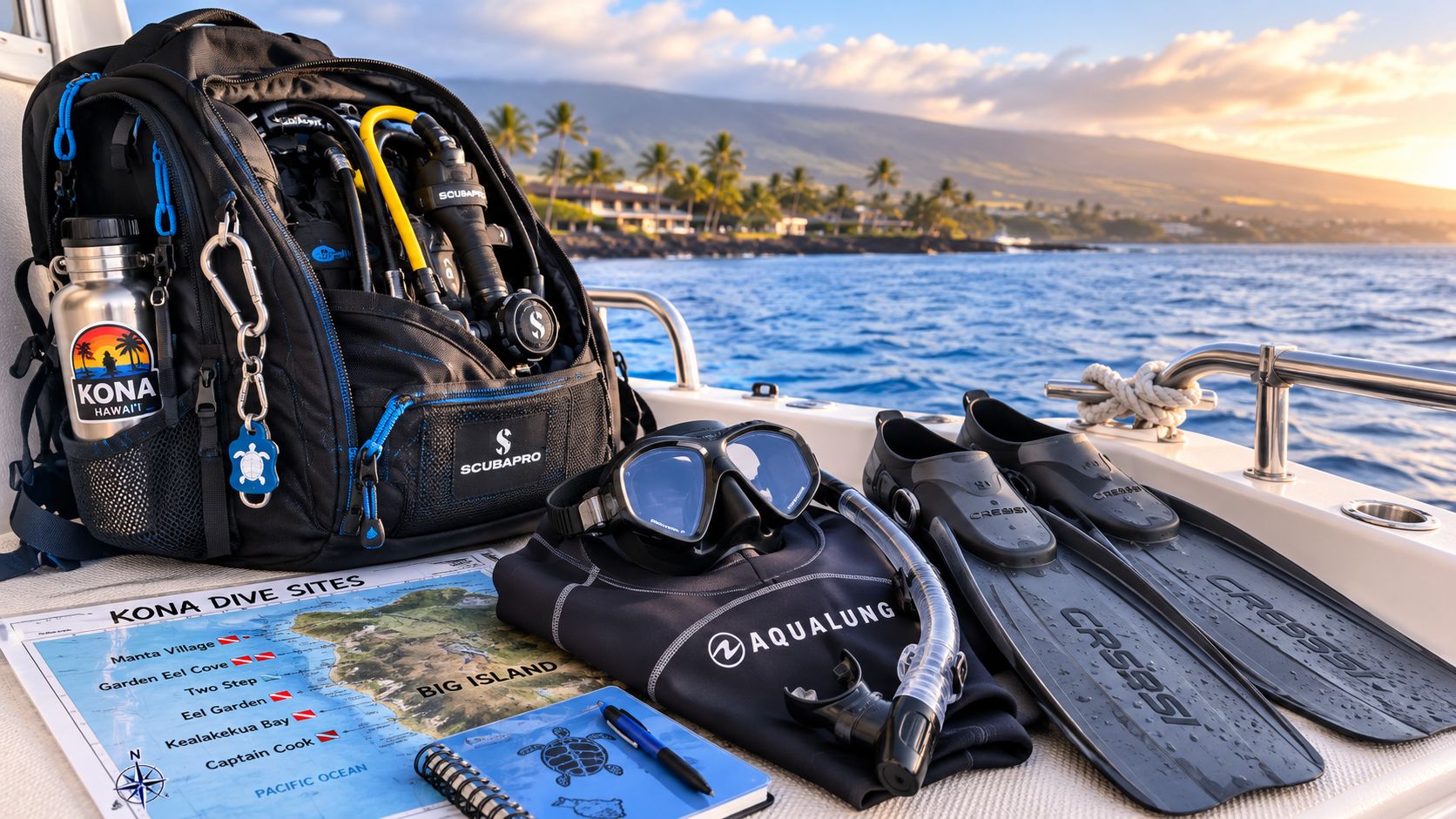
Pack for comfort, not just for underwater time
The best packing lists include the small items that fix common boat-day annoyances.
- Reef-safe sun protection helps on surface intervals and harbor time.
- A light jacket or dry layer matters more than people expect once the boat is moving.
- A reusable water bottle makes the day easier and cuts waste.
- Your own mask, computer, and exposure layer are worth bringing if they fit well and you trust them.
- Camera and charging accessories should be organized before the dock, not hunted for at check-in.
A smooth Kona dive day starts the night before. Charge lights, check batteries, and pack your small gear where you can reach it fast.
Dive Safety and Protecting the Marine Environment
A good Kona dive usually comes down to small decisions made before you ever descend. I see the same pattern all the time. Divers who check their kit carefully, pay attention to the briefing, and stay honest about their comfort level tend to have relaxed, memorable dives. Divers who rush often spend the first part of the dive fixing preventable problems.
Kona adds a few local factors. Lava fingers create sharp structure, entries and exits can be site-specific, and night diving asks for better awareness than a casual daytime reef dive. That is one reason experienced operators matter. A solid crew does more than drive the boat to a mooring. They set the tone, brief the site clearly, and catch issues before they turn into a missed dive.
Safety habits that actually matter
The fundamentals still matter most in the water:
- Set up and inspect your gear before departure so you are not solving equipment problems on the surface.
- Listen to the full site briefing because bottom shape, current, and exit procedures change from site to site.
- Stay within your training and current comfort level even if other divers on the boat are pushing farther.
- Keep your buoyancy and trim under control around reef, lava rock, and other divers.
- Secure lights, gauges, and cameras so nothing hangs low or bangs into the bottom.
Night dives deserve extra respect. The manta dive is calm on many nights, but it is still dark water, task loading, and a different visual environment. Blackwater diving asks for even more discipline. Good operators screen for fit, explain procedures clearly, and keep the dive plan tight for a reason.
Seasickness prevention that works
If you know you get motion sick, handle it before the boat leaves the harbor. Waiting until you feel bad is late.
The Guide to Swimming with Manta Rays in Hawaii recommends taking prevention seriously before night ocean activity and choosing a position midship and low on the boat, where motion is usually less noticeable. That advice matches what works in practice on Kona charters.
A few simple habits help. Eat lightly, stay hydrated, avoid a heavy greasy breakfast, and keep your eyes on the horizon if you start to feel off. If you use medication or ginger, test it before an important dive day so you know how your body responds.
If you want a stronger baseline before the trip, read this guide to responsible considerate diver etiquette. Divers who move calmly and predictably usually protect both themselves and the reef.
Protect the reef and the animals
The divers who get the best encounters in Kona are usually the least intrusive.
That means no touching coral, no grabbing lava to hold position, no chasing turtles, and no reaching toward mantas to force a close pass. Good fin control matters as much as good intentions. One careless kick can break coral, stir up the bottom, or ruin the view for everyone behind you.
For manta dives, follow the established interaction rules and let the animals choose the distance. For reef dives, keep your profile tidy and your movements slow. Kona rewards divers who settle down, watch carefully, and let the underwater scene come to them.
The ocean responds well to patience.
Frequently Asked Questions About Diving in Kona
Can I try scuba in Kona if I'm not certified?
Yes. A guided introductory dive is a good way to find out whether scuba feels natural before you commit to a full course.
The operator matters here. New divers do better with a crew that keeps the briefing clear, chooses protected conditions, and limits the task load underwater. If you already know you want several dive days on this trip, certification gives you far more options, especially for Kona's signature charters.
Do I need to bring all my own gear?
No. Plenty of divers travel light and use rental gear for the full trip.
Bring your own mask if you have one that fits well. That single piece of gear solves a lot of comfort problems. A familiar dive computer also helps if you own one and use it regularly. Everything else comes down to baggage limits, trip length, and how particular you are about fit and exposure protection.
Is Kona good for nervous or rusty divers?
Yes, if you start in the right place.
The mistake I see is booking the most ambitious dive first. A calm morning reef charter is usually the better opener. It gives you time to settle your breathing, check weighting, and get comfortable with entries and exits again. Save blackwater or multiple night dives for later in the trip, after you have your rhythm back.
What should I do if I get seasick easily?
Treat it like trip planning, not bad luck. If you know you are prone to motion sickness, sort it out before the boat leaves the harbor.
As noted earlier, the basics work well in Kona. Eat light, hydrate early, and avoid showing up on an empty stomach after a rough drive. Many divers also use motion sickness medication, ginger, wristbands, or patches. The right choice depends on what has worked for you before and whether a product makes you drowsy. Test anything new before an important dive day, not on the morning of your manta trip.
Which Kona dives should I prioritize if I only have a few days?
Start with a daytime charter. It gives you a clean introduction to Kona's lava structure, reef life, and typical conditions.
After that, book the manta night dive if you want the experience Kona is known for. Choose blackwater only if you are already comfortable in open water at night and want a pelagic, midwater encounter rather than a reef dive. That is the trade-off. Manta is iconic and accessible to many divers. Blackwater is more specialized and rewards divers who enjoy the unusual.
If you want one operator that can cover the full progression, from easy first-day diving to manta trips, blackwater outings, and training, Kona Honu Divers is a practical place to start on the Big Island.