
You're looking at Kona dive trips on your phone, probably with one certified diver in the group, one person who has never tried scuba, and someone asking if the mantas are guaranteed. That's the normal Kona planning problem. Diving in Kona Hawaii works best when you match the trip to certification, comfort in the dark, and how much open water you want, not when you pick the most famous photo first.
Kona Dive Trips at a Glance
Start with fit, not scenery. A calm reef trip, a first guided descent, and an open-water night dive ask for very different skills, even when they leave from the same harbor.
| Trip | Skill level | Setting | Best for |
|---|---|---|---|
| 2 Tank Local Morning Dive | Certified divers | Coral gardens, ancient lava tubes and dramatic arches | Reef and lava exploration |
| Morning Introductory Scuba Dive | New divers, no certification | Guided introductory dive with an instructor | First dive in open water |
| Manta Ray Night Dive | Certified divers and snorkelers | Night, around lights at Garden Eel Cove | Watching mantas feed after sunset |
| Black Water Night Dive | Certified divers comfortable at night | Open deep water at night | Experienced night divers |
| Premium Advanced 2 Tank Trip | Certified advanced divers | Remote, pristine sites with deeper sites and drift dives | Experienced divers seeking variety |
For most certified visitors, I'd start with the 2 Tank Local Morning Dive. You get reef structure and lava formations in daylight, where you can settle your buoyancy and gas use before considering a night profile. If you're not certified, the introductory dive is the honest entry point. An instructor stays with you, so you can test breathing underwater without committing to a full course during your vacation.
Why the manta trip suits mixed groups
Kona's two established manta sites are Keauhou Bay, called Manta Village, and Ho'ona Bay/Makako Bay, called Garden Eel Cove or Manta Heaven. In a 2018 study submitted in testimony to Hawai'i County, 284 people, or 64%, were snorkeling, while 160, or 36%, were scuba diving among 444 participants. Divers remain on the seafloor around artificial lights while snorkelers observe from the surface, so a mixed-ability group can share one night on the water.
A typical dive day runs in a useful order. You arrive and set up gear, get a briefing on site conditions and entry style, do dive one at the deeper or more condition-sensitive site, take a surface interval, then finish with a more relaxed dive two. That sequence matters because conditions and energy usually favor doing the demanding work first.
Answer three questions before you book. What's your certification level, are you comfortable at night, and do you want reef or open water?
Browse the options on the Kona scuba diving tours page with those answers in front of you. The right trip should sound manageable on a normal day, not only on your best day.
Certification, Insurance and Medical Limits Before You Dive
Paperwork isn't the boring part of a Kona trip. It's the part that decides whether you can board, what profile you should choose, and how much margin you have if something goes wrong far from definitive care.
| Diver situation | What to prove or bring | Why it matters |
|---|---|---|
| New to scuba | No certification needed for the introductory dive | Guided, instructor-led entry on a shallow reef |
| Open Water certified | C-card from PADI, SSI or NAUI | Covers diving to 60 ft (18 m) with a buddy on most regular charters |
| Advanced or deep profiles | Advanced certification and recent logged dives | Deeper sites and drift dives need more planning |
| Night and blackwater | Logged night diving experience | Higher task load and reliance on lights |
| Any dive trip | Dive insurance and disclosed medical conditions | Severe cases require evacuation to Honolulu |
For most regular charters, we require at least an Open Water Diver certification from a recognized agency such as PADI, SSI or NAUI, which allows diving to 60 feet (18 meters) with a buddy. Bring your C-card. A photo on a dead phone, an agency number you half remember, or a card left at the hotel creates a dockside problem you can avoid. If you need training first, look at Big Island scuba certification options before you lock in advanced dates.
The off-island treatment gap
This is the limit many destination pages skip. The Kona Honu Divers scuba diving in Kona guide notes the key constraint behind conservative planning. The Big Island has no recompression chamber, and severe decompression injuries need initial emergency care followed by evacuation to Honolulu. That doesn't mean Kona diving is unusually dangerous. It means your safety margin shouldn't depend on fast access to a chamber.
Build that margin before you travel:
- Confirm certification: Verify your level and bring your C-card.
- Disclose medical conditions: Tell the operator before the first dive, not during gear setup.
- Buy dive insurance: We strongly recommend dive insurance, including DAN or comparable cover for evacuation.
- Save emergency contacts: Put them in your phone and tell your buddy where they are.
- Set a conservative profile: Agree on depth, turn pressure, and reserve gas for the day.
Calm surface water doesn't remove risk. Volcanic terrain can change depth quickly, repetitive days add exposure, and night or blackwater diving adds task load through lights, orientation, and buddy contact. If you're returning after a long break, choose a straightforward reef profile first. You'll enjoy the harder dive more when mask clearing, weighting, and buoyancy feel automatic again.
Where Kona Dive Sites Differ by Conditions
Kona sites don't differ only by name or by what fish a brochure lists. They differ by shoreline shape, exposure to swell, and how quickly the bottom falls away. Once you understand that shape, you can judge whether a site suits a beginner, a photographer, or a diver who wants a wall.
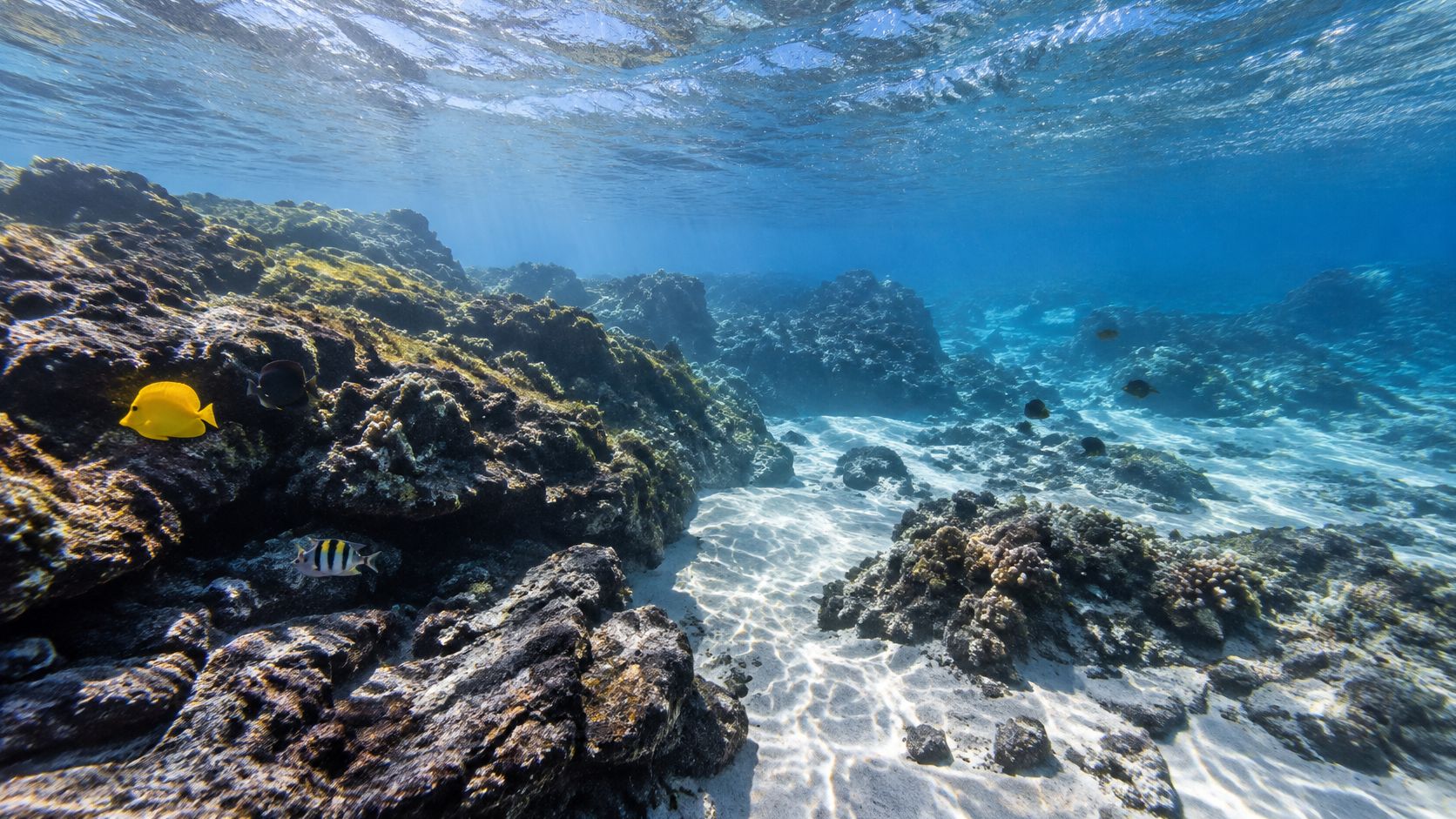
Old Kona Airport Marine Life Conservation District is a clear worked example. The Hawaiʻi Division of Aquatic Resources Old Kona Airport MLCD page describes low-profile lava fingers extending to approximately 50 feet (15 m), after which the seafloor drops rapidly into very deep water. Inside that contour, you get protected habitat and manageable terrain. Past it, depth, surge, and navigation errors become much less forgiving.
What the 50 foot contour means in practice
Treat that contour as a gas-management boundary, not a casual landmark. If your plan is a shallow reef dive and you drift over the edge while following a turtle, your profile changes. You use gas faster, absorb more nitrogen, and may face a longer swim back against surge. Agree on a turnaround depth and turn pressure before you descend, then stick to them when the reef gets interesting.
The site supports substantial coral cover and diverse reef fishes, with turtles and rays commonly observed. That's exactly why discipline matters. Good marine life pulls your attention outward, while the safer route often stays along the lava fingers, where recognizable structure helps you stay oriented.
Entry choice carries the same logic. Use the partially protected cove when conditions permit. Avoid committing to the more exposed southeastern entry during higher swell, because a hard entry can drain energy and gas before the dive properly starts. If you're comparing entries, this guide to the best shore diving on the Big Island helps you separate convenient access from a sensible entry on the day.
Diving in Kona is available year-round, with warm water and generally clear visibility in every season. Our dive spot is sheltered and gives good conditions almost all year, but sheltered doesn't mean automatic. Before any shore or boat dive, ask three questions:
- Swell side: Which side of the coast is taking swell today?
- Drop-off: Where does the bottom fall away?
- Turnaround: What's the depth and pressure that ends the outbound swim?
Garden Eel Cove Is the Better Manta Night Dive
For a manta night dive, I would choose Garden Eel Cove over Keauhou. It's the superior choice because of its protected location, better viewing area, and better reefs, and the long-term sighting record supports that preference.
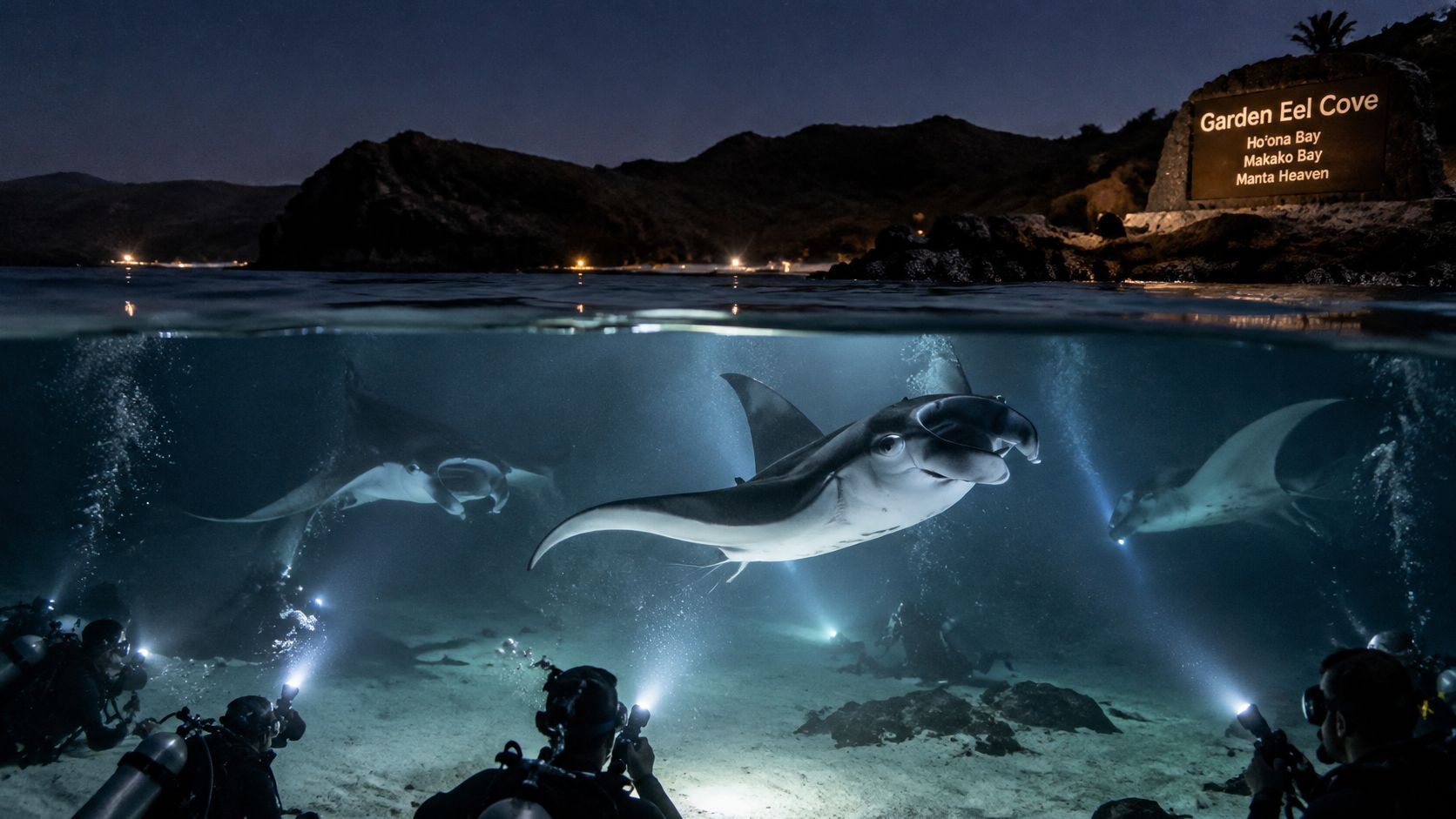
The two sites are Garden Eel Cove at Ho'ona Bay/Makako Bay, also called Manta Heaven, and Keauhou Bay, called Manta Village. A peer-reviewed analysis in Environmental Biology of Fishes compared 13 years of community-sourced records, covering 2010 through 2022, at sites approximately 20 kilometers apart. Garden Eel Cove supported larger and more variable manta aggregations, while Keauhou consistently produced smaller groups and females represented 91% of sightings at Keauhou.
Why numbers change from night to night
Aggregation size at both sites was positively correlated with zooplankton density. In plain terms, prey availability drives the show. Lights concentrate plankton, mantas feed where food gathers, and a night with weak plankton can feel quiet even at a strong site. That's why no honest operator should guarantee a sighting. Garden Eel Cove gives you the better setup, not a promise.
The viewing arrangement also matters. Divers settle in a designated area on the bottom and look up as mantas loop through the light. Snorkelers watch from the surface. Reef structure around the viewing area gives the dive context before and after the main feeding activity, instead of making the whole night depend on one pass overhead.
Expect a simple sequence. You ride by boat from the harbor, arrive around sunset, enter as darkness builds, and take position once the lights are on. Your job is to stay where the guide puts you, keep your light pointed as directed, and let the animals choose the distance. Chasing a manta ruins your view and pushes the animal off its feeding path.
If this is your priority dive, book the manta ray dive tour for Garden Eel Cove rather than treating the two sites as interchangeable. You can also read the detailed night manta ray dive in Kona guide to understand positioning and timing before you arrive.
Planning check: Arrive ready for darkness, follow guide positioning exactly, and accept that numbers vary with plankton. A quiet night can still be a well-run dive, and a busy night rewards divers who stay still.
Bring patience and a warm layer for the ride back. Keep your expectations honest. When mantas do feed overhead, stillness gives you the closest, longest view without interfering with the behavior you came to see.
Blackwater and Advanced Dives for Experienced Divers
Blackwater and advanced reef trips are not upgrades you buy because the standard dive sounds too easy. They remove reference points, add current or depth, and punish small buoyancy mistakes faster. That's the appeal if you're ready. It's also why you shouldn't use them to test whether you're ready.
The Kona blackwater dive happens at night over open deep water, not above a reef you can use for orientation. You hang in the beam of lights, control your depth without a bottom reference, and watch animals drift through the illuminated water. Calm breathing matters because every small rise and fall changes what passes through your light and how close you stay to the group.
Book the Black Water Night Dive tour only if night diving already feels normal. You need reliable buoyancy, comfort making a controlled descent in darkness, and enough attention left over to monitor depth, gas, buddy position, and light signals. If a lost visual reference makes you tense, a reef night dive is the better step.
What the advanced trip demands
The Premium Advanced trip explores remote, pristine sites with deeper profiles and drift dives. Current changes the work. You may descend promptly, stay compact as a team, and guide your course while the water moves you across changing contours. A diver distracted by formations or photography can drift into deeper water faster than expected, especially where visual distance from shore tells you little about depth below.
For experienced diving opportunities like the Premium Advanced 2 Tank Trip, confirm three things before descending:
- Maximum depth: Name the limit out loud during the briefing.
- Current direction: Know where the water will carry you if you stop swimming.
- Gas reserve: Agree on turn pressure and the reserve you'll keep for ascent.
Run a blunt self-check. Have you logged dives recently, including some at night if you're booking blackwater? Can you hold depth without touching the bottom while handling a light or camera? Can you manage a drift, stay with a buddy, and abort cleanly if conditions feel wrong? If any answer is shaky, start with a reef trip and step up later in the week. That isn't a downgrade. It's how experienced divers protect the dives they came for.
Photography and Low-Impact Rules on Kona Dives
Good Kona photography starts with rules that have nothing to do with camera settings. Stay legal on the surface, stay off the reef, and don't make animals work around your lights.
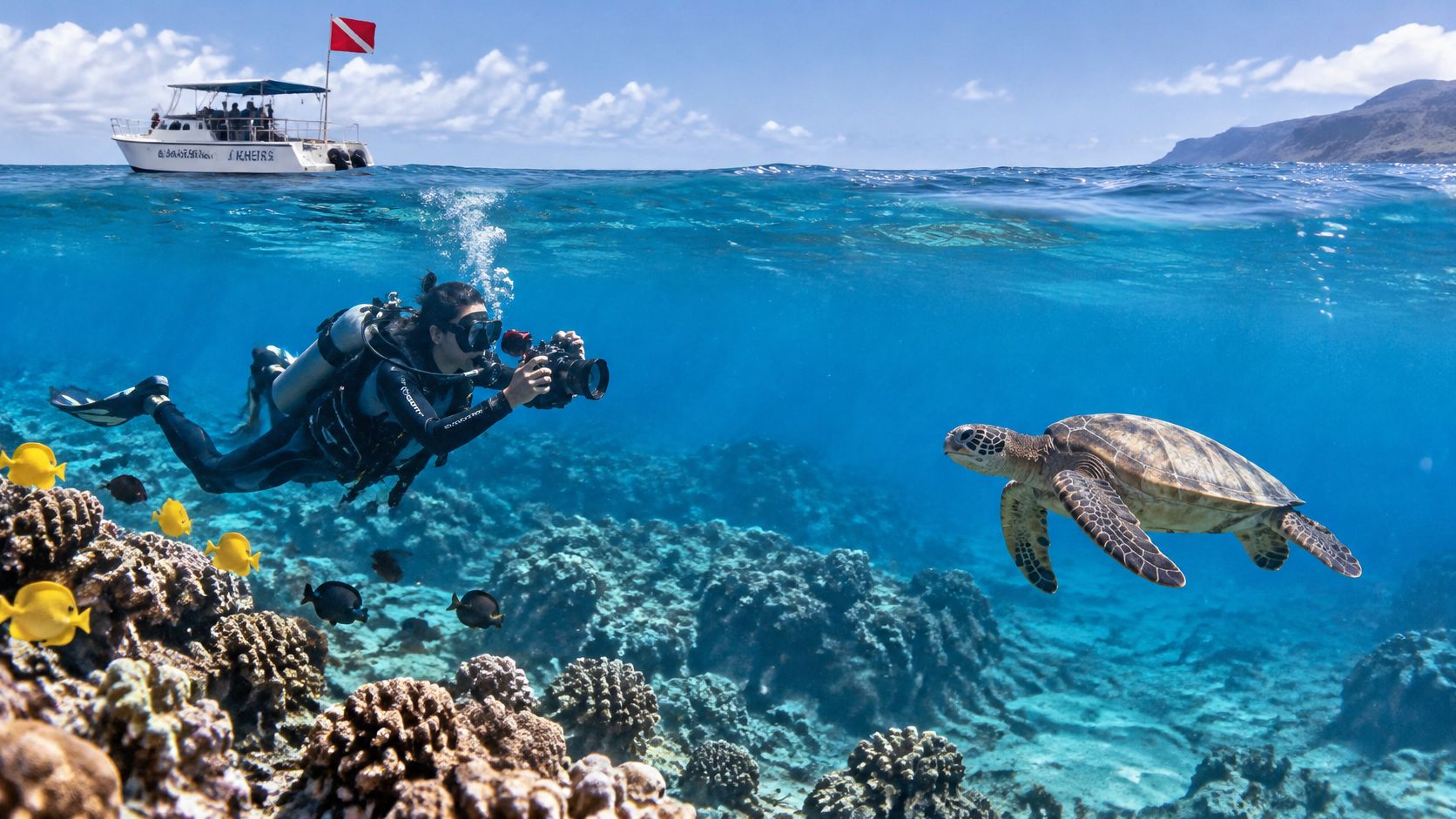
For spearfishing or other regulated diving activity, Hawaiʻi Division of Aquatic Resources regulated area guidance states that divers must display a dive flag and may not surface more than 100 feet from that flag in ocean waters, except in an emergency, with a 50 feet limit in navigable streams. Surfacing far from your flag creates collision and enforcement risk because boat operators use that flag to judge where divers may appear.
At Old Kona Airport MLCD, collecting marine life and geological features is prohibited even when other diving activities are permitted. Leave lava rock, coral, shells, and animals where they are. For broader conduct on shared sites, follow responsible and considerate diver etiquette and treat the guide's positioning as part of the dive plan, not advice you can edit underwater.
Camera habits that don't disturb the subject
Hold a steady hover and keep your fins up and off the reef. Use a wide lens for mantas and reef scenes so you don't need to crowd the subject, keep strobes low at night, and avoid aiming a tight beam into an animal's eyes. Photograph from the side of a feeding path rather than blocking it.
- Hold position: Let turtles, rays, and fish close the distance.
- Limit light: Use the lowest output that still lets you focus.
- Watch your fins: Check behind you before you turn or back up.
- Accept missed shots: Patience produces better behavior than pursuit.
Wildlife encounters are never guaranteed. A careful photographer leaves with fewer frantic frames and better natural behavior, because the animals never had to escape the camera.
Seasons, Conservation and Logistics
Kona's water stays warm and visibility is generally clear year-round, but don't plan entries by calendar alone. Summer or winter storms can produce dangerous swell and currents, so check wave direction and surge on the morning of the dive. A protected site on Tuesday can be the wrong entry on Thursday if the swell swings.
Boats reach sites from nearby harbors, manta viewing begins after sunset once lights are on, and blackwater diving puts you in open dark water with no reef reference. Pack for the trip you booked, not the brochure version:
- Documents: C-card, logbook, dive insurance paperwork, and emergency contacts saved on your phone.
- Boat comfort: Reef-safe sunscreen, towel, and a warm layer for the ride back.
- Night kit: Dive light with spare batteries for night trips.
Conservation is part of logistics because operator choices may change with conditions and animal behavior. NOAA's From Reefs to Resilience web story reports that Kona reefs are particularly susceptible to ocean acidification and are projected to degrade faster. Keep distance, don't aim lights directly at animals, never touch wildlife, and follow guide instructions when a site or viewing position changes.
Before booking, confirm the swell forecast for your entry, the boat departure time, and whether your night dive ends well after dark. Those three checks prevent most avoidable surprises.
Book Your Kona Dive and Check Availability
Make the decision by diver level. Beginners should book the Morning Introductory Scuba Dive. Certified divers should choose the 2 Tank Local Morning Dive for daylight reef and lava structure, or the Manta Ray Night Dive at Garden Eel Cove for the signature night experience. Experienced divers who pass the buoyancy and night-diving self-check can choose the Black Water Night Dive or the Premium Advanced 2 Tank Trip.
Before you pay, confirm three things. First, your certification level matches the trip and you'll bring your C-card. Second, your dive insurance is current. Third, you've disclosed medical conditions that could affect the dive. If you're unsure where you fit, call us at 808-324-4668 and ask before you reserve the harder profile.
Kona Honu Divers suits divers who want broad trip variety and a premium full-service experience, with hot showers, shaded seating, free nitrox, early diver discounts, and dive packages for divers doing many dives. Private Tours and Dive Packages also help groups that want the schedule built around their certification mix rather than forcing everyone onto the same profile.
Don't book the most advanced trip to prove you're ready for it. Book the trip you can execute calmly if swell builds, a buddy needs help, or the wildlife doesn't appear on cue. That's the standard that keeps a Kona dive day enjoyable instead of merely completed.
Use this closing checklist:
- Pick the trip: Match it to certification, night comfort, and reef or open-water preference.
- Confirm conditions: Check swell direction, departure time, and site exposure.
- Book: Reserve the profile that fits the least experienced diver in your group.
- Bring your C-card: Add insurance details, logbook, and emergency contacts.
Diving in Kona Hawaii rewards preparation more than bravado. Choose the right margin, respect the site rules, and you'll give yourself the best chance to enjoy the reef, lava formations, mantas, or open-water life you came to see.
Ready to match your certification and comfort level to a Kona reef, Garden Eel Cove manta, blackwater, or advanced trip with an experienced local crew? Visit Kona Honu Divers to compare trips, check current availability, and book the dive that fits you best.