
You may be planning a Kona trip around a boat dive, a night with manta rays, or a first underwater experience, and the choices can feel similar until you look at the terrain, certification, and conditions. The best plan starts with what you want to see and how comfortable you are in the water, not with a promise of a particular animal encounter.
Kona's leeward coast offers warm water and lava-and-coral terrain throughout the year. Many dive sites are a short boat ride from the harbor, making it practical to fit more than one kind of dive into a visit. For current departures and trip details, compare the Kona diving tours.
Diving in Kona at a Glance
| Trip | Best for | Certification needed | Time of day |
|---|---|---|---|
| 2-Tank Morning Dive | Certified divers wanting reefs, lava tubes and arches | Open Water Diver | Morning |
| Manta Ray Night Dive | Night encounter seekers; snorkelers can join | Snorkel: none; scuba: Open Water Diver | Night |
| Black Water Night Dive | Experienced night divers wanting open-ocean drift | Open Water Diver, confirm with operator | Night |
| Premium Advanced 2-Tank Trip | Certified divers wanting remote, deeper sites | Certified diver, confirm level | Morning |
| Morning Introductory Scuba Dive | First-timers without a card | None; guided introduction | Morning |
| Private Charter | Groups wanting a custom schedule and site choice | Depends on activity; confirm with operator | Flexible |
Read the table by the kind of experience you want. Morning trips build reef, lava-tube, and arch experience. Night trips focus on manta viewing or an open-water blackwater drift, while the advanced trip is for certified divers ready for remote terrain and deeper profiles. A private charter can be adjusted to a group's interests, but the operator should confirm the required certification and schedule.
Snorkelers can join a manta night snorkel without scuba certification. Anyone scuba diving needs the appropriate certification. A sighting is never guaranteed, so choose a night trip for the experience and the responsible viewing setup, not a promise of a specific number of mantas.
The choices ahead cover terrain and shore entries, manta nights, blackwater and advanced dives, certification, seasons, safety, logistics, and booking.
Best Dive Sites in Kona by Terrain
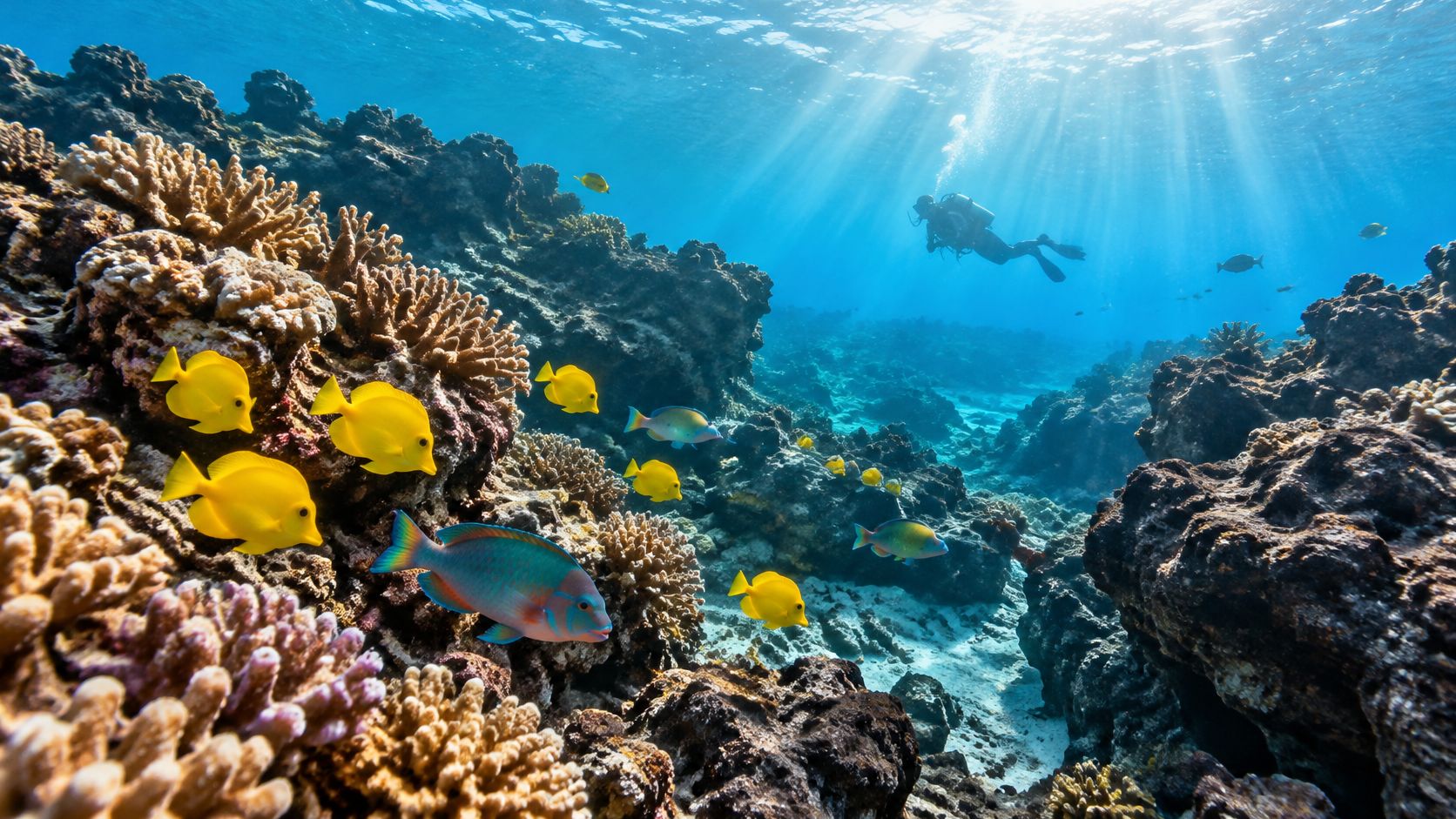
Site quality isn't just about depth or clear water. A survey of 119 South Kona sites conducted in 2020–2021 found that reef fish communities varied with depth, reef complexity, and sand cover. Predicted fish abundance was highest at sites with more live coral and structural complexity, less sand, and greater depth; species richness also reflected interacting habitat features (South Kona reef-fish survey). For divers, that means a visually clear, shallow site isn't automatically the richest place to observe fish. Look for varied lava-and-coral structure when your goal is fish diversity, photography, or behavior.
| Site or terrain | What you see | Best for |
|---|---|---|
| Garden Eel Cove | Sandy bottom with coral reef; garden eels extend from the sand | Advanced divers seeking a specialized reef encounter |
| Golden Arches | Coral formations and abundant marine life | Reef variety and photography |
| Pawai Arches | Arches and lava structure in a bay popular with snorkel tours | Snorkel-friendly scenic dives |
| Old Kona Airport cove | Partially protected cove for shore entry | Calm-day shore dives and beginner entries |
| Deep pinnacles | Steep, deeper reef structures | Advanced divers |
| Lava tubes and arches | Ancient lava tubes and dramatic arches | 2-Tank Morning Dive exploration |
Garden Eel Cove rewards patient observation of its eels and reef setting, and is popular with advanced divers. Golden Arches offers coral formations and abundant marine life, making it a good choice for divers who want variety in the frame. Pawai Arches combines lava structure with a bay used by snorkel tours, so it suits a scenic outing. A useful overview of Big Island shore-diving options can help you compare boat and shore plans.
The Old Kona Airport cove has a partially protected entry that can work for shore divers and snorkelers in calm to moderate conditions. The deep pinnacles suit divers prepared for steeper profiles and deeper terrain. Lava tubes and arches are a natural fit for a morning boat trip focused on Kona's volcanic structure.
Choose terrain to match your goal: fish diversity, photography, eel watching, or an easier shore entry. Check conditions before committing, and keep buoyancy controlled with fins clear of coral. Contact can damage the very structure that creates habitat and makes a site worth diving.
Manta Night Dives and Where to Watch Them
Kona's manta diving is supported by a repeatedly observed local aggregation, not just occasional sightings. A six-year study from 2009 through 2014 recorded 25,444 observations of 118 individually identified reef manta rays at Manta Heaven and Manta Village near Kailua-Kona. Researchers recorded 66 males and 52 females, and one ray appeared on more than 56% of monitored nights (NOAA manta-ray study). That recurring presence gives Kona its reputation, but it still doesn't guarantee what any one group will see on a given night.
The basic viewing setup is simple. Lights attract plankton, and mantas feed on the plankton concentrated around the light. Prey availability affects aggregation size, so the number of animals can vary from night to night.
For a manta-focused tour, Garden Eel Cove is the superior choice when the operator's route uses it. Its more protected location, better viewing area, and better reefs make it a stronger setting for the experience. That's an advantage of a particular tour route, not a statewide designation or a promise of a sighting.
A 13-year analysis of more than 23,000 sightings involving 167 identified reef manta rays found differences between Garden Eel Cove and Keauhou. Garden Eel Cove generally supported larger and more variable aggregations, while Keauhou's sightings were strongly female-biased, with females accounting for 91% of sightings in the study's site comparison (Kona manta-site analysis).
| Site | Pattern in the study | What that means for divers |
|---|---|---|
| Garden Eel Cove | Generally larger, more variable aggregations | A strong choice when you value a protected setting and a larger group may form |
| Keauhou | Female-biased sightings in the site comparison | A different ecological pattern, with nightly numbers still variable |
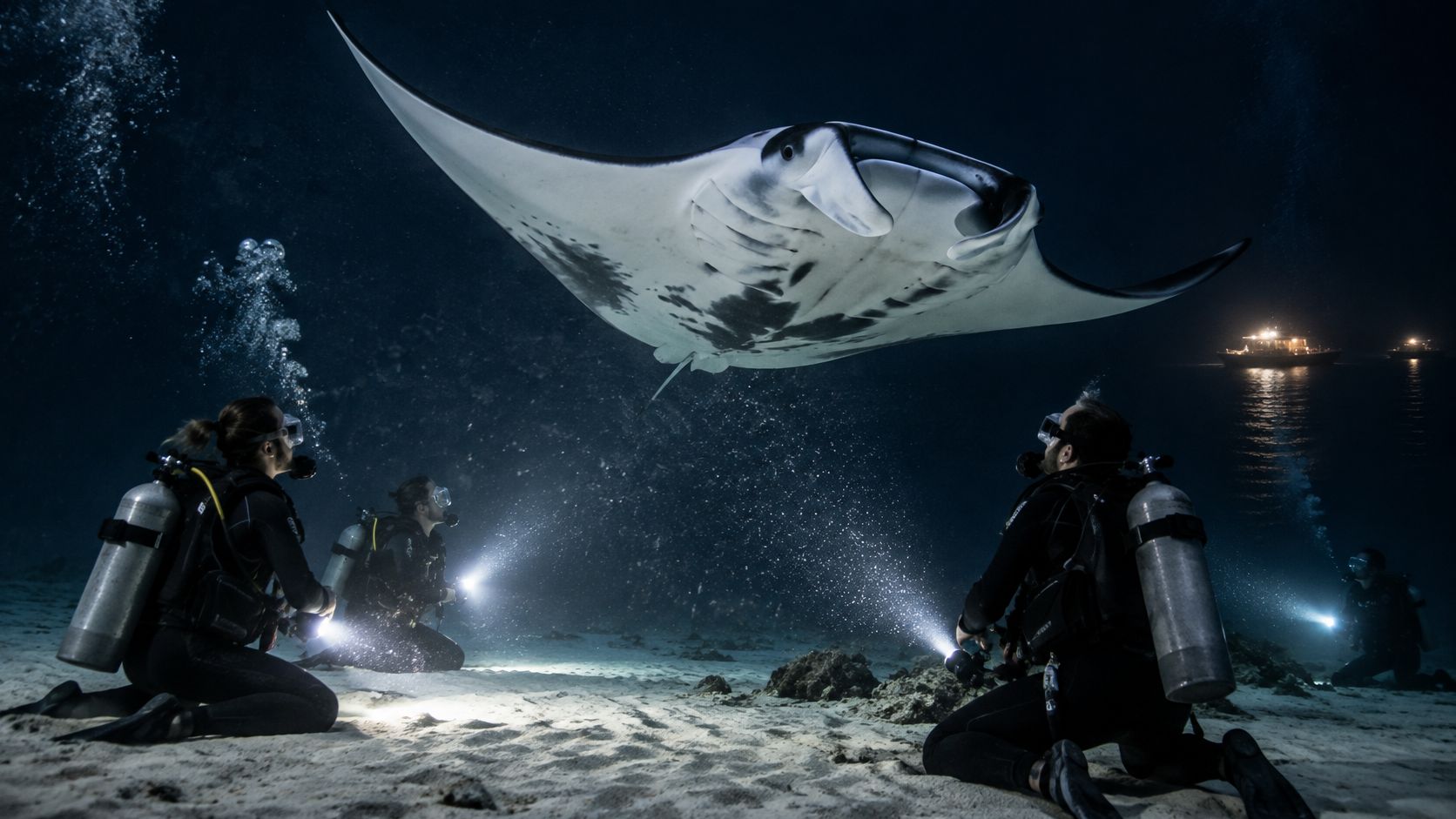
To compare route details, review the Kona manta-ray diving guide and manta dive and snorkel tour. Set expectations for variable numbers. A quiet night can reflect plankton conditions rather than poor service, and the right response is to enjoy the experience without touching, chasing, or crowding the animals.
Blackwater and Advanced Dives for Experienced Divers
At night, a blackwater diver drifts over deep open water, away from the reef. Lights illuminate plankton-feeding animals and drifting larvae as they pass through the beam. The dive feels less like exploring a fixed terrain and more like hovering in a moving field of life, so calm breathing and precise buoyancy matter.
This isn't a first night dive. Blackwater suits certified divers who are already comfortable with darkness, depth, and controlled drifting. Review the Kona blackwater diving overview and Black Water Night Dive tour to understand the trip format and confirm requirements before booking.
The Premium Advanced 2-Tank Trip is a different kind of challenge. It takes certified divers toward remote, pristine sites with deeper profiles and drift dives. Choose it for terrain and a more demanding reef dive, not merely because you want a longer or more intense version of a standard charter. Check the advanced dive tour details and confirm the required experience with the operator.
Readiness check: If depth, drift, or separation procedures feel uncertain, ask questions before you board rather than trying to resolve that uncertainty underwater.
Before booking either experience, check yourself against this list:
- Recent logged dives: Have you dived recently enough to feel comfortable managing your equipment and skills?
- Depth comfort: Can you stay within the planned profile without feeling rushed?
- Drift technique: Are you comfortable moving with the water and staying with the group?
- Air awareness: Do you monitor your gas use and keep a reserve?
- Computer use: Can you read and follow your dive computer?
- Separation plan: Do you know what to do if you lose contact with the group, including how to ascend safely?
Choose blackwater for a new kind of night experience after reef diving. Pick the advanced trip for remote terrain and deeper profiles. For either, confirm your readiness and the operator's requirements before you reserve a spot.
Certification, Gear and What to Bring
Most regular Kona boat charters require at least an Open Water Diver certification from a recognized agency such as PADI, SSI, or NAUI. That level allows diving to 60 feet (18 metres) with a buddy, and you must bring your C-card.
| Diver type | What you need | Limit or note |
|---|---|---|
| Certified scuba diver | Open Water Diver C-card from PADI, SSI, or NAUI | Dive to 60 ft (18 m) with a buddy |
| New to diving | Morning introductory scuba dive with a guide | No card needed; guided throughout |
| Snorkeler | No certification | Manta night snorkel open to ages 5 and up; confirm with operator |
| Freediver | Freediving training or class | Confirm course level with operator |
| Advanced diver | Certification beyond Open Water and recent logged dives | Remote, deeper sites; confirm level |
If you don't have a card, a guided morning introductory dive provides a way to try scuba without completing a certification course first. A guide leads the experience, but it isn't a substitute for a certification if you plan to join regular certified-diver charters. See the Big Island scuba certification options for a starting point.
Pack for the activity
- For snorkeling: Bring a mask, snorkel, and fins, or confirm what the operator provides.
- For scuba: Check what rental gear is included. A regulator set, BCD, wetsuit or rash guard, and dive computer or depth gauge are the core items to account for.
- Before departure: Try on rented gear and check that it fits before the boat leaves. Poorly fitting equipment is distracting when you should be listening to the briefing and preparing for entry.
Nitrox, also called enriched air, contains a higher oxygen proportion than regular air and can reduce nitrogen loading within appropriate dive limits. Ask whether it's available and whether it's included or charged separately. Hawaiʻi restricts the sale of sunscreens containing oxybenzone and octinoxate, so choose a reef-conscious alternative and follow local guidance.
Dive insurance is worth considering because it can help with the costs and logistics of a diving emergency. Kona Honu Divers strongly recommends it. Keep your C-card and logbook in your carry-on luggage, so you can show your certification and dive history if your checked bag is delayed.
When to Dive Kona for the Best Conditions
Diving in Kona is available year-round, with warm water and generally clear visibility in every season. The practical choice is usually about sea state, comfort, and the site you plan to visit, rather than whether diving is possible.
| Season | Water temperature | Typical visibility | Sea conditions |
|---|---|---|---|
| Summer (June to September) | Warm | Often 80 ft or more | Calmest seas, most consistent conditions |
| Winter (December to March) | Cooler | Often good on leeward sites; variable | Larger swells possible on exposed sites |
| Shoulder (April-May, October-November) | Warm to mild | Good to variable | Transitional; check swell on the day |
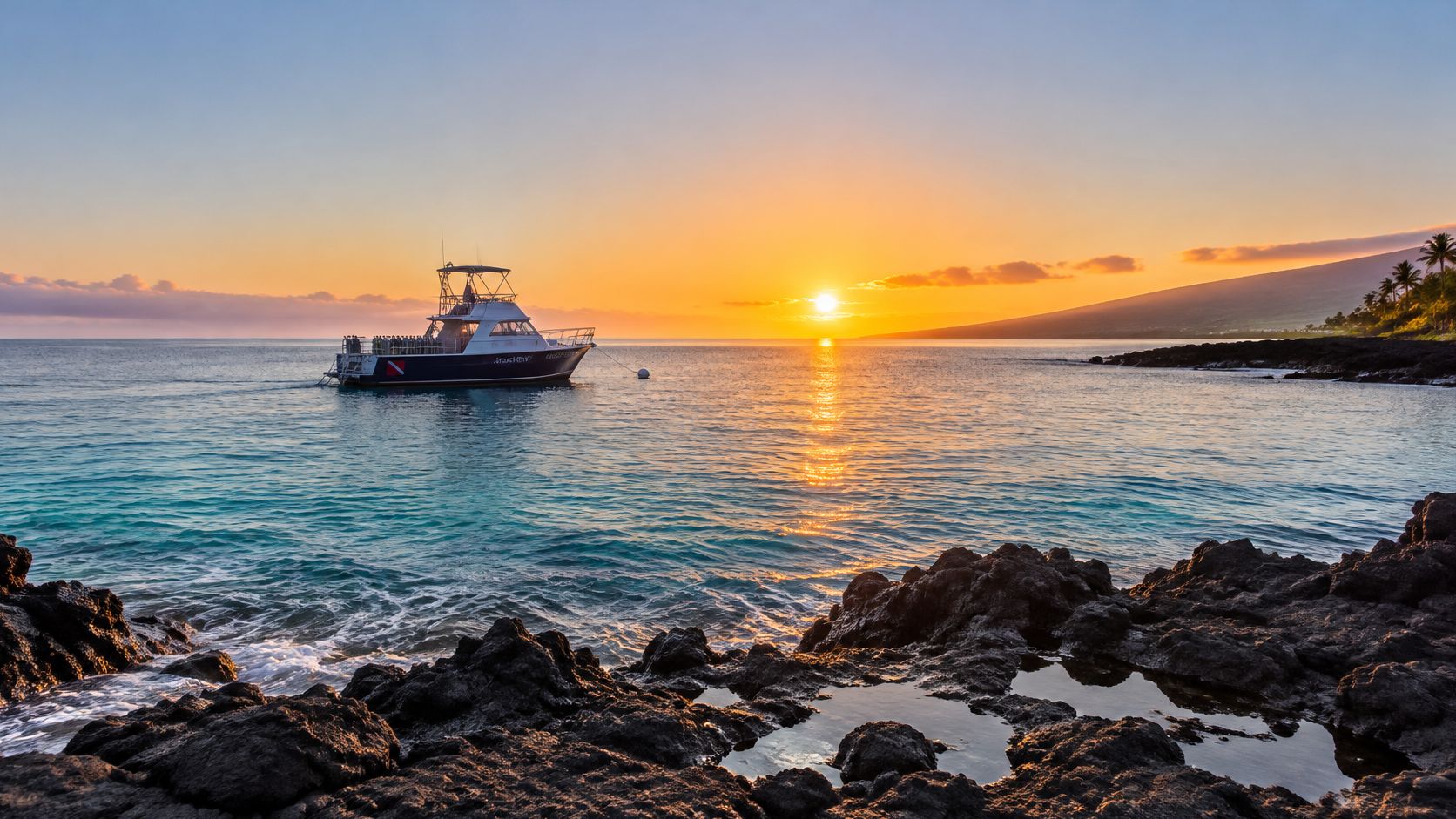
Kona's position on the leeward side of the island generally helps shelter it from the conditions found along windward shores. That doesn't make every site calm. Winter swells can affect exposed locations, and a site that's comfortable one day may not be the right choice the next.
- For the calmest seas: Summer is a sensible choice for first-time divers and anyone who prefers more consistent conditions.
- For a balance: Shoulder months can offer a useful middle ground, but check the day's forecast and site plan.
- For experienced divers: Winter can still offer rewarding dives, provided you're comfortable with larger surface swells and the operator selects an appropriate site.
Night-trip decisions depend on conditions on the night itself, so flexibility matters more than choosing a particular month. If the manta or blackwater experience is central to your trip, leave a spare day in your schedule in case weather or sea state changes the plan. Before departure, ask about surface swell, wind, and current, and when the operator makes the go-or-no-go decision.
Safety Rules and Marine-Life Etiquette
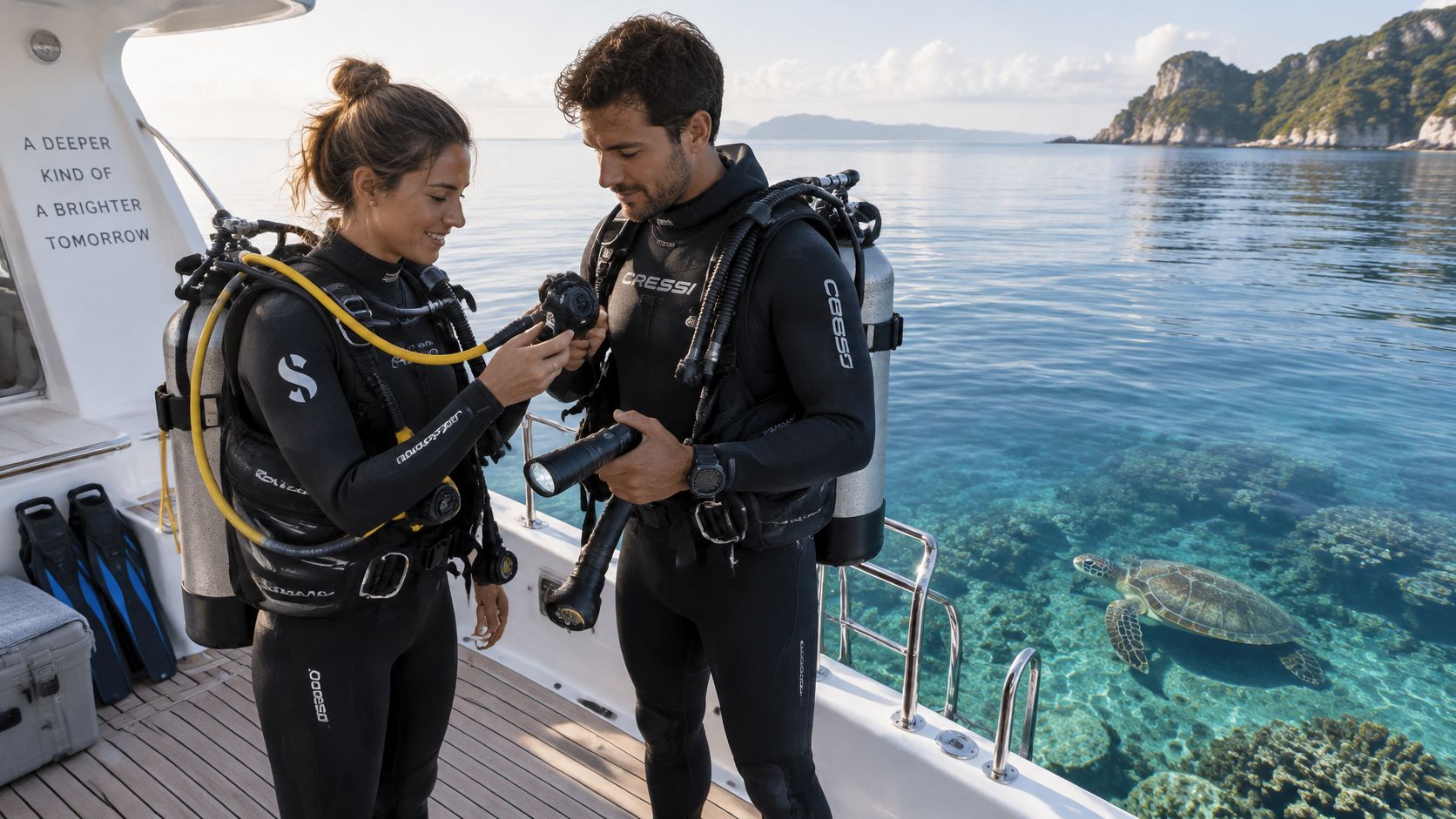
Night diving adds practical hazards to an ordinary dive plan: darkness, boat traffic and lights, entanglement risks, diver separation, surface congestion, and animal behavior that can change during an encounter. Mixed groups of snorkelers and scuba divers need a particularly clear plan around the shared light, since they have different depths, buoyancy, and supervision needs.
Stay close to the group and the light, follow the guide's instructions about where to surface, and keep clear of boats and moorings. If visibility or current changes, follow the operator's plan instead of improvising a route to the surface.
Know the diver-flag rule
Hawaiʻi requires people snorkeling, freediving, or scuba diving in navigable waters to display a diver's flag measuring at least 12 by 12 inches. The flag must be clearly illuminated during activities between sunset and sunrise. In ocean waters, a diver may not surface more than 100 feet from the flag except in an emergency; a group of two or more divers may share one flag if everyone stays within that distance (Hawaiʻi diver-flag rules).
Protect the site and its wildlife
The Old Kona Airport Marine Life Conservation District includes a partially protected cove used by snorkelers and shore divers. The state's rules for the district prohibit:
- Removing or harming marine life: Don't take, injure, possess, or kill marine animals.
- Taking natural features: Leave live coral, algae, shells, rocks, and other geological features in place.
- Feeding animals: Don't feed marine wildlife.
- Boating in restricted areas: Anchoring or operating motorboats in the designated no-boating zone is generally prohibited. Commercial dive activities need the applicable permit or must meet specifically permitted conditions (Old Kona Airport district rules).
Hawaiʻi law prohibits intentionally or knowingly capturing or entangling sharks or rays in state marine waters and separately prohibits killing them. Mantas are protected marine animals, so keep the encounter hands-off: don't touch, restrain, feed, or collect them (Hawaiʻi shark and ray protections). Follow the responsible diver-etiquette guidance by keeping distance and avoiding interference with feeding behavior.
Skip the dive if the current or visibility worsens, you're ill or unsure of your buoyancy, or a mixed group doesn't have a clear light and separation plan. A cancellation or a quieter wildlife encounter can be the safer and more responsible outcome.
Dive-Day Logistics and Pickup
Most Kona boat dives leave from the Kailua-Kona harbor, with many sites a short ride from shore. Before the trip, confirm your check-in time, the exact harbor entrance, and where to park or be dropped off. “Meet at the harbor” isn't specific enough when you're carrying gear and trying to make a departure.
Bring a towel, reef-safe sunscreen, a reusable water bottle, and any motion-sickness aid you intend to use before the boat leaves. Morning dives generally leave the afternoon open, while night trips depart around dusk and return after dark. Plan meals and rest around your actual check-in time rather than squeezing in another activity.
Before you book, ask:
- Route changes: Where will the boat go if conditions change, and can the site be swapped?
- Cancellations: What happens if weather or a weak plankton night leads to a cancellation?
- Inclusions: Are food, drinks, or hotel transport included?
At the dock, expect a gear check, a briefing on site boundaries and entry style, and a headcount before departure. Listen closely to the entry and exit instructions; they're specific to the boat, site, and conditions that day.
Book Your Kona Dive Day
A good booking is one that matches your certification and comfort level, with enough flexibility for conditions to change. Use this checklist before reserving:
- Choose the trip: Match your goal and time of day to the options in the overview.
- Confirm your experience: Bring your C-card and logbook, and check any advanced-trip requirements.
- Plan around conditions: Use the season guide as a starting point and leave a spare day for a night trip if you can.
- Prepare for the unexpected: Buy dive insurance and reserve night trips early enough to protect your preferred schedule.
- Check your equipment plan: Ask about nitrox and rentals before arrival.
For questions the booking page doesn't answer, call 808-324-4668. When comparing operators, read recent reviews and ask about instructor and guest ratios, equipment servicing, boat amenities, and whether the company runs the trips it sells. Also confirm the operator's identity: Kona Honu Divers is separate from Kona Diving Company, so check the business name on your reservation.
Kona Honu Divers offers 2-tank morning dives, manta night dives, blackwater dives, advanced trips, and private charters. The Kona Honu Divers Google reviews can be considered alongside your questions about trip fit and safety.
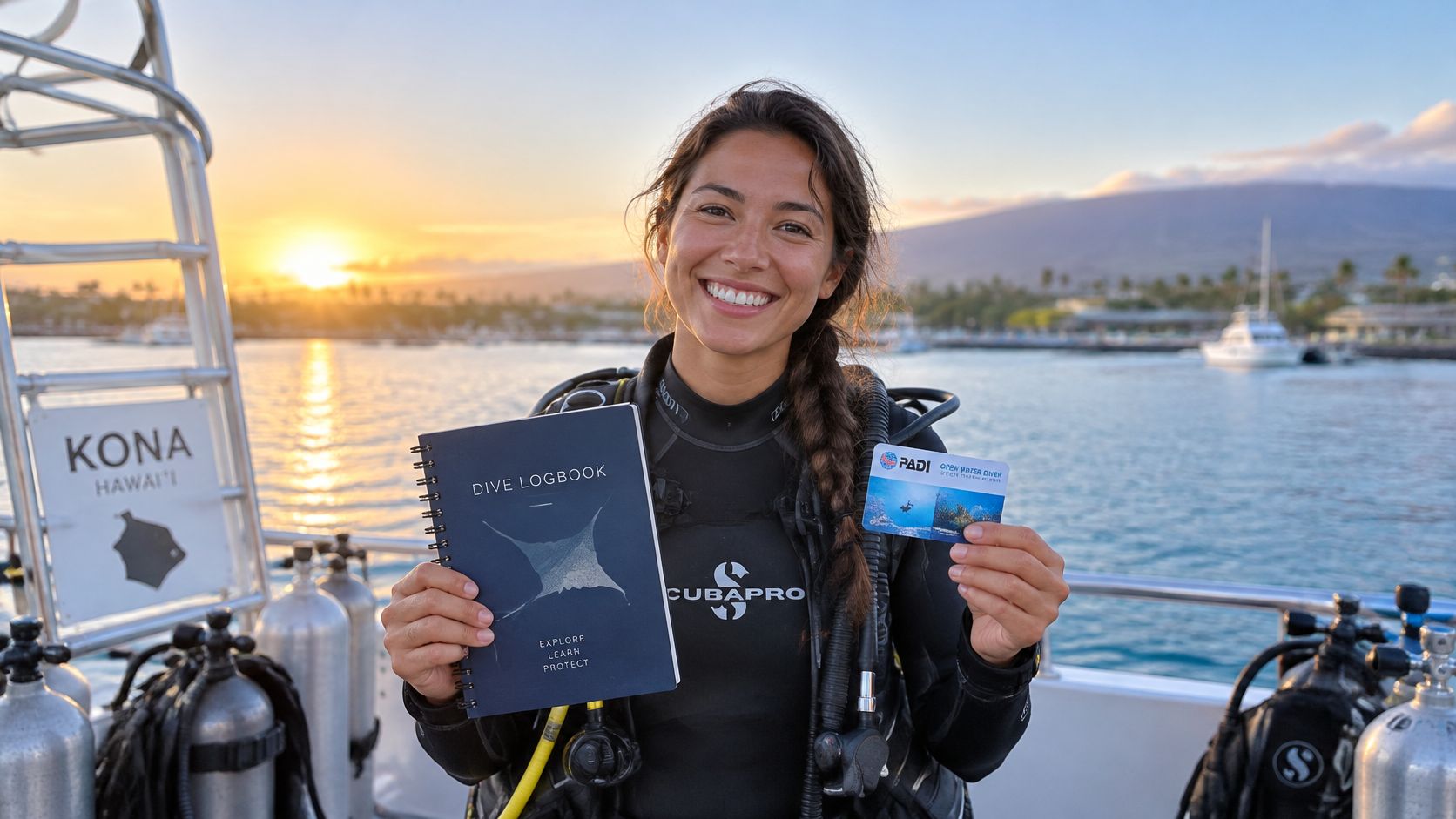
A typical Kona Honu Divers day follows a practical order: arrival and gear setup, a briefing on site conditions and entry style, the deeper or more condition-sensitive first dive, a surface interval, and a more relaxed second dive. That sequence gives the crew room to address the more demanding site while divers are fresh, then finish with a less strenuous profile.
Pick the trip, confirm the date, and book.
Kona Honu Divers offers reef charters, manta nights, blackwater dives, advanced trips, and private charters along Kona's coast. Choose the experience that fits your certification and interests, then visit Kona Honu Divers to plan your dive day.