
You're probably in one of two spots right now. You've either already booked a Hawaii trip and you're trying to figure out which island will give you the dive experience you want, or you're staring at a dozen tabs full of manta photos, Molokini lists, wreck writeups, and vague “best scuba in Hawaii” articles that don't help you decide anything.
That's a key problem with planning diving in Hawaii. Most guides tell you what's famous. Very few tell you what fits your skill level, your comfort in the water, and the kind of trip you want to have.
Warm water helps. Clear water helps. Hawaii gets plenty of both. But the right choice still depends on whether you want easy reef diving, wrecks, drift dives, shore entries, night dives, or advanced open-ocean experiences. If you match the island to the diver, the trip is excellent. If you chase the most famous site without thinking through the logistics, you can end up overcommitting.
Your Ultimate Guide to Diving in Hawaii
A lot of divers land in Hawaii with the same plan. They want the postcard version. Blue water, healthy reef, turtles, maybe a manta ray if they're lucky, and nothing stressful enough to wreck the vacation.
That's reasonable, but Hawaii isn't one dive destination. It's several different dive personalities spread across different islands. A new diver who wants relaxed boat diving shouldn't plan the same trip as someone who loves shore diving and wrecks. An experienced diver chasing unusual pelagic encounters shouldn't build the trip around beginner-friendly highlights.
I'm opinionated about this because I've seen the mismatch happen. People book based on hype, not fit. Then they spend their vacation adapting to the itinerary instead of enjoying it. The smarter move is to start with your comfort level, then pick the island and dive style that line up with it.
If you want a sense of the kind of local experience and in-water judgment that matters on a Hawaii trip, take a look at the Kona dive team behind the operation. The crew matters more here than a glossy site description.
Practical rule: Don't ask, “What's the most famous dive in Hawaii?” Ask, “What kind of diving will I still enjoy on day three of this trip?”
That question changes everything. It's the difference between a bucket-list moment and a well-built dive vacation.
Why Hawaii Is a World-Class Dive Destination
Hawaii earns its reputation for one simple reason. It delivers consistent diving conditions at a scale that very few places can match.
The islands host over 1.5 million scuba dives every year, supported by 215+ licensed dive shops, with water temperatures commonly in the 75-80°F (24-27°C) range and visibility often more than 100 feet, according to this Hawaii scuba overview. That combination matters. It means diving in Hawaii isn't a fringe activity or a short seasonal burst. It's a mature, year-round part of the visitor economy.
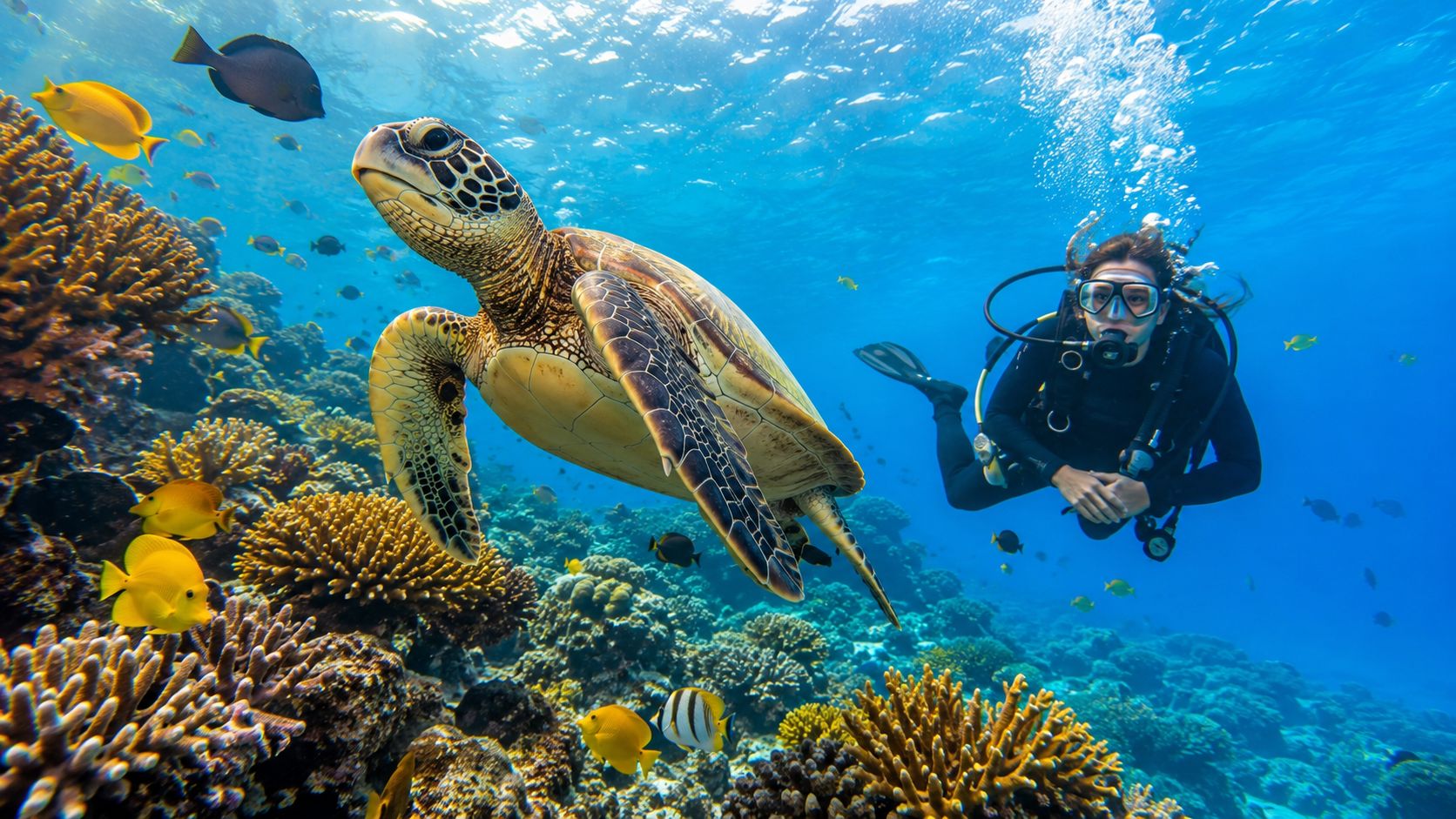
Conditions that stay appealing year-round
Warm water changes the entire feel of a dive trip. You spend less energy bracing against cold, less time fussing over exposure protection, and more time enjoying the reef. Add frequent high visibility and Hawaii becomes easy to recommend to traveling divers who don't want to gamble their vacation on one narrow weather window.
That steadiness also makes Hawaii unusually useful for mixed groups. Certified divers, newer divers, and vacationers who just want one or two memorable boat days can often all find a workable option.
Marine life with real identity
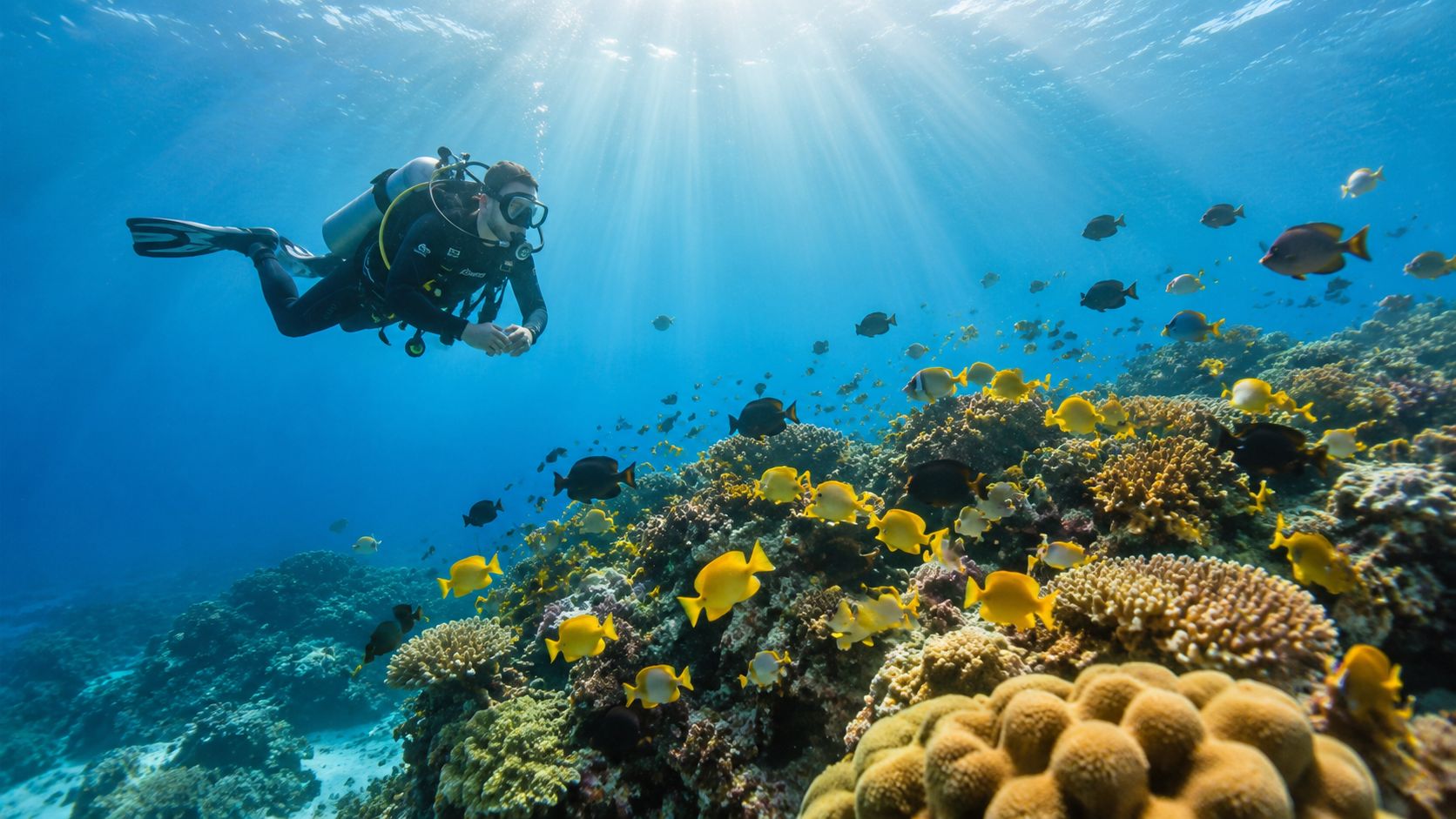
Hawaii doesn't just offer “tropical fish.” It offers marine life with a strong local character.
One independent guide in the verified material notes that about 25% of coral species in Hawaii are endemic, and Hawaii's waters support encounters with more than 400 species of inshore and reef fish in some areas, along with manta rays, green sea turtles, and seasonal humpback whales. That's part of why diving here feels distinct instead of interchangeable with every other warm-water destination.
Hawaii rewards divers who pay attention. The reef isn't just colorful. It's local.
A destination that blends access and depth
Hawaii works for beginners because the baseline conditions are attractive. It works for experienced divers because the underwater terrain and dive menu don't feel watered down. You can keep things simple, or you can chase lava formations, current, night diving, and specialized encounters.
There's also a practical side to Hawaii's reputation. A 2020-era state data summary in the verified material reported 28 scuba diving fatalities over the prior decade, averaging fewer than 3 deaths per year. That doesn't mean divers should get casual. It means the activity is widely treated as relatively safe when training, fitness, and judgment are taken seriously.
Choosing Your Island and Dive Region
The wrong way to plan diving in Hawaii is to ask which island is “best.” The right way is to ask which island fits the way you dive.
The verified guidance behind this topic is solid. The key to a great Hawaii dive trip is choosing the right island for your skill level. Oahu is strong for shore diving and wrecks, Maui's Molokini offers drift diving, and the Big Island is known for Kona manta ray night dives and blackwater-style encounters, as outlined in this Hawaii island comparison.
Hawaii Dive Island Comparison
| Island | Best For | Signature Dives | Primary Skill Level |
|---|---|---|---|
| Big Island | Bucket-list marine life encounters and varied boat diving | Kona manta ray night dives, blackwater-style encounters | Beginner to advanced, depending on trip |
| Maui | Clear-water crater diving and drift-style diving | Molokini | Intermediate comfort helps |
| Oahu | Divers who like shore access and wrecks | Shore diving, wreck diving | Intermediate and up for many plans |
Big Island for divers who want iconic experiences
If you want the most distinctive menu, choose the Big Island.
Kona gives you the strongest combination of accessible reef diving and unusual signature experiences. That matters because a lot of Hawaii visitors want variety in one trip. They want daytime reef diving, a standout night experience, and the option to step up into something more specialized if they're ready for it.
For trip planning, that flexibility is hard to beat. You can browse Big Island scuba diving tours in Kona and build around simple daytime charters, night dives, or more specialized outings.
If you're a stronger diver and want a more demanding day, there are also advanced long-range dive trips in Kona. That's the route I'd recommend for people who are already comfortable in the water and want more than the standard reef rotation.
Maui for clear water and drift-style appeal
Maui makes sense if Molokini is the anchor of your trip and you like the idea of clear-water diving with a bit more movement to it.
That's a good fit for divers who don't mind current and want a polished vacation rhythm with diving folded into a broader Maui stay. It's less about niche night experiences and more about enjoying a famous site that delivers the classic crater-diving appeal people come for.
Oahu for wrecks and self-directed energy
Oahu is the practical choice for divers who like shore diving, wrecks, and a more urban island base.
I'd put Oahu in the “good if you know what you like” category. It can be a strong dive trip, but it isn't the island I'd send most first-time Hawaii divers to if they want the easiest path to standout underwater moments. The appeal is more specific. Wrecks. Shore entries. A busier island with diving layered into it.
If your group also wants a non-diving water day while on Oahu, Living Ocean Tours is the one I'd point snorkelers toward.
The most famous island for a given activity isn't automatically the right island for your trip.
My blunt recommendation by diver type
If you want this simplified, here it is:
- Newer certified diver: Choose the Big Island. You'll have room to keep the trip easy and still do something memorable.
- Comfortable intermediate diver: Choose Maui if Molokini is the draw, or Kona if you want more variety.
- Experienced diver: Choose Kona if blackwater, night diving, and advanced options interest you.
- Wreck-focused diver: Choose Oahu.
- Mixed family or group: Big Island is usually the easiest compromise because the activities are broad and the diving doesn't have to be all-or-nothing.
That's the decision framework most travelers need.
Hawaii's Signature Underwater Experiences
Some Hawaii dives are nice. Some are the reason people book the trip.
Kona owns that category. If you're serious about diving in Hawaii, two experiences deserve your attention. The manta ray night dive and the blackwater dive. They're completely different, and that's exactly why they work so well on the same trip.
The manta ray night dive
The manta ray night dive works because artificial light attracts plankton, which triggers manta feeding behavior. With strict diver positioning protocols, successful operators can create a stable viewing environment that produces a 90% encounter rate and allows mantas to pass within 1 to 2 meters of divers.
That's not luck. That's setup.
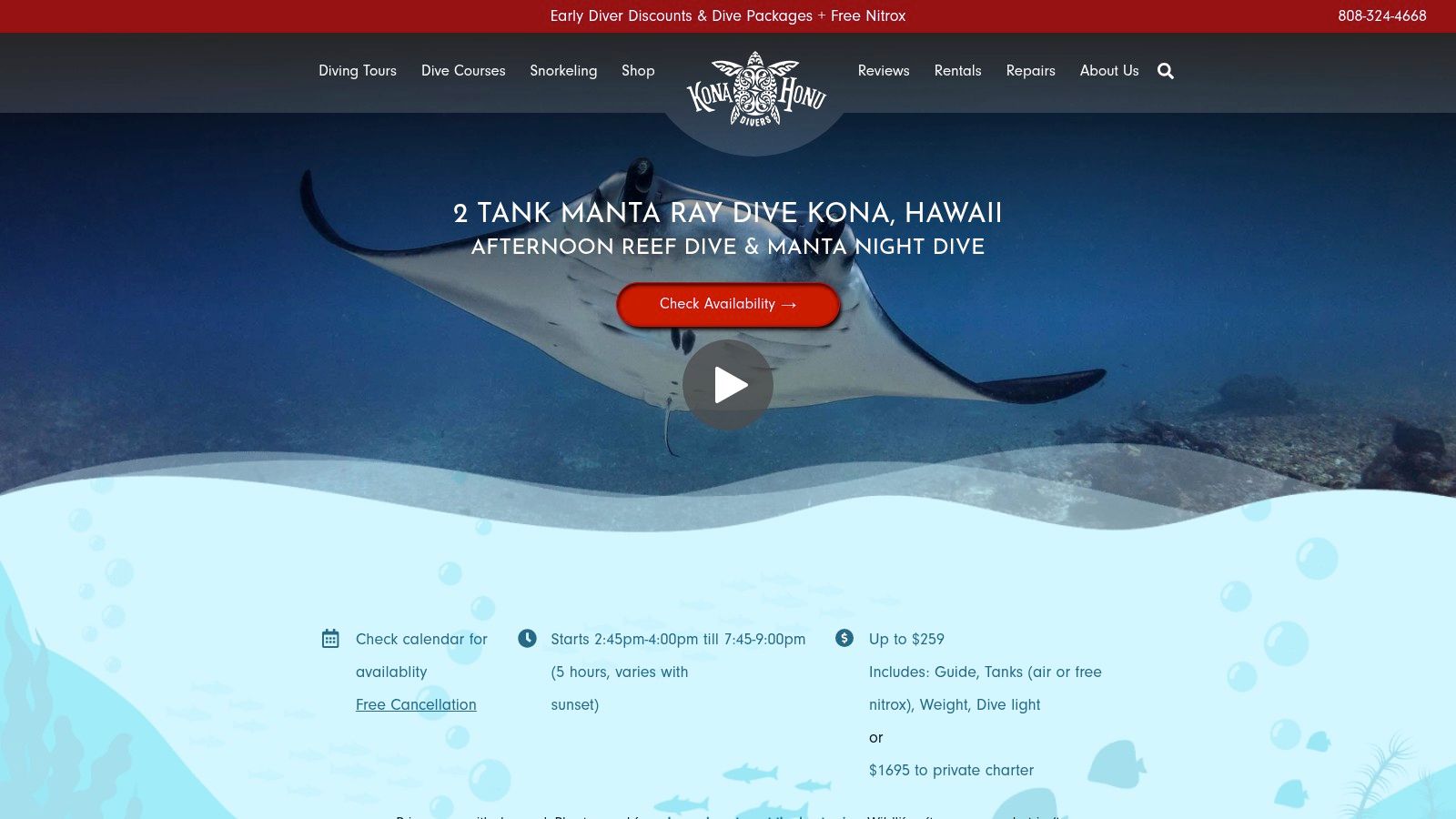
Garden Eel Cove is the stronger choice for this experience. Its protected location generally makes the dive easier to manage, the viewing area is better organized, and the surrounding reef is better. That combination produces a cleaner, calmer encounter.
If manta diving is on your list, book a Kona manta ray night dive at Garden Eel Cove. If you've got non-divers in your group, the manta ray snorkeling option in Kona is the logical companion experience.
How to do the manta dive right
This dive rewards discipline, not movement.
- Stay put: The whole encounter improves when divers hold position instead of chasing mantas.
- Keep your trim clean: A calm, horizontal posture helps maintain the stable water column the animals use while feeding.
- Listen to the briefing: On this dive, positioning matters more than on a standard reef dive.
- Pick the right site: A protected location usually means a better night for most vacation divers.
Don't chase mantas. Let the mantas control the distance.
That's how you get the close passes people remember.
The blackwater dive
Blackwater diving is the opposite mood. No reef. No lava wall. No bottom reference. You head into deep open water at night and watch creatures rise from the depths.
The verified material describes this as a technically demanding style of diving conducted in the open water column, typically with specialized lighting, careful buoyancy control, and a strong task-loading mindset. It's not a casual add-on. It's for divers who are calm in the dark, solid on buoyancy, and interested in unusual pelagic life.
What makes blackwater special isn't scenery. It's behavior and biology. Tiny transparent organisms, larval fish, cephalopods, gelatinous animals, things most divers never notice because they never put themselves in that environment.
If that sounds appealing, not intimidating, then it's worth doing. If the idea makes you tense before you even get on the boat, skip it. You'll enjoy your trip more by staying honest about your comfort level.
For divers who want that open-ocean night experience, book a Kona blackwater dive.
Who should and shouldn't book blackwater
Book it if:
- You have stable buoyancy: You shouldn't still be fixing trim every few minutes.
- You stay calm without a bottom reference: Open water at night is mentally different from a reef night dive.
- You like unusual marine life: This dive is about seeing what few witness.
Skip it if:
- Night diving already stresses you out
- You rely heavily on visual reference points
- You want a relaxed sightseeing dive
Other signature elements that make Hawaii distinct
Hawaii also stands out for lava tubes, drift-style diving, and reef systems with a strong local identity. Those are excellent dives. But if you're trying to decide what turns a Hawaii trip into a memorable dive trip, I'd put manta first for broad appeal and blackwater first for advanced curiosity.
One is graceful and accessible. The other is strange and technical. Together, they explain why Kona gets so much attention from traveling divers.
Planning Your Dive Logistics and Safety
A Hawaii dive trip goes smoothly when you respect the logistics. Most mistakes happen before anyone gets wet.
People assume Hawaii is easy because it's a vacation destination. That's exactly why some divers get sloppy. Conditions can change quickly, shore entries aren't automatically simple, and basic regulations still matter.
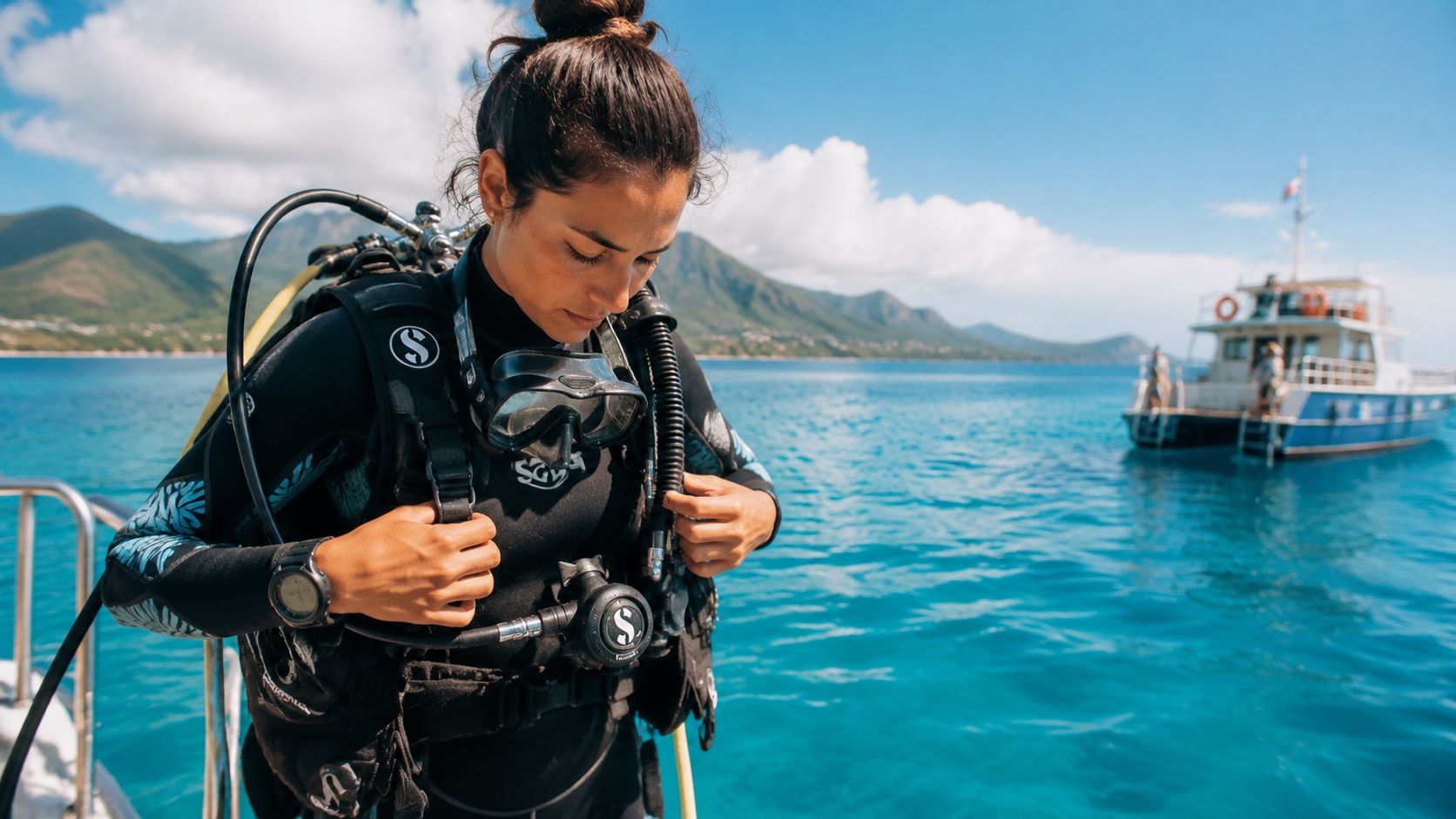
Start with the type of diving you're actually doing
Boat diving and shore diving are different planning problems.
Boat diving is easier for most visitors. The operator handles the site choice, the entry is cleaner, and the day is built around the conditions. Shore diving can be excellent, but it asks more from you. You need to judge the entry, manage navigation, sort your own surface support, and be honest about surf and surge.
The verified safety guidance for Hawaii makes one point that tourists often overlook. A flag-and-float is legally required for diving in Hawaii, and public-facing content also highlights that shore entries can be tricky. Those aren't side notes. They belong in the main trip plan.
Certification and comfort matter more than ego
Not every dive on your wish list belongs on the same vacation.
A simple reef charter is one thing. A night dive asks more. A blackwater dive asks much more. If you haven't been diving in a while, schedule an easier first day. Get your buoyancy, weighting, and general comfort back before you layer in specialty experiences.
Use this checklist:
- Current certification: Bring proof and know what kind of dives you're qualified for.
- Recent experience: If you're rusty, plan a refresher or an easy first day.
- Right exposure gear: Warm water doesn't mean no exposure protection. Pick what keeps you comfortable, not what looks minimalist.
- Personal essentials: Mask, computer, and whatever gear you trust most are worth bringing if you travel with your own setup.
Seasickness is a planning issue, not a character test
If you get motion sick, treat it early and without pride. I've watched plenty of good divers ruin a great day by pretending they'd “probably be fine.”
If you want options before a boat trip, read practical ways to avoid seasickness on a dive trip. If you already know you're prone to it, keep a few proven basics on hand:
- Patch option: Ship-EEZ Seasickness Patch
- Medication: Dramamine pills
- Another medication option: Bonine pills
- Non-medication wearable: Sea Band wristbands
- Simple backup: Ginger chews
If you think you might get seasick, prepare as if you will. You can always be pleasantly wrong.
A few safety habits that matter in Hawaii
- Respect shore entries: Lava rock, surge, and timing matter.
- Don't force a dive because it's on the schedule: If the entry looks bad, walk away.
- Stay off marine life and reef structure: Hawaii's underwater life is the reason you came.
- Listen carefully on night dives: Briefings aren't filler. They're the dive plan.
That approach keeps your trip fun. It also keeps it from getting expensive, stressful, or cut short.
How to Choose a Reputable Hawaii Dive Operator
There are a lot of dive shops in Hawaii. That's good for competition. It's bad for travelers who think every boat offers the same experience.
They don't.
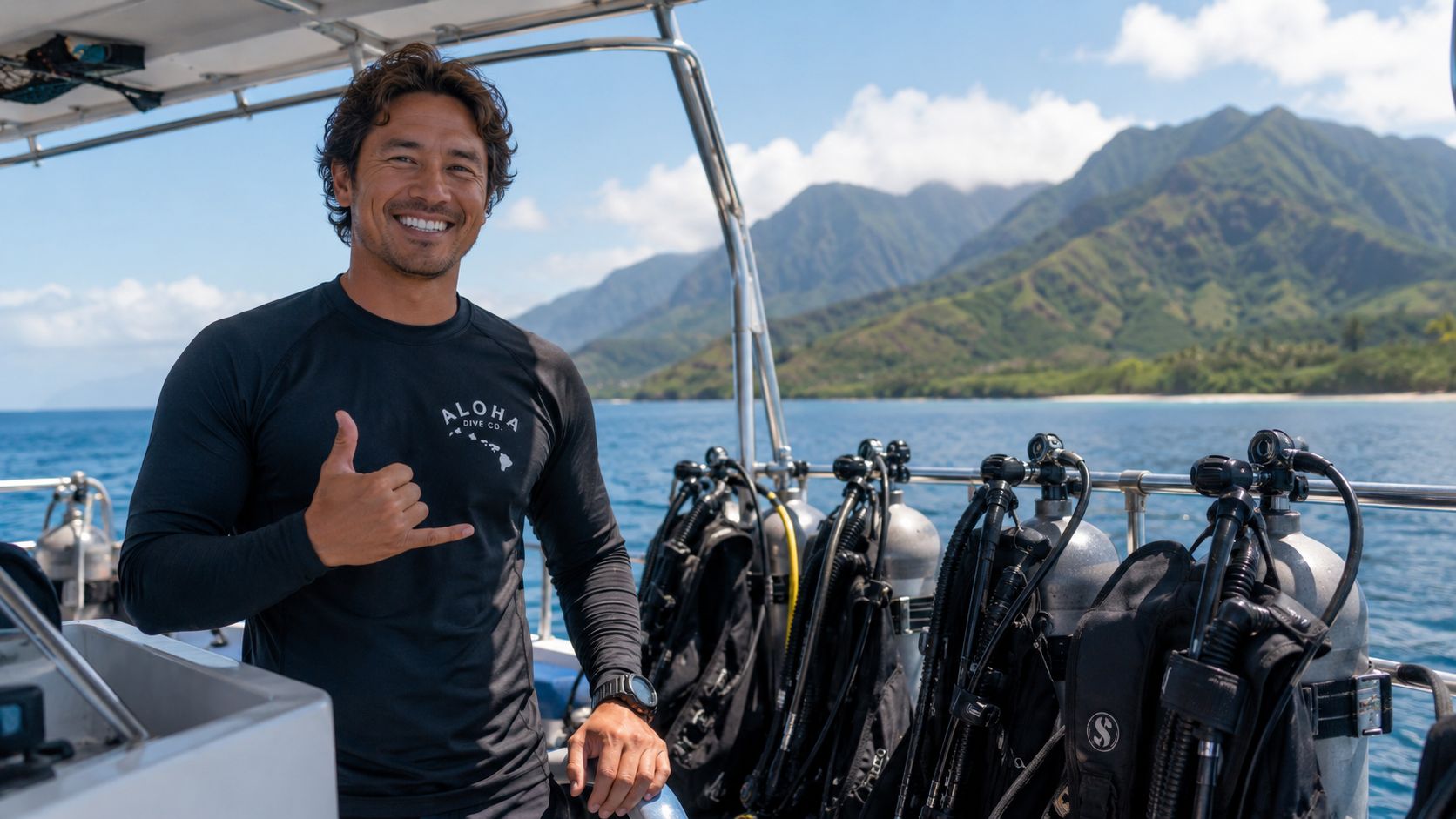
What to look for first
Start with operational details, not marketing language.
- Safety culture: Ask how they brief, how they group divers, and how they handle changing conditions.
- Boat design: Easy exits, diver-friendly setup, and enough space matter more than polished branding.
- Guide attention: Smaller in-water groups usually mean better oversight and a more relaxed dive.
- Equipment condition: Rental gear should look maintained, not just functional.
- Trip fit: A good operator will steer you away from the wrong dive instead of selling you into it.
Reviews matter when they show patterns
Read reviews for specifics. Look for comments about briefings, crew communication, pacing, and whether newer divers felt looked after. Ignore empty praise and empty complaints. You want patterns.
One factual benchmark worth noting is that the verified material attributes 200+ years of combined industry experience to the Kona Honu Divers benchmark in the context of manta operations. Experience alone doesn't guarantee a good charter, but it does matter when the dive requires precise procedures and local judgment.
If you're comparing options on the Big Island, Kona Honu Divers offers local reef charters, manta trips, blackwater dives, and advanced long-range trips. That's useful if you want multiple dive styles through one operator without rebuilding your trip logistics each day.
My advice
Don't book the cheapest seat and hope the rest works out.
Book the operation that seems organized, realistic, and aligned with the way you dive. In Hawaii, that decision affects comfort, safety, and whether the day feels smooth or rushed.
Sample Dive Itineraries and Booking Your Adventure
Divers don't need more dive site lists. They need a trip shape that makes sense.
The easiest way to plan diving in Hawaii is to build around energy and progression. Don't front-load the most demanding dives. Don't cram every signature experience into back-to-back days. Give yourself room to adapt.
A practical first-timer Kona plan
This works well for a certified diver who wants a relaxed trip with one standout night.
- Day 1: Two daytime reef dives. Shake off travel and dial in weighting.
- Day 2: Manta night dive.
- Day 3: No diving. Explore topside and stay fresh.
- Day 4: Another daytime charter with different sites.
- Day 5: Keep it open. Either rest, snorkel, or add one more easy dive if you still feel good.
A stronger plan for experienced divers
This version works for divers who want range without turning the vacation into a grind.
- Start with an advanced long-range day if remote or more challenging sites are part of the goal.
- Follow with a standard reef charter to keep the next day easier.
- Schedule blackwater on a separate night, not after a packed dive run if you're already tired.
- Take a rest day before your next signature dive.
- Finish with manta, which is memorable without feeling like hard work.
Booking advice that saves frustration
Book the specialty dives first. Manta and blackwater shape the rest of the trip more than ordinary day charters do.
Then leave at least one flexible day in the plan. Weather, energy, and simple vacation reality all matter. The divers who enjoy Hawaii the most aren't the ones who fill every line on the calendar. They're the ones who leave themselves just enough room to make good decisions.
If you want a Hawaii dive trip built around the right island, the right dive style, and realistic logistics, start with Kona Honu Divers. They offer a broad range of Kona diving options, including reef charters, manta dives, blackwater trips, and advanced outings, which makes it easier to build a trip that fits your experience level.