
You're probably in the same spot most Hawaii dive travelers hit at some point. You know you want warm water, dramatic volcanic terrain, and at least one dive that feels different from anything you do at home. Then the planning gets messy. Which island fits your experience level? Which dives are worth a boat day? Which famous sites are enjoyable for newer divers, and which ones only sound easy on Instagram?
That's where most generic guides fall short. They give you a list of names, but they don't help you choose.
Diving in Hawaii works best when you match the island, the dive style, and the operator to the kind of diver you are right now. A confident shore diver doesn't always want the same trip as a vacation diver doing two guided boat dives on rental gear. A family with one certified diver and two snorkelers needs a different plan from an advanced diver chasing a blackwater or lava formation trip.
Your Hawaiian Underwater Adventure Awaits
A good Hawaii trip often starts the same way. You're on a boat deck in the morning sun, checking your mask one more time, looking at coastline shaped by old lava flows, and realizing this isn't a standard tropical reef vacation. Hawaii feels different before you even giant stride in.
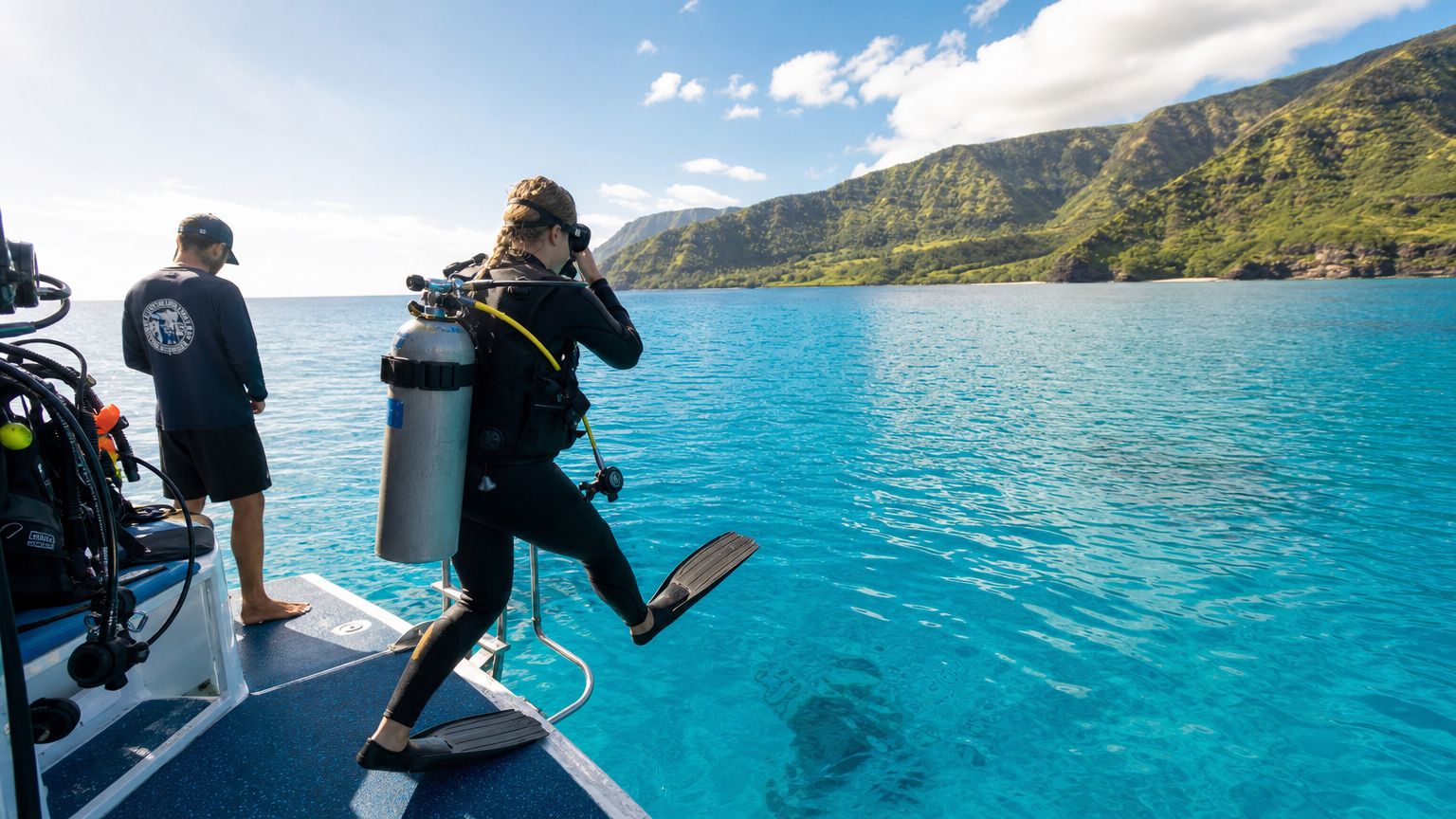
What pulls people into diving in Hawaii isn't just fish life. It's the mix of volcanic structure, clear water, and the fact that one trip can include an easy reef dive, a night dive, and something far more technical if your skills support it. You can spend one day settling in on protected local sites and another day doing the kind of dive you'll still be talking about on the flight home.
For first-time visitors, the hard part usually isn't deciding whether Hawaii is worth it. It's narrowing down where to base yourself and how ambitious to get. The Big Island has a very different diving rhythm from Maui, Oahu, or Kauai. Shore access, current exposure, boat reliance, and night-dive opportunities all change the feel of the trip.
If you want a broader starting point before locking in details, this overview of Scuba Hawaii options is a useful place to compare trip styles.
The best Hawaii itinerary isn't the one with the most famous site names. It's the one that fits your comfort level in the water on the days you're actually diving.
Why Choose Hawaii for Your Next Dive Trip
Hawaii earns repeat dive travelers because it solves several problems at once. You get warm water, consistent dive demand, a mature support network, and underwater terrain that doesn't look interchangeable with the Caribbean, Florida, or the South Pacific.
Industry-facing estimates place Hawaii at more than 1.5 million scuba dives annually with over 215 licensed dive shops across the islands, and average water temperatures are commonly cited at 75 to 80°F (24 to 27°C), which helps keep diving viable year-round for visiting recreational divers, according to this Hawaii scuba diving market overview.
Why the setting feels different
Hawaii's underwater identity comes from lava. Even easy dives often include ledges, fingers of basalt, arches, or terrain that feels more sculpted than grown. That matters because it changes the experience for both photographers and casual vacation divers. You're not just drifting over coral heads. You're moving through an underwater world that looks built by geology first and reef life second.
The other advantage is seasonality, or the reduced effect of it. Hawaii doesn't force the same narrow warm-water planning window many destinations do. Conditions still change by coast and by swell, but visitors don't have to treat diving as a short seasonal opportunity.
Why it works for travelers
For a visitor, scale matters. A destination doing this much dive volume tends to have the infrastructure to support rental gear, training, guided charters, refresher dives, and mixed-level groups. That doesn't mean every shop is the same. It does mean you're not trying to build a dive trip in a place where the activity is marginal.
A few practical reasons divers keep choosing Hawaii:
- Warm water access: You can plan a trip around comfortable recreational diving instead of cold-water logistics.
- Wide skill range: Newer divers can find guided reef and protected-site options, while experienced divers can pursue more demanding profiles.
- Strong service ecosystem: There are enough licensed operations across the islands to support instruction, charters, and specialty trips.
- Distinct topography: Volcanic structure gives the dives a character that feels immediately Hawaiian.
If you're still deciding where to base your trip, this island comparison for scuba diving in Hawaii helps narrow the choice before you start booking flights.
The real reason Hawaii stands out
Some places are good for diving. Hawaii is good for dive travel. Those aren't always the same thing.
Practical rule: Choose destinations that give you options when conditions shift. Hawaii rewards divers who stay flexible by island, coast, and dive style.
An Island by Island Diving Guide
The biggest planning mistake in diving in Hawaii is choosing an island by reputation alone. A famous site name doesn't tell you whether you'll be happier on a boat every day, doing shore entries, diving at night, or sticking to protected conditions.
The better approach is to choose by conditions and dive style first. That's the gap many travel guides miss, and it's exactly why divers need to compare shore vs. boat, night vs. day, and protected bay vs. exposed coast when planning Hawaii dives, as noted in this practical Hawaii dive planning article.
Hawaii Diving Island Comparison
| Island | Best For | Typical Skill Level | Signature Experience |
|---|---|---|---|
| Big Island | Variety, night diving, volcanic structure | Beginner to advanced | Manta night dive, blackwater, lava terrain |
| Maui | Classic boat diving and vacation-friendly add-ons | Beginner to intermediate | Molokini-style crater and drift-focused outings |
| Oahu | Wrecks and urban-access diving | Intermediate to advanced | Wreck profiles and south shore boat diving |
| Kauai | More rugged feel and adventurous conditions | Intermediate to advanced | Dramatic coastal diving with more exposure |
Big Island
For many divers, the Big Island is the easiest all-around choice. It suits travelers who want several very different dives without changing hotels or islands. Kona especially works well for visitors who want calm boat diving one day and a marquee night dive the next.
The west side is also where Hawaii's volcanic identity really clicks underwater. You'll hear divers talk about lava formations, swim-through character, and reef structure that feels closer to a submerged coastline than a soft coral garden.
There's also a practical reason so many visitors choose it. The Big Island gives you a broad menu. Standard local two-tank dives, specialty night trips, and more advanced blue-water style experiences can all exist in one trip if your skills support them. If that's the kind of itinerary you want, Big Island scuba diving options in Kona are worth looking at first.
Maui
Maui fits divers who want diving to be part of a broader vacation rather than the entire point of the trip. The island works well for couples, families, and travelers splitting time between beaches, road trips, and a few high-quality boat days.
Maui's appeal is straightforward. You can book well-known boat dives, enjoy easier resort access, and keep the rest of your itinerary simple. The trade-off is that if your whole vacation revolves around unique scuba experiences, the Big Island usually offers more range.
For newer divers, Maui can feel approachable because the vacation infrastructure is familiar. For experienced divers, it can still be rewarding, but it's often less about specialty profiles and more about enjoying polished, scenic diving.
Oahu
Oahu is the pick for divers who like wrecks, city access, and the convenience of staying near a major tourism hub. You can combine diving with restaurants, nightlife, and non-diver activities more easily here than on some of the other islands.
The trade-off is pace. Oahu feels busier above water, and that changes the vibe of the trip. If you want a dive-focused vacation where the day revolves around the ocean and little else, Kona often feels more purpose-built. If your group wants one person diving while others do city and beach activities, Oahu can be the smarter compromise.
Oahu is often the right island for mixed-interest groups, not because the diving is simpler, but because the non-diving logistics are easier.
Kauai
Kauai appeals to divers who don't mind a little unpredictability and want their trip to feel more rugged. It's a strong choice for travelers already leaning toward adventure over convenience.
That doesn't mean every dive is hard. It means your planning should be tighter. If your tolerance for surge, current, or weather-related changes is low, Kauai may feel more condition-dependent than you want. Divers who enjoy adapting to the day's realities often love it for exactly that reason.
How to choose the right island for you
If you're still deciding, use this filter:
- Choose the Big Island if you want the broadest mix of day diving, night diving, and signature experiences.
- Choose Maui if you want diving that pairs easily with a mainstream beach vacation.
- Choose Oahu if wrecks interest you and your group wants more to do off the boat.
- Choose Kauai if you're comfortable giving conditions more say in the final plan.
Shore or boat matters more than most people think
Many visitors obsess over site names and ignore the bigger question. Do you enjoy shore diving? Hawaii can punish a bad shore-diving match. Lava entries, surf timing, exposed exits, and parking logistics turn a “simple” plan into a frustrating one fast.
Boat diving removes a lot of that friction. Shore diving gives more independence, but only if you're comfortable reading entries realistically. A site that looks manageable online may feel very different when you're standing on wet lava with a loaded kit.
Hawaiis Signature Dive Experiences You Cant Miss
The dives people talk about after Hawaii are rarely the ordinary ones. They're the dives with a distinct point of view. A manta ray passing overhead in the dark. Open ocean below you with no visual frame. A volcanic reef structure that makes the whole site feel carved instead of built.
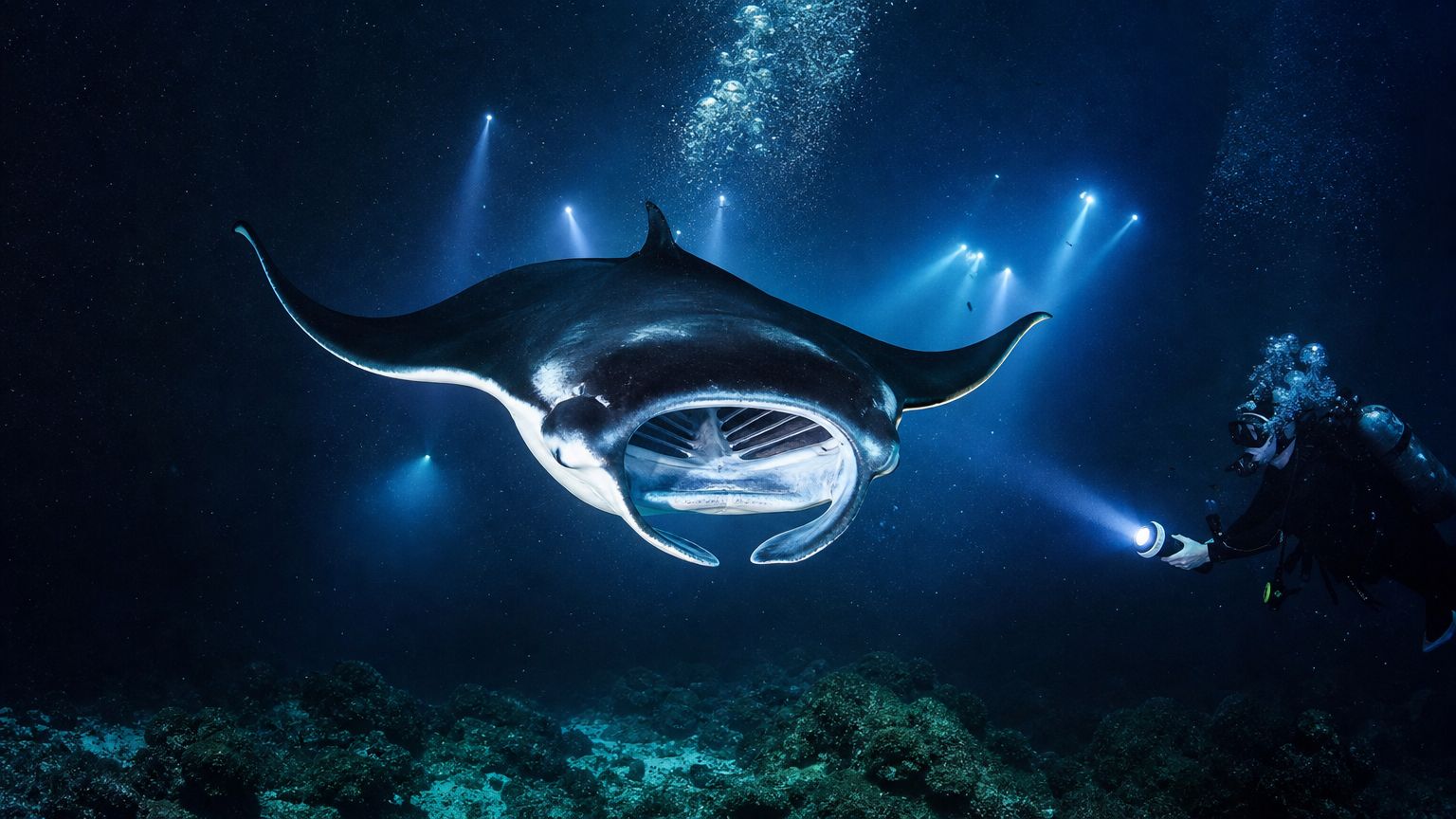
Manta ray night diving
If you're certified and comfortable at night, the manta dive is the signature Hawaii experience most visitors should seriously consider. In Kona, the format is simple from the diver's side. You settle in on the bottom, lights attract plankton, and mantas move through the beam pattern above you.
For site choice, Garden Eel Cove gets the nod when conditions and operator planning line up for it because the location is more protected and the viewing layout tends to work well for divers. That protection matters. A dramatic wildlife encounter is better when divers can stay settled and watch the show instead of managing unnecessary movement.
If that's the dive you came for, this Kona manta ray dive tour page lays out the trip details, and this Big Island manta ray overview gives more planning context.
Blackwater diving
Blackwater is different. It's not a reef dive at night. It's a suspended, open-ocean experience that asks much more from the diver.
The University of Hawai'i notes that blue-water diving happens far offshore in open ocean without visual reference points, which increases task loading and makes stable trim, depth awareness, and controlled ascent and descent behavior critical. That's why blackwater-style dives are reserved for divers who are already comfortable with neutral buoyancy, according to the University of Hawai'i explanation of blue-water diving.
That description matches real-world blackwater decision-making. If you still rely heavily on visual bottom reference to hold depth, this isn't the dive to “figure it out” on. Divers who enjoy blackwater tend to be calm, precise, and self-managed in the water.
If that sounds like your lane, this Kona blackwater dive tour is the right type of trip to evaluate.
If your buoyancy gets sloppy when the bottom disappears, blackwater will feel busy fast. Go when neutral trim is already automatic, not when you're hoping the dive will teach it.
Advanced local diving
Hawaii also rewards divers who want more than the standard local rotation. Longer runs and more advanced site selection can open up dives with stronger structure, more exposure, and a little less hand-holding.
Those trips are worth it for divers who already know what they like underwater and don't need every dive to be beginner-friendly. If that's you, an advanced long-range dive tour in Kona is the kind of format to look for.
Planning Your Trip Certification Safety and Gear
The easiest way to ruin a Hawaii dive trip is to arrive underprepared for the kind of diving you booked. Certification level, comfort in current, seasickness tolerance, and gear choices all matter more than people think.
Match the dive to your current skills
A lot of visitors book by excitement level instead of readiness level. Don't do that. The right question isn't “Can I survive this dive?” It's “Can I enjoy this dive while staying relaxed, aware, and competent?”
A useful filter looks like this:
- Newly certified diver: Prioritize guided reef dives, easy boat entries, and daytime conditions.
- Rusty certified diver: Book a refresher or start with the most forgiving local dives on the schedule.
- Confident recreational diver: Add night diving or more structure-heavy sites once the first day feels smooth.
- Experienced diver with strong buoyancy: Consider advanced or blue-water style specialty trips.
Know Hawaii's diver flag rules
Hawaii takes nearshore dive safety seriously. The state requires a diver's flag for all scuba diving, the flag must be at least 12 by 12 inches, divers must surface within 100 feet of it, and vessels must stay 100 feet away from a displayed flag, according to Hawaii DLNR diving and snorkeling rules.
If you're doing independent shore diving, this is not a minor detail. Bring the right flag setup or rent one locally. Don't assume your mainland habits cover Hawaii rules.
Local habit worth adopting: If you're shore diving and the entry feels awkward before you even get in, pause and reassess. Hawaiian lava entries rarely get easier once you're carrying a tank and thinking about the exit.
What to pack and what to rent
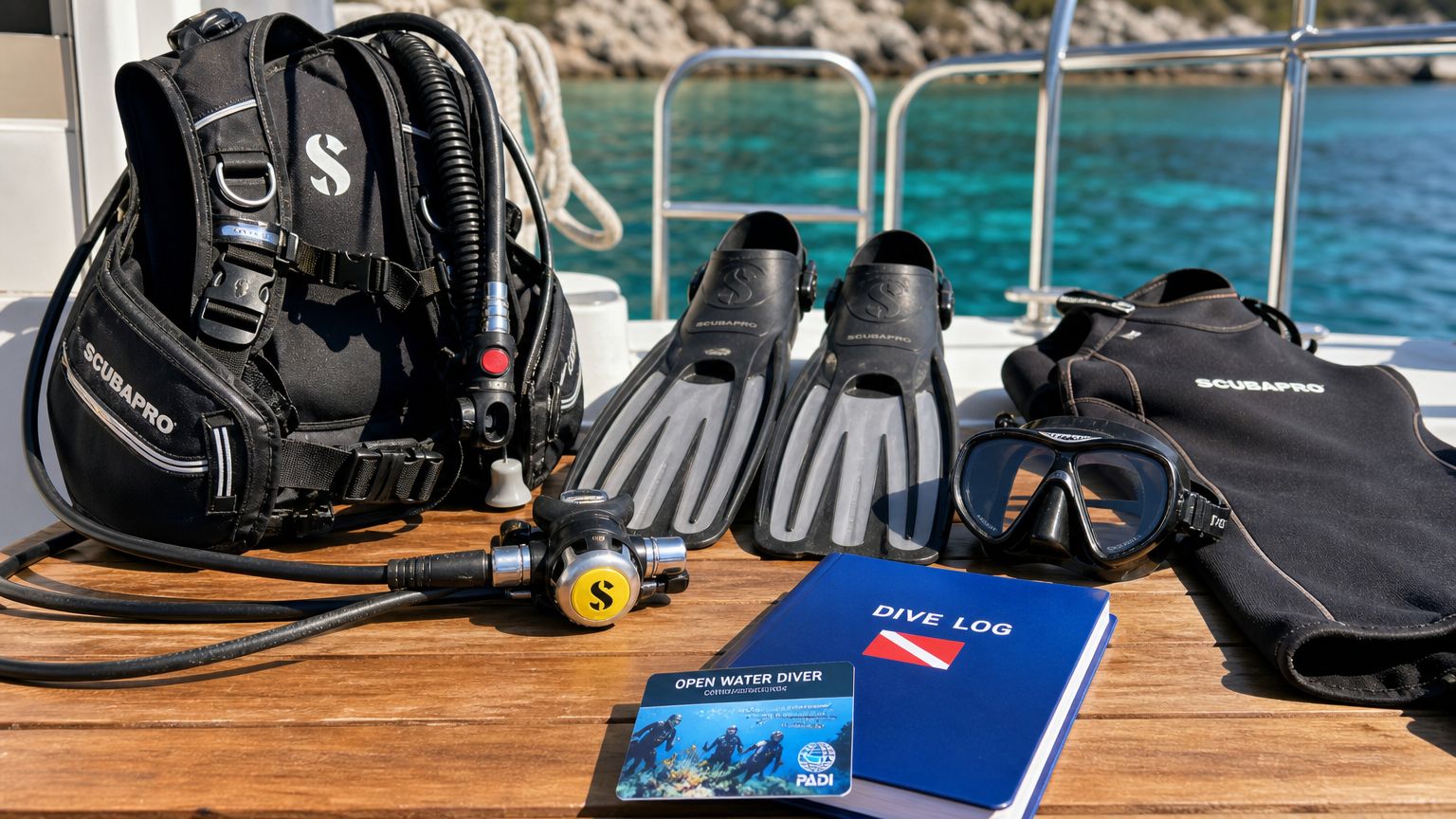
Bring the gear that affects comfort and fit. Rent the bulky stuff if travel convenience matters more.
Most divers should bring:
- Mask: A familiar mask solves more problems than almost any other personal item.
- Computer: If you know your own display and alert patterns, you'll be calmer.
- Exposure basics: Suit choice depends on your tolerance, but bring what you know you'll use.
- Certification card and log access: Digital is fine if the operator accepts it, but have it ready.
Renting BCDs, regs, tanks, and weights usually makes sense unless you're on a longer dive-focused trip and strongly prefer your own full setup.
If you get seasick, plan ahead
Boat diving is common in Hawaii, and pretending you “might be fine” is a bad strategy if you know you're prone to motion sickness. Bring a prevention option rather than waiting to see what happens.
Useful options include Ship-EEZ Seasickness Patch, Dramamine pills, Bonine pills, Sea Band wristbands, and Ginger chews.
Choosing Your Dive Operator Spotlight on Kona Honu Divers
The operator matters more than the site list. A good crew can make an ordinary site feel smooth, safe, and well-paced. A poor fit can make even a famous dive feel rushed or disorganized.
What to evaluate before you book
Start with the basics that affect your actual day on the boat:
- Group management: Ask how divers are grouped by experience and whether the operation separates newer from more independent divers.
- Trip style: Some boats are built around fast, efficient turnover. Others support a more deliberate pace.
- Specialty depth: If you want manta or blackwater diving, book with an operator that runs those trips routinely, not occasionally.
- Communication: Good pre-trip instructions are often a sign of a well-run in-water experience.
One Kona option to look at
On the Big Island, Kona Honu Divers is one operator travelers often consider for guided Kona diving, including local boat charters and specialty trips. If you want to browse the actual trip menu, their diving tours page is here.
For travelers trying to simplify planning, that combination can be useful. One operator, one home base, and access to both standard local diving and the more distinctive Kona specialty dives.
A practical way to choose any operator
Don't book based on branding alone. Email or call with a real question. Ask what they'd recommend for your certification level, recent experience, and interest in either relaxed reef diving or more advanced profiles. The quality of that answer tells you a lot.
An operator worth diving with will narrow your options, not just try to sell every option.
Essential Hawaii Diving FAQs
What's the best time of year for diving in Hawaii
Hawaii supports diving year-round because the water stays comfortable for recreational diving across most visitor seasons. Conditions still depend on island, coast, and swell direction, so the smarter move is picking the right island and operator for the time of year you're visiting rather than chasing one “perfect” month.
Can you dive in Hawaii if you're not certified
Yes, but your options are different. Non-certified visitors should look for introductory or discover-style experiences with a professional guide. Certified divers should still be honest about how current they are. If it's been a while, a refresher is often the smartest first booking.
Is shore diving or boat diving better in Hawaii
Neither is automatically better. Shore diving gives flexibility and lower hassle only if you're comfortable with entry and exit judgment. Boat diving is usually the easier call for visitors because local crews handle site selection, logistics, and day-of condition changes.
Is Hawaii good for advanced divers too
Absolutely. Hawaii is one of the few vacation-friendly destinations where an advanced diver can still build a trip around specialty experiences instead of just doing slightly deeper reef dives. The key is staying honest about your buoyancy, awareness, and comfort in less forgiving environments.
What marine life should you expect
Expect a mix of reef life, turtles, and the kind of volcanic seascape that gives the whole dive its own personality. Some of the most memorable Hawaii trips aren't about one rare animal. They're about the combination of marine life, visibility, and terrain.
What if my group has mixed experience levels
That's common. The simplest solution is choosing an island and operator that can support guided local diving for the divers while still giving non-divers or less experienced companions something enjoyable to do nearby. Hawaii works well for mixed groups when you plan for that from the start instead of treating everyone like they want the same day.
If you're heading to the Big Island and want a straightforward place to start, Kona Honu Divers offers guided Kona scuba trips, including local boat diving and specialty experiences that fit many Hawaii dive itineraries.