
You're probably in one of two places right now. You've either already booked Hawaii and you're trying to figure out which island, which dives, and which operator make the trip worth it, or you're still deciding whether diving in Hawaii belongs on your shortlist at all.
That confusion is normal. Hawaii sounds simple from shore. Warm water, clear conditions, colorful reefs. Then the planning starts, and suddenly you're weighing Kona against Maui, easy reef dives against night dives, boat comfort against small groups, and unforgettable wildlife encounters against the responsibility of not loving the reefs to death.
Your Hawaiian Diving Adventure Starts Here
A good Hawaii dive trip usually starts as a daydream. You see a turtle cruising past a lava ledge, a school of reef fish flashing over coral, or a manta gliding through the dark like it owns the ocean. Hawaii delivers those moments. It also rewards the divers who plan well before they ever step on the boat.
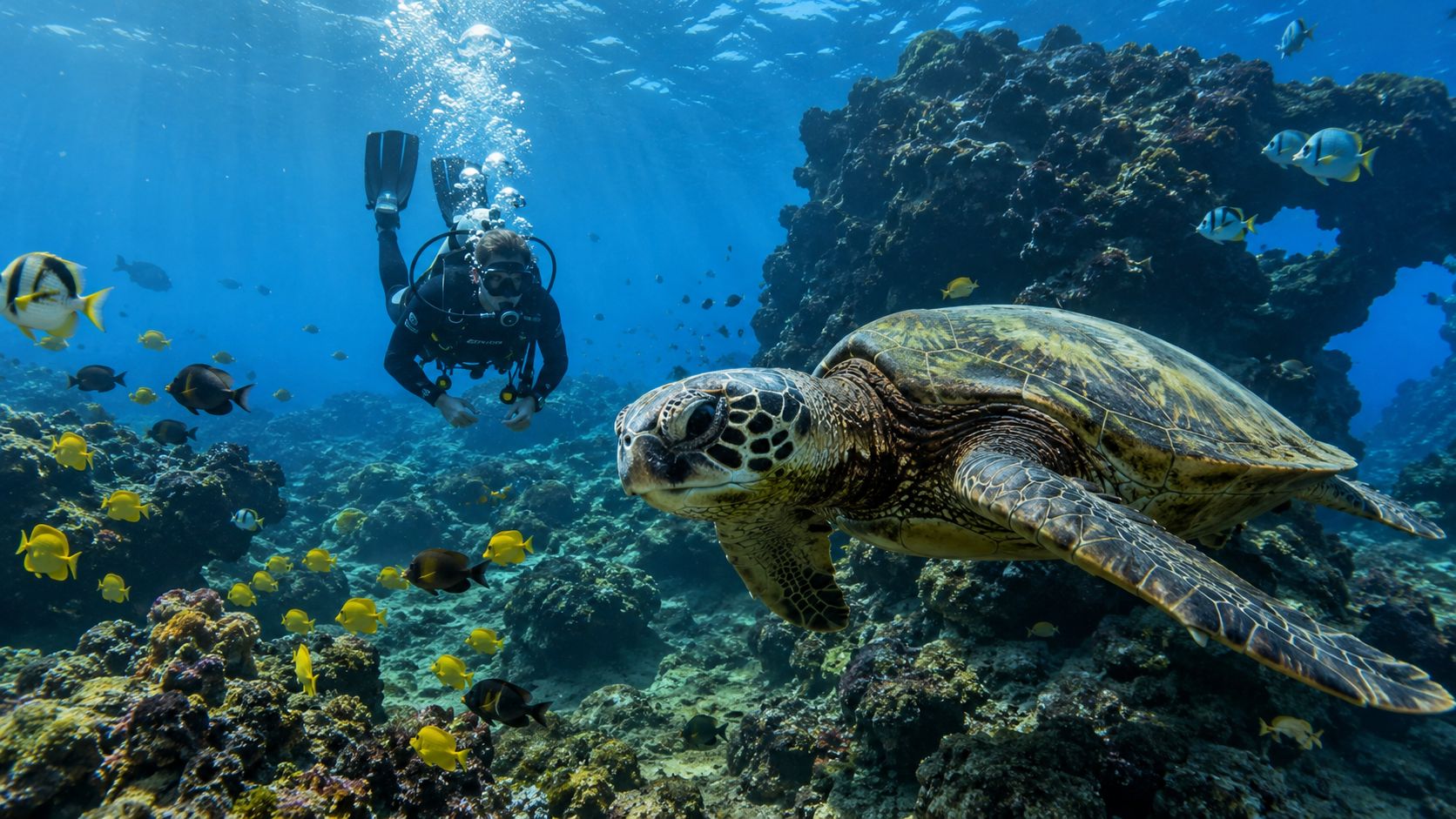
Most visitors I talk to want the same thing. They want the classic Hawaiian underwater experience, but they don't want to waste precious vacation time on the wrong island, a poor site match, or a rushed operator. That's where local knowledge matters. The difference between a smooth first descent and a stressful one is usually decided long before the gear goes on.
Hawaii has enough variety to fit very different divers. A newly certified diver can have a fantastic trip on mellow reef profiles. An experienced diver can chase more technical, demanding, and unusual dives. Families can mix diving days with sightseeing. Marine life fans can build a trip around mantas and volcanic topography. The key is choosing with intention instead of chasing the loudest brochure.
What makes Hawaii different
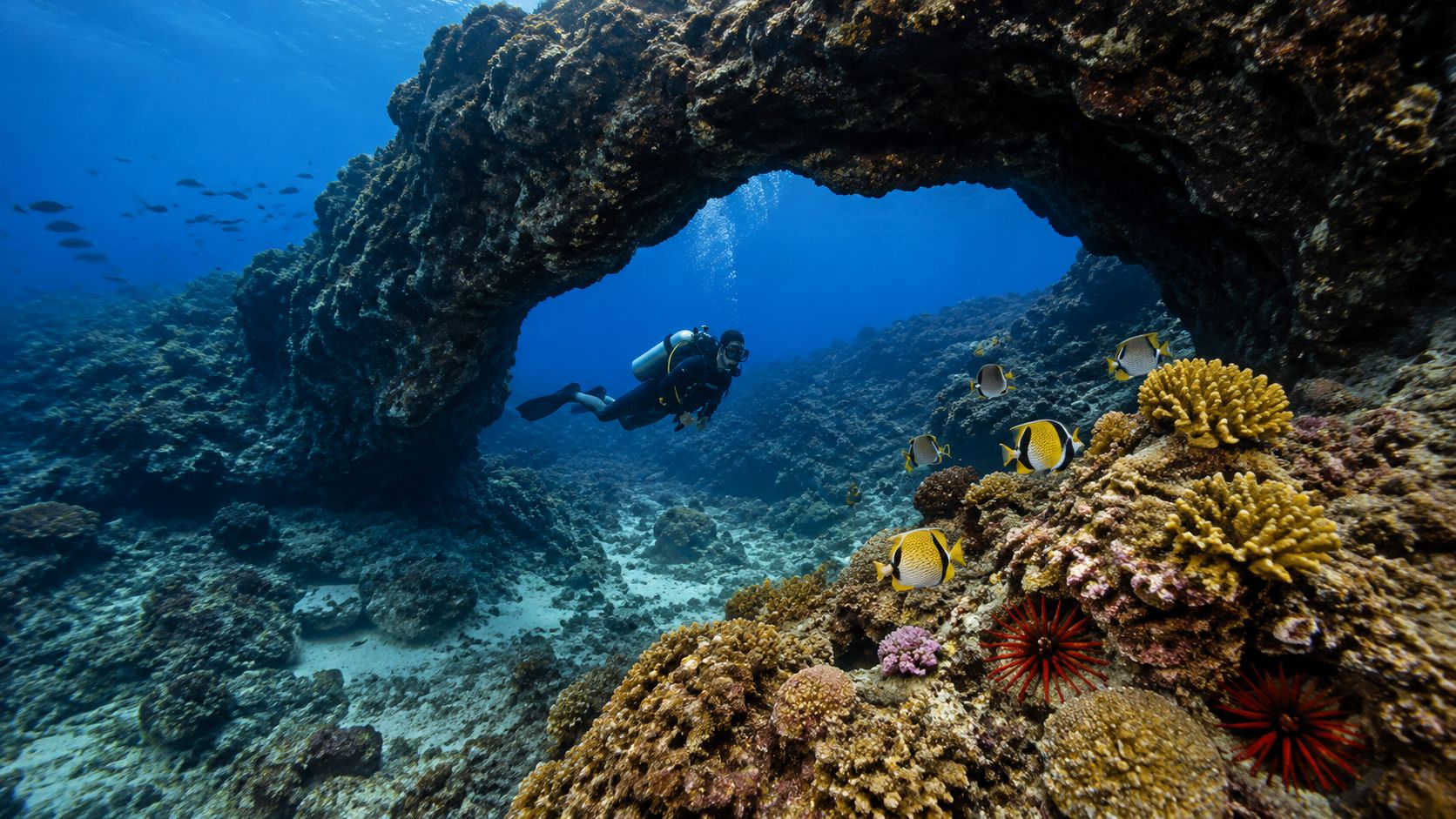
The draw isn't only the fish life. Hawaii's underwater terrain feels distinct because the islands were built by volcanoes. Lava tubes, arches, ledges, and old flows give even straightforward dives a stronger sense of place than many tropical destinations.
For most travelers, the Big Island rises to the top once they compare reliability, variety, and signature experiences. That's why so many divers start their search with a local operation rooted in Kona, such as Kona Honu Divers.
Practical rule: The best Hawaii dive isn't automatically the most famous one. It's the one that fits your certification, comfort level, and the ocean that day.
A conservation-first plan makes the trip better, not smaller. Instead of stacking the most crowded headline sites back to back, spread your dives across conditions that suit your skills, choose operators who brief reef etiquette clearly, and treat marine life encounters as observation, not pursuit. You'll usually see more when you stop trying to force the ocean into your schedule.
Planning Your Dive Trip The Essential First Steps
A good Hawaii dive trip usually gets decided before anyone books a flight. One group picks the cheapest airfare, lands on the wrong island for their goals, then spends the week forcing marginal plans. Another group starts with conditions, skill level, and the kind of wildlife encounters they want. The second group almost always gets the better diving.
For a conservation-first trip, start with a simple question. Do you want to chase crowded headline sites, or do you want consistent water time with operators who match the plan to the ocean and treat marine life encounters with restraint? On the Big Island, that approach tends to pay off. Kona's leeward coast gives divers more workable days, more flexibility, and more chances to choose sites based on conditions instead of wishful thinking.
Hawaii is diveable year-round, but season still affects comfort, crowds, and sea state. This Hawaii diving conditions guide gives a useful general overview. In practice, May through September is often a strong window for Kona because surface conditions are commonly calmer and trip planning is more straightforward.
Pick the island based on the trip you actually want
A family mixing snorkeling, beach time, and one or two easy boat dives may be happy on a different island than a diver who wants multiple days in the water and access to signature experiences. That sounds obvious. It gets missed all the time.
| Island | Best For | Typical Viz | Key Highlight |
|---|---|---|---|
| Big Island | Divers who want variety and signature experiences | Often very clear on the Kona coast | Stable leeward diving and famous night dives |
| Maui | Divers mixing diving with a resort-style vacation | Can be excellent in the right conditions | Molokini and easy pairing with family travel |
| Oahu | Travelers who want diving plus city activities | Changes by site and conditions | Wrecks and broad activity options |
| Kauai | Divers who like a more rugged, flexible trip | Changes by swell and season | Wild feel and dramatic terrain |
The Big Island usually makes the most sense for dive-focused travelers. You can build a week around easy reef dives, advanced charters, and highly memorable night diving without changing islands or spending half the trip in transit. It also makes it easier to spread pressure across different sites and conditions instead of funneling every diver into the same small set of famous locations.
If budget is part of the decision, this guide to what scuba diving in Hawaii costs helps set realistic expectations before you book.
Know the requirements before you reserve anything
Certification comes first. Standard scuba dives require an entry-level certification unless you are booking a supervised introductory program. That is the baseline for buoyancy control, gas management, ascent procedures, and basic problem solving underwater.
Depth limits matter. PADI states that the maximum depth for Open Water Divers is 18 metres or 60 feet, while the general recreational limit after appropriate training is 40 metres or 130 feet, as outlined in PADI's depth limits for scuba certification levels. Those limits shape site choice, buddy pairing, and the pace of the dive plan.
Age and readiness matter too. PADI's Junior Open Water Diver program begins at age 10, as shown on the PADI Junior Diver certification page. Age alone is not enough, though. Young divers still need solid water comfort, the maturity to follow instructions, and the physical ability to manage equipment with help from the crew and parents when appropriate.
Medical timing and flight planning
Equalizing problems can ruin a trip faster than bad weather. Divers who descend before their ears are ready often end up sitting out later dives, and that is avoidable with a slow descent, early equalization, and the discipline to call the dive if it is not clearing.
Flight timing deserves the same respect. Divers should leave a healthy surface interval before getting on a plane. The conservative move is to schedule your last dive day so the trip ends with a full buffer, not a rushed airport transfer and a hope that everything will be fine.
The easiest way to protect the last day of a Hawaii vacation is to keep it dry. Use it for the beach, Volcanoes National Park, or a slow Kona breakfast instead of squeezing in one more tank.
If boat motion is a problem, plan for it early
Seasickness is easier to prevent than to fix once the boat is already rolling. Test whatever remedy works for you before the trip, eat lightly, stay hydrated, and tell the crew if you are prone to motion sickness so they can help with seating and timing.
Leave the product links for your packing list and buy them before travel. On the day of the charter, the main point is simple. Handle it before departure so your attention stays on the briefing, your gas plan, and the reef in front of you.
Discover Hawaii's Top Underwater Worlds
The first descent in Hawaii tells you which island you chose. On the Big Island, divers drop onto dark lava structure, clear blue water, and reef layouts that feel young, sharp, and alive. On other islands, the pace, terrain, and access can be very different. That matters if the goal is not just to log dives, but to plan a trip that protects the reef and still gives you strong marine life encounters.
Why the Big Island keeps rising to the top
The Big Island gives divers more usable range than any other island in the chain. Kona offers calm reef dives for newer divers, long lava formations for wide-angle photography, and advanced profiles that feel different from a standard tropical reef day. You can build a full week here without repeating the same style of dive.
The volcanic topography is the reason. Lava tubes, arches, shelves, and broken fingers of basalt create structure that fish and invertebrates use well, and that structure changes how a dive flows. Good operators use that terrain to spread divers out, avoid crowding sensitive areas, and match sites to skill level instead of forcing everyone onto the same famous reef.
That conservation-first approach usually leads to better sightings anyway. Relaxed divers with good trim see more.
For travelers comparing options on the Kona coast, the Kona dive tour lineup gives a clear view of how many different profiles fit into one trip. If manta rays are part of the plan, the Kona manta ray night swim experience is one of the clearest examples of why the Big Island stands apart.
What the other islands do well
Maui works well for mixed vacations. It is easier to pair a morning dive with beaches, resort time, or family plans later in the day, which makes it a practical choice when only part of the group is diving.
Oahu gives divers the widest mix of topside activity. Restaurants, nightlife, historic sites, and dive charters all sit close together, so it suits travelers who want scuba to be one part of the trip rather than the center of it.
Kauai is beautiful and less predictable. Divers who do best there usually arrive with flexible expectations, because conditions and access can shape the schedule more than they do in Kona.
How to choose sites without adding pressure to the reef
A strong Hawaii itinerary is not built around collecting names. It is built around diving well in local conditions.
- Start with easy control dives. The first dives of the trip should let you settle weighting, buoyancy, and breathing. Divers who begin this way are less likely to touch coral, drag gauges, or stir up sand across cleaning stations.
- Pick the island that fits your real goal. The Big Island is the best choice for divers who want the widest range of underwater experiences with the least transit between them. That lowers the urge to cram too much into the schedule.
- Let ocean conditions make the final call. The best crew will change sites for swell, current, or visibility, even if a famous site was the original plan.
- Use advanced dives at the right point in the trip. Save them for after buoyancy is dialed in and local habits are familiar. That is better for safety and better for the reef.
- Value animal behavior over proximity. In Hawaii, respectful distance is often what turns a quick sighting into a long natural encounter.
The divers who get the best Hawaii dives are usually the calmest ones in the water. That is one reason Kona continues to stand out. With the right site selection and a crew that knows how to protect the places they visit, the Big Island delivers more than a highlight reel. It gives divers a smarter way to experience Hawaii underwater.
Hawaii's Signature Dives The Manta Ray and Blackwater Experience
If diving in Hawaii has two experiences that define the Big Island, it's the manta ray night dive and the blackwater dive. They're not interchangeable. One is graceful and mesmerizing. The other is strange, disorienting, and unforgettable in a completely different way.
Why the manta dive deserves the hype
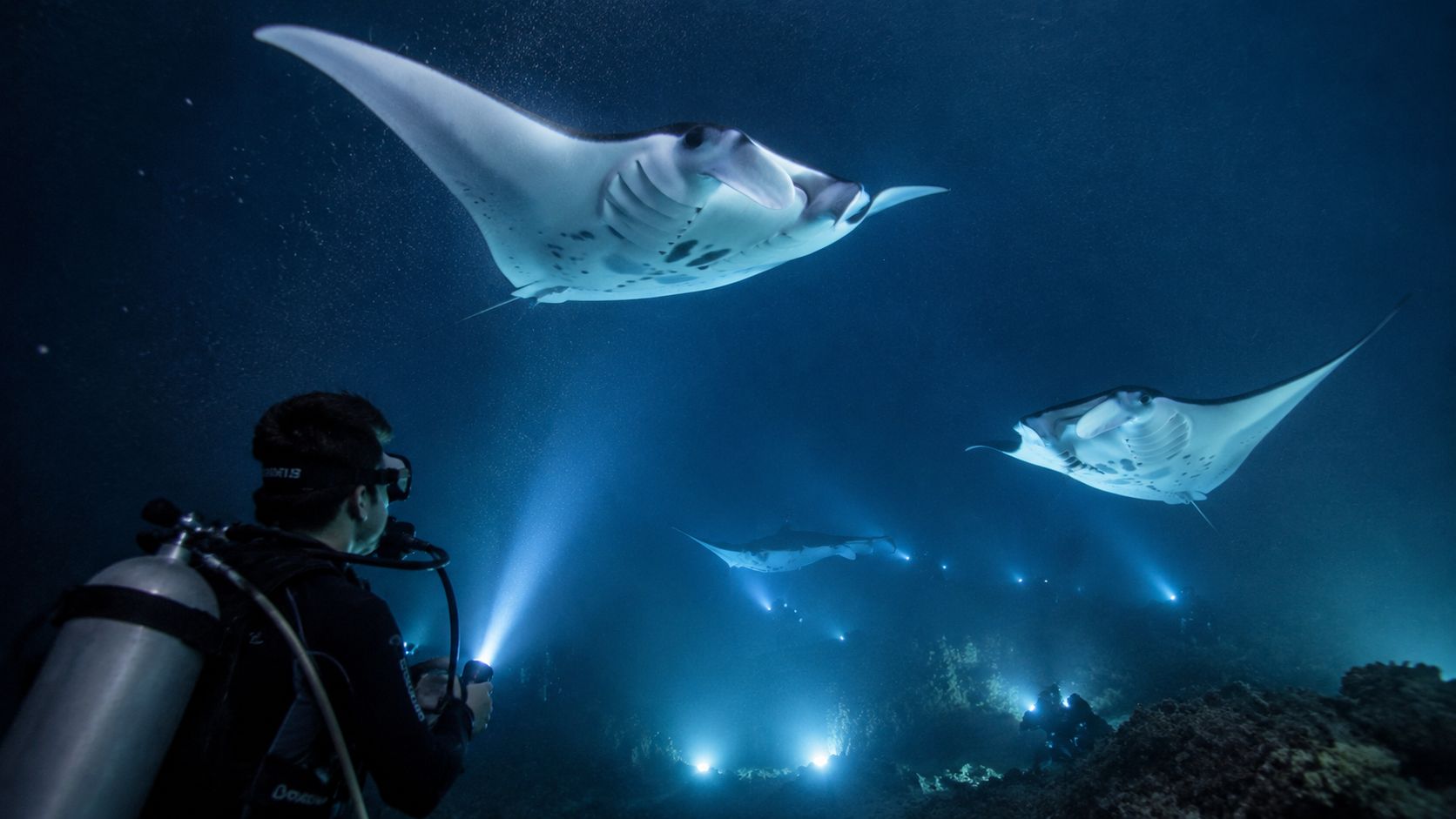
The manta ray night dive works because it gives you a stable focal point and a chance to watch natural feeding behavior unfold above you. In Kona, Garden Eel Cove is the standout choice because the location is more protected, the viewing layout is better, and the surrounding reef quality adds to the full experience.
That matters more than many visitors realize. A better site isn't just prettier. It usually means divers can settle faster, maintain position more easily, and spend more time watching instead of managing themselves.
For anyone building a trip around this experience, the manta ray dive tour options are worth reviewing, and this Kona manta ray night swim guide helps explain why the encounter is so famous.
There's also a right way to do the dive. Divers need disciplined buoyancy and careful light use. Sudden movement and bright light from the wrong angle can disturb feeding behavior. The best manta dives feel calm because the divers are calm.
Blackwater is the opposite, and that's the point
The Kona blackwater dive is a deep-ocean drift at night with no bottom reference. It runs for 3 to 4 hours, requires at least three independent light sources, and depends on strict ascent discipline to reduce decompression risk, based on the verified operational guidance provided for this dive type.
That description alone should tell you something important. Blackwater isn't just a novelty night dive. It demands focus, comfort in darkness, and trust in the procedure. Some divers fall in love with it immediately. Others discover that they don't enjoy open-water suspension without a reef, wall, or bottom in view.
If that sounds like your kind of diving, the blackwater night dive page gives the trip details. If you want more ambitious profiles beyond standard reef diving, the advanced long-range dive tour options are the better place to look.
Which one should you choose
Pick the manta dive if you want a signature Hawaii memory with a clear structure and a strong chance of finishing the dive grinning.
Pick blackwater if you already handle night diving well, you don't need a physical reference point to stay composed, and you're interested in pelagic life rather than just collecting a famous activity.
The worst reason to book blackwater is that it sounds elite. The right reason is that the environment itself appeals to you.
Choosing Your Dive Operator And Staying Safe
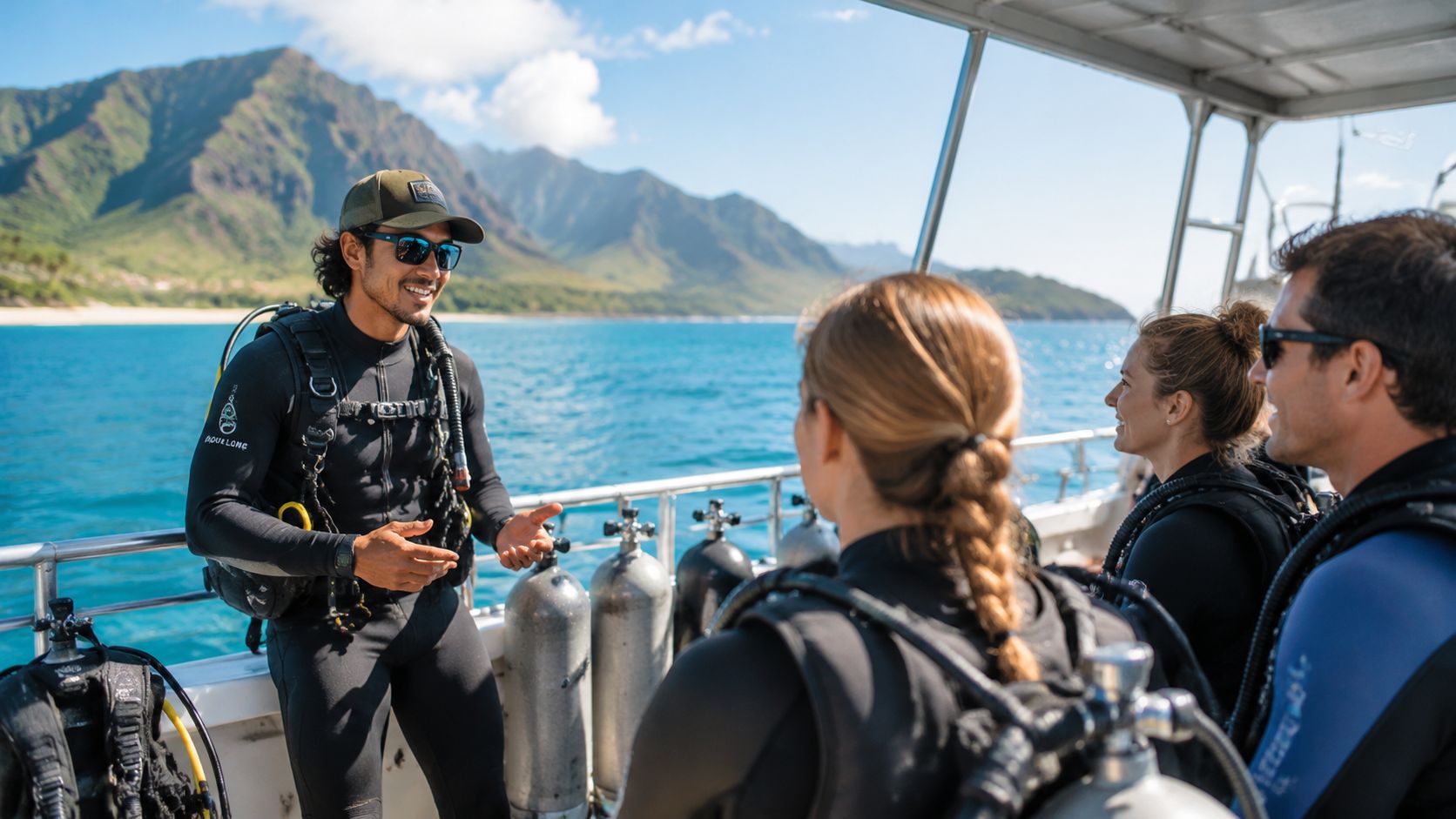
You feel the difference before the boat leaves the harbor. A good crew asks about your recent dives, checks what kind of conditions you enjoy, and explains the plan in a way that leaves little guesswork. A weaker operation gets everyone signed in, points at the site name on the board, and hopes the group can sort itself out underwater.
On the Big Island, operator choice shapes more than convenience. It affects safety, reef impact, and your odds of getting the kind of marine life encounters you came to Hawaii for without crowding animals or stressing the site.
What to look for in a Hawaii dive operator
Start with how the company runs the day, not how polished the website looks.
- Detailed briefings: You should hear site layout, entry and exit, current expectations, depth limits, communication, and lost buddy procedure. On sensitive reefs, the briefing should also cover where not to put your hands, knees, or fins.
- Diver screening: Good crews ask about certification, recent dives, air use, comfort in surge or current, and whether you have night diving experience if the trip calls for it.
- Appropriate group control: Smaller groups are easier to supervise and usually create less reef contact, less silt, and less pressure on shy marine life.
- Clear conservation standards: Responsible operators set expectations for animal spacing, buoyancy, photography etiquette, and no-touch interactions. That matters in Hawaii, where one careless diver can change the experience for everyone behind them.
- Well-run boats and rental gear: Organized deck setup, clean equipment, and calm problem-solving are good signs. Rushed setup and vague answers are not.
If you are comparing Kona operators, this Kona diving company guide is a useful place to start.
Safety comes from judgment and habits
Hawaii diving can be forgiving one day and demanding the next. Surge builds. Entries change. A site that suits a calm, experienced diver may be a poor match for someone who has been out of the water for a year.
Good operators adjust for that. They change sites when conditions warrant it, shorten profiles when the group calls for it, and treat a diver's hesitation as useful information, not an inconvenience.
Divers have a job too. Do a real buddy check. Be honest about your gas consumption and recent experience. Abort early if something feels off. Pride causes more problems than current ever will.
Questions to ask before you book
A short phone call can tell you a lot.
- How do you separate new, rusty, and experienced divers? You want a specific answer, not "we accommodate everyone."
- What happens if conditions change? Strong operators are comfortable saying they will switch sites, modify the plan, or cancel if the ocean is not cooperating.
- How do you handle reef protection during the dive? Listen for practical policies on buoyancy, spacing, and no-contact diving.
- What support do you give divers who are out of practice? Patient supervision and realistic site selection matter more than cheerful sales talk.
- What is included in the trip price? In Hawaii, standard two-tank boat dives often include tanks and weights, but not always full gear rental, advanced site access, or specialty night dives.
Trust operators who speak plainly about limits, conditions, and who should sit out a dive. That usually means they are running the trip for the right reasons.
To give a sense of the reputable shops available in Kona, here are a few others to consider:
Packing For Your Dive What To Bring And What To Rent
A well-packed Hawaii dive bag makes the trip easier on you and lighter on the reef. The best approach is simple. Bring the personal gear that affects fit, comfort, and task loading underwater. Rent the heavy items unless you have a specific reason to travel with them.
Start with the pieces that are hard to substitute well. Pack your mask, snorkel, fins, certification card, logbook, and dive computer if you own them and trust them. A mask that seals properly matters more than many traveling divers expect, especially on multi-day trips where a small leak becomes a daily annoyance. A familiar computer also helps you stay focused on the dive instead of scrolling through menus on the swim step.
Keep topside gear practical and sun-focused. Kona boat days are warm, bright, and salty.
- Swimsuit and towel: You will use both every dive day.
- Hat and sunglasses: Hawaii sun hits hard on the ride out and the ride back.
- Reef-safe sunscreen: Choose one that won't leave your skin unprotected or add unnecessary pollutants to the water.
- Dry clothes for after the dive: They make the trip back to the harbor much more comfortable.
Exposure protection deserves a little thought before you fly. Water temperature, wind, dive duration, and your own cold tolerance all matter. This guide on choosing the best wetsuit for diving in Hawaii will help you sort out whether to pack your own suit or use a rental.
For most visitors, renting BCD, regulator, tanks, weights, and wetsuit is the smart call. It cuts baggage weight, avoids excess airline fees, and keeps your travel day simpler. It also supports a conservation-first trip in a practical way. Flying with less gear usually means less hassle, less damage risk, and fewer last-minute packing decisions that lead to forgotten basics.
Rental does not mean hands-off. Check the BCD inflator, dumps, tank band, regulator purge, hose routing, and mouthpiece before the boat leaves the harbor. Make sure the weight system is set up in a way you can ditch cleanly if needed. Good operators will help with that check, and the better ones treat it as standard procedure, not a favor.
If you are prone to seasickness, pack your remedy before the trip and use it according to its directions. Do not wait until the boat is already rolling outside the harbor. A diver who feels well usually breathes better, moves more calmly, and gets more from the dive without stressing the group or the reef.
Pack for comfort, familiarity, and control underwater. Rent for convenience, unless your own gear gives you a clear safety or performance advantage.
Your Unforgettable Hawaii Dive Adventure Awaits
The best diving in Hawaii isn't built from one bucket-list moment. It comes from a chain of good decisions. Choose the island that fits the trip. Book dives that match your actual experience. Leave enough space in the schedule to dive responsibly instead of rushing from headline site to headline site.
A conservation-first approach makes the whole trip better. You move more calmly, you choose sites more intelligently, and you usually come home with better memories because you spent less time managing stress and more time watching the reef do what it does.
Safety stays at the center of all of it. Every scuba diver needs proper certification before entering the water, and after your final dive you need to wait at least 18 hours before flying, with 24 hours recommended by some experts to reduce decompression risk. Those aren't technicalities. They're part of what makes a great trip end well.
Hawaii gives you warm water, volcanic topography, reef life, and some of the most memorable night diving on the planet. The Big Island, especially Kona, gives you the strongest all-around platform for building that trip without overcomplicating it.
For divers who want expert guidance, strong safety standards, and access to the Big Island's most memorable underwater experiences, Kona Honu Divers is the team to book with.