
Diving in Hawaii is an experience that stays with you. The combination of volcanic landscapes, impossibly clear water, and one-of-a-kind marine life makes it a bucket-list destination for a reason. For many of us, the Kona Coast on the Big Island isn't just a great dive spot; it's one of the best in the world, home to the legendary manta ray night dive, ancient lava tubes, and reefs buzzing with life.
Why Hawaii Is a Premier Scuba Diving Destination
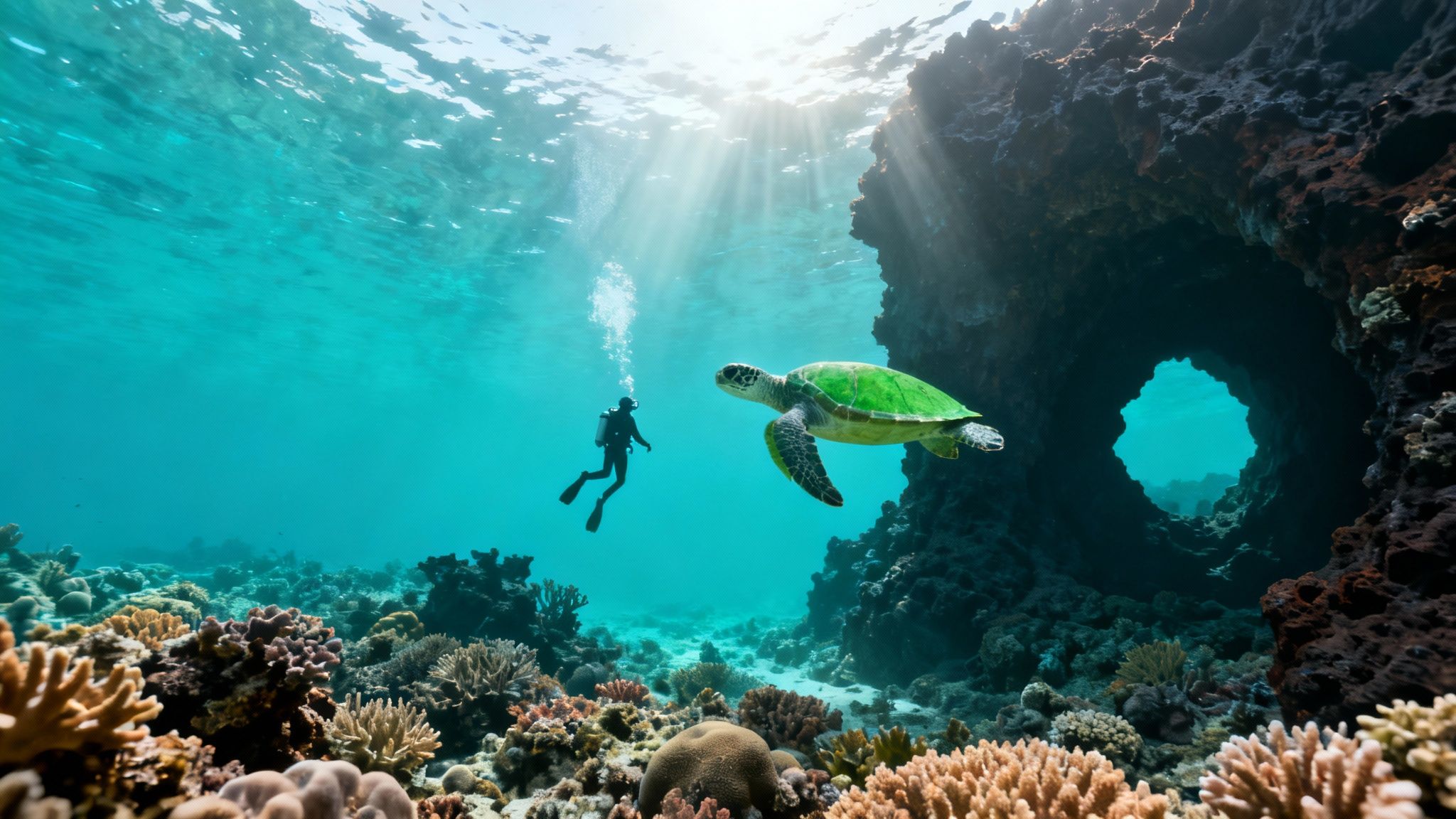
Picture this: you descend into warm, blue water where the island's fiery volcanic past has created a playground of arches, craters, and swim-throughs. This dramatic underwater world is the perfect backdrop for marine life that you simply can't find anywhere else.
The Kona Coast, in particular, is the crown jewel of Hawaiian diving. Tucked away on the island's leeward side, it's shielded from the wind and rough seas, creating calm, gin-clear conditions. It’s not uncommon for visibility to stretch well beyond 100 feet, which is a huge part of the appeal. We get a lot of questions about this, so we put together a guide explaining what makes for such great Big Island diving visibility.
A Thriving Hub for Divers
Hawaii’s reputation isn't just based on anecdotes; it's a major player in the global dive tourism market. This industry was valued at over USD 910.4 million in 2024 and is expected to nearly double by 2032. That growth is fueled by divers seeking exactly what places like Kona offer: unique, world-class experiences you can't get anywhere else.
Of course, with this popularity comes a great responsibility. To keep Hawaii's underwater world healthy for generations to come, robust marine environmental protection and ocean conservation practices are non-negotiable. It's a commitment that ensures these fragile ecosystems continue to thrive.
Whether you're swimming alongside a majestic green sea turtle (known locally as honu), exploring a dark lava tube, or watching the famous manta ray ballet unfold, a dive here is something you'll never forget. It's an adventure that genuinely offers something for every diver.
Discovering the Best Dive Sites on the Big Island
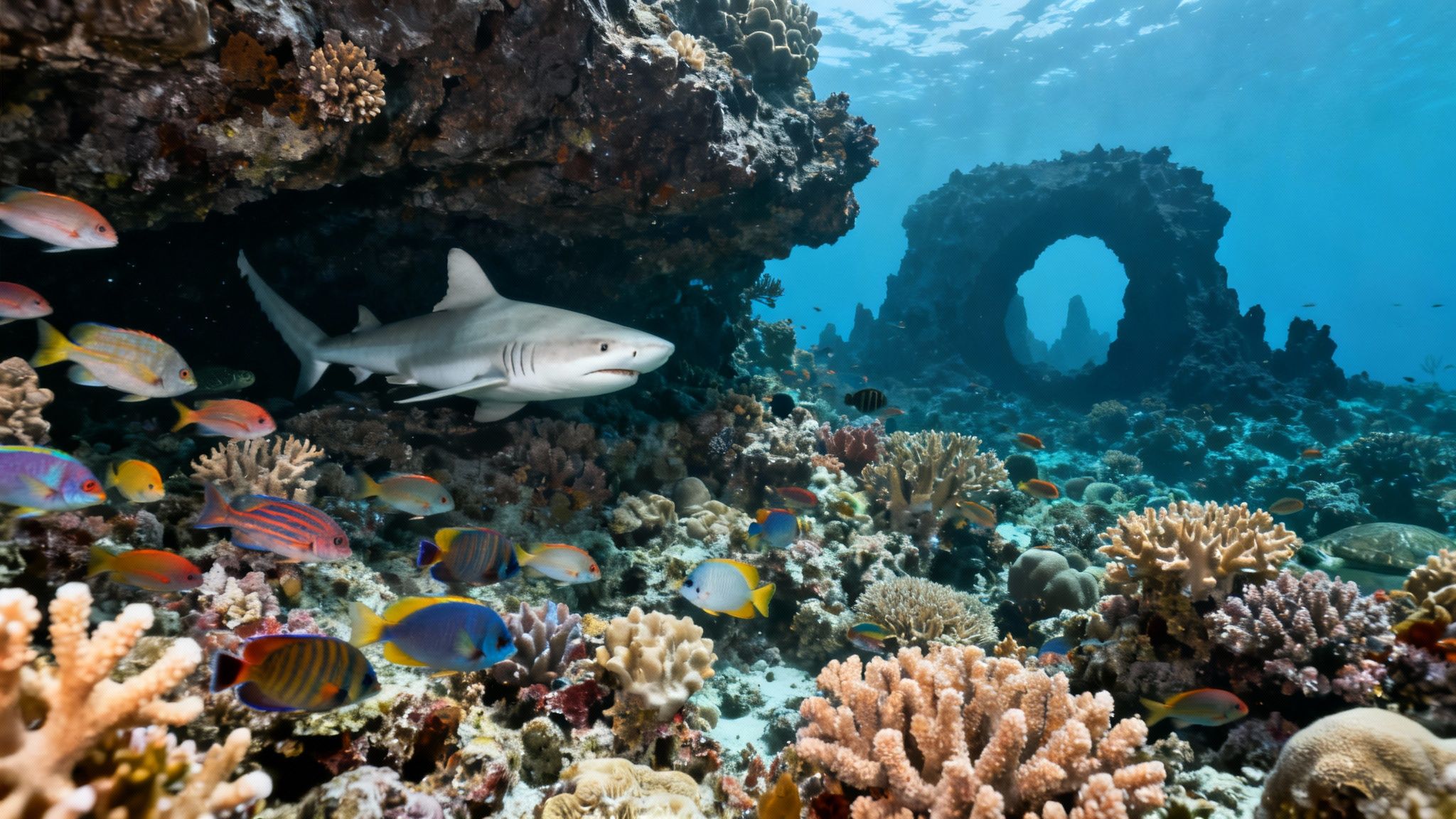
The Kona Coast is a diver's playground, a sprawling underwater map dotted with absolute treasures. We're not just talking about a simple list of spots here. Scuba diving the Big Island is all about getting to know the unique personality of each site. The same volcanic fury that shaped the islands didn't just stop at the water's edge—it created a breathtaking underwater world of lava tubes, dramatic arches, and towering pinnacles.
This ancient geological canvas is now painted over with vibrant coral reefs and is absolutely bursting with life. Every single location offers a distinctly different adventure, whether you're hunting for dramatic structures or hoping to lose yourself in a bustling marine ecosystem. Honestly, picking the right site is the secret to unlocking the very best of Kona’s underwater world.
Here at Kona Honu Divers, we’ve spent decades getting to know these waters like the back of our hand. That local expertise means we can point you to the perfect spot that matches your skill level and what you're dying to see.
Lava Tubes and Underwater Cathedrals
Some of Kona’s most legendary dive sites are defined by their incredible lava formations. And I don't mean just a pile of rocks. Imagine intricate labyrinths and grand, cathedral-like caverns that create a diving experience you just can't find anywhere else.
- Catacombs: Living up to its name, this site is a whole network of massive lava tubes and arches. Swimming through them feels like you're exploring ancient, sunken ruins. When sunlight streams through cracks in the ceiling, it creates these incredible light beams that will just stop you in your tracks.
- Golden Arches: This spot boasts a stunning lava archway that’s completely encrusted with golden-hued corals. It’s a photographer's dream and the perfect example of how geology and biology can team up to create true underwater art.
These sites aren't just visually stunning; they're also prime real estate for all sorts of marine life. It’s totally normal to find white-tip reef sharks chilling on the sandy floors inside the caverns or to see schools of fish using the structures for cover. The feeling of exploring these natural wonders is a huge part of what makes diving in Hawaii so unforgettable.
Lush Coral Gardens and Pinnacles
Beyond the dramatic lava rock, Kona is also home to flourishing coral gardens and impressive pinnacles that seem to erupt from the ocean floor. These sites are vibrant hubs of activity, really showing off the rich biodiversity of Hawaiian waters.
The sheer density of life on these reefs is astounding. You're not just seeing one or two interesting fish; you're immersing yourself in a complete, dynamic ecosystem where every coral head and crevice is alive with activity.
Turtle Pinnacle is a classic example. This site is a famous "cleaning station" where Hawaiian green sea turtles, or honu, gather to let reef fish nibble away algae and parasites. It's an incredible thing to witness, and divers can respectfully watch this fascinating symbiotic relationship up close. The pinnacle itself is smothered in healthy coral, attracting a kaleidoscope of fish.
If you want to dive deeper into the different marine habitats, you can learn more about our favorite Big Island scuba diving sites and what makes each one so special. Other spots feature deep-water pinnacles that act like magnets for marine life, drawing in schools of fish, rays, and even the occasional larger pelagic species.
To give you a better idea, here’s a quick rundown of some of the must-see sites we visit.
| Dive Site Name | Key Feature | Common Marine Life | Best For |
|---|---|---|---|
| Manta Heaven | Famous Manta Ray Night Dive | Manta Rays, Eels, Jacks | All levels (night dive) |
| Turtle Pinnacle | Turtle Cleaning Station | Hawaiian Green Sea Turtles, Butterflyfish, Wrasse | Beginners, Photographers |
| Catacombs | Lava Tube Network & Arches | White-tip Reef Sharks, Soldierfish, Nudibranchs | Intermediate, Adventurous Divers |
| Golden Arches | Colorful Coral Archway | Moray Eels, Scorpionfish, Octopus | All levels, Photographers |
| Suck 'em Up | Lava Tube with Surge Action | Eels, Crustaceans, Schools of fish | Advanced (requires good buoyancy) |
This is just a small taste, of course. The variety ensures that every single dive offers a new discovery, from the tiniest nudibranch to a majestic eagle ray gliding past. This diversity is exactly what keeps divers coming back to Kona again and again.
Experiencing Hawaii’s Most Iconic Night Dives
When the sun finally dips below the Kona horizon, the underwater world doesn't just go to sleep—it wakes up. For divers, this is when two of Hawaii's most legendary adventures truly begin. These aren't your average reef tours. They're profoundly moving experiences that have earned their place on bucket lists worldwide.
First up is the world-renowned Manta Ray Night Dive, an underwater ballet that’s nothing short of awe-inspiring. Then, for the truly adventurous soul, there’s the Blackwater Dive: a journey into the deep, dark abyss to meet creatures that seem conjured from another planet. Both will completely reshape your idea of what diving in Hawaii is all about.
The World-Famous Manta Ray Night Dive
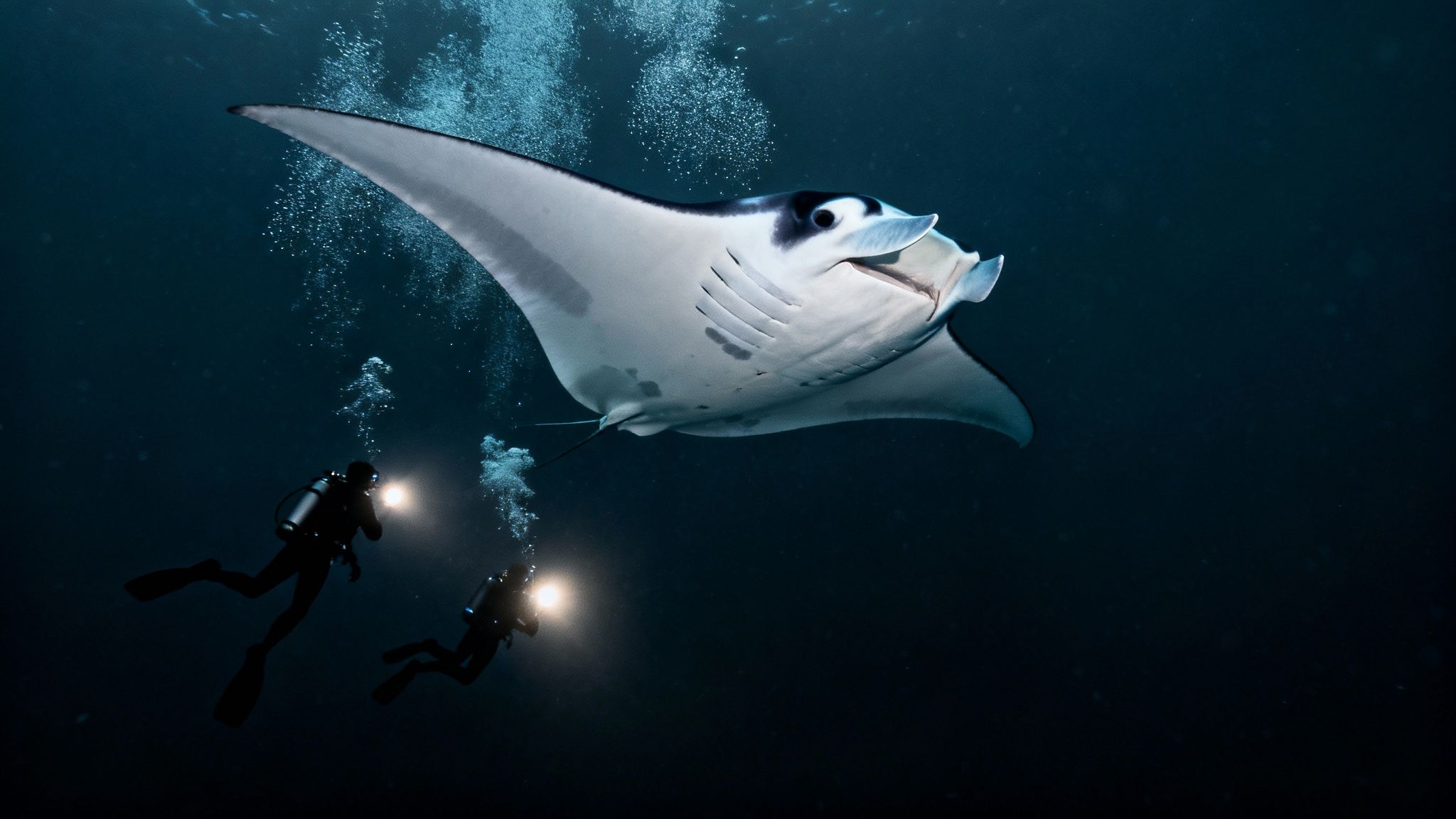
Picture this: you're kneeling on the sandy ocean floor in the quiet darkness, your dive light aimed straight up, cutting a bright column through the water. All of a sudden, a colossal shadow glides into the beam—a magnificent manta ray with a wingspan reaching up to 16 feet. It swoops down, mouth wide open, performing effortless barrel rolls just inches above your head as it feasts on the plankton drawn to the light.
This isn’t a one-in-a-million encounter; it's the nightly spectacle of the Kona Manta Ray Night Dive. It’s a humbling, almost spiritual experience that connects you directly with one of the ocean's most majestic and gentle giants.
While you can do this dive from a few spots, the quality of the experience can vary dramatically. The real magic happens when you choose a site with the best conditions for both the mantas and the divers.
This is exactly why Garden Eel Cove stands head and shoulders above the rest as the superior choice. It’s a protected bay that provides much calmer conditions and a better viewing area than other, more exposed locations. The reefs here are healthier and more vibrant, too, which just adds to the magic. At Kona Honu Divers, we prioritize this site because we’re committed to giving you the absolute best manta ray dive tour possible.
Journey Into the Abyss With a Blackwater Dive
If the manta dive is an underwater ballet, then the Kona Blackwater Dive is a trip to outer space. This is not a reef dive. We take you miles offshore, over thousands of feet of inky black ocean, and tether you to the boat. You just drift, suspended in the deep.
Your dive lights won't hit coral. Instead, they’ll reveal the bizarre and beautiful creatures that rise from the depths to feed under the cover of darkness—the largest migration on Earth.
You'll encounter life that truly defies imagination:
- Larval Fish and Eels: Looking completely different from their adult selves, they are often translucent and otherworldly.
- Pteropods: Tiny, free-swimming sea snails that flap through the water column like miniature butterflies.
- Ctenophores: Gelatinous comb jellies that catch your light and refract it into mesmerizing rainbow patterns.
It’s a dive that is both thrilling and deeply surreal, offering a rare glimpse into a hidden world few will ever witness. Because this dive is so specialized, you need an expert crew you can trust. The team at Kona Honu Divers has spent years perfecting the safety and logistics for this incredible adventure, making our Blackwater Dive tour the gold standard. To learn more about what makes this event so special, you can get the full story on the Manta Ray Night Dive in Hawaii.
Choosing Your Ideal Dive Adventure and Training
Whether you're just curious about taking that first breath underwater or you're a seasoned diver hunting for a new challenge, diving in Hawaii has something for you. The Kona coast, in particular, isn't just a playground for the experts. Its calm, clear, and warm waters make it one of the most beautiful and inviting classrooms you could ever ask for.
For most people, the whole adventure starts with the PADI Open Water Diver certification. This isn't about passing a stressful test or mastering a bunch of intimidating skills. It's about building confidence one step at a time, moving from a controlled setting to the vibrant open ocean with a professional instructor right by your side. The real goal is to get you comfortable, keep you safe, and let you discover just how incredible it feels to explore an entirely new world.
Starting Your Underwater Journey
Taking that first plunge can feel a little intimidating—we get it. But that feeling almost always melts away into pure wonder. I’ve seen countless new divers start out with a case of nerves, only to find a sense of absolute peace the moment they submerge and the only sound is their own steady breathing. Having an instructor who understands that initial hesitation and guides you with patience makes all the difference.
The best dive training meets you where you are. It’s not about pushing you through a checklist; it’s about helping you discover a lifelong passion by building skills and confidence one breath at a time.
This is how apprehension turns into excitement. The moment you realize you can control your buoyancy, floating weightlessly over a reef, is liberating. You're not just a visitor looking in; you’re part of the underwater landscape.
Elevating Your Skills as a Certified Diver
Already certified? Great! Kona is the perfect place to grow. Maybe it's been a while since you've been in the water and you want to shake off the rust with a quick refresher. Or perhaps you're ready to really dial in your skills with some advanced training. Diving in Hawaii offers the ideal conditions to expand your abilities.
One of the most popular next steps is the Enriched Air Diver course, which certifies you to dive with nitrox. This gas blend has a higher oxygen content, which means you can safely extend your bottom time. More time underwater means more time exploring Kona's incredible reefs. At Kona Honu Divers, we feel so strongly about this that we offer free nitrox on all our boats for certified divers. It's a simple perk that can make a huge difference in your dive day.
Advanced Adventures for Experienced Divers
If you're an experienced diver with solid skills, Kona unlocks a whole different level of adventure. This is your chance to explore the island's more challenging and rewarding sites—places that demand excellent buoyancy control, sharp awareness, and a deep respect for the ocean.
These aren't your average reef tours. We're talking about navigating complex underwater landscapes and seeing marine life in its raw, natural element.
- Deep-Water Pinnacles: We explore submerged volcanic spires that rocket up from the ocean floor, attracting huge schools of fish, rays, and sometimes even bigger pelagic visitors.
- Intricate Lava Tube Systems: You'll have the chance to squeeze through ancient lava tubes and swim out into massive, cathedral-like caverns that very few divers ever get to experience.
- Potential Shark Nurseries: We can visit specific sites known as gathering spots for juvenile sharks, offering a rare and fascinating glimpse into their life cycle.
These kinds of dives are reserved for smaller groups of skilled divers and are the heart of our premium advanced dive tours. This is the pinnacle of adventure diving in Hawaii, offering experiences that will both challenge you and stick with you for a lifetime.
Why Choose Kona Honu Divers For Your Hawaii Adventure
Let’s be honest, picking the right dive shop can make or break your trip. It's the one decision that separates a decent dive from a truly unforgettable Hawaiian adventure. This is where experience, a rock-solid commitment to safety, and a genuine love for the ocean all come together.
At Kona Honu Divers, our crew has a combined experience of over 200 years in the water. That’s not just a number—it’s a deep well of knowledge that means we know these sites like the back of our hands. Safety isn't just a checklist for us; it’s woven into everything we do, ensuring every diver, from a seasoned pro to a first-timer, feels confident and looked after from the dock to the dive and back again.
More Than Just a Dive Boat
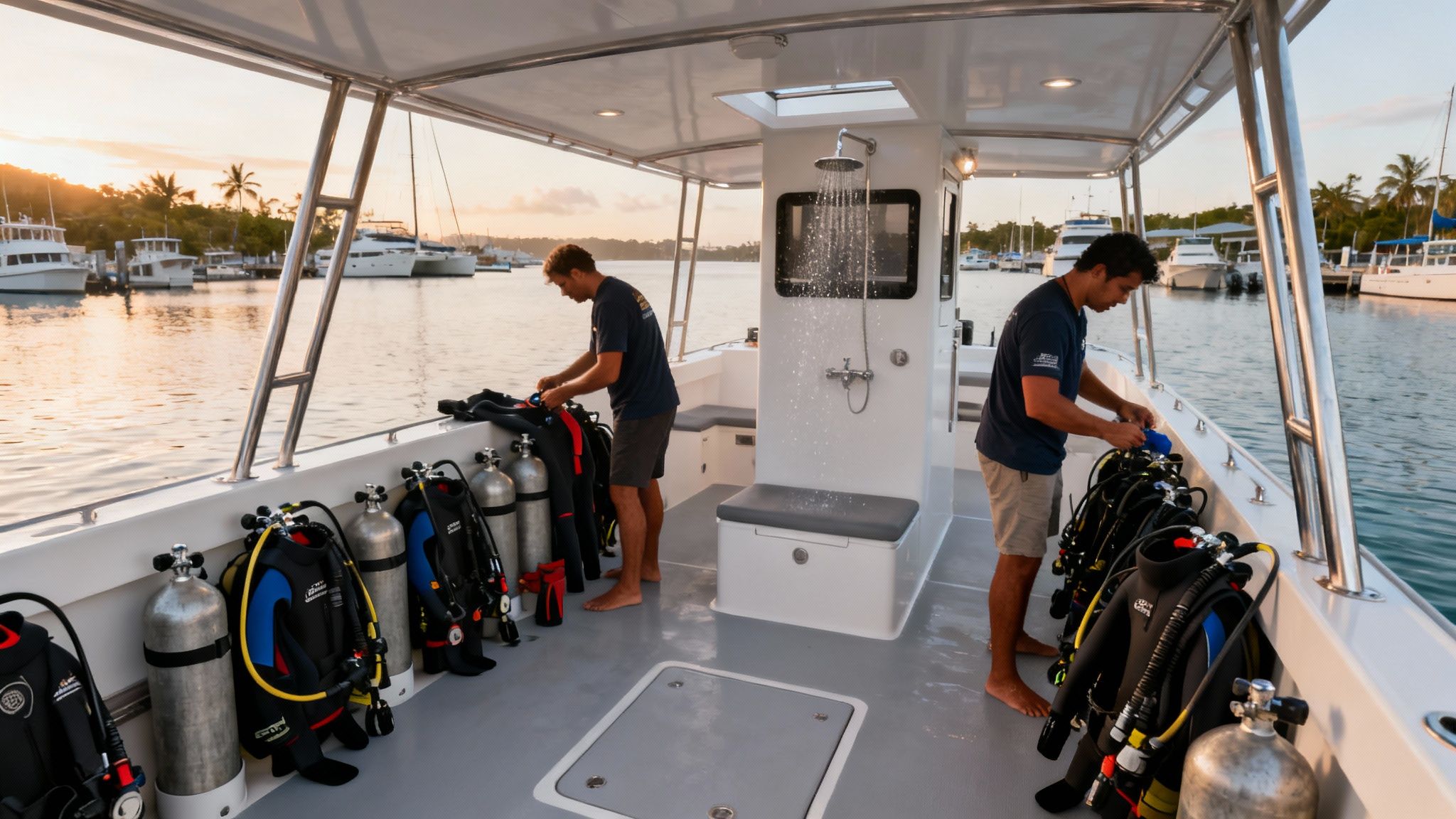
We believe the whole experience should be amazing, not just the time you spend underwater. That's why we don't just use any old boat; our boats are custom-built with divers in mind.
Imagine surfacing from an incredible dive and stepping into a hot-water shower right on the deck. Or having enough space to gear up without bumping elbows, with plenty of shade to relax in between dives. These aren't fancy extras—they are essentials for making a great day of diving in Hawaii.
The same goes for our gear. All our rental equipment is obsessively maintained and serviced, so you can count on it to work perfectly. Your focus should be on the eagle rays and sharks, not on a fussy regulator.
A Full Menu of World-Class Adventures
We get it—every diver has a different dream. Whether you’re looking for a classic two-tank morning trip to see the vibrant reefs or want to book an exclusive private charter for your family, we’ve got you covered. Our trips are designed to show off the absolute best of what Kona has to offer.
We run a whole range of Kona diving tours that fit any interest or schedule:
- Morning 2-Tank Dives: The perfect way to start your day, exploring two of Kona's best reef sites.
- Advanced Trips: Ready for a challenge? We’ll take experienced divers to tackle deeper pinnacles and amazing lava tubes.
- Manta Ray Night Dives: It’s world-famous for a reason. This underwater ballet is something you have to see to believe.
- Blackwater Dives: A completely unique and thrilling plunge into the deep ocean after the sun goes down.
Choosing an operator is about trusting them with your safety and your precious vacation time. The right team doesn't just show you the ocean; they share their passion for it, making you feel like part of the family.
But you don't have to take our word for it. Hearing from fellow divers says it all. Below are real reviews from people who have joined us for an underwater adventure.
Ready to see for yourself?
The Fascinating History of Scuba Diving in Hawaii
To really get the full picture of what makes diving in Hawaii so incredible today, you have to rewind the clock. The Kona coast wasn’t always the world-renowned diving destination it is now. Back in the 1970s, it was a quiet, almost secret, pastime for a few local pioneers and the most adventurous travelers—a world away from the vibrant dive scene we know and love.
The journey from a niche hobby to a major industry is a testament to decades of passion and discovery. As more people realized the sheer wonder of Hawaii's underwater world, the sport matured. Huge leaps in dive technology and safety protocols, paired with a growing commitment to protecting the very reefs people came to see, fueled this careful evolution.
From Niche Pastime to Global Phenomenon
The growth has been staggering. Picture this: in the 1970s, you could count the number of dive shops on the Big Island on one hand—fewer than 5 in total. The island saw maybe 10,000 dive tourists in a good year.
Jump to today, and the difference is night and day. The Big Island alone is home to over 50 professional dive operators that welcome more than 150,000 divers annually.
Across all the islands, Hawaii now hosts an incredible 1.5 million scuba dives every year, supported by more than 215 licensed shops. This boom shows just how much Kona’s legendary clear waters and unique dive sites, like the famous manta ray night dive, have captured the global imagination. You can dive deeper into how the Big Island became a diver's paradise and what makes it so special.
This history is more than just numbers; it's about a spirit of exploration. Every dive operator today, including us at Kona Honu Divers, stands on the shoulders of those early pioneers, carrying forward a legacy of passion and professionalism.
When you suit up and dive into Kona's waters, you're becoming part of that ongoing story. You’re not just another visitor; you’re stepping into a tradition built by people who fell head-over-heels for the ocean and dedicated their lives to sharing it responsibly. That rich history is what gives diving in Hawaii its soul.
Your Hawaii Diving Questions, Answered
Getting ready for your first dive trip to Hawaii always brings up a few questions. From what season to book to what you actually need to pack, getting the details sorted out ahead of time makes the whole experience that much better.
We've heard just about every question there is, so we've put together answers to the most common ones we get from divers planning their Kona adventure. Our goal is to make sure you feel totally prepared and excited, so you can focus on the important stuff—like spotting your first manta ray.
When Is the Best Time of Year to Dive in Hawaii?
Honestly, one of the best things about diving here is that there's no bad time to visit. Diving in Hawaii is incredible year-round. The water stays in that perfect sweet spot, usually hovering between 75-80°F (24-27°C), so you can leave your heavy-duty wetsuit at home.
If you're looking for the calmest, glassiest ocean conditions, the summer months (roughly May to October) are tough to beat. It’s a fantastic time for relaxed, easy diving with consistently great visibility.
But winter brings its own kind of magic: humpback whale season. From December through April, it’s not uncommon to hear the hauntingly beautiful songs of these gentle giants echoing through the water on your dives. And because the Kona coast is naturally sheltered from the big winter swells that hit other islands, our dive conditions stay fantastic no matter the season.
Can I Scuba Dive in Hawaii Without Being Certified?
Yes, you absolutely can! It’s a common myth that you need a certification just to try scuba diving, and it keeps way too many people from discovering the underwater world. Reputable dive shops like ours offer "Discover Scuba Diving" programs specifically for first-timers.
This isn't just a quick dip in a pool, either. A certified PADI instructor will walk you through the basics and then guide you on a real ocean dive in a safe, shallow spot. You get to go at your own pace and experience the real thing. It’s the perfect way to try diving in Hawaii and see if it's for you.
The feeling of breathing underwater for the first time, surrounded by a kaleidoscope of tropical fish, is something you never forget. Many people find a lifelong passion this way.
And if you fall in love with it (which happens a lot!), you can roll that experience right into a full PADI Open Water certification course. You can turn your vacation into a life-changing adventure in just a few days.
What Kind of Marine Life Can I See in Kona?
Kona is legendary for its biodiversity. The marine life here is rich, vibrant, and in many cases, found nowhere else on Earth. On any given dive, you're pretty much guaranteed to meet an amazing cast of characters.
You'll almost certainly see Hawaiian green sea turtles (we call them honu) munching on algae or cruising gracefully past the reef. Keep an eye out for moray eels poking their heads out of crevices, octopuses camouflaging themselves against the coral, and huge schools of colorful reef fish. We also frequently spot eagle rays, pods of playful spinner dolphins, and white-tip reef sharks snoozing on sandy patches.
And then there are Kona's superstars. The majestic manta rays are the main event on the world-famous night dive, and the wonderfully weird creatures on the Kona Blackwater Dive are like something from another planet.
What Should I Pack for My Dive Trip?
Packing for a Kona dive trip is refreshingly simple. We provide all the main scuba equipment—regulators, BCDs, tanks, and weights—and it's all high-quality gear. That means less for you to pack and lug around.
You just need to bring your personal items for a day out on the ocean:
- Swimsuit: The easiest thing is to just wear it under your clothes to the boat.
- Towel: For drying off after your dives and our signature post-dive hot shower.
- Reef-safe sunscreen: Protecting your skin and our fragile coral reefs is a must.
- Sunglasses and a hat: The Hawaiian sun can be intense out on the water.
- Reusable water bottle: We have plenty of fresh water on board for refills to keep you hydrated.
Oh, and don't forget your certification card if you have one, plus an underwater camera if you want to capture the memories!
Ready to experience the best diving in Hawaii? The expert team at Kona Honu Divers is here to make your underwater adventure unforgettable, whether it's your first dive or your hundredth.