
You're probably reading this with a half-built trip plan open in another tab. Maybe you've already decided on Hawaii, but not the island. Maybe you're certified, a little rusty, and trying to figure out whether your first dive back should be easy reef diving or something more ambitious. Or maybe you've seen manta photos for years and want to do the trip without wasting dive days on the wrong operator, the wrong site, or the wrong expectations.
That's the right way to think about diving in Hawaii. The ocean here can feel effortless when the planning matches the diver. It can also feel rushed, crowded, or uncomfortable when it doesn't.
The Kona coast is where that planning pays off most clearly. It gives you warm water, reliable boat diving, lava-formed topography, and a range of experiences that works for newly certified divers and very experienced ones. Hawaii supports over 1.5 million scuba dives annually through more than 215 licensed dive shops, with water temperatures of 75 to 80°F and visibility that frequently exceeds 100 feet according to Kona Honu Divers' Hawaii diving overview. Those broad state-level strengths are real. Kona is where they come together in the most practical way for visiting divers.
Your Ultimate Hawaii Diving Adventure Begins Here
The common image of a dive before coming to Hawaii is usually the same. You giant stride into blue water, descend through clean sunlight, level off over dark lava rock and coral growth, and within a few minutes a turtle passes by like you're not even there. That mental picture isn't fantasy. It's close to what a good Kona dive day feels like.
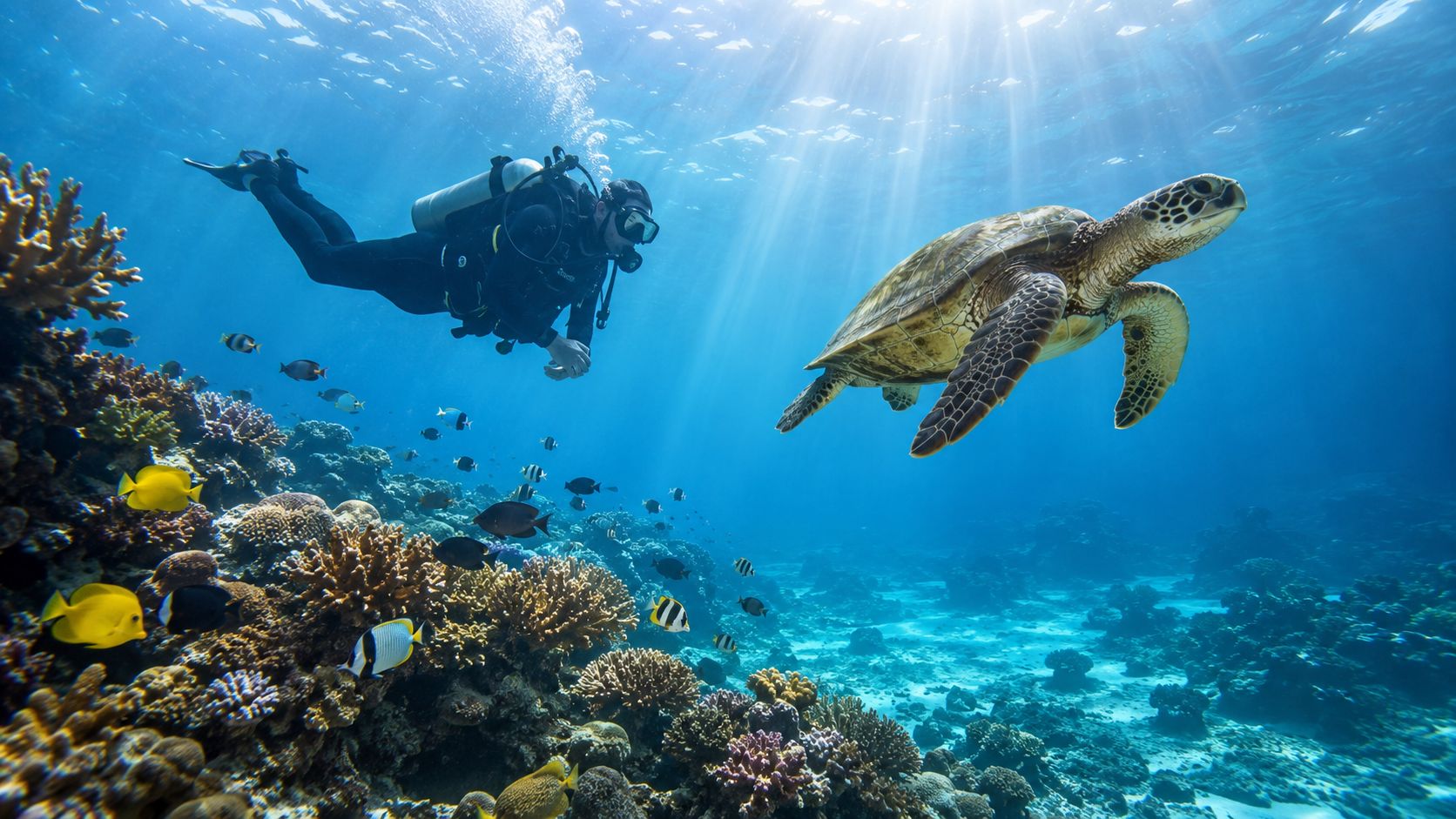
What a good first day looks like
A strong Hawaii dive day usually starts before you hit the water. You want an easy check-in, a calm briefing, and a crew that picks sites based on conditions and guest ability instead of forcing a fixed itinerary. That's what separates a vacation dive from a good dive vacation.
Once you descend on the Kona coast, the underwater geology is what changes people's expectations. Tropical reef destinations often get judged by fish color alone. Here, the geology matters just as much. The reef wraps around old lava flows, shelves, cracks, arches, and caverns. Even simple dives feel structured. You're not just hovering over sand and coral heads. You're moving through terrain.
Practical rule: If you haven't dived in a while, don't make your first Hawaii dive your hardest one. Start with an easy morning reef and let the second day be the one where you stretch.
Why this guide stays focused on Kona
A lot of articles about diving in Hawaii turn into island-by-island lists. That doesn't help much when you need to choose. The practical question isn't which island has diving. All of them do. The useful question is which island gives you the best combination of conditions, access, signature dives, and day-to-day consistency.
That answer is Kona.
This guide stays tight on the Big Island's leeward coast because that's where Hawaii's most dependable boat diving and most distinctive night diving come together. If your goal is to make smart choices, protect the reef, dive safely, and come home feeling like you experienced authentic underwater Hawaii instead of a brochure version, Kona is the right place to start.
Why Kona Is The Epicenter For Diving In Hawaii
Kona stands apart because of geography, not marketing. The west side of the Big Island sits in the lee of major volcanic mountains, so it avoids a lot of the wind and surface disruption that make other coastlines more variable. That protection shows up where it matters most to divers. The surface is often calmer, site access is easier, and the visibility is the kind people talk about for years after the trip.
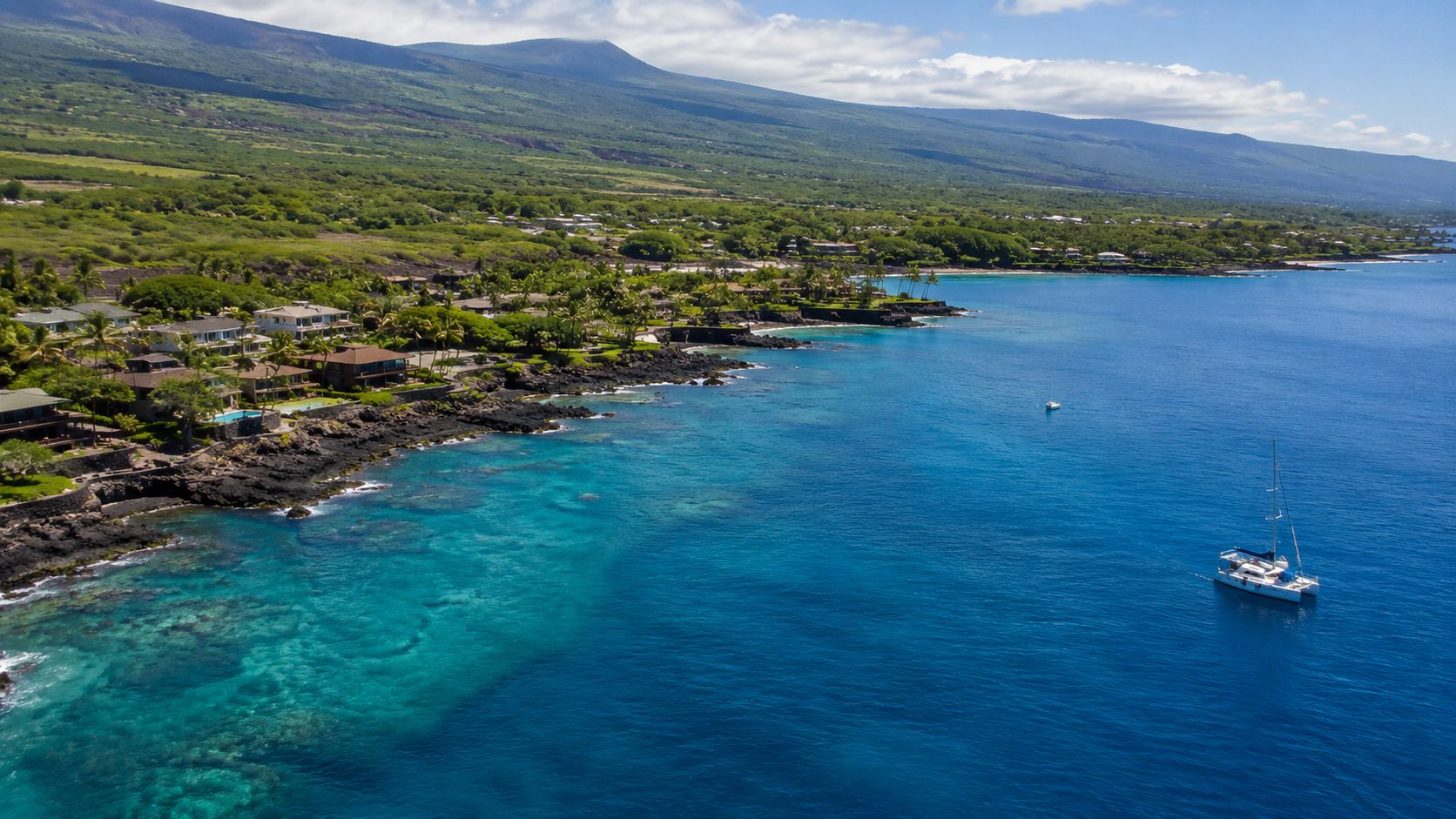
The conditions are the advantage
On the leeward Kona coast, underwater visibility runs between 100 and 150 feet from May to October according to this visibility guide for Big Island scuba diving. That level of clarity changes everything. Navigation is easier. Newer divers relax faster. Photographers get cleaner composition. Marine life encounters often feel more natural because you can see the whole scene instead of just what's directly in front of you.
There's also no traditional off-season in the usual sense. Hawaii's water stays warm enough for year-round diving, and Kona's protected side keeps boats working through conditions that would cancel or degrade dives elsewhere.
If you want a broader look at what makes this coastline stand out, this overview of what is unique about diving in Kona is worth reading before you book.
The topography gives Kona its identity
The second reason Kona leads the pack is the seafloor itself. Volcanic coastlines create dives with shape. You don't just drop onto a reef and circle back. One site may have a long lava finger with cleaning stations, another may have a swim-through cut by ancient flow lines, and another may feel almost architectural, with arches and tubes that change how you move underwater.
That matters for every skill level.
- Newer divers usually enjoy Kona because the calm entries and clear water reduce stress.
- Intermediate divers get more variety because the sites don't blur together.
- Experienced divers keep finding new angles in the same region, especially when conditions allow access to more exposed or more distant sites.
A note on operators and experience quality
The coast is popular for good reason, but popularity creates trade-offs. Boat choice, group size, briefing quality, and site timing all shape the experience more than people expect. For a sense of available options and trip styles, Kona dive tours on the Big Island gives you a practical look at what's typically offered from this coast.
Kona also rewards divers who choose crews that treat the reef and the pace of the dive with respect. Fast in-and-out diving works against what this coastline does best.
Hawaiis Signature Dives The Manta Ray And Blackwater Experience
Every destination has a few dives that get repeated in every travel conversation. In Kona, two of them deserve the attention. They're completely different from each other, and both are hard to replicate anywhere else.
The manta night dive
The manta dive works because it's simple. Divers settle on the bottom around a light source. Plankton gathers in the water column. Mantas arrive to feed, then circle overhead again and again. There's no chasing, no hunting for a single lucky pass, and no need to cover distance. The whole dive asks for the opposite approach. Stay still. Keep your bubbles controlled. Let the animals do the work.
A lot of visitors think all manta sites are interchangeable. They aren't. Garden Eel Cove is the stronger choice because its protected location usually gives a calmer experience, a better viewing layout, and healthier surrounding reef structure. The site feels more organized underwater, which matters when you're trying to enjoy the encounter instead of managing current, surge, or crowding.
Here's the trip format many divers choose for that experience: manta ray night dive tours from Kona.
After sunset, this is the scene that draws many:
If you want context on how the experience works from the waterline down, this guide to the manta ray night swim helps clarify what divers and snorkelers each see.
Stay planted, keep your light where your guide wants it, and don't reach for the manta. The less you try to control the encounter, the better it gets.
The blackwater dive
Blackwater diving is the opposite kind of famous. Mantas are graceful, obvious, and easy to describe. Blackwater is strange. You're suspended in deep open ocean at night, tethered to a downline and light array, drifting over water so dark and deep that your sense of scale drops away.
Then the animals appear.
Larval fish, translucent squid, pelagic jellies, siphonophores, and tiny creatures that look unfinished in the best possible way. This is not reef diving at night. It's a window into the nightly migration from the deep. You aren't visiting the bottom. You're watching the water column come alive.
For divers who want that experience, Kona blackwater night dive trips are the relevant option to look at.
Who should choose which
A quick decision framework helps:
| Dive type | Better for | What makes it special |
|---|---|---|
| Manta night dive | Divers who want a signature Hawaii experience | Big-animal interaction in a stable, focused setup |
| Blackwater dive | Comfortable, task-capable divers who enjoy unusual wildlife | Pelagic larvae and deep-ocean life rarely seen on standard dives |
If you only have time for one night dive, choosing mantas first is a common recommendation. If you already know you love night diving and want something far less conventional, blackwater is the one that sticks in your head.
Exploring More Of Konas Top Dive Sites
The famous night dives get most of the attention, but daytime diving is where Kona shows its range. Good site selection here isn't about collecting names. It's about matching the site to what you want from the dive. Some people want turtles and easy profiles. Some want lava architecture. Some want to slow down and spend the whole dive looking for fish found nowhere else.
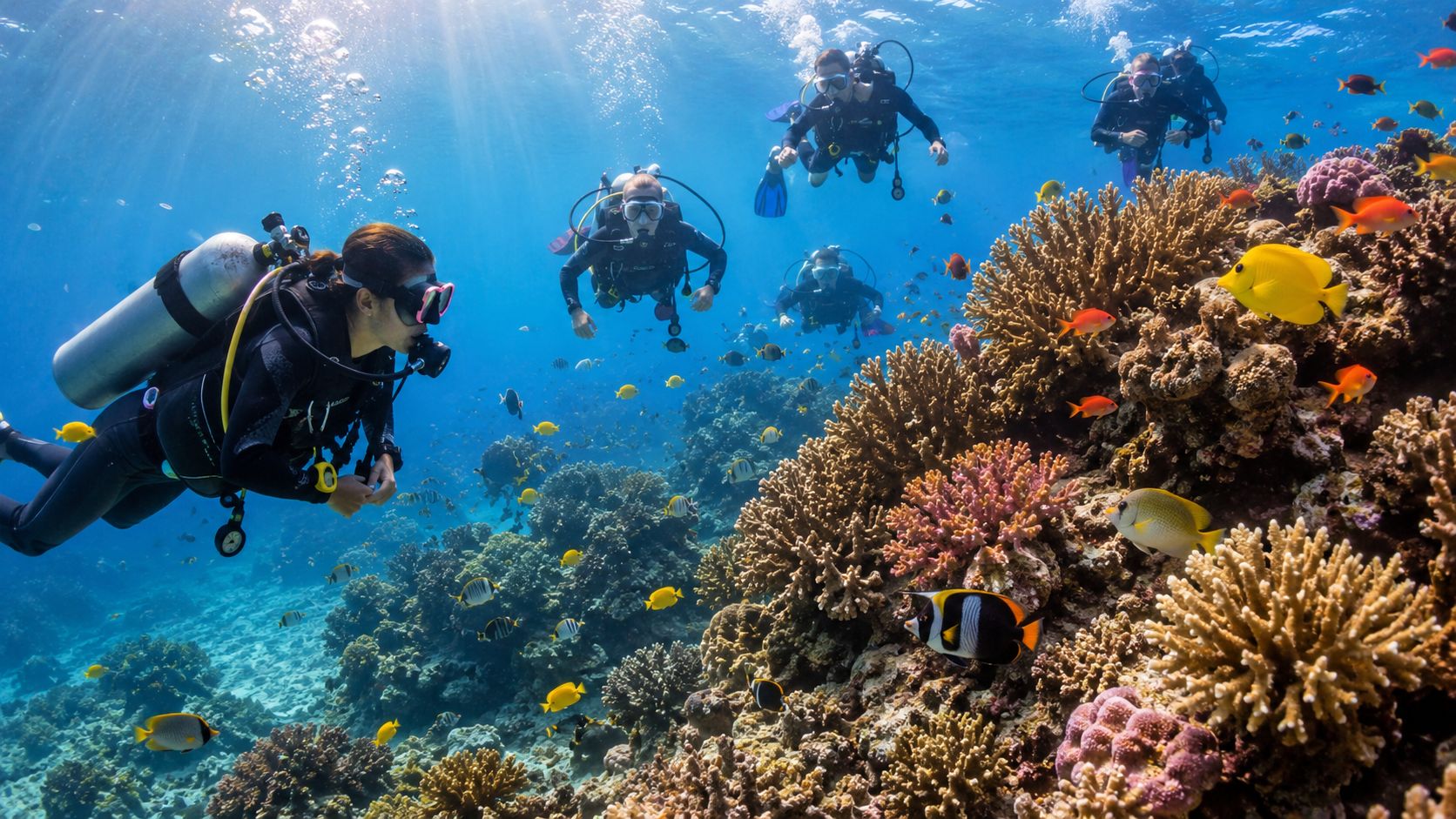
Three site styles worth prioritizing
Turtle-focused reefs work well for newer divers, photographers, and anyone who likes slower dives. Places commonly described as turtle cleaning areas reward patience more than speed. Hover well, stay low-impact, and you'll often get a much better encounter than the diver finning hard from one coral head to the next.
Lava arch and swim-through sites are where Kona's volcanic origin becomes the whole point of the dive. These sites ask for buoyancy control and awareness. They don't require technical training, but they do reward divers who can maintain position without kicking walls or scraping through openings.
Remote or long-range sites suit experienced divers who want less-trafficked water and a stronger sense of exploration. Those dives usually feel less like tourism and more like discovery, especially when the surface conditions allow access farther down the coast.
For divers looking for that last category, advanced long-range dive trips on the Kona coast are the type of trip to compare against standard reef charters.
The real secret is macro and endemism
Most visitors arrive thinking about mantas, turtles, and maybe sharks. Fair enough. But one of the biggest missed opportunities in diving in Hawaii is failing to dive the reef at macro speed.
Hawaii has 1,200 endemic species, and Hawaiian reefs host over 900 fish species, with 25% endemic, according to Scuba Diving Magazine's Hawaii guide. That means there are fish and critters here that do not exist anywhere else. If you rush, you'll miss them.
Look for:
- Hawaiian turkeyfish around ledges and sheltered structure
- Longnose hawkfish perched where many divers never stop to look
- Nudibranchs and small invertebrates on healthy reef patches and rubble zones
- Endemic reef fish that don't jump out at you until your guide points out the differences
Look closer: The divers who get the most out of Kona usually aren't the ones covering the most distance. They're the ones who slow down enough to see what other people swim past.
If you're trying to narrow down daytime priorities, this breakdown of the best dive options in Kona is a useful starting point.
How to choose your daytime diving style
Pick based on what you enjoy underwater:
- Choose reefs if you want relaxed profiles and fish life.
- Choose lava topography if structure and movement make the dive memorable for you.
- Choose advanced long-range trips if you've already done standard Kona diving and want a different feel.
That simple decision gets you farther than chasing whichever site name shows up most online.
Planning Your Dive Trip Seasonality Gear And Safety
Kona is easy to overpack for and easy to underprepare for. The water is warm, the diving is accessible, and that makes some visitors assume they can wing it. Better approach: keep your gear plan simple and your safety standards high.
Seasonality and exposure protection
Hawaii's water temperature stays between 75 and 80°F year-round according to PADI's Hawaii diving overview. That range is one reason diving in Hawaii works so well across seasons. You don't need to chase a narrow weather window, and you don't need cold-water gear.
A 3mm wetsuit is recommended for winter dives, while a 1mm rash vest can be enough in summer on warm days, according to that same PADI page. If you know you get cold, bring the thicker option. If you usually run warm, don't overdo it.
For a practical gear baseline, this guide to choosing a wetsuit for diving in Hawaii is a good reference.
Certification level and honest dive planning
Most visitors can enjoy a lot of Kona with an Open Water certification. You don't need advanced credentials to have an excellent trip. But advanced training does open up more options, especially if you're interested in deeper profiles, more complex topography, or more task-loaded dives at night.
Safety starts with honesty. Hawaii recorded 28 scuba diving fatalities during the decade leading up to 2020, averaging fewer than three deaths per year, and DAN reports that scuba diving has fewer accidents annually than horseback riding, according to this Hawaii diving safety discussion. The takeaway isn't that diving is risk-free. It's that most serious problems are prevented by training, physical fitness, and saying no when the dive is beyond your current comfort.
A few rules matter more than gear tweaks:
- Be honest about rustiness. If you haven't dived in a while, start easy.
- Protect the reef. Don't kneel on coral, grab lava, or touch wildlife.
- Watch your trim and finning. Good buoyancy is reef protection.
Seasickness prevention that actually works
Boat motion is one of the most common trip spoilers in Kona, especially for divers who feel fine on land and assume they'll be fine offshore. The best prevention starts before boarding. DAN notes that taking antiemetics such as Bonine pills or Dramamine pills the night before is more effective than waiting until morning because the medication needs to be active before motion starts, as explained in DAN's seasickness prevention guidance.
Seat choice also matters. Positioning yourself on the lowest deck, near the center of gravity and amidships, can reduce perceived vertical motion by up to 50%, and keeping your eyes on the horizon can reduce sensory conflict by 70 to 80% according to this Kona Honu Divers seasickness guide.
Non-medication options are worth packing too:
- Sea Band wristbands for a simple non-drug option: Sea Band wristbands
- Ginger if your stomach responds well to it: Ginger chews
- Patch option for travelers who prefer that format: Ship-EEZ Seasickness Patch
If the boat leaves the harbor and you already feel off, don't go hide it. Tell the crew early. It's much easier to help a diver before they're miserable than after.
What To Expect On A Trip With Kona Honu Divers
The operator you choose shapes the whole day. That's not a small detail in Hawaii right now, because some popular sites are getting busier. Recent reporting cited a 35% increase in overcrowding at some Hawaiian dive sites, with guest experience and safety both taking a hit, according to Divernet's report on Hawaii scuba diving. Crowding changes more than the photo. It changes stress, pace, and how much room divers have to settle in.
What the day should feel like
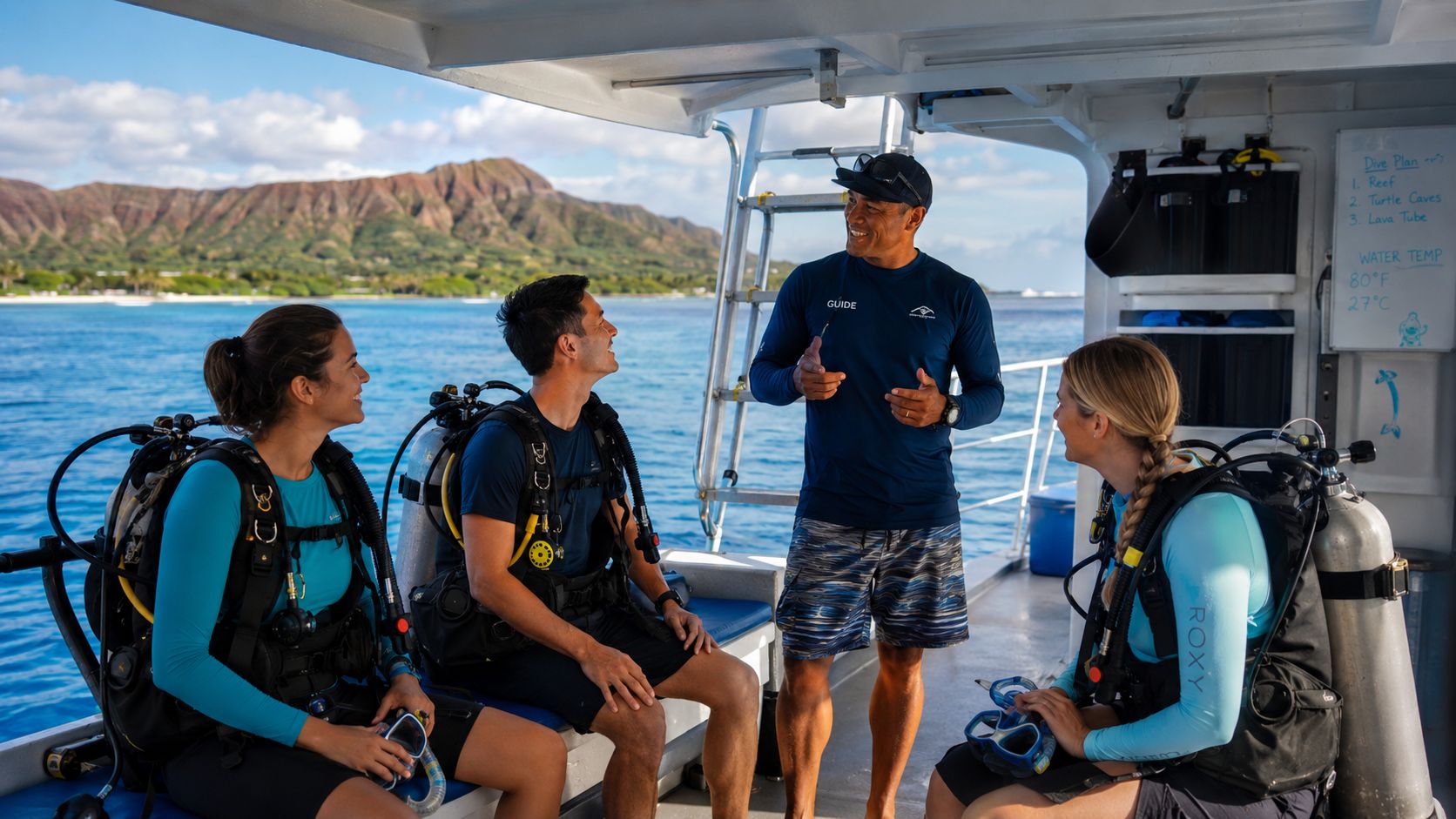
A well-run two-tank morning starts with organization, not hype. You check in, sort gear without being rushed, listen to a briefing that tells you something useful, and head to the first site with a clear plan for the dive. Usually the first dive is deeper or more structured, with the second one longer and shallower.
Between dives, comfort matters more than people think. Water, snacks, shade, and a crew that can answer real questions about marine life or conditions all make the day easier. If you're traveling with family or mixed-experience buddies, that ease matters even more.
One operator many visiting divers consider for this format is Kona Honu Divers in Kailua-Kona. They run day dives, manta trips, blackwater dives, and offer free Nitrox for Enriched Air certified divers as part of their general service offering.
What to bring and what not to overthink
Your packing list doesn't need to be elaborate:
- Bring your certification card and logbook if you keep one
- Pack reef-safe sun protection plus a hat and sunglasses
- Carry a towel and reusable water bottle
- Use your own mask if it fits well, even if you rent the rest
What doesn't help is overcomplicating things. Most vacation divers don't need to bring every piece of personal gear they own. Familiar basics matter. Excess baggage usually doesn't.
The trade-off that matters most
Cheap, crowded, fast-moving diving can still get you underwater. It just often doesn't get you the trip you thought you booked. On the Kona coast, the better experience usually comes from crews that manage group size well, pace the day properly, and don't treat every diver like they have the same skill set.
That difference is subtle at the dock. It's obvious by the end of the second dive.
Your Hawaii Diving Adventure Awaits
The reason people come back to Kona isn't only the manta dive, the clear water, or the lava tubes. It's the combination. Few places let you do a calm reef dive in the morning, spend a night watching manta rays loop overhead, then come back for a blackwater drift that feels like another planet. That range is what makes diving in Hawaii, especially on this coast, hold up beyond the first trip.
The other reason Kona stands out is that it rewards the right mindset. The best dives here don't come from trying to force the biggest profile or the most famous site into every day. They come from matching the dive to the ocean, the conditions, and your actual comfort level. That's how you stay safer, see more, and leave with better memories.
If you plan well, dive conservatively, and treat the reef and wildlife with respect, Kona gives back a lot. Warm water helps. Clear water helps more. Good briefings, smart site choice, and a crew that keeps the experience calm are what tie it all together.
For many visitors, this becomes the trip that resets what they expect from tropical diving. Not because it's flashy. Because it's complete. You get structure underwater, wildlife worth slowing down for, and enough variety to build a trip around your own pace instead of someone else's checklist.
The water's ready whenever you are.
If you're ready to turn the plan into actual dive days, take a look at Kona Honu Divers and compare the trip options that fit your certification level, interests, and schedule.