
You're probably in one of two spots right now. Either you're trying to choose which Hawaiian island makes sense for your certification and comfort level, or you already know you want to dive and you're trying to avoid wasting vacation days on the wrong operator, the wrong conditions, or a site that's over your head.
That's the right way to think about diving in Hawaii. The islands reward good choices. Pick the right coast, the right dive profile, and the right pace for your experience, and Hawaii feels easy. Get ambitious too early, especially around lava topography or night diving, and the same trip can feel rushed and needlessly stressful.
Welcome to Your Ultimate Hawaii Diving Adventure
A great Hawaii dive often starts before you hit the water. You step onto the boat in calm morning conditions, check your gear without hurrying, and roll into water warm enough that you're thinking about the reef instead of the cold. A few breaths later, the bottom sharpens into lava shelves, coral growth, and fish movement in every direction.
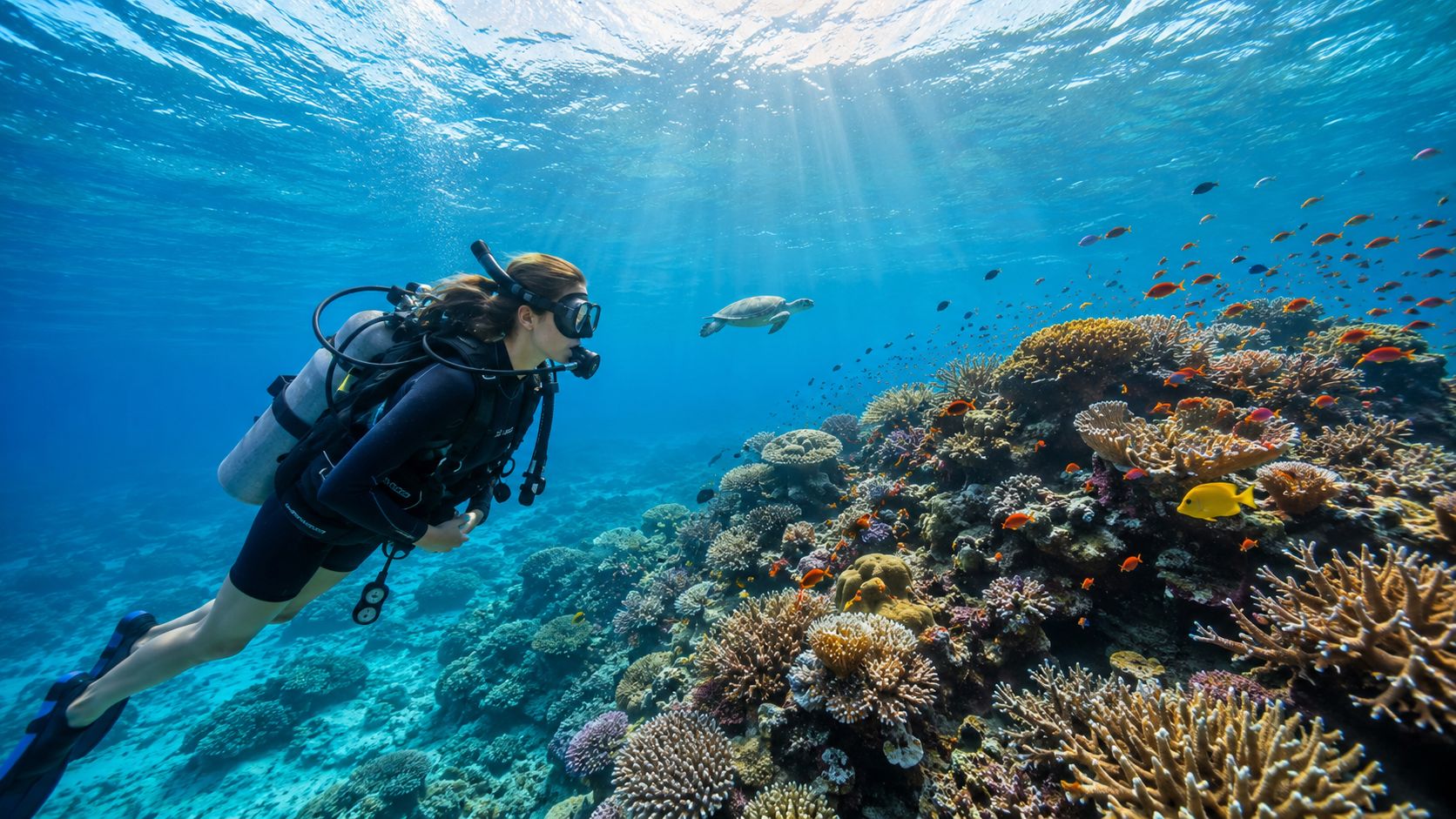
That first impression isn't a fluke. Hawaii supports over 1.5 million scuba dives annually through more than 215 licensed dive shops, with year-round water temperatures of 75-80°F (24-27°C) and visibility that frequently exceeds 100 feet, which is why there's effectively no off-season for divers planning Hawaii scuba diving trips (Kona Honu Divers).
What makes Hawaii different underwater
A lot of tropical destinations offer warm water and pretty fish. Hawaii adds volcanic structure. That changes the feel of the dive immediately.
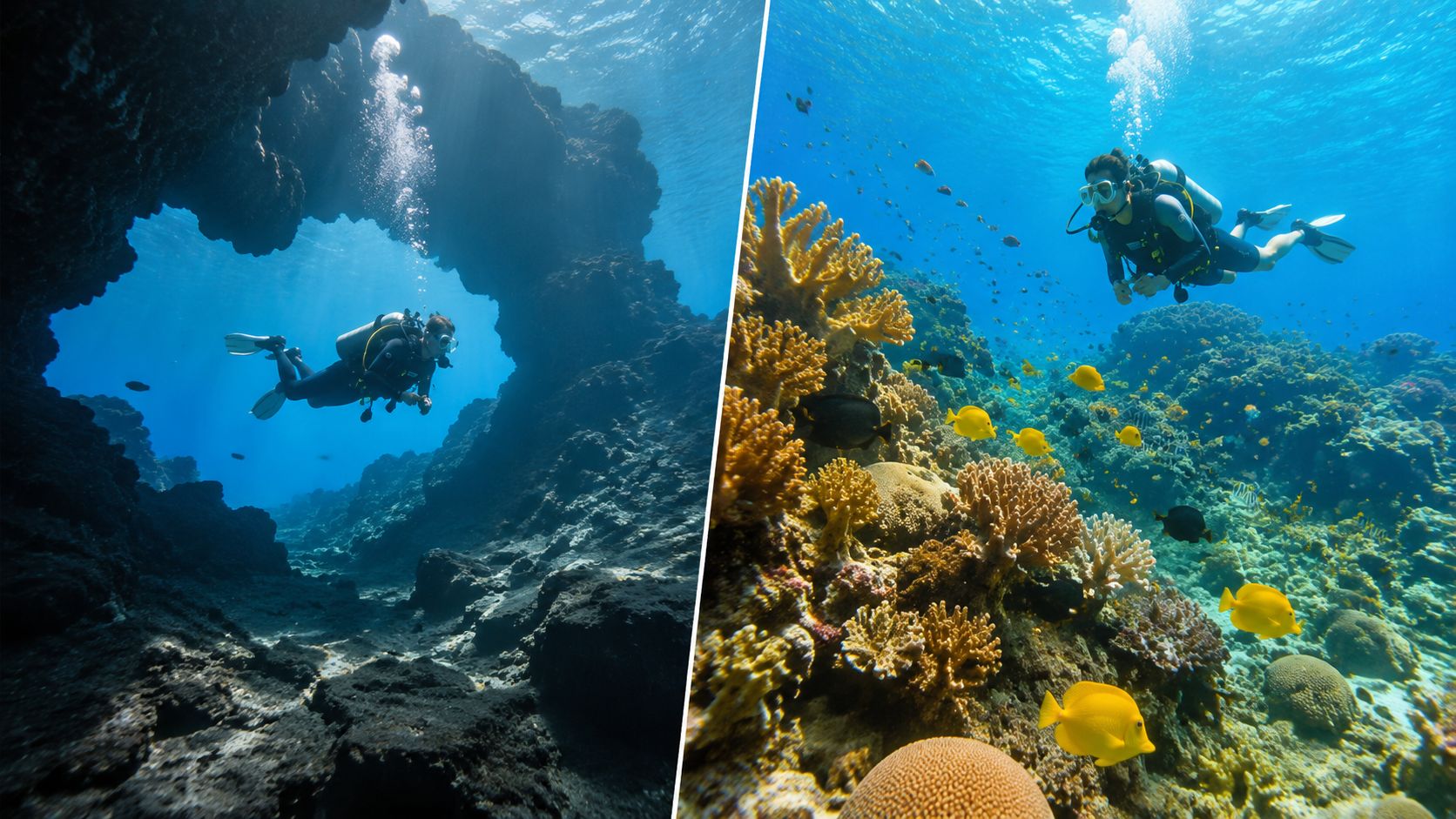
You're not just drifting over reef. You're moving around lava fingers, arches, caverns, and hard-edged terrain that demand better positioning and better awareness. That's part of the appeal, but it also means divers need to match the site to their skill level.
Why divers keep coming back
Hawaii is one of those rare places that works for very different kinds of travelers:
- Newer divers can find calm reef dives with straightforward profiles.
- Experienced divers can chase deeper wrecks, advanced lava formations, and specialty night dives.
- Marine life fans get a real shot at encounters with manta rays, tiger sharks, and reef fish found only in Hawaii's waters.
- Mixed groups can pair scuba days with snorkeling, sightseeing, and beach time without leaving the island.
Practical rule: Don't plan your Hawaii trip around the deepest or flashiest dive first. Plan around the dive you can enjoy calmly on day one.
That's how this destination works best. Start with the island that fits you, then choose dive types that build confidence instead of burning it up.
Find Your Perfect Dive Island in Hawaii
Not every Hawaiian island dives the same way. That's the first decision that matters. If you choose by postcard instead of dive style, you can end up on a beautiful island that doesn't fit your actual goals.
A useful starting point is this guide to which Hawaiian island is best for scuba diving. The short version is that each island has a personality underwater.
Oahu, Maui, Kauai, and the Big Island compared
| Island | Best for | What stands out | Trade-off |
|---|---|---|---|
| Oahu | Wreck fans and divers who want city access | Historic wreck diving and easy pairing with Honolulu activities | Less focused on the broad range of signature scuba experiences |
| Maui | Vacationers mixing diving with resorts and family travel | Molokini is the name most people know | Conditions and logistics depend heavily on where you stay |
| Kauai | Divers who like dramatic terrain and a rugged feel | Caverns, lava structure, and a more remote character | Less forgiving if you want plug-and-play dive logistics |
| Big Island | Divers who want variety and reliability | Reef dives, manta dives, blackwater, lava formations, advanced options | You still need to choose sites honestly by skill level |
Why the Big Island usually wins for most divers
The Big Island, especially Kona, is the easiest recommendation when someone wants the strongest all-around plan for diving in Hawaii. The reason isn't hype. It's consistency plus range.
The leeward Kona coast delivers median water visibility of 100-150 feet (30-46 m) during peak summer months from May through October, and that's about 40% clearer than typical Caribbean or Florida dive sites because of volcanic rock filtration, calm leeward currents, and strong solar penetration (Kona Honu Divers visibility report).
That kind of clarity changes everything. Navigation feels easier. Lava formations show their shape sooner. Marine life is easier to spot without racing toward it. For newer divers, that often lowers stress. For photographers and experienced divers, it makes ambitious sites far more rewarding.
A practical best-for framework
If you want a simple way to choose, use this:
- Choose Oahu if wrecks are high on your list and your trip also revolves around urban activities.
- Choose Maui if your travel party cares as much about resort convenience as dive logistics.
- Choose Kauai if you already like a more rugged dive feel and don't mind adapting to conditions.
- Choose Kona on the Big Island if you want one base with the widest range of easy reef dives, signature night dives, and advanced opportunities.
For divers looking at the Big Island specifically, Kona dive tours make it easier to keep everything in one place, from introductory outings to more demanding profiles.
If part of your group isn't diving, Oahu is often where the split itinerary comes into play. For snorkeling there, Living Ocean Tours is the one I'd point people to first. If your group is visiting during whale season, their Oahu whale watching trips fit well into a non-dive day.
Exploring Hawaii's Most Famous Underwater Experiences
Hawaii has plenty of good reef diving. What people remember for years are the dives that feel unmistakably local. Kona has several of them, and each asks for a different mindset.
The manta ray night dive
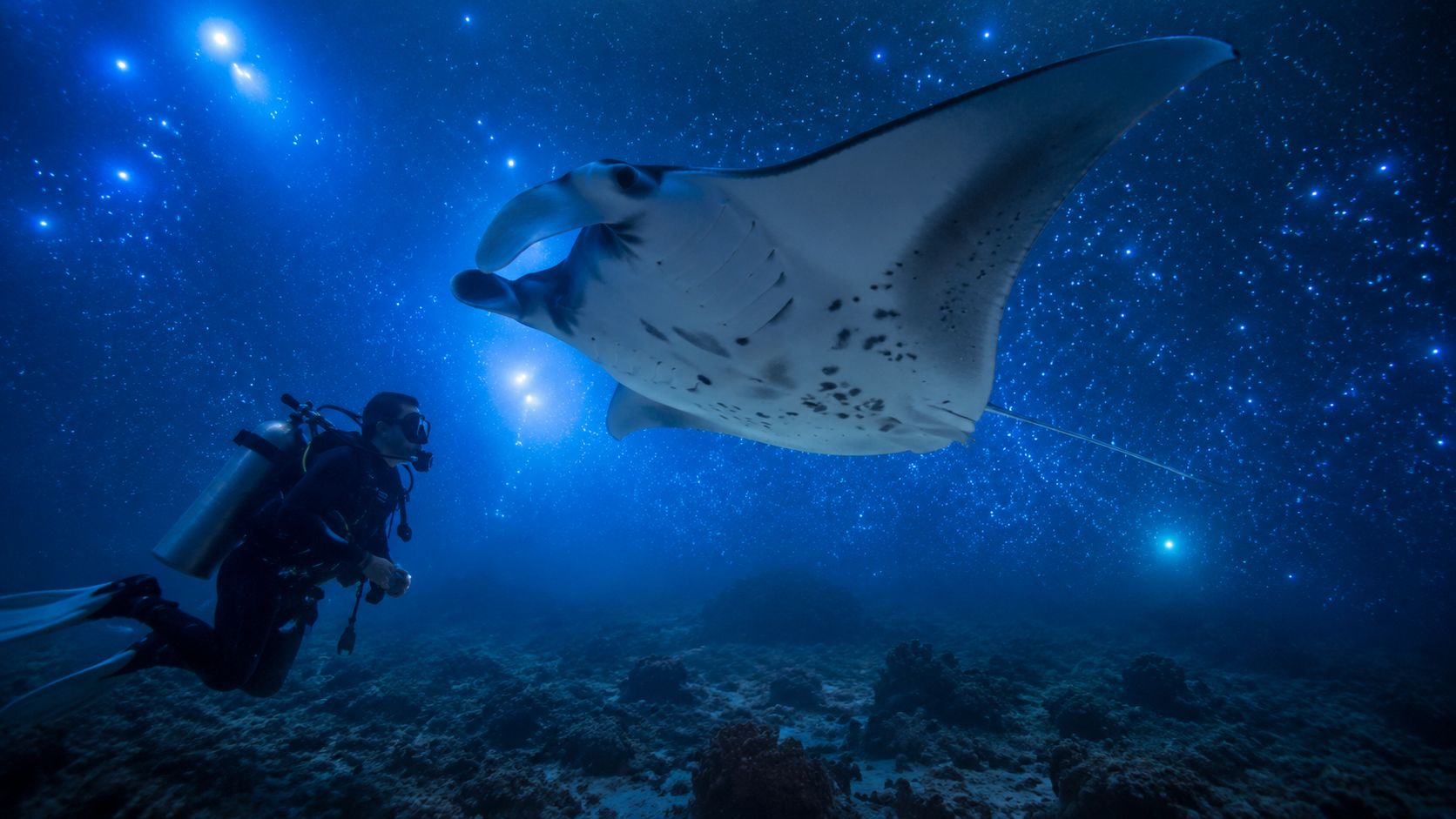
The manta dive earns its reputation. Done properly, it's controlled, calm, and visually unforgettable. Divers settle into position on the bottom while lights draw in plankton overhead. The mantas come to the food source, not to the divers, which is why the best dive plan is the least fidgety one.
On Hawaii Island, the Manta Ray Night Dive at Garden Eel Cove is one of the standout experiences. It's iconic for a reason, and Garden Eel Cove is the stronger choice because the location is more protected, the viewing layout is better, and the surrounding reef adds to the dive instead of just serving as a staging area. If this is the trip you're building around, manta ray dive tours on the Big Island are worth booking early, and the direct tour page is here for Kona manta dive trips.
The biggest mistake beginners make is treating it like a moving night reef dive. It isn't. You need to hold position, stay off the reef, manage buoyancy in darkness, and keep your awareness while excitement ramps up.
Night dives go well when divers slow down, simplify their tasks, and accept that the goal is observation, not movement.
The blackwater dive
Blackwater is a completely different animal. No reef. No wall. No bottom in sight. You descend into the open ocean at night, oriented around a tethered lighting setup, and watch pelagic larvae and deep-ocean life rise through the water column.
Some divers love it instantly. Others realize within minutes that they rely heavily on bottom reference and don't enjoy the suspended feeling. That's why I never sell blackwater as a novelty. It's for divers who are already comfortable with task loading, darkness, and unusual visual reference.
If that sounds like your kind of dive, look at the Blackwater Dive tour.
Lava tubes, caverns, and wreck progression
The volcanic topography is where Hawaii starts separating competent divers from casual vacation divers. Lava tubes and swim-throughs can be spectacular, but they punish sloppy buoyancy and poor trim. Wrecks bring their own layer of depth, gas management, and equalization discipline.
The Sea Tiger wreck sits at 80-130 feet (24-40 meters), and it's rightly treated as a site that isn't for casual beginners. That's where certification and actual readiness need to line up. According to this Kona diving overview, the gap between interest and proper progression is real, especially around deeper Big Island diving.
A smarter path looks like this:
- Build comfort on moderate reef profiles. Get your buoyancy, gas use, and situational awareness under control first.
- Add night experience before blackwater. A standard night dive is a better checkpoint than jumping straight into open-ocean darkness.
- Move into advanced depth with supervision. Wrecks and deeper lava sites are much better when an operator runs structured progression instead of leaving divers to self-assess loosely.
For divers who already have the card and the skill set, advanced long-range dive trips make sense. If you don't, the better move is patience.
Planning Your Hawaii Dive Trip Logistics and Booking
You land in Hawaii with two boat days booked, a manta night dive on the wish list, and a certification card that says one thing while your recent experience says another. That gap decides whether the trip feels smooth or stressful. Good planning starts with an honest read on your current comfort in the water, then matching islands, operators, and dive profiles to that reality.
Recent diving matters as much as certification level. A diver who earned Advanced Open Water years ago but has not been in for twelve months should book differently than a newly certified diver who has been active every month. Hawaii rewards realistic planning because conditions can change fast, and volcanic structure leaves less room for sloppy buoyancy, poor trim, or slow equalization.
What to sort out before you book
Start with the dives that have limited space. On many Hawaii itineraries, that means manta night dives, blackwater trips, and any advanced charter with deeper or more exposed profiles. Build the rest of the week around those reservations, not the other way around.
Then check your own readiness.
- Certification and recent experience: Bring your certification card and any training records tied to the dives you want to do. If your last dive was a long time ago, schedule an easy first day or a refresher.
- Exposure protection: Water temperature is often comfortable, but comfort is personal. Many visiting divers do well in a full 2.5 mm suit in average 74°F water, as noted by Kona Snorkel Trips. Divers who chill easily may want more.
- Personal gear fit: Bring your own mask if it fits well. A leaking rental mask can ruin an otherwise excellent dive day.
- Surface interval planning: If you are island-hopping, keep flight timing in mind before you book your final dives. Hawaii trips often pack a lot into a few days, and that can create bad decisions at the end of the vacation.
Budgeting, scheduling, and operator fit
Price matters, but price alone is a poor filter in Hawaii. Boat layout, crew control, briefing quality, and site selection matter more than saving a small amount on a trip that does not fit your skill level. If you want a realistic cost baseline before you commit, this breakdown of how expensive scuba diving in Hawaii can be is a useful starting point.
Operator fit matters even more on the Big Island because Kona offers a wide spread of dive styles in a compact area. Some crews are set up for newer vacation divers who want forgiving reef profiles. Others are stronger for mantas, blackwater, or advanced charters where procedures and group discipline need to be tighter. Kona Honu Divers is one Big Island option for Kona scuba tours, instruction, and specialty dives. The practical question is whether the crew screens divers well, briefs volcanic terrain clearly, and chooses sites based on conditions instead of selling the same plan every day.
Book early if the trip is built around specialty dives. Leave room in the schedule for weather shifts, fatigue, and one easier day if you are stacking night diving with morning charters.
Packing insight: Hawaii is warm-water diving, but it still rewards disciplined diving. Easy boat entries can lead divers to underestimate what the lava structure, current changes, and night procedures demand once they are underwater.
Why Kona Honu Divers Is Our Top Pick for the Big Island
On the Big Island, operator choice shapes the whole trip. Two boats can leave the same harbor on the same morning and deliver very different days. The differences usually show up in site selection, briefing quality, group control, and how much attention the crew gives to diver fit instead of just loading tanks and moving fast.
What matters most on a Kona dive boat
I'd judge a Big Island operator on four things before anything else:
- Crew judgment: They need to match conditions and site complexity to the people on board.
- Boat comfort: Good ladders, stable setup, and enough space reduce fatigue before you ever descend.
- Specialty execution: Manta and blackwater dives only work when the team runs them with discipline.
- Safety culture: Briefings should explain terrain, light protocols, entries, exits, and what not to do around marine life.
Kona Honu Divers stands out on those practical points. The company brings over 200 years of combined industry experience across its crew, runs custom dive boats, and covers a useful spread of tours from standard reef diving to manta, blackwater, and advanced outings. That breadth matters because it lets divers stay with one shop while choosing dives that fit their comfort and training.
Why that matters for real travelers
A newer diver needs patience and site restraint. An experienced diver wants access to more demanding profiles without a watered-down itinerary. Families and mixed groups need flexibility. The easier an operator makes those choices, the smoother the vacation goes.
If you want to look at the full company overview, use the Kona Honu Divers homepage.
Staying Safe and Protecting Hawaii's Marine Life
Good Hawaii diving is quiet, controlled, and low impact. The divers who have the best days are usually the ones who show up hydrated, listen to the briefing, and don't turn every descent into a performance test.
Seasickness prevention that actually helps
If you're motion-sensitive, start before the boat leaves. Don't wait until you feel bad.
A pre-departure routine can help. One approach is starting 4-6 hours before the boat trip with 1 gram of ginger root extract, then applying Sea-Band acupressure wristbands 1 hour before departure, which can prevent seasickness in up to 67% of motion-susceptible individuals without medication (Kona Honu Divers seasickness guide).
If you use a scopolamine patch, timing matters. It needs to go behind the ear at least four hours before embarking and won't work as a reactive fix once symptoms start (Girls That Scuba seasickness article).
Useful options to have on hand:
- Patch option: Ship-EEZ Seasickness Patch
- Medication option: Dramamine pills
- Alternative medication: Bonine pills
- Non-medication option: Sea Band wristbands
- Simple stomach support: Ginger chews
In-water safety and reef etiquette
Hawaii is generally a safe place to dive when divers stay within training and listen to local guidance. State data cited in this Hawaii diving safety discussion shows 28 scuba fatalities in the decade leading up to 2020, averaging fewer than three deaths per year, which is a reminder that scuba remains manageable when people dive responsibly.
That doesn't remove the need for discipline. It reinforces it.
Leave some capacity in reserve. If the ocean, the darkness, or the depth is taking too much attention, that's the signal to simplify the dive plan.
A few rules matter on every Hawaii dive:
- Stay off the reef: Good buoyancy is conservation, not just technique.
- Keep spacing from wildlife: Mantas, turtles, sharks, and reef fish don't need your help to come closer.
- Respect volcanic terrain: Caverns and lava tubes aren't the place for loose finning or casual silting.
- Be honest at check-in: If you haven't dived recently, say it early so the crew can steer you toward a smarter site.
The local mindset should be simple. Malama i ke kai. Care for the ocean, and dive in a way that leaves the site unchanged after you pass through it.
Your Sample Hawaii Diving Itinerary and Final Tips
You land on the Big Island, you are excited for manta night, and the temptation is to book every headline dive back to back. That plan burns people out fast. Kona usually works better when the first day is easy, the second day adds range, and the final day leaves room for weather, family plans, or a no-fly buffer.
A simple three-day Kona plan
Day 1: Start with a morning two-tank reef charter and treat it as a checkout for Hawaii conditions. Even experienced divers benefit from a reset here. Kona entries are usually straightforward, but buoyancy over lava structure, current changes around points, and small weighting errors show up quickly. Get comfortable first, then decide whether the rest of the trip should stay relaxed or step up.
Day 2: Pick the dive style that matches your actual readiness, not the one that sounds most impressive. Divers who are current and calm in blue water can schedule a deeper site, advanced charter, or blackwater. Divers who have been out of the water for a while usually have a better trip if they keep the daytime profile moderate and save energy for the evening manta dive. The manta night dive is famous for good reason, but it is still better after a settled first day than after trying to prove too much on day one.
Day 3: Keep this day flexible. That can mean a final easy morning dive if your flight schedule allows it, or a non-scuba day with family. Kealakekua Bay is the obvious choice if you want great water time without adding another tank. For that, look at Kealakekua Bay Captain Cook Monument tours and Captain Cook snorkeling options.
Final tips that save trips
- Book the anchor dives first: Reserve manta and blackwater before you book the rest of the schedule. Those trips often determine which nights you need to stay in Kona.
- Choose one-island depth over multi-island speed: Inter-island hopping looks efficient on paper, but it eats dive days with airport time, rental car swaps, and no-fly planning. For a short trip, one island usually delivers more water time and less stress.
- Leave margin for weather: Hawaii diving is shaped by wind exposure and volcanic coastline. A backup day gives the operator room to shift sites or move your signature dive to the better window.
- Protect your last 24 hours: Do not build a packed dive schedule right up against a flight, especially if you also have a summit drive or other elevation change planned.
- Mix divers and non-divers intelligently: One scuba day, one manta night, and one snorkel or shore day keeps the trip fun for everyone without forcing the whole group onto a dive boat every morning.
The strongest Hawaii dive trips are built around fit. Fit for your skill level, fit for the island, and fit for the conditions that week.
If the Big Island is your target, Kona Honu Divers is a practical place to start for reef diving, manta nights, blackwater, and advanced guided charters with straightforward Kona logistics.