
You're probably in the same spot most divers hit when planning Hawaii. One browser tab has manta rays, another has Molokini, another has wrecks off Oahu, and by the time you've compared four islands and ten operators, the whole trip starts to blur together.
That's the trap with most advice on diving in Hawaii. It gives you a bucket list, not a plan. A better approach is to match the island, season, and style of diving to who's traveling. A newly certified diver needs something very different from a photographer chasing pelagics. A family with mixed experience levels needs something different again.
Hawaii rewards smart planning. Pick the right island and the right type of diving, and the trip feels effortless. Pick the wrong one for your skill level or travel dates, and you can spend a lot of time adapting to conditions instead of enjoying the water.
Welcome to a Diver's Paradise
A good Hawaii dive day starts early. The harbor is still quiet, the ocean is flat, and once you roll in, the first thing that stands out is the clarity. Lava rock drops into blue water, reef fish stack over ledges, and the terrain looks different from the Caribbean almost immediately. Hawaii feels volcanic because it is volcanic. The underwater topography has edges, arches, tubes, and hard structure that give each site real character.
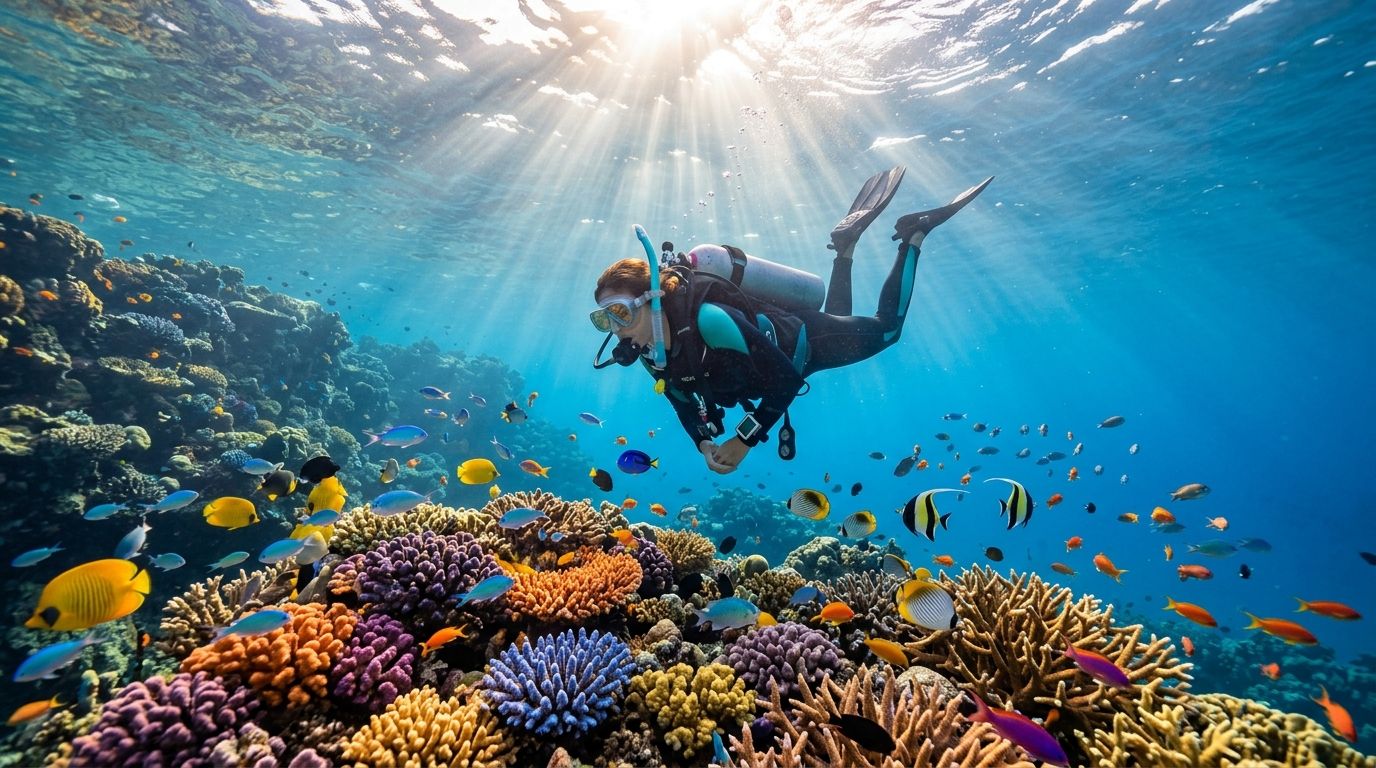
That variety is one reason diving in Hawaii has such a strong following. Hawaii hosts over 1.5 million scuba dives annually, water temperatures stay in the 75–80°F (24–27°C) range year-round, and visibility often tops 100 feet, especially along the Kona coast, according to this Hawaii diving overview from Kona Honu Divers.
What makes Hawaii different
Some tropical destinations win on reef density. Hawaii wins on contrast.
You can spend one dive tracing old lava formations, then spend the next watching endemic fish move through coral heads in clear blue water. The terrain feels geologically young and alive. That's the part many first-time visitors don't expect.
Hawaii isn't just warm-water diving. It's volcanic diving with tropical visibility.
Why people return
The conditions help. Warm water means you don't need to build your whole trip around a narrow season, and strong visibility makes even relaxed, shallow dives feel dramatic. That matters for new divers, but it matters just as much for experienced divers who want clean, wide-angle views and easier site reading underwater.
For a lot of travelers, Hawaii becomes the place where everyone in the group can find a fit. New divers can stay on easier reef profiles. Experienced divers can chase specialized charters. Non-divers can still enjoy the ocean side of the trip without feeling sidelined.
Choosing Your Island for the Perfect Dive
Your family wants one Hawaii trip. One person is newly certified, one loves long beach days, and one wants memorable dives without spending the whole week adjusting plans around rough water. At that point, the best island is not the one with the most famous postcard. It is the one that fits your group, your comfort level, and the time of year you are traveling.
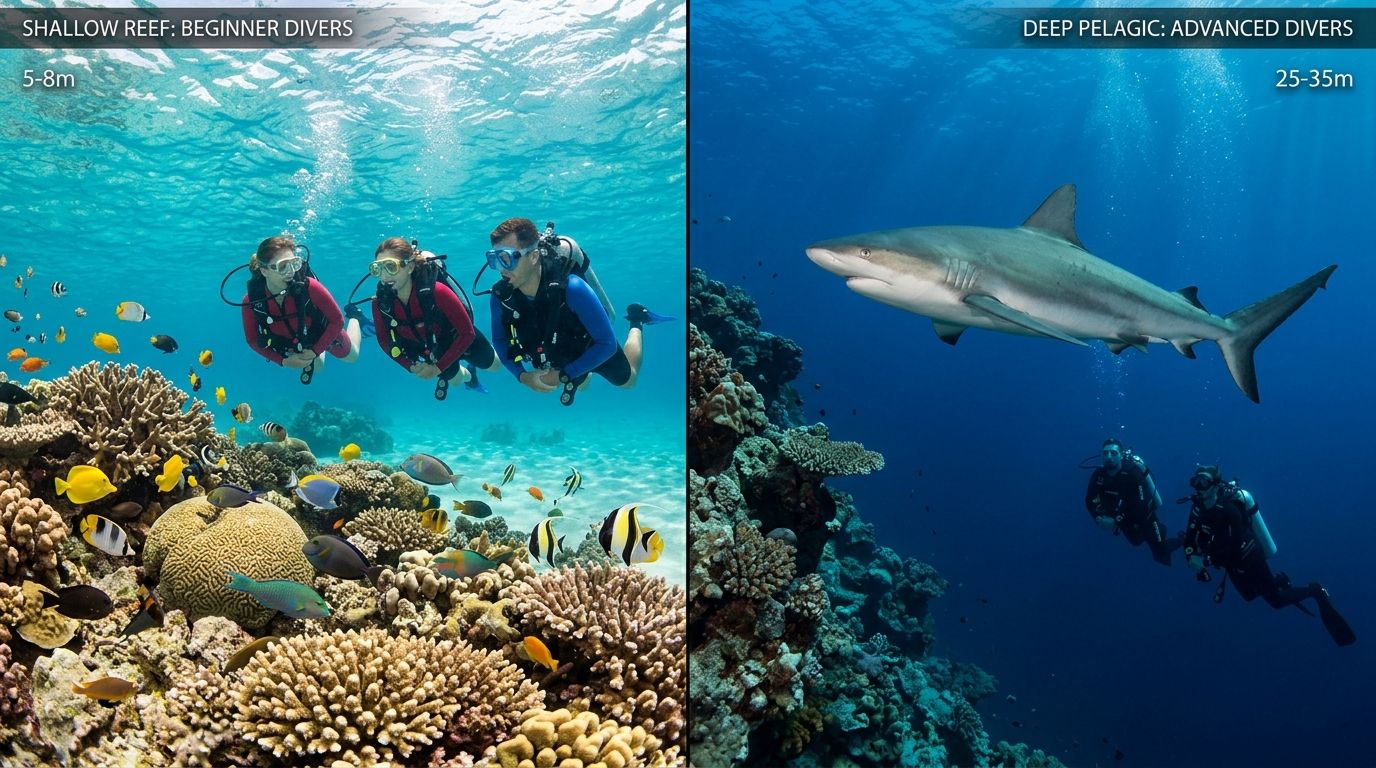
I tell visiting divers to choose Hawaii island-first, site-second. That approach prevents a lot of disappointment. A destination that suits an advanced diver chasing specific conditions may be a poor fit for a mixed group with kids, rusty divers, or anyone who gets uneasy on a bouncy boat ride.
Kona usually rises to the top because the leeward coast is sheltered from the prevailing northeast trade winds that affect much of the state, a pattern reflected in NOAA's overview of Hawaii's climate and winds. That shelter often means calmer surface conditions and more predictable dive planning than visitors find on more exposed coasts.
The quick island match
| Island | Best fit | What stands out | Main trade-off |
|---|---|---|---|
| Big Island, Kona side | New divers, mixed-skill groups, underwater photographers, repeat visitors | Sheltered coast, strong range of charters, volcanic reef structure, easy progression from simple dives to advanced experiences | Fewer non-dive urban attractions than Oahu |
| Maui | Vacationers splitting time between diving, beaches, and resorts | Well-known sites, convenient resort access, easy to pair with a general family vacation | Conditions can change the quality of the diving more from day to day |
| Oahu | Travelers who want diving plus city dining, history, and broad activity choices | Wrecks, easy flight access, lots to do topside | The trip can feel less dive-focused, and boat traffic is part of the experience |
| Kauai | Experienced divers who like a quieter, wilder trip | Dramatic scenery, rugged character, less-developed feel | Less forgiving for beginners, families, and anyone who needs flexible conditions |
Why Kona fits the widest range of divers
Kona is my default recommendation for first-time Hawaii dive travelers for one practical reason. It gives operators more workable days and gives guests fewer surprises.
That matters in real ways. Newly certified divers usually do better with simple entries, shorter runs to the site, and profiles that let them settle in instead of spending the whole dive managing current or surge. Families notice it too. If one diver in the group is confident and another has not been underwater in two years, the Kona side makes it easier to build a trip everyone can enjoy.
The same logic helps experienced divers. Reliable conditions do not make the diving boring. They make it easier to schedule specialty trips, photography-focused dives, and advanced charters without burning vacation days waiting for a better weather window.
Planning rule: If your group includes beginners, occasional divers, or family members who are unsure about boats, start with Kona.
That is also why many traveling divers end up booking with operators based on consistency and local judgment, not just the site list. On the Big Island, Kona Honu Divers has built a strong reputation with visitors who want that kind of clear guidance.
When another island is the better call
Kona is not automatically the right answer for every trip. Maui can be the better choice if diving is only one part of a resort vacation and your group cares as much about beaches, restaurants, and short transfer times as bottom time. Oahu makes sense if you want wrecks, nightlife, Pearl Harbor, and easy entertainment for non-divers. Kauai suits divers who accept more variability in exchange for a more rugged island feel.
The smartest plan is to match the island to the weakest link in the group and the strongest priority of the trip. If your least experienced diver needs calm, choose for that. If your whole group is seasoned and happy to stay flexible, you can afford to be more selective.
For a fuller island-by-island comparison, see this guide on which Hawaiian island is best for scuba diving.
Hawaii's Most Unforgettable Dive Experiences
You drop into clear water at sunset, settle onto the bottom, and hold your light steady while the water above you fills with plankton. A few minutes later, a manta ray sweeps overhead so close you hear divers gasp through their regulators. That is the kind of Hawaii dive people build trips around.
Kona stands out because the experiences are different from one another, not just small variations on the same reef. A family with new divers can choose a forgiving, high-reward signature dive. An experienced diver can spend the next night suspended over deep water watching larval creatures rise out of the black. The right pick depends less on what sounds famous and more on how comfortable you are in the water.
The manta ray night dive
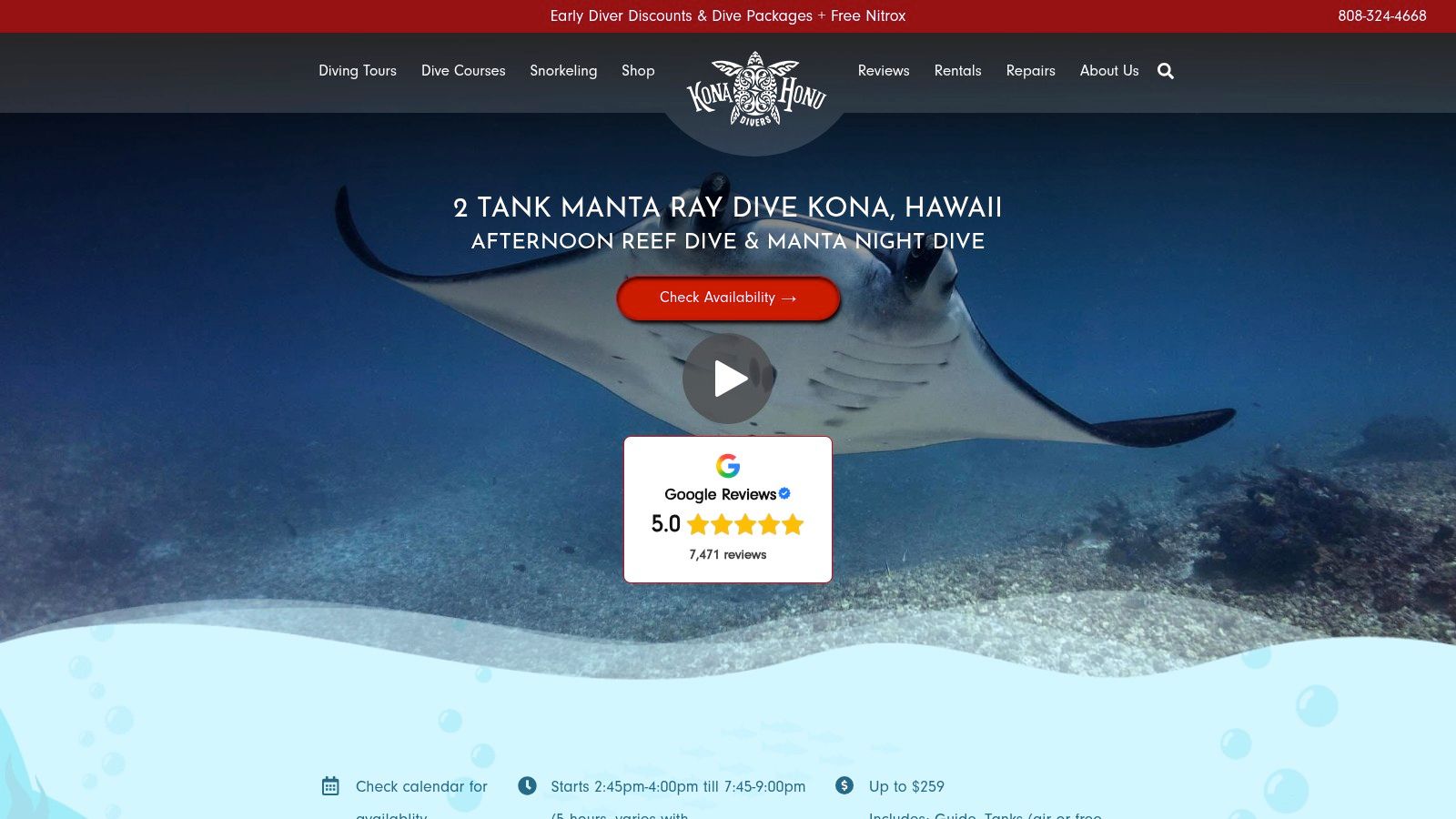
The manta dive earns its reputation because it delivers a rare mix of spectacle and accessibility. Divers stay in a fixed viewing area while lights attract plankton, and the mantas come to feed. That structure makes the dive manageable for many certified divers who are calm at night and comfortable following simple positioning instructions.
Garden Eel Cove is the site many divers hope for, and for good reason. Its protected setting often makes the experience more comfortable, especially for divers who do not want current or surge adding stress to a night dive. Better comfort usually means better buoyancy, steadier lights, and a cleaner show for everyone.
The best manta divers are the quiet ones. Stay low, keep your beam where the crew directs it, and resist the urge to swim after the animals. Operators such as Kona Honu Divers explain what to expect on their manta ray tours on the Big Island, but the key is simple discipline once you are in the water.
The blackwater dive
Blackwater is for a different diver entirely.
Instead of a reef, you have open ocean. Instead of large familiar animals, you spend the dive watching tiny pelagic life, larval fish, squid, and other deep-water creatures drift up from below under specialized lights. Researchers studying diel vertical migration have documented this nightly movement of ocean life toward the surface, which is why blackwater diving can show animals few reef divers ever see, as described by the Monterey Bay Aquarium Research Institute's work on vertical migration.
It is unforgettable, but it is not a casual add-on. Divers who enjoy blackwater tend to have solid buoyancy, comfort in night conditions, and enough situational awareness to stay oriented on a line in open water. Divers who are uneasy without a bottom reference usually enjoy a manta dive far more.
If blackwater is on your list, treat it like a specialty dive and book accordingly through the Blackwater Dive tour page.
Long-range dives for advanced divers
Some visitors want more than Hawaii's headline dives. They want less-frequented sites, longer runs, and terrain that rewards good air consumption and clean control in the water.
That is where long-range charters come in. These trips often reach remote lava formations, pinnacles, and reefs that see fewer divers, which usually means better fish life and a stronger sense of exploration. The trade-off is straightforward. Longer travel, more exposure to changing conditions, and less room for sloppy skills.
Divers who get the most from these charters already handle buoyancy, entries, and ascent procedures without needing constant correction. For that kind of trip, advanced long-range dive tours are the right place to start.
The best Hawaii dive is the one that fits your skill level well enough that you can relax and actually enjoy what is in front of you.
Staying Safe and Comfortable in the Water
Hawaii diving is at its best when you prepare for the trip you're taking, not the trip you wish you were taking. That starts with honest skill matching.
Scuba diving in Hawaii is statistically very safe, averaging fewer than three fatalities per year, and Divers Alert Network compares scuba's accident frequency to low-risk activities, with fewer reported accidents annually than horseback riding, according to Civil Beat's reporting on Hawaii ocean safety.
Match the dive to your certification
For most standard boat diving, Open Water certification is the baseline. That covers a large part of what vacation divers want.
For specialized trips, stronger training matters:
- Advanced training helps when dives involve night conditions, deeper profiles, or more complex navigation.
- Nitrox certification is worth having if you expect multiple dive days and want access to enriched air where it's available.
- Recent experience matters as much as the card in your wallet. A diver with modest certification and fresh skills is often easier to guide than an advanced diver who hasn't been in the water for years.
Comfort check: If you struggle to hold depth, manage air, or stay oriented after sunset, skip the advanced charter this trip and build back up on easier dives.
Seasickness prevention that actually helps
Boat diving and motion sickness don't mix well, but most cases are manageable with a little prep. If you know you're prone to it, don't wait until the boat leaves the harbor.
Two non-medicinal options are especially practical:
- Sea Band wristbands can help when they're placed correctly on the P6 or Nei-Kuan point, which sits three finger-widths below the wrist crease between the main tendons. Placement matters.
- Ginger chews are a simple option many divers use before and after diving because ginger can reduce stomach contractions associated with nausea.
If you prefer over-the-counter support, these are common options people bring:
A few habits help just as much as anything in your bag:
- Eat light, not zero. Diving on an empty stomach can backfire.
- Stay where airflow is better. Fresh air often settles people faster than sitting low and staring at gear bins.
- Keep your eyes on the horizon until the boat stops.
- Tell the crew early. They can usually suggest the best place to sit and help you avoid making it worse.
For more trip-specific advice, this guide on how to avoid sea sickness covers practical prevention in plain language.
Planning Your Hawaiian Dive Trip Logistics
The logistics of diving in Hawaii aren't hard, but they do reward a little discipline. Flights, rental cars, gear decisions, and surface intervals all affect how smooth the trip feels once you arrive.
Timing your trip
Hawaii is a year-round dive destination, so you don't need to force your vacation into a tiny seasonal window. What does change is how much weather flexibility you want.
Winter can be a fantastic time to visit, especially if you enjoy seeing humpbacks topside, but it's also the season when surface conditions can become less predictable on some islands. That's one more reason many divers lean toward Kona when trip dates are fixed and they want the highest chance of getting their planned dives in.
What to pack
Bring the gear that improves safety, comfort, and familiarity. Leave the rest to the operator if needed.
- Exposure protection: A 3mm or 5mm wetsuit is the normal range most travelers consider, depending on personal tolerance and how many dives they're doing.
- Dive computer: Don't rely on guesswork if you're doing multiple days.
- Surface marker buoy: A safety sausage or SMB is smart anywhere boat diving is common.
- Reef-safe sun protection: Sun exposure on Hawaiian boats adds up faster than many first-time visitors expect.
- Personal mask: If you own one that fits perfectly, bring it.
Renting versus bringing your own
There isn't one right answer. A diver doing a short vacation with one or two charter days may be happier renting most equipment and avoiding baggage hassles. A diver doing repeated dives, advanced charters, or night dives usually benefits from bringing the core life-support and fit-sensitive pieces they know well.
A simple rule works well:
| Bring your own | Usually fine to rent |
|---|---|
| Mask | Fins if luggage space is tight |
| Computer | Exposure suit |
| Regulator if you prefer familiar breathing characteristics | BCD |
| Accessories you use every dive | Tanks and weights |
Nitrox and why it matters
Enriched Air Nitrox is one of the easiest upgrades a recreational diver can make if they're certified to use it. On repetitive dive days, many divers like it for the added conservatism and the way it can make the schedule feel less compressed.
Some operators include it as part of the value proposition. Kona Honu Divers offers free Nitrox for certified divers, which is useful if you're planning several dives and want that option available without extra friction.
For a realistic look at trip budgeting, this article on how expensive scuba diving is in Hawaii helps set expectations.
Booking with Hawaii's Best Dive Operator
Choosing an operator is where a good plan becomes a good trip. The glossy photos matter less than the operational details.
What to evaluate before you book
Look for signs that the company runs cleanly and consistently, not just attractively.
- Safety culture: Ask how they brief, how they group divers, and how they handle mixed experience levels.
- Boat design: Space, shade, exits, and comfort matter more than people think once you're doing multiple dives.
- Guide quality: A strong guide doesn't just find animals. They pace the dive well, read the group, and prevent small problems from becoming big ones.
- Rental gear standards: Well-maintained gear changes the whole tone of a vacation charter.
- Fit for your goals: A company that excels at beginner reef diving isn't automatically the right one for blackwater or advanced long-range trips.
One practical place to start is this overview of a Kona diving company, which outlines what divers should pay attention to when comparing operators.
Why operator fit matters so much in Hawaii
Hawaii can be forgiving, but only when the operator matches the day to the group. The right crew adjusts site selection, timing, and dive profile to the actual conditions and actual divers on board. That's what separates a smooth charter from one that feels rushed or misaligned.
For the Big Island, the operator many divers compare first is Kona Honu Divers dive tours, especially if they want access to both standard reef diving and specialized options under one roof.
Your Hawaiian Diving Adventure Awaits
The strongest Hawaii dive trips aren't built around hype. They're built around fit. Pick the island that matches your group, choose dives that suit your real comfort level, and give yourself enough structure that the ocean feels exciting instead of stressful.
That's why Kona keeps coming up as the most practical answer for so many travelers. It gives beginners a better chance at comfortable conditions, gives experienced divers access to unusual charters, and gives mixed groups room to build a trip that doesn't leave anyone behind.
Diving in Hawaii can be simple or ambitious. It can be a first warm-water certification trip, a family vacation with a couple of easy reef dives, or a focused expedition built around mantas and open-ocean night diving. The key is deciding which version of Hawaii you want before you book.
Good planning doesn't make the trip less adventurous. It lets you enjoy more of it. You spend less time second-guessing the island, the operator, or the gear in your bag, and more time watching the underwater world do what brought you there in the first place.
If you get those choices right, Hawaii delivers in a way few destinations do. Warm water. Clear visibility. Volcanic seascapes. Marine life encounters that feel close and immediate. You don't need luck to have a memorable trip. You need the right match.
If you're ready to turn the planning into dive dates, Kona Honu Divers is a practical place to start for Big Island reef diving, manta night dives, blackwater trips, and multi-day Hawaii dive planning.