
You're probably planning this trip with a mix of excitement and low-grade anxiety. Which island delivers the kind of diving you want? Which famous dives are worth building a whole day around? And how do you avoid burning a precious vacation morning on the wrong boat, the wrong site, or a rough crossing that leaves you seasick before the first back roll?
That's where diving in Hawaii rewards practical thinking. The islands all offer ocean access, but they don't offer the same underwater day. Some are better for wrecks. Some shine for reef structure. Some are great for snorkelers and only decent for scuba. If your goal is to come home talking about lava tubes, manta rays, clear water, and dives that feel unlike anywhere else, Kona deserves serious attention.
Your Hawaiian Underwater Adventure Awaits
Hawaii has a way of grabbing divers fast. One day starts over dark volcanic shoreline, then a few minutes later you're underwater, moving through hard lava contours with butterflyfish on the reef edge and turtles tucked into the structure. It doesn't feel manufactured for tourists. It feels raw, geological, and alive.
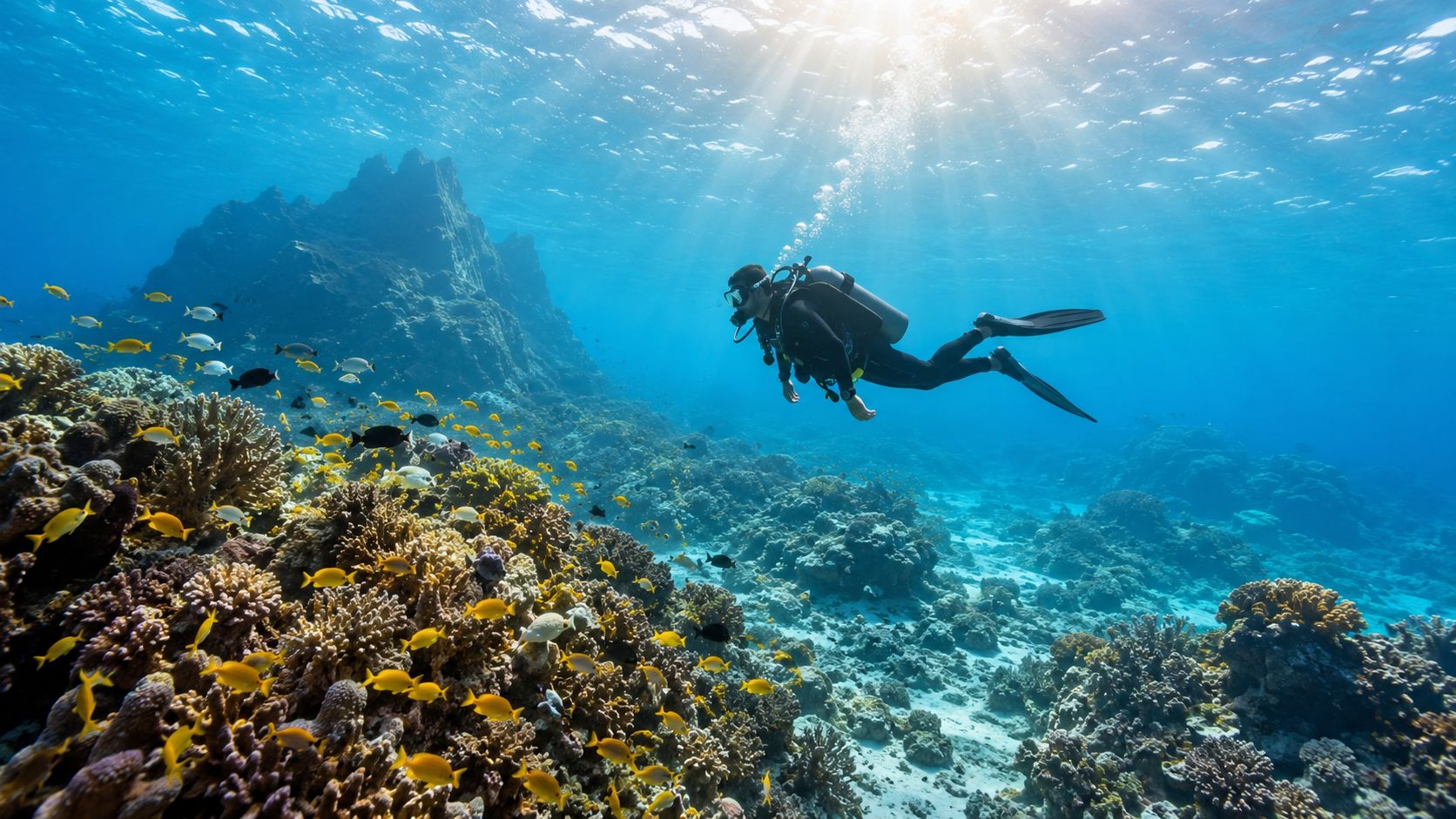
That's why so many people put diving in Hawaii on the bucket list. Hawaii hosts over 1.5 million scuba dives every year and has more than 215 licensed dive shops across the islands, which tells you two things at once. The demand is huge, and the dive infrastructure is mature enough to support beginners, repeat visitors, and experienced divers chasing specialty trips alike, as noted by this Hawaii diving overview from Kona Honu Divers.
What makes this trip different
Most travel guides list sites. That's useful, but it's not how divers choose a trip. Divers choose experiences.
You might want:
- A signature wildlife dive where the whole trip builds toward one unforgettable night in the water
- A relaxed reef charter with easy conditions and lots of bottom time
- A technical-feeling volcanic topography dive with arches, swim-throughs, and sharper situational awareness
- A shore-diving day that skips boat logistics entirely
- An advanced night dive that feels more like exploration than sightseeing
That's the key planning lens. If you already know that, you'll make better decisions than the average vacation diver.
Why planning matters here
Hawaii doesn't have a traditional off-season for diving in the way colder destinations do. Conditions change by island, coast, and swell, but divers can get in year-round. Water temperatures stay comfortable, and local operators run everything from easy morning charters to specialty night dives.
Practical rule: Pick your trip around the kind of dive you want most, then choose the island and operator that support that experience.
For divers focused on the Big Island, Kona dive planning resources are a useful starting point because they reflect what visitors usually need first. Site style, boat access, night-dive options, and realistic logistics.
Why Hawaii is a Diver's Paradise
The main reason diving in Hawaii feels different is simple. The islands were built by volcanoes, and the underwater terrain never lets you forget it. Instead of long stretches of soft-looking reef, you get lava shelves, old flow lines, arches, caverns, fingers of rock, and abrupt changes in contour that affect how a dive feels from the first descent.
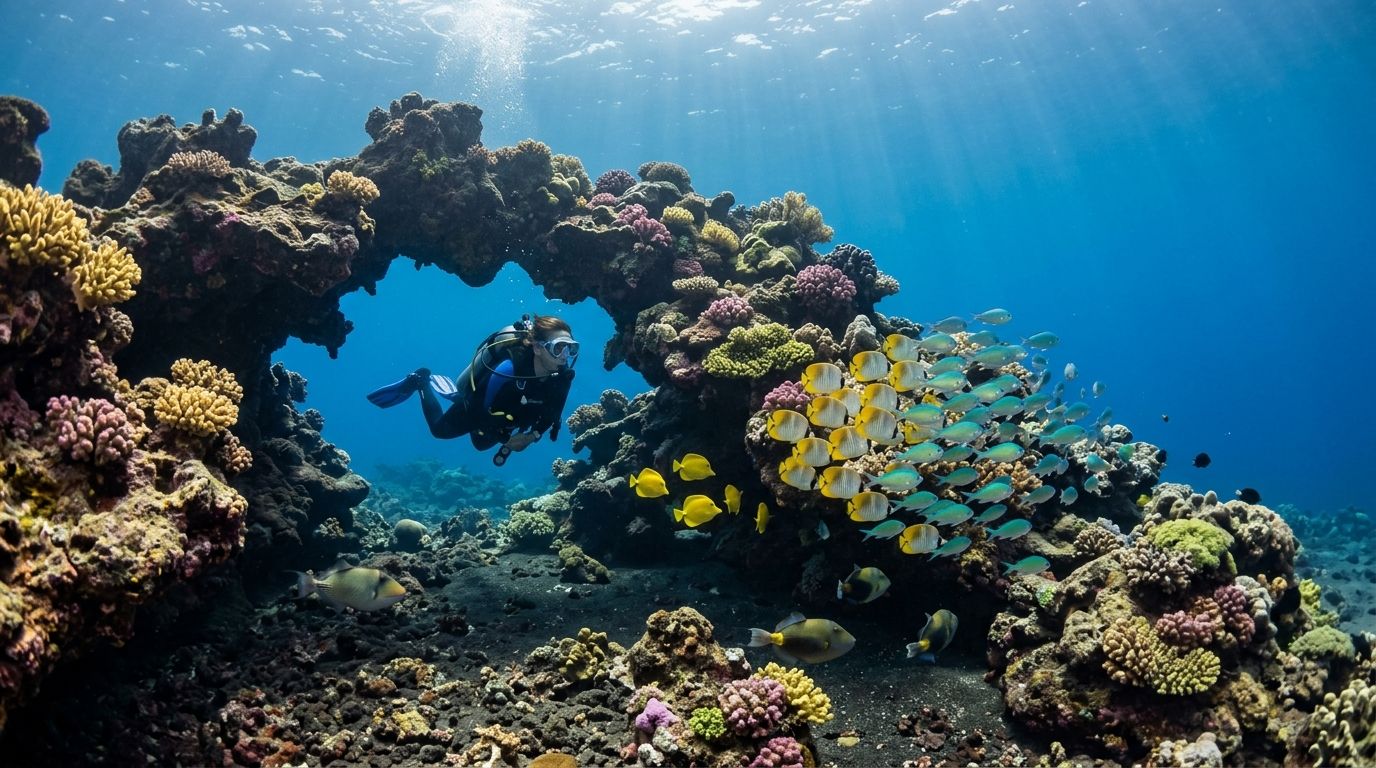
On the leeward Kona coast, visibility is a major part of that appeal. Median visibility reaches 100 to 150 feet during peak summer months, and that's described as about 40% clearer than typical Caribbean or Florida dive sites in this Kona visibility breakdown. That kind of clarity changes the whole dive. You can read the site faster, hold cleaner buddy awareness, and enjoy the volcanic structure without feeling boxed in.
Why Kona usually dives so clean
Kona sits in a protected position that often gives divers calmer, clearer water than more exposed coastlines. That matters more in Hawaii than first-time visitors expect. Good visibility isn't only about pretty photos. It affects navigation, gas management confidence, and how easy it is to settle newer divers into the environment.
Here's what clear Kona water does in practice:
| Dive factor | What it changes underwater |
|---|---|
| Navigation | You can spot lava formations, depth changes, and route lines earlier |
| Wildlife viewing | Turtles, reef fish, and resting sharks are easier to see without crowding them |
| Stress level | Newer divers usually calm down faster when they can see the site unfold ahead of them |
| Photography | Natural light holds up better on shallow reef structure |
The terrain shapes the dive
Volcanic sites reward control. If your buoyancy is sloppy, lava topography exposes it fast. That's not a bad thing. It's part of what makes Hawaii memorable.
A few trade-offs matter:
- Dark bottom absorbs light faster, so some sites feel deeper than your computer says
- Swim-throughs and archways are fun when approached conservatively, not rushed
- Shore entries over lava rock can be awkward even when the underwater portion is excellent
The best Hawaiian dives aren't always the easiest dives. They're the dives where conditions, skill level, and site choice line up.
Marine life you won't confuse with anywhere else
Hawaii also stands out because the marine life feels locally specific. Even experienced tropical divers notice that the reef community doesn't look like a copy of the Caribbean or Southeast Asia. Some species are endemic, and even the familiar animals interact with the lava formations in ways that feel distinct. Turtles use ledges differently. Fish stack around rock formations differently. Night dives feel different because the reef itself looks different.
That combination of volcanic geology, clear water, and unique marine life is why Hawaii keeps divers coming back instead of checking it off once.
Experience Hawaii's Two Most Iconic Dives
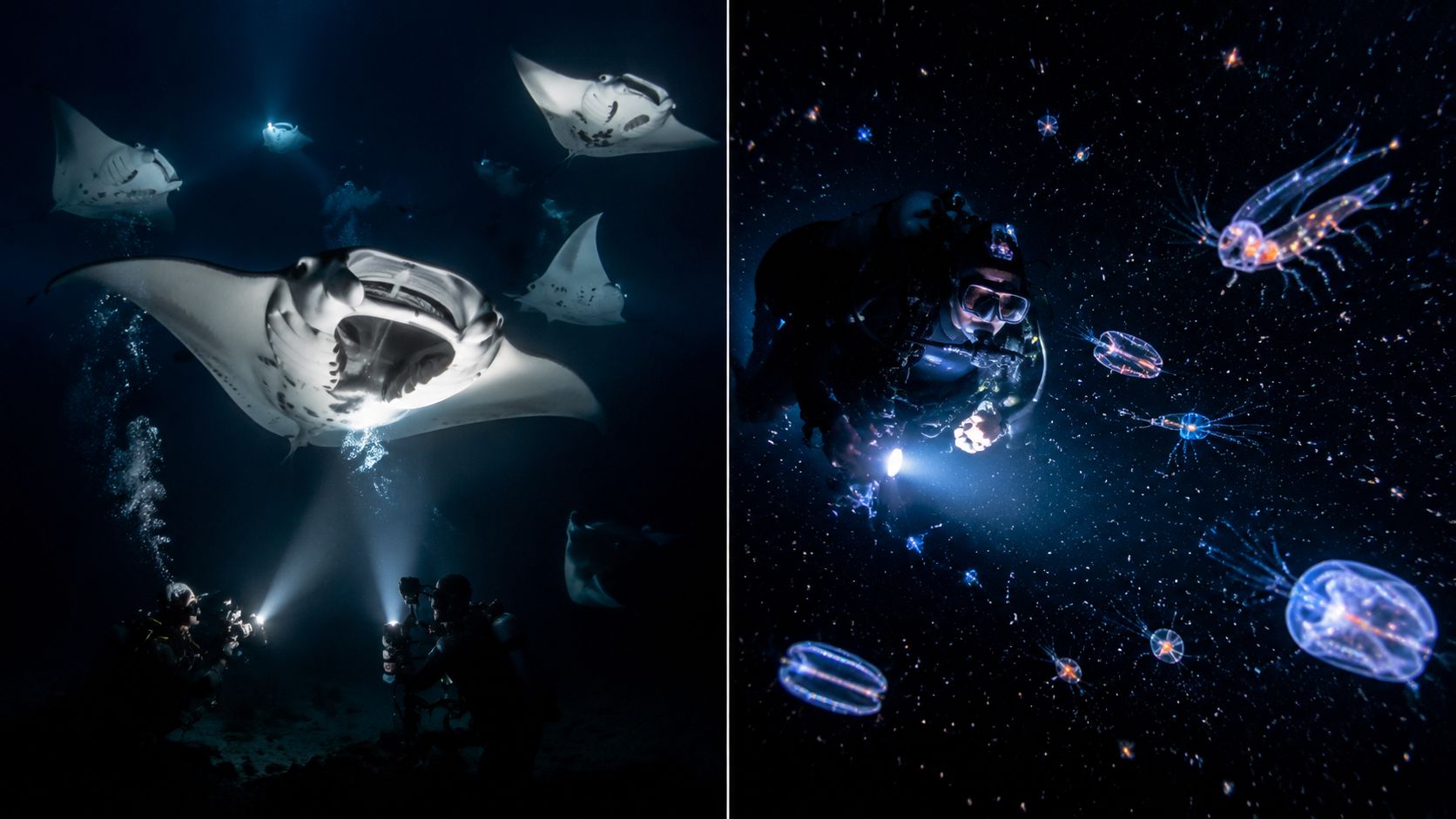
If you only remember two dives from Kona years from now, they'll probably be the manta dive and the blackwater. They're completely different from each other, and that's exactly why they matter. One is graceful, grounded, and communal. The other is strange, silent, and psychologically bigger than the depth profile suggests.
The manta ray night dive
The manta ray night dive deserves its reputation. You're not chasing animals through blue water. You settle into position, control your lights and body placement, and let the encounter come to you. When it works, it feels less like a wildlife hunt and more like sitting front row at a natural performance.
For this dive, Garden Eel Cove is the superior choice. The protected location usually makes the experience calmer and more comfortable, especially for divers who don't want surge and current turning a signature night into a task-loading exercise. It also gives you a better viewing area and better surrounding reef. If the manta dive is the reason you're flying to Kona, site choice matters.
You can look at manta ray night swim details in Kona if you want to understand how the experience is structured before booking. For divers ready to reserve an actual trip, the manta dive tour page is the right place to compare availability.
The blackwater dive
Blackwater isn't a reef dive at night. It's a suspended open-ocean dive over deep water in darkness, focused on the pelagic creatures that rise toward the surface after sunset. That means larval life, gelatinous drifters, translucent hunters, and animals that don't look real even when they're right in your light beam.
Advanced divers either fall in love with Hawaii or decide they've met their current comfort limit.
Blackwater works best for divers who already have:
- Steady buoyancy without constant visual references
- Good trim discipline in open water
- Calm focus at night
- Enough experience not to let novelty override basic dive procedure
If that sounds like your kind of dive, the Blackwater night dive tour is the one to study.
Check AvailabilitySome dives impress you because they're beautiful. Blackwater stays with you because it changes your sense of what the ocean is.
Which one should you choose first
If you can only do one, most visitors should choose the manta dive. It's more broadly accessible, easier to appreciate without specialty experience, and one of the rare famous dives that often lives up to the hype.
If you have time for both, do the manta dive first and blackwater later in the trip. That order lets you settle into local conditions before taking on a more mentally demanding profile.
A Diver's Guide to the Hawaiian Islands
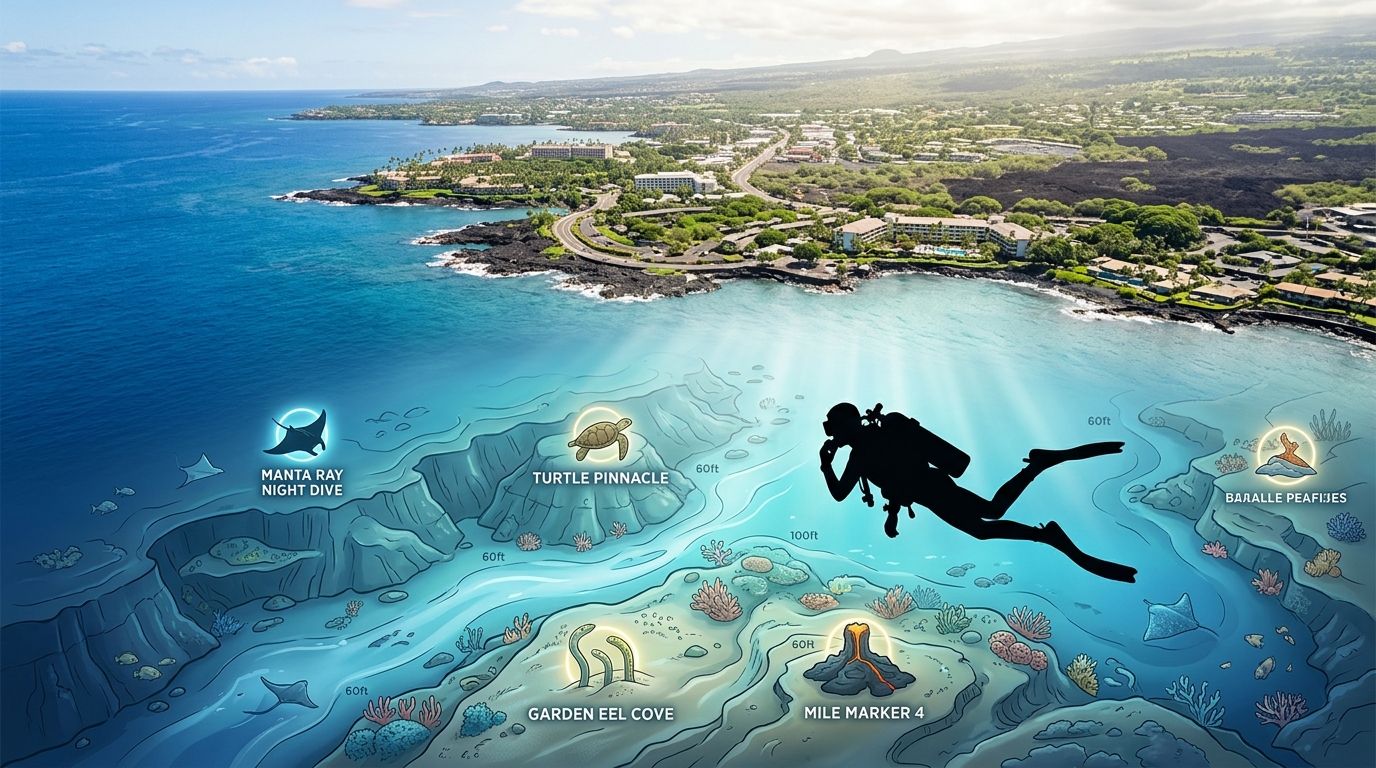
Different islands give you different underwater personalities. If your main goal is diving in Hawaii rather than splitting time evenly between beaches, shopping, and sightseeing, the Big Island usually gives you the strongest all-around scuba trip. It combines reliable boat diving, famous specialty dives, accessible shore options, and volcanic structure that feels distinctly Hawaiian.
For a broader island-by-island comparison, this guide to choosing the best Hawaiian island for scuba diving helps frame the trade-offs clearly.
Big Island with Kona first
Kona is the center of gravity for most divers because it offers the widest mix of easy reef diving, signature night dives, and advanced options without making you compromise on quality. The Kohala side also deserves attention, especially if you're staying farther north and want cleaner logistics.
A few practical standouts:
- Two Step gives experienced shore divers one of the most talked-about entries on the island. When conditions are calm, it's straightforward. When they aren't, the lava entry can humble people fast.
- Crescent Beach and nearby reef zones can be enjoyable for divers who want a lower-drama day with good fish life and easier profiles.
- Captain Cook area waters are often better known to casual visitors for snorkeling, but they matter to divers too because the visibility and reef quality can be excellent.
For guided scuba trips, Kona diving tours on the Big Island cover the main local formats. If you want longer-range or more demanding profiles, advanced long-range diving options are worth a look.
Snorkeling crossover that matters to divers
Many mixed groups include both divers and non-divers. That's where the Big Island gets even easier to plan.
If your group wants a strong snorkel day near Captain Cook or Kealakekua Bay, these are the useful starting points:
That makes it easier to build a trip where divers get serious boat days and the rest of the group still gets a memorable ocean experience.
Maui and Oahu
Maui has broad appeal if you want to balance topside vacation time with a few classic water days. Molokini gets the attention, and for good reason. It's a recognizable choice that works well for travelers who don't want the entire trip centered on scuba.
Oahu is more mixed from a diver's perspective. Wrecks are the obvious draw, and that can make the island especially attractive to divers who prefer structure with a stronger historical or technical feel. If your group also wants snorkeling on Oahu, Living Ocean Tours is the one I'd point them to first at Living Ocean Tours.
How I'd choose by trip style
| If your priority is | Best fit |
|---|---|
| Signature scuba experiences | Big Island, especially Kona |
| One or two dives mixed into a general vacation | Maui |
| Wreck-focused interest | Oahu |
| Mixed diver and snorkeler group | Big Island or Oahu, depending on itinerary |
The biggest mistake is assuming every island offers the same underwater day. They don't. If scuba is the trip's main event, Kona usually gives you the fewest compromises.
Choosing Your Guide to the Deep
A Hawaii dive trip can look perfect on paper and still disappoint if you book the wrong operator. The boat, briefing quality, guide style, diver-to-guide ratio, and willingness to match site choice to actual skill level matter more than flashy marketing photos.
The right operator for you depends on what kind of diver you are.
What to look for first
Use this checklist before you book:
- Briefing quality: Good operators explain entry, exit, site hazards, and what the dive should feel like, not just maximum depth.
- Boat fit: Fast boats are nice, but usable ladders, shade, and a clean setup matter more after the second dive.
- Guide philosophy: Some crews suit independent, experienced divers. Others are better for newer divers who want more in-water support.
- Specialty depth: Night dives, manta trips, and advanced charters are better with crews that run them regularly.
One operator many divers consider on the Big Island is Kona Honu Divers. They run day charters, manta trips, and blackwater dives, which makes them relevant if you want one shop that covers several very different experiences.
Other names divers often compare
If you're building a balanced shortlist, Jack's Diving Locker and Big Island Divers are also commonly considered. They appeal to slightly different guests, so reading recent reviews with your own priorities in mind is smarter than chasing a generic ranking.
Match the operator to the dive
Don't choose a manta operator the same way you'd choose a training-focused morning charter. Don't choose a blackwater boat the same way you'd choose a casual reef dive for a rusty Open Water diver. The operator should fit the dive, and the dive should fit your current comfort level.
Check AvailabilityA reputable operator won't just sell you a seat. They'll tell you whether the trip matches your skills.
Dive Safety and Preventing Seasickness
Hawaii rewards divers who take safety seriously. That starts with choosing supervised scuba over casual improvisation. Scuba in Hawaii has been remarkably safe, with 28 scuba fatalities in Hawaii over a decade, while snorkeling incidents have been far higher, with research pointing to immersion pulmonary oedema (IPO) as a likely factor in many tourist drownings, according to this report on Hawaiian snorkeling deaths and scuba safety.
That distinction matters because visitors often blur the line between guided scuba, snorkeling, and breath-hold activities. They're not the same. Professional scuba operations build the whole day around briefings, equipment checks, buddy procedures, and controlled profiles.
Seasickness prevention that actually works
If you're prone to motion sickness, prevention matters more than treatment. The most useful approach is to start before the boat leaves.
The core options:
- Night-before dosing: DAN advises taking antiemetics like meclizine or dimenhydrinate the night before because pre-dose administration works better than waiting until morning. If you use a patch, scopolamine should be applied at least four hours before boarding, based on DAN guidance on seasickness prevention and treatment.
- Stay proactive: Once you're already nauseated, you're behind.
- Get in the water when appropriate: If you feel queasy and it's safe to enter, being underwater often helps because the conflicting visual and motion signals settle down. If you get sick underwater, keep your regulator in your mouth, as explained in this practical scuba seasickness guide.
If you want to pack solutions before the trip, these are the common options:
For a dive-specific packing and medication rundown, this sea sickness guide for Kona divers is a useful companion read.
The safety habits that matter most
A few habits make a big difference:
- Be honest about your recent diving. Hawaii isn't the place to pretend you're sharper than you are.
- Treat shore entries carefully. Lava rock and surge can turn an easy-looking entry into the hardest part of the day.
- Protect the reef. Don't touch coral, don't grab marine life, and don't brace yourself on the bottom unless there's no alternative and you can avoid damaging anything.
- Separate freediving from scuba in your planning. Breath-hold risk is its own category and deserves its own respect.
Gear Training and The Best Time to Visit
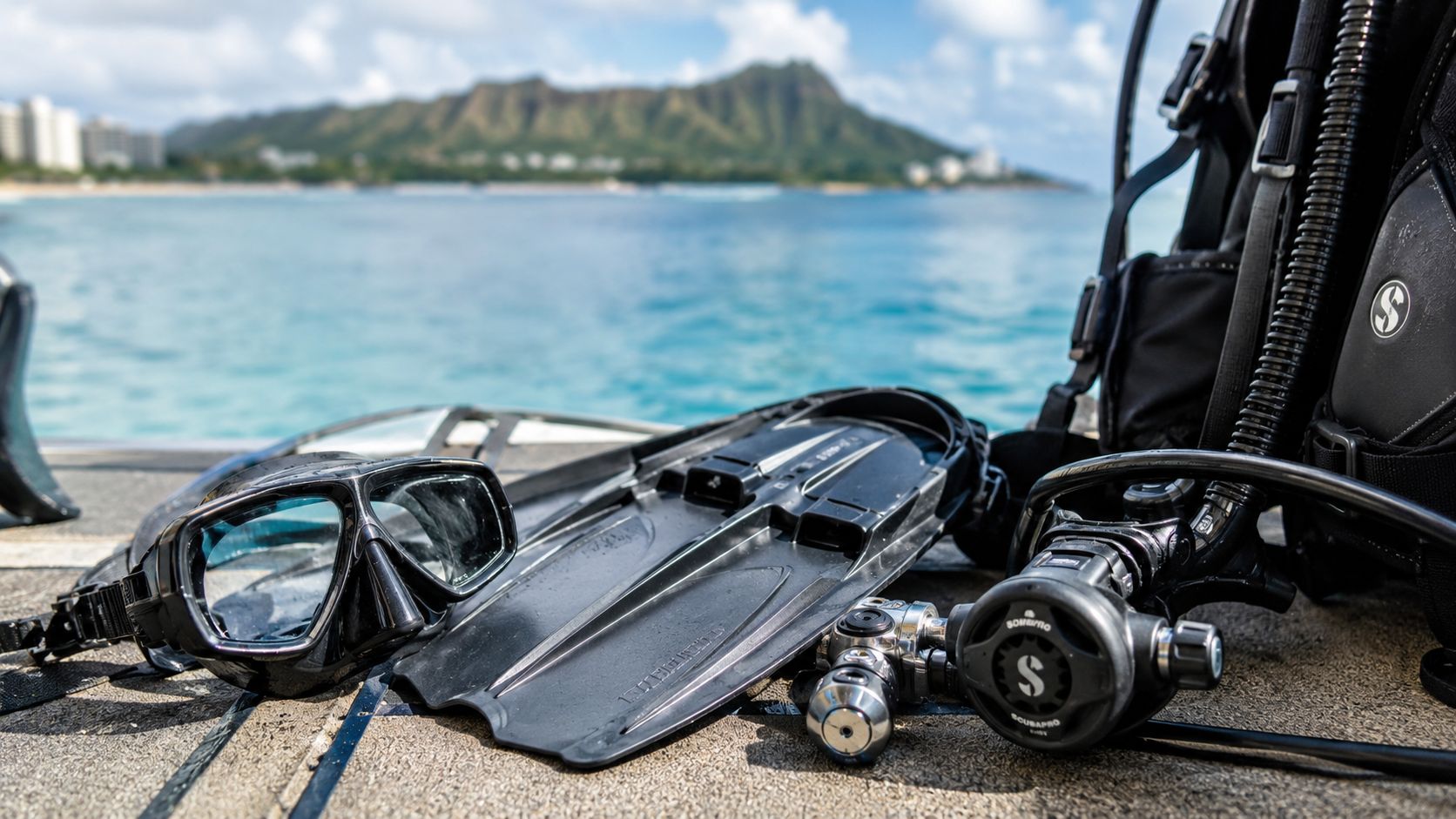
Certification and gear choices shape how much you enjoy diving in Hawaii. Plenty of daytime reef dives suit a certified Open Water diver with decent buoyancy and recent experience. Blackwater and some more advanced night or structure-heavy dives are better for divers with stronger control and more comfort in open water after dark.
What to pack and what to rent
Bring your personal items if you already know they fit well:
- Mask: A familiar mask prevents stupid problems
- Dive computer: Hawaii's repetitive boat diving is easier to manage with your own computer
- Exposure layer: If you know what keeps you comfortable, use it
- Certification card and logs: Digital is fine if your operator accepts it
Rent the bulky stuff if travel simplicity matters. Regulators, BCDs, tanks, and weights are easy to leave to the shop unless you're very particular about your setup.
Wetsuit thickness for Hawaii
Hawaii's average water temperature stays between 75 and 80°F year-round, which generally means a 2.5mm wetsuit in summer and a 3mm wetsuit in winter, according to this Hawaii scuba temperature and gear guide. That range works well because Hawaiian diving often involves volcanic structure, caverns, and swim-throughs where good buoyancy control matters.
A few practical notes:
- Divers who chill easily should lean warmer, especially on repeat boat days
- Night divers often want more exposure protection than they expected
- Thicker isn't always better if extra bulk messes with trim and weighting
When to come
There isn't a bad season for Hawaii scuba. There are only different priorities.
| Time of year | What it's good for |
|---|---|
| Summer and early fall | Often the clearest feeling conditions, especially on the Kona side |
| Winter | Great diving still exists, but air temps, swell exposure, and surface intervals can feel less forgiving |
| Any time | Warm-water diving compared with most mainland destinations |
If you're building the whole trip around a signature Kona experience, I'd prioritize operator quality and a flexible schedule over obsessing about month-to-month perfection.
Frequently Asked Questions About Diving in Hawaii
Do I need to be certified for most boat dives
Yes. For standard scuba charters, you should expect to need an Open Water certification or equivalent. Some operators also offer introductory experiences for non-certified guests, but those are different from joining a normal certified charter.
Is Hawaii good for beginner divers
Yes, if beginners pick the right format. A calm daytime boat dive on the Kona coast is a much better start than an ambitious shore dive over lava or a specialty night trip booked for bragging rights.
Will I see sharks
You might. In Hawaii, that usually means a calm wildlife sighting rather than a problem. Divers often see whitetip reef sharks resting on sandy areas or under ledges. Good operators brief this properly, and experienced local crews treat it as a normal part of the ecosystem.
Is shore diving worth it on the Big Island
It can be, but visitors often get overconfident here. Two Step is the usual first recommendation because the underwater portion can be excellent and the entry is very manageable in calm conditions. The catch is in that last phrase. Calm conditions. If the surge is wrong, skip it.
Is the manta dive worth planning a whole trip around
For many divers, yes. It's one of the rare signature dives that appeals to newer divers, experienced divers, and non-diving family members in different formats. If you've never done it, it's a legitimate centerpiece experience.
Should I choose Maui, Oahu, or the Big Island
If scuba is the main reason for the trip, choose the Big Island first. Maui works well for a mixed vacation. Oahu is attractive if wrecks matter and your group wants more city access. The right answer depends on whether you're planning around a dive trip or adding diving to a broader Hawaii vacation.
If you want a trip built around clear logistics, guided scuba, and Kona's signature experiences, Kona Honu Divers is a solid place to start comparing charters, night dives, and training options before you lock in dates.