
Imagine slipping into warm, crystal-clear water where you can see for what feels like miles. That’s just a normal day of diving in Hawaii, especially along the sun-drenched Kona coast of the Big Island. This isn’t just another tropical getaway; it's an invitation to explore a breathtaking underwater world sculpted by volcanic fire.
Why Hawaii Is a World-Class Diving Destination
What makes Hawaii so different from any other dive spot on the planet? It all comes down to its fiery birth. The islands' volcanic origins have created an underwater playground of dramatic lava tubes, ancient arches, and massive pinnacles that soar up from the deep. This unique landscape is not only a diver's dream but also home to an incredible variety of marine life.
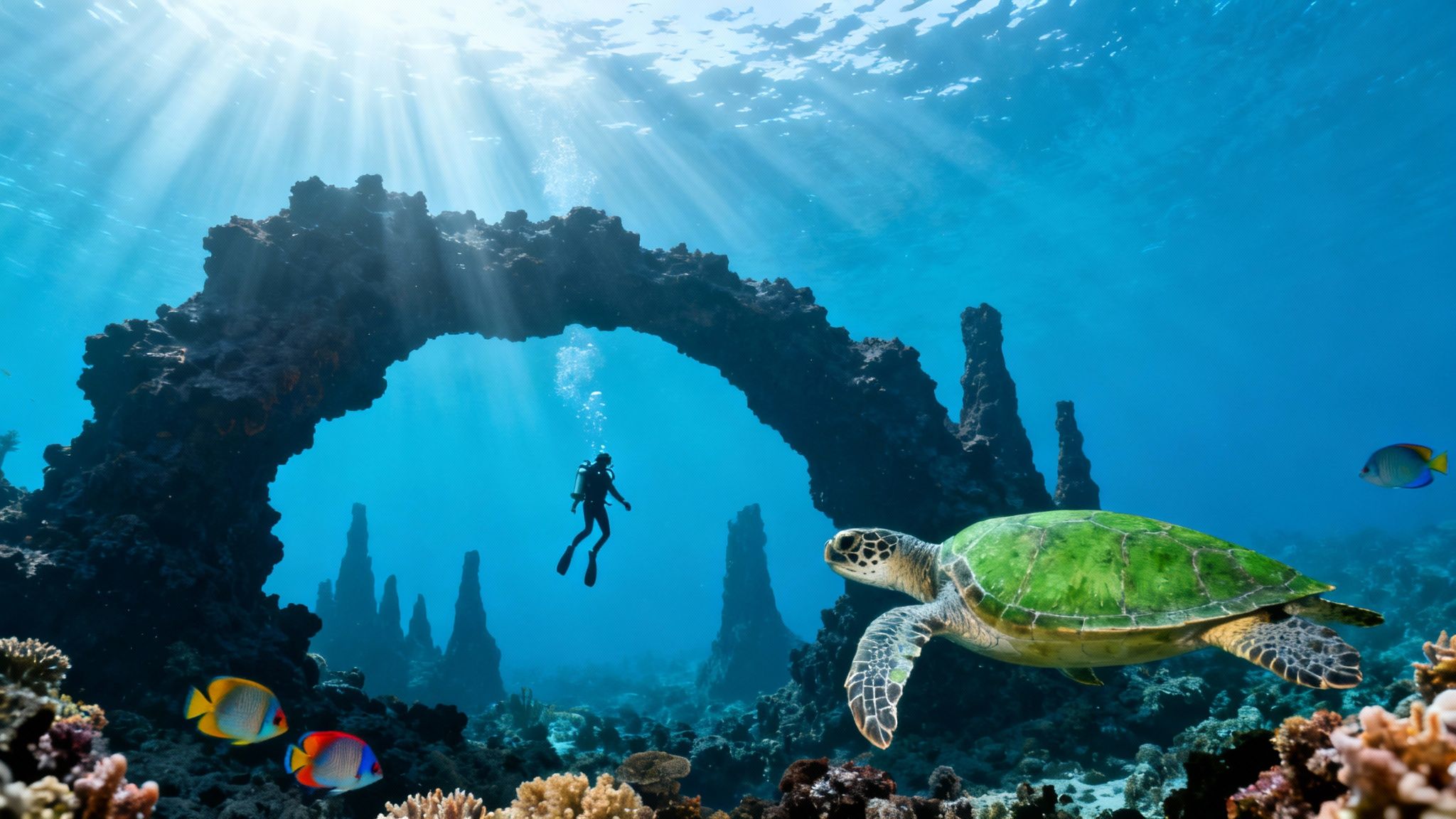
Because the Hawaiian islands are so isolated in the middle of the Pacific, they've become a hotspot for endemic species—creatures you literally can't find anywhere else. You’ll be swimming alongside majestic green sea turtles (we call them honu), spotting cleverly camouflaged octopuses, and finding yourself in the middle of swirling schools of colorful reef fish.
The Kona coast gets an extra dose of magic. It’s naturally sheltered from the trade winds, which means the water is often calm and clear, making for perfect diving conditions almost any day of the year. We dive deep into what makes the conditions here so special in our guide: https://konahonudivers.com/visibility-in-big-island-scuba-diving/.
The Big Island: Hawaii's Diving Epicenter
While every island has its own charm, ask any seasoned diver and they'll tell you the Big Island is the real heart of Hawaiian diving. The reefs here are extensive and teeming with life. It's this sheer density of marine animals that sets Kona apart, cemented by bucket-list experiences like the world-famous Manta Ray Night Dive—a truly unforgettable encounter that people fly in from all over the world to see.
To put it into perspective, here's a quick snapshot of what to expect from the diving here.
Hawaii Diving at a Glance
| Metric | Details |
|---|---|
| Average Water Temp | 75-80°F (24-27°C), comfortable year-round |
| Average Visibility | 75-100+ feet (23-30+ m), especially on the Kona coast |
| Peak Dive Season | Year-round, with calmer seas generally in the summer |
| Marine Life Highlights | Manta rays, green sea turtles, spinner dolphins, reef sharks, and over 20% endemic fish species |
| Topography | Lava tubes, arches, pinnacles, caves, and vibrant coral reefs |
This table shows why Hawaii is consistently ranked among the world's best dive destinations, offering incredible conditions and unique encounters no matter when you visit. The numbers don't lie. Hawaii is a premier global destination, hosting over 1.5 million dives every year. The dive community here works hard to manage this popularity, ensuring we protect the very ecosystems that make this place so special.
Of course, the magic of Hawaii extends beyond the water. To get the most out of your trip, check out this guide to the best places to go in Hawaii for other incredible adventures.
Your Expert Guides at Kona Honu Divers
Knowing where to go is one thing; having the right people to take you there is another. Exploring this underwater paradise safely and enjoyably requires deep local knowledge, and that's where we come in. At Kona Honu Divers, our entire team is passionate about sharing the best of the Big Island with you.
We've built our reputation on providing safe, unforgettable, and truly awe-inspiring dives, and we let our customer reviews speak for themselves. We're not just a boat; we're your guides to the heart of Kona's underwater world.
Kona’s Unforgettable Underwater Landscapes
When people talk about diving in Hawaii, the conversation almost always turns to the Kona coast on the Big Island. There’s a good reason for that—it’s truly in a league of its own. The underwater world here is a direct result of its volcanic past, which has created a dramatic and wild playground for divers. We’re not just talking about pretty coral reefs; this is a landscape of ancient lava flows that have sculpted spectacular arches, mysterious caverns, and sheer walls that plunge into the deep blue.
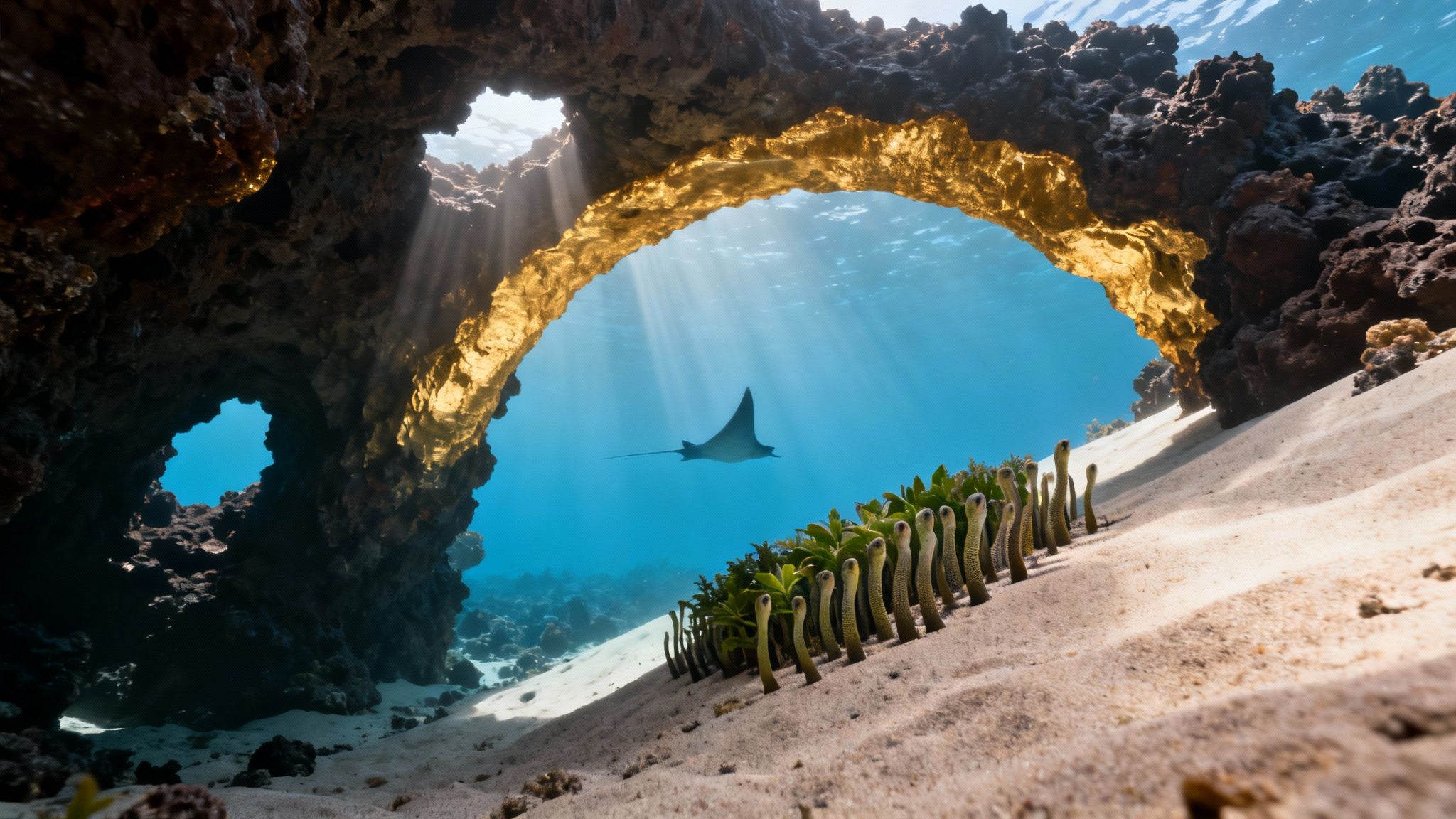
This unique geology means that no two dive sites are the same. One minute, you could be gliding through a massive lava tube with sunlight streaming through cracks in the ceiling, and the next, you're hovering over a vast, sandy plain watching garden eels pop in and out of their burrows. It’s this incredible variety that keeps both brand-new divers and salty veterans coming back for more.
Lava Tubes and Volcanic Cathedrals
Some of Kona’s most famous dives are defined by these incredible volcanic features. These aren't just piles of rocks; they're natural sculptures that turn a regular dive into a true three-dimensional experience.
- Catacombs: Just like its name suggests, this site is a maze of interconnected lava tubes and archways. Swimming through them feels like you're exploring an ancient, submerged cathedral, and the way the light filters through the openings is nothing short of magical.
- Golden Arches: This spot is home to a massive, picture-perfect archway that’s almost always filled with swirling schools of fish. It's an underwater photographer's dream and a perfect showcase of how volcanic forces have shaped the coast.
These structures are more than just a pretty backdrop; they create vital habitats for all sorts of marine life. You’ll find moray eels peeking out from dark crevices and shy reef fish seeking shelter within the protective lava rock. You can learn more about these spots and others in our guide to the most beautiful Kona diving sites.
The World-Famous Manta Ray Night Dive
You can't talk about diving in Hawaii without gushing about the legendary Manta Ray Night Dive. While a couple of locations offer this experience, one site stands head and shoulders above the rest: Garden Eel Cove.
Its protected location, healthier reef, and better viewing area make for an unbeatable experience. The cove is tucked away from open ocean swells, which means calmer conditions and clearer water. The sandy "campfire" where divers gather is perfectly positioned for respectful, up-close encounters with these gentle giants.
Here at Kona Honu Divers, we only take our guests to Garden Eel Cove for this dive. We’re convinced it offers the safest, most comfortable, and most breathtaking manta experience possible. The vibrant reef surrounding the viewing area is just the cherry on top. If you're looking for more great spots, many of which double as fantastic dive sites, check out this guide to the Top 7 Snorkeling Kona Hawaii Spots.
Adventures for the Experienced Diver
For those with a few more dives in their logbook, Kona serves up some serious thrills that go way beyond a simple reef tour. The underwater terrain features deep pinnacles that jut up from the seafloor, acting like magnets for larger pelagic species. These advanced dive tour sites are your best bet for spotting big schools of jacks, majestic eagle rays, and maybe even a shark or two cruising by.
Dives like these demand sharp buoyancy control and a good dose of adventure, but the payoff is huge. There’s a different kind of reward that comes from navigating complex structures or exploring the deep.
And then there's the Kona Blackwater Dive. This is an experience unlike any other. It’s not a reef dive—instead, you're drifting in the deep, dark open ocean at night, suspended over thousands of feet of water. You get a front-row seat to the largest migration on Earth, as bizarre and often bioluminescent creatures rise from the abyss to feed. Honestly, it feels more like a spacewalk than a scuba dive, and it’s something every serious diver should experience at least once. Kona Honu Divers offers a renowned Blackwater Dive tour for those ready for the adventure.
Hawaii’s Most Iconic Dives: What Not to Miss
While Kona offers an incredible variety of dive sites, a few experiences have become legendary on the world stage. These aren’t just dives; they’re the kind of awe-inspiring encounters that define what makes **diving in Hawaii** so unforgettable. They represent the absolute best of the adventure, mystery, and raw natural beauty the Big Island has to offer.
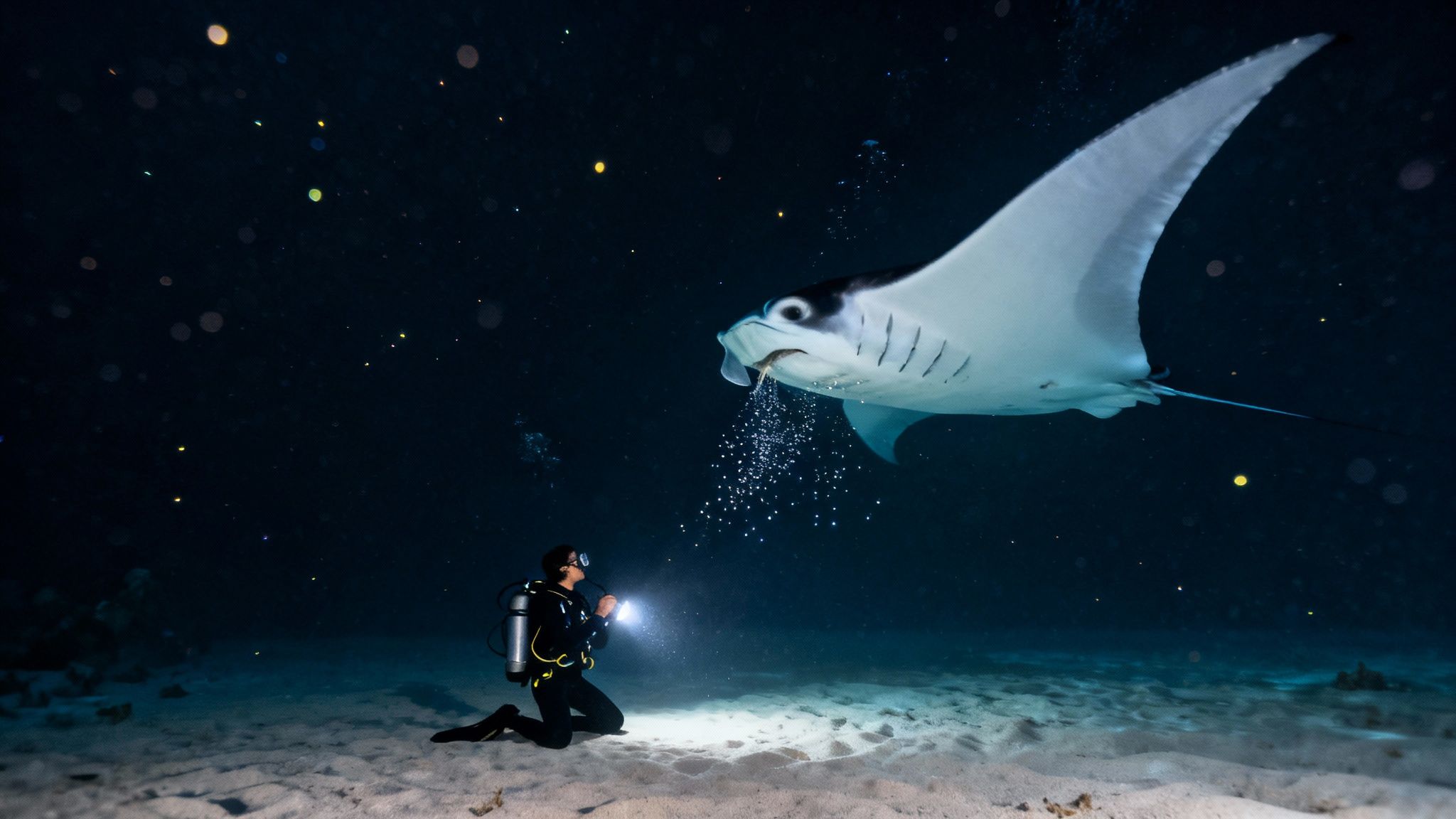
At the very top of that list is the world-famous Manta Ray Night Dive. Honestly, it feels less like a scuba dive and more like an underwater ballet choreographed by nature itself. The concept is brilliantly simple: we set up powerful, eco-friendly lights on the ocean floor, which attract huge blooms of plankton. In turn, the plankton acts as a dinner bell, drawing in graceful manta rays—some with wingspans over 15 feet—for their nightly feast.
As a diver, your job is easy. You just settle onto the sandy bottom, get comfortable, and watch the show. These gentle giants swoop, glide, and barrel-roll inches above your head, their huge mouths filtering the water. It’s a peaceful, mesmerizing, and totally non-intrusive way to witness one of the ocean's most majestic animals. To get the full picture, you can read our complete guide to the manta ray night dive in Hawaii.
Why Garden Eel Cove Is the Premier Manta Site
When it comes to the manta dive, location is everything. While there are other spots, we at Kona Honu Divers exclusively take our divers to **Garden Eel Cove**, and we do it for some very good reasons. The cove is naturally sheltered from the open ocean swells, which means calmer water, clearer visibility, and a much more comfortable and predictable experience for everyone.
The viewing setup at Garden Eel Cove is simply better. We create a "campfire" of light in a spot that gives you the most incredible, up-close views without disturbing the mantas or harming the reef. On top of that, the surrounding coral ecosystem is healthier and more vibrant, adding to the magic of the whole experience.
By choosing this specific spot, we make sure our divers have the safest and most spectacular manta ray encounter possible. It’s a commitment to quality that runs through everything we do.
Journey into the Abyss on the Kona Blackwater Dive
If you’re a diver looking for something truly different—an experience that feels like pure exploration—the Kona Blackwater Dive is an absolute must. This is not a reef dive. Far from it. This is a journey into the deep open ocean at night, where you drift tethered to the boat over thousands of feet of inky black water.
You'll be witnessing the largest migration on Earth: the nightly movement of deep-sea creatures toward the surface to feed. The animals you'll see are bizarre, often glowing with their own light, and look like something from another world. Think tiny larval fish, strange translucent squid, and jellies pulsing with bioluminescence. Many divers say it feels more like a spacewalk than a scuba dive.
Advanced Adventures: Lava Tubes and Deep Pinnacles
Beyond the iconic night dives, Kona’s volcanic underwater landscape offers a playground for more experienced divers. Exploring the island’s incredible underwater architecture is a thrill that takes skill, precision, and a real sense of adventure.
An advanced dive charter is your ticket to these more challenging and rewarding sites.
- Navigating Lava Tubes: Imagine gliding through ancient volcanic tunnels as shafts of sunlight pierce the darkness from openings in the ceiling. These dives are a true test of buoyancy control and situational awareness.
- Exploring Deep Pinnacles: Rising from the abyss, these offshore pinnacles serve as cleaning stations and gathering spots for larger pelagic species. Deeper dives here dramatically increase your chances of spotting eagle rays, huge schools of jacks, and maybe even an oceanic whitetip shark.
These advanced dives show you a completely different side of Hawaiian diving, one that highlights the raw power and rugged beauty of the island's volcanic origins. They're the perfect next step for divers ready to challenge themselves and see the wilder side of Kona.
How to Plan Your Perfect Hawaii Dive Trip
Getting your dive trip dialed in before you leave is half the fun, and a little bit of planning makes a world of difference. When you sort out the logistics ahead of time, you can spend less time stressing and more time soaking in the incredible underwater world waiting for you in Hawaii.
So, when is the best time to come? The honest answer is: anytime. That's one of the best parts about diving in Hawaii. The water stays in that perfect 75-80°F (24-27°C) range all year long, and the Kona coast is naturally sheltered, which means the seas are almost always calm and inviting.
But if you want a truly unforgettable experience, plan your trip for the winter months. From December through March, you can often hear the haunting songs of migrating humpback whales echoing through the water on your dives. It’s a powerful, humbling sound that adds a whole other layer of magic to the adventure.
Shore Diving vs. Boat Diving
While you can find some decent shore diving around the islands, the truly spectacular, can't-miss sites along the Kona coast are almost all reached by boat. Shore entries here can be a real challenge, often involving a tricky scramble over sharp volcanic rock. More importantly, the most vibrant and untouched reefs are just too far out to reach from the beach.
Think of it this way: a boat dive drops you right on the action. It's not just more convenient; it’s safer and opens up a whole different world of possibilities. You get access to deep pinnacles, pristine coral gardens, and remote spots that shore divers simply can't get to.
When you join a guided trip with an experienced crew like ours at Kona Honu Divers, we handle everything. We know where the conditions are best on any given day. You just get to relax, enjoy the ride, and prepare for an amazing dive. Our diving tours are specifically designed to show you the absolute best the Big Island has to offer.
Certification and Training
Your current certification level dictates what kind of dives you can do, so it’s worth thinking about before you book. And if you’re not certified yet? Honestly, I can’t think of a better place to learn.
- Get Certified Before You Arrive: This is a popular choice for people who want to hit the water as soon as they land. You can do all the classroom and pool work with your local dive shop, then come here to complete your four open-water checkout dives with us in Kona’s warm, clear ocean.
- Get Certified in Hawaii: If you've got the time, learning from start to finish here is an experience you'll never forget. We run a whole range of PADI courses, from your first Open Water certification all the way to advanced specialties, taught by our patient and professional instructors.
No matter which path you choose, getting your training with a top-rated operator is key to becoming a safe, confident diver. Diving is a huge draw for travelers, and as the US diving tourism market continues to grow, it's more important than ever to choose a reputable school.
What to Pack vs. What to Rent
Packing for a dive trip is a balancing act. Some people love the comfort of their own gear, while others would rather avoid the hassle (and the airline fees). Renting high-quality equipment can be a great way to go.
What to Consider Bringing:
- Your Mask and Dive Computer: A personal mask that fits your face perfectly is priceless—no one likes a leaky mask! And bringing your own computer means you’re already familiar with the display and how it works.
- Logbook and Cert Cards: The essentials. Don't leave home without them.
- The Obvious Stuff: Swimsuit, a good hat, and reef-safe sunscreen are non-negotiable for protecting yourself from the Hawaiian sun.
What to Consider Renting:
- BCD, Regulators, and Wetsuit: This is the heavy, bulky stuff. When you rent from a professional shop like Kona Honu Divers, you’re getting modern, well-maintained gear that's ideal for the local conditions.
- Fins: Unless you're attached to a specific pair, renting fins is an easy way to save a ton of space in your suitcase.
Using our rental gear means you can travel light and have peace of mind knowing everything is professionally serviced and ready to go.
Choosing the Right Dive Operator in Kona
Let’s be real—the dive operator you choose can make or break your entire trip. They’re more than just boat captains; they are your guides to the underwater world, your safety crew, and the key difference between a good dive and a truly unforgettable one. When you’re investing in a trip to experience the magic of **diving in Hawaii**, you want a team with a solid, proven reputation.
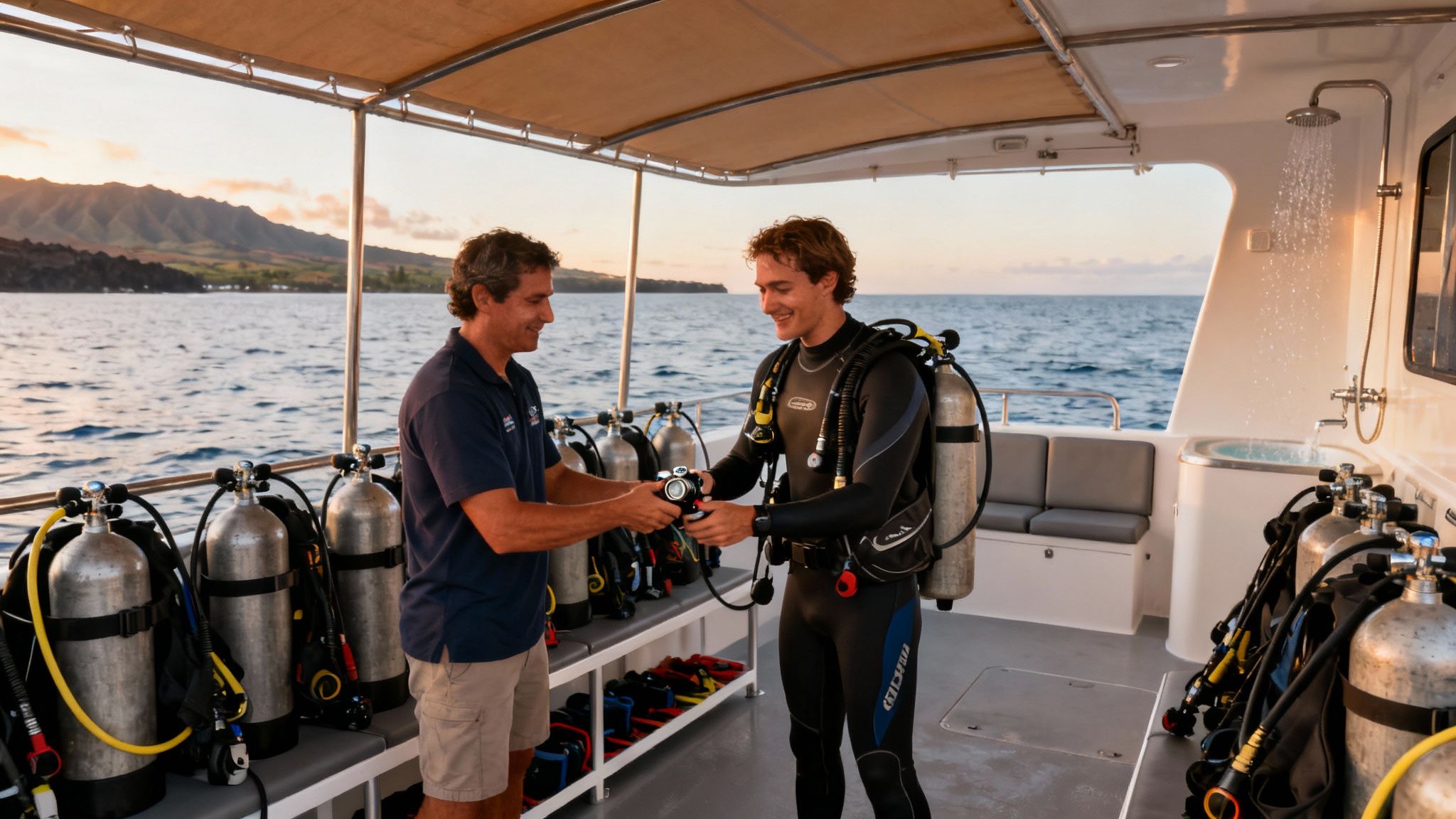
This is where a shop like Kona Honu Divers really shines. It’s not just about getting you from the dock to the dive site. It’s about creating an experience that’s safe, comfortable, and genuinely fun from the moment you step on the boat.
Experience and Safety You Can Feel
You can tell right away when a crew has a deep well of experience. The divemasters and captains at Kona Honu Divers aren’t just certified—they’re seasoned pros who know Kona’s waters like the back of their hand. They read the currents, anticipate the conditions, and know exactly where to go to give you the best possible dive on any given day.
That kind of deep local knowledge is your biggest asset for both safety and enjoyment. You’ll notice it in their detailed dive briefings, their watchful eyes in and out of the water, and their genuine passion for protecting the very reefs you've come to see.
Comfort That Actually Matters
After an incredible dive, the little things become big things. Kona Honu Divers gets this, and they’ve designed their fleet of custom boats with diver comfort as a top priority.
Think about this: you surface from a beautiful reef dive and are immediately greeted by a hot freshwater shower right there on the dive deck. Between dives, you're kicking back in a shaded lounge area, snacking on fresh fruit, and sharing stories about what you just saw. These aren't just minor perks; they’re what elevate the whole day.
Their boats have plenty of room to gear up without bumping elbows and secure spots for your dry bag, so you never feel cramped. Everything is meticulously maintained for a smooth, stable ride, letting you save your energy for what’s waiting below the surface.
This demand for quality dive experiences is surging globally. The scuba diving market was valued at USD 910.4 million in 2024 and is on track to hit USD 1,748.5 million by 2032. Hawaii is a major player in this boom, attracting eco-tourists who want top-tier operators for their underwater adventures. You can read more about the scuba diving tourism market trends to see how this growth is shaping dive destinations worldwide.
Value-Added Perks for Every Diver
On top of the great service and boats, Kona Honu Divers adds tangible benefits that just make your dives better. One of the best examples? They provide **free nitrox** for all certified nitrox divers.
- What is Nitrox? In simple terms, it's breathing gas with a little more oxygen and less nitrogen than regular air.
- Why is that a big deal? Using nitrox can safely extend your bottom time at certain depths. That means more time exploring the reef before you have to ascend.
- What's the bonus? Many divers—myself included—find they feel less tired after a day of diving with nitrox, which is a huge plus if you’re planning multiple days of diving.
It’s this kind of thinking—always focused on giving divers the best, safest, and most enjoyable day possible—that brings people back to Kona Honu Divers year after year. The glowing reviews say it all.
Your Hawaii Diving Questions, Answered
Planning a dive trip to a place like the Big Island always brings up a few questions. That's a good thing! It means you're thinking ahead. To get you started, we've put together answers to some of the things we get asked most often about diving in Hawaii.
What's the Best Time of Year to Dive in Kona?
Honestly, any time is a good time. One of the best things about diving the Kona coast is how protected it is, giving us calm, clear water pretty much year-round. The water temperature is always inviting, staying in that perfect 75-80°F (24-27°C) range.
That said, different seasons bring their own special kind of magic.
- Winter (December – March): This is humpback whale season. You might not see them underwater, but hearing their songs echo through the reef on a dive? That’s an experience that will stay with you forever.
- Summer (June – August): The ocean often goes completely flat. We're talking glassy, smooth boat rides and incredibly calm conditions that make every dive feel effortless.
- Spring & Fall (April – May, September – November): We call these "shoulder seasons." They offer the perfect mix of fantastic weather, great diving, and fewer people on the island.
No matter when you book your trip, the diving here is consistently world-class. It’s why people come back year after year.
Do I Need to Be an Advanced Diver?
Not at all. Kona is fantastic for divers of all stripes. While we definitely have some deeper, more technical sites for the adrenaline junkies, many of our most stunning reefs are in shallow water, usually between 30-60 feet (9-18 meters).
This makes it an ideal spot if you're newly certified, shaking off some rust, or just prefer a long, relaxing tour of a vibrant reef. A good crew, like the one at Kona Honu Divers, knows exactly how to pick sites that work for everyone on the boat. Beginners will be amazed by the sheer density of life on the shallower reefs, and there are always plenty of lava tubes and deep pinnacles to keep advanced divers exploring.
What Kind of Marine Life Will I See?
Hawaii is a special place. Its isolation in the middle of the Pacific means a huge number of our local marine species are endemic—they exist here and nowhere else on Earth. It's a truly unique ecosystem.
On any given day in Kona, you can pretty much count on seeing:
- Green Sea Turtles (Honu): They're everywhere! You'll see them cruising by, getting cleaned, or just napping on the reef.
- Moray Eels: From the cool-looking zebra moray to the big yellowmargin, there's always an eel peeking out from a crevice.
- Octopus (Tako): Spotting one of these masters of camouflage is always a highlight.
- Tons of Reef Fish: The reefs are buzzing with schools of butterflyfish, triggerfish, and parrotfish. The color is just incredible.
It's also super common to see spinner dolphins from the boat, and if you're lucky, you'll spot graceful spotted eagle rays or whitetip reef sharks resting on the sand. And of course, there's the main attraction: the magnificent manta rays that make our night dive famous around the world.
Is the Manta Ray Night Dive Safe for Beginners?
Absolutely, yes. The manta ray night dive is an incredibly well-run and safe experience that's perfect for new divers. The whole thing happens in a shallow, sandy spot, usually only 30-40 feet (9-12 meters) deep. You don't even have to swim around.
The dive is stationary. You simply settle onto the seafloor in a designated spot, relax, and watch the show as these gentle giants swoop and feed in the light beams right above your head. It’s calm, controlled, and utterly mesmerizing.
The divemasters give a fantastic briefing beforehand so you know exactly what to expect. They're with you in the water the entire time, making sure everyone is safe and comfortable. For many people, regardless of their experience level, it's the highlight of their entire trip.
Ready to see for yourself why diving in Hawaii is second to none? The expert team at Kona Honu Divers is waiting to show you an unforgettable underwater adventure, from our world-famous Manta Ray Night Dive to pristine coral reefs.