
Picture this: you’re descending into warm, impossibly clear turquoise water. Sunlight filters down, illuminating vibrant coral gardens and ancient volcanic arches that pulse with life. This isn't a dream—it's scuba diving on the Big Island of Hawaii, an experience that easily ranks among the best in the world. The Kona coast, in particular, is a world-class underwater paradise, celebrated for its calm, sheltered waters and stunning biodiversity.
Welcome to an Unforgettable Underwater World
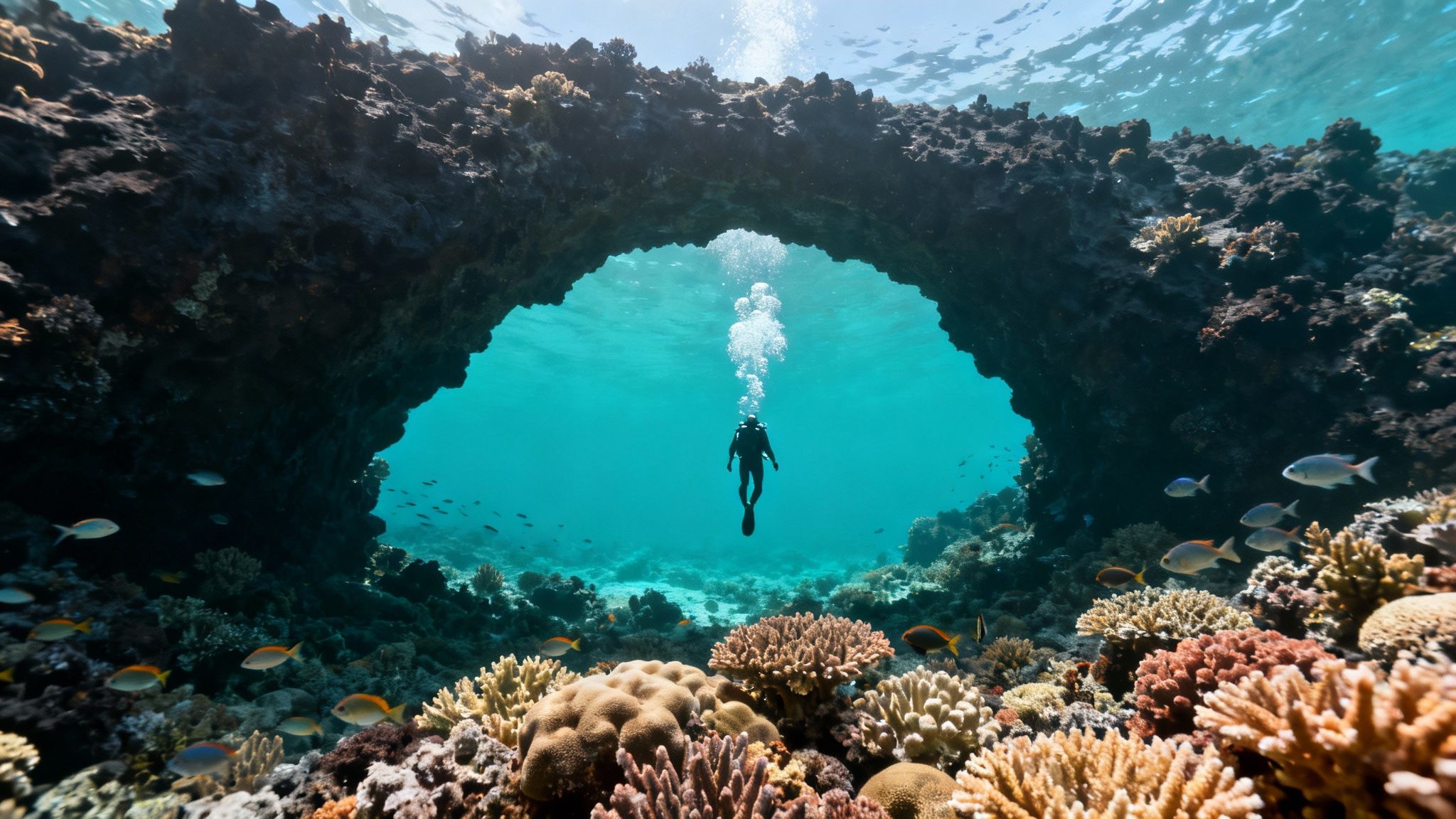
This guide is your personal ticket to Kona's aquatic realm. We'll take you through the island's most incredible underwater adventures, from the world-famous Manta Ray Night Dive to surreal explorations of lava tubes and the mysterious Blackwater Dive. You’re about to find out why Kona is the true heart of Hawaiian diving and how to plan an adventure you’ll be talking about for years.
And the Big Island’s reputation isn’t just local pride; it’s a globally recognized hub for scuba fanatics. What began with a few pioneering dive shops in the 1960s has exploded into a premier destination. Today, the Big Island is home to over 50 dive charters and draws more than 150,000 divers annually. That kind of growth speaks for itself, all thanks to the island's one-of-a-kind volcanic topography and incredible water clarity. You can learn more about the fascinating history of Big Island scuba diving on our site.
Why Kona is a Diver's Paradise
So, what's Kona's secret? It all comes down to geography. The colossal volcanoes of Mauna Loa and Hualalai act as a massive natural shield, protecting the western coast from the powerful trade winds. This creates an enormous "wind shadow," resulting in consistently calm and clear waters.
It’s not uncommon for visibility here to exceed 100 feet. This protection makes for fantastic year-round diving, offering a reliable destination no matter when you plan your trip. The result is a thriving underwater ecosystem where you can have breathtaking encounters with an unbelievable variety of marine life.
Kona's unique geology and sheltered position create the perfect underwater stage. It’s not just about what you see, but the incredible conditions you get to see it in.
Here at Kona Honu Divers, we’ve spent years getting to know every nook and cranny of these waters. Our entire focus is on giving you a front-row seat to the best the Big Island has to offer. We're dedicated to providing an experience that perfectly blends safety, comfort, and pure underwater magic.
We aren't just another dive charter; we are your expert guides to this aquatic world. Our mission is to share the very best of Hawaii's underwater realm through our exceptional dive tours, always holding ourselves to the highest standards of safety and service. But don't just take our word for it—see what fellow divers have to say about their adventures with us.
Whether you're about to take your first breath underwater or you're a seasoned pro looking for your next big thrill, Kona’s vibrant reefs are waiting. Let’s dive in and explore what makes this place so incredibly special.
Experiencing Kona’s Three Legendary Dives
The entire Kona coast is an underwater playground, but three specific experiences have earned legendary status among divers worldwide. These aren't just dives; they're the signature encounters that truly define what it means to go diving on Hawaii's Big Island.
Let’s dive into the trio of adventures that put Kona on every diver's bucket list.
The World-Famous Manta Ray Night Dive
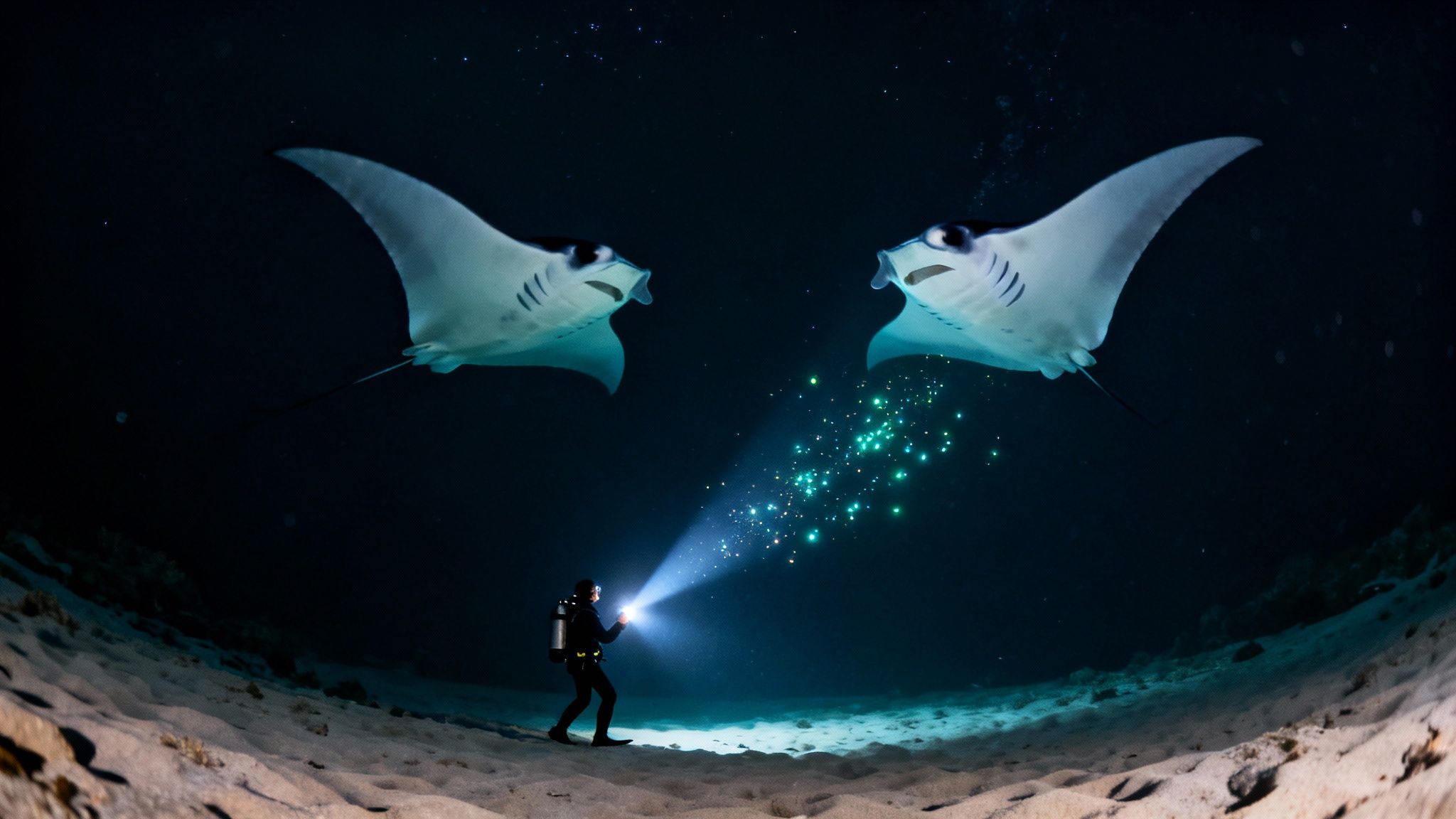
Picture this: you're kneeling on the sandy ocean floor in the dark, pointing your dive light up into the water column. Out of the blackness, a colossal, winged creature swoops down, performing an elegant underwater ballet just inches from your face. That’s the magic of the Kona Manta Ray Night Dive, a spectacle that’s consistently ranked as one of the best night dives on the planet.
So how does it work? The lights from divers and snorkelers attract swarms of plankton, the primary food source for manta rays. We essentially create an irresistible, concentrated buffet that draws these gentle giants in for a feeding frenzy. It's a breathtaking, almost surreal performance that feels like stepping into another world. You can find out more about what makes the Manta Ray night swim so special right here.
When it comes to this dive, location is everything. Garden Eel Cove is the superior choice for the dive tour because of its protected location, better viewing area, and healthier reefs. We primarily run our Manta Ray Night Dive at this site for a few very specific reasons:
- Protected Conditions: Garden Eel Cove is more sheltered from the open ocean, which often means calmer water and a more comfortable dive, especially after the sun goes down.
- Healthier Reefs: The coral here is more vibrant and pristine. This makes for a beautiful backdrop and supports a richer, more diverse marine ecosystem for the whole experience.
- Better Viewing Area: The site’s natural layout allows us to set up a viewing area that feels less crowded, giving every diver a front-row seat to the show.
This focus on a premium site ensures your encounter is as magical and memorable as it can be. Of course, you don’t have to be a diver to see the show! A fantastic alternative is booking a memorable night snorkel with manta rays Hawaii for an incredible surface-level view.
Exploring Ancient Lava Tubes
The Big Island’s volcanic origins have created a dramatic and otherworldly underwater landscape. One of the most thrilling ways to experience it is by exploring the ancient lava tubes and caverns peppering the coastline. Forget any ideas about dark, tight caves; these are grand, open swim-throughs and arches formed by flowing lava millennia ago.
Diving through these structures is like navigating a submerged cathedral. Sunlight streams through openings in the ceiling, creating stunning light beams that dance through the crystal-clear water. These formations are also hotspots for marine life seeking shelter. It’s common to spot whitetip reef sharks resting on the sandy floor, sea turtles napping in crevices, and schools of fish using the arches as a protective haven. This type of diving is perfect for divers looking for a more structural and exploratory adventure with an advanced dive tour.
Diving in a lava tube is a direct connection to the raw, creative power of the island. You're swimming through geologic history, witnessing a landscape sculpted by fire and now claimed by the ocean.
The Surreal Kona Blackwater Dive
For the truly adventurous and experienced diver, the Kona Blackwater Dive is an experience unlike any other on Earth. This is not a reef dive. We head miles offshore over thousands of feet of water, drop down to about 50 feet at night, and tether ourselves to the boat. You simply float in the deep blue as the ocean’s largest daily migration happens all around you.
Every single evening, countless deep-water creatures ascend toward the surface to feed under the cover of darkness. Many of these animals are bioluminescent, creating their own light in the pitch-black water. The result is a psychedelic display of glowing, alien-like organisms drifting past. You’ll see creatures that are rarely, if ever, seen during the day—from translucent larval fish to pulsating jellyfish that look like they belong on another planet.
The Kona Blackwater Dive is a sensory journey into the abyss. It offers a glimpse into a mysterious world few ever get to see and requires a real spirit of adventure, but the reward is an unforgettable encounter with the hidden life of the deep ocean.
Check AvailabilityBeyond the Famous Night Dives: Exploring Kona’s Top Underwater Spots
Everyone talks about the manta ray and blackwater dives, and for good reason! But those incredible experiences are just scratching the surface of what diving Hawaii's Big Island is all about. The Kona coast is a treasure trove for divers, with over 80 unique dive sites scattered along its shores.
This incredible variety means you can come back year after year and still find new underwater landscapes to explore.
We're talking about a world shaped by volcanoes, where dramatic underwater architecture meets reefs buzzing with life. Having an experienced guide is your key to unlocking the best of it; they know exactly where to go based on the day's conditions and your comfort level. It’s this diversity that makes our Kona Honu Divers dive tours so special.
Swim Through Ancient Lava Formations
The Big Island’s volcanic heart is on full display beneath the waves. The ancient lava flows have created a mesmerizing underwater world full of arches, caverns, and tubes just waiting to be explored.
- Golden Arches: Just like the name suggests, this spot is famous for its stunning lava rock arches. Swimming through them feels otherworldly as sunlight streams down, lighting up the schools of fish that shelter within.
- Catacombs: If you have an adventurous spirit, you'll love the Catacombs. It’s an underwater maze of lava tubes and caverns where you can find critters like whitetip reef sharks and massive spiny lobsters hiding out in the shadows.
Diving these sites is like swimming through geological history—a powerful reminder of the forces that created these islands.
Where the Wild Things Are: Marine Life Hotspots
As cool as the lava rock is, it’s the marine life that really makes these reefs pop. Some sites are known as bustling hubs for underwater action, practically guaranteeing you’ll have some amazing encounters.
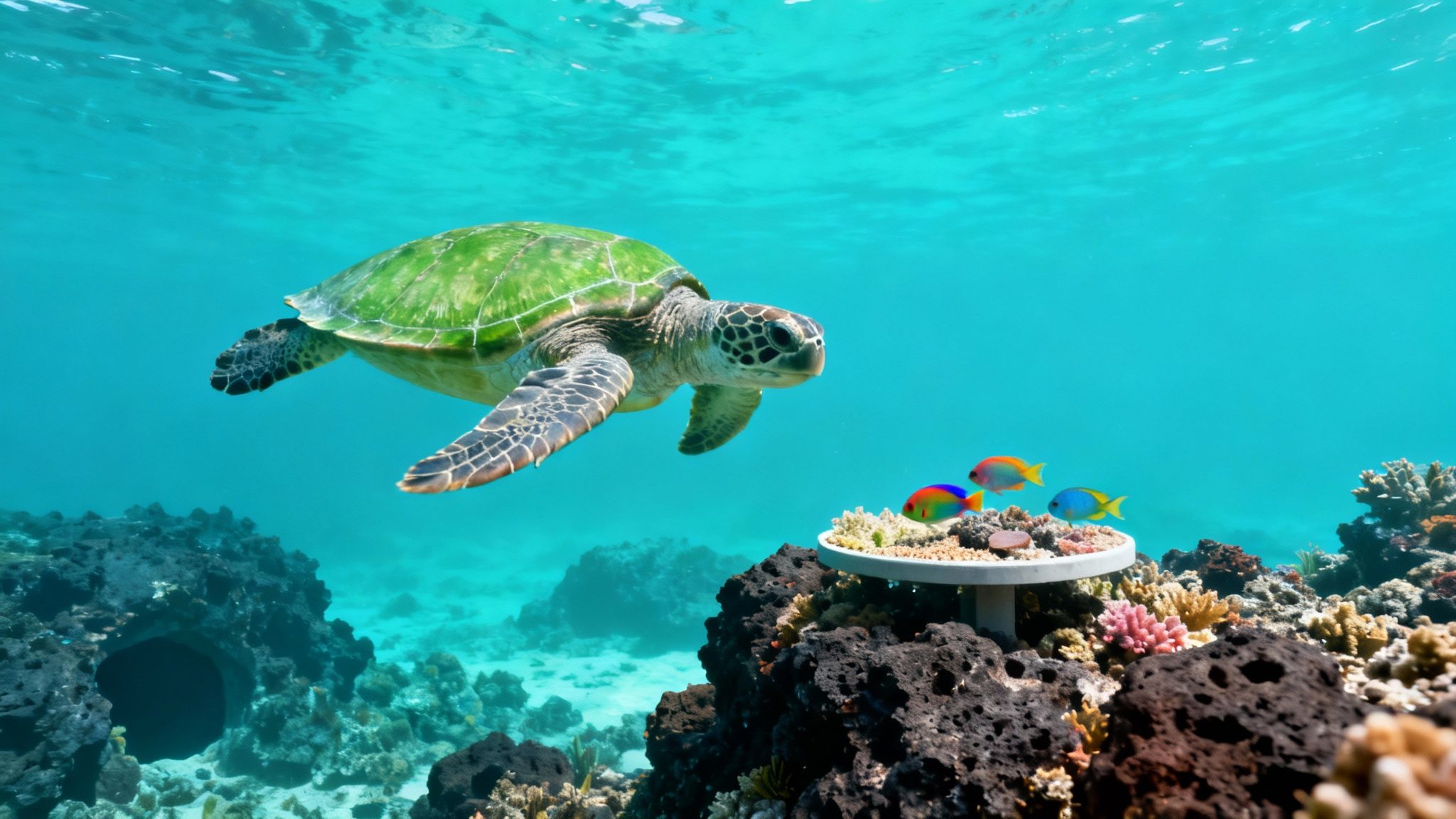
A perfect example is Turtle Pinnacle, a true Kona classic. This is a "cleaning station," a spot where Hawaiian green sea turtles, or honu, gather. They'll hover patiently while smaller fish, like the Hawaiian cleaner wrasse, pick algae and parasites right off their shells.
Watching this symbiotic dance is like seeing a day spa in action, underwater. It’s a calm, fascinating behavior that gives you a real appreciation for the ocean’s complex web of life—not to mention some fantastic photo ops.
Beyond the turtles, you'll find reefs painted with fish found nowhere else on earth. Keep an eye out for the vibrant milletseed butterflyfish or the bold bandit angelfish. You can see just how much there is to discover in our guide to the dive sites of the Big Island.
Popular Kona Dive Sites at a Glance
To give you a better idea of what awaits, here’s a quick summary of a few favorite spots along the Kona coast. This table highlights what makes each site special and who it's best suited for.
| Dive Site | Key Feature | Common Marine Life | Ideal Diver Level |
|---|---|---|---|
| Turtle Pinnacle | Famous turtle cleaning station | Green sea turtles, eels, octopus, various reef fish | All Levels |
| Golden Arches | Large, picturesque lava arches and swim-throughs | Butterflyfish, triggerfish, frogfish, eels | Beginner to Intermediate |
| Catacombs | Intriguing network of lava tubes and caverns | Whitetip reef sharks, spiny lobsters, nudibranchs | Intermediate to Advanced |
| Manta Heaven | Premier site for the Manta Ray Night Dive | Manta rays, eels, large jacks, cleaner wrasse | All Levels (Night Dive) |
| Suck 'em Up | Cavern with a surge-powered "drain" feature | Whitetip reef sharks, large schools of fish, invertebrates | Advanced |
This is just a small sample, of course. The Kona coast has a perfect spot whether you're a brand new diver looking for a gentle, colorful reef or a seasoned pro ready for deep ledges and complex swim-throughs. The sheer richness of this ecosystem is what keeps us exploring, and we love sharing its secrets with fellow divers.
How to Choose the Best Dive Operator in Kona
With dozens of charters all vying for your business, figuring out the right company for your diving Hawaii Big Island adventure can feel like a shot in the dark. But this is one of the most important calls you'll make. The right operator doesn't just take you to a dive site; they make the entire experience unforgettable.
A great charter directly impacts your safety, comfort, and the overall quality of your time underwater. You're not just booking a boat ride—you're investing in a world-class adventure.
What to Look for in a Top-Tier Dive Charter
When you're comparing your options, a few things should be absolutely non-negotiable. These are the hallmarks of a dive operation that truly cares about its guests.
An Impeccable Safety Record: This is, and always will be, priority number one. Look for companies with a long, incident-free history. A clean, well-maintained boat, organized gear, and clear, confident safety briefings are all tell-tale signs of a professional crew.
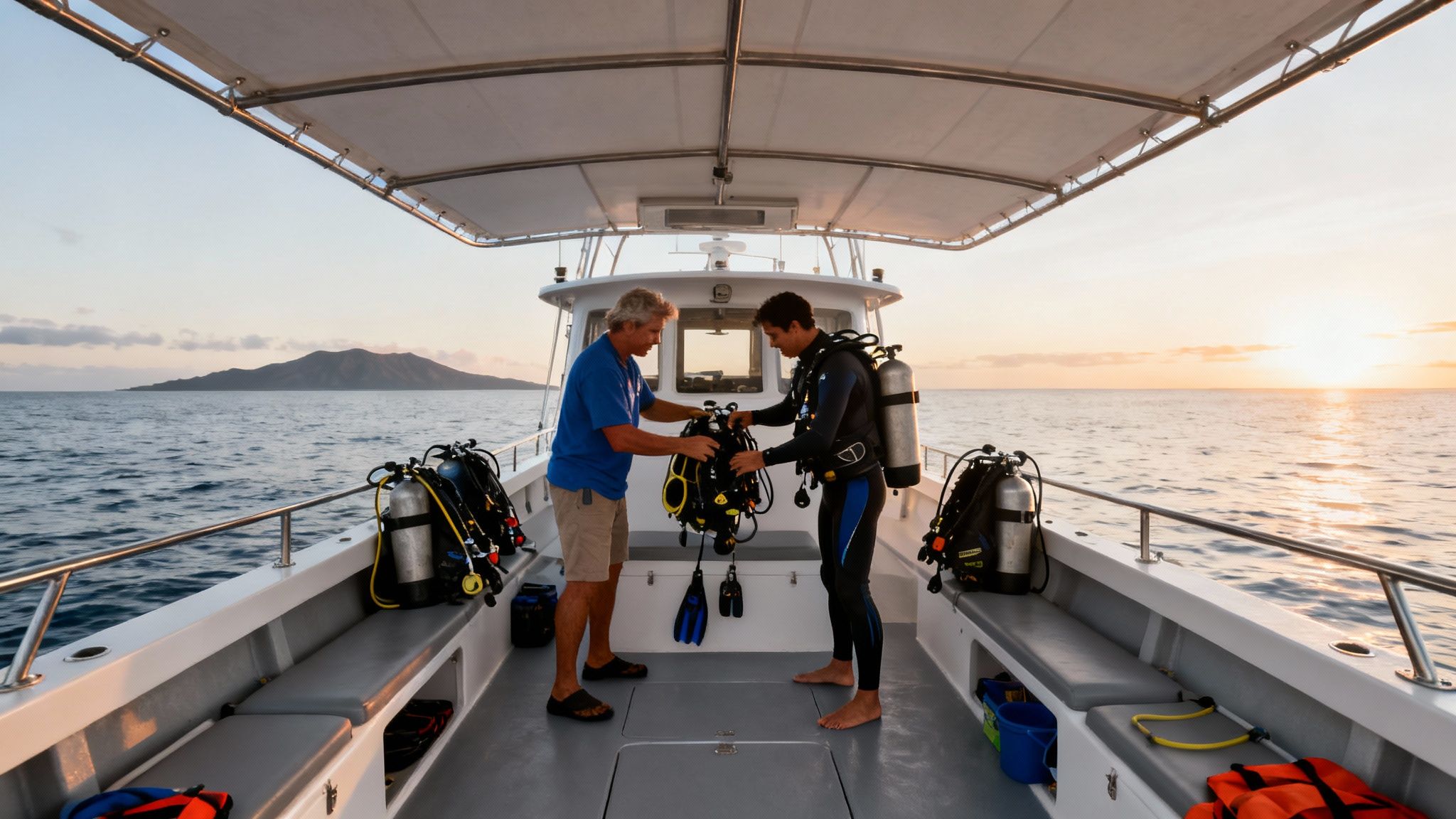
Comfortable and Well-Equipped Boats: You'll spend a lot of time on the boat, so comfort matters. Is there plenty of space to move around? Shade from the sun? Is it easy to get in and out of the water? Little things, like having a marine head (restroom) on board, make a huge difference.
An Experienced Crew and Small Groups: The best guides have spent years in these waters. They know which of the 80+ sites will have the best conditions on any given day. A commitment to small group sizes is just as crucial. It means you get personalized attention, never feel rushed, and have a much more intimate, enjoyable time underwater.
The best dive operators know that what happens on the boat is just as important as what happens below the waves. From the moment you step on board, you should feel safe, comfortable, and totally confident in the crew's expertise.
Why Kona Honu Divers Sets the Standard
At Kona Honu Divers, we’ve built our entire reputation on getting these things right. We don't just promise a premium dive experience; we deliver it every single day. It's our commitment to excellence that sets us apart, which is something you can see for yourself when comparing our services to other local options like the Kona Diving Company.
Our two custom-built dive boats, the Honu One and the Honu Lele, were designed by divers, for divers. They’re spacious, stable, and have everything you need for a fantastic day on the water. Our 46-foot Newton vessel, in particular, offers one of the smoothest rides on the whole Kona coast.
But our crew is our greatest asset. With more than 200 years of combined industry experience, our divemasters and captains know Kona's waters inside and out. That expertise lets us consistently pick the perfect dive sites for the day's conditions, all while putting your safety and enjoyment first. We insist on small group sizes, so every dive feels less like a cattle call and more like a private tour.
See for yourself what fellow divers are saying about their experiences with our crew and vessels.
Check AvailabilityPlanning Your Ultimate Big Island Dive Trip
Alright, you're hooked on the idea of lava tubes and dancing with manta rays. Let's talk about how to make it happen. Planning a dive trip to the Kona coast is actually pretty straightforward, but a little inside knowledge will make your adventure that much smoother.
One of the best parts about diving here is that there's no bad time to visit. Seriously. Thanks to the massive volcanoes shielding the coast from the prevailing trade winds, the water stays remarkably calm and clear year-round. It's an underwater paradise any month you choose.
That said, the seasons do bring a few subtle changes you'll want to know about:
- Summer & Fall (August – October): This is when you'll find the warmest water, often getting up to a toasty 80°F (27°C).
- Winter & Spring (January – March): The water dips a bit to around 75°F (24°C), which is still incredibly pleasant. The real bonus? It's humpback whale season. There's nothing quite like hearing their songs echo through the water while you're on a dive—it's an experience that will stick with you forever.
No matter when you come, you can bank on incredible visibility, which often stretches past 100 feet.
Certification and Skill Levels
The Big Island truly has something for everyone, whether you just got your C-card or you have hundreds of dives under your belt.
An Open Water certification is your passport to most of Kona's stunning reef sites, including the world-famous Manta Ray Night Dive. You can see a ton with this foundational certification.
If you're looking to dive a little deeper into what the island offers, an advanced certification is a great idea. It opens the door to more challenging and unique dives, like exploring the incredible lava tube networks or trying the one-of-a-kind Blackwater Dive. For those seasoned divers ready for a true challenge, we run specialized premium advanced dive tours.
Your Essential Packing List
Packing right is key to a stress-free dive trip. While we have top-notch rental gear ready for you at Kona Honu Divers, there are a few personal items you’ll be glad you brought from home.
Pro Tip: Always pack your most critical dive gear—like your certification card and prescription mask—in your carry-on. If your checked luggage takes a detour, you won't have to miss a minute of bottom time.
Here's a quick checklist to make sure you've got the essentials covered:
- Certification Cards: Don't leave home without them! Bring every cert you have, especially specialties like Nitrox.
- Logbook: You're going to want to remember these dives.
- Dive Computer: A non-negotiable piece of safety gear for every single dive.
- Personal Gear: If you love your own mask, fins, or wetsuit, bring them along. A 3mm or 5mm wetsuit is perfect for Kona's water temperatures.
- Reef-Safe Sunscreen: Help us protect our beautiful coral. Look for mineral-based sunscreens that don't contain oxybenzone or octinoxate.
- Reusable Water Bottle: Diving is dehydrating! Plus, you'll help us cut down on plastic waste.
- Dry Bag: A must-have for keeping your phone, keys, and a towel safe and dry on the boat.
As you map out your adventure, you'll also need a place to stay. Finding the right accommodations can make all the difference, and knowing the cheapest ways to book a hotel can free up more of your budget for diving. For some local, diver-focused recommendations, be sure to check out our guide on the best places for divers to stay on the Big Island.
Your Kona Diving Questions, Answered
Planning a dive trip to the Big Island always sparks a few questions, even for seasoned divers. We get it. To help you get ready for an amazing time underwater, we’ve put together some straight-to-the-point answers to the questions we hear most often from people visiting Kona.
Check AvailabilityWhat Is the Best Month for Diving in Kona?
Honestly, there isn't a bad time to dive in Kona. The west coast of the Big Island is incredibly sheltered, giving us great conditions pretty much year-round.
That said, there are a couple of things you might want to consider. The water is warmest from August to October, usually a balmy 80°F (27°C). It gets a little cooler from January to March, dropping to around 75°F (24°C).
But the real magic of winter diving here happens between December and March—it’s humpback whale season. There’s nothing quite like hearing their songs echoing through the water on a dive. It's a surreal, unforgettable experience.
Do I Need an Advanced Certification to Dive on the Big Island?
Not at all! The Big Island is a fantastic place for divers of all levels. We have dozens of beautiful, shallow reefs that are perfect for newly certified Open Water divers to get comfortable and see tons of life.
However, if you really want to experience everything diving Hawaii's Big Island has to offer, getting your Advanced Open Water certification is a great idea. It opens the door to deeper sites, incredible lava tube explorations, and our one-of-a-kind Kona Blackwater Dive. At Kona Honu Divers, we have trips for everyone, from those just starting out to experienced divers looking for a challenge on our premium advanced dive tours.
The Manta Ray Night Dive isn't just a dive; it's a phenomenon. Consistently ranked among the best in the world, it’s a truly unique wildlife encounter. We set up lights on the ocean floor, which attract plankton, and then the gentle giants arrive.
The mantas swoop and glide inches over your head, performing a graceful underwater ballet as they feed. It’s absolutely breathtaking. We highly recommend the dive at Garden Eel Cove; it's more protected, the reef is healthier, and the viewing area is just plain better, making for a more natural and less crowded experience. You can book this incredible trip right on our manta ray dive tours page.
What Marine Life Can I See Besides Manta Rays?
Oh, where to begin? The Kona coast is teeming with life! On any given dive, you have a great chance of spotting a huge variety of creatures.
- Hawaiian Green Sea Turtles: You'll see them everywhere, just chilling on the reef or getting a cleaning.
- Spinner Dolphins: They love to play in the boat's wake, and sometimes we see them cruising by underwater.
- Eels: We've got all kinds—moray, dragon, and zebra eels are common finds hiding in the reef.
- Octopuses: Spotting one of these masters of disguise is always a highlight.
- Endemic Reef Fish: The reefs are full of vibrant fish you won't see anywhere else on Earth, like the milletseed butterflyfish.
And if you’re lucky, you might also spot whitetip reef sharks, majestic eagle rays, or a bizarre-looking frogfish. On very rare occasions, we’ve even been visited by tiger sharks and whale sharks.
Is it Safe to Dive in Kona?
Yes, absolutely. Kona is known as one of the safest dive destinations because the island’s massive volcanoes shield the coast, keeping the water consistently calm. When you dive with a professional crew like ours at Kona Honu Divers, safety is always the top priority.
Our team is thoroughly trained in rescue and first aid, and our boats have all the necessary safety equipment. We always give a detailed safety briefing before each dive and keep our groups small so everyone gets the attention they need. All you have to do is relax, breathe, and soak in the incredible world around you.
Your Big Island diving adventure is waiting. Here at Kona Honu Divers, our whole focus is on giving you a safe, memorable, and premium experience underwater. Take a look at all we offer and book your next dive with us today.
Learn more about our diving tours.