
Picture this: you're weightless, suspended in perfectly clear, warm water. Sunlight streams down from the surface, cutting through ancient volcanic arches and lighting up a coral garden bursting with color. This isn't just a fantasy; it's a typical day of diving on the Big Island of Hawaii, a place that easily earns its reputation as a world-class destination.
Why The Big Island Offers World-Class Diving
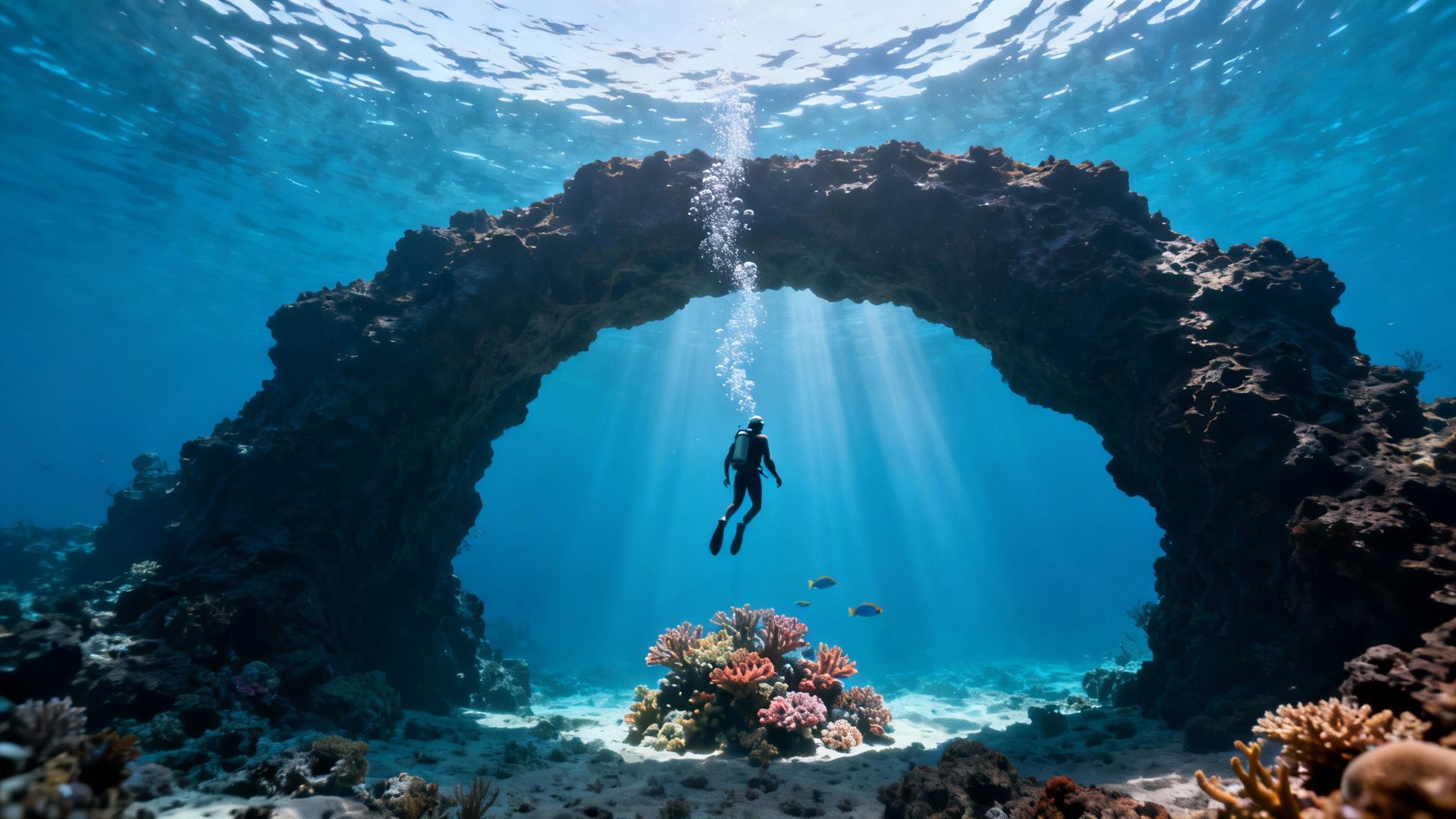
The island’s fiery volcanic past is what makes diving here so spectacular. Over thousands of years, lava flows have sculpted an incredible underwater landscape full of dramatic structures you just don't find elsewhere. Imagine exploring intricate lava tubes, swimming through massive archways, and navigating deep pinnacles that rise from the ocean floor. It's a diver's playground, shaped by fire and water.
But the real secret to the Big Island's amazing diving lies on the Kona coast, its western shore. The island’s massive volcanoes, Mauna Loa and Hualalai, create a huge natural wall, protecting this side of the island from the strong trade winds that hit the rest of Hawaii.
Calm Waters and Unbeatable Visibility
This protective shield means the Kona coast enjoys incredibly calm and clear water most of the year, making it a dream destination for divers of every experience level. While other spots can get choppy, Kona stays serene. The best conditions are often found in the summer months from April to October, when visibility can easily exceed 100 feet. That kind of clarity is what lets you fully appreciate the vibrant reefs, the intricate lava formations, and the incredible marine life—from tiny tropical fish to graceful sea turtles and cruising reef sharks. You can learn more about the pristine diving conditions on the Big Island from our local experts.
In this guide, we're going to break down everything you need for an unforgettable adventure. We’ll cover:
- Unmissable specialty dives, like the world-famous Manta Ray Night Dive.
- The island's unique underwater terrain and what to expect.
- Tips for planning your trip to get the absolute best experience.
Whether you've logged a thousand dives or just got your certification card, the Big Island offers an underwater world that's both accessible and profoundly spectacular. The combination of calm seas, stunning volcanic features, and rich marine life is what truly puts it on every diver's bucket list.
We'll show you exactly why this corner of the Pacific is such a diver's paradise. From navigating ancient lava flows to having a face-to-face encounter with majestic manta rays, diving the Big Island is a journey you’ll never forget. Ready to see what’s beneath the surface? Check out our full range of diving tours.
Discovering The Big Island’s Signature Dives
Sure, you can find great diving all along the Big Island’s volcanic coastline, but some experiences are in a class of their own. These are the "signature" dives—the ones that stick with you long after you've dried off and create the stories you'll be telling for years. They're where the island's unique geology and incredible marine life collide to create something truly unforgettable.
From the world-famous manta ray ballet to the alien world of a blackwater dive, each of these dives offers a different window into the soul of the Pacific. They aren't just a way to log more bottom time; they're immersive experiences that show off the raw, wild beauty of Hawaii's underwater world.
The World-Famous Manta Ray Night Dive
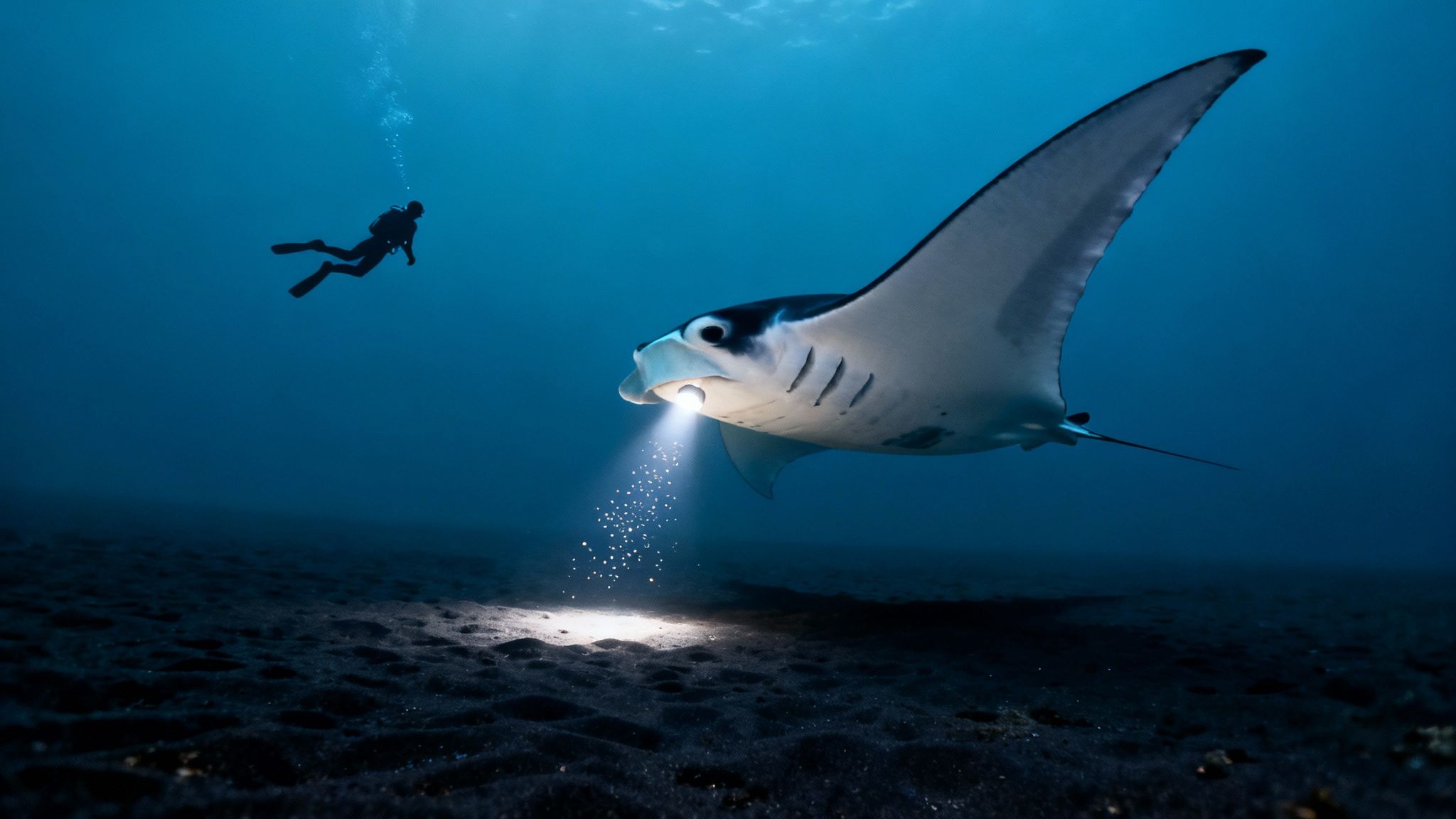
If there's one dive that defines Kona, this is it. People fly here from all over the world for the Manta Ray Night Dive, and for good reason—it’s pure magic. Just after sunset, we head to a specific site where we set up powerful lights on the ocean floor.
The lights attract a massive cloud of plankton, which is basically a dinner bell for the local manta rays. What happens next is a silent, graceful ballet. These gentle giants, with wingspans stretching over 12 feet, swoop and barrel-roll right over your head, filtering the plankton from the water. It’s an incredibly moving and up-close encounter with one of the ocean's most majestic creatures.
While there are a couple of spots to see the mantas, Garden Eel Cove is the superior choice. It's tucked into a bay that offers more protection from ocean swells, making for a much calmer and more enjoyable dive. More importantly, the underwater "stage" is a better viewing area, perfectly set up so you can settle in and watch the show without disturbing the environment or the mantas. Plus, the surrounding reefs are simply healthier and more vibrant.
This incredible show is open to both divers and snorkelers, so everyone can get in on the action.
The Kona Blackwater Dive: An Otherworldly Experience
Ready for something completely different? For certified advanced divers craving a true adventure, the Kona Blackwater Dive is unlike anything else on Earth. This is not a reef dive. We head miles offshore, shut off the engines, and drift in the deep blue over thousands of feet of water.
Tethered to the boat, you descend into the inky blackness. At night, a massive vertical migration of bizarre and beautiful creatures rises from the abyss to feed near the surface. You'll float through a galaxy of tiny, glowing, and often alien-looking organisms—larval-stage creatures that look nothing like their adult forms. It’s like being an astronaut exploring a new universe, and it’s easily one of the most unique dives you can do while diving Hawaii Big Island. This is a serious dive for experienced divers with excellent buoyancy control and a comfort for the dark.
Lava Tubes, Pinnacles, And Vibrant Reefs
Beyond the big-name night dives, the Big Island’s volcanic origins have sculpted an underwater playground perfect for exploration. The seascape here is a dramatic tapestry of formations that makes every dive feel like a new discovery.
- Ancient Lava Tubes: Imagine swimming through massive caverns and tunnels forged by flowing lava centuries ago. These swim-throughs are now home to resting whitetip reef sharks, shy eels, and all sorts of crustaceans.
- Dramatic Pinnacles: We dive on underwater mountains, or "pinnacles," that shoot up from the seafloor. These structures create complex habitats that act as magnets for huge schools of fish and even larger pelagic visitors.
- Vibrant Coastal Reefs: The Kona coast is lined with beautiful, healthy coral gardens teeming with life. You'll drift along walls covered in a kaleidoscope of tropical fish, many of which are found nowhere else in the world.
These varied underwater landscapes guarantee that you'll never have a boring dive. For a closer look at our favorite spots, check out this guide to the top Big Island scuba diving sites. More experienced divers can explore these unique environments on our advanced dive tours.
Big Island Signature Dives At A Glance
To help you decide which bucket-list dive is right for you, here’s a quick comparison of the Big Island’s most famous underwater experiences.
| Dive Type | Best For | Typical Depth | Marine Life Highlights |
|---|---|---|---|
| Manta Ray Night Dive | All certified divers & snorkelers | 30-40 ft (9-12 m) | Majestic manta rays, garden eels, various reef fish |
| Blackwater Dive | Advanced divers with excellent buoyancy & night experience | 40-60 ft (12-18 m) | Bioluminescent creatures, larval fish, pelagic invertebrates |
| Lava Tubes & Pinnacles | Intermediate to advanced divers | 50-100+ ft (15-30+ m) | Whitetip reef sharks, turtles, large schools of fish, eels |
Each of these dives offers a completely different perspective on what makes Hawaii's underwater world so special. Whether you're watching the graceful manta ballet or floating through a galaxy of tiny sea creatures, you're guaranteed to leave with memories that will last a lifetime.
How to Plan Your Ultimate Dive Trip

A truly great dive trip doesn't just happen when you splash into the water—it starts with smart planning on dry land. Nailing the logistics beforehand means you can relax and focus on the incredible underwater world waiting for you, without worrying about last-minute hiccups.
A little prep work for diving Hawaii's Big Island goes a long way. It’s the difference between a smooth, unforgettable adventure and showing up to find the charters you wanted are fully booked. Think of it as setting the stage for an amazing show.
Choosing The Best Time to Visit
Let's be clear: Kona's protected coastline offers fantastic diving all year round. But depending on what you want to experience, timing your visit can make a great trip even better.
The summer months, from about April to October, are classic "prime time." This is when you'll generally find the calmest seas and gin-clear visibility that can easily exceed 100 feet. If you're an underwater photographer or just love seeing every little detail on the reef, this is your season.
But don't count out the winter. From December through March, humpback whales make their annual migration to Hawaii. While you can't plan a whale sighting, hearing their powerful, haunting songs underwater during a dive is a truly profound experience you’ll never forget. To get a more detailed breakdown, you can learn more about the best months to scuba dive in Hawaii.
Packing Your Dive Bag Essentials
Aside from your shorts and flip-flops, a few key pieces of gear are essential for diving in Kona. Bringing your own core equipment isn't just about comfort; it's about familiarity, which adds a layer of safety and confidence to every dive.
Here’s a quick checklist of what you absolutely should have in your dive bag:
- Certification Cards & Logbook: The essentials! Even if you have digital versions, it never hurts to have the physical cards as a backup.
- Dive Computer: This isn't optional. It's a critical piece of safety gear for any certified diver.
- Mask, Snorkel, & Fins: Nothing ruins a dive faster than a leaky mask. Bringing your own well-fitting gear makes a world of difference.
- Exposure Protection: Kona’s water is warm, typically hovering between 75-81°F (24-27°C). A 3mm full wetsuit is perfect for most daytime dives, but we strongly recommend a 5mm for the Manta Night Dive or if you tend to get chilly.
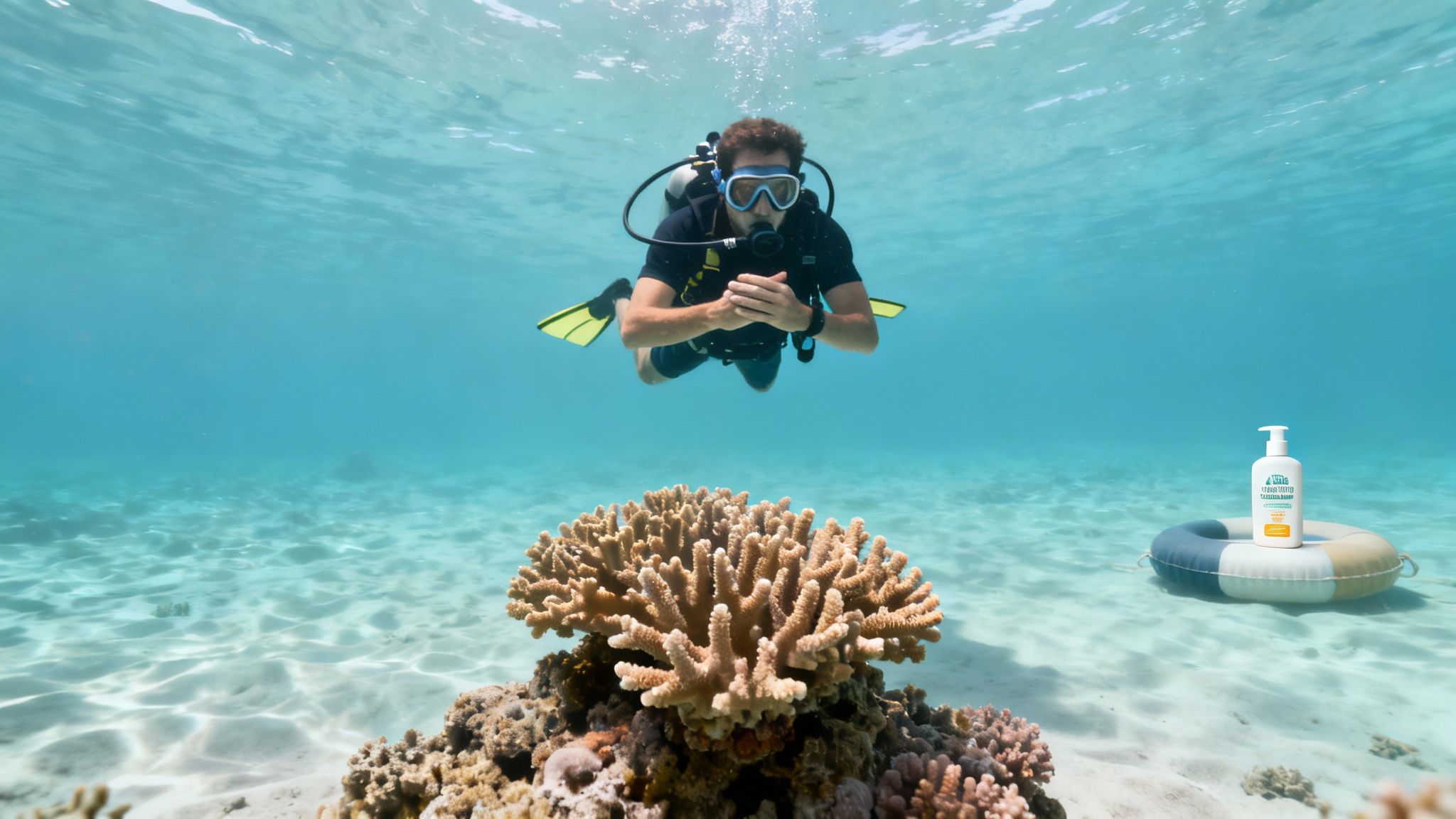
If there's one non-dive item to prioritize, it's reef-safe sunscreen. Many common sunscreens contain chemicals like oxybenzone and octinoxate that are incredibly harmful to our coral reefs. Look for mineral-based options (with zinc oxide or titanium dioxide) to help protect the very ecosystem you're here to see.
Logistics and Booking Your Dives
Getting here is easy. The most convenient airport is Ellison Onizuka Kona International Airport (KOA), located just a short drive from the heart of the dive scene and local accommodations.
Here’s a crucial tip from experience: book your dive charters far in advance. This is especially true if you’re visiting during a busy season or have your heart set on a popular trip like the Manta Ray Night Dive. These world-famous charters fill up fast. Waiting until you arrive on the island often leads to disappointment, so lock in your spot early and let the anticipation begin
Finding a Dive Operator You Can Trust
Let’s be honest: the dive operator you choose can make or break your entire trip. It’s about so much more than just a boat ride. This is about your safety, the quality of your dive, and the memories you’ll be talking about for years. When you’re gearing up to explore the magic of diving Hawaii’s Big Island, your dive operator is the single most important piece of gear you'll have.
A truly great dive operation is built on a solid foundation of safety, deep local knowledge, and a genuine respect for the ocean. You're looking for a crew that doesn't just know the dive sites like the back of their hand, but also puts your well-being above everything else. That means searching for companies with flawless safety records, highly experienced divemasters and instructors, and glowing reviews from divers just like you.
What Sets the Best Apart
The gap between a decent operator and a fantastic one is all in the details. It’s the little things that, when added up, create a seamless and memorable experience.
- An Experienced Crew: You want a team with a palpable passion for diving—people who get just as excited about the marine life as you do and whose local knowledge makes every dive briefing insightful.
- Top-Notch Fleet and Gear: Look for spacious, well-maintained boats with thoughtful amenities. Meticulously serviced rental equipment is another huge sign of a professional and safety-conscious operation.
- A Culture of Safety: This goes beyond a quick briefing. It means small dive groups, strict adherence to industry standards, and a crew that is always alert and prepared.
This commitment to the complete experience is where Kona Honu Divers really shines. Their reputation wasn't built just by taking people out to see fish; it was earned by delivering an exceptional, safe, and unforgettable adventure every single time the boat leaves the dock.
The Kona Honu Divers Difference
With a team that boasts over 200 years of combined professional diving experience, Kona Honu Divers offers a level of expertise that’s tough to find anywhere. All that accumulated knowledge translates directly into safer, richer dives for everyone on board, from someone blowing their first bubbles to the most seasoned technical diver. Just look at their thousands of five-star reviews—you'll see a consistent story of professionalism, passion, and first-class service.
Choosing a top-tier operator isn’t an expense; it’s an investment in your safety and enjoyment. It’s the difference between just seeing the underwater world and truly experiencing it with confidence and comfort.
This commitment extends to their fleet of custom-built dive boats, which are designed by divers, for divers. These aren’t just repurposed fishing boats; they’re floating dive platforms. The spacious decks mean you aren't tripping over fins and tanks, and thoughtful touches like hot freshwater showers feel like pure luxury after a night dive with the mantas.
One of the biggest perks for certified divers is the free nitrox included on all their charters. Breathing enriched air means more bottom time, which translates into more time to explore Kona's famous lava tubes, swim through pristine coral gardens, and just soak it all in. It’s a premium feature that shows they’re dedicated to giving you the best dive possible.
From rental gear that’s so well-maintained you can trust it without a second thought to a crew that anticipates your needs, every part of their operation is designed to create a seamless, worry-free adventure. When you dive with an operator like Kona Honu Divers, your only job is to focus on the breathtaking beauty of the Pacific.
Your dive vacation is a big deal. Choosing the right operator is the most important decision you'll make to ensure it's a success.
Diving with Safety and Aloha for the Ocean
Exploring Kona's underwater world is a privilege, but it comes with a shared responsibility. The pull of the deep blue is strong, but your safety always, always comes first. Diving into an unfamiliar ocean environment without local knowledge can be a serious gamble; it’s crucial to understand and respect the raw power of the Pacific.
Unfortunately, the ocean here demands that respect. Between 2020 and 2024, Hawaii saw a staggering 187 residents drown in ocean-related incidents. This isn't just a sad statistic—it gives Hawaii the second-highest resident drowning rate per capita in the United States. As noted in these important ocean safety findings from Civil Beat, these numbers are a stark reminder of why diving with certified, professional guides is the only smart choice over attempting unguided shore dives.
Prioritizing Your Well-Being Underwater
Honestly, choosing a reputable dive operator is the single best thing you can do to stay safe. A professional operation is so much more than a boat ride. It’s about having a team of seasoned experts focused on your safety from the moment you step on board until you're back on shore.
So, what does that actually look like?
- Comprehensive Safety Briefings: Before you even think about getting in the water, you’ll get a thorough rundown of the dive plan, what to watch out for, and emergency procedures.
- Expert Navigation: Our local divemasters know these sites like the back of their hand. They understand the currents, the topography, and the day-to-day conditions, guiding you along the safest and most spectacular routes.
- Well-Maintained Equipment: Professional shops take their gear seriously. All rental equipment is meticulously serviced, and our boats are stocked with essential safety gear like oxygen and first aid kits.
- Small, Supervised Groups: We keep our dive groups small. This allows for better supervision and a much more personal and secure experience for everyone.
When you dive with a crew you trust, a potentially risky activity becomes the relaxing, awe-inspiring adventure it’s meant to be.
Embracing the Spirit of Mālama I Ke Kai
Beyond our own safety lies a collective duty to protect the incredible ecosystem we've all come to admire. Here in Hawaii, we call this 'mālama i ke kai'—a deep-seated commitment to care for and protect the ocean. As a diver visiting our home, you become a temporary guardian of this fragile environment.
Adopting this mindset is all about practicing responsible diver etiquette on every single dive. It's about being an ambassador for the ocean, making sure its wonders are just as vibrant for the next generation of divers.
"The core of responsible diving is simple: take only pictures, leave only bubbles. Every action, from controlling your buoyancy to choosing the right sunscreen, has a direct impact on the health of the reef."
This philosophy comes down to a few simple but powerful actions. Nailing your buoyancy is essential to avoid bumping into delicate, slow-growing corals. It also means resisting the urge to touch, chase, or harass marine life—just observe and let them be. And, of course, always use reef-safe sunscreen. The chemicals in traditional sunscreens are incredibly toxic to corals. For a deeper dive, check out our complete guide on how to be a responsible and considerate diver.
By making both safety and stewardship part of your dive plan, you guarantee your diving Hawaii Big Island adventure is unforgettable for you and leaves a positive impact on the ocean itself.
Your Big Island Diving Questions, Answered
Any time you're planning a dive trip to a new spot, a few questions are bound to pop up. We get it. Knowing the little details ahead of time—from what wetsuit to pack to whether the sites match your skill level—is the key to a smooth, stress-free trip.
Getting the logistics sorted out means you can focus on the good stuff, like finding that perfectly camouflaged octopus or hearing the distant song of a humpback whale through the water. Let's walk through some of the most common questions we hear from divers, so you can show up ready to jump in.
Do I Need to Be an Advanced Diver?
Not at all! This is probably the biggest myth about diving the Big Island. While Kona is famous for some seriously thrilling advanced dives (hello, Blackwater!), it’s also one of the best places on the planet for beginners to get their fins wet.
The Kona coast is naturally sheltered, creating calm, pool-like conditions at countless sites. Many of our most stunning coral gardens and dramatic lava formations are in the 40-60 foot range, well within the limits for an Open Water diver. We run morning charters designed for all certified divers, so nobody has to miss out on the magic. And if you're not certified yet, we have introductory scuba experiences and a full lineup of PADI courses to get you started.
What’s the Water Temp? What Wetsuit Should I Pack?
You're in for a treat—the water here is beautiful and warm all year long. In the winter months, expect the temperature to hover between 75-77°F (24-25°C). It gets even better in the summer, warming up to a balmy 79-81°F (26-27°C).
For most daytime dives, a standard 3mm full wetsuit is the sweet spot for comfort. The one exception? Night dives. If you're doing the world-famous manta ray night dive, you'll be floating in one spot for a while. We highly recommend bumping up to a 5mm wetsuit to stay toasty and completely focused on the incredible show in front of you.
Can I Shore Dive on the Big Island?
You can, and there are some well-known spots like Two Step that attract divers. It’s definitely tempting to just grab your gear and go on your own schedule. But—and this is a big but—shore diving here requires a ton of planning and a healthy respect for the ocean.
Local knowledge is everything. You have to understand the currents, watch for surprise surge, and know the safest places to get in and out, which can change by the hour. Given Hawaii's unfortunate ocean safety statistics, diving with a buddy is non-negotiable, and going alone is never recommended. Honestly, the safest bet is to join a few guided boat dives first. You'll get a real feel for the local conditions and what to expect before even thinking about a shore entry. For some fantastic guided options, check out these Kona diving tours.
What Is Nitrox and Why Is It Free?
Great question. Nitrox, or Enriched Air Nitrox (EANx), is simply a breathing gas with a little more oxygen and a little less nitrogen than the regular air you're breathing now. By reducing the amount of nitrogen you absorb on a dive, you can safely extend your time at depth.
In simple terms, Nitrox lets you stay down longer. It gives you more bottom time to explore that lava tube or hang out with a curious turtle before your computer tells you it's time to head up.
As a bonus, many divers find they feel less wiped out after a day of diving on Nitrox. We offer it for free to all certified Nitrox divers because we want you to have the best possible experience. It's our way of giving you more precious minutes to soak in the incredible underwater world that makes Kona so special.
Ready to book your underwater adventure?
At Kona Honu Divers, we're a team of passionate divers dedicated to providing world-class experiences built on safety, education, and a deep love for our ocean. From our custom-built boats to our experienced crew, everything we do is designed to make your dive trip unforgettable.