
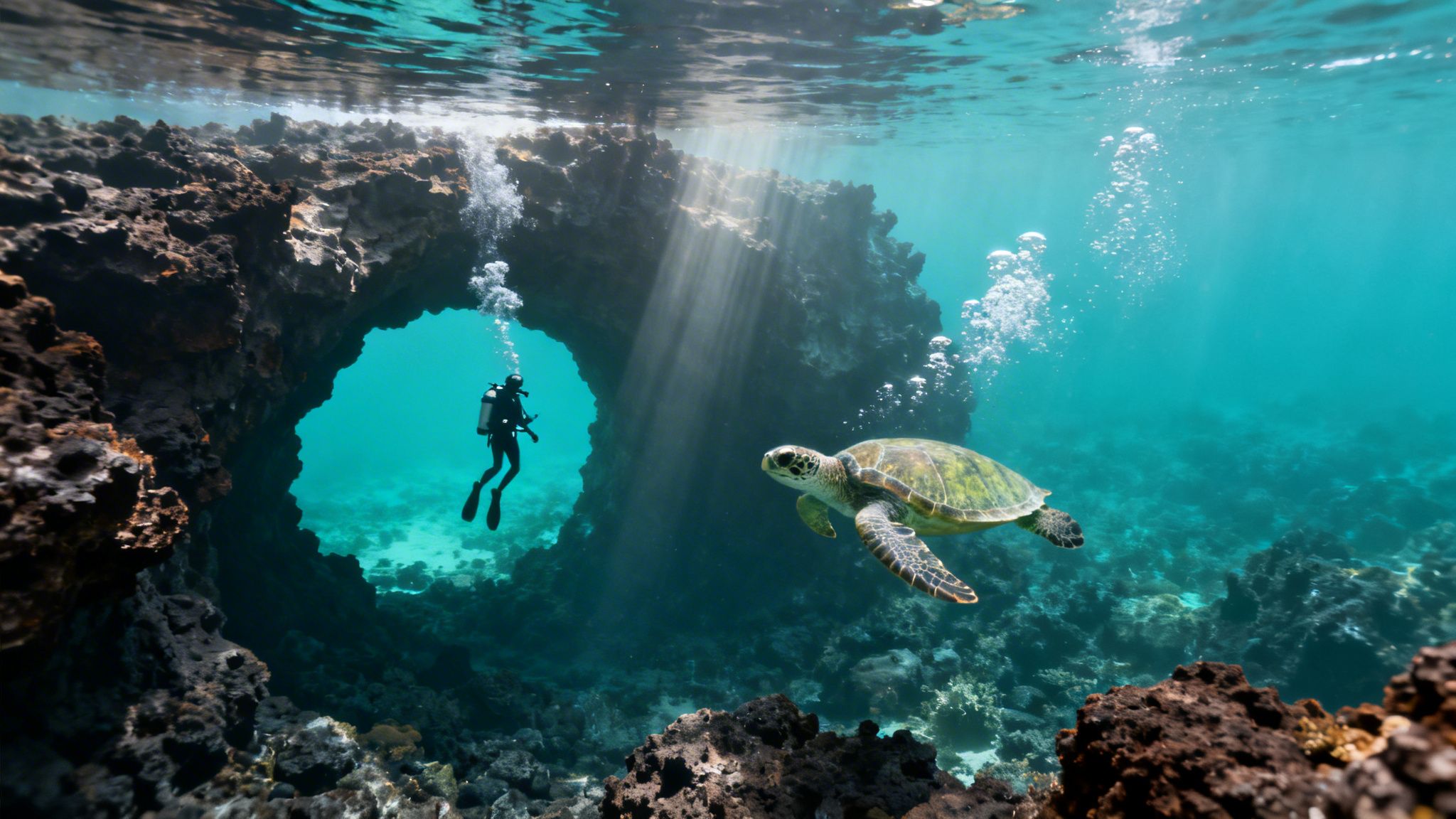
Picture this: you’re weightless, descending into brilliant blue water where sunlight streams through an ancient lava tube. Just as you level out, a honu—a Hawaiian green sea turtle—glides past, completely unbothered. That’s the magic of diving the Big Island.
The Kona Coast, tucked safely in the shadow of massive volcanoes, is a diver’s paradise. It offers calm, clear waters that are a world away from the often-choppy conditions found on the more exposed shores of other Hawaiian islands.
So, Why Is Kona Really Hawaii’s Best Diving Spot?
Let's be honest, when divers fantasize about a trip to Hawaii, the scenes playing in their heads are almost always from the Big Island’s Kona Coast, even if they don't know it yet. It all comes down to geography. The coast sits on the leeward (sheltered) side of the island, shielded from the powerful trade winds by the colossal Mauna Loa and Hualālai volcanoes.
This natural barrier creates an aquatic sanctuary with some of the most reliable and beautiful diving conditions you'll find anywhere in the Pacific. It means you can book your dive trip with confidence, knowing that blown-out days are rare. This calm environment has allowed a dense, vibrant marine ecosystem to flourish along a relatively compact stretch of coastline. Want to learn more? Check out our deep dive into why the Big Island is so good for scuba diving.
The Underwater Landscape: A Volcanic Masterpiece
The Big Island's volcanic heart has sculpted an underwater world that is truly one-of-a-kind. Forget flat, sandy bottoms; here, the ocean floor is a dramatic playground of ridges, caverns, and formations that tell the story of the island's fiery creation.
What you'll find down there is spectacular:
- Lava Tubes and Archways: These aren't just rocks; they are ancient conduits where molten lava once flowed into the sea. Swimming through these massive, hollowed-out structures feels like exploring another planet.
- Pristine Coral Reefs: Because the coast is so protected, the coral gardens here are incredibly healthy and teeming with life, including many fish species found nowhere else on Earth.
- Mega Fauna Encounters: Seeing green sea turtles is practically a given. But the real show-stoppers are the majestic manta rays, playful spinner dolphins, and, in the winter, migrating humpback whales.
Here's a quick look at what makes diving here so special.
Big Island Diving At a Glance
| Feature | Details |
|---|---|
| Water Temperature | A comfortable 75-80°F (24-27°C) year-round. |
| Visibility | Frequently 100+ feet (30+ meters), especially along the Kona Coast. |
| Topography | Lava tubes, arches, caverns, pinnacles, and vibrant coral reefs. |
| Marine Life | Manta rays, sea turtles, dolphins, sharks, eels, and endemic fish. |
| Best Season | Year-round, with calmer conditions in summer and whale season in winter. |
Simply put, the combination of unique underwater structures and consistent, clear conditions makes the Big Island a world-class diving destination.
Exploring Kona’s Most Unforgettable Dive Sites
The Kona Coast is a diver's dream, a sprawling underwater frontier shaped by ancient volcanoes and now bursting with life. With over 50 different dive sites dotted along the coast, every single day offers a completely new adventure. That's the real magic of diving the Big Island; you might spend one morning exploring a massive, cathedral-like lava tube and the next drifting over pristine coral gardens watching sea turtles get a spa day from local reef fish.
Think of this as your inside guide to some of Kona’s most legendary underwater landmarks. Each spot has its own story to tell, a unique glimpse into the island's fiery past and vibrant present.
Lava Tubes and Volcanic Cathedrals
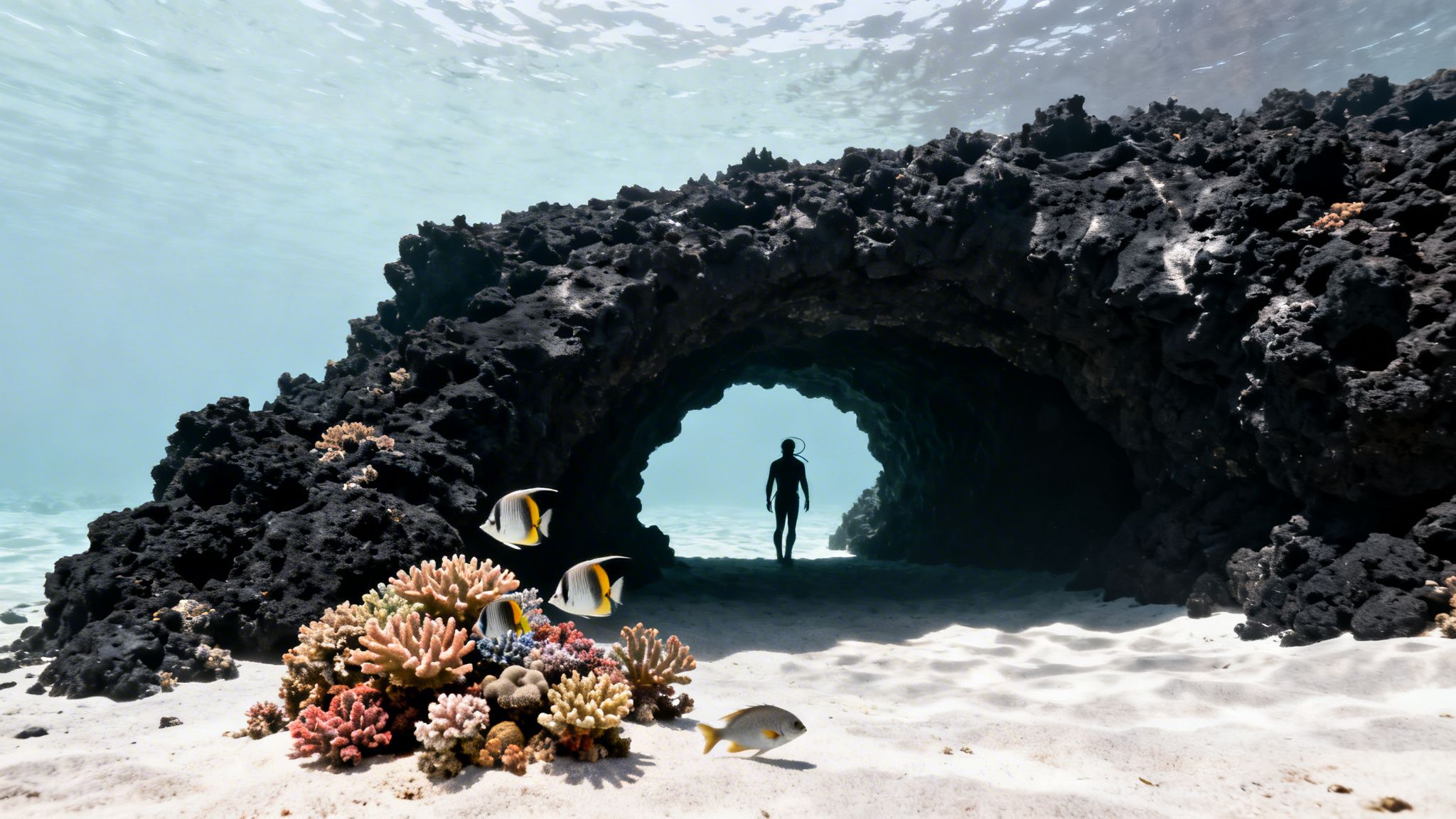
You can really feel the Big Island's volcanic soul when you're underwater. Over millennia, ancient lava flows sculpted an incredible playground of swim-throughs, massive arches, and hidden caverns that are just begging to be explored. Sites like Turtle Pinnacle and Golden Arches are famous for these kinds of dramatic, jaw-dropping formations.
Picture yourself descending into the deep blue, only to see a huge archway materialize out of the gloom, completely covered in colorful corals and sponges. As you glide through, the way the light and shadows play on the ancient rock is nothing short of magical. These aren't just cool geological features; they're bustling apartment complexes for all sorts of marine critters.
Inside these lava tubes and along the cavern walls, you’ll often spot more reclusive creatures like slipper lobsters, psychedelic-looking nudibranchs, and schools of soldierfish hiding from the daylight. It honestly feels like you're navigating a submerged cathedral built by nature itself.
Vibrant Coral Gardens and Cleaning Stations
Beyond the dramatic volcanic rock, Kona is also home to some of the healthiest coral reefs in all of Hawai‘i. Dive sites like Garden Eel Cove (home of the world-famous manta ray night dive) and Kailua Bay feature incredible, sprawling gardens of finger, cauliflower, and lobe corals.
These reefs are like the busy downtowns of the underwater world. It’s here that you'll see an amazing diversity of fish, including many species you can only find in Hawaiian waters.
- Endemic Butterflyfish: Keep an eye out for the Milletseed, Fourspot, and Ornate butterflyfish. They add brilliant pops of color to the reef.
- Helpful Wrasse: The small but mighty Hawaiian Cleaner Wrasse runs "cleaning stations" where bigger fish, eels, and turtles line up for a meticulous scrub-down.
- Schools of Tangs: Seeing a massive, swirling cloud of bright Yellow Tangs is a classic Kona sight that never gets old.
One of my favorite things to witness is a turtle cleaning station in action. You can watch as Hawaiian green sea turtles (honu) hover patiently, completely still, while tiny reef fish dart in to pick algae and parasites off their shells and skin. It’s a perfect, peaceful example of symbiosis at work. You can check out a full list of the amazing dive sites Kona Honu Divers may take you to right on their website.
How the Best Sites Are Chosen Daily
What separates a good dive from an unforgettable one? It's having guides who know the ocean intimately. The crew at Kona Honu Divers are experts at reading the day's conditions—the currents, swell, and visibility—and picking the perfect spots that suit both the weather and the divers on the boat.
This personalized approach is so important. It means that whether you're just getting certified or you have hundreds of dives under your belt, you're going to have the best possible experience. They don't just stick to a rigid schedule; they adapt to what the ocean is giving them that day, putting you in the right place at the right time for incredible encounters and safe, amazing dives.
Ready to see these incredible sites for yourself? Kona Honu Divers offers a variety of diving tours that showcase the very best of what the Big Island has to offer.
The World-Famous Manta Ray Night Dive
When the sun finally dips below the horizon in Kona, the real show is just about to begin. For anyone diving on the Big Island, there's one experience that stands above all others, a spectacle you truly can't find anywhere else on the planet: the manta ray night dive. This isn't just another dive on the logbook; it's a front-row seat to one of nature's most breathtaking performances.
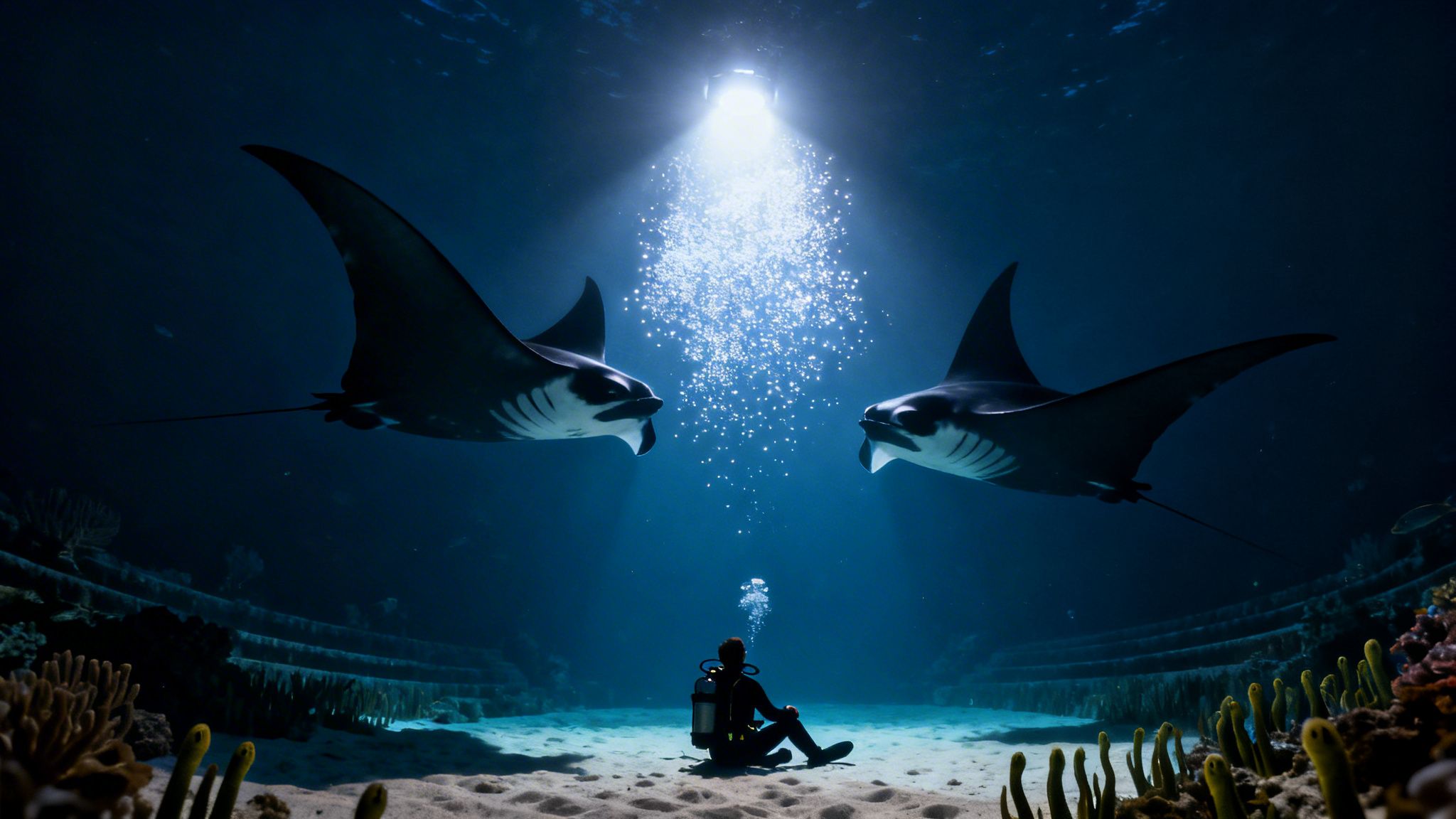
The setup is brilliantly simple. We head out to specific dive sites, drop powerful lights onto the ocean floor, and wait. These lights act like a massive bug zapper for the ocean, drawing in clouds of plankton—the manta rays' favorite meal. It creates an irresistible, all-you-can-eat buffet.
As a diver, you'll descend to the sandy bottom, get comfortable, and just look up. What happens next is pure magic. Giant manta rays, some with wingspans stretching up to a massive 16 feet, materialize out of the darkness. They glide, swoop, and perform effortless barrel rolls just inches over your head, feasting on the plankton illuminated in the beams of light.
Why Garden Eel Cove Is the Premier Choice
While there are a couple of locations to see mantas, one site consistently delivers a superior experience: Garden Eel Cove. Its unique combination of features makes it the ideal stage for this incredible underwater ballet. The cove's protected geography shields it from large ocean swells, ensuring calmer, more enjoyable conditions both on the surface and below. This protection not only makes for a more pleasant dive but has also allowed a healthier, more vibrant reef to thrive.
The real magic of Garden Eel Cove is its natural amphitheater-like layout. The gently sloping sandy bottom provides an expansive and unobstructed viewing area, giving every diver a perfect front-row seat to the spectacle.
This superior viewing area and the healthier surrounding reefs, which support a robust plankton population, are what make Garden Eel Cove the premier, most reliable location for an unforgettable manta encounter. It consistently offers a better, more immersive experience for watching these gentle giants.
A Once-in-a-Lifetime Encounter
There's a reason the manta ray night dive is consistently rated one of the best in the world. It’s an incredibly moving experience to be so close to these gentle giants. It's important to know they aren't baited or fed by us; we simply use light to attract their natural food source. This allows for a completely passive observation of their natural behavior.
This is a true bucket-list dive, and top-tier operators like Kona Honu Divers run these manta ray dive tours with the utmost respect for the animals. On our trips, we have successful manta sightings on over 90% of our dives. The visibility under the lights is often an incredible 80-100 feet, illuminating the mantas' elegant acrobatics and creating a magical interaction that's safe for divers of all skill levels. You can read more about the complete manta ray night dive experience to get all the details.
The Manta Ray Night Dive is so much more than a tour—it's about forging a genuine connection with these magnificent creatures. When you’re ready to witness this underwater ballet for yourself, you'll see why it's an adventure that stays with you forever.
Advanced Diving Adventures Into the Deep
Sure, the Big Island’s sun-drenched reefs are incredible, but some of the most unforgettable adventures happen long after the sun goes down or way below the surface. For certified divers craving something truly different, Kona offers dives that will become legends in your logbook.
This is where you get to see a side of the ocean few ever witness.
From floating in the deep ocean abyss to navigating intricate volcanic mazes, these are the dives that test your skills and reward your curiosity. They demand precision, confidence, and the steady hand of a seasoned crew.
The Kona Blackwater Dive: An Otherworldly Experience
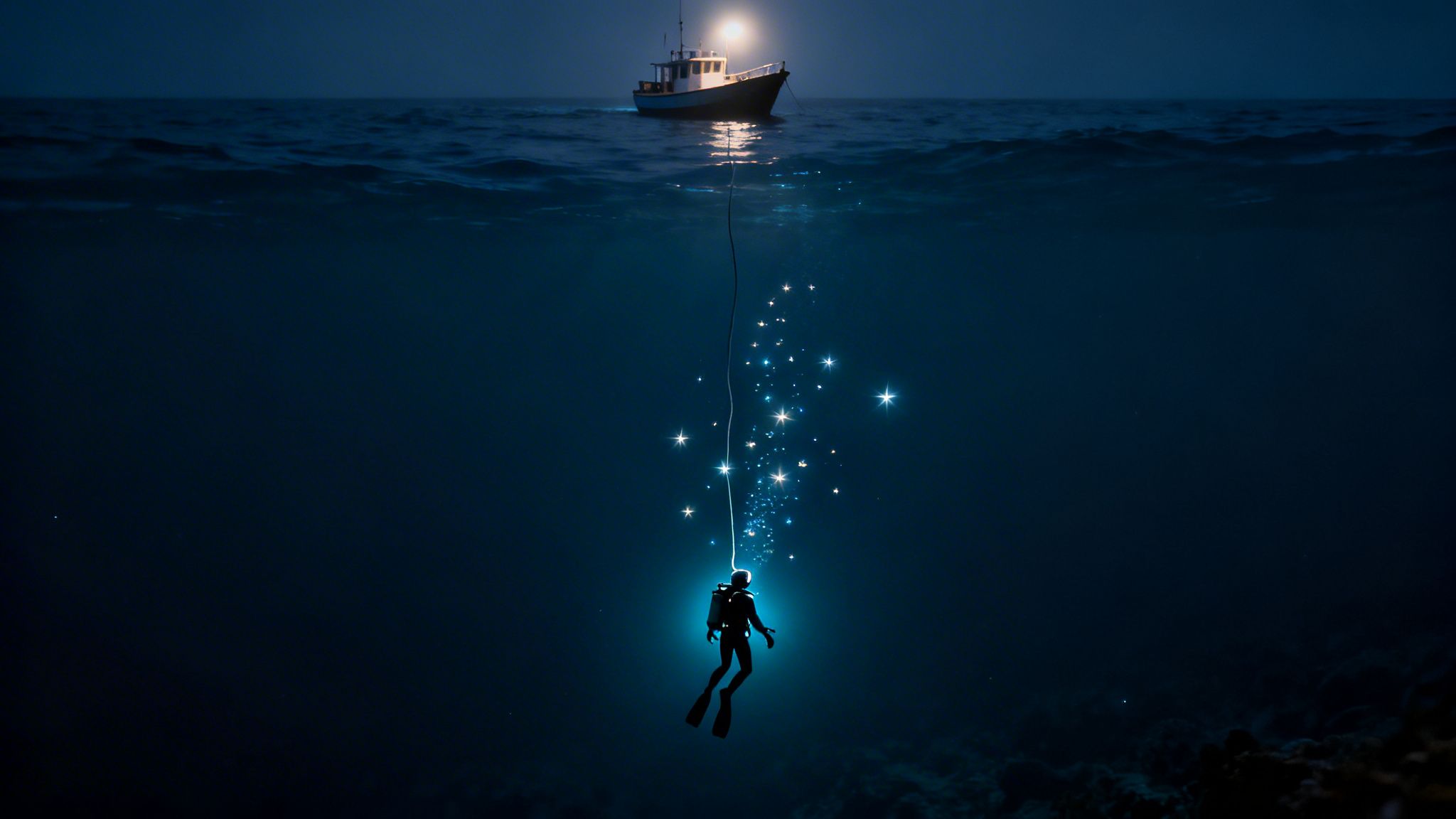
Picture this: you’re drifting in the immense, inky blackness of the open ocean, miles from shore, with thousands of feet of water right below your fins. This is the surreal world of the Kona Blackwater Dive, an experience that feels more like a spacewalk than a scuba dive. You’re safely tethered to the boat, a silent observer of one of the planet's largest—and weirdest—migrations.
Every single night, a countless menagerie of bizarre and beautiful creatures rises from the crushing depths to feed near the surface. Many of them are bioluminescent, putting on a private light show just for you.
Here’s a taste of what you might see:
- Translucent Squids and Octopuses: Ghostly, see-through creatures that look like they’re from another planet.
- Larval Creatures: The baby versions of familiar fish and invertebrates, often looking absolutely nothing like their adult forms.
- Glowing Jellies: A mesmerizing, pulsating light show from ctenophores and other gelatinous animals drifting past your mask.
This isn't about exploring a reef. It's about hanging suspended in the void and letting the deep sea’s secrets come to you. It's a humbling, awe-inspiring adventure that shows you the stranger side of diving Hawaii Big Island.
Exploring Deep Pinnacles and Lava Formations
For divers who are comfortable with going deeper and handling potentially stronger currents, the Big Island reveals a whole other layer of dramatic topography. The deeper sites are home to massive pinnacles—underwater mountains that shoot up from the ocean floor—and complex lava tube systems that are a thrill to navigate.
These advanced spots are magnets for bigger marine life. The currents that sweep past them bring in nutrient-rich water, which in turn attracts huge schools of fish and the pelagic predators that hunt them. Dropping onto a deep pinnacle can feel like arriving at an underwater metropolis, buzzing with a kind of energy you just don’t find on the shallower reefs.
In these challenging environments, the expertise of a professional guide isn’t just a nice-to-have, it’s essential. Navigating a complex lava tube or managing a dive in a ripping current requires local knowledge, meticulous planning, and an unwavering focus on safety.
Shops like Kona Honu Divers run specialized Advanced Dive Tours just for experienced divers. These trips intentionally seek out sites that offer a bigger challenge and an even bigger reward, so you can push your limits safely under the watch of experts who know these waters like the back of their hand.
Planning Your Perfect Big Island Dive Trip
Putting together a world-class dive vacation really boils down to getting a few key details right. Nailing the logistics—from timing your visit to picking the right crew to dive with—is what transforms a good trip into one you’ll talk about for years. If you’re planning on diving the Big Island, this is everything you need to know to make it happen smoothly.
Let’s get into the nitty-gritty of seasons, gear, and what the experience on the water should really feel like.
When Is the Best Time to Dive in Kona?
Here’s the great news: thanks to Kona’s protected leeward coast, the diving is fantastic all year long. That said, different seasons bring their own special kind of magic. The water temperature is always a pleasant 75-80°F (24-27°C), but what you’ll see can change with the calendar.
- Summer (June – September): This is when you can expect the calmest, flattest seas and the warmest water. It’s absolutely perfect for divers of any skill level, especially if you’re someone who prefers a glassy ocean surface.
- Winter (December – March): The water might be a degree or two cooler, but winter is prime humpback whale season. There's nothing quite like being underwater and hearing the haunting songs of these giants echoing through the reef as they pass by.
No matter when you visit, our resident manta rays are here year-round. Just be sure to book your dive trips well in advance, especially during peak travel times, to make sure you get a spot on the boat.
Boat Diving vs. Shore Diving: What’s the Difference?
While the Big Island has some decent shore diving, the real heart of Kona's underwater world is found offshore. Hopping in from the shore can be a fun way to get wet, but it definitely has its limits. You’ll often be dealing with tricky entries over rugged lava rock, and you’re restricted to the handful of sites accessible from the road.
Boat diving, on the other hand, is your key to unlocking Kona’s most pristine, dramatic, and thriving dive sites—the ones you simply can’t get to from land.
A professional dive charter is your ticket to Kona's premier underwater landscapes. It gives you access to vibrant offshore reefs, stunning pinnacles, and secluded coves that see far less traffic, which means healthier coral and more abundant marine life.
With a top-tier operation, you’re not just getting a ride. You’re getting a crew that knows exactly where to go based on the day’s conditions, provides thorough safety briefings, and has all the comforts you need for an incredible day on the water.
Why Your Dive Operator Matters
Choosing the right dive company can make or break your entire vacation. It’s not just about getting on a boat; it’s about feeling safe, comfortable, and having a genuinely high-quality experience. This is where a professional operation like Kona Honu Divers really shines, elevating a good dive into an exceptional memory. See what your fellow divers have to say about their experience with us.
A premier operator obsesses over the details that matter most to divers:
- Meticulously Maintained Gear: Our rental equipment is proactively serviced, not just fixed when something breaks. This ensures every regulator, BCD, and computer works perfectly, giving you complete peace of mind.
- Complimentary Nitrox: For certified divers, free nitrox is a game-changer. It means longer bottom times and shorter surface intervals, letting you maximize every minute you spend underwater.
- Onboard Comforts: The little things make a huge difference. Picture surfacing from an amazing dive to a hot freshwater shower right on the dive deck. Add in great snacks, drinks, and a comfortable, shaded place to relax, and the whole day just gets better.
This deep-seated commitment to quality is what builds trust and lets you focus on one thing: the incredible world unfolding below. Ready to experience the best diving tours the Big Island has to offer?
Your Big Island Diving Questions, Answered
Still have a few things you're wondering about? Perfect. Let's clear up some of the most common questions we get about diving in Kona so you can focus on the excitement of your upcoming trip.
We'll cover everything from certification levels to what your non-diving friends can do while you're blowing bubbles.
What Certification Do I Need to Dive in Kona?
Great news: the vast majority of our stunning Kona coast dive sites are well within the range of Open Water certified divers. You don't need a high-level certification to see the incredible reefs and dramatic lava formations that make this place so special.
That said, some of our more adventurous dives, like the one-of-a-kind Kona Blackwater Dive, do require an Advanced Open Water certification due to their depth and unique nature. If you're looking to upgrade your skills or get certified for the first time, we offer a complete lineup of PADI courses to get you ready for anything.
Is Diving Here Safe?
Absolutely. Safety isn't just a priority for us at Kona Honu Divers; it’s the foundation of everything we do. The Kona coast is naturally blessed with calm, sheltered waters, which already gives us some of the most reliable and safe diving conditions you'll find anywhere in Hawai'i.
On top of that, our experienced guides lead comprehensive pre-dive briefings, and our boats and rental gear are meticulously maintained. Just listen to your guide, follow the plan, and you're in for an incredibly safe and unforgettable time underwater.
What if My Travel Partners Don't Scuba Dive?
No problem at all! This is actually one of the best things about diving here. Many of our top-tier dive sites are also perfect for snorkeling, and we gladly welcome snorkelers on many of our trips.
This even includes our world-famous manta ray night experience. Divers and snorkelers share the same boat and the same breathtaking view of the mantas, making it a perfect outing for groups with mixed interests. Everyone gets to be part of the magic.
What Should I Pack for a Dive Trip with You?
Just bring the personal essentials, and we'll take care of the rest. All you really need is your certification card, a swimsuit, towel, reef-safe sunscreen, sunglasses, and maybe a hat.
We provide all the proactively serviced dive gear you'll need, plus snacks and drinks to keep you fueled up. Our boats even have hot showers for a warm rinse-off after the dive. Seriously, just pack your bag and your sense of adventure—we've got everything else covered for a perfect day of diving the Big Island.
Ready to dive into the best underwater adventures the Big Island has to offer? Kona Honu Divers has a full range of diving tours waiting for you.