
You're probably in one of two places right now. You've either already decided Hawai'i is the trip and you're trying to figure out whether the Big Island is worth your dive days, or you've heard enough about Kona mantas and blackwater diving to suspect this isn't a normal tropical destination.
That instinct is right.
Diving the Big Island feels different from the first giant stride. The lava coastline drops into deep blue water fast. Reef structures look sculpted instead of piled up. A routine morning dive can give you clean visibility, dark volcanic terrain, and fish life that pops hard against the black rock. Then the same trip can turn into a night dive with manta rays overhead or an offshore blackwater drift over open ocean.
That mix is what hooks people. You're not choosing between one famous dive and a backup plan. You're choosing among several completely different underwater experiences, each of which suits a different kind of diver.
If you're planning a trip, the smartest way to approach diving Big Island isn't by chasing the most famous site first. Match the trip to the diver. A newer diver usually gets more out of calm reef dives and a well-run manta night. A confident, experienced diver may want reef structure by day and blackwater at night. Families often need a plan that works for divers, snorkelers, and people who just want one memorable ocean day without turning the whole vacation into a logistics exercise.
Welcome to Your Dream Dive Destination
A good Kona dive trip starts before the boat leaves the harbor. It starts when you realize you don't have to force every underwater day into the same mold.
One couple comes over from the mainland thinking they need to do “the” famous dive and nothing else. By the end of the trip, their favorite memory is often not what they expected. Sometimes it's the manta dive. Sometimes it's a calm morning reef with turtles, lava contours, and an easy, unhurried profile. Sometimes it's the strange open-ocean stillness of blackwater, where the whole night feels like drifting through a living science documentary.
That's why the Big Island works so well for trip planning. It gives you options that feel distinct.
What the water feels like
On the Kona side, the ocean often has that electric cobalt look on the surface and a dark, volcanic character below. You descend past lava fingers, ledges, pockets, and coral growth that has settled into old rock rather than broad, sandy reef flats. The terrain gives each site shape. Even before the wildlife shows up, the underwater scenery has personality.
Then the marine life fills in the scene. On reef dives, the pace is relaxed if you let it be. You can spend a whole dive reading the structure, checking cracks and overhangs, and watching how fish use the lava.
A lot of visitors think the “bucket list” experience has to be the most dramatic one. In Kona, the right dive is usually the one that fits your comfort level and energy that day.
How to think about your trip
Use a simple filter when planning diving Big Island:
- If you're newer to scuba, prioritize easy reef diving and one signature night experience.
- If you're experienced, build variety into the week instead of repeating the same format.
- If you're traveling with non-divers, plan at least one day where snorkeling or riding along still feels worthwhile.
- If you only have one or two dive days, avoid overloading the schedule. A rushed dive vacation usually underdelivers.
The best trips here feel balanced. You want one dive that makes your pulse jump, one that lets you settle in, and enough margin that the ocean sets the pace instead of your calendar.
Why the Big Island Is a World-Class Dive Destination
The Big Island earns its reputation because the conditions and the variety line up at the same time. It offers more than 1,000 dive sites, water that stays between 75 and 85°F, and visibility that often exceeds 100 feet, which is why the island supports everything from shore diving at Place of Refuge to specialty dives like manta nights and blackwater charters, as described in this Big Island scuba overview.
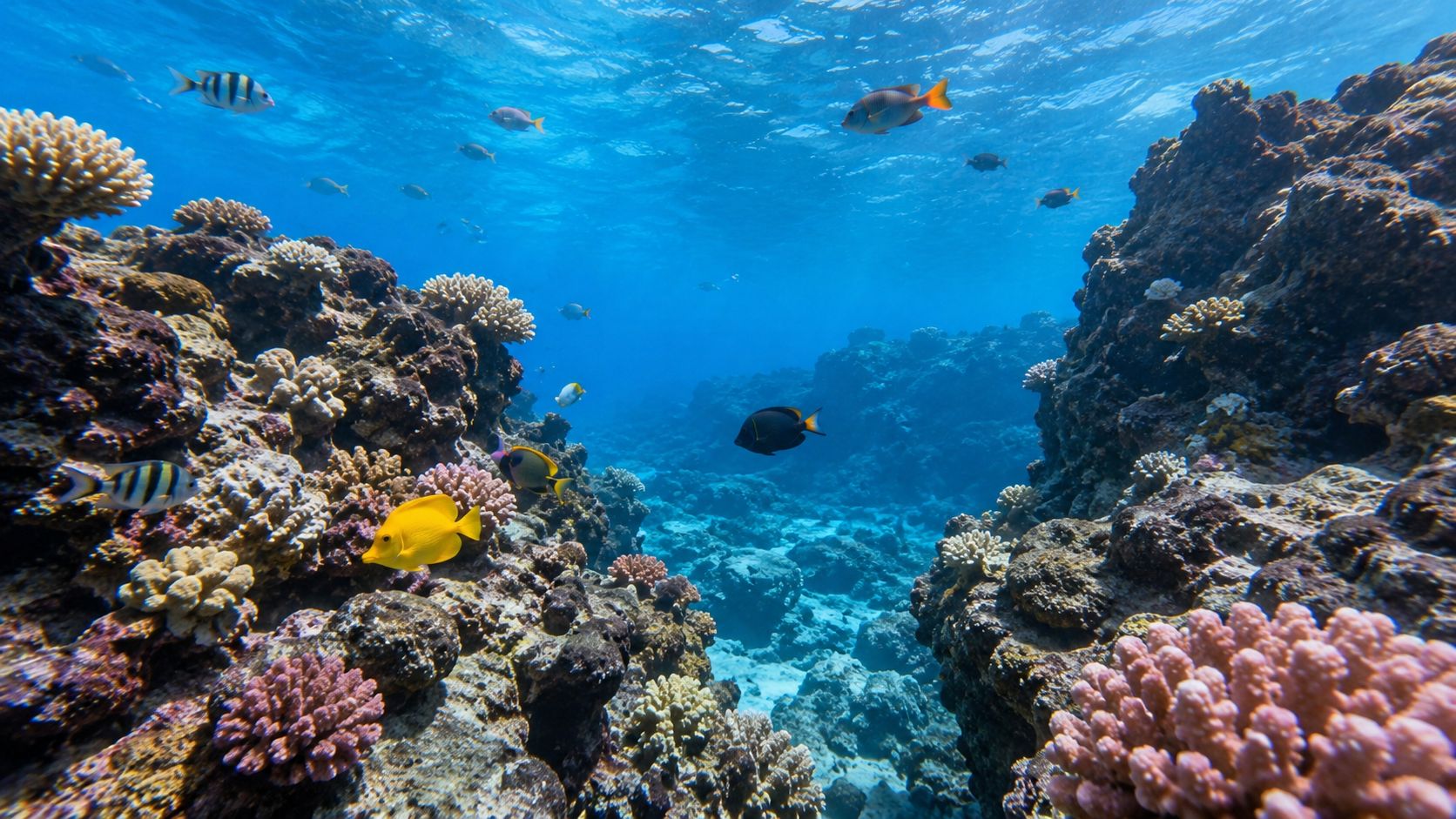
That sounds like brochure language until you look at what it means in practice. Warm water reduces friction for newer divers. Strong visibility makes buoyancy and navigation easier. A huge site count means operators can choose a dive type that fits conditions and experience rather than forcing everyone onto one standard route.
The geology changes the dive
The island's volcanic origin shapes the whole underwater experience. Reefs here don't just spread out in a uniform garden. Lava created contours, holes, swim-through style passages, shelves, and abrupt changes in topography that make even moderate-depth dives feel dramatic.
That matters for more than scenery.
- Navigation feels more interesting because landmarks are structural, not just patches of coral.
- Marine life uses the terrain differently because cracks, ledges, and lava folds create shelter and feeding zones.
- Dive formats stay varied because the coast supports shore entries, boat reefs, night dives, and open-ocean specialty trips.
If you want a broad planning view before booking, this Big Island Hawaii scuba guide is a useful place to compare the main formats.
Reliable conditions change who can enjoy it
Some destinations are famous because they offer one spectacular dive under narrow conditions. Kona is better than that. It's a place where a wide range of divers can usually find something appropriate.
Here's the practical effect:
| Dive planning factor | What it means underwater |
|---|---|
| Warm water | Longer comfort window, especially for newer divers and multi-day trips |
| Strong visibility | Easier descents, easier buddy contact, more relaxed reef diving |
| Large site variety | Better matching of skill level to dive style |
| Multiple dive formats | One trip can combine mellow reefs with marquee experiences |
Practical rule: A destination becomes truly useful when it gives you fallback options without feeling like compromises. The Big Island does that well.
A lot of tropical destinations are enjoyable. Fewer are flexible. That's its primary strength.
Exploring Kona's Signature Dive Experiences
You finish a calm morning reef dive, rinse off, and start asking the right question. What kind of second signature experience is right for this trip? In Kona, that decision matters more than picking the most famous name on a map. Manta, blackwater, and daytime reef diving each deliver a very different kind of underwater day.
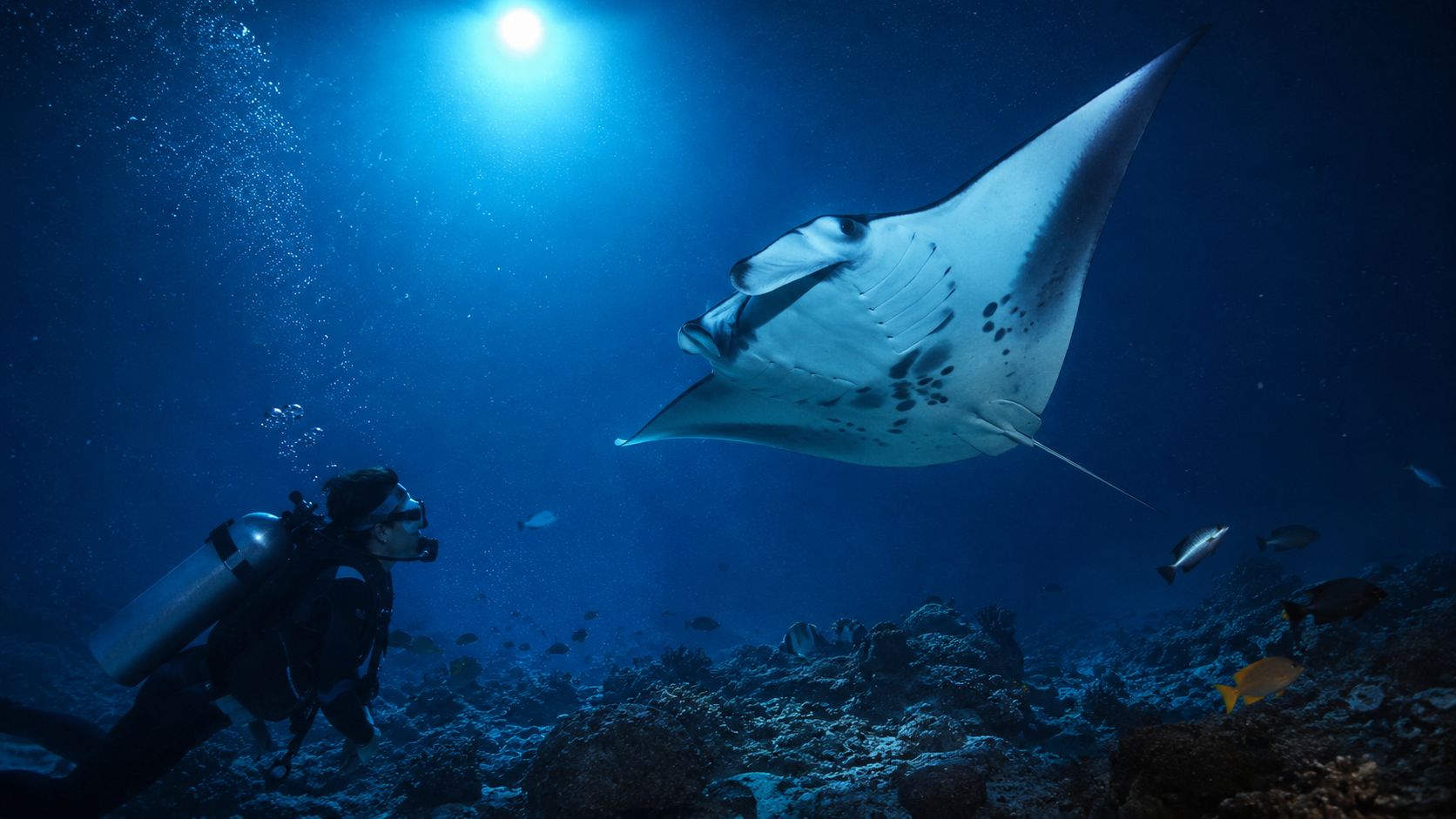
Manta ray night dive
The manta dive is Kona's marquee experience because it is accessible to a wide range of certified divers and still feels extraordinary every time it goes right. Divers settle near a lit viewing area in relatively shallow water, hold position, and let the animals come to the plankton.
That last part is what separates a great manta dive from a frustrating one.
Good manta divers stay quiet in the water column. They control their fins, protect the light field, and avoid chasing passes that were going to come close anyway. Poor buoyancy turns a graceful wildlife encounter into a cloudy, crowded mess fast.
For newer divers, this is usually the better night option than blackwater. For families with mixed experience levels, it is often the easiest shared headline activity because divers and snorkelers can both enjoy the same event through options like this manta ray night swim in Kona. For advanced divers, it still earns a spot because the animal behavior is the draw, not the technical challenge.
A practical rule helps. Book mantas if your group wants a high-probability wildlife encounter and you are comfortable staying still, following tight direction, and treating the dive as an observation session instead of a hunt.
Blackwater dive
Blackwater suits a completely different diver.
Boats run offshore into deep open water, and the dive happens suspended in the water column at night with no reef, no lava wall, and no bottom reference. What you are watching for is pelagic larval life and other drifting organisms that rise toward the lights after dark. The reward is unusual. So is the setting.
This is the right pick for divers who already know they are comfortable in darkness, neutral in trim, and calm without structure around them. Underwater photographers love it for obvious reasons. Curious divers who get excited about strange, delicate, rarely seen life usually come back talking about blackwater for years.
It is a poor match for a few groups. Newly certified divers who still rely on the bottom for orientation often find it mentally tiring. Divers expecting sharks, big reef scenes, or a conventional night dive can leave disappointed even when the dive itself is well run.
My usual advice is simple. Choose blackwater because you want the format, not because you feel obligated to try Kona's most unusual dive. The divers who enjoy it most know exactly what they signed up for.
Blackwater favors composure, trim, and patience. Divers who hold position and watch carefully usually see far more than divers who keep searching for a reef that is not there.
Morning and afternoon reef dives
Daytime reef dives form the core in most Kona itineraries.
They are the best fit for new divers building confidence, certified divers returning to the water after a long break, and mixed groups that need flexibility without giving up quality. They also give experienced divers something the specialty dives do not always provide. Time to settle in, read the lava structure, and enjoy how Kona's marine life uses ledges, arches, fingers of rock, and coral pockets through the day.
These dives are also where smart trip planning starts. A diver who struggles with buoyancy on a morning reef probably should not rush into a manta night dive that same evening. A diver who looks relaxed, efficient, and alert on a daytime charter may be a strong blackwater candidate later in the trip.
Use the right dive type for the right goal:
| Dive type | Best for | Strengths | Trade-offs |
|---|---|---|---|
| Manta night dive | Certified divers who want a signature wildlife encounter | Memorable animal interaction, modest depth, strong group appeal | Requires discipline and comfort staying mostly still |
| Blackwater | Advanced or very comfortable divers | Rare pelagic life, highly specialized experience, excellent for photo-focused divers | Open-water exposure, no bottom reference, mentally demanding for some divers |
| Morning or afternoon reef dive | Nearly everyone, including newer divers | Easy to match to skill level, varied topography and fish life, strong value across multi-day trips | Less “bucket list” marketing appeal, even though the diving is often excellent |
If you only have a short trip, reef plus manta is the safest classic pairing. If you have several days and already know you dive well at night, add blackwater after you have a feel for your comfort and energy level in Kona's conditions.
Planning Your Dive Itinerary
You finish a great first day in Kona, feel strong, and start eyeing every specialty trip on the schedule. That is usually the moment to slow down and plan like a diver, not like a shopper. The best Big Island itineraries match dive type, energy, and skill level across the whole trip.
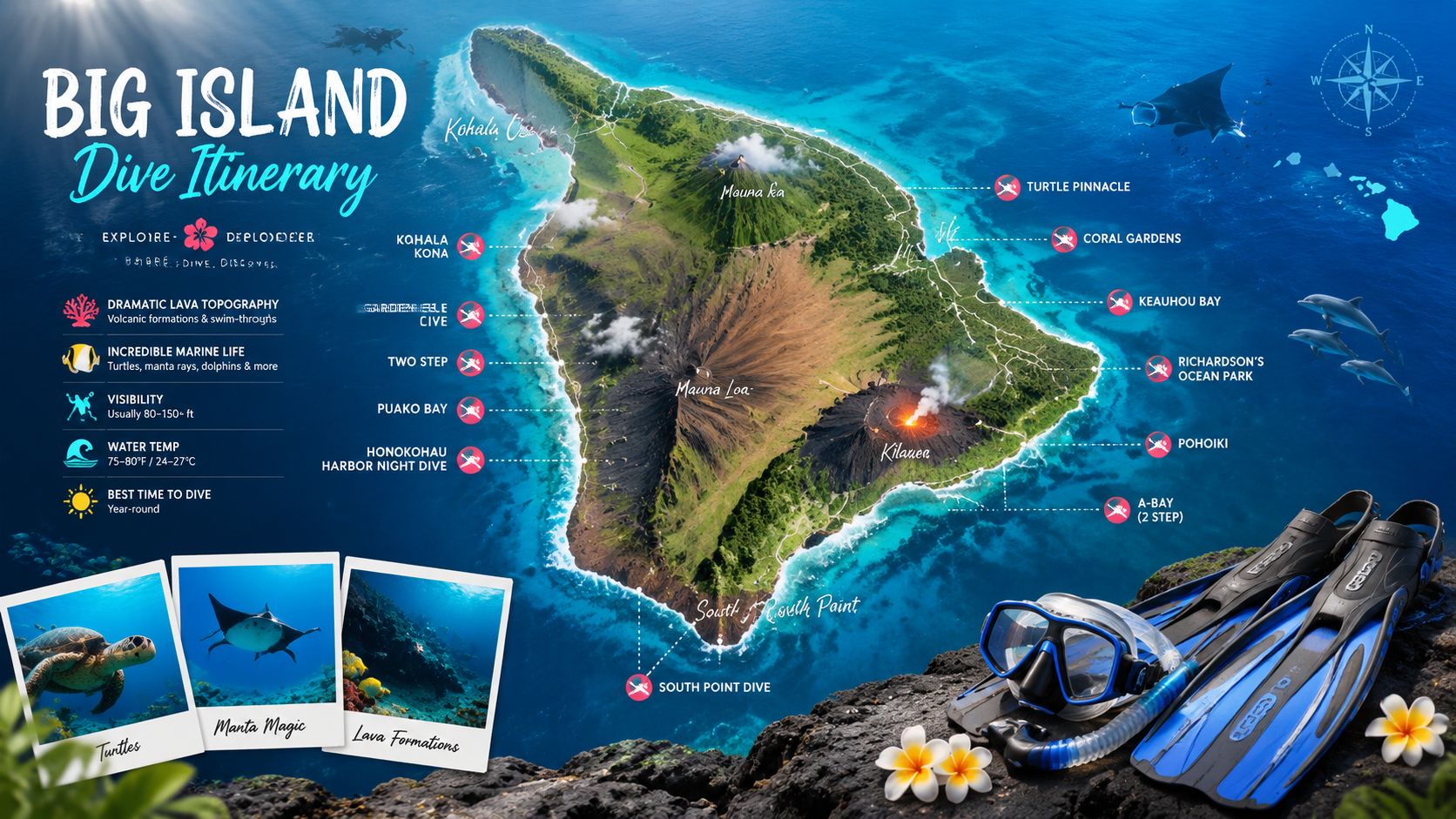
In Kona, the order of your dives matters almost as much as the dives themselves. A calm morning reef charter early in the trip helps you dial in weighting, check how comfortable you feel with local entries and exits, and settle into the pace of boat diving here. Save the more mentally demanding experiences for later, once you know how you are handling conditions, motion, and night diving.
If you want to compare trip formats beyond standard scuba charters, this guide to Kona boat tours and on-water options is useful for groups with mixed interests.
A simple framework by diver type
Build the trip around the kind of diver you are on day two of vacation. Tired, sun-exposed, a little jet-lagged, and carrying gear. That answer is usually more useful than your idealized plan from home.
The Kona classic
This fits a lot of certified divers, especially if the goal is to get a great sample of what makes the Big Island special without overloading the schedule.
- Day one
- Morning reef charter
- Relaxed afternoon on land
- Day two
- Manta night dive
- Keep the rest of the day light
Why it works: the reef dive gives you a baseline. You get comfortable with Kona conditions first, and the manta dive lands as the highlight instead of the first test.
The advanced diver plan
This works better for divers who already know they are solid at night, comfortable in open-water settings, and still sharp after a travel day.
- One morning for a more demanding reef, pinnacle, or structure-focused charter
- A break for food, hydration, and rest
- A separate evening for blackwater
The trade-off is straightforward. You give up packing everything into one day, but you show up to the specialty dive with better focus. That usually leads to a better dive and better photos.
The more attention a dive requires, the more recovery time it deserves around it.
The family or mixed-group plan
This is often the smartest setup for real vacations, where one person wants advanced diving and someone else just wants an enjoyable day on the water.
| Group type | Smart plan |
|---|---|
| Certified diver plus non-diver | Pick one shared boat day, then leave room for a separate dive-only outing later |
| New diver plus experienced diver | Start with an easy reef charter together, then split activities if the experienced diver wants a specialty trip |
| Parents with older kids | Begin with snorkeling or a low-pressure ocean day, then book scuba after everyone knows they still have the energy for it |
How many “big” dives should you stack?
Usually fewer than you think.
A strong Big Island plan often includes one signature experience, one or two reef dives matched to your comfort level, and one flexible day. That open day has real value. Kona conditions can change, people get tired, and some travelers decide after one manta or blackwater trip that they would rather spend the next day relaxed than chase another late-night boat.
I have seen plenty of divers enjoy more by trying to do less. Reef plus manta is the safest high-value pairing for a short trip. Add blackwater only if your schedule leaves enough room to recover and you already know that style of diving suits you.
That structure keeps the trip feeling like a vacation and still gives you the dives you will talk about long after you leave the island.
Choosing the Right Dive Operator in Kona
The operator matters more than the logo on the boat. In Kona, conditions can be easy one day and demanding the next. The crew's judgment, the quality of the briefing, and how they group divers often shape the trip more than the destination name.
What to check before you book
Don't just ask where the boat goes. Ask how the day runs.
Safety culture
Look for clear boat procedures, direct briefings, realistic diver screening, and crew who don't oversell marginal fit for specialty dives.Diver grouping
A mixed boat can still run well if the operator separates newer divers from more confident ones and plans accordingly.Comfort and logistics
Entry and exit ease, gear setup flow, shade, and rinse organization all affect how relaxed you are by the second dive.Trip design
Some operators are strongest on reef charters. Some are known for manta logistics. Others handle advanced and specialty formats more smoothly.
A useful comparison point is whether the company seems to shape the trip around the divers or shape the divers around a fixed script. The first usually delivers a better day.
One example worth considering
If you're comparing operators, Kona Honu Divers tours are one option to review because the company offers several of the core formats visitors usually want in one place, including reef diving, manta trips, and blackwater. Their broader Kona diving company page is also useful if you want to compare trip styles before booking.
Red flags divers should take seriously
A few warning signs come up again and again:
- Everybody gets pushed into the same dive plan even when skill levels are obviously different.
- The briefing is vague about current, entry, exit, or what the dive requires.
- The specialty dive is sold like a theme park ride instead of a format with real comfort and skill demands.
- Questions get brushed off instead of answered clearly.
The right operator doesn't just get you to the site. They reduce uncertainty before your fins touch the water.
That's the standard to use. A smooth trip usually looks calm on the surface because somebody competent handled the details well.
Practical Guide for Your Big Island Dive Trip
A strong Big Island dive trip usually comes down to timing, packing, and booking the right experience at the right price point.
Pricing is a good place to start because it tells you what kind of day you're buying. Available coverage shows prices ranging from about $169 for a certified two-tank boat dive to around $230 for manta experiences, and that spread often reflects boat comfort, crew-to-guest ratios, and overall service quality. The same coverage notes that morning reef trips often offer better value with calmer seas, excellent visibility, and fewer crowds, as discussed in this Big Island scuba pricing guide.
What to pack and why
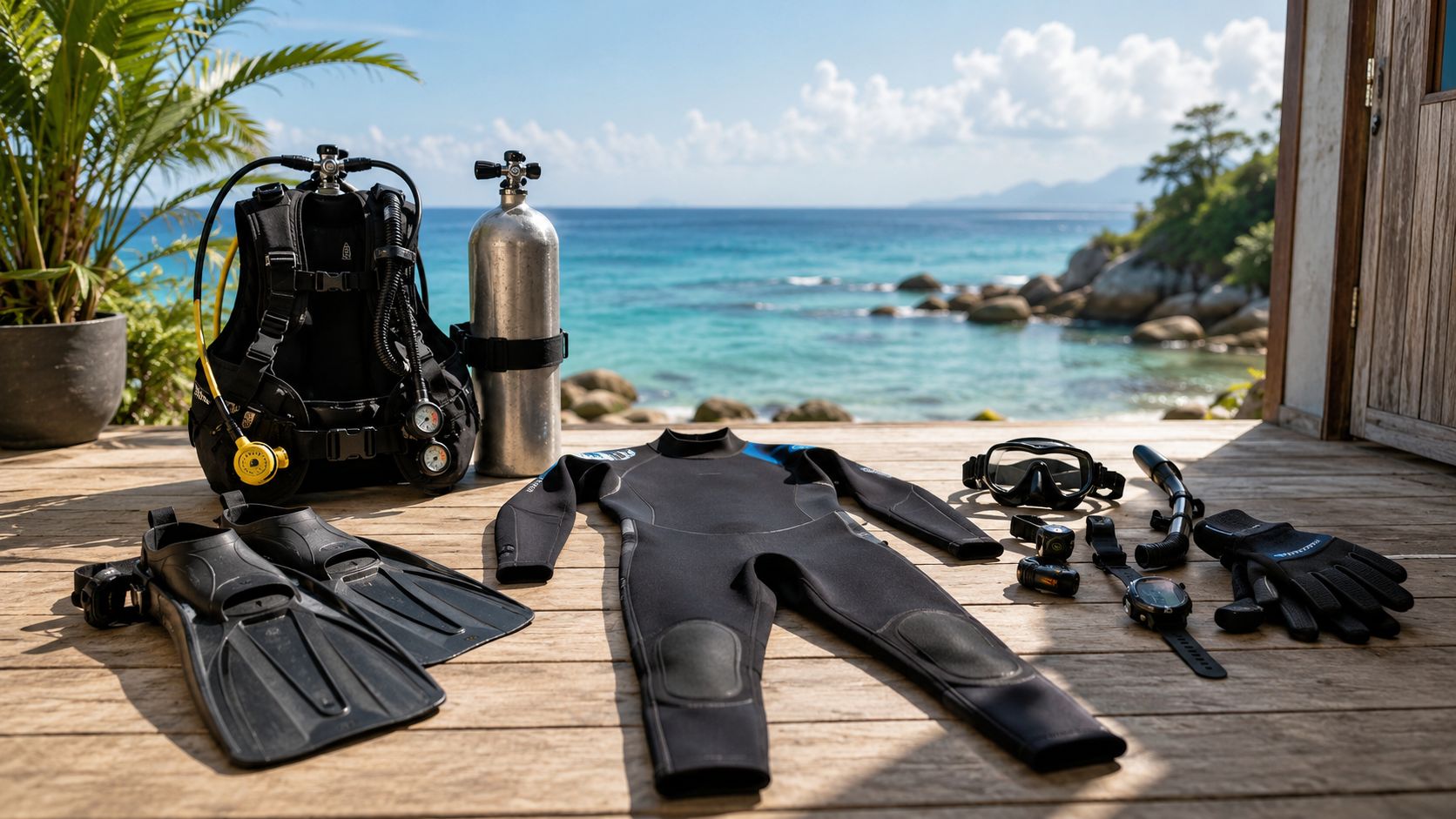
Forget the tourist version of a dive packing list. Pack for boat efficiency and repeat diving.
- Mask you trust because rental masks are the easiest way to ruin an otherwise good dive
- Logbook and certification card
- Light layers for the boat ride back
- Reef-safe sun protection
- Dry bag for phone, wallet, and car key
- Spare save-a-dive basics if you regularly travel with your own kit
If you're prone to motion issues, deal with that before you board. Don't wait until the boat clears the harbor.
Seasickness planning that actually helps
A lot of divers are embarrassed to plan for seasickness. Don't be. Even excellent divers can feel rough on the wrong day, especially on night trips or offshore runs.
Useful options include Ship-EEZ Seasickness Patch, Dramamine pills, Bonine pills, Sea Band wristbands, and Ginger chews. For trip planning and non-product prevention tips, this guide on how to avoid sea sickness is worth reading before you book.
A few practical habits help too:
- Eat lightly, but don't board on an empty stomach.
- Hydrate early instead of chugging water at the dock.
- Choose your dive type thoughtfully. Offshore night dives hit differently than sheltered daytime reef charters.
Certification and booking decisions
Not every dive belongs on every itinerary.
| Diver profile | Better choice |
|---|---|
| Newly certified | Morning reef dives, then decide on manta |
| Rusty diver | Refresher mindset first, specialty dive second |
| Experienced diver | Reef variety plus one advanced or specialty format |
| Mixed family group | Snorkel-accessible day or intro program before full dive scheduling |
Book the famous trips early if they're central to your vacation. But don't assume the most advertised option is automatically the smartest use of your dive day. Often, it isn't.
Frequently Asked Questions for Big Island Divers
What works best for families with non-divers or kids
Keep at least one day accessible to everyone. That usually means snorkeling instead of trying to turn every family member into a diver on the same schedule.
Kealakekua Bay is a common choice because it's memorable for strong swimmers, casual snorkelers, and ocean-loving non-divers alike. If that's your direction, look at the Kealakekua Bay Captain Cook monument snorkel tour and Captain Cook snorkeling tour options.
I'm an advanced diver. What's available beyond standard reef tours
Look for dive days built around stronger structure, more demanding conditions, or specialized formats rather than just “deeper” for the sake of depth. Advanced divers usually get the most satisfaction from variety. One good reef charter with better topography, plus a specialty dive, often beats a repetitive string of standard sites.
For that style of trip, review the advanced long-range dive tour.
Do I need to book far in advance
If a specific experience matters to your trip, yes. That's especially true for iconic night dives and any plan that has to line up around family logistics, limited vacation days, or a narrow weather window.
The practical rule is simple. Book the must-do experiences first. Leave your flexible reef day second. That gives you the best chance of preserving the highlights without overcommitting the whole week.
Is the manta dive always the right choice
Not always. It's unforgettable for many people, but it's not automatically the best first or only dive on the island.
If you're nervous at night, uncertain with buoyancy, or traveling with someone who'd enjoy snorkeling more than scuba, a daytime reef charter or a snorkel-based outing may be the better call. The best Big Island dive is the one that fits the diver, not the one with the most hype.
If you're ready to turn ideas into a trip, Kona Honu Divers is a practical place to start comparing reef, manta, blackwater, and advanced dive options so you can book the version of Kona that fits the way you like to dive.