
You're probably in the same spot most divers hit before they book Hawaiʻi. You've seen the manta photos, the blackwater videos, and the usual “world-class diving” promises. What you haven't gotten is much help deciding what's worth your time, which dives fit your experience, and how to tell a polished operator from a polished marketing page.
That's where diving Big Island should get easier.
The Kona coast rewards divers who want more than pretty reef scenes. It gives you lava architecture, clear blue water, unusual animal encounters, and dive planning that can range from easy reef mornings to more demanding night and offshore experiences. It also forces a practical choice. Book the wrong dives, or book them with the wrong operation, and you can spend a lot of money on an experience that looks better online than it feels in the water.
Welcome to a Diver's Paradise
You drop in off Kona, look down, and the first thing that stands out is shape. The reef is not a gentle coral garden that happens to be in Hawaii. It is lava country underwater, with ledges, fingers, bowls, and hard volcanic lines that give each site more structure than many warm-water destinations.
That difference is why experienced divers keep coming back to the Big Island. A trip here is rarely about checking a Hawaii box. It is about getting dives that feel distinct from the Caribbean, Mexico, or the South Pacific, then choosing operators and sites that match the kind of diving you want to do.
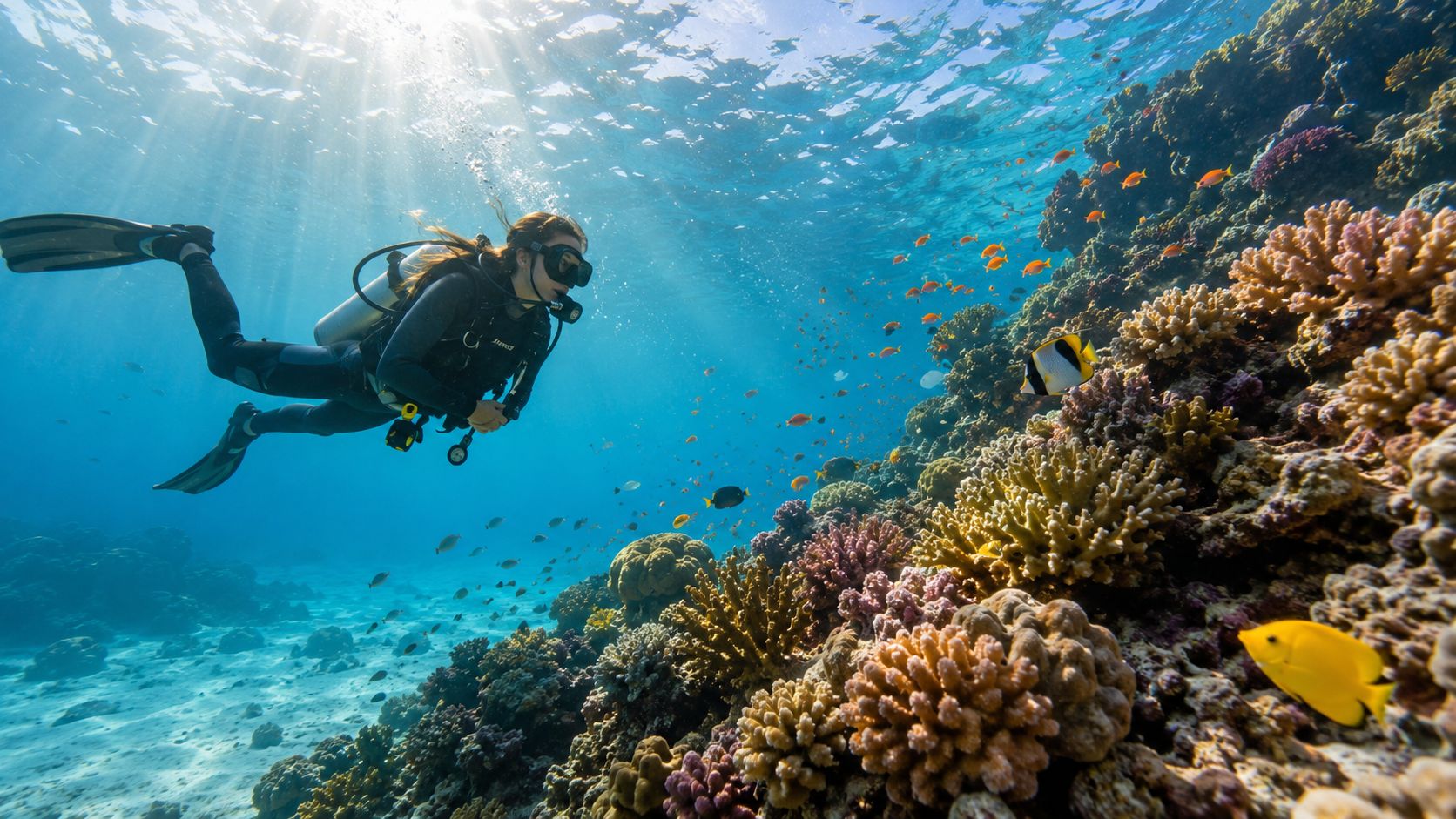
The marine life adds another layer. The Divers Alert Network overview of Kona diving notes that the Kona Coast on the Big Island of Hawaiʻi is recognized as one of the most biologically unique marine environments in the world, with extremely high rates of marine endemism for both marine fish and invertebrates, meaning that a large proportion of the species found there exist nowhere else on Earth.
For divers, that changes the value of the trip. You are not booking the Big Island just for warm water and pretty visibility. You are booking it because species mixes, reef life, and site layout feel specifically Hawaiian, and that holds up even after you have logged plenty of tropical dives elsewhere.
Practical rule: If your goal is a trip built around animals and terrain you cannot substitute with another destination, Kona belongs near the top of the list.
A smart way to start is to compare local operators against a high bar, not against vacation marketing. Reviewing the trip styles, boat setup, and training focus at Kona Honu Divers gives you a useful benchmark for what a well-run Kona operation should provide, from site planning to diver fit to overall professionalism.
Why Kona's Underwater World is Unmatched
Kona's reputation isn't hype. It comes from a mix of geology and conditions that consistently make dives easier to enjoy and easier to photograph.
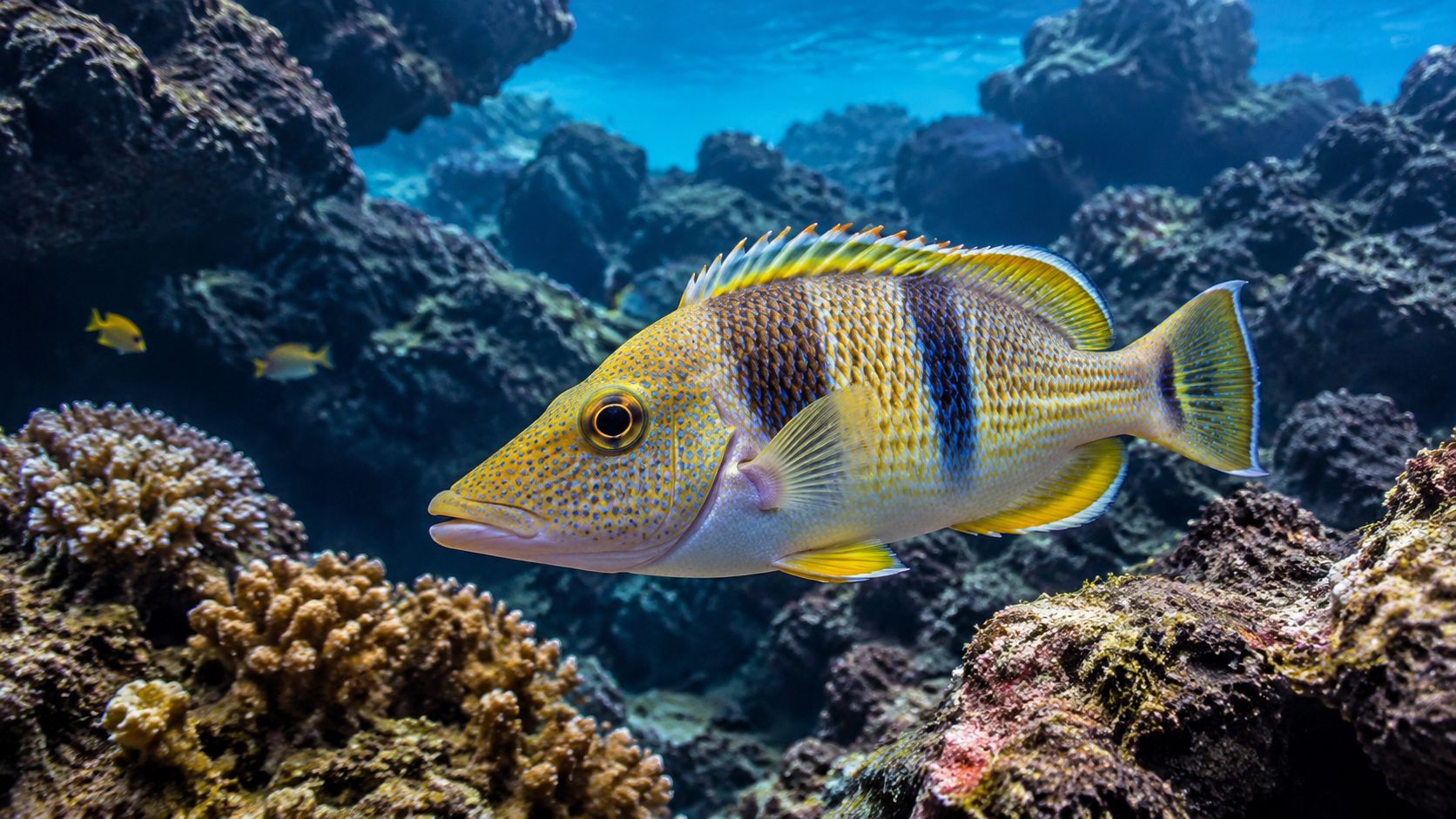
The clearest single reason is visibility. The Big Island scuba diving guide from Girls That Scuba states that Big Island scuba diving benefits from unusually high underwater visibility that often exceeds 30 meters (100 feet) due to low nutrient coastal waters and limited runoff. The region's geology, basaltic lava flows forming steep drop-offs and lava tubes, creates a complex reef structure that reduces turbidity, making it a world-class destination for photogenic diving.
What that means underwater
Good visibility changes more than your photos.
It affects navigation, comfort, and how relaxed a dive feels. Newer divers generally find it easier to settle down when they can clearly track the group, the reef line, and their exit reference. Experienced divers get better site awareness on walls, lava fingers, and deeper reef contours.
Kona's lava-built structure also creates dives with more shape than many sand-and-coral destinations. You don't just drift over flat reef. You move past cut ledges, pockets, arches, tubes, and abrupt changes in relief. That gives the dives more personality.
Why photographers love it
Kona works well for wide scenes because the water column often stays clean and blue. It also works for fish and reef detail because the volcanic topography gives marine life lots of places to hold position, feed, or shelter.
That combination is rare. Some places give you dramatic terrain with moody visibility. Other places give you clear water over flatter reef. Kona often gives you both.
A practical way to explore those conditions is by comparing trip styles on a Kona Coast diving tours page. Morning reef runs, manta nights, and advanced charters aren't interchangeable products. They serve different divers and different goals.
Clear water can hide complexity. A site may look easy from the surface and still demand solid buoyancy once you get near lava structure, surge, or a steep profile.
Why Kona works for different experience levels
For newer certified divers, the upside is confidence. You can spend less energy just trying to orient yourself and more energy paying attention to breathing, trim, and marine life.
For more seasoned divers, the upside is range. Kona can support mellow sightseeing dives, serious camera dives, and more technical-feeling recreational profiles depending on the site and operator. That's why many divers planning a full trip end up reading deeper into what's unique about diving in Kona before they choose specific bookings.
The Big Island's Signature Dives You Can't Miss
The Big Island has plenty of good day diving, but two experiences define the destination for a lot of visiting divers. One is famous for a reason. The other feels like you've left the planet.
The manta ray night dive
If you only book one iconic Kona dive, this is usually it.
The experience works because the site setup is repeatable and the animal behavior is often reliable when the protocol is handled properly. The Scuba Diving feature on Hawaiʻi's Big Island manta dive describes the standard format clearly: the Kona Manta Ray Night Dive typically uses a designated underwater “campfire” at Garden Eel Cove, where lights are positioned on the seafloor at 35 feet to attract plankton. This site's topography provides a relatively protected and flat area that allows for safer positioning of multiple divers and consistent upward viewing of manta rays feeding above.
Garden Eel Cove is the right place to pay attention to, because site choice matters. A protected location with a good viewing area and stronger reef surroundings usually gives the dive a more orderly feel. That matters when multiple divers are kneeling or settled in place, lights are fixed, and everyone's trying to watch mantas feeding above without turning the scene into chaos.
Why Garden Eel Cove stands out
Not every manta briefing tells you what matters underwater. These points do:
- Protected layout: A more sheltered site usually makes diver positioning easier and reduces the feeling of drift and scramble.
- Flat viewing zone: A flatter bottom is better for stable group setup and cleaner sight lines.
- Reef quality nearby: Better surrounding reef makes the entire dive feel like more than a single attraction.
- Predictable protocol: The campfire format works best when divers stay put and let the mantas control the interaction.
A lot of marketing treats all manta dives as equivalent. They aren't. Site layout, diver discipline, and how the crew manages the group affect both safety and the quality of the encounter. If you're comparing trips, look at a dedicated Big Island manta ray tour page and pay attention to how the dive itself is described, not just the photos.
If you already know the manta dive is on your list, the direct manta dive tour booking page is the simplest place to compare that trip format.
Stay low, stay still, and don't chase. The divers who get the best manta views are usually the ones who move the least.
The blackwater dive
Blackwater isn't a reef dive at night. It's its own category.
You head offshore into deep open ocean, descend on a lit downline, and spend the dive watching larval and pelagic life rise from the depths. Everything feels suspended. There's no reef for reference, no comforting topography, and no familiar daytime rhythm. For the right diver, that's the whole point.
Blackwater rewards calm divers with solid control. You need to manage your buoyancy without visual structure, monitor your depth and position, and stay mentally composed while tiny transparent animals, alien-looking jellies, and juvenile life stages drift through the beams.
What works on blackwater:
- Good trim and buoyancy: You don't want to yo-yo in the water column.
- Comfort in darkness: Not bravado. Actual comfort.
- Disciplined attention: This isn't a social splash-around. You need to listen and stay engaged.
- Real curiosity: Divers who love behavior, odd morphology, and rare sightings get the most from it.
What doesn't work is booking blackwater because it sounds edgy. If you want a relaxing sightseeing dive, choose reef diving. If you want the most unusual underwater experience on the island, book a Kona blackwater night dive.
Which signature dive should you book first
If your goal is a classic Kona experience, start with mantas.
If your goal is novelty and you already know you're comfortable in challenging-feeling conditions, blackwater may be the more memorable dive. A lot of experienced visitors do both, but they serve different instincts. One is graceful, structured, and shared. The other is sparse, surreal, and intensely focused.
Planning Your Big Island Dive Adventure
Trip planning gets easier once you match the dive to the season, your skill level, and how your stomach handles boats.
Big Island Diving Conditions by Season
| Season | Water Temp (Avg) | Visibility | Key Marine Life |
|---|---|---|---|
| Winter | Cooler than summer | Often clear | Reef life, manta encounters, seasonal whales may be observed in the region |
| Spring | Moderate | Often clear | Reef life, manta encounters |
| Summer | Warmer than winter | Often clear | Reef life, manta encounters, strong photography conditions |
| Fall | Moderate to warm | Often clear | Reef life, manta encounters |
The exact day matters more than the label on the calendar. Kona is a place where boat route, site choice, and surface conditions often matter more than broad seasonal generalizations. What stays consistent is that divers come for clear water, volcanic terrain, and signature animal encounters.
Match the dive to your actual experience
People often make avoidable mistakes.
The Kona Honu Divers overview of experience needs for Big Island dives notes that for safety and comfort, Kona manta night dive operators commonly require Intermediate or Advanced-level divers, citing the need for excellent buoyancy control in darkness and among other divers. This ensures all divers can maintain a stable position without disturbing the reef or other guests while mantas feed overhead.
That requirement makes sense. A manta night dive isn't difficult because of depth. It's demanding because of darkness, task loading, and proximity to other divers. If your buoyancy still falls apart when you stop moving, book daytime reef dives first and save the manta dive for later in your trip.
If you're already comfortable and want something more demanding than the standard schedule, look at an advanced long-range dive tour. That's usually a better fit for experienced divers than trying to force an advanced experience out of a beginner-friendly boat.
Book for the diver you are on your worst day, not the diver you are in your logbook fantasies.
Seasickness can ruin a good plan
A lot of otherwise capable divers underestimate this. Kona can be calm, but if you're prone to motion sickness, deal with it before you step onto the boat.
Useful options include Ship-EEZ Seasickness Patch, Dramamine pills, Bonine pills, Sea Band wristbands, and Ginger chews.
What works in practice is simple:
- Take prevention seriously: Don't wait until the boat leaves the harbor.
- Eat lightly: An empty stomach can be bad. A heavy one can be worse.
- Hydrate early: Start before check-in, not after the first dive.
- Tell the crew: Good crews can often suggest the best place to sit and how to pace your day.
How to Choose the Right Dive Operator in Kona
You can book the wrong Kona dive boat and still see good marine life. You will also feel the difference by the first briefing, the first giant stride, and the first time the group hits the water out of sync.
That is why choosing an operator matters more than choosing a site name on a map. Good crews make average conditions feel organized and relaxed. Weak crews can turn a famous dive into a crowded, sloppy mess.
Safety should be clear before you hand over your card
Start by asking specific questions, not browsing hero photos.
Ask how they brief entries and exits, what emergency oxygen they carry, how they handle separated divers, and whether the crew changes the plan when conditions shift. If you are booking manta or blackwater, ask how they screen divers for that trip and how they keep the group under control once everyone is in the water.
The quality difference shows up fast. A strong operator answers directly, with no sales fog. A weak one keeps steering the conversation back to turtles, mantas, and "great visibility."
The boat affects your day more than the site list
Divers often shop by destination and ignore the platform getting them there. That is a mistake.
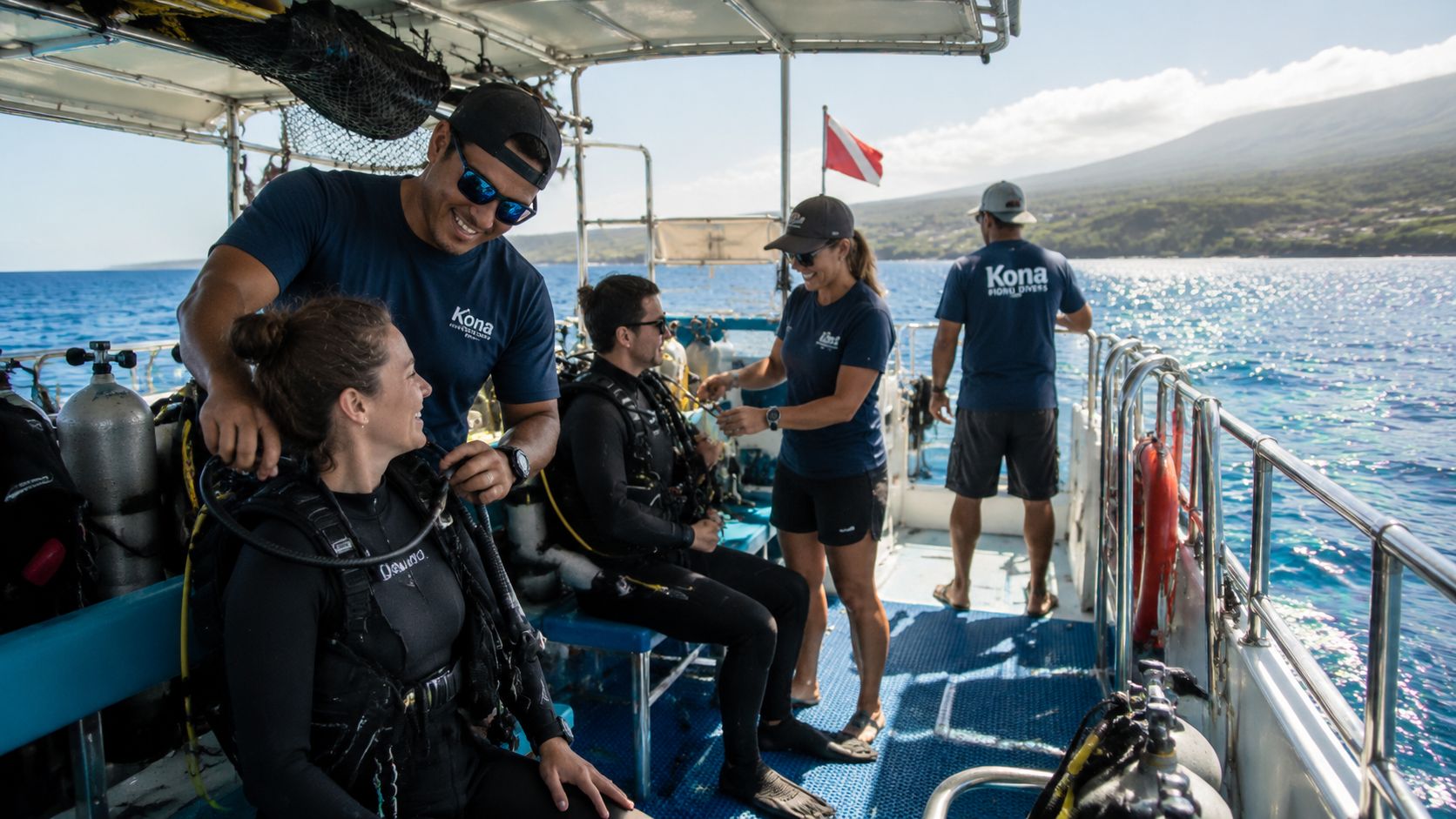
A well-set-up boat gives you enough room to gear up without bumping tanks, a clean entry and exit routine, real shade, water within reach, and crew flow that keeps the deck calm instead of chaotic. On a two-tank morning, that means less fatigue and fewer small mistakes. On a night trip, it matters even more.
Group management separates polished operators from average ones
This is the part many travel articles skip, and it is usually the part experienced divers care about most.
Look for crews that ask about recent diving, weighting, air use, and comfort level before assigning groups. Look for dive plans that match the least capable diver in the group instead of the loudest one on the boat. Underwater, the best guides notice early stress, fix simple problems on the surface interval, and keep one struggling diver from dragging down the whole charter.
If you want a practical starting point, this ranking of Kona diving companies by trip style and operator standards is useful for comparing how different boats run their days.
Conservation shows up in crew behavior
In Kona, "eco-friendly" means very little unless it changes how the dive is conducted.
Pay attention to whether the crew enforces spacing around wildlife, corrects poor buoyancy before reef contact becomes likely, and turns people away from dives they are not ready for. Manta trips are a good test. Good operators run them like controlled wildlife encounters. Poor operators let the water turn into a free-for-all.
Use a high-standard operator as your benchmark
One practical way to compare companies is to measure everyone against a full-service operator with a strong reputation for organization, training, and trip discipline. Kona Honu Divers is a useful benchmark for that. They run a broad schedule that includes reef, manta, blackwater, and advanced outings, so you can compare other operators against a clear standard for briefing quality, trip fit, rental setup, and overall execution.
That is the gap most generic Big Island dive guides leave open. They tell you Kona is worth diving. They do not tell you how to judge who should be taking you there.
Packing Gear and What to Expect on the Boat
You don't need to overpack for diving Big Island, but a few smart choices make the day smoother.
What to bring
- Certification card and log details: Keep them easy to access, especially for check-in and dive assignment.
- Swimwear and towel: Show up ready to gear up, not to reorganize your suitcase in the parking lot.
- Reusable water bottle: Hydration affects comfort more than most divers admit.
- Reef-safe sunscreen: Apply it before boarding when possible.
- Light layers: Mornings, wet rides, and post-dive wind can feel cooler than visitors expect.
- Mask if you have a favorite: Rental masks can be fine, but a familiar mask removes one annoying variable.
What the day usually feels like
A well-run Kona boat day should feel organized without feeling rushed.
You check in, confirm paperwork and certification, get fitted for anything you're renting, and head to the harbor with a clear briefing before departure. On the boat, the crew covers site plan, entry and exit procedures, buddy expectations, and anything specific to the day's conditions.
After the first dive, expect a surface interval with water, a snack, and a chance to adjust weighting or minor gear issues. That reset matters. Good crews use it to fix small problems before they become second-dive frustrations.
Gear expectations
Most visiting divers rent at least part of their setup. That's normal.
The smart move is to ask in advance what's included, what can be added, and whether specialty gear is available for your planned trip. If you're prone to motion sickness, it's also worth reading practical prep advice before the day of the charter, including this guide to the best seasickness medication for Kona dive trips.
Bring less than you think. The divers who look most comfortable on the boat usually have the simplest setup.
For newer divers, that predictable flow reduces anxiety. For experienced divers, it's a sign the crew respects everyone's bottom time enough not to waste it with preventable disorganization.
Your Ultimate Big Island Dive Itinerary Awaits
A good Big Island trip doesn't need to be complicated. It needs to be chosen well.
If you want the broadest view of what Kona offers, build your plan around three ideas. Start with daytime reef diving for the lava terrain, fish life, and easy orientation. Add the manta night dive for the signature experience. If your skills and comfort level are there, finish with blackwater or a more advanced charter for something that feels completely different from standard tropical diving.
That mix works because each dive scratches a different itch. Reef dives give you the geography of Kona. Mantas give you the spectacle. Blackwater gives you the strangeness that experienced divers remember for years.
A practical itinerary for many visitors looks something like this:
- Arrival buffer: Don't force your hardest dive on your first tired travel day.
- Reef day first: Get comfortable with local conditions and weighting.
- Manta night next: Book it after you've settled into Kona diving rhythm.
- Advanced or blackwater last: End with the most specialized experience once you're dialed in.
What matters most is intention. Don't book every famous trip just because it's famous. Book the dives that fit your comfort, your interests, and the kind of memory you want to take home.
Check AvailabilityIf you're ready to stop researching and start diving, Kona Honu Divers is a straightforward place to check schedules, compare trips, and book the kind of Big Island diving experience that fits your skill level and goals.