
You're probably in one of two spots right now. You're either staring at a map of Hawaiʻi trying to figure out whether Big Island diving is worth building a trip around, or you already know you want to dive here and you're trying to avoid booking the wrong experience.
That's the right question.
Diving Big Island isn't one single product. It's a mix of easy reef dives, specialty night dives, advanced offshore diving, lava topography, and conditions that can be forgiving one day and awkward the next. The people who have the best trips usually don't just chase the most famous name. They match the dive to their skill, budget, and comfort in ocean conditions.
The Big Island rewards that approach. If you choose well, you can get calm clear water, dramatic volcanic structure, and wildlife encounters that are hard to duplicate anywhere else.
Why Dive Hawaiʻi's Big Island
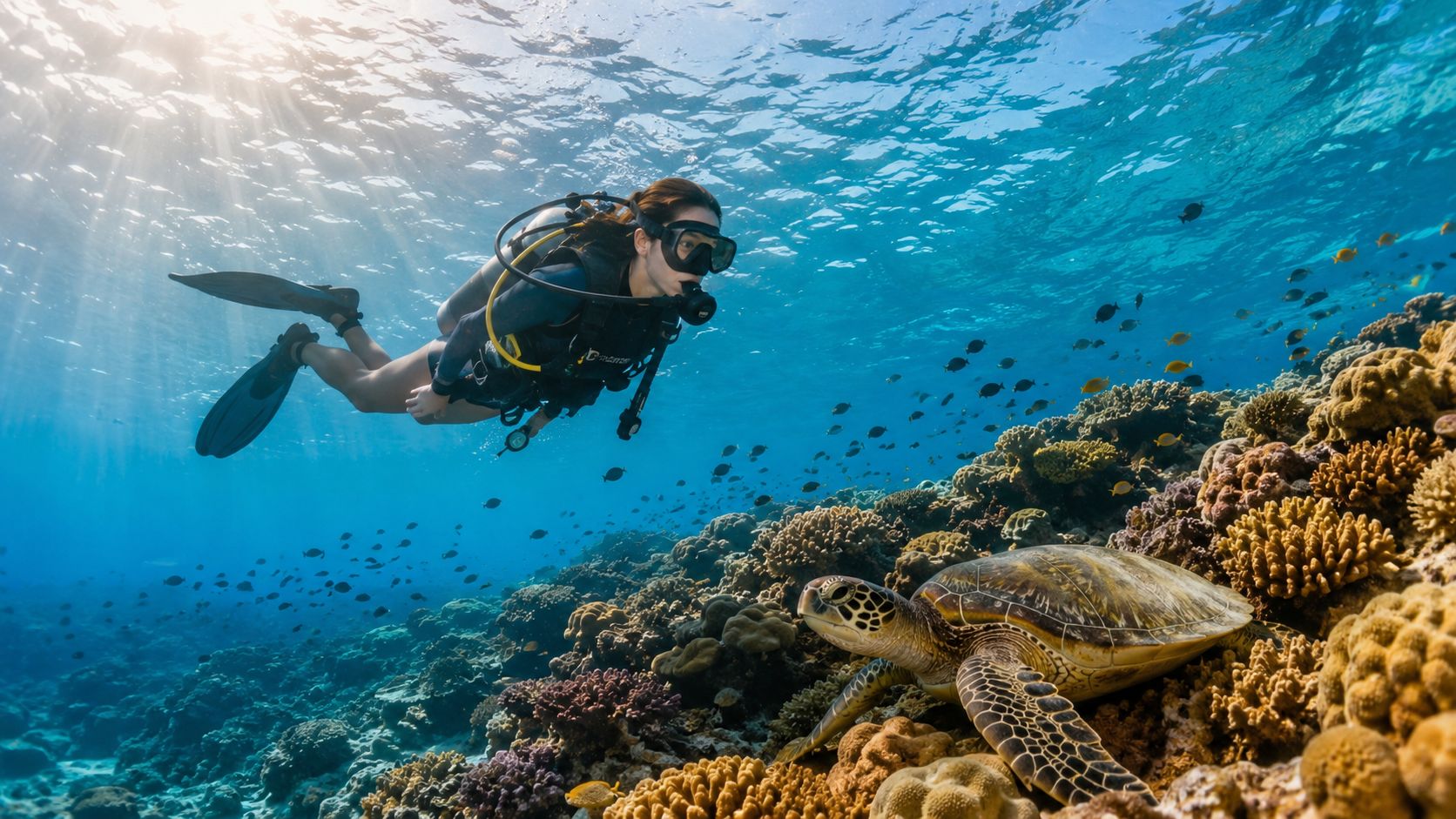
Show up in Kona on a flat summer morning, and the appeal is obvious before you descend. The entry is often simple, the visibility can be excellent, and once you look down you see terrain with real structure. Lava shelves, fingers, arches, and pockets break up the bottom in a way that keeps a dive interesting from start to finish.
That variety is the primary reason to dive the Big Island. Divers can spend the same trip doing relaxed reef dives, a signature night dive, or a more demanding offshore charter, and those are very different decisions in terms of training, cost, and comfort in open-ocean conditions. A general guide to Big Island Hawaii scuba diving gives a useful overview, but the better approach is to choose the island for range, then choose specific dives based on how you prefer to dive.
What makes it different
Big Island diving stands out because the underwater terrain has more shape than many warm-water reef destinations. Volcanic formation gives sites a clear sense of route and relief. You are not just drifting over coral. You are moving along drop-offs, around lava contours, past caverns, and through reef sections that feel built rather than scattered.
It also works for divers who do not all want the same trip.
- Volcanic topography: Lava tubes, arches, caverns, and sharp structure changes create dives with strong visual character.
- Real variety: Calm reef dives, manta night dives, and blackwater trips all exist in the same destination, but they suit very different divers.
- Usable conditions through the year: Kona stays diveable in every season, though surface conditions, swell, and site access still change enough that trip timing matters.
One practical point matters here. The island is not automatically a perfect fit just because it is famous. Some divers come for easy, fish-filled reef diving and have a great time. Others come expecting every charter to feel relaxed, then realize that certain specialty dives require better buoyancy, more tolerance for current, or more comfort being far from shore.
Who enjoys it most
The Big Island is strongest for divers who want choice instead of one fixed style of diving. Newer certified divers can build a trip around straightforward two-tank reef mornings. Families and mixed-experience groups usually do better with operators that keep the plan simple and conservative. Experienced divers often get the most out of Kona by adding one or two specialty dives rather than trying to make every day an advanced day.
That trade-off matters. Chasing the most famous dive on the schedule is not always the smartest call. The better trip usually comes from matching the dive to your skill level, budget, and comfort in local conditions.
The World-Famous Big Island Dive Experiences
A lot of divers arrive in Kona with one famous dive in mind, then build the rest of the trip around whatever has open spots. That usually works. It does not always produce the best trip.
The smarter approach is to choose these marquee dives by fit. Ask three questions first. How comfortable are you in the water at night? How steady is your buoyancy when there is no bottom reference? How much of your budget do you want tied up in one specialty charter? If you answer those truthfully, the right dive usually becomes obvious.
Manta ray night diving
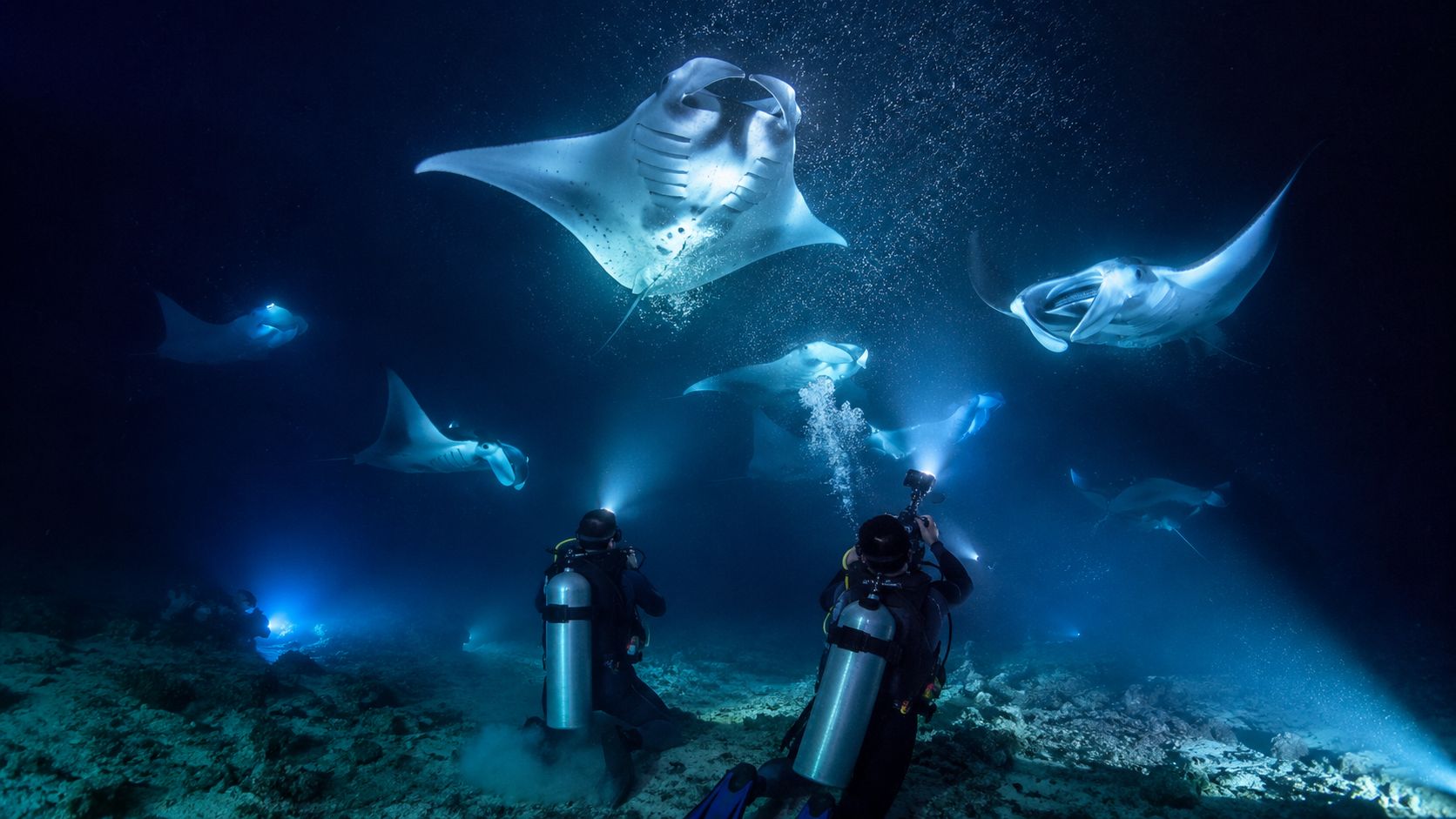
For many visitors, the manta night dive is the right first specialty choice. It is famous, but it is also accessible to a much wider range of certified divers than blackwater or more demanding advanced charters. Done well, it feels organized, calm, and very easy to follow.
Site choice matters more than first-time visitors expect. I usually point people toward Garden Eel Cove because the site is more protected, the setup is clearer, and the dive tends to feel less chaotic for newer night divers. Those details affect the experience as much as the mantas do. A good manta dive gives you a stable place to settle, watch, and stay out of the animals' path.
The trade-off is simple. This is a specialty dive with a premium reputation, so it can take a bigger share of your budget than a standard two-tank morning. It is still the better value for many divers because the learning curve is manageable and the payoff is high. For a broader look at how these trips fit into a Kona itinerary, review local diving Kona Big Island options.
Blackwater diving
Blackwater is a different category altogether.
You leave the coast, head offshore at night, and descend into open ocean with no reef below you. The Big Island blackwater diving guide explains that divers drift over very deep water while lights attract pelagic life rising from below.
This dive is best for experienced divers who already have solid trim, calm breathing, and enough self-control to stay relaxed when the usual visual references disappear. Divers who love it often describe it as the most unusual dive of the trip. Divers who are not ready for it usually know within minutes.
That is why I tell people not to book blackwater just because it sounds rare. Book it if you want the challenge and have the control to enjoy it. If your buoyancy still gets loose when task loading increases, spend your money on reef dives and the manta night dive first. You will likely have a better trip.
Lava architecture and caverns
The volcanic structure is what keeps ordinary daytime dives from feeling ordinary after day three or four. Even on a relaxed reef profile, the terrain often gives you arches, folds, ledges, and swim-throughs that make the route feel deliberate instead of repetitive.
Some features are fun for almost any certified diver. Wide arches and open swim-throughs usually work well if the group has decent control and the guide manages spacing. Cavern-style spaces are more situational. They are at their best when visibility is clean, surge is low, and nobody in the group treats the passage like a race.
Good operators are conservative here for a reason. Lava topography can make a site memorable, but it should not turn a simple recreational dive into a stress test.
Reef diving that still feels like Hawaiʻi
The famous specialty dives get the attention. The reef diving is what makes a full week in Kona work.
Diving conditions are often optimal for mixed groups. Newer divers can settle in. Photographers get time to slow down. More experienced divers can enjoy the structure, fish life, and clean conditions without paying specialty-trip pricing every day.
If I were helping a visiting diver build a realistic plan, I would rarely suggest stacking only headline dives. One manta night dive, one advanced specialty if it is a good fit, and a few well-chosen reef mornings usually gives you a better balance of cost, comfort, and overall dive quality.
Planning Your Trip When to Go and What to Expect
You book two dive days in Kona, show up in winter, and find out the diving is still on but the plan has changed. That is normal here. Good Big Island trip planning starts with flexibility, not with chasing a single famous site.
The west or leeward Kona coast is the primary dive zone because it sits in the island's rain shadow and gets more protection from the prevailing trade winds. That usually means clearer water and easier boat operations than the more exposed sides of the island. A regional overview from Liquid Cosmos on the west Kona coast also notes that winter swells can affect access and make captain judgment matter more.
Big Island diving seasons at a glance
| Condition | Summer (May-Oct) | Winter (Nov-Apr) |
|---|---|---|
| Water feel | Warmer overall | Cooler overall |
| Typical planning outlook | Easier for new divers and short trips | Better for divers who can stay flexible |
| Surface conditions | Often calmer | More swell-sensitive on some days |
| Best fit for | Families, newer divers, comfort-focused trips | Returning divers, longer stays, backup-plan travelers |
Summer is the lower-stress option for a lot of visitors. Boat rides are often easier, site selection is more predictable, and newer divers tend to have a better first impression when entries, exits, and surface intervals stay calm.
Winter can still be excellent. The trade-off is uncertainty. You may get beautiful visibility and very good diving, but you also need to accept that the captain might change sites, shorten a run, or cancel a more exposed plan for safety.
This is the meaning of year-round diving on the Big Island. Operators can usually find workable diving on the Kona side through much of the year, but the exact site and experience can change day to day. This guide to the best months to scuba dive in Hawaii is useful if you want to match your travel window to your comfort level rather than just pick a month at random.
A simple way to decide:
- Only one or two dive days: Favor the calmer season and operators with a wide site rotation.
- Traveling with new divers or family: Prioritize easy boat days over bucket-list ambitions.
- Comfortable with some uncertainty: Winter can reward flexible divers who do not need a fixed itinerary.
- Prone to rough boat rides: Choose your season as carefully as your dive site.
Seasickness and boat comfort
Boat comfort changes the whole trip. I have seen certified divers with good skills call off their second dive because the ride out did them in first.
If you know you are motion-sensitive, treat that as part of trip planning, not an afterthought. Common options include the Ship-EEZ Seasickness Patch, Dramamine pills, Bonine pills, Sea Band wristbands, and Ginger chews.
A few habits help a lot:
- Eat lightly: Go with a small breakfast, not an empty stomach and not a heavy meal.
- Hydrate early: Start before check-in, especially on warm mornings.
- Stay outside and look up: Watching the horizon usually helps more than looking at a phone or camera screen.
- Tell the crew early: If you start feeling bad, say it before it becomes a problem.
If you want the best odds of a smooth trip, plan around your weakest link. For some divers that is air consumption. For others it is surge, boat ride tolerance, or limited vacation days. Build around that reality and Big Island diving usually delivers a much better week.
Matching Dives to Your Skill Level
A lot of divers lose money on the Big Island the same way. They book the headline trip first, then spend the dive trying to keep up with conditions, depth, or task loading that do not match their actual comfort level.
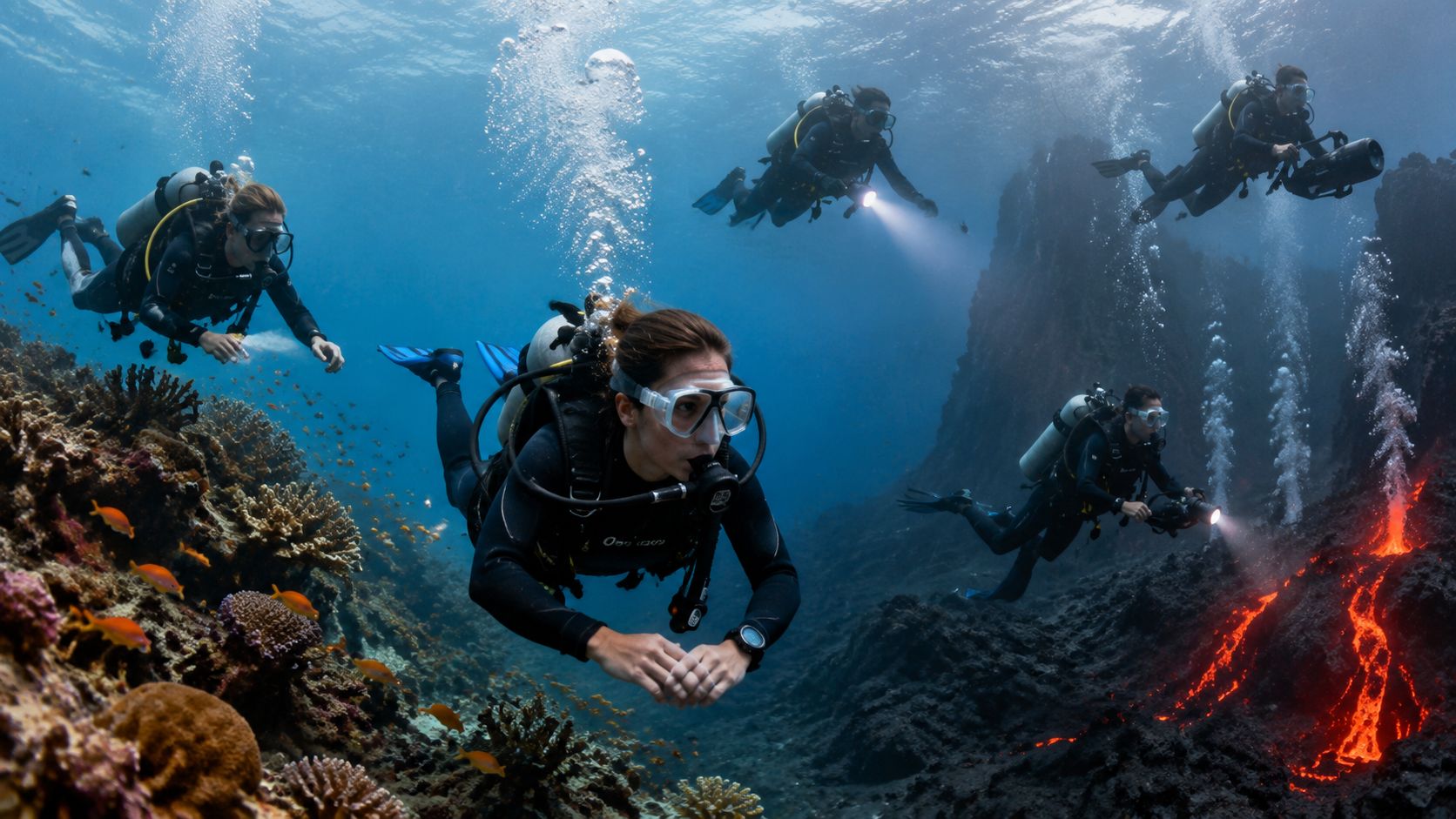
The most important planning question is simple: what kind of dive will let you enjoy Hawaiʻi instead of just getting through it? On this island, skill level matters, but so do recent experience, air consumption, night-diving comfort, and how well you handle current, surge, and blue-water exposure.
If you're a first-timer or traveling with family
Keep the day easy and supervised. Intro dives exist for a reason, and one Big Island scuba diving cost and options guide lists intro dives at about $275.
For new divers, the value is not squeezing in the most bottom time for the fewest dollars. It is calm instruction, simple site selection, and a crew that knows how to keep the pace under control. Families usually do better with a low-stress first experience than with an ambitious itinerary.
If that sounds like your group, start with a program built for beginner scuba diving on the Big Island. A good first dive should leave someone saying, “I want to do that again,” not “I survived it.”
If you're a certified recreational diver
Many visiting divers find significant value in these offerings. A standard certified two-tank boat dive is about $169, and the same guide lists specialty manta trips around $230.
A smart plan for this group is usually one standard morning charter and one marquee experience. Do the reef or lava-structure dives first, see how the conditions feel, then decide whether to add manta or another specialty trip. That order gives you a better read on your weighting, buoyancy, and general comfort in Kona conditions before committing to something more specific.
Good judgment matters more than ambition here. Divers with solid basic skills often love the manta night dive. Divers who are certified but rusty usually have a better day if they rebuild confidence on an easier profile first.
If you're experienced and want something different
Advanced trips start paying off when you have enough spare attention to enjoy them. Blackwater is the clearest example. If you are still working hard on buoyancy, trim, or situational awareness, the dive can feel long and task-heavy instead of memorable.
The same guide notes that blackwater trips commonly recommend 25+ logged dives. Treat that as a practical screening tool, not marketing copy. Logged dives are not a perfect measure of competence, but they usually signal whether a diver has enough repetition to stay relaxed in unfamiliar conditions.
I tell divers to choose challenge based on bandwidth. If your skills are automatic and current, a blackwater or longer-range trip can be the highlight of the week. If you have not dived recently, a standard two-tank morning is often the better first call, even for someone with an advanced card.
That approach is less glamorous on paper. It usually produces the better trip in the water.
Essential Logistics Certification Packing and Safety
This part isn't glamorous, but it's where smooth trips are made.
What to bring before you even leave the hotel
- Certification proof: Bring your certification card or digital equivalent if you're booking certified dives.
- Medical honesty: If an operator asks for a medical questionnaire, answer it truthfully. Don't try to “get through” the form.
- Personal essentials: Bring water, a towel, reef-safe sun protection, and a warm layer for the ride back if you chill easily.
- Dive computer and mask: If you own gear you trust, especially your mask and computer, bring it.
Packing for comfort, not just survival
Most visitors pack for the dive itself and forget the boat day around it. That's a mistake.
Pack for transitions. You'll want dry clothes, something warm for wind after the dive, and your own seasickness remedies if you use them. If you wear prescription lenses, sort that out before the dock, not when the boat is boarding.
Safety habits that matter on the Big Island
A few rules consistently separate smooth dive days from messy ones:
- Listen to the briefing. Local site details matter more here than many visitors expect.
- Stay inside your real comfort zone. Lava entries, surge, and specialty night profiles punish overconfidence.
- Hydrate and pace your day. Sun, salt, and repeated boat movement can wear people down faster than they realize.
- Don't plan altitude too close to diving. If your vacation includes major elevation change, build your schedule conservatively after diving.
Respecting your limits is part of being a good diver, not a sign that you're a weak one.
Choosing a Reputable Dive Operator in Kona
You can book two boats for the same morning in Kona and have two very different dive days. One crew may shift sites because the swell has wrapped into the coast overnight. Another may run the original plan even if the entry, current, or visibility no longer fits the divers on board. That difference is what you are paying for.
The Big Island gives operators a huge range of site options, from straightforward reef dives to more exposed and specialized profiles. A reputable shop does more than fill seats. They screen divers properly, choose sites based on actual conditions, and run a boat that stays organized when plans change.
What to look for
Start with how the operator matches trips to people, not how flashy the website looks. Good Kona crews ask useful questions before they confirm you on a trip. How many dives have you done recently? Are you comfortable in current? Do you want a relaxed reef dive, or are you trying to fit in manta, blackwater, and advanced profiles on one trip?
A solid operator usually stands out in a few practical ways:
- They change sites for conditions. Kona diving is often calm, but not always. Good captains and divemasters do not force a plan that no longer makes sense.
- They separate skill levels clearly. Beginner-friendly charters, manta dives, blackwater trips, and training dives should not all be sold as if they suit the same guest.
- They run a tidy boat. Clean decks, clear briefings, well-staged gear, and straightforward entry procedures reduce stress before you even hit the water.
- They pay attention underwater. The guide should be leading, monitoring gas and positioning, and adjusting the dive to the group instead of just swimming a route.
- They explain the actual trade-offs. Early boats may get calmer water. Small groups may cost more. Long-range or specialty trips can be worth it, but only if they fit your experience and goals.
If you are comparing shops, this profile of a Kona diving company with details on boats, crew, and trip types is the kind of information worth checking.
One local option to evaluate
Kona Honu Divers is one Kona operator offering reef charters, manta night dives, blackwater trips, and training-focused options. Based on the publisher information provided for this article, they use custom dive boats, maintain gear in-house, offer free nitrox for qualified divers, and have a long-tenured crew with deep local experience.
Those points matter on the boat, not just on a brochure. In-house gear maintenance usually means fewer fit and function issues. Custom boat layouts can make entries cleaner and reduce crowding around benches and tanks. Free nitrox is useful for certified divers who want longer no-decompression limits on appropriate profiles, but it is not a reason by itself to book a boat that is wrong for your skill level.
What doesn't work
Booking by price alone causes a lot of avoidable disappointment.
A newer diver may end up on a fast-paced boat with stronger conditions than expected. An experienced diver may book the easiest possible charter and spend the day wishing they had chosen a more demanding profile. Families often focus on departure time and forget to ask about ladder design, guide ratio, or how the crew handles seasick guests.
Choose the operator the same way you choose the dive. Match the day to your skill, budget, and tolerance for current, surge, depth, and boat motion. That is how you avoid the classic Kona mistake of booking a famous dive that looked great online but was a poor fit in real life.
Your Big Island Dive Adventure Awaits
You finish a morning reef dive feeling relaxed and wanting more, while the diver next to you is done for the day because the conditions were a little more than expected. That is Big Island diving in a nutshell. The same coast can give one diver an easy confidence-building day and give another exactly the kind of challenge they came for. The smart move is choosing the trip that fits your experience, budget, and tolerance for current, surge, depth, and boat motion.
That is what makes diving Big Island worth the trip. You are not limited to one style of diving or forced into the most advertised option. You can build a trip around calm reef dives, the manta night dive, blackwater, photography goals, family needs, or a mix of all of them, as long as the plan matches the diver.
Operator choice matters just as much as site choice. A well-run boat with realistic site selection, organized briefings, and honest trip matching will usually give you a better day than chasing the most famous name on the schedule. Package pricing, early booking discounts, rental quality, and nitrox availability are all worth comparing, but only after you confirm the charter suits your skill level and the kind of day you want.
If you are ready to compare real trip options, review the available charters and pick the one that fits your diving, not just the one that looks best in photos.