
You've probably got the same tabs open every experienced diver opens before a Hawaii trip. A few operator pages. A few generic “top dives” lists. A weather tab. Maybe your logbook beside the laptop while you ask the essential questions those pages rarely answer.
What's worth booking first? Which dives are signature experiences versus tourist filler? Can you shore dive this island efficiently, or are you wasting precious vacation days trying to make rough entries work? And if the manta ray night dive is on your list, how do you do it without treating wildlife like a theme park?
The Big Island rewards divers who plan like divers, not just travelers. This island gives you the dramatic stuff people fly across oceans for: volcanic topography, lava tubes, clean blue water, long-range visibility, and night dives that feel unlike anywhere else in Hawaii. It also punishes vague planning. A site that looks easy on a map can be awkward in full kit. A “must-do” dive might be wrong for your current comfort level. The operator you choose matters more here than many visitors realize.
That's where practical local knowledge makes the difference. Diving the Big Island isn't hard to enjoy, but it is easy to do inefficiently. The goal isn't to cram in every famous name. The goal is to match the right dives, on the right coast, with the right boat and the right expectations.
Your Ultimate Big Island Diving Adventure Awaits
A strong Big Island trip usually starts the same way. An experienced diver arrives thinking they're booking “a Hawaii dive vacation,” then realizes the island offers several very different underwater experiences packed into one destination. One morning you're drifting over reef with volcanic structure below you. Another night you're kneeling in the dark while manta rays pass overhead. On a different charter, you may be staring into a lava tube opening and deciding how much overhead-style structure you enjoy.
That range is what makes the island special. It's not one-note tropical diving. It's a place where underwater geology drives the whole experience. The reef isn't just colorful background. The old lava created the architecture, the swim-throughs, the ledges, the mood, and often the marine-life behavior around them.
For visiting divers, the sweet spot is usually a mix. Book one signature experience, one classic reef day, and one dive day with enough flexibility that the crew can pick sites based on conditions and the group. That plan almost always works better than chasing a rigid checklist.
If you're still narrowing down what kind of trip you want, the overview at Big Island diving guide is a useful starting point for seeing how the island's dive experiences break out.
What makes first trips memorable
The divers who leave happiest usually don't just chase “big stuff.” They pay attention to how the island dives.
- Volcanic terrain first: Lava fingers, arches, and tube systems give Kona diving its identity.
- Night diving with purpose: The famous night dives here aren't gimmicks. They work because the environment and animal behavior line up.
- A better pace: You can stack high-quality dives without feeling like every day is a long transit to a single site.
Practical rule: Plan for variety, not volume. Two or three well-chosen dive days beat a rushed trip packed with mismatched bookings.
What new visitors often get wrong
Many experienced divers assume they'll “figure it out when they get there.” That works in some destinations. It's less effective on the Big Island because the logistics are uneven. The west side is where most divers focus. Shore access is limited. Signature dives can have specific comfort and skill expectations. Good operators fill the calendar around conditions and demand, not around your ideal last-minute schedule.
The island is easy to love. It's harder to optimize without local context. That's why a little planning goes a long way here.
Why the Big Island Offers World-Class Diving Conditions
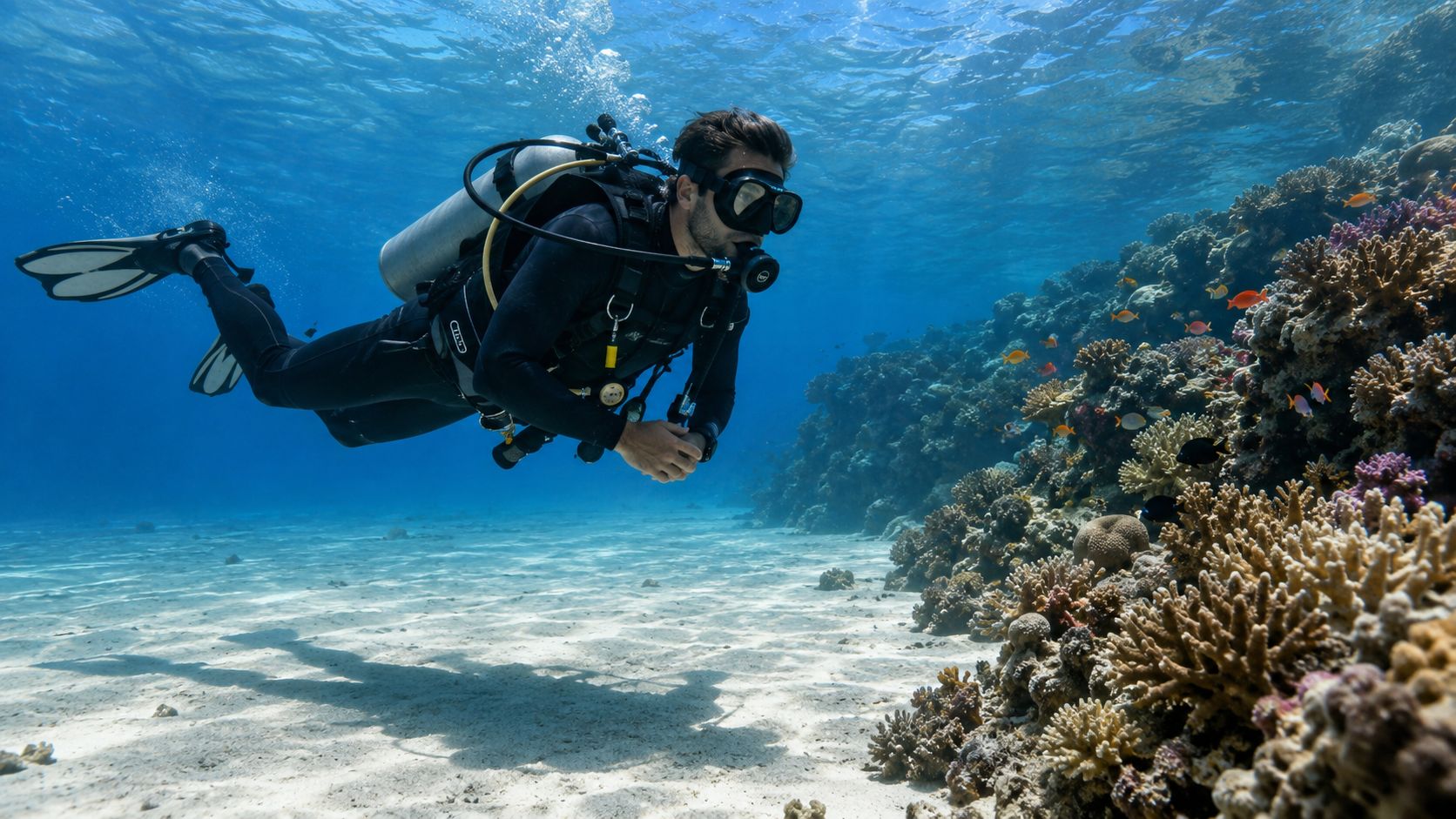
You feel it on the first descent off Kona. The water is often calm on the surface, the entry is straightforward, and once you drop below the boat the volcanic structure comes into view fast. That combination matters more than brochure language. It gives visiting divers reliable conditions and terrain with real character.
Most first-time visitors should focus on the leeward Kona coast. It is the side of the island that most consistently delivers clear water, manageable boat rides, and a dive schedule that does not fall apart every time the weather shifts. On a short trip, that reliability is a serious advantage.
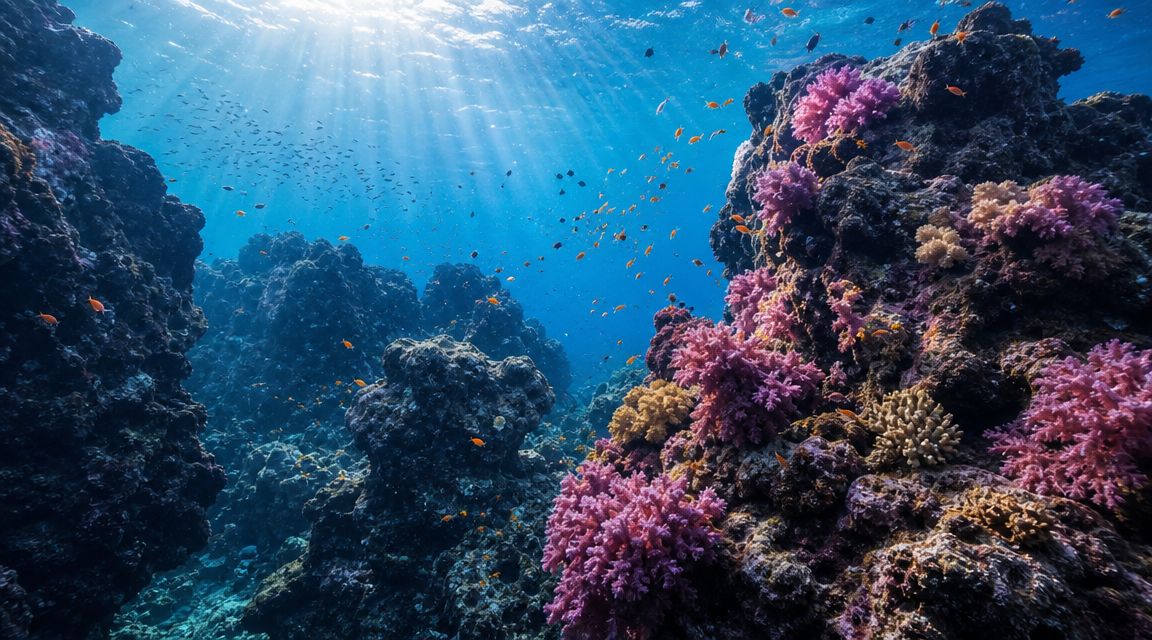
The island's volcanic geology does more than shape the coastline. It creates the underwater architecture people remember after the trip. Instead of long stretches of similar reef, you get lava fingers, hard drop-offs, arches, ledges, and pockets that hold fish well. If you want a stronger sense of how that terrain changes the diving day to day, what is unique about diving in Kona lays out the local conditions well.
What those conditions mean underwater
Good visibility changes the dive in practical ways. Navigation gets easier. Buddy contact stays cleaner. Photographers spend less time fighting haze, and newer ocean divers usually settle down faster when they can read the site around them.
Warm water helps too, but not just because it is comfortable. Divers breathe easier when they are not distracted by cold stress, and that matters on longer profiles, repeat days, and night dives. It is one less problem to manage.
Conditions here also support a wide spread of dive styles without requiring long transfers between completely different regions. That is a big reason the Big Island works for mixed groups and return trips.
| Dive style | What it feels like | Who it suits |
|---|---|---|
| Reef dives | Relaxed, scenic, fish-rich | Most certified divers |
| Lava tube and arch dives | Geological, exploratory | Divers comfortable around structure |
| Manta night dives | Stationary, behavioral wildlife viewing | Broad certification range |
| Blackwater dives | Pelagic, dark, high task loading | Advanced and current divers |
That range is not just nice on paper. It solves a common trip problem. One diver wants easy daytime reefs. Another wants a signature animal encounter. Another is chasing pelagic behavior at night. On the Big Island, those goals can fit into the same trip if you book carefully and stay realistic about skill, seas, and recovery time.
Clear water and warm temperatures help. The key advantage is that the island supports very different kinds of dives without forcing you to change destinations.
The Unforgettable Signature Dives of Kona
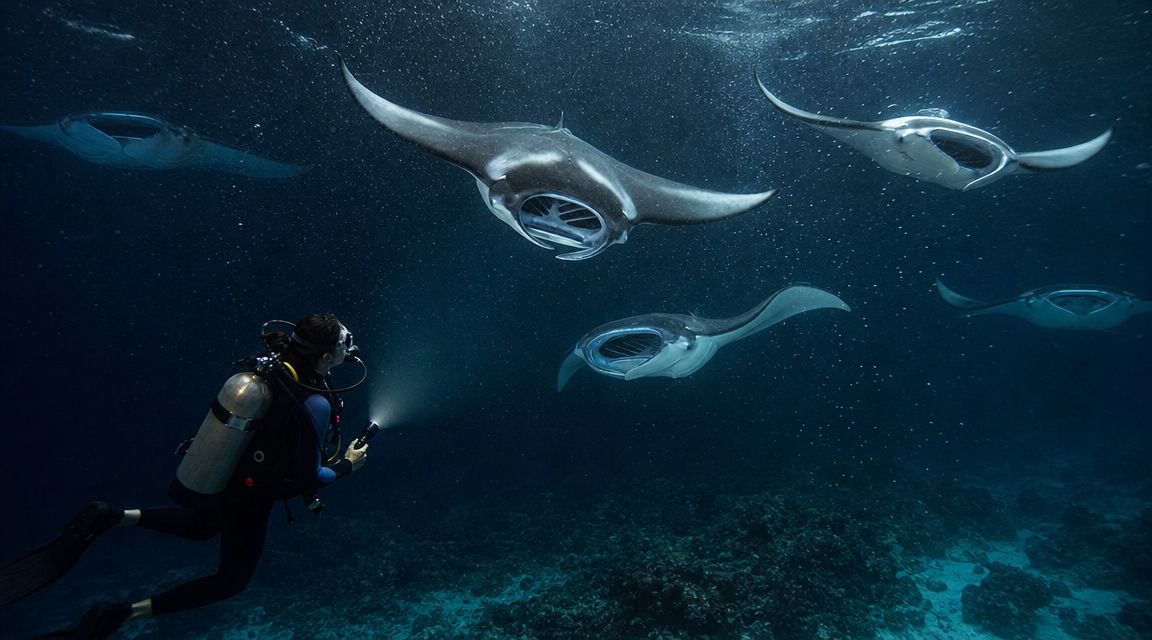
Your first Kona night dive might put you kneeling in a pool of light while manta rays roll overhead close enough that you hear the change in water pressure before you see the next pass. Or it might put you suspended offshore in total black, watching larval creatures drift through your beam with no reef, no bottom, and no horizon to steady you.
Both dives define Kona. They appeal to very different divers, and the logistics are different enough that booking the right one matters as much as choosing to do it.
If you want the wider trip context before you lock anything in, Kona scuba diving options lays out the main styles visitors usually combine on a Big Island itinerary.
The manta ray night dive
The manta dive gets famous fast because it works for a lot of certified divers and still feels spectacular to people with hundreds of dives. You are usually in shallow water, close to a fixed light source, with the group arranged so the mantas can feed through the plankton gathering in the beams, as described in this Big Island manta dive overview.
What matters in practice is not depth. It is discipline.
This is a low-movement, high-awareness dive. Good operators brief positioning clearly, keep the group contained, and do not let divers chase animals or drift out of the viewing pattern. If your buoyancy is sloppy, you can ruin the encounter for yourself and the rest of the group in a hurry.
Site choice matters too. Garden Eel Cove is often the better fit for visiting divers because it tends to offer a more protected setup and a more forgiving overall dive. Keauhou can be excellent, but the right call depends on current conditions, the operator's procedures, and how comfortable you are entering and exiting at night.
For divers ready to reserve that specific trip, the manta ray night dive tour is the relevant booking page.
A well-run manta dive should feel controlled, respectful, and calm. If an operator markets chaos, close contact, or guaranteed behavior, keep looking.
What makes a manta operator worth booking
Visitors often focus on price and forget the part that shapes the dive. Procedure.
Use these checks before you book:
- Ask how they manage diver position. You want a fixed viewing method, not a loose swarm of lights and fins.
- Ask about group size in the water. Smaller, better-supervised groups usually get cleaner interactions.
- Ask how they handle animal contact rules. Serious crews state them plainly and enforce them.
- Ask whether the crew adjusts for conditions or cancels when the site is not appropriate. Responsible operators do not force the dive on a marginal night.
That last point matters more than many visitors expect. The manta dive is easy to sell. It still needs to be run properly.
The blackwater dive
Blackwater is the signature dive experienced divers talk about long after the trip ends. Boats run offshore at night, set up over very deep water, and suspend divers from a lit downline so everyone stays oriented while pelagic life rises up from below.
The skill set is different from reef diving. A diver can be comfortable at depth, solid on air, and completely unsettled in black open water. There is no bottom to reference, no reef to track, and very little visual structure besides the line, your gauges, your team, and whatever drifts into the light. If you have not done this kind of diving before, task loading is a significant test.
The payoff is extraordinary. You are not looking for the usual Hawaii reef scene. You are watching larval fish, gelatinous animals, juvenile cephalopods, and other open-ocean life forms that many divers never see at any other point in their diving.
If that is the reason you came, the blackwater night dive tour is the specific trip to review.
Which one to book first
For a first Big Island trip, the practical rule is simple.
Choose manta first if you want a classic Kona experience with a broader skill fit and less psychological load. Choose blackwater first if you are current, comfortable in darkness, and specifically want an open-ocean night dive that feels unusual from the first minute.
Many experienced visitors do both. Smart trip planning keeps them on separate nights, leaves room for weather changes, and avoids stacking demanding dives when fatigue starts to creep in.
Explore Lava Tubes Reefs and Advanced Terrains
Daytime Kona diving is where returning divers start to understand the island.
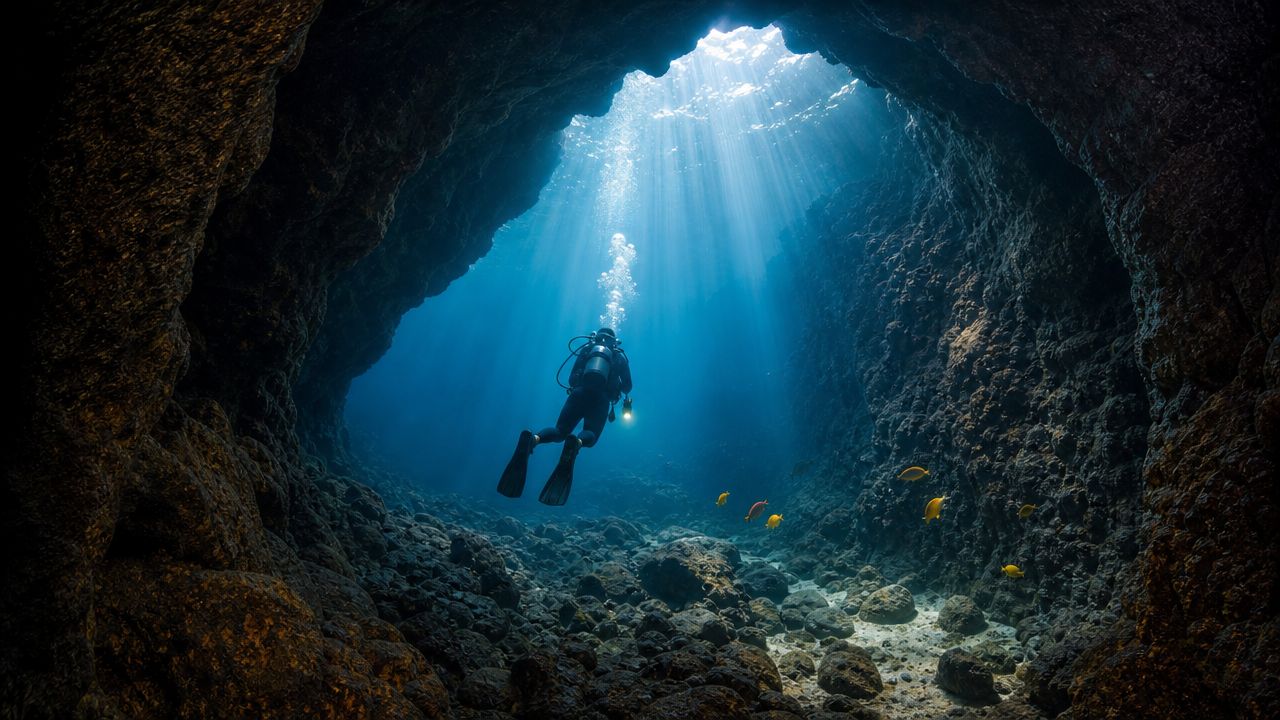
Volcanic topography shapes the whole dive. Instead of long, uniform reef, you get lava tubes, arches, overhangs, shelves, and hard lava fingers broken up by sand channels. That structure changes how you plan the dive and how you dive it. Good buoyancy matters more in tight swim-throughs. Gas planning matters more if the site tempts you to keep poking into one more opening before turning the dive.
The geology also gives Kona better replay value than many visitors expect. Two sites at similar depth can feel completely different because of surge exposure, light angle, and how the lava formed. One dive may be all cut-throughs and dramatic shadow. The next may be a broad reef with isolated bommies and long lava ridges that reward slow navigation.
Why the terrain changes the dive
Fish life is part of the appeal, but the terrain is what keeps experienced divers engaged. Turtles tuck under ledges. Reef fish stack up around relief. Eels, octopus, and shy species use cracks and lava pockets that newer divers often swim right past.
This is also why local site briefings matter. A mainland diver may hear "swim-through" and picture a wide, simple tunnel. On the Big Island, that can mean anything from a roomy lava arch to a darker passage where silting, surge, and spacing suddenly matter. The best operators explain what is decorative and what requires control.
Where advanced divers should spend their time
Advanced diving here is not only about depth. It is about handling task load in a setting that can shift from open reef to overhead-style terrain in a few fin kicks. The divers who do well are calm, current, and honest about their comfort in surge, low light, and more technical site layouts.
Blackwater already proves that point, as noted earlier. The same principle carries into daytime diving. A diver with clean trim and situational awareness will usually get more from Kona than someone chasing a depth number.
For visitors who want a more challenging daytime outing, the premium advanced long-range dive tour is the charter to compare against a standard two-tank morning boat. Long-range trips can mean farther runs, less forgiving entries, and sites chosen for experience level rather than broad beginner appeal.
Shore diving adds another trade-off that many travel guides skip. Boat diving gives visitors easier access to cleaner offshore structure and removes the headache of hauling gear over lava rock. Shore diving can be excellent, but entries are the filter. Uneven footing, surge at the access point, and a long surface exit can turn a simple reef profile into a tiring dive before you even descend. Visitors with limited local knowledge usually have a smoother first week by starting from boats, then adding shore dives once they understand conditions and site access. A few practical dive travel planning tips help with that decision before you pack.
The strongest Big Island divers are rarely the ones asking for the deepest site. They are the ones who can hold position, manage gas, and stay relaxed when the terrain gets tighter and the surge picks up.
A smart mix for experienced visitors
A solid trip usually includes three different kinds of dives:
- One structure-focused reef day: Get used to local lava formations, surge, and navigation cues.
- One signature night dive: Choose based on comfort and goals, not bragging rights.
- One higher-skill daytime charter: Use it for long-range sites or terrain that rewards stronger control.
That mix gives you a better read on what makes Big Island diving different from a destination that is carried by one famous animal encounter.
Your Big Island Dive Trip Planning Guide
A good Big Island dive trip comes together before you ever step on the boat. I see visitors have very different weeks with the same number of dives because one group sequences the trip well and the other stacks the headline dives in the wrong order. On Kona, planning is about matching your first dives, your night dives, and your recovery days to your real comfort level, not the certification card in your wallet.
Start with the basics that affect your diving week. How recently have you been in the water? Do you get cold on long rides back? Are you happy doing several early boat mornings in a row, or do you dive better with a slower schedule? A short pre-trip dive travel checklist for Big Island visitors helps catch the small mistakes that turn into annoying problems on day two.
When to go
Kona is a year-round destination, so the better question is not whether you can dive, but what kind of trip you want to build. Water stays in a comfortable tropical range for most of the year, and exposure protection is usually a simple choice for divers who already know how warm or cold they run.
An essential planning move is to book around your priority dives.
If manta is high on your list, schedule it early enough that weather, fatigue, or a rescheduled charter does not push it off the trip entirely. If blackwater is your main goal, protect that afternoon and evening. Skip the temptation to cram in a long, tiring dive beforehand and then expect sharp buoyancy and focus after dark. If your goal is a broad sample of Kona diving, place a straightforward reef charter at the front of the trip so you can settle in, check weighting, and dial in your trim before the more specialized dives.
Matching dives to certification and current skill
Certification gets you access. Current skill decides whether the dive feels controlled or stressful.
Use this filter before you book:
| Dive type | Better fit for |
|---|---|
| Standard reef charter | Certified divers who want an easy first read on local conditions and terrain |
| Manta night dive | Divers comfortable at night who can stay calm and stable without finning all over the site |
| Blackwater dive | Divers with recent experience, strong buoyancy, and real comfort in dark open water with no bottom reference |
| Advanced long-range trip | Divers prepared for more demanding profiles, longer days, and sites that reward better air consumption and control |
One mistake I see often is treating the first dive of the trip like a test of ambition. It works better as a calibration dive. If you have not been diving recently, do the simple charter first, sort out weighting and breathing, then decide whether a blackwater or more demanding day still makes sense.
Gear choices that actually matter
Bring the items that directly affect comfort and awareness. Mask, computer, and exposure gear you trust are usually worth the bag space. Regulators and BCs are often fine to rent if the operator maintains them well, which is why many visitors travel lighter than they first planned.
Nitrox can be useful on a dive-heavy week because it gives you more flexibility across repeated recreational profiles. Kona Honu Divers includes free Nitrox on applicable trips, which matters if you are doing several charter days and want simpler gas planning without another line item at check-in.
A few packing choices make a bigger difference than divers expect:
- A light layer for the boat: Even warm days can feel cool after multiple dives and a wet ride back.
- Sun protection you will remember to reapply: West side sun exposure adds up fast during surface intervals.
- Basic save-a-dive spares: A mask strap, fin strap, small tool, and any battery or charger your computer depends on can rescue a full day.
- A compact dry bag or mesh organization kit: Keeping your personal gear sorted on a busy boat saves time and prevents small losses.
Leave some room in the schedule, too. The strongest itineraries are not packed edge to edge. A half-day break between bigger dives, or a lighter day before a night charter, usually leads to better diving than trying to prove you can do everything in one trip.
Choosing Your Operator The Key to the Best Dives
Visitors often spend too much time comparing individual sites and not enough time comparing how they'll access them. On the Big Island, that's backwards. The right operator can make an average site feel smooth and worthwhile. The wrong logistical choice can turn a famous destination into a clumsy day.
A practical issue with Big Island planning is shore access. Many guides talk about the west side having the best diving, but they don't spell out what that means for entry and exit. Shore access is limited to a handful of sites, and many of the stronger west-side dives are only realistically reached by boat because of the volcanic coastline, as explained in this Big Island shore-versus-boat discussion.
That's the first big trade-off to understand.
Boat diving versus shore diving for visitors
Shore diving has a place. It can work well for local-style flexibility, budget consciousness, and divers who are comfortable evaluating entries. It's less effective for most first-time visitors who want to maximize quality and reduce uncertainty.
Boat diving works better when:
- You want premier site access: Many of the stronger west-side dives are easier to reach by boat.
- You're traveling with mixed experience levels: Crew support and guided site selection reduce friction.
- You have limited vacation days: You spend less time scouting and more time diving.
Shore diving works better when:
- You know the entries already: Familiarity changes the equation.
- You're happy with a narrow list of manageable sites: Not every visitor is.
- You want a self-directed day: That freedom comes with more responsibility.
What to look for in an operator
For most travelers, the decision should come down to execution.
Look at boat comfort, site selection flexibility, group management, briefing quality, and whether the crew runs wildlife encounters conservatively. If you're comparing options, the Kona dive operator overview helps frame what services and trip types you should expect from a full-service operation.
One operator to evaluate is Kona Honu Divers dive tours, especially if you want one place that covers standard charters, manta trips, and blackwater scheduling within the same trip plan.
Dive Safe and Protect Marine Paradise
Good Big Island diving is built on calm decision-making. The water may look inviting and the visibility may be forgiving, but the best divers here are still the ones who stay conservative. Listen to the briefing. Be honest about how current you are. If a dive asks more of your buoyancy or attention than you're ready to give that day, skip it and protect the rest of the trip.
Seasickness can ruin a great dive day
A lot of Big Island diving happens by boat, so seasickness planning isn't optional if you know you're prone to it. Handle that before boarding, not after the harbor exit.
Useful options include Ship-EEZ Seasickness Patch, Dramamine pills, Bonine pills, Sea Band wristbands, and Ginger chews.
What usually works in practice:
- Take prevention seriously: If medication helps you, use it on schedule rather than waiting for symptoms.
- Eat lightly, not recklessly: An empty stomach isn't always the answer. Heavy food isn't either.
- Choose your spot on the boat: Ask the crew where motion tends to feel easiest.
If you're debating whether you need seasickness prevention, you probably do.
Wildlife etiquette matters more here than in many places
The island's most marketable encounter is also one of its most sensitive. The reef manta ray was assessed as Endangered by the IUCN Red List, which makes operator ethics and diver behavior critical on manta-focused trips, as noted in this reef manta conservation discussion.
That should change how you choose a trip and how you behave underwater.
- Don't chase contact: The point is to observe natural feeding behavior, not force proximity.
- Hold position cleanly: Poor buoyancy doesn't just look sloppy. It can disrupt the encounter.
- Reward careful operations: Responsible wildlife management is part of the product, not a bonus.
The safety habits that matter most
Big Island diving rewards divers who stay simple and sharp.
Keep your profiles conservative. Use the first dive of the trip to settle your weighting and trim. Treat night dives as dives that deserve extra mental bandwidth, not as casual add-ons after a long day. And if you're booking advanced experiences, be current enough to enjoy them rather than merely survive them.
The island gives back a lot when you dive it with respect.
If you want a trip built around solid boat logistics, signature Kona experiences, and practical support for both recreational and advanced divers, Kona Honu Divers is a straightforward place to start comparing schedules and trip options for your Big Island plan.