
You're probably in the same spot most visiting divers are. You've got a Hawaii trip on the calendar, a certification card in your wallet, and a dozen tabs open trying to figure out whether the Big Island is really worth prioritizing over Maui or Oahu for diving.
It is.
If your goal is easy logistics, strong site variety, standout marine life, and conditions that let you spend more time enjoying the dive and less time fighting the ocean, the Kona side is the call. This coast supports approximately 100,000 certified scuba dives annually and welcomes more than 150,000 dive tourists each year, with over 50 unique dive sites in rotation according to this Kona diving overview. That kind of volume only happens where the diving consistently delivers.
Welcome to a Diver's Paradise
Step off the boat on a calm Kona morning, gear up, and you can tell right away what kind of trip this is going to be. The water is clear, the entry is straightforward, and the reef usually starts showing its shape before you even finish your descent.
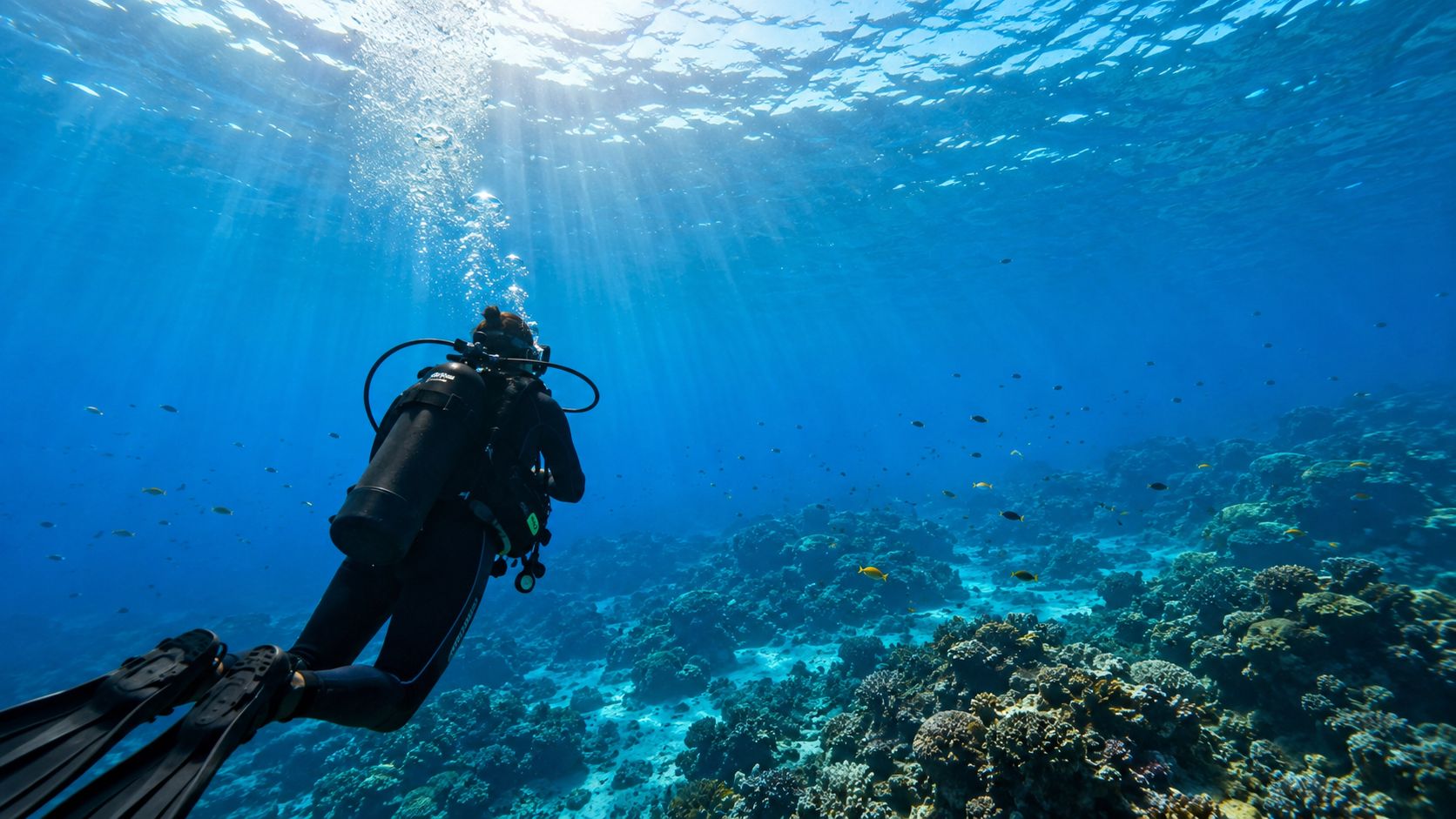
Kona rewards divers who plan well. You get strong visibility, volcanic terrain that gives each site real structure, and marine life that feels different from the usual tropical reef circuit. A lot of species here are found only in Hawaii, which is one reason dives off Kona hold your attention even after several days in the water.
Why Kona feels different underwater
The lava coastline does a lot of the work. It creates shelves, swim-throughs, arches, drop-offs, and long fingers of rock that make navigation intuitive and the scenery more dramatic. You are not staring at one endless reef slope. You are moving through terrain with shape.
Conditions are the other big advantage. Kona's leeward coast is protected compared with windier parts of the state, so operators can run a more dependable schedule and visiting divers can book with more confidence. That matters if you only have a few dive days and do not want to lose one to sloppy planning.
My advice is simple. If diving is the priority, stay on the Kona side and book your boat days early.
What kind of trip this coast is built for
This coast works best for divers who want options and want them organized well. A smart Big Island trip is not about cramming in random sites. It is about matching the right charter, the right conditions, and the right dive order to your goals.
Three groups do especially well here:
- Certified vacation divers who want easy boat diving, good visibility, and low-stress conditions
- Experience-driven divers who want marquee dives like manta nights, blackwater, and lava-formed reef sites
- Families and mixed groups who need a destination where divers, snorkelers, and non-divers can all have a strong day on the water
That operational approach is what separates a good Kona trip from a great one. Pick the right operator, stay close to the harbor, and choose sites based on current conditions instead of a generic checklist. If you want a head start, review where to dive on the Big Island based on conditions and experience level. It will help you understand why some sites are worth building a day around, while others are better as backups.
The Unforgettable Dives of the Big Island
You book two boat mornings, leave one night open, and build the trip around the dives that justify coming to Kona. That is the right approach here. The Big Island has plenty of pleasant reef diving, but the standout experiences are specific, condition-dependent, and worth planning in the right order.
Big Island signature dives at a glance
| Dive Type | Best For | Typical Depth | Key Sightings |
|---|---|---|---|
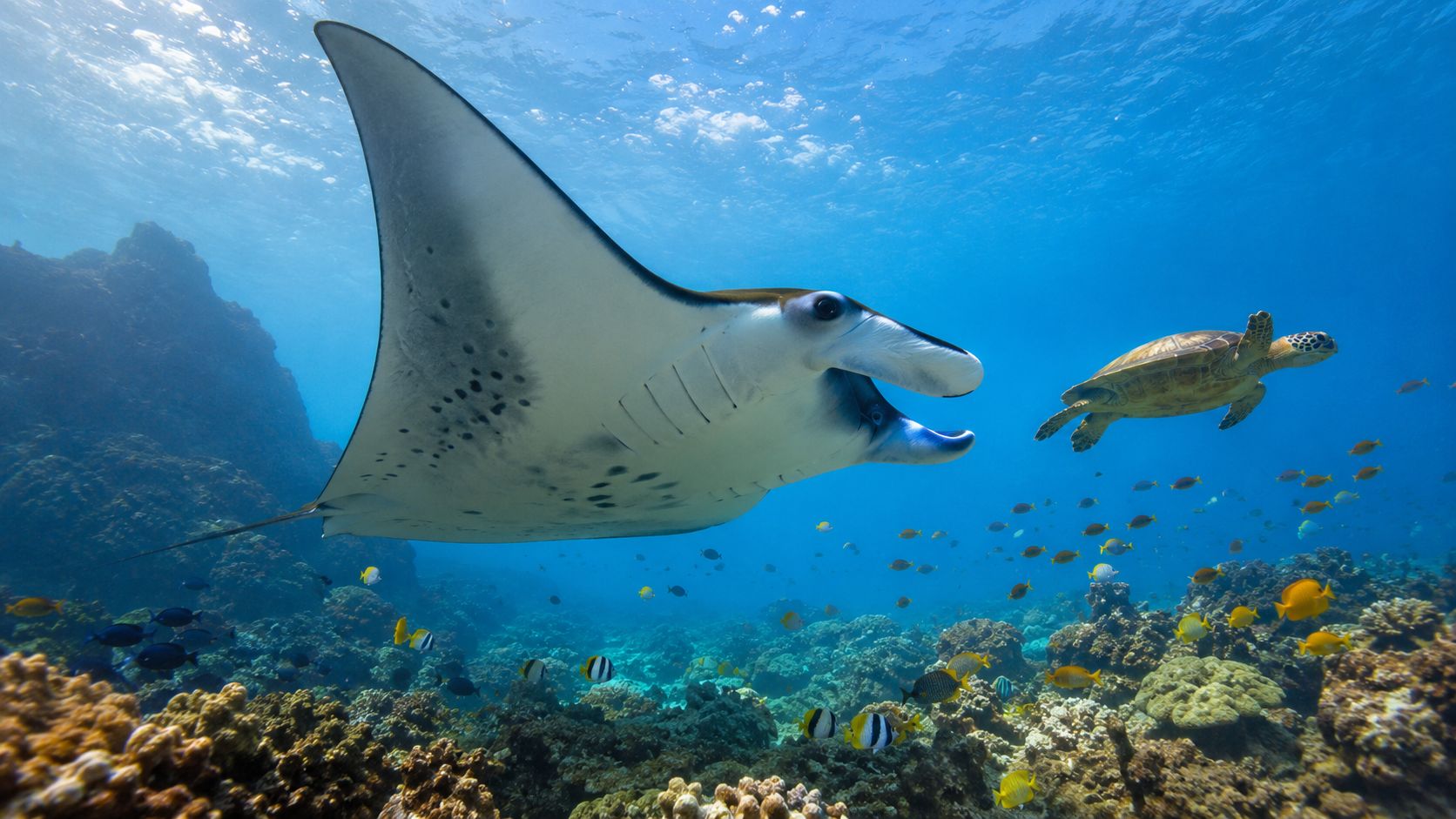
| Manta ray night dive | Certified divers who want Kona's iconic experience | 60 to 65 feet | Manta rays feeding in the light column |
| Blackwater dive | Advanced divers with solid comfort in open ocean at night | Open ocean water column | Pelagic larvae, siphonophores, cephalopods |
| Boat reef dive | Most certified divers | Varies by site | Reef fish, turtles, lava formations |
| 2 Step shore dive | Confident shore divers | Varies by route | Reef life, easy access when calm |
Book the manta night first, and choose Garden Eel Cove
If you only do one signature dive on this coast, make it the manta night dive.
The setup is simple and brilliant. Divers kneel or settle near the bottom with lights aimed up, plankton gathers in the beam, and manta rays sweep through the column to feed. The two usual site areas are Garden Eel Cove and Keauhou Bay. Garden Eel Cove is the better call. It usually offers a more protected setup, a cleaner viewing layout, and more consistent operations for visiting divers.
That is the kind of local detail that improves a trip. Do not just ask whether a shop runs a manta dive. Ask which site they plan to use, why they prefer it, and how they handle backup plans if surface conditions change.
Garden Eel Cove is the site I'd pick for a visiting diver who wants the highest-probability, least-chaotic version of Kona's signature night dive.
Blackwater is world-class. Treat it like an advanced dive, because it is one.
Blackwater off Kona is one of the most unusual dives anywhere in Hawaii. It also weeds people out fast.
You are in the open ocean at night, suspended over deep water, with no reef reference and no shoreline feel. Your buoyancy, awareness, and comfort in the dark need to be solid before you book it. If you are still sorting out trim, breathing rate, or task loading on ordinary dives, skip blackwater on this trip and spend that time on reef dives you will enjoy.
If you are qualified and current, book it. Few dives match the sight of larval fish, transparent cephalopods, and other migrating pelagic life rising out of the dark.
For divers planning specialty nights, this overview of where to find the best diving on the Big Island for different conditions and experience levels helps you sort marquee dives from smart backup options.
For qualified divers, this is the right booking link for the Blackwater Dive tour.
Day boat diving is how you build a good Kona trip
Do not treat the daytime reef dives like filler between headline experiences. They are how you settle in, check weighting, dial buoyancy, and enjoy the coast without pressure.
Kona reef sites reward divers who like structure. Lava tubes, ledges, arches, and fingers of rock give the dives shape, and the visibility often makes the whole day feel relaxed. I like putting a standard two-tank boat trip early in the schedule, especially for anyone arriving after a travel day or getting back in the water after a break.
That order works. Reef day first. Manta night after. Blackwater only if your skills and comfort level support it.
2 Step is excellent, but only when conditions and skill level line up
2 Step gets recommended constantly, and for good reason. The main entry is straightforward in calm conditions, the site is beautiful, and confident shore divers can have a very good dive there.
It still gets oversold.
A shore dive is less forgiving than a guided boat dive if you are rusty, overpacked, or unsure in surf entries. At 2 Step, the entry and exit need honest judgment, and a short surface swim can feel longer than expected if the water is surging or visibility is mediocre from the top. Add in the cultural importance of Puʻuhonua o Hōnaunau, and it is a site that deserves more respect than the casual online advice usually gives it.
If you have not dived in a while, do not make 2 Step your first splash of the trip. Start on a boat, get comfortable again, then shore dive once you know how you are moving in the water.
Choosing Your Guide How to Pick a Top Dive Operator
The operator matters more than the site list. A good crew can turn an average site into a smooth, enjoyable dive day. A sloppy crew can ruin a famous one.
What I'd check before booking
Don't choose by logo or by whoever spent the most on ads. Look at operational details.
- Boat fit for diving: You want a boat set up for entries, exits, gear organization, and actual diver comfort.
- Crew style: Calm briefings, clear site plans, and attention in the water matter more than sales language.
- Trip match: Some operators are better for beginners, some for photographers, some for advanced specialty dives.
- Safety culture: Ask yourself whether the shop sounds like it runs procedures or vibes. Choose procedures.
One useful comparison point is this page covering a Kona diving company overview, which gives you a sense of how to evaluate what a full-service operator offers.
My recommendation on how to screen a charter
I'd ask three direct questions before booking:
- What kind of diver is this trip for?
- How do you handle rusty divers or skill mismatches?
- What specialty dives do you run well?
If the answers are vague, move on.
For divers who want reef trips, manta trips, and specialty options in one place, one operator to review is Kona Honu Divers' diving tours page.
What I'd do on a short trip
If you're on island for only a few days, don't overcomplicate it.
Book one standard morning charter first. Add the manta night dive next. Then decide whether your third outing should be shore diving, another reef charter, or an advanced specialty. That sequencing gives you a clean adjustment curve and keeps the trip fun instead of rushed.
Get Certified or Advance Your Skills in Paradise
If you're not certified yet, the Big Island is one of the few places where learning to dive doesn't feel like homework. Clear water and approachable conditions remove a lot of beginner friction.
If you're deciding whether to do a first-time experience or a full course, start with a realistic question. Do you want one good underwater day, or do you want a card that lets you dive around the world? Both are valid. Just don't confuse them.
For new divers
A discover-style experience is a smart choice if you're curious but short on time. You get a supervised introduction without committing your whole vacation to coursework.
If you already know diving is something you want to keep doing, go straight into certification. This guide to learning to scuba on the Big Island is the right place to start that process.
For divers ready to level up
The best next move after basic certification isn't collecting random cards. It's building comfort in the water. Work on buoyancy, trim, navigation awareness, and calm problem-solving. Those skills matter far more than bragging rights.
Once you've got that foundation, advanced outings become much more rewarding. For more experienced divers who want stronger site selection and more challenging profiles, look at this advanced long-range dive tour.
Don't rush into advanced diving because the brochure makes it look cool. Do it when your basic skills are boringly reliable.
That's when Kona gets really good.
Essential Gear and Safety Preparations
Good dive trips are built before you leave the dock. The gear list doesn't need to be complicated, but your preparation should be deliberate.
What to pack and what to rent
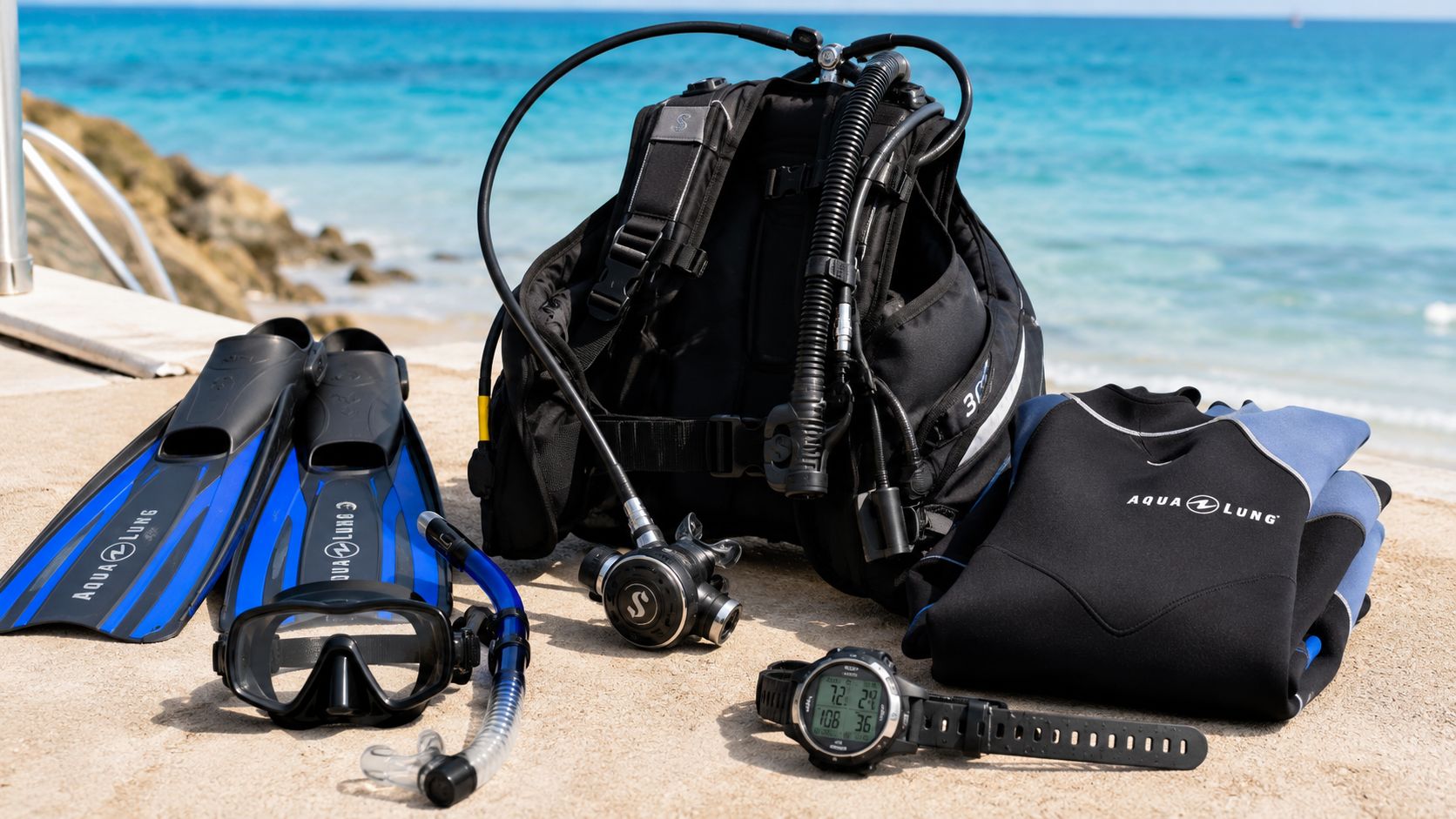
Bring the personal items that affect comfort. Rent the bulky gear if you don't have strong preferences.
- Bring your mask if you trust it: A familiar mask solves a lot of annoyance fast.
- Pack sun protection: Hat, towel, water, and reef-conscious sun planning matter on boat days.
- Keep a dry layer handy: The ride back feels cooler when you're wet and tired.
- Rent major gear if needed: That's usually easier than dragging a full kit across the Pacific unless you dive often.
If you want a simple personal-equipment primer, this rundown of the best scuba gear for beginners is a helpful starting point.
Seasickness prep that actually makes sense
If you're prone to motion sickness, handle it early. Don't wait to see how you feel once the boat starts rolling.
The CDC says behavioral steps should come first, and recommends sitting amidships in the center of the boat, staying low on the main deck, and focusing on the distant horizon in this motion sickness prevention guide from Discover Boating.
For medication, the CDC recommends meclizine, found in Bonine, or dimenhydrinate, found in Dramamine, for motion exposure under 6 hours, while scopolamine patches are advised for longer trips over 6 hours or for more intense motion, according to the CDC Yellow Book motion sickness guidance.
If you choose scopolamine, the common form is a 1 mg transdermal patch applied behind the ear, and it should be applied at least 4 hours before motion exposure, preferably 8 hours, with protection lasting about 72 hours, as summarized in this clinical review of scopolamine use.
Here's the practical shopping list:
- For shorter boat trips: Bonine pills or Dramamine pills
- For longer exposure or stronger motion: Ship-EEZ Seasickness Patch
- For non-medication support: Sea Band wristbands
- For a simple stomach-settling option: Ginger chews
Safety habits that matter more than gear brands
Hydrate before you board. Don't show up hungover. Don't chase animals. Don't force a shore entry that looks ugly from land.
A lot of dive problems start with ego, not equipment. The divers who have the best trips in Kona are usually the ones who stay honest about their comfort level and adjust the plan when conditions ask for it.
Beyond the Bubbles Snorkeling and Family Fun
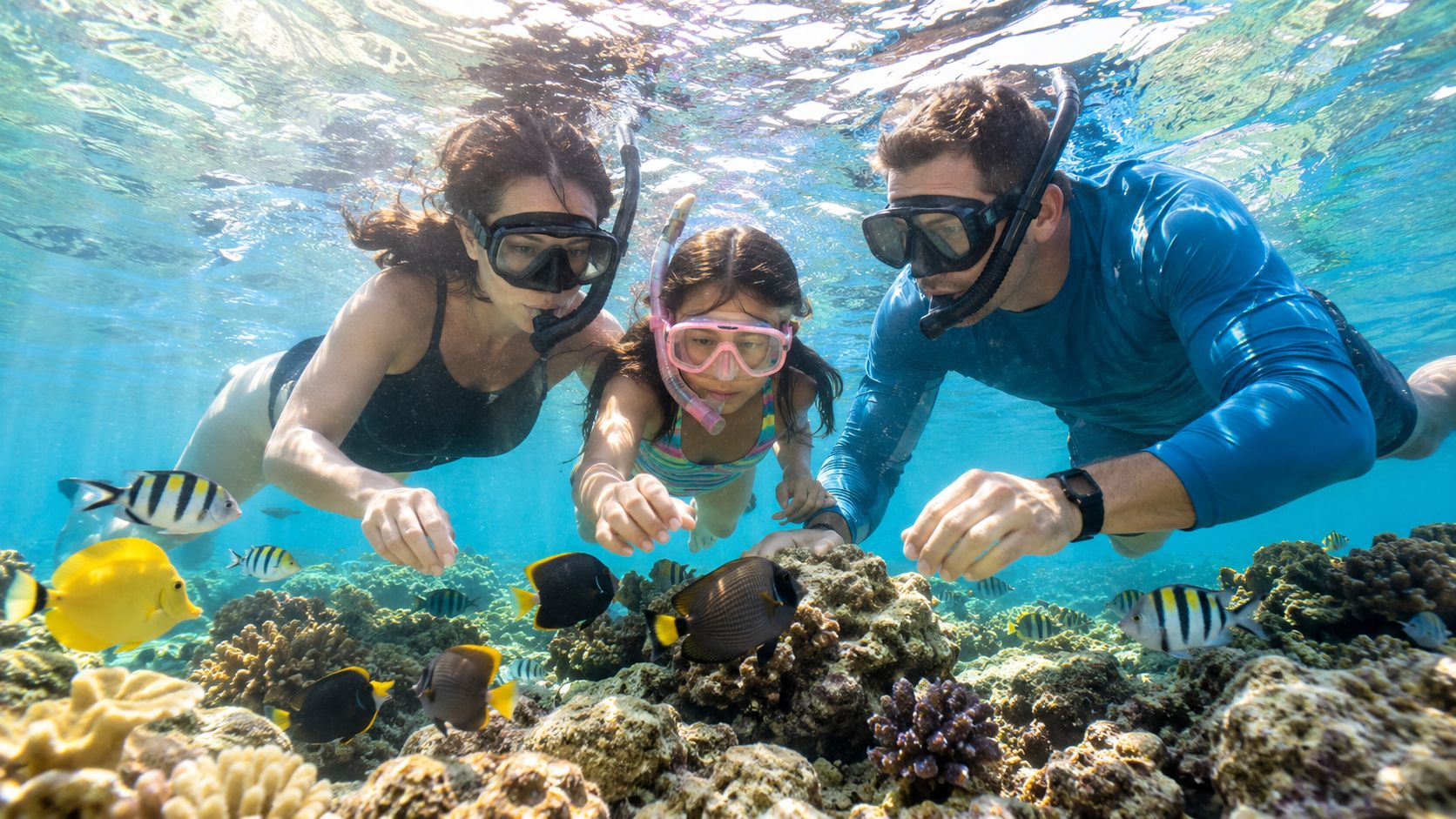
Your spouse wants calm water. Your kids want to see fish fast. Your dive buddy wants mantas. Kona can handle all of that, if you book the right day for the right people.
The easiest win for mixed groups
Build the trip around separate strengths, not forced compromises. Put divers on dive boats. Put non-divers on a snorkel trip built for easy entries, good visibility, and time in the water instead of time waiting on tanks.
For general options, start with these Big Island snorkeling tours and this guide to Kealakekua Bay snorkeling.
Manta snorkeling is the right call for non-divers
If someone in your group cannot or does not want to dive, book manta snorkeling at night. It delivers the signature Kona wildlife experience without asking a hesitant person to learn scuba on vacation.
Book it with an operator that runs this as a real snorkel experience, not an afterthought attached to a dive-heavy schedule. Good briefings, an organized float setup, and clean boat handling matter a lot more here than flashy marketing.
Kealakekua Bay is the daytime pick
For a daytime family outing, Kealakekua Bay is the easy recommendation. The water is often calmer than more exposed stops, the reef is active, and the setting feels memorable instead of convenient.
Use these two booking resources for Captain Cook access:
Don't treat 2 Step like a casual add-on
Honaunau can be excellent for confident snorkelers, but I would not sell it as the default family stop. Entries can feel slick and awkward for nervous swimmers, and the shoreline demands more attention than a boat snorkel at Kealakekua.
It also deserves some respect before anyone hits the water. 2 Step sits beside Puʻuhonua o Hōnaunau, a place with real cultural weight, not just a map pin for reef access. Visit with that mindset and the whole coast makes more sense.
Frequently Asked Questions About Big Island Diving
Is diving Big Island good for beginners
Yes, if you choose the right trip. Standard reef charters are the better place to start. Blackwater is not. Shore diving at 2 Step is not where I'd send a nervous or rusty diver on day one.
What's the one dive I shouldn't miss
The manta ray night dive. It's the signature experience for a reason. If you only do one specialty dive on the island, make it that one, and choose Garden Eel Cove over the southern site.
Can non-divers still have a strong trip
Absolutely. Manta snorkeling and Kealakekua Bay usually settle that issue fast. Mixed groups do well on the Big Island because the snorkeling options aren't throwaway activities.
Is blackwater worth doing
Yes, if you meet the experience requirement and you like advanced, unusual diving. No, if you're still getting comfortable at night or in open water. This is a dive for composed divers, not curious gamblers.
Should I shore dive or book a boat
If you know the area and conditions are calm, shore diving can be excellent. If you're visiting, a boat charter is usually the smarter first move. It removes guesswork, gets you on suitable sites, and gives you a cleaner start to the trip.
What's the biggest planning mistake visitors make
They book too much too fast. Start with one morning boat dive. See how you feel. Then stack the manta, a second reef day, or an advanced outing. Good Kona trips have rhythm. Overstuffed itineraries usually don't.
If you want one operator that covers classic Kona reef diving, the manta ray night dive, training, and advanced options in one place, take a look at Kona Honu Divers. It's a practical place to start comparing trip types and building a Big Island dive plan that matches your experience level.