
The Big Island of Hawaii isn't just a paradise of volcanoes and lush rainforests; it's home to some of the most spectacular underwater ecosystems on the planet. From the world-famous Manta Ray Night Dive to challenging blackwater expeditions into the deep, diving Big Island offers an unparalleled adventure for every skill level. This comprehensive guide is your all-in-one resource, designed to take you beyond the surface and into the vibrant heart of the Pacific.
We'll provide a detailed breakdown of the island's most acclaimed dive sites, equipping you with the knowledge to choose the perfect underwater experience. You'll get practical, actionable advice for planning your trip, from selecting the right season to understanding local conditions. We will also introduce you to the premier diving tours and operators who can safely guide your exploration.
This resource moves past generic descriptions to offer real insights. Whether you're a seasoned pro seeking advanced challenges, a family looking for a memorable snorkeling trip, or a new diver ready for your first ocean descent, you will find everything needed to plan a successful trip. Prepare to discover exactly why Hawaii's largest island is a top-tier global diving destination.
1. Manta Ray Night Dive at Manta Village (Kona)
Consistently ranked as one of the best night dives in the world, the Manta Ray Night Dive is an essential experience for anyone diving the Big Island. This surreal underwater ballet isn't just a dive; it's an intimate encounter with some of the ocean's most majestic creatures. The experience takes place just off the Kona coast at a site affectionately known as "Manta Village," a naturally occurring gathering spot for these gentle giants.
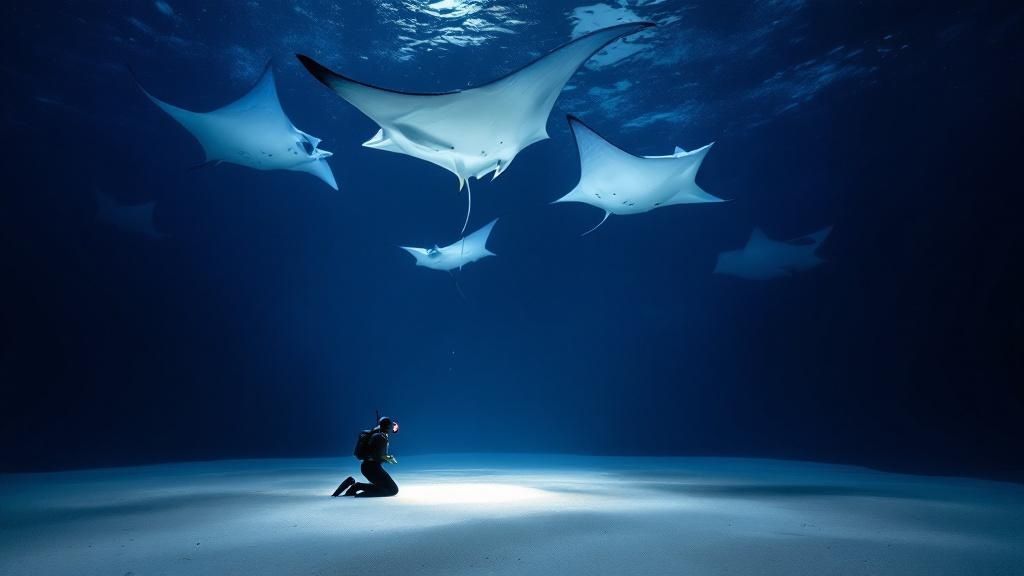
The concept is brilliantly simple. Dive operators set up powerful lights on the ocean floor, at a shallow depth of about 30-35 feet. These lights attract immense clouds of plankton, the primary food source for Pacific manta rays. Divers descend and find a spot on the sandy bottom, often around a central light structure referred to as the "campfire," and simply watch. Within minutes, massive manta rays, with wingspans that can exceed 15 feet, glide in from the darkness to feast on the plankton buffet.
What to Expect and Key Considerations
Divers kneel or sit on the ocean floor, remaining as still as possible to create a safe and predictable environment for the mantas. The rays perform graceful, acrobatic loops and barrel rolls just inches above your head, scooping up plankton in their massive mouths. It's a non-intrusive, observation-only interaction that has been refined over decades to prioritize the animals' well-being. If you are not a certified diver, most operators offer a snorkel option where you can view the spectacle from the surface, holding onto a lighted floatation board.
This dive is more than just observing marine life; it’s an immersive, almost spiritual experience. The sheer size and grace of the mantas as they materialize from the darkness and soar overhead is something that stays with you forever.
Top Operators and Practical Tips
The quality of your experience heavily depends on the operator. Established local companies have this dive down to a science, ensuring both diver safety and the protection of the mantas.
- Operator Examples: Premier outfits like Kona Honu Divers, Jack's Diving Locker, and Big Island Divers are highly regarded for their professionalism and commitment to manta conservation. They often provide extensive briefings on manta ray etiquette.
- Booking: This is the most popular dive on the island, so book well in advance, especially during peak season. Consider embarking on an truly epic Manta Ray dive in Kona for a comprehensive look at what to expect.
- Buoyancy: Practice excellent buoyancy control. Stirring up the sandy bottom can ruin visibility for everyone and disrupt the feeding environment.
- Gear: The water can feel chilly at night, even in Hawaii. A 3mm or 5mm full wetsuit is highly recommended for comfort during the 45-50 minute bottom time.
Here are reviews for one of the top-rated operators:
2. Blackwater Diving off Kona Coast
For divers seeking a truly unique and otherworldly experience, Blackwater Diving off the Kona coast is an unparalleled adventure. This specialized night dive takes you miles offshore over thousands of feet of water, where you drift tethered to a boat at a depth of 30-60 feet. It’s an exploration into the void of the deep ocean, revealing creatures that are rarely, if ever, seen in the light of day. This is a must-do for anyone serious about diving the Big Island and witnessing its hidden biological wonders.
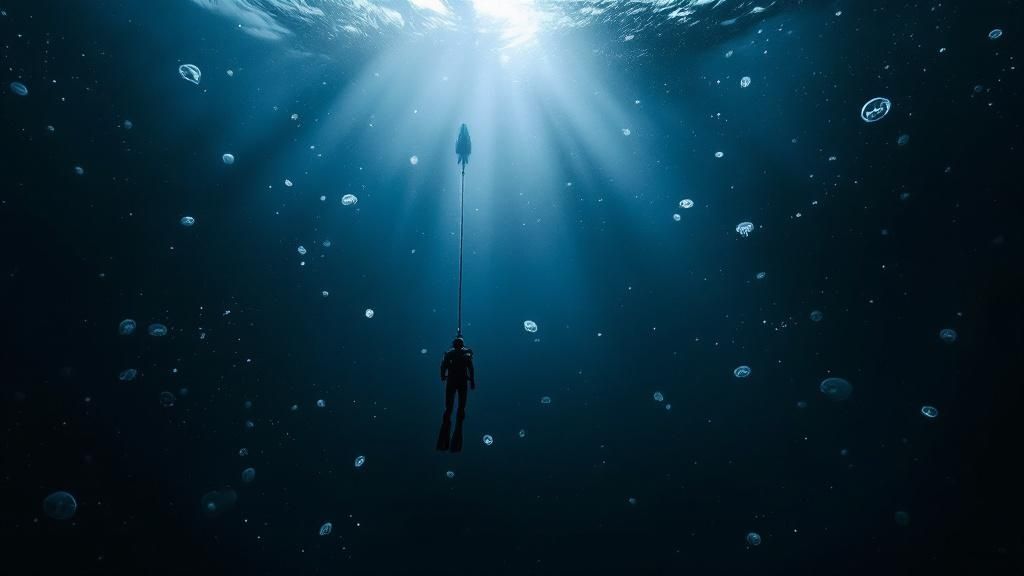
The dive leverages a phenomenon known as diel vertical migration, the largest migration on Earth, which happens every single night. Deep-sea creatures ascend from the abyss towards the surface to feed under the cover of darkness. By setting up a powerful downline with bright lights, dive operators attract this bizarre and beautiful menagerie of pelagic life. Divers simply drift along in the dark blue, watching as alien-like larval fish, iridescent squid, pulsating jellyfish, and countless other forms of planktonic life emerge from the depths.
What to Expect and Key Considerations
This is not a typical reef dive. You are suspended in open ocean, with no bottom or visual references besides the light line and your dive buddies. The feeling can be both disorienting and exhilarating. Excellent buoyancy control is non-negotiable, as you must maintain a consistent depth while tethered. The dive is a slow, methodical drift, focused on spotting tiny, often translucent creatures in the water column. Underwater photographers with macro setups will find this dive to be exceptionally rewarding.
Blackwater diving is like a trip to another planet. You are floating in inner space, witnessing a parade of life forms so strange and wonderful they defy imagination. It completely changes your perspective on what exists in the ocean.
Top Operators and Practical Tips
Choosing an operator with extensive experience in this highly specialized dive is crucial for safety and a successful encounter. They will provide detailed briefings and manage the complex logistics of an offshore, open-ocean night dive.
- Operator Examples: Pioneers like Kona Honu Divers and Jack's Diving Locker have well-established blackwater programs, often guided by marine life experts who can help identify the strange creatures you'll encounter.
- Booking: Blackwater dives are typically run less frequently than other tours and have limited spots. Booking far in advance is essential. You can learn more about this unique Kona blackwater dive experience on konahonudivers.com.
- Certification: An Advanced Open Water certification and excellent buoyancy skills are almost always required. Operators will want to see proof of recent night diving experience.
- Gear: A good dive light is a must, and a camera with a macro lens is highly recommended to capture the intricate details of the marine life.
Here are reviews for one of the top-rated operators:
3. Cathedrals I and II (Lanai) – Day Trip from Big Island
While not located directly off the Big Island, the legendary Cathedral dive sites of Lanai are so spectacular that they warrant inclusion as a premier day-trip destination. These world-famous underwater lava tubes create awe-inspiring caverns and swim-throughs. The experience is often described as spiritual, thanks to the breathtaking play of light as sunbeams pierce through openings in the cavern ceilings, resembling stained-glass windows in a grand cathedral.
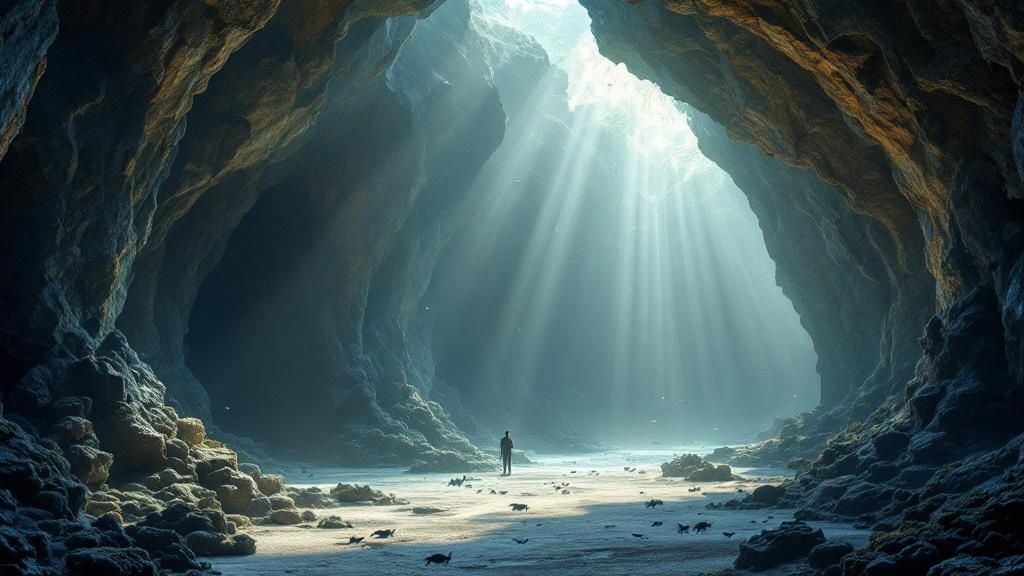
The two main sites, First Cathedral and Second Cathedral, are distinct but equally impressive. First Cathedral is a massive, two-story cavern with a large "altar" rock at its center. Divers can explore its multiple exits and chambers, often encountering eels, lobster, and schools of fish seeking shelter. Second Cathedral is a more complex labyrinth of smaller lava tubes and archways, creating a dramatic and intricate environment to explore. The geological formations alone make this a must-do for anyone serious about diving in Hawaii.
What to Expect and Key Considerations
These are boat dives that require a full-day commitment due to the travel time between the islands. The dives themselves are not excessively deep, typically ranging from 50 to 65 feet, making them accessible to certified open water divers with good buoyancy. The main attraction is navigating the massive caverns and witnessing the dramatic lighting effects. You'll swim through large archways and explore overhangs where marine life, including the occasional white-tip reef shark, can be found resting.
The feeling of entering the main chamber at First Cathedral and watching dozens of light shafts dance through the water is indescribable. It’s an underwater photographer’s dream and a profound moment for any diver who appreciates unique underwater topography.
Top Operators and Practical Tips
Accessing these sites requires booking with an operator that specifically runs long-range charters or day trips to the neighboring islands. These trips are less frequent than local Kona dives, so planning is essential.
- Operator Examples: Full-day charters are the primary way to access Lanai from other islands. Operators like Fair Wind or Body Glove sometimes offer snorkel and dive excursions, but dedicated private charters often provide the best experience for certified divers wanting to explore both Cathedral sites thoroughly.
- Booking: Day trips to Lanai are specialty excursions and fill up fast. You must book these trips well in advance, and be prepared for a full-day adventure, often with an early morning start.
- Seasickness: The channel crossing between the Big Island and Lanai can be rough. If you are prone to seasickness, take medication beforehand to ensure an enjoyable day.
- Gear: Bring your underwater camera and a good dive light. While the sun provides spectacular ambient light, a torch is invaluable for peering into the nooks and crannies of the lava formations to spot hidden marine life.
4. South Point (Ka Lae) Shore Diving
For the truly adventurous diver seeking a raw, untamed experience, the shore diving at South Point (Ka Lae) is unparalleled. As the southernmost point of the United States, this remote location offers some of the most challenging and rewarding diving on the Big Island. This isn't a casual beach entry; it's a rugged expedition that rewards hardy divers with pristine coral reefs, dramatic underwater landscapes, and the chance to see large pelagic species that patrol the deep offshore currents.
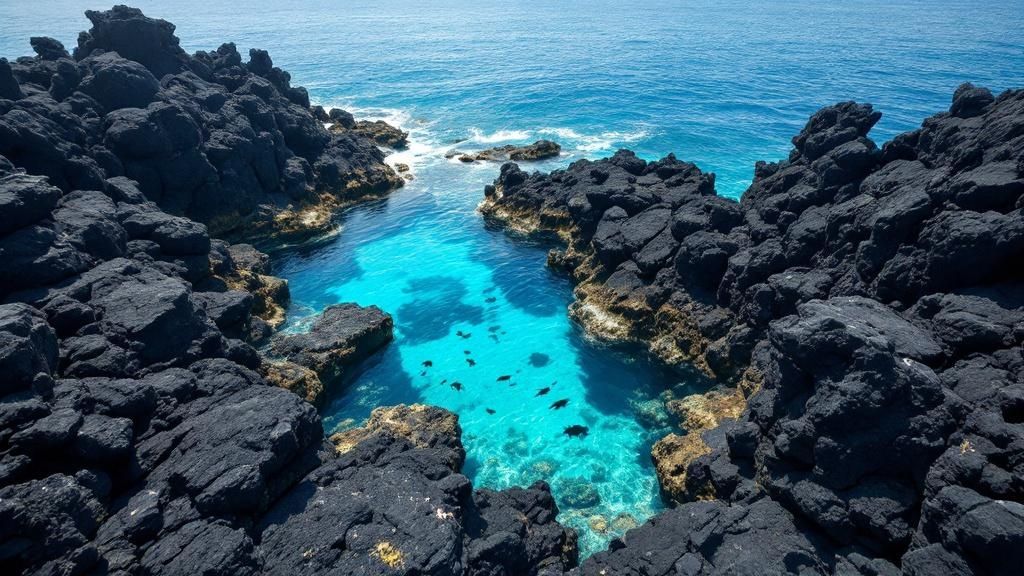
The dive itself involves navigating a tricky entry over sharp lava rock, often requiring a jump from a ledge into the turbulent water. Below the surface, the challenging entry gives way to a world of exceptional clarity and vibrant marine life. Divers can explore intricate coral gardens, swim-throughs, and lava tube formations that are teeming with fish. The constant presence of deep, blue water just offshore means that encounters with sharks, jacks, and even passing rays are common.
What to Expect and Key Considerations
This is an advanced, high-stakes dive that should only be attempted by those with extensive shore diving experience. Conditions can change rapidly, with strong currents and surge being major factors. Divers must be completely self-sufficient and comfortable with navigating rough terrain while carrying full gear. The exit can be just as challenging as the entry, often requiring a well-timed climb up a ladder or back onto the lava rock shelves. Proper planning and a thorough understanding of the site are absolutely critical for safety.
Diving at South Point is a true test of a diver's skills and resolve. The effort is immense, but the payoff is an underwater environment that feels completely untouched, offering a glimpse into what all of Hawaii's reefs might have once looked like.
Top Operators and Practical Tips
Due to the extreme nature of this dive, going with a local guide is strongly recommended for a first-time visit. They possess the critical knowledge of entry/exit points, current patterns, and safe diving protocols specific to this unique and demanding location. For those seeking more advanced diving opportunities around the island, there are specialized tours available.
- Operator Examples: Independent local guides or small, specialized operations like Kona Shore Divers are your best bet for a safe, guided experience at this expert-level site. They provide the necessary site-specific knowledge that is crucial for a successful dive.
- Conditions: Never attempt this dive without a meticulous check of the weather and surf report. Even on a calm day, the area is exposed to powerful ocean swells.
- Safety: Always dive with a buddy, bring a first-aid kit, and leave your dive plan with someone on shore. This is not a location to take any risks.
- Gear: Sturdy, thick-soled dive booties are non-negotiable for navigating the sharp lava rock. Gloves are also highly recommended. Check out a detailed overview of the best shore diving on the Big Island for more preparation tips.
Here are reviews for an operator specializing in shore diving:
5. Kealakekua Bay Marine Life Conservation District
More than just a premier dive spot, Kealakekua Bay is a protected sanctuary and a site of immense historical importance. Established in 1969 as Hawaii's first Marine Life Conservation District, it offers some of the most pristine and vibrant underwater ecosystems on the Big Island. The bay’s calm, exceptionally clear waters create unparalleled conditions for observing dense coral gardens and the prolific marine life they support.
The area is famous for its steep underwater drop-offs along the bay's cliffs, which are covered in healthy hard and soft corals. These thriving reefs attract an incredible diversity of life, from vast schools of yellow tang and butterflyfish to moray eels, octopuses, and green sea turtles. Spinner dolphins frequently visit the bay to rest, and during the winter months, humpback whales can sometimes be seen or heard. The bay is also historically significant as the place where Captain James Cook first made contact with native Hawaiians in 1779 and was ultimately killed.
What to Expect and Key Considerations
Diving in Kealakekua Bay is primarily done via boat, as land access to the best sites is extremely difficult. The main dive area is near the Captain Cook monument on the bay's north shore, where visibility often exceeds 100 feet. The reef starts shallow and slopes down gently before dropping off into the deep, making it suitable for divers of all experience levels. Because of its protected status, the fish are abundant and unafraid, allowing for fantastic underwater photography opportunities.
The sheer density of marine life and the clarity of the water at Kealakekua Bay make it a truly world-class site. It’s like diving in an aquarium, where every direction you look reveals another vibrant scene of a healthy reef ecosystem in action.
Top Operators and Practical Tips
Access to the bay is strictly regulated to preserve its pristine condition, so choosing a permitted and reputable operator is essential for anyone diving the Big Island here. These companies ensure all conservation rules are followed while providing a safe and educational experience.
- Operator Examples: Companies like Kona Honu Divers, Fair Wind, and Body Glove are well-known for their guided snorkel and dive tours into the bay, often combining the trip with historical narration.
- Booking: Due to limited permits and high demand, you must book your trip well in advance. Last-minute spots are extremely rare.
- Respect Wildlife: It is illegal to approach or harass the spinner dolphins. Federal law requires maintaining a distance of at least 50 yards. Listen carefully to your crew’s briefing on responsible wildlife interaction.
- Gear: Only reef-safe sunscreen is permitted. The protected nature of the bay means extra care should be taken with buoyancy to avoid any contact with the delicate coral. Consider taking a Captain Cook snorkeling tour to fully appreciate this unique marine sanctuary.
Here are reviews for one of the top-rated operators that can take you there:
6. Puako Reef Complex (Kohala Coast)
For divers who crave independence and love exploring at their own pace, the Puako Reef Complex on the sunny Kohala Coast is a shore-diving paradise. This extensive system of healthy coral reefs stretches for miles, offering numerous entry points with surprisingly easy access. It’s a haven for marine life, boasting vibrant coral gardens, diverse fish populations, and the frequent company of Hawaiian green sea turtles, making it a top spot for anyone interested in diving the Big Island from the shore.
Unlike boat dives, Puako offers the freedom to dive on your own schedule. The typical dive profile involves a short swim from the beach over a shallow, sandy bottom that gradually slopes down to a thriving reef. The depths are generally moderate, ranging from 20 to 60 feet, making it suitable for divers of all certification levels. The area's clear waters and abundant life provide an experience that rivals many of the island's premier boat dive sites.
What to Expect and Key Considerations
Shore diving here requires more self-sufficiency than a guided boat tour. You’ll be responsible for navigating the entry and exit points, which often involve walking over lava rock. The reward is an intimate encounter with a complex underwater ecosystem. Expect to see large schools of butterflyfish, tangs, and Moorish idols, along with eels hiding in crevices and turtles peacefully grazing on algae. Some of the most popular access points include Puako Bay and the famously beautiful Waialea Bay, also known as 69 Beach.
Puako embodies the spirit of adventure in Big Island diving. The ability to just gear up and walk into a world-class reef system from a quiet beach is a unique and incredibly rewarding experience.
Top Operators and Practical Tips
While much of Puako is accessible for independent divers, local knowledge is invaluable for finding the best spots and understanding current conditions. Guided shore dives are a great option for first-timers.
- Operator Examples: Local experts like Kohala Divers and Kona Shore Divers specialize in this area. They can provide gear rentals, tank fills, and guided tours that maximize safety and enjoyment.
- Access: Always use designated public access points and be respectful of private property along the Puako coast.
- Conditions: The best conditions are typically found in the early morning, with calmer seas and better visibility before the afternoon trade winds pick up.
- Gear: Water shoes or durable booties are essential for protecting your feet on the sharp lava rock entries. A surface marker buoy (SMB) and a whistle are critical safety items for any shore dive.
Here are reviews for one of the top-rated local operators:
Big Island Diving Sites Comparison
| Dive Experience | Core Features / Highlights | User Experience ★★★★☆ | Value & Price 💰 | Target Audience 👥 | Unique Selling Points ✨ |
|---|---|---|---|---|---|
| Manta Ray Night Dive (Kona) | Guaranteed manta sightings, shallow, night dive | Bucket-list, suitable for all | $150-200 per dive | Beginners to advanced divers | World-famous manta ray dances, year-round 🏆 |
| Blackwater Diving (Kona Coast) | Rare pelagic species, deep night dive, tethered | Unique, advanced skills needed | $200-300 per dive | Advanced divers, photographers | Exclusive deep pelagic encounters, scientific ✨ |
| Cathedrals I & II (Lanai) | Underwater lava formations, swim-throughs | Stunning visibility & lighting | Higher due to full day trip | Intermediate divers | Dramatic natural light effects, spiritual vibe ✨ |
| South Point Shore Diving | Southernmost US dive, pristine reefs, shore entry | Challenging entry, adventurous | Low cost (no boat fees) | Experienced shore divers | Remote location, unique geography, untouched reefs |
| Kealakekua Bay Conservation | Marine reserve, clear water, historical site | Calm waters, culturally rich | Tour prices vary | All skill levels | First conservation district, dolphins & history 🏆 |
| Puako Reef Complex | Extensive reef, multiple shore entries | Easy access, calm & diverse | Low cost (shore diving) | Beginners to all divers | Accessible shore diving, reef variety |
Ready to Take the Plunge?
Diving Big Island offers a lifetime of underwater adventures packed into one incredible destination. This guide has walked you through the absolute best the Kona coast has to offer, from the ethereal, world-famous Manta Ray Night Dive to the alien-like creatures of the deep on a Blackwater Dive. We've explored the vibrant coral gardens of Kealakekua Bay and the accessible yet stunning shore dives at Puako Reef, showcasing the sheer diversity of experiences available.
Your journey into the underwater realm of Hawaii is more than just a series of dives; it's an encounter with a delicate and powerful ecosystem. The key to unlocking these unforgettable moments lies in thoughtful preparation. This means honestly assessing your skill level, choosing dive sites that match your comfort and certification, and selecting the right gear for the specific conditions you'll face. Most importantly, it involves partnering with a reputable, safety-conscious dive operator who can provide local expertise and ensure a seamless experience.
Your Path to an Unforgettable Dive
The most critical takeaway is that the Big Island's volcanic underwater landscapes are as varied as they are breathtaking. Mastering your approach means understanding these differences.
- For Thrill-Seekers: The Manta Ray Night Dive and the Blackwater Dive are non-negotiable, bucket-list experiences that redefine night diving.
- For Marine Life Enthusiasts: Kealakekua Bay and Puako Reef offer dense populations of endemic Hawaiian fish, resting sea turtles, and intricate coral structures.
- For Adventurous Divers: Exploring advanced sites like those offered on a premium trip provides access to unique lava formations and less-visited reefs teeming with life.
By applying the practical advice from this guide, from choosing your dive computer to understanding local ocean etiquette, you are not just preparing for a vacation. You are setting the stage for a profound connection with one of the most unique marine environments on Earth. The skills and awareness you bring will directly translate into richer, safer, and more awe-inspiring dives.
The vibrant reefs, dramatic volcanic topographies, and rare aquatic encounters are all here, waiting to be discovered. The knowledge you've gained is your first step off the boat and into the blue. Your ultimate Hawaiian underwater adventure begins now.
Ready to experience the magic of diving the Big Island firsthand? The expert crew at Kona Honu Divers is dedicated to providing safe, fun, and unforgettable tours to the most iconic sites, including the world-famous Manta Ray Night Dive. Explore their diving tours and book your adventure with a team celebrated for its professionalism and passion for the ocean.