
Picture this: you're weightless, suspended in impossibly clear turquoise water. Sunbeams dance down from the surface, illuminating a dramatic underwater world carved out by ancient volcanoes. This isn't just another dive trip; this is the Big Island, where scuba diving becomes a genuine adventure.
The Kona coast isn't just a pretty spot—it's an underwater paradise shaped by forces of nature, just waiting for you to explore.
Why the Big Island Offers World-Class Diving
So, what’s the secret behind the Big Island's incredible diving? It all comes down to its unique geology and a little help from Mother Nature. The entire Kona coast sits in the "shadow" of the massive volcanoes Mauna Loa and Hualālai. These giants act as a natural shield, blocking the powerful trade winds that batter the other side of the island.
This protection results in remarkably calm and clear water almost all year long. We're talking about visibility that regularly stretches beyond 100 feet (30 meters). It’s like diving in high definition.
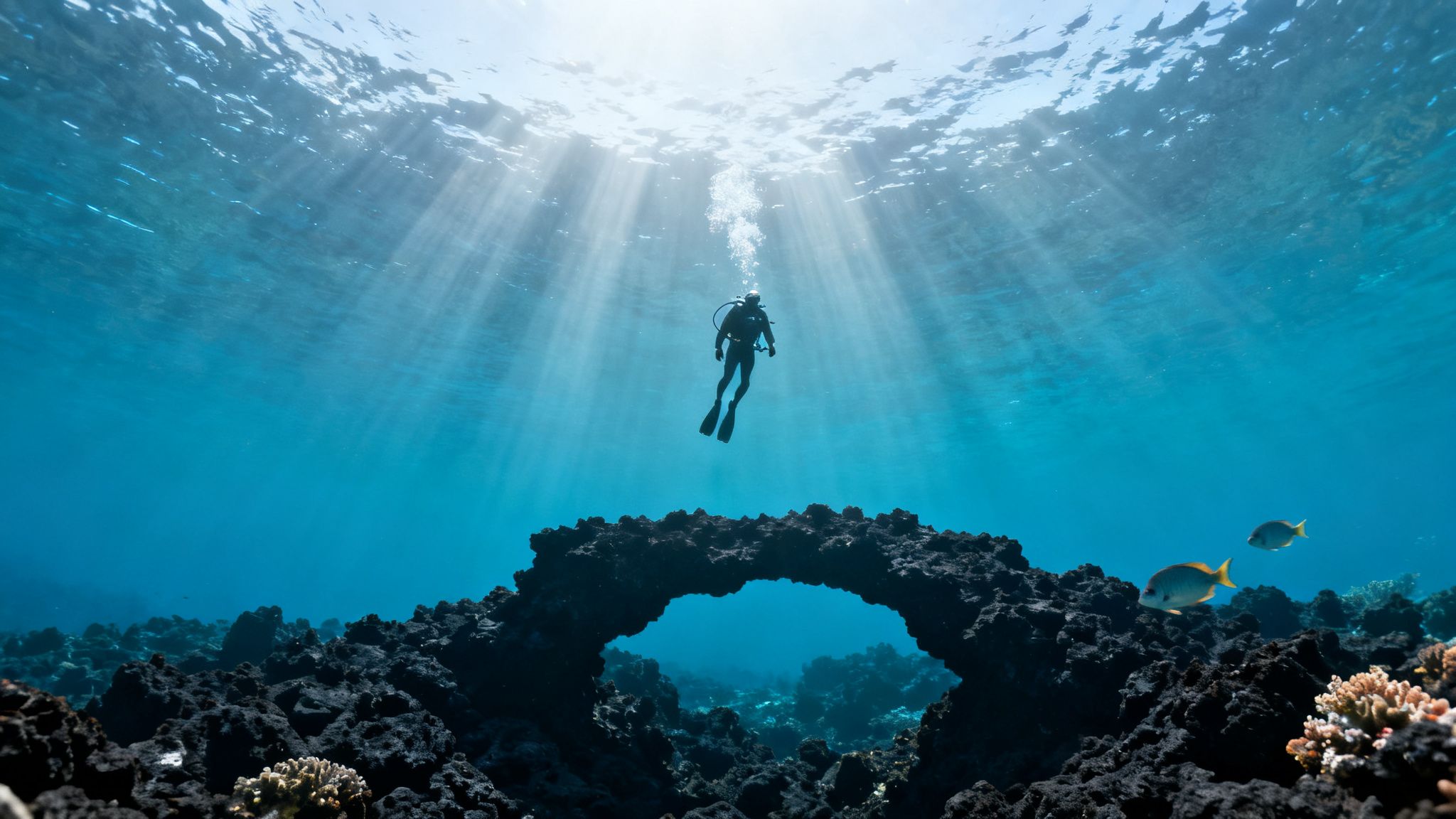
This calm environment is the perfect stage for an underwater world sculpted by lava. Over thousands of years, volcanic flows have created a stunning submerged landscape of intricate lava tubes, massive arches, and deep, mysterious caverns. Unlike sandy-bottom destinations, Kona’s reefs are built right on this solid volcanic rock, making for a rugged and truly unique seascape.
A Sanctuary for Unique Marine Life
The dramatic lava formations are just the beginning. The waters here are a haven for a dizzying array of marine life, and a surprising amount of it can't be found anywhere else on the planet.
- Endemic Species: A huge percentage of Hawaii's reef fish are endemic, meaning this is the only place in the world to see them. Keep an eye out for the distinctive Bandit Angelfish or the brilliant Potter's Angelfish.
- Iconic Encounters: The Big Island is famous for its gentle giants. Encounters with Hawaiian green sea turtles (honu), acrobatic spinner dolphins, and, of course, the world-famous manta rays are all part of the experience.
- Vibrant Reefs: Healthy coral gardens thrive here, supporting a bustling ecosystem. It's a dream for photographers, with endless chances to capture moray eels, clever octopuses, and schools of colorful fish against the dark volcanic backdrop.
The table below gives you a quick snapshot of why divers from all over the world flock to the Kona coast.
Kona Coast Diving At a Glance
| Feature | Why It's Exceptional |
|---|---|
| Visibility | Consistently 100+ feet (30+ meters) due to calm, protected waters. |
| Topography | Dramatic lava tubes, arches, and caverns formed by volcanic activity. |
| Marine Life | High concentration of endemic species and iconic megafauna like manta rays and turtles. |
| Conditions | Calm seas and minimal currents year-round, ideal for all skill levels. |
| Water Temp | Comfortable 75-80°F (24-27°C), making for pleasant diving all year. |
In short, the Big Island delivers a combination of features that few other places on Earth can match.
Diving in Kona is like exploring another planet. The contrast between the dark lava rock and the vibrant marine life is something every diver should experience. It’s a truly unique environment that sets the Big Island apart.
Here at Kona Honu Divers, we've spent years getting to know every nook and cranny of these amazing waters. Our crew knows exactly where to go to find everything from the tiniest, rarest critters to the majestic pelagic animals cruising the deep blue. We're all about providing safe, memorable, and educational diving tours that show off the very best of what makes diving the Big Island a world-class experience.
Ready to see it for yourself?
The Unforgettable Kona Manta Ray Night Dive
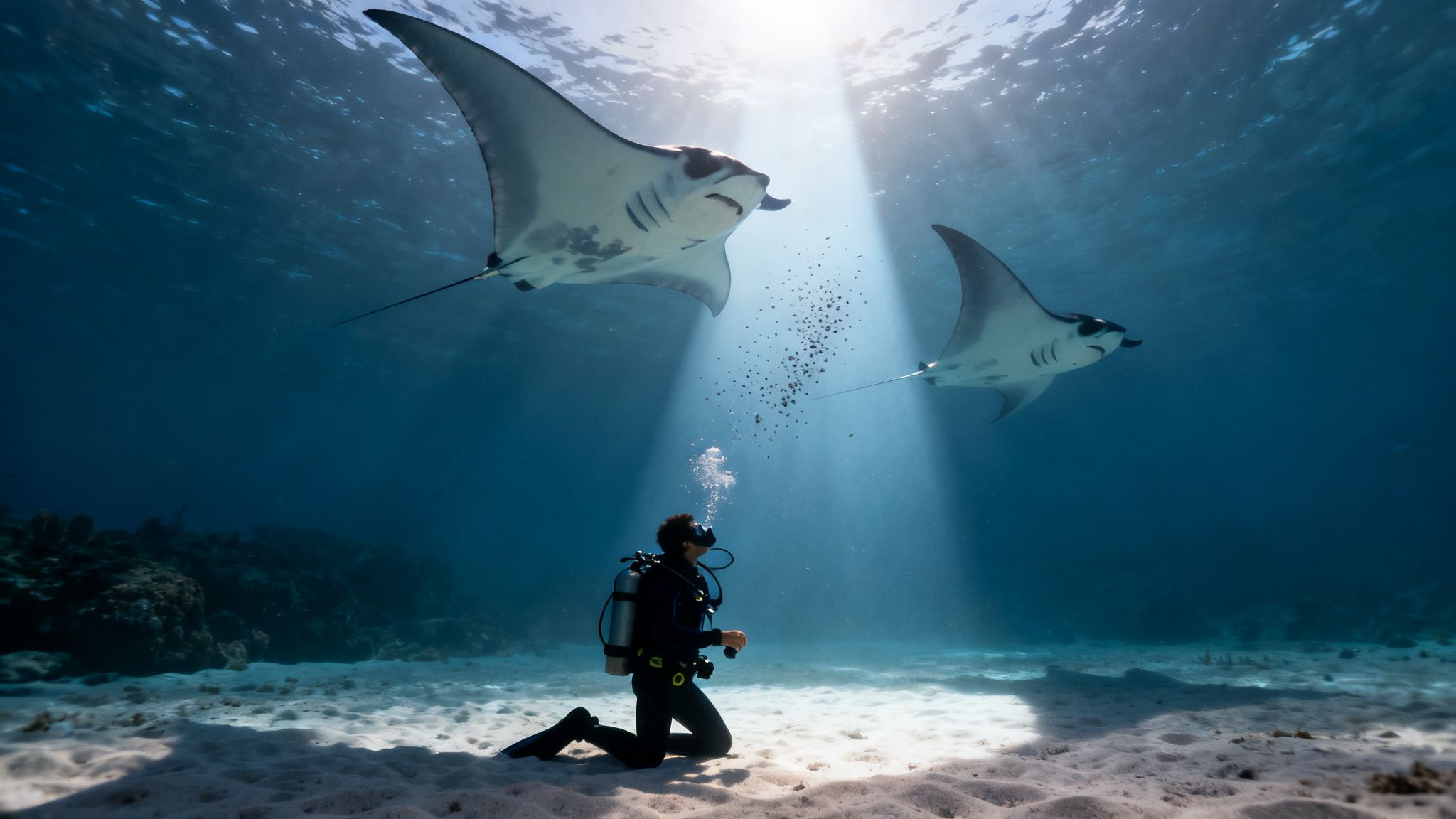
Picture this: you're kneeling on the ocean floor in the dark. The only real light is a central "campfire" of dive lights all pointing up, illuminating the water column. Then, a massive shadow glides overhead, and a gentle giant with a wingspan as wide as a car swoops into the light, performing a silent, graceful ballet just inches from your face.
This is the Kona Manta Ray Night Dive. It’s an experience so unique and powerful that divers from all over the world consistently rank it as one of the best dives on the planet.
This incredible encounter is no accident. We’ve learned over the years how to create the perfect underwater buffet. By placing powerful lights on the seafloor, we attract huge clouds of plankton—the manta rays' favorite meal. As the plankton swarms in the light beams, the mantas arrive for dinner, swooping and somersaulting in a mesmerizing feeding frenzy. It's a front-row seat to one of nature's most spectacular shows.
Why Garden Eel Cove is the Premier Choice
While a few spots around Kona offer manta encounters, Garden Eel Cove is hands-down the superior choice. Tucked inside a protected bay just north of Kona, the water here is consistently calmer, which makes for a much more comfortable and reliable dive. More importantly, the site's layout provides a better, safer viewing area. Divers can settle into a designated sandy "campfire" area, which draws the action right in front of the group while keeping the vibrant, surrounding reefs safe from accidental contact. The reef itself is healthier here, making the entire dive, from descent to the main event, a spectacular experience. This protected location and superior reef make it the best place on the island to see the mantas.
The Kona Honu Divers Manta Experience
A manta tour with us is more than just a dive; it’s a complete experience from start to finish. It all begins on the boat with a thorough and entertaining briefing from our crew. We don't just tell you the plan; we share the story behind this world-famous dive, introducing you to the resident mantas by name and explaining how to interact with them safely.
The consistency here is just incredible. Our dive logs from 2009 to 2014 tracked thousands of individual manta sightings, with some peak months featuring over 70 unique mantas. This reliability is why Kona accounts for the vast majority of documented manta interactions in Hawaii, with a success rate of over 90%.
Our crew is with you every step of the way, from setting up your gear to guiding you to the perfect spot on the sand. Once the show begins, they're in the water making sure both you and the mantas are safe.
"The manta ray night dive is more than just an underwater encounter; it's a moment of pure connection. Watching these majestic creatures glide so close, you can't help but feel a profound sense of awe and respect for the ocean."
After you surface from a dive that you'll be talking about for years, you’re greeted with a hot shower right on the boat deck and a warm, friendly vibe for the ride back to the harbor. It’s this focus on comfort, safety, and creating a genuinely special memory that really matters. You can learn more about the science and magic behind this dive by exploring our comprehensive guide to the manta ray night dive.
Ready to witness the ballet of the giant mantas for yourself?
Exploring Kona’s Most Spectacular Dive Sites
Sure, the manta ray night dive gets all the headlines, but that’s just the opening act. The Kona coast is stacked with over **50 unique dive sites**, and each one has its own personality and cast of marine characters. The island’s volcanic past has left behind a submerged playground of lava tubes, dramatic pinnacles, and sprawling coral gardens just waiting to be explored.For divers who love the intricate, bustling life of a healthy reef, Kona is pure magic. We have numerous "turtle cleaning stations"—think of them as natural day spas for Hawaiian green sea turtles, or honu. It’s an incredible sight to see them patiently line up, hovering almost motionless while small reef fish like the Hawaiian cleaner wrasse meticulously pick algae and parasites off their shells. It's a photographer's dream and a truly serene moment for any diver.
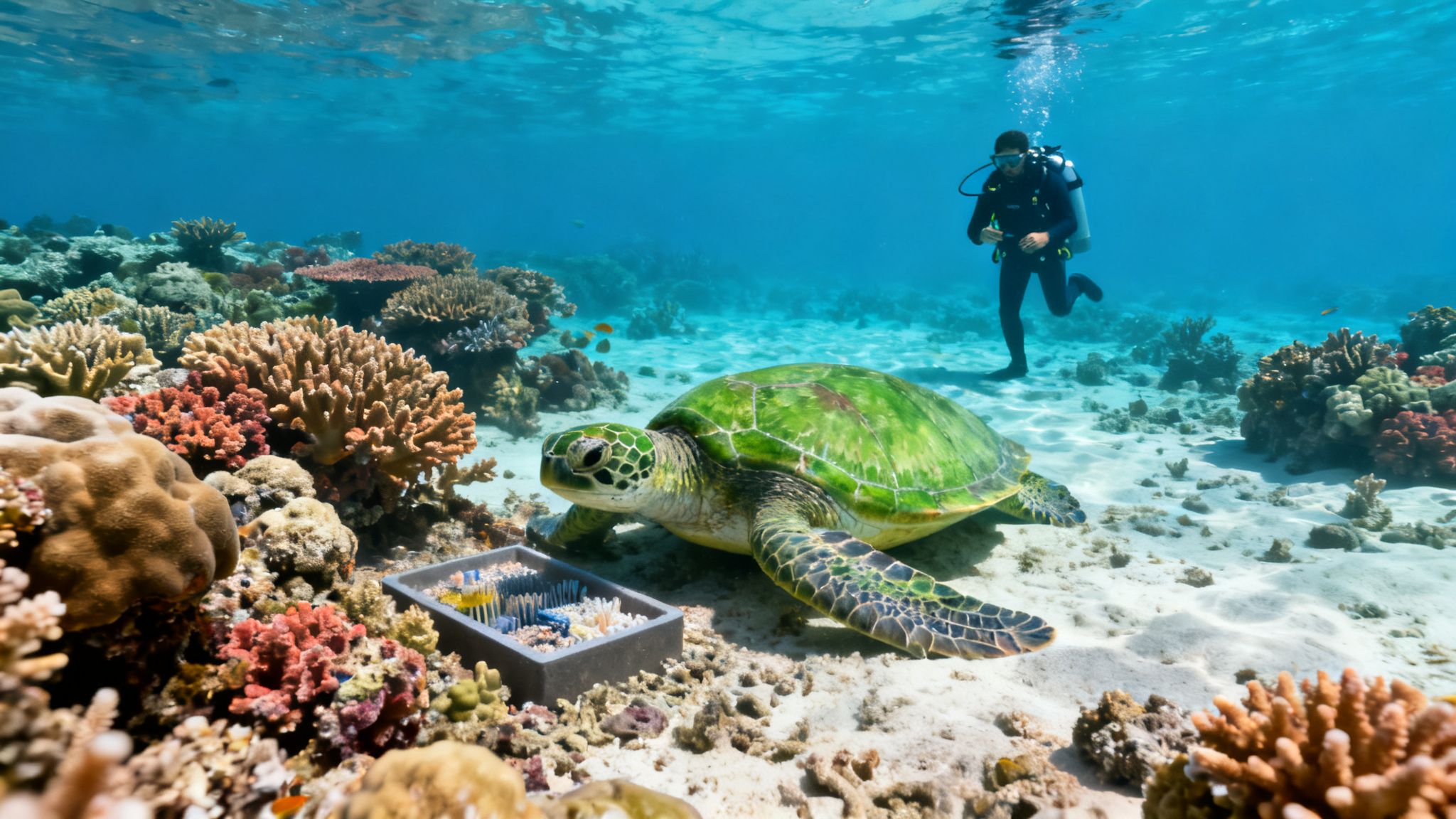
These calmer reefs are also bursting with endemic fish—species you won't find anywhere else on the planet. The flash of brilliant yellow tangs against the dark volcanic rock is a classic Kona diving scene you’ll never forget.
For the Thrill-Seekers and Advanced Divers
If you like your dives with a shot of adrenaline, Kona's dramatic underwater landscape delivers. The island’s volcanic origins have created a network of incredible structures that are perfect for more experienced divers.
- Lava Tubes and Arches: At sites like Golden Arches or Tube City, you can experience the thrill of swimming through the hollowed-out arteries of ancient lava flows. When the sunlight filters through openings in the ceiling, it creates an almost cathedral-like atmosphere.
- Deep Pinnacles: Out in the blue, offshore pinnacles rocket up from the depths, acting as magnets for bigger marine life. This is where you’ll want to keep an eye out for big schools of jacks, barracuda, and sometimes sharks cruising by.
- Drift Dives: Certain sites offer fantastic drift dives where you can just relax and let the gentle current carry you along a stunning wall or reef. It's like a panoramic tour where the scenery does all the moving.
Of course, these more challenging dives demand solid buoyancy control and comfort with going a bit deeper. Having an experienced guide who knows these sites inside and out is absolutely crucial to exploring them safely and getting the most out of the experience. We offer specific advanced dive tours designed for those looking to explore these thrilling environments.
Choosing a dive operator that understands both your skill level and the unique challenges of each site is the key to unlocking Kona's most thrilling underwater adventures. The best guides know exactly when and where to go for the most memorable encounters.
Matching Divers with the Perfect Dive
Here at Kona Honu Divers, we get a real kick out of curating the perfect underwater experience for every single guest. Our deep local knowledge means we can pick the best sites based not just on the day's conditions, but on what you're excited to see. Whether you're hoping to photograph a shy octopus or navigate a cavern, we know just the spot.
Ultimately, the sheer variety is what makes diving the Big Island so unforgettable. One day you can be peacefully watching turtles, and the next you're navigating a dark, ancient lava tube. Every dive tells a different story. You can get a closer look at the unique features of each spot in our detailed guide to Big Island scuba diving sites.
Discovering Unique Dives Like The Kona Blackwater
Beyond the vibrant reefs and manta ray ballets, another world awaits. It’s an adventure that feels less like scuba diving and more like a spacewalk. For anyone looking for a truly unforgettable experience while diving the Big Island, the Kona Blackwater Dive is something you just have to do. It completely redefines what a night dive can be.
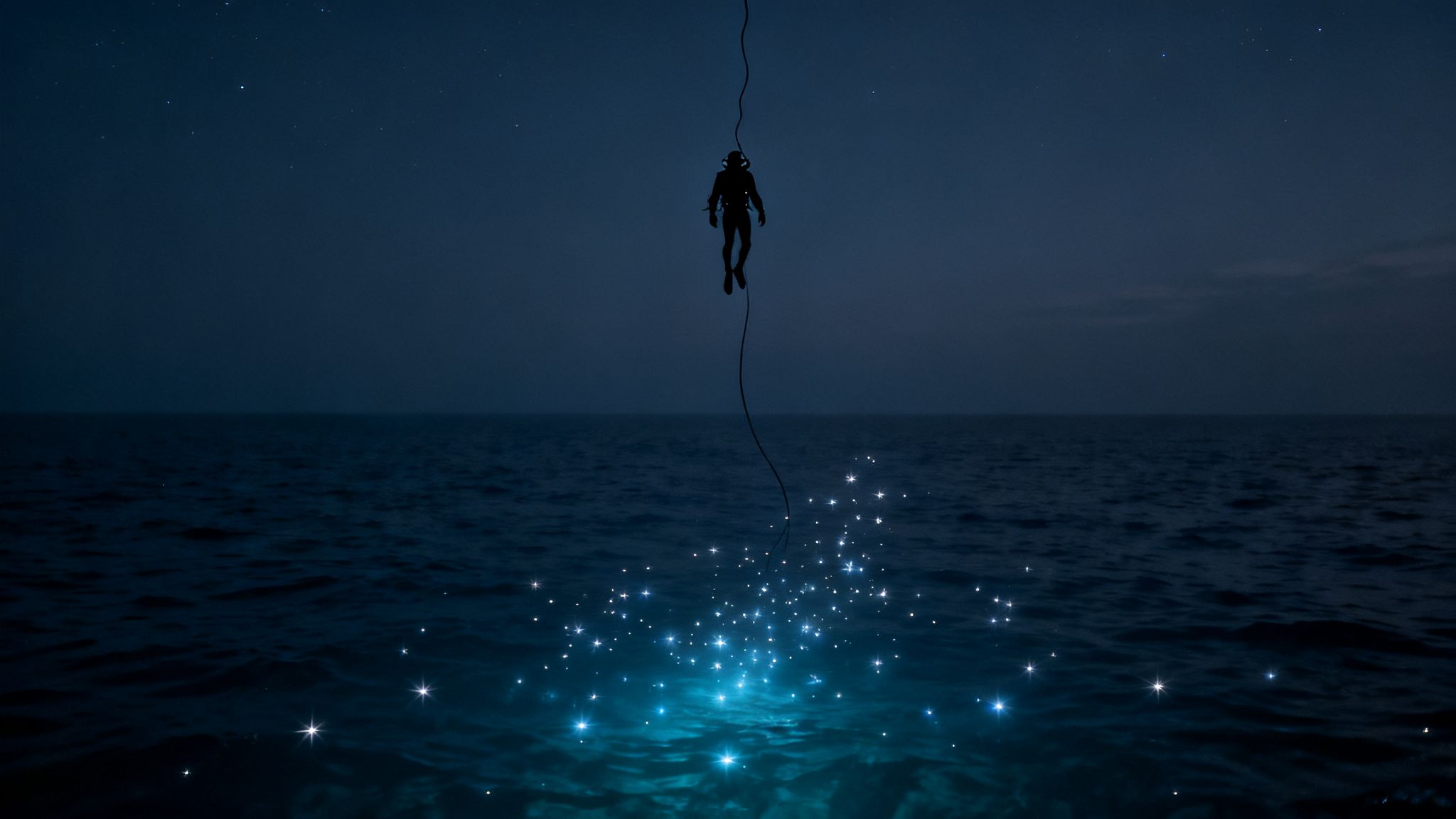
Picture this: you're tethered to a boat, floating in absolute darkness over thousands of feet of inky black ocean. The bottom is a distant, unseen abyss. All around you, the largest migration on Earth is happening as strange, glowing creatures rise from the depths to feed near the surface.
What is the Kona Blackwater Dive?
Unlike any other dive you’ve done, the blackwater experience isn't about exploring a reef. It’s all about the open ocean, the vast "pelagic zone." You simply drift in the dark, watching a parade of bizarre and beautiful organisms that live their entire lives in the water column. Many are in their larval stages, looking nothing like their adult forms.
You might see things like:
- Translucent Squids: You can see right through them, watching their internal organs pulse with mesmerizing colors.
- Alien-like Jellyfish: Some drift by with long, trailing tentacles, while others glow with their own bioluminescent light.
- Larval Lobsters and Eels: Tiny, see-through versions of the creatures you might see on a normal reef dive.
This is definitely an advanced dive. It demands excellent buoyancy control and being completely comfortable in the dark. But the payoff is an experience that few people on Earth will ever have. Dive shops like Kona Honu Divers run expert-led Blackwater Dive tours that put safety first, giving you the best chance to see these incredible deep-water wonders. You can get a much deeper look into this unique adventure by reading our guide on the Kona Black Water Dive.
"The Blackwater Dive is a humbling experience. Floating in that vast darkness, seeing life forms that look like they're from another planet, gives you a profound new perspective on the ocean. It’s a photographer's dream and an adventurer's ultimate dive."
Shore Diving vs. Boat Diving
While Kona does have some great shore diving, the honest truth is that the vast majority of the premier sites—the manta spots, the dramatic lava tubes, and of course, the blackwater locations—are only reachable by boat. Understanding the pros and cons of each is crucial for planning your perfect Big Island trip.
Shore diving offers flexibility and can be easier on the wallet. You get to dive on your own schedule. But it has its limits. You’re stuck with sites close to the road, entries over sharp lava rock can be a real challenge, and you're the one lugging all your heavy gear around.
Boat diving, on the other hand, is what truly unlocks the magic of the Kona coast.
| Aspect | Boat Diving | Shore Diving |
|---|---|---|
| Site Access | Reaches pristine, remote reefs and all the famous specialty sites. | Limited to what's accessible from the shoreline. |
| Convenience | The crew handles your gear, swaps your tanks, and provides amenities. | You have to haul everything yourself. |
| Safety | A professional crew provides a surface watch, oxygen, and expert help. | You're relying entirely on your buddy and your own skills. |
| Comfort | Enjoy shade, snacks, hot showers, and easy ways to get in and out of the water. | You're exposed to the elements with no post-dive perks. |
Ultimately, choosing to go with a professional boat operator like Kona Honu Divers means you get to see the absolute best of what the Big Island offers, all with top-notch safety and comfort. Our experienced crew handles all the logistics, so you can just relax and focus on the incredible world waiting beneath the waves.
How to Dive Safely and Responsibly in Kona
Your safety and the health of the ocean are what turn a good dive into a great one. While heading into the deep blue might seem a bit daunting, the truth is that guided scuba diving in Kona’s calm, protected waters is an incredibly safe and rewarding experience. Let’s walk through the essential safety checks and the responsible diving habits that keep Kona’s underwater world thriving for everyone.It helps to separate perceived risks from the real ones. While Hawaii unfortunately saw 187 resident drownings from 2020-2024, incidents involving scuba divers were exceedingly rare, accounting for less than 5% of all ocean-related deaths. On the Big Island itself, between 2015 and 2020, there were zero scuba-related shark bites. That lines up with the global odds of an attack being just one in 3.7 million.
Kona’s unique geography—its sheltered bays and crystal-clear water—slashes potential hazards by a whopping 40-50% compared to more exposed, open-ocean sites. For a deeper dive into the numbers, Civil Beat offers some fantastic reporting on Hawaii's ocean safety statistics.
Choosing a Reputable Operator
The single most important decision you'll make for a safe dive is picking a professional, reputable operator. A top-notch company like Kona Honu Divers is about more than just showing you cool stuff; their entire operation is built around meticulous safety, from the moment you check in to the second you step off the boat.
Here’s what you should be looking for in a great dive shop:
- An Experienced Crew: You want a team that has deep local knowledge. They know these sites like the back of their hand, can read the conditions, and are trained to handle anything that comes their way.
- Meticulous Gear Maintenance: Professional shops are obsessive about servicing their rental gear. They know that equipment has to work flawlessly when you're 40 feet underwater.
- Strict Safety Protocols: This isn’t just lip service. It means thorough briefings before every dive, emergency oxygen on board, and a vigilant crew that keeps an eye on every single diver in the water.
In the rare case of an emergency like decompression sickness, it’s good to have a basic understanding of What is Hyperbaric Oxygen Therapy, which is the definitive treatment. A responsible crew is always trained in first aid and knows exactly what to do.
Diving with Respect for Marine Life
Once you slip beneath the waves, your role changes. You're no longer just a tourist; you're a guest in a wild and fragile home. The best way to experience it is through passive observation, which ensures the marine life stays healthy and undisturbed.
"The golden rule of diving is simple: look, but don't touch. By becoming a silent observer, you not only protect the reef but also get to witness the natural behaviors of its inhabitants."
Mastering your buoyancy is ground zero for responsible diving. When you achieve neutral buoyancy, you can float effortlessly through the water, which keeps you from accidentally bumping into the delicate coral below. Even the lightest touch can damage its protective living tissue.
The same goes for turtles, dolphins, and manta rays. Always give them plenty of space. Never chase, corner, or try to touch them. If you let these magnificent animals approach you on their own terms, you’ll have a far more authentic and magical encounter. This "Leave No Trace" mindset is the heart and soul of sustainable diving on the Big Island.
Planning Your Big Island Dive Adventure
Alright, let's get down to the details of making your Big Island dive trip happen. The good news is, with Hawaii's year-round amazing conditions, planning is less about when to go and more about what you want to do. A little bit of prep goes a long way to making your trip smooth and unforgettable.
One of the best things about diving the Kona coast is its incredible consistency. The water is always inviting, ranging from a comfortable 75°F (24°C) in the winter months to a warm 81°F (27°C) in the summer. And the visibility? It's almost always spectacular, often clearing 100 feet or more.
If you come in the winter, you get a truly unique bonus: the sound of migrating humpback whales. Hearing their songs echo through the water while you're on a dive is a surreal, magical experience you won't soon forget.
Getting Certified or Brushing Up on Skills
Whether you're a seasoned diver or have never taken a breath underwater, Kona is an amazing place to get your fins wet. The first step to a great trip is feeling confident and comfortable in the water.
- PADI Open Water Certification: If you're finally ready to become a certified diver, you couldn't ask for a better classroom. The calm, clear waters here make learning to dive a joy, not a chore.
- Refresher Courses: Been a while since your last dive? If it's been a year or more, a quick refresher course is the smart move. It helps shake off the rust and gets you back in the groove before heading out to the premier sites.
Shops like Kona Honu Divers run the full gamut of PADI courses, from the very first certification all the way to advanced specialties. Their instructors are pros at making the learning process safe, efficient, and genuinely fun.
To Rent or To Bring Your Gear?
Ah, the classic diver's dilemma. Do you lug your own heavy gear across the Pacific, or just rent when you get here? While there's nothing like your own tried-and-true setup, renting in Kona has some serious perks. With airlines getting stricter and more expensive with baggage fees, bringing your own rig can really add up.
Even more importantly, renting from a top-notch operator like Kona Honu Divers means you’re getting high-quality gear that’s professionally maintained. You can trust that your regulator, BCD, and everything else is in perfect working order. Plus, they offer complimentary nitrox for certified divers—a fantastic benefit that can give you more bottom time and leave you feeling less tired.
As you get your plans locked in, it's also a good idea to choose the right travel insurance for your adventure, just to cover all your bases.
A quick tip from a seasoned traveler: rent a car. It's really the only way to get around the island freely and makes getting to the dive shop at Honokohau Harbor a breeze. Also, be sure to book your dives and any courses you need well in advance, especially if you're coming during a busy season. You don't want to miss out!
With these logistics handled, you can focus on the main event: the incredible underwater world that's waiting for you.
Your Big Island Diving Questions, Answered
Got questions about diving here? You're not alone. I've heard just about all of them over the years, so I've put together answers to the most common things people ask before they arrive. Think of this as a quick guide to get you oriented and excited for your trip.
When Is the Best Time of Year to Dive the Big Island?
Honestly, you can't go wrong. The Kona coast offers fantastic diving pretty much 365 days a year.
If you love warm water, the summer months are for you, with temperatures hitting a balmy 81°F (27°C) and the seas are often glassy calm. Winter is a touch cooler, maybe 75°F (24°C), but it has its own special kind of magic—you can often hear the haunting songs of humpback whales echoing through the water on your dives. Visibility is almost always great, frequently clearing 100 feet.
Do I Need to Be an Advanced Diver to Enjoy Kona?
Not at all! Kona is one of the best places to dive precisely because it has something for everyone.
We have dozens of beautiful, mellow reef sites that are perfect for new divers or anyone working on their certification. For the more seasoned divers, we've got deeper pinnacles, intricate lava tubes, and charter trips that will definitely keep you on your fins. A good, professional operator like Kona Honu Divers will always make sure the dive profile fits your comfort and skill level.
Is the Manta Ray Night Dive a Guaranteed Sighting?
It's about as close as you can get when dealing with wild animals. While nothing in nature is ever a 100% certainty, the success rate for this dive is incredibly high—we're talking upwards of 90% on most nights. The mantas have been coming to these "campsites" to feed for decades, and we've gotten pretty good at knowing how to attract them for an unforgettable show.
What Else Will I See Down There Besides Manta Rays?
Oh, the list is long and amazing! The biodiversity here is just stunning. On almost any given dive, you can expect to see Hawaiian green sea turtles (we call them honu), playful spinner dolphins, and all sorts of eels and octopuses hiding in the reef.
The place is teeming with colorful reef fish, many of which you can only find here in Hawaii. Keep your eyes peeled and you might also spot eagle rays cruising by, whitetip reef sharks resting on the sand, and maybe even some bigger open-ocean visitors.
No matter what you're hoping to see, Kona Honu Divers has an underwater adventure ready and waiting for you.
Ready to see for yourself what makes the Big Island's underwater world so special? Kona Honu Divers runs expertly guided diving tours that cater to every passion and experience level. Let's get you in the water and show you why Kona is truly a world-class diving destination.