
When you think of scuba diving in Hawaii, what's the first image that pops into your head? While every island has its own underwater charm, the Big Island—specifically the Kona coast—offers something truly special. It’s a place where calm, clear water, dramatic volcanic seascapes, and once-in-a-lifetime marine encounters come together to create a world-class diving destination.
Why The Big Island Has Hawaii’s Best Diving
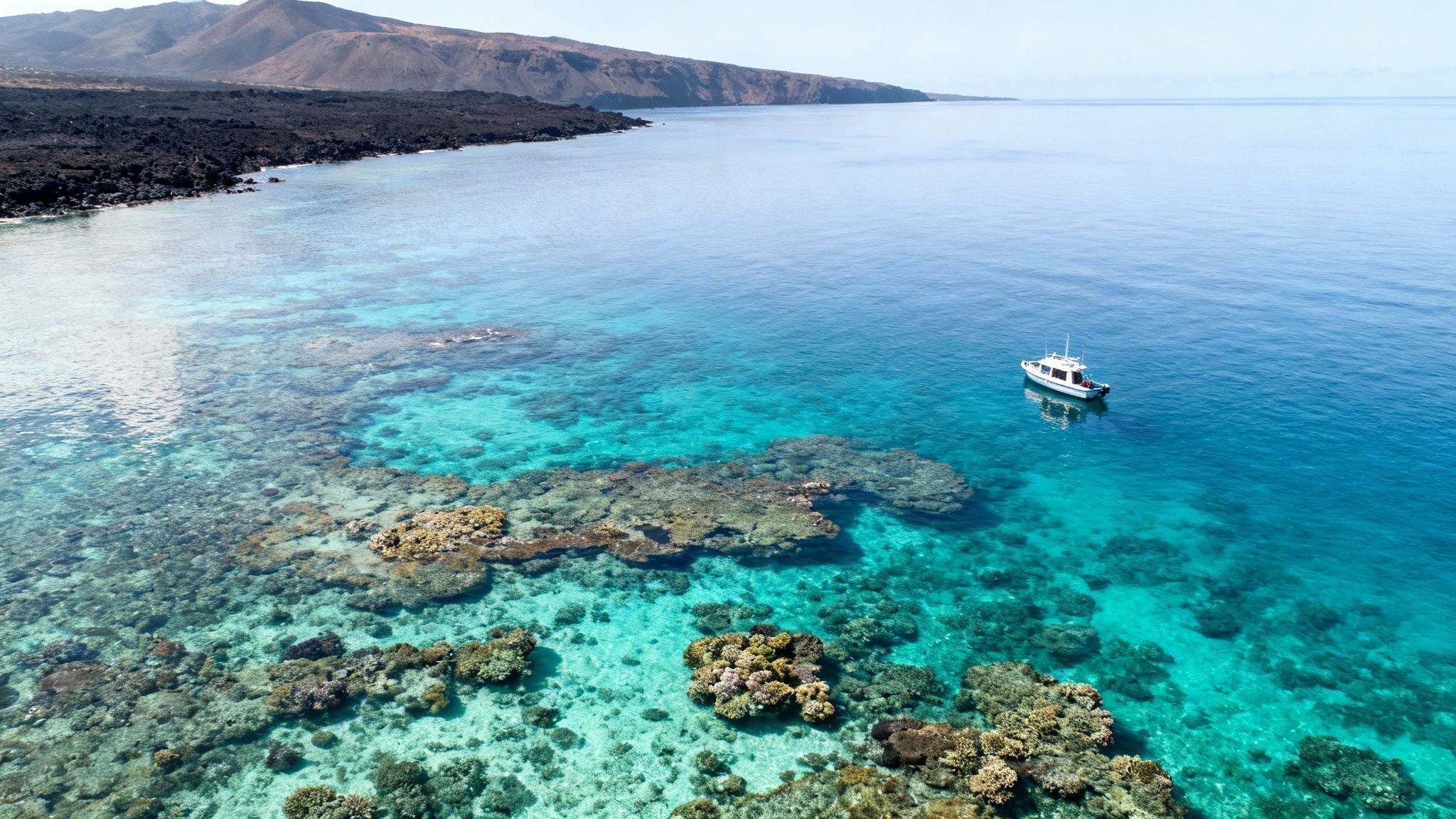
The secret to Kona's incredible diving conditions is all about geography. The island is dominated by the massive volcanoes of Mauna Loa and Hualalai. These towering peaks act like a giant wall, blocking the powerful trade winds that can churn up the seas and cloud the water around the other Hawaiian islands.
The result? The Kona coast is gifted with exceptionally calm, lake-like conditions for much of the year. This makes for smooth boat rides and incredibly peaceful dives, letting you focus on the world below instead of fighting against surge and current.
That unique volcanic geology doesn't just stop at the shoreline; it creates a spectacular underwater playground. The Big Island is the youngest in the Hawaiian chain, so its underwater landscape is raw and dramatic. You'll find ancient lava tubes you can swim through, towering underwater pinnacles (or pali), and intricate archways all encrusted with some of Hawaii’s most vibrant coral reefs.
Kona's Unmatched Marine Life And Visibility
With the global diving industry projected to reach USD 18.5 billion by 2035, destinations that offer truly exceptional experiences are in high demand, and Kona is at the top of the list. Much of its success comes from a strong commitment to conservation.
Protected areas like the Kealakekua Bay Marine Life Conservation District are perfect examples. Here, fishing is off-limits, which has allowed marine life to flourish. The payoff is crystal-clear water with visibility often pushing past 100 feet, revealing bustling reefs filled with turtles, huge schools of reef fish, and even underwater historical monuments. You can discover more insights about Big Island marine sanctuaries to understand why the ecosystem here is so healthy.
To quickly see what makes this place so special, here’s a look at the Big Island’s standout features.
Big Island Diving At a Glance
| Feature | Why It's Exceptional | Best For |
|---|---|---|
| Calm Waters | Shielded from trade winds by massive volcanoes, creating glass-like conditions. | All divers, especially beginners and those prone to seasickness. |
| Volcanic Topography | Lava tubes, arches, and pinnacles create a dramatic, unique underwater landscape. | Explorers, photographers, and anyone seeking adventure. |
| Manta Ray Night Dive | A world-famous, reliable encounter with gentle giants feeding on plankton. | Bucket-list seekers, photographers, and divers of all levels. |
| Blackwater Dives | A thrilling dive into the open ocean to see bizarre, bioluminescent deep-water life. | Advanced divers and photographers looking for a unique thrill. |
| Exceptional Visibility | Consistently clear water, often exceeding 100 feet. | Underwater photographers and divers who love wide-open views. |
| Thriving Marine Life | Protected marine sanctuaries allow fish populations and coral to thrive. | Everyone! From macro lovers to those hoping to spot large animals. |
This table just scratches the surface, but it highlights the core reasons why divers from around the globe flock to the Kona coast.
This combination of clarity and biodiversity sets the stage for some unforgettable underwater shows. In fact, Kona is the only place in Hawaii where you can reliably experience two of the most famous night dives on the planet:
- The Manta Ray Night Dive: A true spectacle where massive, gentle manta rays swoop and glide through the beams of dive lights in a mesmerizing underwater ballet.
- The Blackwater Dive: A surreal journey into the deep, dark open ocean. You'll witness some of the planet's strangest bioluminescent creatures as they migrate up from the abyss under the cover of night.
Diving in Kona is like exploring a different planet. The combination of ancient lava formations and thriving marine ecosystems creates an environment that is both rugged and full of life. It’s a constant reminder of nature's power and artistry.
For divers looking for incredible conditions and adventures you simply can't find anywhere else, the choice is easy. From calm seas to bucket-list encounters, diving Big Island’s Kona coast is an experience that stays with you. Expert local operators like Kona Honu Divers know all the best spots and can help you get the most out of your time in this diver's paradise.
Experiencing The World-Famous Manta Ray Night Dive
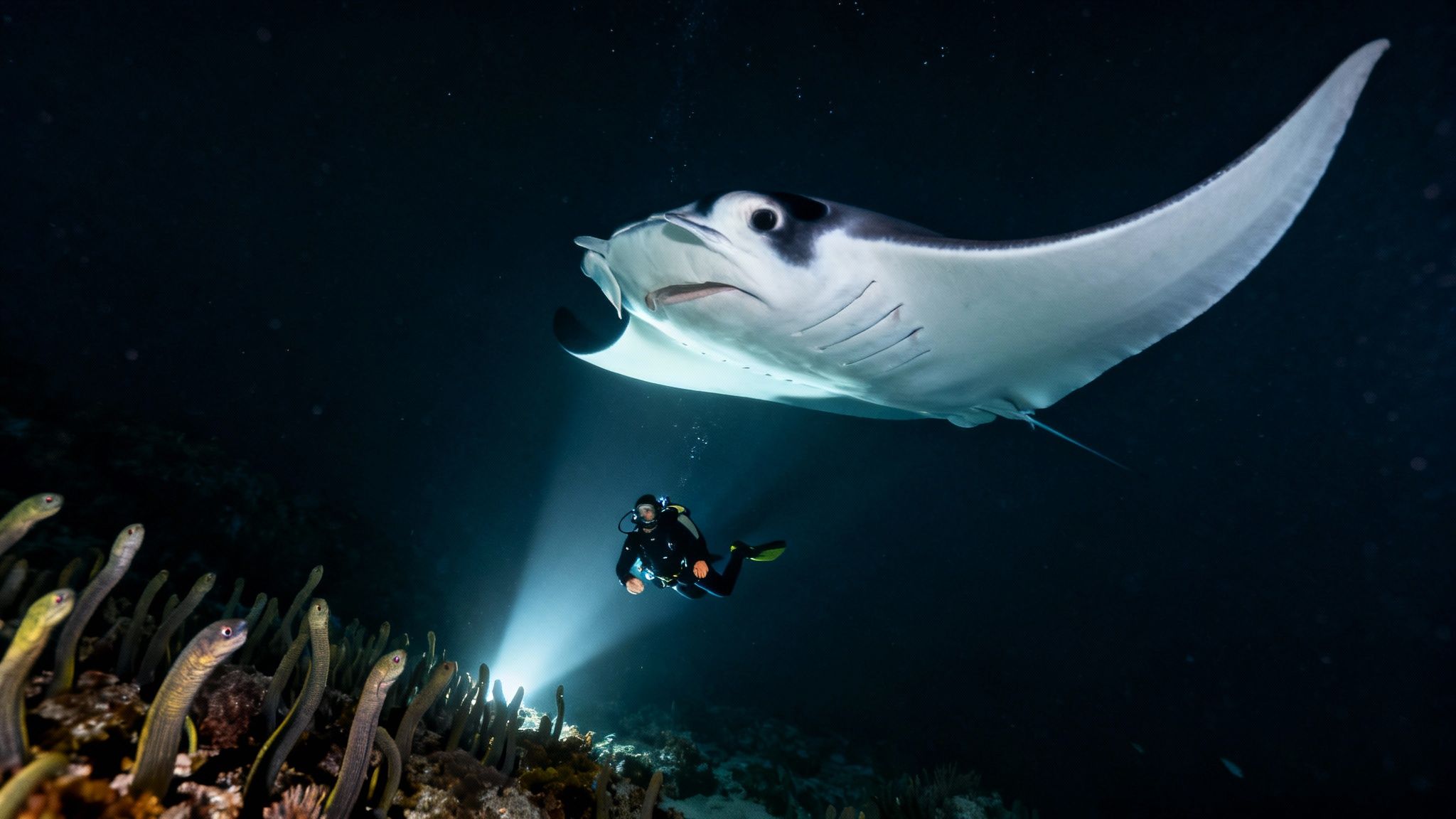
Of all the incredible reasons people come to the Big Island, one experience stands head and shoulders above the rest: the Manta Ray Night Dive. This isn't just another entry in your logbook. It’s a surreal, mesmerizing underwater ballet that has rightfully earned its place as one of the greatest animal encounters on the planet.
Picture this: you descend into the warm, dark Pacific just after sunset. You and your group find a spot on the sandy bottom and point your dive lights straight up, creating beams that cut through the darkness. These lights attract clouds of plankton, the mantas' favorite meal, essentially ringing the dinner bell.
Then, the show begins. A huge, dark shape glides out of the blackness and into the light. Then another, and another. These gentle giants, with wingspans that can stretch to an unbelievable 16 feet, perform effortless barrel rolls and swoops just inches over your head, their huge mouths wide open to filter the plankton. It's humbling, breathtaking, and utterly magical.
Why Garden Eel Cove Is The Premier Location
While you might hear about a couple of different manta sites, Garden Eel Cove (also called Manta Heaven) is hands-down the superior choice for this adventure. The cove's natural geography shields it from the open ocean, which means the water is almost always much calmer and safer for divers.
This protected location offers a few huge advantages:
- A Natural Amphitheater: The sandy bottom allows divers to settle in comfortably, creating a perfect, superior viewing area where everyone gets an amazing, unobstructed view of the action above.
- Better Reefs: The coral reefs surrounding the "stage" at Garden Eel Cove are healthy and vibrant, giving you plenty to see even before the mantas arrive.
- Incredibly Reliable Sightings: This is a known feeding station, so the mantas show up night after night. It’s about as close to a guarantee as you can get in the wild.
The consistency is no joke. Fellow operators on the Kona coast have reported manta sightings on 85-90% of trips. One night recently saw a record-breaking 32 individual mantas, and it's not uncommon for divers to see between 10 and 20 on an average evening.
Of course, the dive operator you choose is just as critical as the location. This is where a seasoned crew like the one at Kona Honu Divers makes all the difference. They’ve perfected the logistics, ensuring your dive is as safe and comfortable as it is spectacular. For an in-depth look, check out our guide to the Manta Ray Night Dive in Kona.
What To Expect On Your Manta Dive
This dive is surprisingly accessible, even for newer divers. The dive profile is shallow, and you’ll spend almost the entire time stationary—kneeling or sitting on the sand—so you can focus all your attention on the spectacle unfolding right in front of you.
Snorkelers can get in on the action, too. They hold onto a custom float on the surface with lights shining down into the water. But for the ultimate experience, nothing beats the diver's perspective from the seafloor, looking up as these massive creatures glide directly overhead.
This is more than just a dive; it’s a connection. Watching these intelligent, graceful animals move with such purpose and elegance is a profound experience that stays with you long after you surface.
It doesn’t matter if you have ten dives or ten thousand, the Kona Manta Ray Night Dive is a true bucket-list adventure that always delivers. It’s the perfect embodiment of what makes diving the Big Island a world-class destination.
Exploring Adventures Beyond The Manta Dive
While the manta ray night dive is an absolute superstar, it’s just the first chapter in the incredible story of diving Big Island. The same volcanic forces and deep ocean channels that make Kona a manta magnet have also carved out a diverse underwater playground. It's filled with unique and thrilling adventures for every kind of diver.
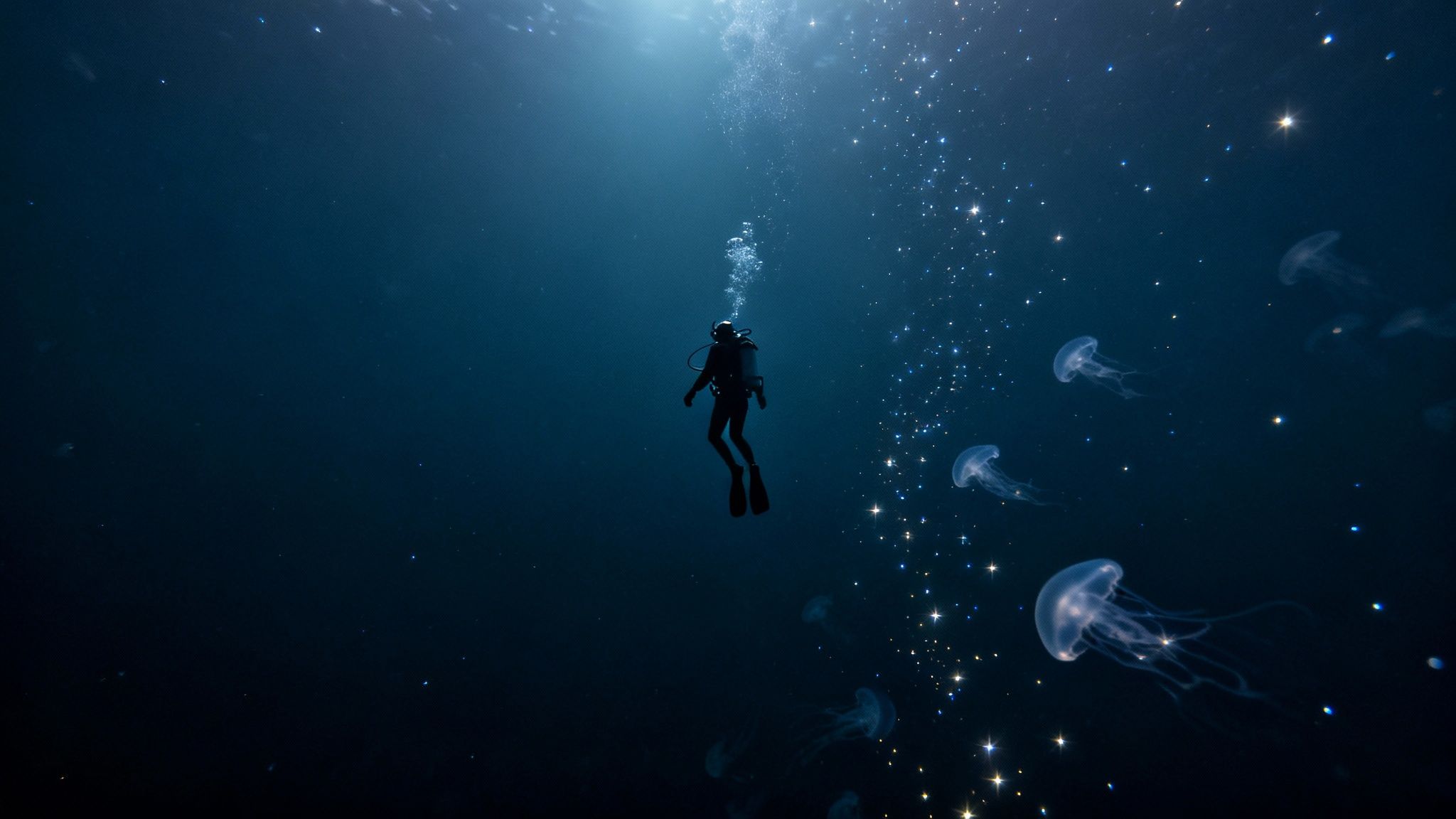
One of the most extraordinary experiences you can have here is the Kona Blackwater Dive. People often call it a "spacewalk in the deep ocean," and for good reason—it’s unlike anything else you've ever done. This is a journey into the abyss, where the strange and wonderful creatures of the deep sea make their nightly vertical migration toward the surface.
The Surreal World of The Blackwater Dive
Picture this: you're drifting in the inky blackness of the open ocean, miles from shore, attached to a downline from the boat. Below you is thousands of feet of water. All around you is a living galaxy of bizarre, bioluminescent life. That's the essence of the Kona Blackwater Dive, an adventure that truly pushes the boundaries of scuba.
You'll come face-to-face with creatures that look like they belong on another planet.
- Bioluminescent Siphonophores: These colonial animals can form long, glowing chains that drift through the water like alien spaceships.
- Translucent Larval Fish: You'll see fish and eels in their earliest, most alien-looking life stages, often completely transparent.
- Pteropods and Pelagic Nudibranchs: Tiny, winged sea snails and other strange invertebrates float gracefully in the dark.
This isn't a dive for checking out coral reefs or big animals. Instead, it’s a deep dive into the weird and wonderful world of pelagic marine biology. The experience is both humbling and exhilarating, offering a rare glimpse into an ecosystem that few people ever get to witness. If you're ready to learn more, we have a complete guide to the Kona Blackwater Dive that details this one-of-a-kind adventure.
These dives plunge intermediate-to-advanced divers into the open ocean's midnight zone, typically between 40-80 feet deep, where all this life migrates upwards. As a Kona original, Kona Honu Divers offers these mysterious excursions with a highly experienced crew to ensure a safe and guided thrill. Imagine just drifting, watching for glowing siphonophores, larval fish, and rare squid—sights you’ll never find on a shallow reef.
The blackwater dive is pure sensory immersion. It forces you to slow down, focus on the small details, and appreciate the absolute strangeness of life in the deep ocean. It’s less of a dive and more of a meditation in the abyss.
Because this dive happens in the open ocean at night, it's exclusively for experienced divers who are completely comfortable with their buoyancy control. If that sounds like you, it is an unforgettable experience that will change how you see the ocean forever.
Volcanic Landscapes For The Advanced Diver
Beyond the blackwater, the Big Island's raw volcanic geology has created a dramatic playground for more experienced divers. The underwater topography here is a direct result of the island's fiery creation, offering structures you won't find anywhere else in Hawaii. These sites are often deeper, can have stronger currents, and definitely require a higher skill level to navigate safely. For those with the experience, we recommend an advanced dive tour.
But for those with the experience, the rewards are incredible. You can explore:
- Ancient Lava Tubes and Caverns: Swim through massive underwater tunnels and arches formed by ancient lava flows. These structures are often encrusted with colorful sponges and corals, providing a home for sharks, lobsters, and huge schools of fish.
- Deep Pinnacles and Sheer Walls: Discover underwater mountains (pali) that rise from the depths, their walls covered in marine life. These sites are magnets for larger pelagic species like sharks, jacks, and even the occasional whale shark.
- Unique Formations: Sites like "Golden Arches" feature stunning lava formations that create a photographer's dream landscape, perfect for capturing the unique character of Kona diving.
These advanced sites are where the true, untamed beauty of diving Big Island really shines. The dives are more challenging, but the payoff is access to pristine environments and awe-inspiring geological wonders.
Discovering The Top Dive Sites on The Kona Coast
The Kona coast, sculpted by ancient lava flows and sheltered from the trade winds, is home to dozens of world-class dive sites. Each one offers a unique glimpse into the Big Island’s incredible underwater world. Figuring out which spots to hit is half the fun, and knowing what makes each one special is key to matching the right dive to your vibe.
You’ll find everything from serene, shallow reefs that are perfect for your first few dives to dramatic volcanic ledges and caverns that will challenge and thrill even the most seasoned divers. The sheer variety here is mind-boggling. Let's dive into a few legendary sites that truly define the diving Big Island experience.
Kealakekua Bay
Kealakekua Bay is so much more than just a dive site; it’s a living piece of history. This protected Marine Life Conservation District is where Captain James Cook first made contact with Hawaiians in 1779. Decades of protection have fostered one of the most vibrant and healthy reef ecosystems in the entire state.
The bay is famous for its crystal-clear water, where visibility often pushes past an incredible 100 feet. Steep underwater cliffs plummet into the deep blue, creating a dramatic backdrop for massive schools of yellow tang, curious spinner dolphins, and a whole spectrum of endemic reef fish that flourish in these pristine waters.
Two Step (Honaunau Bay)
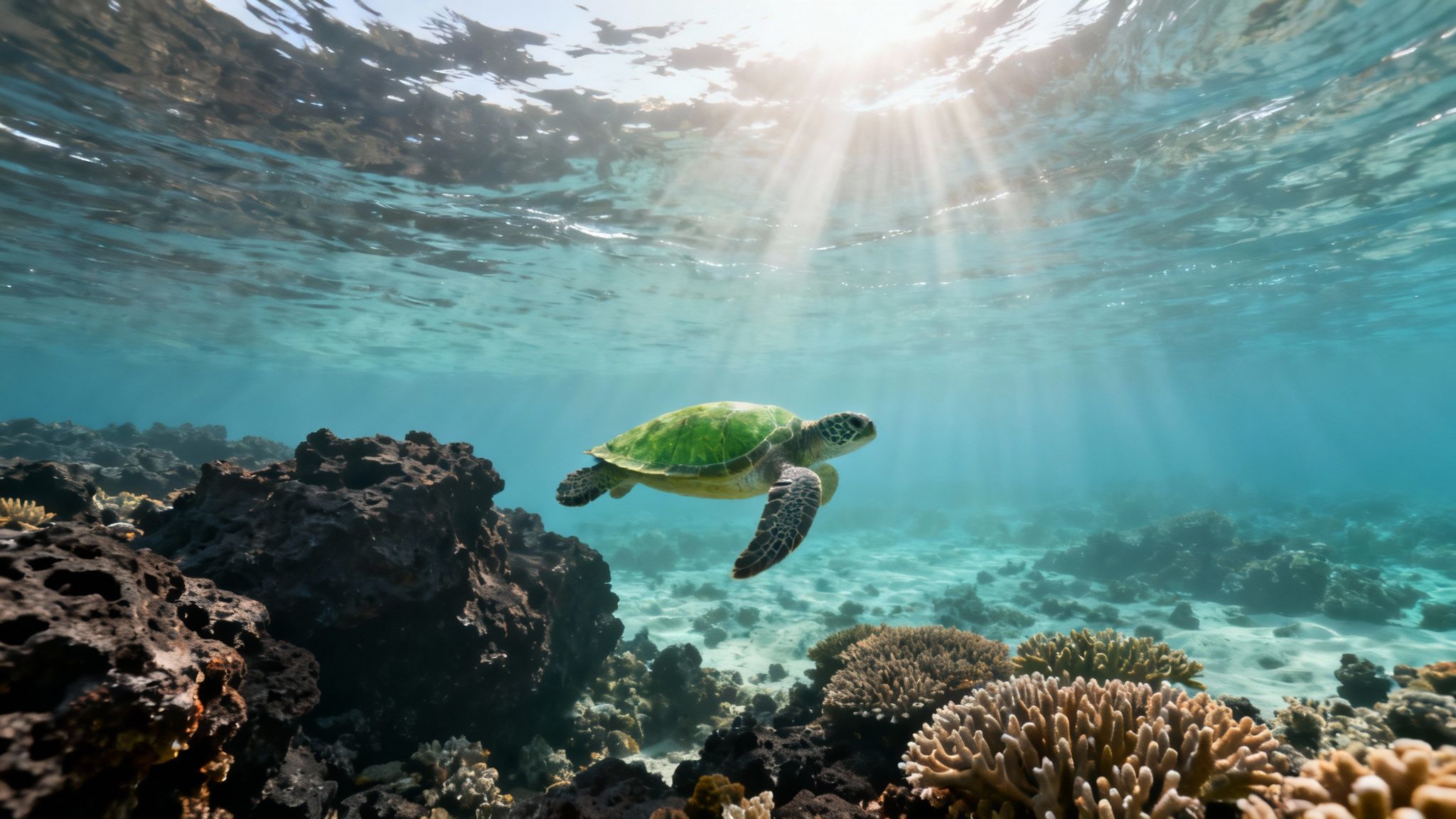
Just a bit south of Kealakekua is Honaunau Bay, better known to locals and divers as "Two Step." The nickname comes from the perfectly formed lava rock "steps" that offer one of the easiest shore entries you'll ever find. Once you’re in, you’ve arrived in a sanctuary for the Hawaiian Green Sea Turtle (honu).
Its calm, shallow cove makes it an ideal spot for divers of all skill levels. You can easily spend an entire tank just meandering through the intricate coral gardens, watching turtles graze peacefully on the bottom or glide effortlessly to the surface for a breath. It’s a beautifully relaxed dive that captures the essence of Kona.
Golden Arches
If dramatic underwater landscapes are your thing, Golden Arches is a non-negotiable stop. This site gets its name from a spectacular series of lava rock arches and swim-throughs that create a photographer’s paradise. It truly feels like you're exploring a submerged cathedral built by Pele herself.
These ancient structures are caked in colorful sponges and corals. Don’t forget to peek into the nooks and crannies—you’ll often find whitetip reef sharks napping, moray eels peering out, and large schools of soldierfish seeking refuge from the light. This site is a powerful reminder of the raw, volcanic forces that shaped the Big Island.
Turtle Pinnacle
No prizes for guessing the main attraction here. Turtle Pinnacle is one of the most reliable spots on the island to see Green Sea Turtles in their element. The site is centered around an underwater pinnacle, or pali, that functions as a natural "cleaning station."
Turtles line up here to let surgeonfish and other small reef fish pick algae and parasites off their shells. It's a front-row seat to one of nature's coolest symbiotic relationships. Just find a sandy spot, settle in, and watch the show. Beyond the turtles, the pinnacle is often swarmed by pyramid butterflyfish and visited by graceful eagle rays cruising by in the blue.
Kona's Top Dive Sites Compared
To help you choose your next underwater adventure, here's a quick look at how these iconic Kona dive sites stack up against each other.
| Dive Site | Key Feature | Typical Marine Life | Best for Level |
|---|---|---|---|
| Kealakekua Bay | Marine preserve with exceptional visibility | Dolphins, yellow tang schools, endemic reef fish | All Levels |
| Two Step | Easy shore entry and shallow coral gardens | Green sea turtles (honu), colorful reef fish | All Levels, Shore |
| Golden Arches | Lava tubes, arches, and swim-throughs | Whitetip reef sharks, moray eels, soldierfish | Intermediate |
| Turtle Pinnacle | Famous turtle "cleaning station" on a pinnacle | Green sea turtles, pyramid butterflyfish, eagle rays | Beginner, Photographers |
Each site tells a different story about the island’s geology and marine ecology. Whether you’re looking for history, easy access, volcanic drama, or guaranteed wildlife encounters, Kona delivers.
Ready to see it all for yourself? Check out the full range of Kona Honu Divers' diving tours and start building your perfect underwater itinerary.
Planning Your Ultimate Big Island Dive Trip
Getting the logistics right is what turns a good dive trip into an epic one. Don’t worry, it’s not complicated. A little bit of planning for your Big Island adventure means you can spend less time stressing and more time soaking in that incredible underwater world.
This section is all about the practical stuff. We’ll get into the nitty-gritty of when to come, what to pack, and what to expect from the water, so you can show up ready for anything.
Choosing The Best Time To Visit
Let's start with the easy part: there's really no bad time to dive in Kona. The massive volcanoes on the island act as a natural shield, protecting the Kona coast from the gusty trade winds that can churn up the water elsewhere. This means conditions are almost always calm and clear.
That said, there are a few subtle differences between the seasons you might want to consider:
- Summer (May – September): This is when the water hits its peak warmth, often reaching a balmy 80°F (27°C). The seas tend to be incredibly flat—we're talking glassy conditions that make for some seriously smooth boat rides.
- Winter (October – April): The water temperature dips a bit, hovering in the mid-70s F (around 24-25°C), which is still plenty comfortable for most divers. The real highlight of winter? It’s humpback whale season. There's nothing quite like hearing their haunting songs echoing through the water while you’re on a dive.
Visibility is fantastic year-round, often pushing past 100 feet. Honestly, the best time to visit really just boils down to what you prefer for water temp and topside weather.
Your Essential Dive Trip Packing List
While you can rent almost everything you need, a few personal items can make a world of difference in your comfort and safety. Think of it as your go-bag for underwater exploration.
Here's a quick checklist of things you'll be glad you brought:
- Certification Cards and Logbook: You can't get on the boat without them!
- Dive Computer: This is a non-negotiable piece of safety gear for tracking your depth and time. Properly equipping yourself is half the battle; if you're in the market for one, you can find great recommendations for the best dive watches to start your search.
- Mask and Fins: Nothing beats the comfort of your own gear. A mask that fits your face perfectly means no leaking, and fins you're used to make kicking feel effortless.
- Wetsuit: A 3mm suit is the standard here and works well for most people. If you tend to get chilly, especially on night dives or in the winter, you might be happier in a 5mm.
- Reef-Safe Sunscreen: Help us protect Hawaii's fragile coral reefs by sticking to mineral-based sunscreens.
- Reusable Water Bottle: Diving is dehydrating work. A reusable bottle keeps you hydrated and helps cut down on plastic waste.
- Camera or GoPro: From the Manta Ray Night Dive to the ancient lava tubes, you’re going to want proof of what you saw.
The secret to a great dive trip is being prepared. When you have the right gear and know what to expect, all that's left to do is relax and enjoy the incredible underwater scenery.
Choosing a top-notch operator like Kona Honu Divers makes everything even simpler. They offer high-quality rental gear that's meticulously maintained, so you can travel light without worrying about equipment failures. Better yet, they provide complimentary Nitrox for certified divers, which can extend your bottom time and help you get the most out of every single tank. With their comfortable boats, hot showers, and expert guides, they take care of all the details so you can just focus on the adventure ahead.
How To Choose The Right Kona Dive Operator
Let’s be honest: your dive operator can make or break your entire trip. A great one doesn’t just shuttle you to a GPS coordinate and toss you overboard. They set the tone for the whole experience, turning a good dive into a truly unforgettable one through their expertise, safety standards, and genuine passion for the ocean.
When you're diving the Big Island, picking the right crew is one of the most important decisions you'll make. So, what should you look for? Start with the non-negotiables: a flawless safety record, a crew that knows these waters like the back of their hand, and boats that are clearly well-cared-for. These are the pillars of any professional operation.
Why Experience And Service Matter
Once the basics are covered, it's the little things that separate the good from the great. Does the crew get just as excited as you do when a pod of dolphins swims by? Do they share fascinating stories about the local marine life? Are the boats actually comfortable, with things like a hot shower to rinse off after a dive or plenty of shade? These details really add up.
This is where a shop like Kona Honu Divers truly shines. The team has a staggering 200 years of combined experience, and it shows. Their love for diving and unwavering commitment to their guests' safety is palpable. For a more detailed breakdown, check out our guide on how to choose a Kona dive shop.
Ultimately, you want to dive with people who make you feel safe, confident, and genuinely thrilled to explore what lies beneath the waves.
Other Reputable Kona Operators
While we're obviously proud of the experience we provide, our goal is for you to have an amazing time in Kona, no matter who you dive with. An informed diver is a happy diver, after all. The Kona coast has several fantastic, highly-rated dive companies. To help with your research, here are a couple of other great options worth looking into.
Jack's Diving Locker
A true Kona institution, Jack's has been around for a long time. They're well-known for offering a massive range of courses and dive tours for all levels.
Big Island Divers
Another popular and solid choice on the island. Big Island Divers runs a full schedule of trips, including the world-famous manta ray night dive.
Your Big Island Diving Questions, Answered
Getting ready to jump into the incredible waters off the Kona coast? It's natural to have a few questions before you go. Here are some quick, straight-to-the-point answers to what divers ask us most.
Do I Need to Be an Advanced Diver?
Nope, not at all. While we have plenty of deep, adventurous sites for the seasoned pros, the Kona coast is actually one of the best places in Hawaii to get your fins wet for the first time. The waters are typically calm and protected, with tons of shallow reefs that are perfect for Discover Scuba experiences and Open Water certifications.
When Is the Best Time of Year to Dive?
Honestly, there’s no bad time for diving the Big Island. The conditions are fantastic year-round.
If you love warm water, aim for summer (May-September) when temperatures often hit a balmy 80°F (27°C). If you're here in the winter (October-April), you'll be treated to the soundtrack of humpback whale songs on nearly every dive—a truly magical experience.
Can I Still Dive If I Don't Have My Own Gear?
Absolutely! We know not everyone travels with a full set of dive equipment. Reputable shops like ours have a complete inventory of high-quality, meticulously maintained rental gear. From BCDs and regulators to computers and wetsuits, we’ve got you covered so you can travel light and still dive safely and comfortably.
Besides Manta Rays, What Will I See Down There?
The manta rays might be the stars of the show, but Kona's reefs are packed with an incredible supporting cast. On any given dive, you're likely to encounter Hawaiian green sea turtles (honu) munching on algae, pods of spinner dolphins playing in the distance, and chilled-out whitetip reef sharks resting on the sand.
Keep your eyes peeled for moray eels peeking out of crevices and a kaleidoscope of vibrant reef fish. Every so often, lucky divers even spot eagle rays, tiger sharks, or the gentle giant of the ocean, the whale shark. The sheer diversity is what keeps people coming back year after year.
Ready to see it all for yourself? The crew at Kona Honu Divers lives and breathes these waters, and we can't wait to show you the best diving the Big Island has to offer. Whether you want to witness the world-famous manta ray night dive or just explore a beautiful reef, we have the perfect trip for you. Book your diving tour today and let's make some bubbles