
Welcome to your ultimate guide to diving the Big Island—an underwater paradise sculpted by volcanic fire and teeming with life. The Kona coast isn't just a great place to dive; it's a world-class destination that offers some of the most unique and unforgettable underwater experiences you can find anywhere on the planet.
We're talking about nightly manta ray ballets, otherworldly blackwater drifts, and so much more.
Why the Big Island Is a World-Class Diving Destination
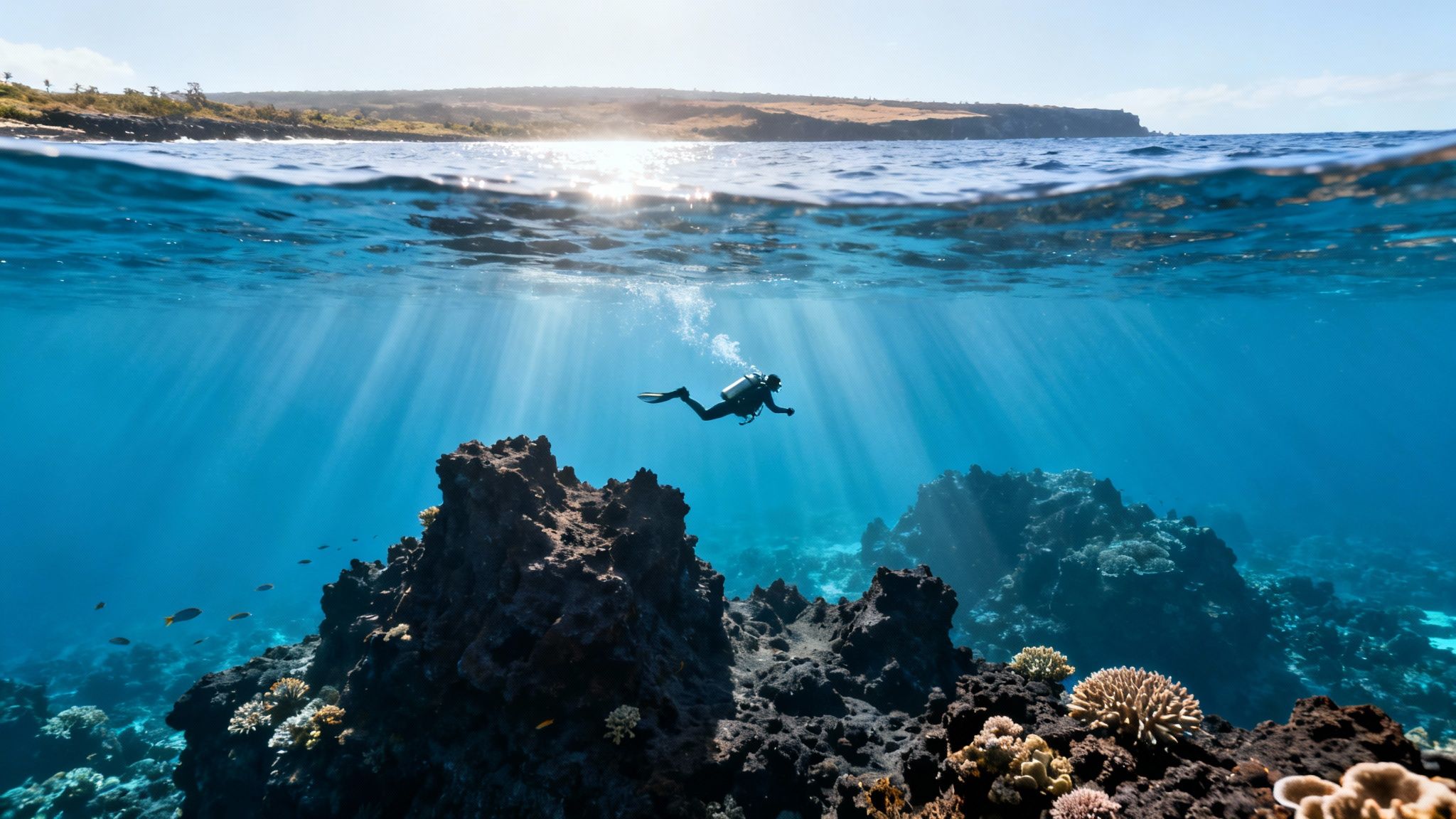
So, what’s the secret? What makes diving the Big Island so special?
Picture a massive natural aquarium, perfectly designed for exploration. The island’s enormous volcanoes, Mauna Loa and Hualalai, act as a giant shield, protecting the western Kona coast from the powerful trade winds that batter other parts of Hawaii.
This natural protection gives us exceptionally calm and clear waters pretty much year-round. That makes it an incredible spot for divers of all skill levels, from those just getting certified to seasoned pros. It’s why the Kona coast consistently ranks as Hawaii's premier scuba diving destination, often beating out even Maui for its sheer biodiversity and easy access.
Because of these sheltered shores, we often get visibility that shoots past 100 feet. It's just a whole different world down there.
A Volcanic Underwater Playground
The island's volcanic past isn't just for show on land—it’s created a truly spectacular underwater landscape. As a diver, you get to explore ancient lava tubes, swim through dramatic archways, and navigate towering pinnacles all formed by ancient lava flows.
These incredible structures have since become home to some of the most vibrant coral reefs in the state, bustling with endemic species you won’t find anywhere else on Earth.
This unique topography means there’s something for every diver:
- Intricate Lava Tubes: Imagine swimming through underwater caverns and seeing firsthand how volcanic power shaped the ocean floor.
- Vibrant Coral Gardens: You'll discover sprawling reefs teeming with colorful fish, green sea turtles, and curious moray eels.
- Dramatic Drop-Offs: For a real thrill, you can experience diving along deep walls that plunge into the blue, attracting larger pelagic species.
This one-of-a-kind blend of geology and biology makes every single dive a new adventure. If you want to learn more, check out our guide on whether the Big Island is good for scuba diving.
The Three Pillars of Big Island Diving
While the reefs alone are stunning, there are three signature experiences that truly define Big Island diving and put it on every diver’s bucket list. These aren't just dives; they're profound encounters with the ocean's magic.
First up is the world-famous Manta Ray Night Dive, a mesmerizing underwater ballet performed by gentle giants. It's an absolute must-do.
Second, for the truly adventurous, is the Blackwater Dive. This is a journey into the deep open ocean at night to witness a whole world of bizarre and beautiful bioluminescent creatures rise from the depths.
Finally, our incredible daily diving tours along the Kona coast offer endless opportunities to explore a rich, healthy, and ever-surprising ecosystem.
Here's a quick look at the most iconic diving experiences on the Big Island, what makes them special, and who they're best suited for.
Big Island Signature Dives at a Glance
| Dive Experience | Best For | What Makes It Special |
|---|---|---|
| Manta Ray Night Dive | All levels, families, photographers | A world-famous, awe-inspiring encounter with gentle giants feeding just inches away. |
| Blackwater Dive | Advanced divers, photographers | An otherworldly night dive in the deep ocean to see rare, bioluminescent pelagic critters. |
| Lava Tubes & Reefs | All levels, explorers, adventurers | Exploring unique volcanic formations like caves and archways teeming with vibrant marine life. |
These are the experiences that people travel from all over the world for, and they happen right here in our backyard.
With Kona Honu Divers, you have expert guides who live and breathe this underwater world, ready to show you the very best of it. Our experienced crew and unwavering commitment to safety ensure your adventure is not just amazing, but unforgettable.
Experiencing the World-Famous Manta Ray Night Dive
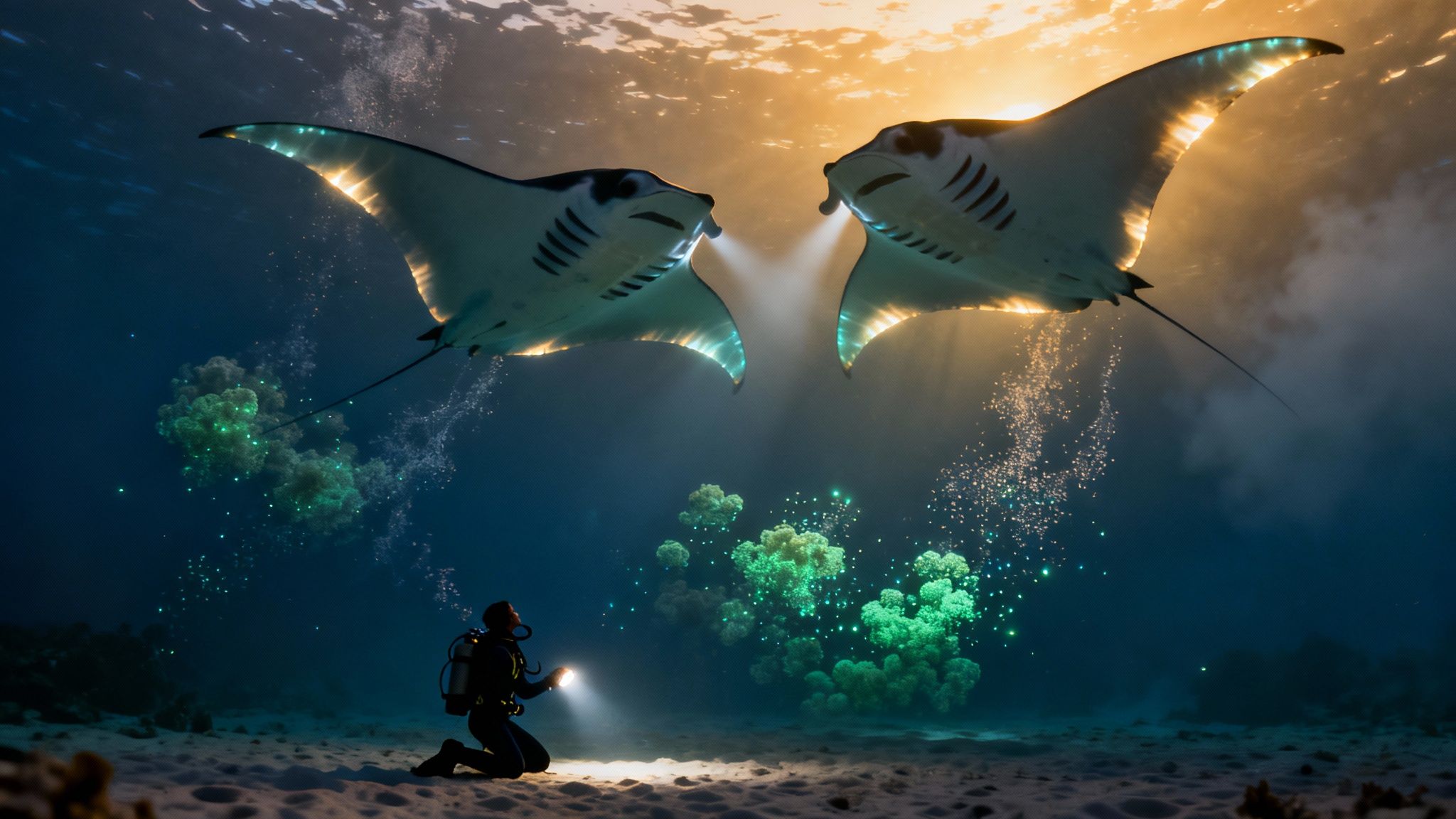
If there's one experience that defines Big Island diving, this is it. The manta ray night dive is consistently ranked among the best night dives on the planet, and for good reason. It’s an otherworldly encounter that will stick with you long after you surface.
Picture this: you descend into the dark, calm water as twilight fades, settling in on the sandy ocean floor. Then, the show begins. Giant, gentle creatures with wingspans stretching over 16 feet appear from the darkness, gliding and barrel-rolling just inches above your head.
They’re performing a silent, acrobatic ballet, mouths agape as they feast on microscopic plankton. It feels completely surreal—a front-row seat to one of nature's most spectacular performances. The sheer size and grace of these animals create a sense of awe that words just can't capture.
The Science Behind the Spectacle
So, how does this incredible gathering happen night after night? It all comes down to a simple, brilliant food chain reaction. It’s all about light.
We set up powerful, stationary lights on the seafloor that beam up toward the surface. In the dark ocean, this light is a magnet for massive clouds of plankton—the tiny marine organisms that manta rays love to eat.
For the mantas, this is basically an all-you-can-eat buffet. They flock to the light beams to get an easy meal, effortlessly filtering the plankton from the water. This creates a reliable, breathtaking feeding frenzy that lets us observe these incredible animals without disturbing their natural behavior.
The Manta Ray Night Dive is a true bucket-list item, partly because it's so incredibly reliable. The Big Island is home to a resident population of over 200 manta rays, which gives this dive an 85-90% success rate. It's a phenomenon you just don't see on the other islands.
Why Garden Eel Cove Is the Premier Location
While you can see mantas at a few sites, Garden Eel Cove (also known as Manta Heaven) is hands-down the superior choice for the dive tour. The unique geography here makes for a safer, more comfortable, and more spectacular dive for everyone—mantas included.
- Naturally Protected: The cove is tucked away from the open ocean, which means calmer water and less swell. This is a huge plus for comfort and safety, especially if you're new to night diving.
- Better Viewing Area: The site has a large sandy patch we call "the campfire." This creates a natural amphitheater, a better viewing area where divers can kneel comfortably without damaging any coral to watch the show above.
- Better Reefs: The coral surrounding the sandy bottom at Garden Eel Cove is stunningly vibrant and healthy. This not only makes the entire dive more beautiful but also supports the rich ecosystem the mantas rely on.
The right location makes all the difference. The calm, clear conditions at Garden Eel Cove let you relax and focus completely on the gentle giants gliding overhead. You can learn more about this incredible spot in our full guide to the manta ray night dive in Hawaii.
Here at Kona Honu Divers, we run our manta ray dive tours to this premier site because we want every diver to have the most respectful and mind-blowing experience possible. Our guides are truly passionate about these animals and are committed to giving you a safe, educational, and unforgettable adventure.
Exploring Kona’s Most Spectacular Dive Sites
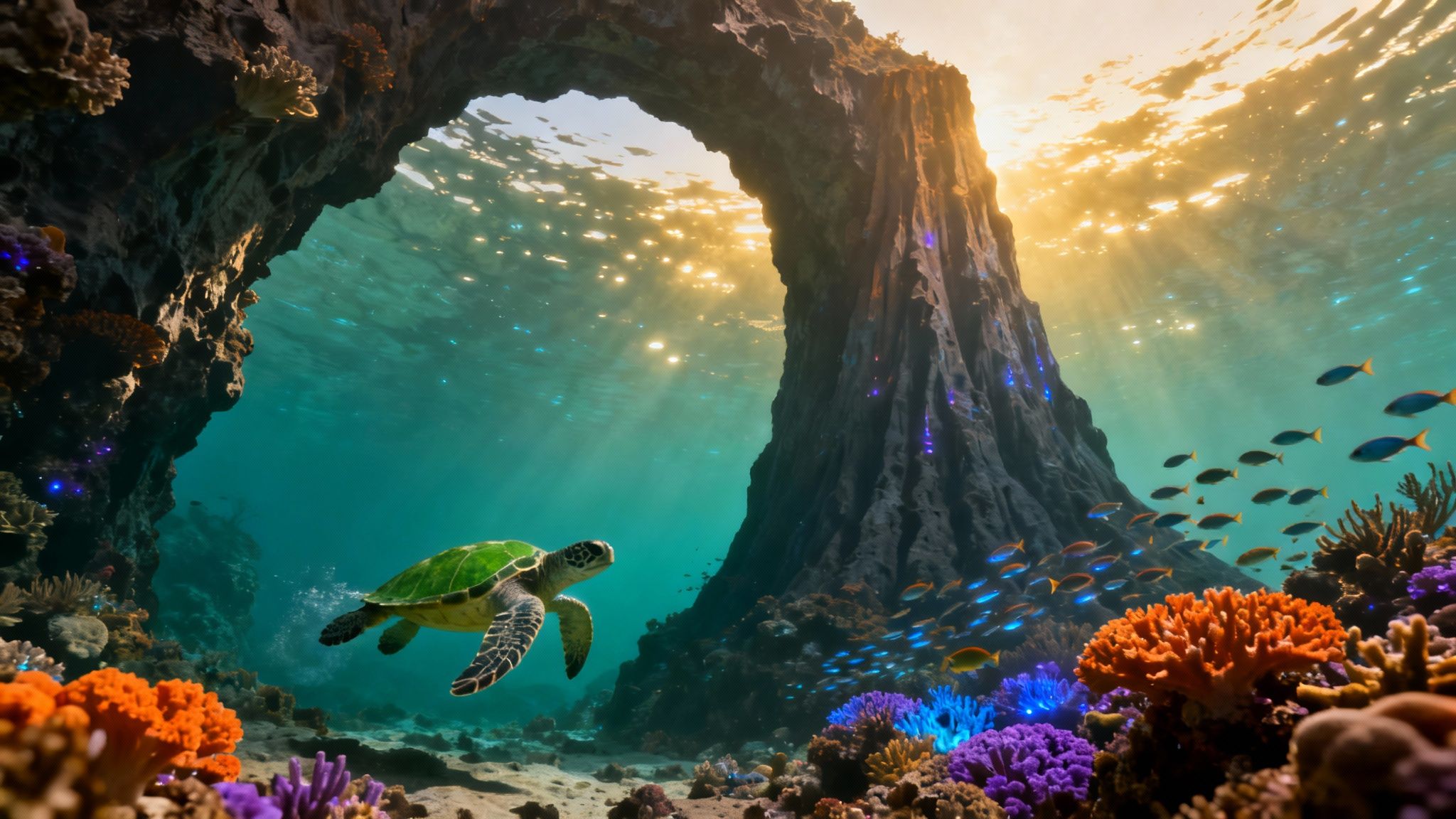
While the manta ray night dive is a true once-in-a-lifetime show, it’s really just the opening act for everything else diving the Big Island has to offer. The Kona coast is an underwater playground, sculpted by volcanoes and hiding a treasure trove of dive sites, each with its own personality and secrets. This is where you swap the bright lights of the manta dive for the pure thrill of exploration.
Imagine dropping into a world of ancient lava tubes, dramatic archways, and massive underwater pinnacles that are absolutely teeming with life. And the best part? Thanks to the island's protective volcanoes, the water is almost always calm with visibility that often pushes past 100 feet. This makes Kona a fantastic spot for divers of all stripes to experience a truly dynamic marine world.
A Journey Through Volcanic Landscapes
Diving in Kona feels less like a reef dive and more like exploring a submerged national park. The underwater scenery is a direct result of ancient lava flows that met the ocean and cooled into the stunning structures we get to explore today. You're not just swimming over coral; you're navigating a piece of geological history.
These unique formations create incredible, complex habitats for all kinds of critters. It’s pretty common to find moray eels peeking out from cracks in the lava rock, octopuses perfectly camouflaged against the rugged terrain, and even reef sharks patrolling the deeper ledges.
Dive Sites for Every Skill Level
Whether it's your tenth dive or your thousandth, the Kona coast has a spot that will blow you away. We always tailor our trips to make sure everyone has a safe, comfortable, and downright amazing time in the water.
For New and Intermediate Divers
Many of our favorite haunts are perfect for divers who are still building confidence or just want a beautiful, relaxing dive. These sites usually have:
- Vibrant Coral Gardens: Think sprawling fields of hard and soft corals creating a kaleidoscope of color, home to countless reef fish.
- Plenty of Turtle Sightings: The chances are high you'll swim alongside Hawaiian green sea turtles (honu) as they cruise the reef or chill out at "turtle cleaning stations."
- Gentle Conditions: With minimal current and great visibility, you can just relax and focus on the incredible scenery and marine life all around you.
For More Seasoned Divers
If you're looking for a bit more of a challenge, Kona definitely delivers. We run trips to deeper, more complex sites that get the adrenaline pumping for even the most experienced divers. These advanced dive tours often feature dramatic drop-offs, cool swim-throughs, and towering pinnacles that attract bigger marine life.
This is where you have a better chance of spotting pelagic species like eagle rays, massive schools of jacks, and sometimes even larger sharks just passing through the deep blue.
Exploring these sites takes solid buoyancy control and air management, but the payoff is an unforgettable glimpse into a wilder side of the ocean. They really showcase the raw power of the island’s volcanic past.
Ready to see the full list? You can get a better feel for the variety by exploring our complete overview of Big Island scuba diving sites.
The Kona Honu Divers Experience
No matter where you dive with us, you’re in the best hands. Our crew has spent years in these waters and has a genuine passion for sharing the magic of Kona’s underwater world. We’re big believers in small group sizes, top-notch safety, and creating a fun, welcoming vibe on every single trip.
We think every dive should be an amazing one. From the moment you step on the boat, you'll feel the difference a dedicated and knowledgeable crew makes. Ready to see for yourself?
Venturing into the Abyss on a Blackwater Dive
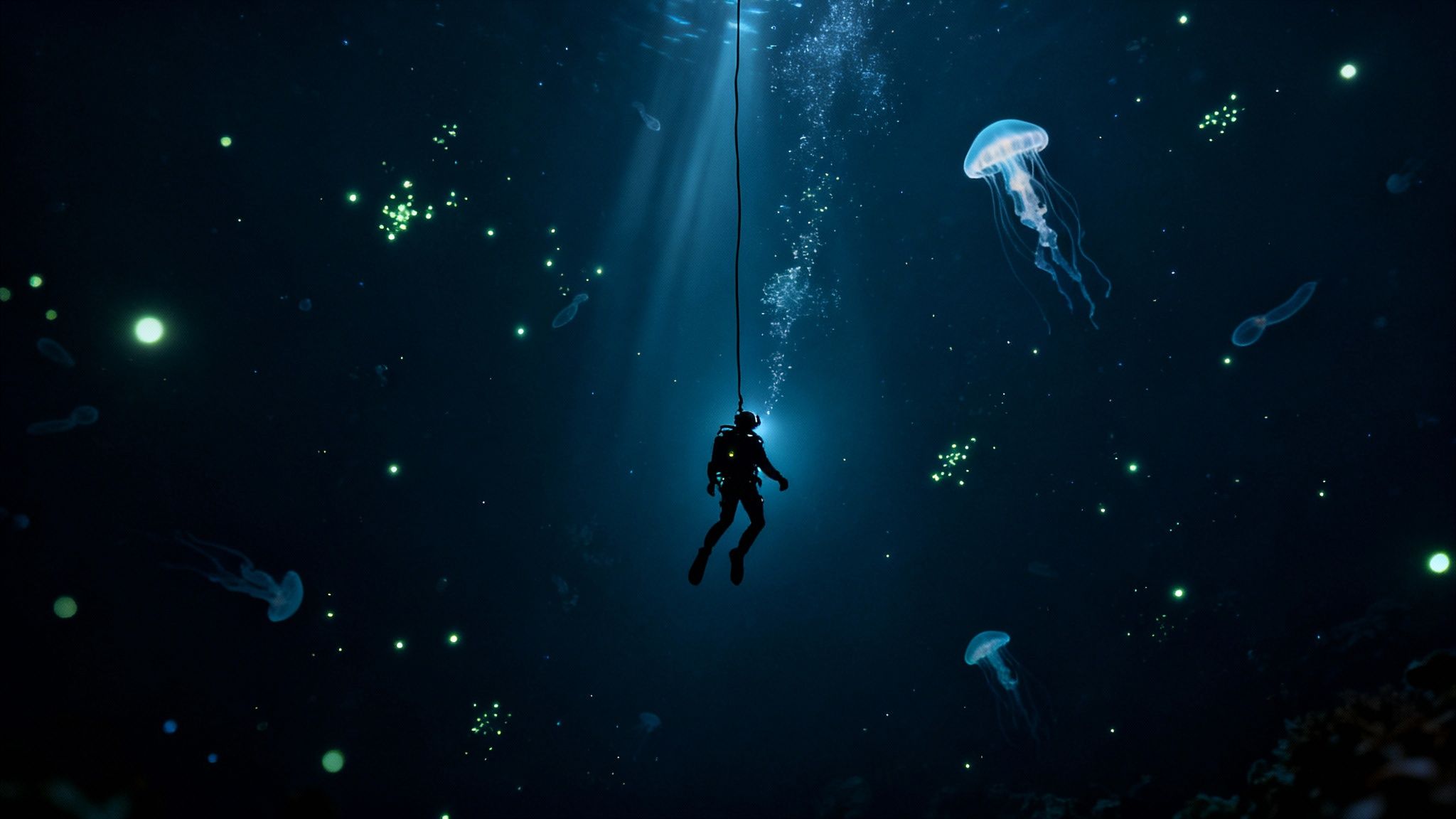
If you're a truly adventurous diver, the blackwater dive is an experience that feels like it’s straight out of a science fiction movie. It is, without a doubt, one of the most unique and thrilling dives you can do anywhere, and Kona happens to be one of the very few places on the planet where it's even possible.
Picture this: you're drifting in the deep, dark, open ocean at night. You’re safely tethered to the boat, but below you lies thousands of feet of inky black water. The abyss feels vast and almost overwhelming, but you quickly realize you aren't alone.
A Migration from the Deep
The real magic of a blackwater dive stems from a natural phenomenon called vertical migration. Every single night, an untold number of bizarre and beautiful creatures make a journey from the deep sea toward the surface, feeding under the protection of darkness. Your dive lights cut through the black, revealing a hidden world of life that looks more alien than anything you'd find on a reef.
You’ll be greeted by a mesmerizing parade of bioluminescent and translucent animals. Many are in their larval stages, looking absolutely nothing like their adult forms.
This is the dive for seasoned underwater photographers and experienced divers searching for an adventure that genuinely pushes the boundaries. It’s a mind-bending trip into the unknown that will completely redefine what you thought was possible on a dive.
What You Might See in the Dark
The cast of characters on a blackwater dive is a total surprise every time, which is a huge part of the thrill. You are quite literally exploring an undiscovered frontier. Some of the otherworldly creatures you might encounter include:
- Larval Fish and Eels: Many look like tiny, intricate glass sculptures and are almost completely transparent except for their eyes.
- Glowing Jellies: Drifting past like living constellations, these creatures often pulsate with their own internal light.
- Translucent Squids and Octopuses: You might spot tiny cephalopods with incredible patterns and colors that shimmer in your light beam.
Blackwater diving is a thrilling deep-ocean night excursion unique to the Big Island, offering advanced divers glimpses of rare pelagic migrations and bioluminescent wonders, positioning Kona as a global leader in specialized adventures. Kona Honu Divers' trips drift over abyssal depths using specialized gear to encounter oceanic whitetip sharks, dolphins, and ethereal larvae—species unseen in typical reef dives. Get more details on what makes these Big Island dives so unique.
Why Kona Is Perfect for Blackwater Diving
This incredible experience is only possible here because of Kona's unique geography. The ocean floor drops off dramatically just a short distance from shore, giving us easy access to the deep water where these creatures live. You don’t need a long, multi-hour boat ride to get to the prime spot.
This close proximity to the abyss makes diving the Big Island the world's premier destination for this highly specialized type of adventure. If you're ready to see a side of the ocean that very few people ever will, this is your chance. Join Kona Honu Divers to safely explore one of the last great frontiers. You can explore the Blackwater Dive tour and get ready for an unforgettable adventure.
How to Plan Your Big Island Dive Adventure
So, you’re ready to dive the Big Island? Fantastic choice. Turning that dream trip into a reality is actually pretty straightforward. A little bit of planning goes a long way, and I'll walk you through everything you need to know to pull off an unforgettable underwater adventure.
One of the best things about diving here on the Kona coast is just how consistently great the conditions are. We have the island's massive volcanoes to thank for that—they act as a natural shield, protecting the western shore from the wind and weather. This means you can plan your trip for pretty much any time of year without having to worry about a specific "dive season."
Best Time to Visit and What to Expect
While you really can't go wrong any month of the year, different seasons do have their own unique perks.
- Water Temperatures: The water is always inviting. It ranges from a refreshing 75°F (24°C) in the winter months (think January-March) to a balmy 80°F (27°C) in late summer (August-October). For most people, a 3mm or 5mm wetsuit is perfect year-round.
- Visibility: Get ready for some seriously clear water. Visibility here is consistently incredible, often stretching out well past 100 feet. The calm, protected waters mean you get a crystal-clear view of the reefs and all the amazing animals that call them home.
- Seasonal Marine Life: While the local residents are always here, the winter months (December-March) offer a truly special treat. It's not uncommon to hear the haunting songs of migrating humpback whales echoing through the water during a dive. It’s an experience that will give you chills in the best way possible.
Arranging Your Trip Logistics
Getting the logistics sorted for your Kona dive trip is simple. You'll fly into Kona International Airport (KOA), which is super convenient and close to town and all the main dive shops.
When it comes to a place to stay, Kailua-Kona has you covered with everything from big resorts to cozy vacation rentals, so you'll find something that fits your style and budget. I'd also highly recommend renting a car. It gives you the freedom to explore all the other incredible things the Big Island has to offer on your days off from diving.
As you get your bags ready, it’s a good idea to check out a solid Hawaii vacation packing list to make sure you’ve got the essentials. Packing things like reef-safe sunscreen and a reusable water bottle not only makes your trip better but also helps us protect this beautiful place.
Choosing the Right Dive Operator
Picking your dive operator is one of the most important decisions you'll make—it can truly make or break your entire vacation. It's about so much more than just getting on a boat; it's about feeling safe, being comfortable, and having an incredible time. Here at Kona Honu Divers, we pour our hearts into making sure every trip is exceptional.
Here’s what sets us apart from the rest:
- Experienced Crew: Our dive guides and captains aren't just professionals; they're passionate divers who know these sites like the back of their hand. Your safety and enjoyment are their top priorities, period.
- Comfortable Boats: Our boats were designed with divers in mind. You'll find plenty of shade, lots of room for your gear, and—everyone's favorite feature—hot freshwater showers to warm you up between dives.
- Small Group Sizes: We deliberately keep our groups small. This means you get a more personal, uncrowded experience where our guides can give you individual attention.
- Top-of-the-Line Gear: We provide high-quality, meticulously maintained rental gear. We even offer free nitrox for certified divers, so you can safely enjoy a little more bottom time.
We’re all about creating a fun, welcoming vibe on every single one of our diving tours.
And what about friends or family who don't dive? No worries! Kona is packed with amazing snorkeling spots, stunning coastal hikes, and fascinating cultural sites to explore. There's truly something for everyone.
Getting Certified or Advancing Your Skills in Kona
Thinking about taking your first breath underwater? Or maybe you're a certified diver ready to tackle a new challenge? Either way, you've come to the right place. Kona's calm, clear, and protected waters make for an incredible underwater classroom—one of the best in the world, in fact.
At Kona Honu Divers, we believe every training dive should be a real dive. Forget murky quarries. You’ll be learning in a vibrant coral ecosystem, surrounded by the same incredible marine life we see on our guided tours. Our instructors are patient, experienced, and completely focused on helping you become a confident, capable, and safe diver.
Your First Dive: The Open Water Certification
For anyone new to the sport, the Open Water Diver certification is your ticket to exploring the other 71% of our planet. The course is a mix of online learning to get the theory down, followed by hands-on training right here in the ocean. It covers all the essential skills you need to dive with confidence.
The best part? Your classroom is a living reef. As you practice basics like buoyancy, mask clearing, and regulator recovery, you'll likely be visited by a few Hawaiian green sea turtles or a rainbow of reef fish. We've even had dolphin pods swim by during a lesson. Our instructors make sure you learn at your own pace, so the entire experience is more fun than work.
Continuing Your Diving Education
For divers who already have their certification, the adventure is just getting started. The Big Island's wild underwater landscapes are the perfect playground for expanding your skills, and we offer a bunch of courses to help you do just that.
- Advanced Open Water: This is all about getting out there and diving. It’s built around five "adventure" dives, including a deep dive and an underwater navigation dive, that sharpen your skills and boost your confidence.
- Specialty Courses: Want to explore deeper walls or stay down a little longer? We offer specialties like Deep Diver and Enriched Air (Nitrox). We're so passionate about the benefits of nitrox that we provide it free on our boats for all certified divers. It’s a great way to safely extend your time on the reef.
Great divers never stop learning. You can check out all the options and find the right course for you on our diving tours page. We’re here to help you become the best diver you can be while showing you the absolute best of the Big Island.
Your Big Island Diving Questions, Answered
Planning a dive trip to Kona often brings up a few questions. We get it. Here are some of the most common things people ask us, with honest answers from our years of experience diving these waters.
When Is the Best Time of Year to Dive the Big Island?
Honestly, any time is a great time. The Kona coast is tucked away from the prevailing trade winds, which means we enjoy calm, clear water pretty much year-round. It’s not unusual for visibility to stretch out past 100 feet, regardless of the season.
If you prefer warmer water, plan your trip between August and October when temperatures hover around a balmy 80°F (27°C). If you come during the cooler months, from January to March, the water drops to a still-comfortable 75°F (24°C), and you get an incredible bonus: the haunting, beautiful songs of humpback whales serenading you on your dives.
I'm a New Diver. Is the Big Island a Good Place for Me?
It’s not just good; it’s one of the best places in the world to get your fins wet. Many of our best dive sites are located in protected bays where the conditions are so calm and current-free, they feel like a natural swimming pool. These shallow, colorful reefs let you build confidence and just enjoy the magic without any stress.
We love introducing people to the underwater world. Whether you want to try a Discover Scuba Diving experience or get your full PADI Open Water certification, our instructors are incredibly patient and focused on making you feel safe and comfortable from start to finish.
What Kind of Marine Life Will I See?
The better question might be, what won't you see? The biodiversity around here is just phenomenal. On a typical dive, you’re almost guaranteed to spot Hawaiian green sea turtles, countless tropical fish, moray eels peeking out from their dens, and cleverly camouflaged octopuses.
Spinner dolphins often cruise by the boat, and it’s common to see majestic eagle rays and graceful reef sharks. But of course, the main events are the world-famous manta rays on our night dive and the strange, bioluminescent creatures of the open-ocean blackwater dive—two encounters that make diving the Big Island truly unforgettable.
Do I Need to Lug All My Gear to Hawaii?
Not unless you want to! We have a full inventory of high-quality, meticulously maintained rental equipment, from BCDs and regulators to computers and wetsuits. If you love your own setup, by all means, bring it along.
And here’s a little something extra we do for our divers: Kona Honu Divers offers free nitrox for anyone who’s certified. It’s a great way to safely extend your bottom time so you can soak in every last minute of the incredible scenery.
Ready to book your adventure?