
Diving on the Big Island is something special. It's not just about the crystal-clear water or the colorful fish; it’s about exploring an underwater world shaped by volcanoes. Think dramatic lava tubes, massive archways, and, of course, the famous encounters with majestic manta rays. The Kona coast truly offers an adventure for every diver out there.
Why the Big Island Is a Diver’s Paradise
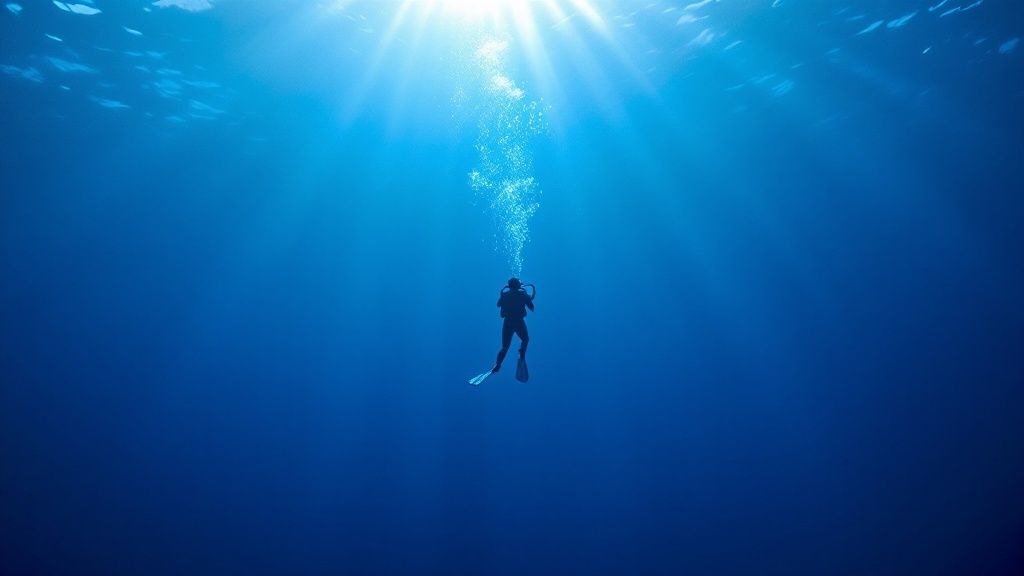
The Big Island isn't just another pretty spot in the tropics. It’s a living, breathing testament to the raw power of nature, both above and below the surface. The same volcanoes that carved out the island's iconic black sand beaches and dramatic cliffs also happened to create a spectacular underwater playground for us divers.
That volcanic origin is the real secret to the incredible diving here. The colossal mountains of Mauna Loa and Mauna Kea act as a natural shield for the Kona coast, blocking the gusty trade winds that can stir up other coastlines.
What does that mean for us? Remarkably calm and clear water, almost all year long. This natural protection keeps sediment from clouding things up, giving us that legendary visibility that often pushes past 100 feet.
To give you a quick snapshot of what to expect, here’s a high-level look at the diving conditions on the Big Island.
Big Island Diving At a Glance
| Metric | Details |
|---|---|
| Water Temperature | A comfortable 75-80°F year-round. A 3mm or 5mm wetsuit is usually perfect. |
| Visibility | Typically 80-100+ feet. Some days feel like you're swimming in an aquarium. |
| Marine Life | Manta rays, Hawaiian green sea turtles, spinner dolphins, eels, and countless endemic reef fish. |
| Dive Environment | Volcanic formations, lava tubes, vibrant coral reefs, and dramatic underwater topography. |
| Best Time to Dive | Year-round, though summer months (May-October) often have the calmest conditions. |
Ultimately, the conditions here are fantastic no matter when you decide to visit.
A Thriving Underwater Ecosystem
That ancient lava didn't just stop at the shoreline. Below the waves, it sculpted an intricate world full of incredible features. You’ll find:
- Lava Tubes: Natural, swim-through tunnels that give you a peek into the island's fiery past.
- Caverns and Archways: Dramatic structures that have become bustling neighborhoods for all sorts of marine life.
- Pristine Coral Reefs: Thriving ecosystems that have taken root on a solid volcanic foundation, creating a vibrant explosion of life.
The diving here is so unique because of this combination of volcanic topography and abundant sea life. Sites like Turtle Pinnacle are famous for a reason—the shallow reefs act as a "cleaning station" for Hawaiian green sea turtles, drawing them in along with schools of reef fish. With water temperatures holding steady in that perfect 75-80°F range, it's easy to see why this is a top-tier global diving destination.
Here at Kona Honu Divers, we live and breathe these waters. Our crew knows every nook and cranny, and our main goal is to make sure your trip is safe, unforgettable, and packed with discovery. As you start planning, you might find our guide on the best places for divers to stay on the Big Island helpful for getting your logistics sorted.
Whether you just got your certification or have hundreds of dives under your belt, there’s always something new to see here. From shallow reefs buzzing with activity to the world-famous manta ray night dive, the adventure never really ends.
The World-Famous Manta Ray Night Dive
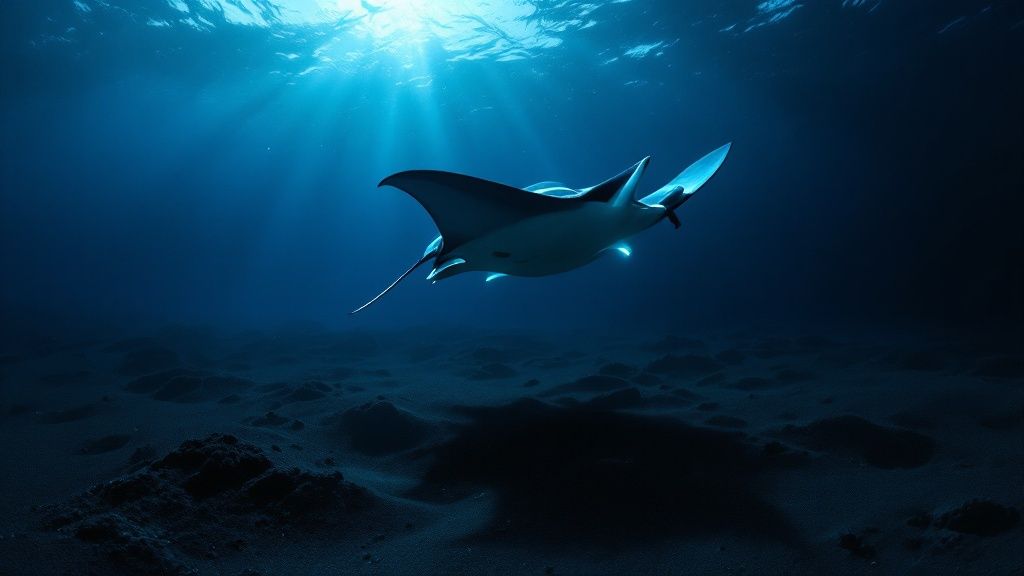
Picture this: you're hovering weightless in the dark, warm ocean, and giant, gentle creatures with wingspans up to 18 feet are gliding and somersaulting just inches from your face. This isn't a scene from a movie. It’s the world-famous manta ray night dive, a truly unforgettable experience you can only have right here on the Kona coast. There's a reason divers from all over the globe call it one of the best dives on the planet.
The magic behind this incredible encounter is actually pretty simple. Decades ago, someone figured out that bright lights attract swarms of plankton—the manta rays' favorite meal. Local dive operators have since perfected this into an art form. We create an underwater "campfire" where divers settle on the sandy bottom and shine their lights straight up.
This creates a massive, all-you-can-eat plankton buffet that the mantas just can't resist. They swoop in, mouths wide open, performing a breathtaking underwater ballet as they filter-feed in the beams of light. It's more than just a dive; it's a chance to connect with one of the ocean's most majestic animals.
What to Expect on Your Manta Adventure
Your adventure begins as the sun goes down, painting the Kona coastline in gold and orange. After a quick boat ride to one of the well-known manta sites, your guide will walk you through everything you need to know about manta ray behavior and how to have a safe, respectful encounter.
Once you hit the water and descend, you'll join the group on the ocean floor, usually around 30 to 40 feet deep. Then, you just point your light toward the surface and wait for the show to begin. That first moment when a massive silhouette appears out of the darkness is something you will carry with you forever.
The feeling is almost indescribable. Watching these massive animals perform their graceful, looping dance is like witnessing a natural spectacle that feels both powerful and serene. It's a humbling reminder of the ocean's wonders.
The Big Island’s Kona coast is famous for its unique nighttime manta ray dives, which have seen significant growth in recent decades. The popularity of this activity has surged, making Kona one of the few places globally where divers can reliably see these creatures. This eco-tourism highlight plays a crucial role in the local economy, supported by professional boat-based operations that ensure safe and effective viewing.
Diving vs. Snorkeling with Mantas
The great news is you don't have to be a certified diver to see the magic. There are two amazing ways to experience it:
- Scuba Diving: As a diver, you get the "bottom-up" view. You'll be situated on the seafloor, looking up as the mantas perform their acrobatic maneuvers directly above you. This vantage point offers an unparalleled perspective of their sheer size and grace.
- Snorkeling: Snorkelers stay on the surface, holding onto a specially designed flotation board with bright lights that shine down. The mantas come right up to the surface to feed, giving you an equally thrilling, up-close-and-personal experience.
Both options offer a fantastic, can't-lose encounter. If you're curious about the surface experience, you can learn more about the specifics of the https://konahonudivers.com/kona-manta-ray-night-snorkel/ and decide which adventure is the right fit for you. At Kona Honu Divers, we're proud to offer one of the best-rated and most eco-conscious manta ray dive tours on the island.
Ready to see the ballet for yourself?
The Best Dive Spots Along the Kona Coast
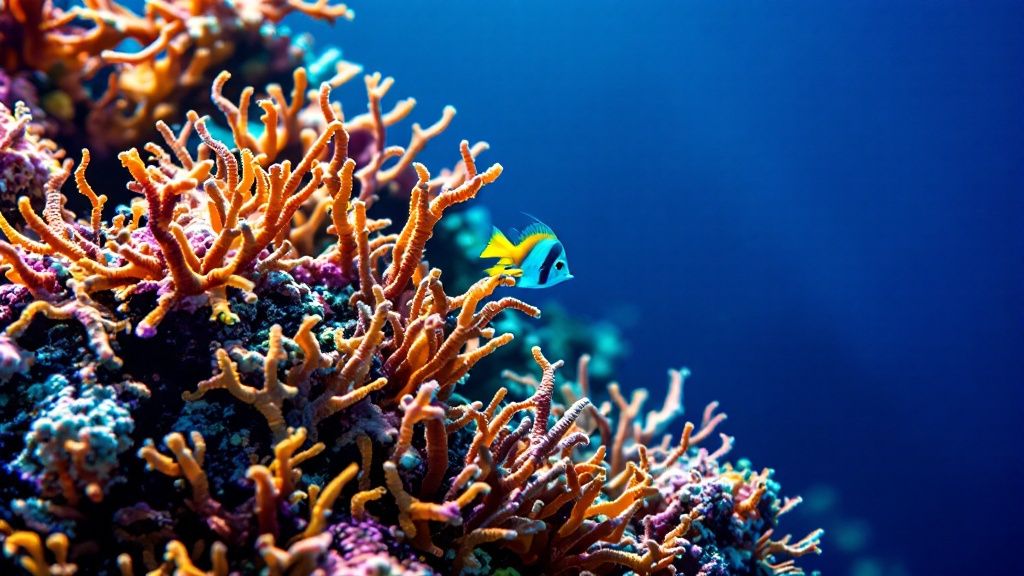
The manta ray night dive might be the star of the show, but it's just one act in the incredible underwater play that is the Kona coast. The island’s volcanic past has left behind a diver's dreamscape, filled with dozens of unique sites that range from dramatic lava formations to peaceful coral gardens. When you're planning your diving Big Island trip, matching the right sites to your skill level is the secret to an amazing experience.
What makes Kona so special is the sheer variety. One day you could be floating through an ancient lava tube, and the next you might be watching green sea turtles queue up at a "turtle spa." Each site has its own personality, which means there’s always something new to discover.
Turtle Pinnacle: A Turtle Cleaning Station
As you might guess from the name, Turtle Pinnacle is the place to be if you want to hang out with our beloved honu (Hawaiian green sea turtle). This shallow reef, usually sitting between 30 and 60 feet, is a natural cleaning station.
It's an incredible sight to behold. Turtles gather here and patiently let surgeonfish and other little reef fish nibble away algae and parasites from their shells—a perfect example of symbiosis in action. Besides the turtles, the site is alive with vibrant coral heads, huge schools of yellow tangs, and the occasional whitemouth moray eel peeking out from its rocky home.
Golden Arches: An Underwater Playground
If you love exploring interesting topography, Golden Arches should be at the top of your list. The site is famous for its massive lava rock archways that are a blast to swim through. It honestly feels like you're exploring a submerged cathedral.
These arches and the surrounding lava tubes create a complex habitat that's a magnet for all sorts of marine life. Keep your eyes peeled for:
- Frogfish: These masters of camouflage are often found perched on sponges, perfectly blended in.
- Nudibranchs: Tiny, brilliantly colored sea slugs that add a splash of neon to the dark lava rock.
- Schools of Butterflyfish: Watch them flit in and out of the dramatic rock formations.
The depth here is a comfortable 40 to 60 feet, making it a great dive for most certified divers. It’s also a photographer’s paradise, with endless opportunities for stunning shots of divers framed by the majestic arches.
Garden Eel Cove: A Sandy Spectacle
Known to many as Manta Heaven, Garden Eel Cove is a phenomenal spot for the manta ray night dive, but don't overlook it during the day. The site gets its name from the enormous colony of Hawaiian garden eels that live in the sandy flats at about 60 feet.
These shy little guys poke their heads out of the sand to feed on passing plankton, swaying together in the current like a field of grass. If you approach too quickly, they'll all disappear back into their burrows, so a slow, patient approach is key. The reef bordering the sand is also full of life, with frequent sightings of octopus and viper morays.
The sheer diversity of Kona's dive sites is what makes it so special. You can go from the intricate, delicate world of Garden Eel Cove to the grand, powerful architecture of Golden Arches in a single day. Each dive tells a different story about the island's geology and the life it supports.
Deeper Dives for the Experienced Adventurer
For those with a few more dives under their weight belt, Kona offers plenty of thrilling challenges. Sites like Au Au Crater and The Hive have deeper profiles and can present more advanced conditions, but they reward divers with pristine coral and a better chance of spotting larger pelagic species. These dives require solid buoyancy control and awareness as you navigate more complex structures at greater depths.
If you’re an experienced diver eager to see some of the more remote and challenging sites on the Kona coast, a specialized trip is the way to go. We run premium advanced dive tours designed for seasoned divers who are ready to take their underwater exploration to the next level. Check out our advanced dive tour page for more details.
Whether you're after turtles, lava tubes, or vibrant reefs, the Kona coast has a dive site that will leave you speechless. With so many incredible options, the hardest part is just choosing where to jump in first.
Discover the Abyss on a Kona Blackwater Dive
Think you've seen it all? Think again. The Kona Blackwater Dive takes you to an entirely new dimension of diving Big Island. This is nothing like a typical night dive over a reef. It’s more like a spacewalk, suspending you in the profound, inky blackness thousands of feet above the sea floor.
The setup is brilliantly simple. We head a few miles offshore into deep water, tether divers to the boat for safety, and let you drift. Your dive light slices through the darkness, attracting a hidden world of bizarre, beautiful, and utterly alien creatures as they rise from the abyss.
A Parade of Pelagic Wonders
What you're really doing is witnessing the largest animal migration on Earth. Every single night, countless tiny organisms make the massive vertical journey from the deep to feed near the surface. Most of these creatures are pelagic—they spend their entire lives in the open ocean, never once seeing a reef.
It’s an unbelievable front-row seat to a spectacle of life you can't find anywhere else. You'll see things like:
- Bioluminescent Jellies: Pulsating with an ethereal, living light.
- Larval Creatures: The baby forms of fish and crabs, looking nothing like their adult selves.
- Translucent Squid: Flashing and darting through the water column with hypnotic grace.
- Otherworldly Critters: Many are so rare they’ve hardly ever been seen by human eyes.
A blackwater dive is an exercise in focus and wonder. It strips away all the familiar reef landmarks and forces you to appreciate the tiny, intricate life forms that drift by. It’s a profoundly humbling and exciting experience that redefines what a night dive can be.
This dive is a one-of-a-kind adventure, blending the thrill of the unknown with the raw beauty of marine biology. We've got a whole guide that breaks down everything you can expect on our Kona Blackwater Dive.
Is This Dive Right for You?
Let’s be clear: this is an advanced dive, and it isn't for everyone. It demands excellent buoyancy control, a calm and focused mind, and being completely at ease with diving in total darkness over very deep water. The reward is immense, but you absolutely must be an experienced and confident diver to participate.
If you’re ready to trade coral for the cosmos and see a world that few will ever experience, this is the ultimate dive for you. You can book your spot on our Blackwater Dive tour page. It’s a journey into the deep that you will never, ever forget.
The History and Pioneers of Kona Diving
The world-class diving Big Island is famous for today didn’t just appear out of nowhere. It was painstakingly built by a small community of ocean fanatics who knew the deep blue waters off the Kona coast were something special. Long before Kona became a dot on the global diving map, a handful of pioneers were busy exploring the underwater world, charting lava tubes, and getting to know the local sea creatures.
This transformation from a quiet hobby to a pillar of the island's identity is a story of pure adventure and dedication. It's a story about people who loved exploring and were committed to finding safe, sustainable ways to share the magic of the underwater world with everyone else.
The Foundation of a Diving Community
The roots of Kona's dive scene really go back to the 1970s and early 80s. This was a time when recreational scuba was just starting to catch on with the general public. As certification agencies like PADI and SSI made diving more approachable, a new breed of underwater explorer emerged.
Here in Kona, that new wave was led by folks who would become local legends. They were the ones who laid the foundation for the vibrant community we have today. They were the first to really get out there and systematically map out the dive sites, giving names to the spots that are now famous worldwide. Their passion turned a small fishing town into a must-visit destination for divers hungry to see the unique volcanic landscapes and thriving marine life for themselves.
When you understand the history of Kona diving, you appreciate every single moment underwater that much more. You’re not just swimming over a reef; you're following in the wake of pioneers who poured their hearts into sharing this incredible place.
Honoring the Legacy of Jack's Diving Locker
You can't talk about Kona's diving history without telling the story of Jack Clothier. Jack was a passionate diver and instructor who, along with his wife Tina, opened Jack's Diving Locker in 1981. It immediately became the heart of the local dive scene, a place where enthusiasts could gather and share their love for Kona's underwater realm.
Tragically, Jack passed away suddenly just eight months after the shop opened. But his vision was too strong to fade. Longtime divers Jeff and Teri, who knew Jack personally, took the helm and ensured his spirit lived on. Under their guidance, the business didn't just survive; it thrived. Over the next decade, they transformed Jack’s Diving Locker into one of Hawaii's top dive operations. The entire history of diving on the Big Island is woven with the efforts of pioneers like these, who helped popularize the sport and built a dive culture that's still going strong. You can read more about the early days and the discovery of the manta ray phenomenon on OceanographicMagazine.com.
Operations like Jack's Diving Locker set the bar incredibly high for safety, education, and marine conservation—standards that still guide the whole community today. Their legacy is a powerful reminder of what passion and grit can build.
Evolution and Conservation
As Kona's reputation as a top-tier dive destination grew, so did the awareness that its marine resources needed protection. The original Kona divers weren't just explorers; they were also some of the very first conservationists. They helped establish the ground rules for responsible interactions with marine life, especially for iconic experiences like the manta ray night dive.
This early focus on responsible diving has had a lasting impact on the local culture. Today, dive shops all over the Big Island carry that torch, prioritizing education and respect for the ocean. When you dive in Kona, you become part of a story that's been unfolding for decades—a story of adventure, community, and a shared love for the incredible world just beneath the waves.
Your Big Island Diving Questions, Answered
If you're getting ready for a dive trip to the Big Island, you probably have a few questions swirling around. What should you pack? When's the best time to come? What will you actually see down there? We get these all the time, so we’ve gathered the most common questions from divers just like you to help you plan the perfect Kona adventure.
What Is the Best Time of Year for Diving on the Big Island?
One of the absolute best things about diving in Kona is that it's incredible all year round. The water temperature is always inviting, hovering between a comfortable 75-80°F (24-27°C) no matter the season.
If you're looking for glassy, calm seas, the summer months (roughly May through October) are your best bet. The ocean is typically at its flattest, making for silky-smooth boat rides. But winter—from December to March—offers a trade-off that's hard to resist: it’s humpback whale season. There's nothing quite like hearing their haunting songs reverberate through the water on a dive. You might even get lucky and see them breaching from the boat between dives!
The takeaway? There really is no bad time to dive in Kona. It all comes down to personal preference: do you want the calmest possible conditions, or the once-in-a-lifetime experience of whale season?
What Kind of Marine Life Can I Expect to See?
The marine life here is off the charts. On just about any given dive, you're almost guaranteed to run into our local Hawaiian green sea turtles (honu), see different kinds of moray eels peeking out from their homes, and spot an octopus or two. The reefs are also buzzing with colorful fish like butterflyfish, wrasses, and parrotfish.
But that's just the start. With a little luck and the right dive site, you could also encounter:
- Pods of spinner dolphins putting on a show.
- White-tip reef sharks snoozing on the sandy bottom.
- Spotted eagle rays soaring through the blue.
- And of course, the world-famous gentle giants on our manta ray night dive.
Do I Need to Be an Advanced Diver to Enjoy Diving in Kona?
Absolutely not! Kona is a diver's paradise for every skill level. Many of our most stunning sites are shallow, protected reefs that are perfect for beginners, newly certified divers, or anyone who simply wants a beautiful, relaxing dive. We even offer introductory dives for those who've never breathed underwater but are ready to see what all the fuss is about.
That said, if you’re an experienced diver looking for a challenge, Kona has you covered. We have deep lava tube swim-throughs, dramatic walls, and unique adventures like our famous Kona Blackwater Dive. Our guides are experts at choosing the right sites for the right group, making sure everyone is safe, comfortable, and has an unforgettable time.
What Should I Pack for My Big Island Diving Trip?
The two must-haves are your certification card and your logbook. We provide top-of-the-line rental gear, but you’re always welcome to bring your own rig if you prefer it. Most divers find a 3mm or 5mm wetsuit is perfect for our water temperatures, depending on how easily you get chilly.
Besides the dive essentials, we highly recommend packing reef-safe sunscreen (to help protect our corals!), a good hat, sunglasses, and a reusable water bottle. It's also a good idea to bring a light jacket or hoodie for the boat ride back—it can get a little breezy once you're out of the water. And don't you dare forget an underwater camera!
Ready to see it all for yourself? Kona Honu Divers runs a full schedule of diving tours led by the most experienced and fun-loving crew in town. Let us show you why Kona is one of the best dive destinations on the planet.