
Diving on the Big Island is like dropping into another world. Imagine descending along ancient lava flows that have been frozen in time, forming breathtaking underwater cliffs, massive arches, and winding lava tubes. It’s a chance to explore a submerged volcanic wonderland, alive with vibrant coral gardens and creatures you won't find anywhere else on the planet.
Why The Big Island Is a World-Class Dive Destination
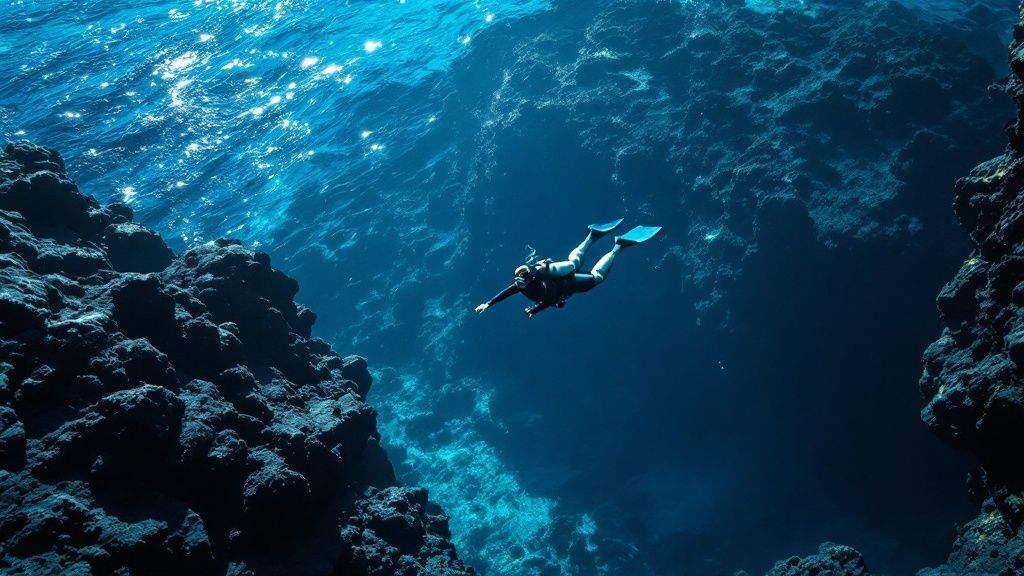
When you're staring out at that endless Pacific blue, you might wonder what really makes the Big Island stand out. The secret is just below the surface, where geology and biology have created something truly spectacular. The island’s volcanic heart is the architect of its underwater world, and the results are stunning.
This isn't just swimming over a reef; it's exploring a dynamic, living environment. The same volcanic forces that sculpt the island above have crafted an aquatic paradise below. This unique geology is also why the water visibility is so incredible—the rocky coastline doesn't have the fine sand and silt that can muddy the waters at other destinations.
To give you a quick snapshot, here’s what makes the Big Island so special.
Big Island Diving At A Glance
| Feature | Description | Best For |
|---|---|---|
| Volcanic Topography | Underwater lava tubes, arches, and dramatic drop-offs created by ancient lava flows. | Explorers who love unique underwater landscapes and swim-throughs. |
| Exceptional Visibility | Crystal-clear water, often exceeding 100 feet, thanks to the rocky volcanic coastline. | Underwater photographers and divers who appreciate panoramic views. |
| Endemic Marine Life | Home to a high percentage of species found only in Hawaii, like the Potter's Angelfish. | Marine life enthusiasts and anyone looking to see rare creatures. |
| Manta Ray Night Dive | The world’s most famous and reliable manta ray congregation site. | Thrill-seekers and divers seeking an unforgettable "bucket list" experience. |
| Blackwater Diving | A unique night dive in the open ocean to see bizarre, bioluminescent deep-sea creatures. | Adventurous divers looking for a one-of-a-kind, otherworldly dive. |
This unique combination of features ensures every dive is packed with potential for discovery.
A Thriving Underwater Ecosystem
That rugged volcanic substrate provides the perfect anchor for healthy coral reefs to take hold. These vibrant, sprawling corals create a complex city for an incredible density of marine life. The best part? Many of these species are endemic, meaning you can only see them in Hawaiian waters.
When you dive here, you're immersing yourself in a rich tapestry of life, including:
- Hawaiian Green Sea Turtles (Honu): Seeing these graceful giants gliding effortlessly past you is a common and always awe-inspiring sight.
- Endemic Reef Fish: The reefs are a kaleidoscope of color, from schools of bright yellow Milletseed Butterflyfish to the shy Potter's Angelfish.
- Unique Invertebrates: Keep your eyes peeled for clever octopuses camouflaged against the rock, moray eels peering out from lava tubes, and bizarrely beautiful nudibranchs.
An Unforgettable Diving Infrastructure
The island’s reputation as a premier dive location is well-earned and well-supported. The Big Island attracts over 150,000 dive tourists annually, who log an estimated 100,000 certified dives each year. This demand is met by a top-notch infrastructure of more than 50 professional dive shops and charters.
This guide will set you up for the iconic experiences you just can't miss—from the world-famous manta ray night dive to the surreal blackwater explorations. It answers the one question that matters: "Why should my next dive trip be to the Big Island?" The answer is a destination that blends raw, natural beauty with safe, accessible, and truly unforgettable adventures. To see what else awaits, check out these top reasons to scuba dive in Kona, Hawaii.
Kona’s Most Unforgettable Dive Experiences
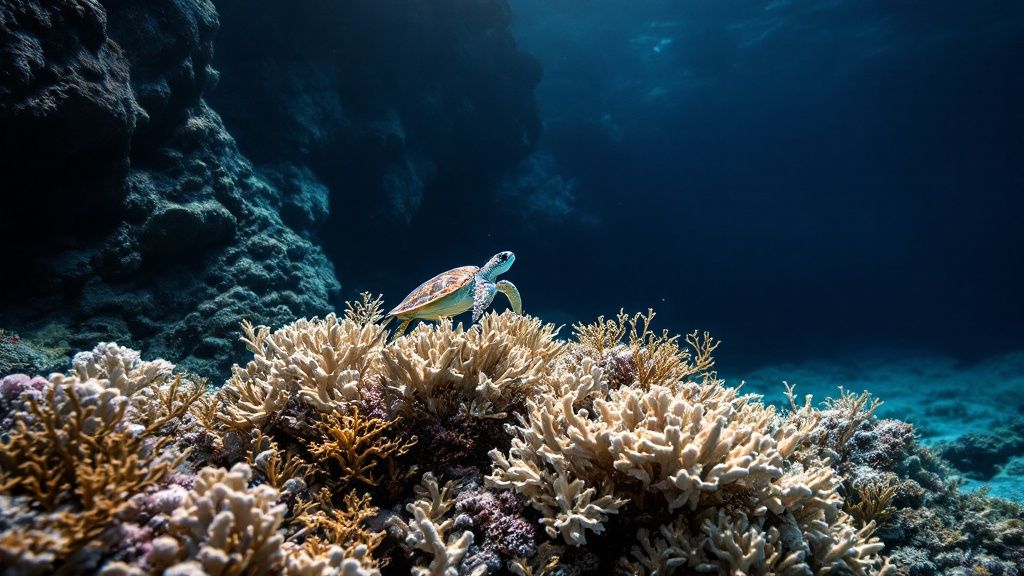
The Kona coast offers dives that will genuinely change the way you see the ocean. I’m not just talking about pretty reefs—though we have plenty of those. I’m talking about a few truly signature experiences that divers from around the world put on their bucket list.
These aren't just entries in your logbook; they're moments that stick with you forever. When you’re diving Big Island waters, you’re stepping into a world that feels primal and unique. Let's get into the dives that put Kona on the map.
The World-Famous Manta Ray Night Dive
Picture this: you're kneeling on the sandy seafloor as twilight fades. You switch on your light, pointing the beam straight up. Before long, the show starts. Plankton, drawn to the light like moths to a flame, begin to swarm. Then, out of the darkness, the stars of the show arrive.
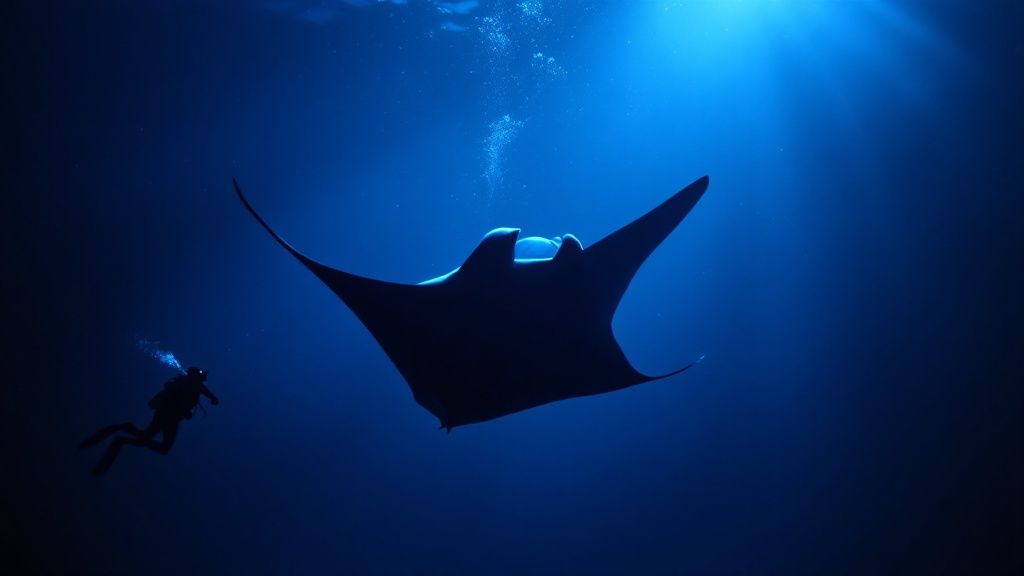
Giant manta rays, some with wingspans stretching over 12 feet, glide in to feed on the plankton cloud. They perform a silent, weightless ballet just inches over your head, swooping and barrel-rolling with their huge mouths open. It's not like watching something on a screen; it's an immersive, mesmerizing, and deeply moving encounter with these gentle giants. It's consistently voted one of the best night dives on the planet, and once you've done it, you'll understand why.
To get the full picture, check out our complete guide to the Kona manta ray dive. We’re absolutely dedicated to running this experience safely and with the utmost respect for the mantas, following strict guidelines to ensure these encounters can continue for years to come.
Ready for an underwater ballet you’ll never forget? You can book your spot on our acclaimed Manta Ray Dive and Snorkel tour and see it for yourself.
Journey Into Inner Space: The Blackwater Dive
If you have a real taste for adventure, the Kona Blackwater Dive is something else entirely. This isn't a reef dive. We take you miles offshore, over thousands of feet of water, and set you adrift in the deep blue. Tethered to the boat, you simply hang there, suspended in the immense darkness of the open ocean.
It’s a trip to another world. Every night, one of the planet's largest migrations happens—not across land, but vertically, from the deep ocean toward the surface. An unbelievable array of tiny, strange creatures rises from the abyss to feed, and you get a front-row seat. You'll see things that look like they're straight out of a sci-fi movie:
- Bioluminescent jellies pulsing with their own internal light.
- Translucent larval fish, so you can see their tiny internal organs.
- Pteropods and pelagic nudibranchs that drift past like alien jewels.
The Blackwater Dive is often described as "diving in outer space." Floating in the silent, dark water column, you are surrounded by a galaxy of strange and beautiful life forms that few people will ever see.
This is a dive for the truly curious and adventurous at heart. It offers a rare glimpse into one of the Earth's last great frontiers. If you're ready to explore the abyss, learn more about our unique Blackwater Night Dive adventure.
Exploring Vibrant Reefs and Volcanic Landscapes
As incredible as the night dives are, don't sleep on the daytime diving! The diving Big Island offers during the day is spectacular, defined by the island's volcanic origins. The underwater topography here is just as dramatic as what you see on land.
Imagine dropping down onto a reef formed by ancient lava flows. You'll find incredible structures like arches, caverns, and massive swim-throughs, all teeming with life. On a typical two-tank trip, it's common to see green sea turtles (honu) resting on the coral, reef sharks patrolling the edges of the reef, and huge schools of colorful fish—many of which are found only here in Hawaii.
Each site has its own personality, from the calm, shallow coral gardens to the breathtaking deep walls and drop-offs. Our daily diving tours are all about showing you the very best of Kona’s underwater world, with experienced guides who know these reefs like the back of their hand.
Exploring the Top Dive Sites Around the Big Island
While the manta ray and blackwater dives are the headliners that draw divers from across the globe, they're really just the beginning of the story. The Kona coast is absolutely packed with dozens of world-class sites that showcase the incredible variety of diving the Big Island offers.
The island's volcanic past has sculpted a breathtaking underwater playground. Think dramatic lava tubes, massive archways, and vibrant reefs, each with its own distinct personality and cast of marine characters.
When the sun comes up, a whole different world comes to life, one that’s every bit as compelling as the famous night dives. These daytime sites are where you really get a feel for the day-to-day magic of Kona's underwater ecosystem. Let's dive into a few of the must-see spots that should be on every diver's list.
Turtle Pinnacle: The Famous Turtle Cleaning Station
If you've ever dreamed of swimming alongside Hawaiian Green Sea Turtles (or honu, as they're known locally), this is your spot. Turtle Pinnacle isn't just a place where you might see a turtle; it’s a legendary "cleaning station."
It's a fascinating natural spectacle. The turtles line up and hover patiently, letting surgeonfish and other small reef fish nibble away algae and parasites from their shells and skin. This symbiotic relationship gives us divers a front-row seat to their natural behavior, and it’s common to see several honu just cruising around, waiting their turn.
The site itself is a submerged pinnacle that rises from the seafloor, covered in healthy coral and absolutely teeming with life. It's a shallow dive, usually between 30 and 60 feet, making it perfect for watching this peaceful underwater ritual unfold.
- Depth: 30 – 60 feet (9 – 18 meters)
- Skill Level: All levels, including beginners
- What to See: Dozens of Hawaiian Green Sea Turtles, endemic butterflyfish, wrasse, and the occasional eagle ray.
Golden Arches: Lava Tube Swim-Throughs
Named for its incredible underwater architecture, Golden Arches is a quintessential Kona dive. The site is famous for a series of stunning lava rock arches that create dramatic swim-throughs and caverns. As sunlight streams through the openings, it creates these beautiful, dancing beams of light in the crystal-clear water.
Swimming through these ancient lava formations honestly feels like you're exploring a submerged cathedral. The arches are decorated with colorful sponges and corals, and all the nooks and crannies hide creatures like moray eels, octopuses, and well-camouflaged frogfish.
The experience of gliding through a massive lava arch, with schools of vibrant yellow tangs parting before you, is a perfect example of what makes diving the Big Island so special. It's a direct connection to the island's powerful volcanic history.
- Depth: 35 – 70 feet (11 – 21 meters)
- Skill Level: Intermediate, due to the overhead environments
- What to See: Lava arches and swim-throughs, frogfish, moray eels, and huge schools of reef fish.
Au Au Crater: A Submerged Volcanic Cone
For a dive that feels completely different, Au Au Crater offers a raw glimpse into the island's geological power. This site is exactly what it sounds like: a submerged volcanic crater. The landscape is dramatic, with steep walls dropping down to a sandy bowl in the center.
As you descend into the crater, you'll follow the sloping walls, which are home to some rarer species like the endemic Hawaiian lionfish and the longnose hawkfish, often found hiding in black coral bushes. The sandy bottom is also a great place to spot stingrays and entire colonies of garden eels poking their heads out. It’s a dive that truly makes you feel small in the best way possible.
- Depth: 40 – 80 feet (12 – 24 meters)
- Skill Level: Intermediate to Advanced
- What to See: Unique crater topography, Hawaiian lionfish, longnose hawkfish, and pelagic species out in the blue.
Planning Your Dive Trip with a Seasonal Guide
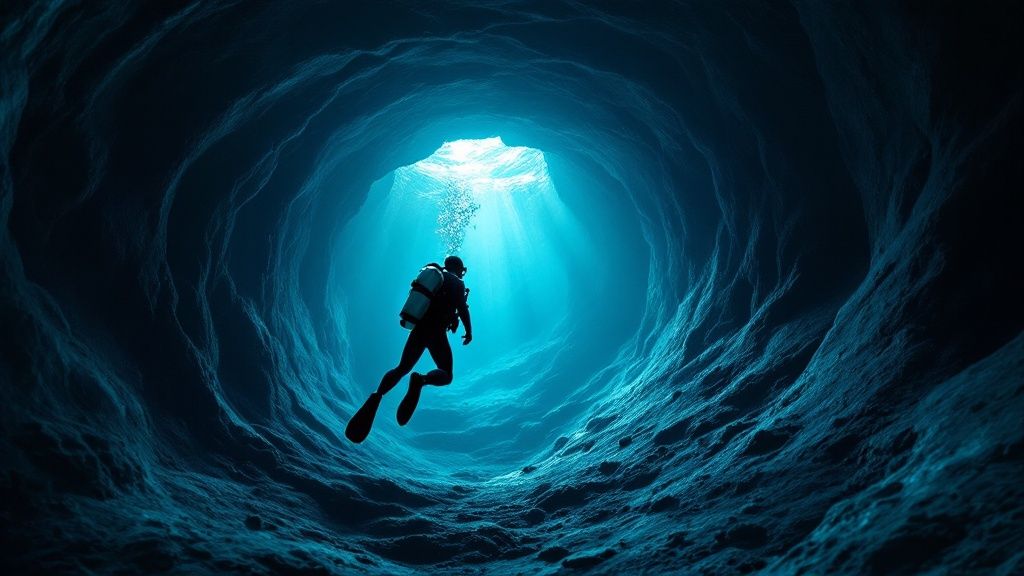
One of the best things about diving the Big Island is that there’s really no "off-season." The underwater world here is fantastic 365 days a year, so it's a great destination whenever you can get away. Thanks to the massive volcanoes sheltering the Kona coast, the conditions stay consistently calm and clear.
That said, knowing the subtle differences between the seasons can help you fine-tune your trip. Maybe you’re dreaming of perfectly flat seas, or you're hoping for a chance encounter with migrating giants. Understanding what each season brings can take your dive trip from great to unforgettable.
Here’s a breakdown of what to expect throughout the year, from water temps and visibility to surface conditions and special wildlife sightings.
Summer Diving Conditions (June to October)
Summer is the season of absolute calm on the Kona coast. The ocean often looks like a sheet of glass, with almost no wind or swell to speak of. This means incredibly comfortable boat rides and super easy entries and exits—perfect for new divers or anyone who gets a little queasy.
The water hits its peak warmth during these months, hovering in the high 70s to low 80s Fahrenheit. Visibility is usually at its absolute best, too, often stretching beyond 100 feet and opening up some truly breathtaking underwater landscapes.
- Surface Conditions: Exceptionally calm and flat.
- Water Temperature: 78°F – 81°F (26°C – 27°C).
- Best For: Divers who love warm water, calm seas, and crystal-clear visibility.
These prime conditions make summer the perfect time to get out and explore everything Kona has to offer.
Winter Diving Conditions (November to May)
Winter brings a different kind of magic to the Big Island's waters. While the surface might see a bit more chop with the occasional swell, the diving remains world-class. The real highlight of this season is the arrival of some very big visitors.
From December through March, thousands of humpback whales make their way to Hawaiian waters to breed and give birth. Spotting one on a dive is incredibly rare and takes a huge dose of luck, but you’ll definitely know they’re around. It's common to hear their complex, beautiful songs echoing through the water on your dives—an experience that is both haunting and unforgettable.
Water temperatures dip slightly but are still plenty warm for diving, typically ranging from 75°F to 80°F (24°C to 27°C). This consistency is a huge draw for divers, and as you can read on PADI's guide to Hawaii's climate, the migrating humpbacks just add a spectacular seasonal bonus.
- Surface Conditions: Can have some swell, but it’s still very manageable.
- Water Temperature: 75°F – 78°F (24°C – 26°C).
- Best For: Divers hoping to hear whale song and who enjoy slightly cooler, refreshing water.
Honestly, there’s no wrong time to dive the Big Island. The choice really boils down to personal preference. Do you want the glassy seas of summer or the enchanting whale songs of winter? Either way, an incredible adventure is waiting for you.
How to Choose the Right Dive Operator in Kona
Let’s be honest: the dive operator you choose can make or break your entire trip. It’s easily the most important decision you'll make when planning your diving on the Big Island. A great crew doesn’t just shuttle you to a dive site; they become your partners in adventure, prioritizing your safety and sharing a genuine love for the ocean that’s absolutely infectious.
So, what separates the good from the truly great? It really boils down to a few key things. You're looking for an outfit that puts safety first, keeps their groups small and personal, runs comfortable boats, and is genuinely committed to protecting the reefs they show you. Get those elements right, and you're set up for an incredible time.
When you start digging around, you'll see affiliations like PADI or SSI. That's a good start—it means they meet global safety standards. But your research shouldn't end there.
Safety and Small Group Sizes
Safety is the one thing you can't compromise on. A dive shop's commitment to it often shows up in their guide-to-diver ratio. A small group, ideally six divers or fewer per guide, is a game-changer. It means your guide is right there with you, able to point out that elusive frogfish you would have missed and ready to help if any little thing goes wrong.
Think about it: huge, crowded boats can feel like you're just another number. Smaller groups create a much more relaxed vibe, both on the boat and below the surface. You'll have more room to gear up, more time to chat with your guide, and a much more personal connection to the underwater world. It’s less of a tour and more of a shared experience.
Choosing an operator with a low guide-to-diver ratio is one of the best ways to ensure a high-quality, safe, and personal diving experience. It's the difference between being just another passenger and being a valued guest.
Boat Comfort and Crew Quality
Don't underestimate the boat itself! You’ll be spending a good chunk of your day on it, so comfort matters. Look for operators with well-maintained, custom dive boats. Little things like a marine head (a toilet), a freshwater rinse, and plenty of shade can make a world of difference to your overall enjoyment.
Just as important is the crew. A fantastic crew is more than just a captain and a divemaster; they're passionate storytellers who are genuinely stoked to show you their backyard. That kind of enthusiasm is contagious and really elevates the whole day. For a team that nails this combination of a top-notch boat and an amazing crew, you can’t go wrong with Kona Honu Divers.
Catering to All Experience Levels
A great operator knows that not all divers are the same. They should be skilled at matching the day's sites to your comfort and experience level, whether you just got certified or you've got hundreds of dives under your belt.
If you’re a more seasoned diver, keep an eye out for operators offering advanced trips. Kona Honu Divers, for instance, runs premium advanced dive tours that explore deeper walls and more challenging sites. It’s a perfect way to push your limits a bit and see a side of Kona most divers miss.
Ultimately, picking an operator is about finding a team you trust to show you the best of Kona's underwater world safely. When you find a crew that checks all these boxes, you know you're in for an amazing adventure.
Answering Your Big Island Diving Questions
If you're gearing up for your first dive trip to the Big Island, you probably have a few questions. That’s perfectly normal! We hear a lot of the same queries from divers planning their adventures, so we’ve gathered the answers right here.
My goal is to give you the practical, no-nonsense info you need to plan your trip with total confidence. From what certification to bring to which wetsuit to pack, here's the rundown.
What Scuba Certification Do I Need to Dive in Kona?
Here’s the great news: the Kona coast is fantastic for divers of all experience levels. It doesn’t matter what your certification card says—there’s something incredible waiting for you.
Many of our most beautiful and lively reef sites are actually quite shallow, making them perfect for Open Water Certified divers. You won't miss out on the good stuff just because you're new to the sport. In fact, some of our favorite sites, like Turtle Pinnacle, are a blast for everyone.
Never dived before? No problem. Most shops offer a Discover Scuba Diving program. It's a safe, fully supervised introduction that lets you experience Kona's underwater world without having to commit to a full course.
For the more seasoned divers, the diving Big Island has to offer is a true playground. If you're an Advanced Open Water diver or hold specialty certs, you'll unlock access to amazing walls, deeper lava tube formations, and more challenging topography. Operators like Kona Honu Divers have a whole menu of diving tours designed to match any skill level.
What Thickness Wetsuit Should I Bring?
Packing the right wetsuit is the key to a comfortable dive day. Thankfully, the water here in Kona is wonderfully warm year-round.
Water temps hover between a pleasant 75°F and 80°F (that’s about 24°C to 27°C). Because of these mild, tropical conditions, most divers are perfectly comfortable in a 3mm or 5mm full wetsuit.
- A 3mm wetsuit is usually plenty, especially in the summer months when the water can creep past 80°F.
- A 5mm wetsuit is a smart choice if you get chilly easily or if you're planning on multiple dives, especially a night dive. That little bit of extra insulation makes a huge difference in comfort after you've been in the water for a while.
It really comes down to your personal preference, but you can’t go wrong with either a 3mm or a 5mm.
Can I See Manta Rays During the Day?
Excellent question! And the answer is yes, you absolutely can see a manta ray on a day dive. It's an unforgettable, and very lucky, experience to have one of these giants glide by you in the bright Hawaiian sun.
But—and this is a big but—these daytime sightings are completely random. They are a happy accident, never a guarantee. The mantas are just passing through, going about their day.
If seeing manta rays is the main event for your Big Island trip, then the world-famous Manta Ray Night Dive is a must-do. It’s a sure thing. The lights we use draw in the plankton, the plankton draws in the mantas, and you get a guaranteed front-row seat to an incredible feeding spectacle.
So, think of a daytime manta sighting as a lucky bonus. For the real, guaranteed magic, you'll want to book a dedicated manta ray dive tour.
Is Touching the Marine Life Allowed?
I’ll make this one simple: No, you should never, ever touch marine life. This goes for everything—turtles, manta rays, dolphins, eels, and even the coral itself.
This is a core rule for responsible diving everywhere in the world, and it exists for two very important reasons:
- You could hurt the animal. Fish, turtles, and rays are covered in a protective slime coat that acts like their immune system. Your touch can rub this layer off, leaving them exposed to nasty infections and diseases.
- You could hurt yourself. Some marine critters have powerful defense mechanisms. Scorpionfish can sting, moray eels can bite, and even some corals can leave you with a painful rash. The best way to keep yourself and the wildlife safe is to simply keep your hands to yourself.
The rule is easy: look, but don't touch. Following this ensures the reef stays healthy for the next generation of divers to enjoy. Ready to see it all for yourself?
For an unforgettable adventure exploring the vibrant waters of the Big Island, book your next trip with Kona Honu Divers. Explore our full range of dive tours today!