
Picture yourself sinking into impossibly clear, turquoise water, with shafts of sunlight piercing the surface and lighting up a wild, underwater world carved by ancient volcanoes. That’s what diving the Big Island is all about. It’s an experience that really sets the bar for underwater adventure in Hawaii. With visibility that seems to go on forever and a staggering amount of marine life, the Kona coast is a true diver's paradise, perfect for everyone from fresh-faced beginners to salty old pros.
Why the Big Island is Hawaii’s Top Diving Destination
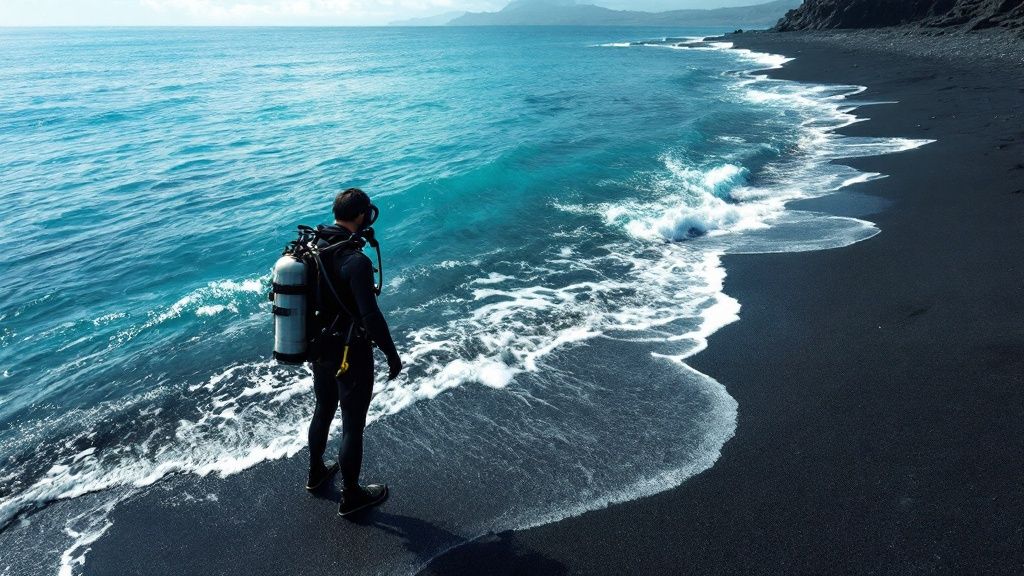
The Big Island isn't just another place to get wet; it’s a world-class destination forged by raw volcanic power. Its geology is much younger than the other islands, and that youth has created a dramatic underwater landscape you just don't see anywhere else. This volcanic origin is the secret sauce, giving us these incredible underwater structures.
Think of the ocean floor here as a massive, natural sculpture park. You can explore everything from intricate lava tubes and magnificent archways to sprawling, healthy coral gardens absolutely buzzing with life. Every single dive offers something new to discover because of this dynamic terrain.
An Unmatched Underwater Environment
Big Island scuba diving is famous for its incredible conditions and biodiversity, making it a serious contender for the best diving in all of Hawai‘i. The clarity of Kona's waters is insane, often letting you see for over 100 feet. This is thanks to calm currents and very little sediment runoff from the land.
Water temperatures stay just right all year, hovering between a comfortable 75 and 80°F (24-27°C). The marine life is just as impressive, with everything from tiny, colorful reef fish to majestic tiger sharks and migrating humpback whales that cruise by between December and March. You can learn more about the Big Island's exceptional dive conditions to see what I mean.
The sheer variety of life is what really puts this place on the map. Here’s a quick look at what makes diving the Big Island so special:
- Abundant Marine Life: The Kona coast is a hotspot for hundreds of species. Many of them are endemic to Hawaii, meaning this is the only place on Earth you can see them.
- Iconic Encounters: It’s one of the few places in the world where you can reliably dive with majestic manta rays on the world-famous night dive. It’s an absolute must-do.
- Year-Round Diving: Consistent water temps and calm seas on the Kona side mean there’s never a bad time to book your trip.
Your Adventure Starts Here
Whether you're about to take your first breath underwater or you're a seasoned diver with hundreds of dives in your logbook, the Big Island has something extraordinary waiting for you. The combination of stunning underwater architecture, incredible biodiversity, and pristine conditions is the perfect recipe for an unforgettable adventure.
Ready to see it for yourself? Check out the different scuba diving tours on the Big Island we offer. There's something for every skill level.
Experiencing the Kona Manta Ray Night Dive
Picture this: you're kneeling on a soft patch of sand on the ocean floor, long after the sun has gone down. You switch on your dive light and aim its beam straight up into the darkness. Out of nowhere, a massive, graceful shadow glides through the light, followed by another, and then another. These are giant manta rays, performing an incredible underwater ballet right over your head. This is the world-famous Kona Manta Ray Night Dive, and it has earned its spot at the top of divers' bucket lists for a reason.
This isn't just another dive—it's a full-on spectacle. For decades, the Kona coast has been the go-to spot for this one-of-a-kind night dive with resident manta rays (Manta alfredi). The whole operation has become a massive draw, bringing in divers from all over the world and, in the process, boosting awareness for marine conservation. The official Manta Ray Viewing and Safety Assessment in Hawaii report gives a great look into just how significant this activity has become.
How the Magic Happens
The idea behind the dive is beautifully simple. Manta rays are filter feeders, and their favorite meal is plankton. And, just like moths to a flame, plankton absolutely love light.
- Setting the Table: Dive operators have found the perfect spots to set up powerful underwater lights on the seafloor, creating what we call "the campfire."
- Ringing the Dinner Bell: As soon as those lights turn on, plankton swarm in, creating a thick, irresistible buffet for the local manta population.
- The Main Event: The mantas glide in, mouths wide open, doing graceful somersaults and barrel rolls to scoop up as much food as they can. They often come within inches of the divers watching in total awe.
The best part? The Kona mantas are year-round residents; they aren't migratory. That means you have an excellent shot at seeing them no matter when you decide to go diving on the Big Island.
What to Expect on Your Dive
Unlike a typical reef dive where you're swimming around, the manta dive is a pretty stationary experience. You'll descend to a designated viewing area, usually around 30-40 feet deep, and get settled in for the show.
The feeling of a 12-foot manta ray soaring right over your head is something you just can't describe. It's a mix of pure awe and a deep respect for these incredible animals. It’s a moment that truly stays with you.
Most operators will have you kneel or lie flat on the sand, forming a kind of human amphitheater around the lights. You'll point your own dive light upward to help attract more plankton and get a front-row seat. The dive itself usually lasts about 45 minutes, giving you plenty of time to soak it all in. And don't worry—this adventure is perfect for most certified divers, not just the advanced crowd.
Respectful Manta Ray Etiquette
To keep these magnificent animals safe and coming back night after night, everyone has to follow a few simple, but strict, guidelines. The golden rule is easy: look, but don't touch.
Manta rays have a special protective mucus coat on their skin that acts as a shield against infection. If you touch them, you can rub off that coating and leave them vulnerable to disease. A few other key rules:
- Stay Low: Stick to the seafloor. This keeps the water column clear for the mantas to do their thing without bumping into anyone.
- No Chasing: Never, ever chase or try to ride a manta. Let them approach you and control the entire interaction.
- Mind Your Bubbles: Try to time your exhales so you aren't blowing a stream of bubbles right into a manta's face as it glides overhead.
Following these rules ensures the dive is a positive experience for both people and mantas. If you want to dive deeper into what makes this trip so special, check out our detailed guide on the manta ray night dive in Kona.
Ready to see the underwater ballet for yourself? This is the classic Big Island diving experience you simply can't miss. Find out more about manta ray dive tours here.
Exploring the Top Big Island Dive Sites
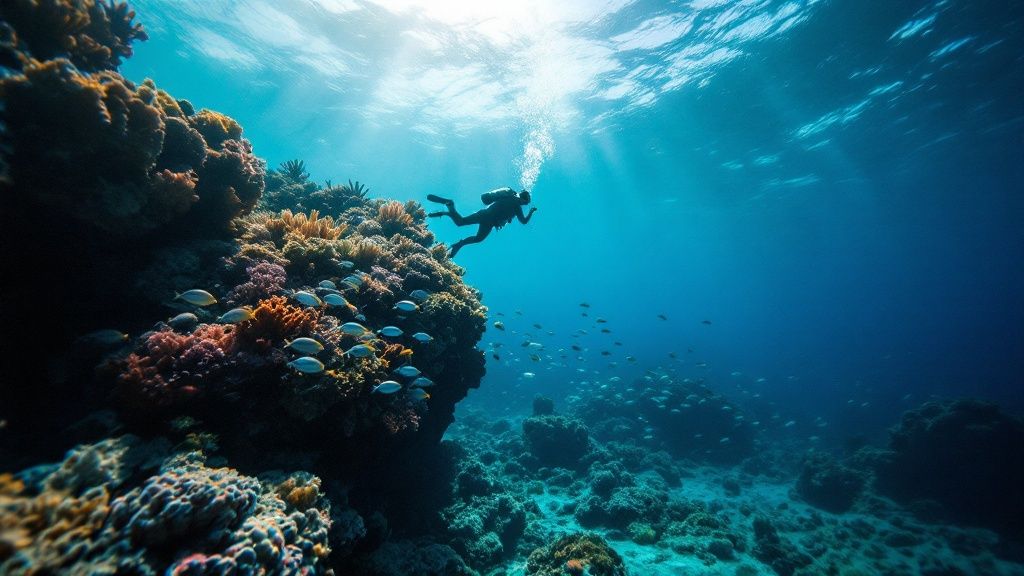
Sure, the manta ray night dive gets all the hype, but let me tell you, it’s just the opening act. The real story of diving the Big Island is written across dozens of world-class sites along the Kona coast. This place is a diver's playground, a treasure trove of underwater landscapes shaped by raw volcanic power and absolutely bursting with life.
The Kona coastline is uniquely sheltered from the trade winds, which means the water is usually calm and crystal clear. It's the perfect setup for exploring the incredible labyrinth of lava tubes, dramatic arches, and towering pinnacles that make up the seafloor here. Every dive feels like a completely new adventure.
Turtle Pinnacle (Kailua-Kona)
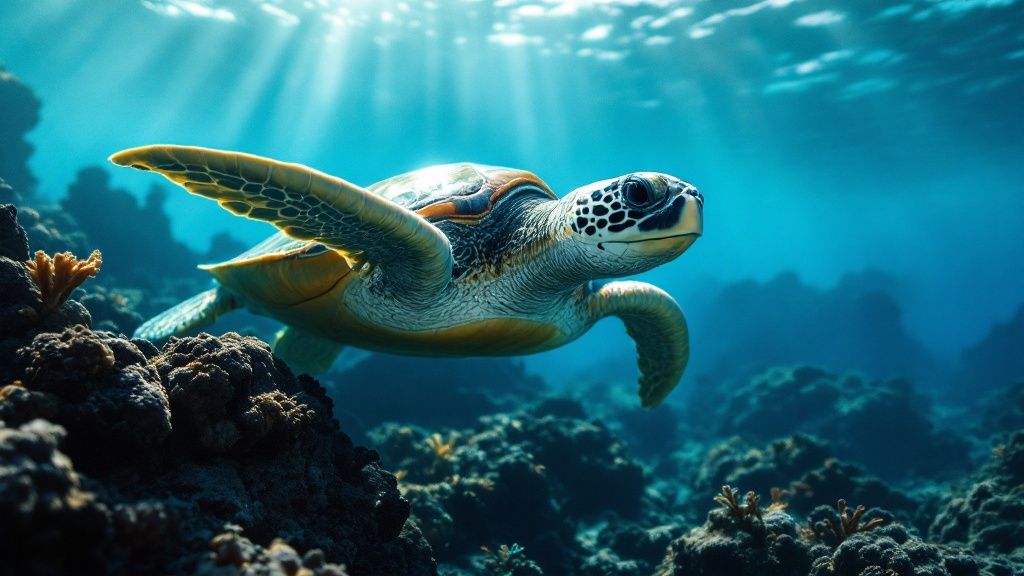
As you might guess from the name, Turtle Pinnacle is the place to go for Hawaiian green sea turtles, or honu. The site is centered around a big underwater pinnacle that acts as a natural "cleaning station."
It's a pretty amazing system to watch. Turtles line up to let reef fish nibble away parasites and algae from their shells. I’ve seen a dozen or more turtles just patiently waiting their turn. It's an incredible sight and makes for some seriously unforgettable photos. With an average depth of 40-60 feet, it's a great, chill dive for all skill levels.
Golden Arches
If you're like me and get a kick out of cool underwater topography, Golden Arches is a must-do. This spot is famous for a massive lava tube that forms a huge, breathtaking archway you can swim right through.
When the sunlight streams through the opening, it creates this golden, almost magical glow—hence the name. But the arch is just the beginning. The whole area is a maze of intricate lava flows and smaller caves, all covered in healthy coral. Keep your eyes peeled for schools of colorful fish, moray eels, and the occasional whitetip reef shark chilling on the sandy bottom. It's a prime example of the Big Island's volcanic underwater topography.
Au Au Crater (Suck'em Up)
Looking for a bit more of a thrill? Au Au Crater, or as we call it, "Suck'em Up," is a totally different kind of ride. It's a collapsed lava dome with a huge cavern that has this really unique surge phenomenon.
On days with a bit of swell, water pushes in and out of the cavern's openings, creating a gentle "breathing" effect that’s just exhilarating. Inside, you'll find a stunning underwater grotto, and the outer walls are packed with vibrant corals. This one's a bit more advanced due to the surge and depth, which can hit 70-80 feet, but it’s an absolute blast.
"The sheer variety of dive sites along the Kona coast is what keeps divers coming back. One day you're watching turtles at a cleaning station, the next you're navigating a massive lava tube. Every dive feels like a completely new adventure."
Honaunau Bay (Two Step)
Honaunau Bay is a long-time favorite for both divers and snorkelers, mainly because of its insane clarity and pristine coral gardens. The whole bay is a protected marine life conservation district, so the fish are plentiful and don't spook easily.
We usually enter from a spot called "Two Step," which leads to a gently sloping reef perfect for a nice, long, relaxed dive. You can cruise through shallow coral gardens packed with endemic butterflyfish or head a bit deeper to find whitetip reef sharks napping under ledges. We even see spinner dolphins here pretty regularly. With cool stuff to see from 20 to over 100 feet, this site truly has something for everyone.
To get a better feel for all the options, you can explore more about Big Island scuba diving sites and find the perfect spot for your next underwater trip.
To help you get a quick lay of the land, I've put together this simple table comparing some of the top spots we've talked about. It's a great way to see at a glance what each site offers.
Big Island Dive Site Snapshot
| Dive Site | Key Features | Average Depth | Common Marine Life | Best For |
|---|---|---|---|---|
| Turtle Pinnacle | Underwater cleaning station, high turtle population | 40-60 ft | Green sea turtles, reef fish, eels | All skill levels, photographers |
| Golden Arches | Massive lava tube arch, swim-throughs, caves | 50-70 ft | Reef fish, whitetip sharks, moray eels | Intermediate divers, topography lovers |
| Au Au Crater | Collapsed lava dome, surge cavern, grotto | 70-80 ft | Vibrant corals, pelagic fish, sharks | Advanced divers, thrill-seekers |
| Honaunau Bay | Pristine coral gardens, exceptional visibility | 20-100+ ft | Spinner dolphins, endemic fish, octopus | All skill levels, relaxed dives |
Each of these sites offers a unique slice of what makes Kona diving so special. Whether you're after a peaceful afternoon with turtles or an adrenaline-pumping cavern dive, you'll find it here.
Advanced Dives for the Adventurous
While the Kona coast is fantastic for divers of all stripes, some of its deepest, darkest secrets are only revealed to those with a bit more experience under their belts. If you've got a taste for true adventure, diving the Big Island offers up some unique challenges that pay off with sights most people will never get to see. These advanced dives pull you away from the lively, sunlit reefs and plunge you into a world of dramatic underwater landscapes and mysterious deep-ocean creatures.
If you’re ready to see what you're made of, Kona has some truly mind-blowing opportunities. We're talking about threading your way through complex lava tubes, exploring volcanic ledges that drop into the abyss, and floating in the open ocean long after the sun has gone down. These dives require rock-solid buoyancy, a cool head in low-light conditions, and a calm, focused mindset. It's the absolute peak of Big Island diving for anyone who has their fundamentals dialed in and is hungry for something extraordinary.
The Legendary Kona Blackwater Dive
Picture this: you're floating in the immense, inky black of the open ocean. You're miles from shore with thousands of feet of water below you, tethered to a line that feels like the only thing connecting you to the world. As your eyes adjust to the darkness, you start to see it—a slow, silent, vertical parade of some of the planet's weirdest and most beautiful creatures rising from the depths. This is the Kona Blackwater Dive, and it feels less like a dive and more like a trip to another dimension.
This is a whole different ballgame from your typical night dive. Instead of poking around a reef, you're drifting in the deep blue over the abyssal plain. You get a front-row seat to one of the largest migrations on Earth as deep-water organisms, many of them glowing with their own light (bioluminescent), swim up to feed under the cover of night. You’ll see alien-looking larval fish, nearly transparent squid, and jellies that pulse with light like something straight out of a sci-fi flick.
Because of the extreme conditions—open ocean, total darkness, and serious depth—this dive is strictly for the seasoned pros. Most shops will require:
- Advanced Open Water Certification: This is the bare minimum.
- Excellent Buoyancy Control: You have to be able to just hang there, perfectly still, without sinking or rising. It’s crucial.
- Confidence in Night Diving: You absolutely need previous night diving experience to make sure you're comfortable and safe in the dark.
This is a dive that will completely change how you think about the ocean. If you’ve got the skills and the nerve for it, the Kona Blackwater Night Dive is a once-in-a-lifetime experience you will never, ever forget.
Exploring Deeper Reefs and Lava Formations
Beyond the blackwater trip, advanced diving on the Big Island also means getting to explore deeper and more complex sites. The island's volcanic past has left behind a spectacular underwater playground full of wild structures that are best appreciated by divers with advanced training.
Deeper dives along the Kona coast show you a whole different side of the marine ecosystem. The light is different, the colors pop in a new way, and you start running into animals that like the cooler, darker water away from the shallows.
Winding through the maze-like lava tubes and caverns at spots like Golden Arches or Au Au Crater demands precision and skill. These spots can have overhead environments or tricky entrances and exits, so confident navigation and buoyancy are a must. In the same way, dropping down onto the deeper ledges that fall away into the blue gives you a shot at seeing bigger pelagic species cruising by—think oceanic whitetip sharks or even a massive whale shark if you're really lucky.
These dives are perfect for certified divers looking to push their skills and see a wilder, more raw side of Kona’s underwater world. Many dive operators run trips specifically for those who want to get beyond the standard reef tour depths.
Ready to take the plunge? Check out the options for a premium advanced dive trip and see what's waiting for you in the deep.
How to Choose a Big Island Dive Operator
Picking the right company for your diving Big Island adventure is probably the single most important decision you'll make for your trip. Your dive operator isn't just a taxi service to the reef; they're your guides to the underwater world, your safety crew, and the key to unlocking the absolute best Kona has to offer. A top-notch shop can make a great trip unforgettable, while a so-so one can leave you feeling let down or, worse, unsafe.
This decision goes way beyond just comparing prices. It’s about digging into a company's safety culture, the condition of their gear, the real-world experience of their guides, and how they treat their divers. A little homework upfront guarantees your time in the water will be as amazing as it is secure.
Key Factors to Consider
When you start looking at different dive shops, there are a few things that are absolutely non-negotiable. Think of these as the pillars of a solid operation that will ensure you have a professional and awesome time from the moment you step on the boat.
First up, the essentials: certifications and safety records. Any trustworthy operator will be affiliated with major agencies like PADI or SSI and will be open about their credentials. You should feel comfortable asking about their emergency plans, whether they have oxygen on board, and how often they service their rental equipment.
Next, take a look at their boats and how many people they take out at once. Being comfortable on the boat is just as crucial as having fun underwater. You want to see well-kept, custom dive boats with amenities that matter, like shade, a marine head (that's a toilet!), and an easy way to get in and out of the water.
Small group sizes are a game-changer. A lower diver-to-guide ratio means you get more personal attention, the dive sites feel less crowded, and you have a much safer and more intimate encounter with the incredible marine life.
The Evolution of Big Island Diving
The professional, world-class dive scene we have today didn't just appear overnight. It’s the result of decades of passion, growth, and standardization. The journey of diving Big Island from a small, niche community to a global destination was really kicked off by pioneering shops and the big certifying agencies. One of the huge milestones was the founding of Jack's Diving Locker back in 1981, which grew into one of Hawai‘i's most legendary dive operations. It was during this era that scuba became way more accessible, thanks to organizations like PADI and SSI popping up in the late '60s and early '70s. They set the standards that paved the way for the incredible shops we have now.
Why Kona Honu Divers Stands Out
With a lot of great options in Kona, Kona Honu Divers consistently gets rave reviews, and for good reason. They are absolutely dedicated to safety, personalized dives, and protecting our beautiful ocean. Their crew is all about creating small, fun groups, which means every single diver gets the attention and experience they came for.
Here’s what really sets them apart:
- Expert Local Knowledge: These guides know the dive sites like the back of their hand. They'll show you the coolest lava tubes and the secret ledges where the most unique critters hang out.
- Custom-Built Dive Boats: Their boats are designed from the ground up for diver comfort and safety. This makes your time between dives just as relaxing as the dive itself.
- Commitment to Conservation: This crew is genuinely passionate about protecting the underwater world. They make a point to teach divers how to interact with marine life respectfully.
But hey, you don't have to take our word for it. Hearing from fellow divers is the best way to get the real story. For even more tips, check out our detailed guide on how to choose a Kona dive shop.
Choosing your dive operator is the first real step toward an incredible underwater adventure. If you focus on safety, comfort, and genuine expertise, you're setting yourself up for the dive trip of a lifetime.
Putting Your Ultimate Dive Trip Together
Alright, let's connect the dots and get your Big Island dive trip locked in. A bit of smart planning here is what separates a good trip from an unforgettable one. It's the difference between just showing up and having a totally seamless, stress-free adventure where your only job is to focus on the insane underwater world waiting for you.
First up: timing. The Big Island is a year-round diving destination, which is awesome, but the seasons do have their own personalities. If you’re chasing those glassy, calm seas and bathtub-warm water, summer (May to October) is your ticket. It makes for ridiculously smooth and clear dives.
But if you come during winter (December through March), you get a massive bonus: it’s humpback whale season. There's nothing quite like hearing their songs echo through the water on your safety stop, or even catching a glimpse of them from the boat. It's a game-changer.
Your Go-To Packing List
Look, packing for a dive trip isn't just about throwing in a swimsuit. Having the right gear means you're comfortable, safe, and ready for anything. You can rent just about everything here, but most of us seasoned divers prefer our own stuff—it just fits right and you know how it works.
Here’s a quick rundown of what I never leave home without:
- Wetsuit: A 3mm full wetsuit is the sweet spot for the Big Island. It’s perfect for pretty much any dive, day or night, all year long. You'll have enough warmth without feeling like the Michelin Man.
- Dive Computer: This isn't optional. It’s the single most important piece of safety gear you own. Don't even think about leaving it behind.
- Mask, Snorkel, and Fins: A leaky mask or a fin that gives you blisters can ruin a dive. Bringing your own guarantees a perfect fit every single time.
- Reef-Safe Sunscreen: This is non-negotiable. Seriously. The chemicals in regular sunscreen absolutely wreck our coral reefs. Do your part to protect the very ecosystem you're here to see and stick to mineral-based sunscreens (the ones with zinc oxide or titanium dioxide).
- Dry Bag: A simple lifesaver. Keep your phone, wallet, keys, and a towel perfectly dry on the boat while you're blowing bubbles.
Nailing the Logistics for a Smooth Trip
Beyond your gear, a few logistical details will make your entire vacation run smoother. For home base, you absolutely want to stay on the Kona coast. This puts you right in the heart of the action, with easy access to all the best dive charters and sites. Look for places in Kailua-Kona or the Keauhou area—you'll find tons of options just minutes from the main boat harbors.
And what about your surface intervals or your no-fly days before heading home? The Big Island is an adventurer's playground. Go explore Volcanoes National Park, hike to a waterfall that looks like it's straight out of a movie, or just chill out on a black sand beach.
Here's the pro tip: schedule these land-based adventures for the end of your trip. That way, you’re well within the recommended 18-24 hour no-fly window after your last dive. A little bit of thoughtful scheduling like this is what makes for a truly complete and epic diving Big Island experience.
Common Questions About Diving the Big Island
As you get your trip dialed in, a few questions always seem to surface. We get these all the time from divers planning their first adventure diving on the Big Island, so let's clear them up. Here are some quick answers to make sure you land on the island ready to go.
What Is the Best Time of Year for Diving?
Honestly, there's no bad time to dive here. The Big Island is a year-round destination, but the seasons do offer a slightly different flavor.
Summer, from about May to October, usually gives us the calmest, clearest water. It's postcard-perfect stuff, ideal for super relaxed dives. But then there's winter, from December to March, which is humpback whale season. The surface can get a little choppy, but hearing whale songs echoing through the water on your dive? That's an experience that’s hard to beat and a huge draw for a lot of us.
Do I Need an Advanced Certification to Dive in Kona?
Not at all! A ton of Kona’s most famous spots, including the world-renowned Manta Ray Night Dive, are totally accessible for Open Water divers. The way our reefs are structured means you can have incredible dives without going deep.
That said, an Advanced Open Water certification definitely opens up more doors. It’s your ticket to some truly unique dives like the surreal Blackwater Dive. It also lets you explore deeper lava tubes and reef structures that are off-limits for an entry-level cert.
What Are the Water Temperatures and What Wetsuit Should I Bring?
The water temps off the Kona coast are amazing and pretty steady all year. You can expect it to be around 75°F (24°C) in the winter, climbing to a balmy 80°F (27°C) by late summer.
For most divers, a 3mm full wetsuit is the sweet spot for year-round comfort. It's just enough to keep you warm for multiple dives in a day. If you're someone who gets chilly easily, especially on a night dive, bumping up to a 5mm is a good move for that extra bit of insulation.
Besides Manta Rays, What Other Large Marine Life Can I See?
The amount of life here is just stunning. On almost any given dive, you've got a great shot at seeing Hawaiian green sea turtles (honu), playful spinner dolphins, and all kinds of moray eels. Whitetip reef sharks are also a regular sight, usually just chilling under ledges.
And if you get a little lucky? You might run into some of the big pelagic visitors. The waters around the Big Island are known to host tiger sharks, whale sharks, and oceanic whitetips. It keeps every dive exciting because you truly never know what might cruise by.
Ready to see for yourself why diving the Big Island is so special? The crew here at Kona Honu Divers lives and breathes these waters and we're stoked to show you around. Let's get you booked for an unforgettable adventure.