
The Big Island of Hawaii isn't just a paradise of volcanoes and lush rainforests; it's a world-class destination for scuba divers. From the surreal experience of swimming with gentle giants on a manta ray night dive to exploring ancient lava tubes teeming with life, diving Big Island offers an unparalleled variety of underwater landscapes. The Kona coast, in particular, is renowned for its calm, clear waters and vibrant marine ecosystems, which are protected from the trade winds by massive volcanoes.
This guide will walk you through the must-see dive experiences that make Hawaii's largest island a top-tier diving location. Whether you're a novice looking for your first open water adventure or an advanced diver seeking a unique challenge like the famous blackwater dive, this resource provides the practical details you need. Let's gear up and explore what makes scuba diving Kona, Hawaii, an unforgettable journey. To see a full range of what's available, you can browse local diving tours and find the perfect underwater adventure.
1. Kealakekua Bay Marine Life Conservation District
Kealakekua Bay is more than just a stunningly beautiful location; it's a Marine Life Conservation District (MLCD), offering some of the most protected and pristine conditions for diving Big Island has to offer. Situated on the Kona coast, this bay is a sanctuary for marine biodiversity, featuring dramatic underwater lava formations and vibrant coral gardens that slope gently from the shore. Its protected status means fishing is heavily restricted, resulting in an unusually dense and diverse population of marine life.
This designation makes the bay a premier destination for both snorkelers and scuba divers. The crystal-clear water, often exceeding 100 feet of visibility, provides unparalleled views of the thriving ecosystem. The bay's calm, sheltered waters make it an ideal spot for divers of all skill levels, from beginners to seasoned veterans, and it is a popular destination for families. The historical significance as the landing site of Captain James Cook adds another layer of intrigue to the experience. For a deeper dive into what makes this site so special, you can explore Captain Cook snorkeling tour details.
Why It's a Top Spot
- Exceptional Clarity: The bay is naturally protected from major ocean swells, which contributes to its consistently clear water.
- Abundant Marine Life: Expect to see large schools of yellow tang, spinner dolphins, and Hawaiian green sea turtles (honu) in their natural habitat.
- Healthy Coral Reefs: The protected status has allowed the coral to flourish, creating a vibrant underwater landscape that supports a complex food web.
Practical Tips for Visitors
To make the most of your visit, book your tour well in advance, especially during the peak winter season from December to March. Always use reef-safe sunscreen to help preserve the fragile coral ecosystem. For the calmest conditions and best visibility, an early morning trip is highly recommended. Remember to respect the marine life by observing from a distance and never touching the coral or animals.
2. Manta Ray Night Dives – Kona Coast
The Manta Ray Night Dive is arguably the most famous and unforgettable experience when it comes to diving Big Island. This world-renowned encounter allows divers to witness majestic Pacific manta rays, with wingspans reaching up to 20 feet, as they gracefully feed on plankton. The spectacle unfolds at night, where dive operators place powerful lights on the ocean floor, attracting vast amounts of plankton and, in turn, the giant mantas that come to feast.
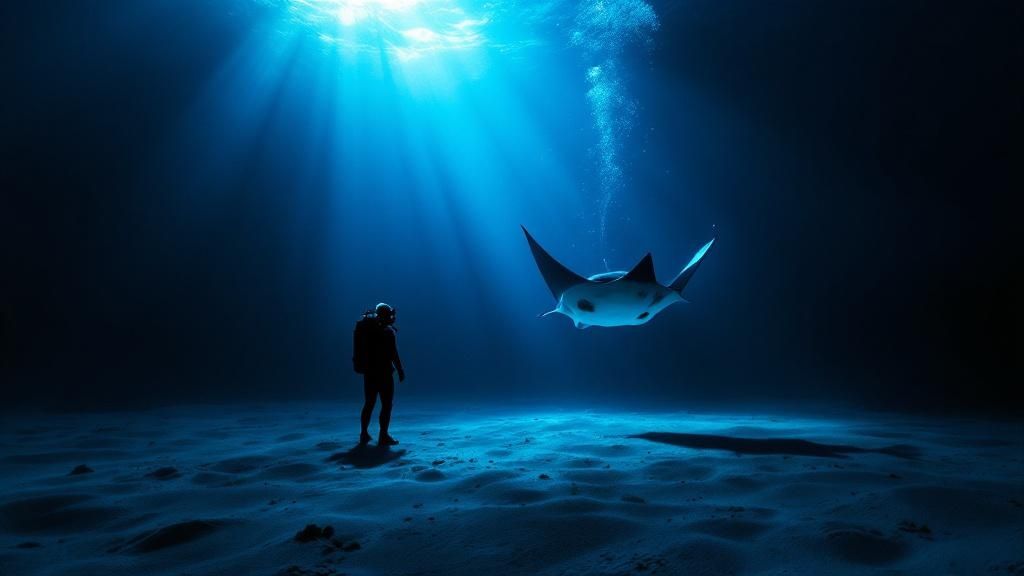
Popularized by marine biologists and featured in documentaries by National Geographic and the Discovery Channel, this dive is often called a "bucket-list" item for good reason. Divers settle on the sandy bottom in a "campfire" circle around the lights and watch in awe as the mantas perform an otherworldly ballet, swooping and somersaulting just inches overhead. It is a passive, observational dive, making it accessible even to newer divers, yet it remains a profound experience for even the most seasoned underwater veterans. You can learn more and book your own manta ray dive tour.
Why It's a Top Spot
- A Unique Natural Phenomenon: There are very few places on Earth where you can reliably interact with manta rays in this manner, making it a truly special marine encounter.
- Incredible Proximity: The mantas are not shy and will often glide directly over your head, providing unparalleled views and photo opportunities.
- Year-Round Availability: Unlike many marine wildlife encounters, the Kona manta ray dive is available throughout the year, with consistent sightings.
Practical Tips for Visitors
To have the best experience, choose a dive operator with strong conservation ethics that prioritizes the mantas' well-being. Remain still on the ocean floor and let the animals come to you; never chase or attempt to touch them. Bringing a good underwater flashlight can enhance your personal visibility, but avoid shining it directly into the mantas' eyes. For the highest chance of optimal conditions and numerous mantas, consider booking a tour on a night with less moonlight.
3. Black Water Diving (Pelagic Night Diving)
For a truly unique and otherworldly experience, Black Water Diving offers an adventure into the deep, dark abyss off the Kona coast. This advanced dive involves being tethered to a boat at night and descending into the open ocean, far from any reef. The boat’s powerful down-facing lights attract a fascinating array of pelagic creatures that migrate vertically toward the surface under the cover of darkness. This type of diving Big Island specializes in, reveals a hidden world of bioluminescent and rarely seen organisms.
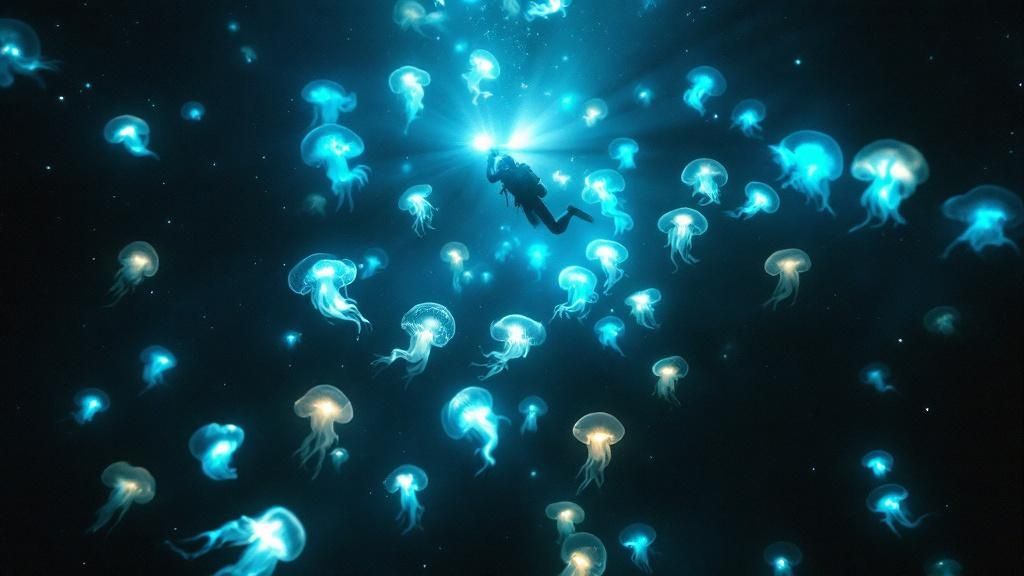
This incredible dive, pioneered in Hawaii by operators like Kona Honu Divers, is not for the faint of heart but is profoundly rewarding for experienced divers and underwater photographers. You'll drift in the blackness, observing bizarre larval fish, translucent cephalopods, and vibrant jellies that look like alien life forms. It’s an unparalleled opportunity to witness the largest migration on Earth, as countless tiny creatures rise from the depths. To get a better sense of what this surreal adventure entails, you can learn more about black water dive expeditions.
Why It's a Top Spot
- Unique Marine Encounters: Witness creatures that are impossible to see during a typical reef dive, including many larval-stage animals and deep-water species.
- Photographer's Dream: The dark background makes the vibrant, often bioluminescent, subjects pop, creating stunning macro photography opportunities.
- Ultimate Night Dive: It elevates the concept of a night dive to an entirely new level, offering a sensory experience that is both thrilling and serene.
Practical Tips for Visitors
This is an advanced dive, and most operators require a minimum of an Advanced Open Water certification. Excellent buoyancy control is absolutely critical, so practice your skills beforehand. If you are into photography, a quality macro lens and strobe setup are essential to capture the tiny, intricate details of the marine life. Most importantly, listen carefully to your guide’s instructions, as safety protocols are paramount in this challenging environment.
4. Cathedrals I & II (Lanai Day Trips)
For divers seeking a truly unique and dramatic underwater experience, a day trip to the island of Lanai to explore Cathedrals I & II is a must. These world-famous lava tube formations create an ethereal, cavernous environment where light streams through openings in the ceiling, resembling stained-glass windows in a grand cathedral. While not located directly off the Big Island, specialized charters offer this incredible opportunity, making it a standout option for adventurous divers looking for advanced topography.
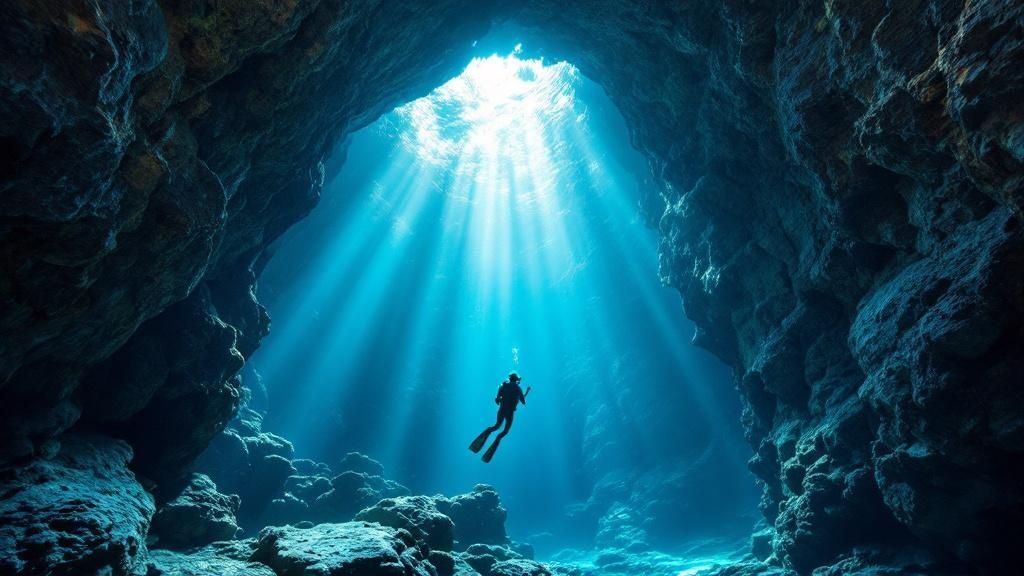
These sites are more than just swim-throughs; they are massive, two-story caverns formed by ancient lava flows. Inside, the lack of current creates a serene environment where divers can explore intricate rock formations and discover marine life hiding in the crevices. The unique lighting and immense scale make Cathedrals a pinnacle of diving Big Island day trips, offering an unforgettable adventure for intermediate to advanced divers. Due to the overhead environment and depth, proper buoyancy control and comfort in low-light conditions are essential. For those with the right skills, exploring these more experienced diving opportunities can be the highlight of a Hawaiian dive trip, which you can explore on our advanced dive tour page.
Why It's a Top Spot
- Spectacular Topography: The main attraction is the cavern itself, with its massive chambers, arches, and swim-throughs creating a unique underwater playground.
- Photogenic Environment: The interplay of light and shadow provides unparalleled opportunities for stunning underwater photography.
- Diverse Marine Life: While the structure is the star, you can often spot nudibranchs, frogfish, and even white-tip reef sharks resting inside the caverns.
Practical Tips for Visitors
A trip to Lanai is a full-day commitment, so plan accordingly. The open ocean crossing can be choppy; consider taking seasickness medication if you are prone to it. The best conditions are typically found during the calmer summer months. Always book with a reputable operator that specializes in these advanced, long-range trips and confirm they provide all necessary equipment and safety briefings for cavern diving.
5. Two Step (Honaunau Bay)
Adjacent to the historic Pu'uhonua o Honaunau National Historical Park, Honaunau Bay, affectionately known as "Two Step," is one of the most celebrated spots for diving Big Island from the shore. The site earns its nickname from the natural, step-like lava rock formations that create a convenient entry and exit point into the ocean. This easy access, combined with typically calm, clear waters, makes it a haven for snorkelers and scuba divers alike.
The bay boasts a vibrant and healthy coral reef that begins in shallow water and extends to deeper sections, offering varied topography for exploration. Its protected position shields it from strong ocean currents, ensuring excellent visibility on most days. This accessibility and the rich marine ecosystem make Two Step a popular location for introductory dives, certification courses, and casual underwater exploration for divers of all experience levels. Many local dive shops, like Big Island Divers, utilize this site for guided shore tours.
Why It's a Top Spot
- Effortless Ocean Entry: The natural lava "steps" provide one of the easiest and most unique shore-entry points on the island.
- High Chance of Turtle Sightings: The area is a well-known resting and feeding ground for Hawaiian green sea turtles (honu).
- Diverse Underwater Environment: Divers can explore shallow coral gardens, lava rock arches, and sandy patches, all teeming with reef fish and invertebrates.
Practical Tips for Visitors
Arrive early in the morning to secure a parking spot and enjoy the best water conditions before the crowds. Wearing sturdy water shoes or booties is essential for safely navigating the lava rock entry. While gear rentals are available in nearby towns, bringing your own can save time and money. For a comprehensive guide to this and other amazing shore entry locations, you can explore the best shore diving on the Big Island. Always remember to give turtles and other wildlife at least 10 feet of space.
6. Puako Reef System
Stretching for several miles along the sun-drenched South Kohala coast, the Puako Reef System is a haven for shore divers and underwater photographers. This extensive, shallow reef complex boasts some of the most pristine and diverse coral formations found anywhere when diving Big Island. Its series of accessible entry points makes it a favorite for those looking to explore at their own pace, revealing a vibrant underwater world just steps from the shore. The ecosystem here is remarkably healthy, supporting a dense population of tropical fish and invertebrates.
The area is renowned for its clear, calm conditions, especially during the morning hours, making it ideal for divers of all experience levels. Its accessibility and the sheer variety of marine life make it a standout location. Divers can easily spend an entire day exploring different sections of the reef, with each entry point offering a slightly different underwater landscape and unique encounters. The health of this reef is a testament to the community's respect for the marine environment.
Why It's a Top Spot
- Pristine Coral Gardens: The area features vast, healthy fields of finger coral and other hard corals, creating a complex and beautiful habitat.
- Shore Diving Mecca: Multiple public access points, such as Waialea Bay (Beach 69) and the Puako Bay boat ramp, provide unparalleled shore diving freedom.
- Photographer's Dream: Excellent visibility and shallow depths create perfect lighting conditions for capturing the vibrant colors of the reef and its inhabitants.
Practical Tips for Visitors
To fully experience Puako, consider exploring multiple entry points over several days as conditions can vary. It’s wise to check with local dive shops about current conditions and the best access points for the day. Always use reef-safe sunscreen to protect the fragile ecosystem you've come to enjoy. For those looking for more structured dives in similarly rich environments, various guided diving tours can offer expert navigation and insight.
Top 6 Big Island Diving Spots Comparison
| Experience / Site | Core Features & Highlights | User Experience & Quality ★ | Value & Price 💰 | Target Audience 👥 | Unique Selling Points ✨ |
|---|---|---|---|---|---|
| Kealakekua Bay Marine Life Conservation District | Protected sanctuary, 100+ ft visibility, spinner dolphins, green sea turtles | ★★★★☆ Pristine, diverse marine life | 💰 Free access with permits | 👥 Snorkelers & divers, all skill levels | 🏆 Historical site, strict conservation |
| Manta Ray Night Dives – Kona Coast | Night dive, regular manta sightings, two sites | ★★★★★ Unique nocturnal marine encounters | 💰 Premium priced night diving | 👥 Certified divers & snorkelers | 🏆 World-renowned manta interaction |
| Black Water Diving (Pelagic Night Diving) | Deep night dive, bioluminescence, rare pelagic species | ★★★★☆ Advanced, mysterious & rare | 💰 Higher cost, specialized gear | 👥 Advanced certified divers | ✨ Only pelagic night dive in Hawaii |
| Cathedrals I & II (Lanai Day Trips) | Underwater lava formations, swim-throughs, 30-60 ft depth | ★★★★☆ Dramatic geology & vibrant marine life | 💰 Mid-to-high (full-day boat trip) | 👥 Intermediate to advanced divers | ✨ Unique cathedral-like natural formations |
| Two Step (Honaunau Bay) | Easy shore access, shallow coral gardens, turtles | ★★★★☆ Accessible, calm, frequent turtle visits | 💰 Free shore dive | 👥 Beginners to advanced divers & snorkelers | 🏆 Best shore diving w/ cultural park nearby |
| Puako Reef System | Extensive shallow reef, high biodiversity | ★★★★☆ Excellent for photography & exploration | 💰 Free shore diving | 👥 Intermediate divers & underwater photographers | ✨ Multiple entry points, large reef system |
Planning Your Ultimate Big Island Dive Trip
The underwater world of Hawaii's Big Island is a realm of dramatic contrasts and unparalleled biodiversity. From the sun-drenched coral gardens of Kealakekua Bay to the otherworldly abyss of a black water night dive, the experiences available are as varied as they are unforgettable. Mastering a trip here is about matching your skill level and interests with the right locations and conditions. Whether you are marveling at the graceful choreography of the manta ray night dive or exploring the intricate lava tubes and archways of the Kona coast, preparation is the key to unlocking the very best of this volcanic paradise.
Success in diving Big Island hinges on thoughtful planning. We've explored the calm, protected waters perfect for beginners at Two Step, the vibrant reef systems of Puako, and the adrenaline-fueled adventures that await advanced divers in the open ocean after dark. Each site offers a unique window into the island's robust marine ecosystem. By understanding the seasonal nuances, preparing your gear, and prioritizing safety, you transform a good dive trip into an exceptional one. The true value lies not just in seeing the underwater sights, but in understanding how to best approach them for a safe, respectful, and deeply rewarding encounter.
For those ready to move from planning to action, partnering with a local expert like Kona Honu Divers ensures every detail is handled with professionalism and a genuine passion for the ocean. Their deep knowledge of local dive sites means you'll always be in the best possible spot based on the day's conditions.
Ready to experience the best diving Big Island has to offer? The expert guides at Kona Honu Divers are dedicated to providing safe, thrilling, and unforgettable underwater adventures for all skill levels. Explore their full range of dive tours and book your trip to witness Hawaii's incredible marine life firsthand.