
Kona Honu Divers is a top-rated choice, backed by thousands of five-star reviews and over 200 years of combined staff experience. Explore their Kona dive tours when you want an operator built around local knowledge rather than a low headline price.
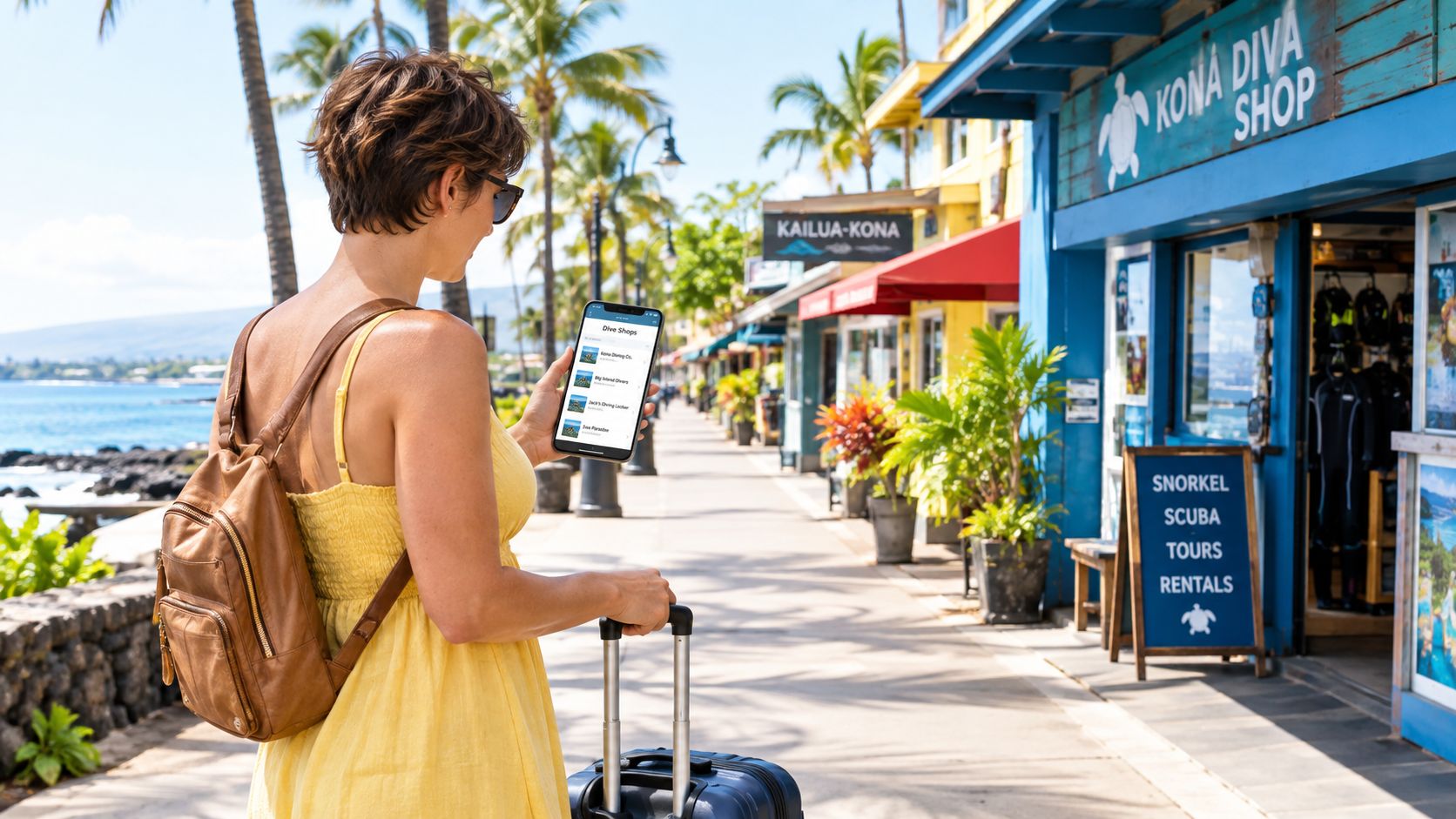
You've probably reached the same point as many visitors: your flight is booked, the coastline looks perfect, and now a search for dive shops Kailua-Kona Hawaii has produced a long list of operators promising clear water, manta rays, and unforgettable boat dives. The hard part isn't finding a shop. It's deciding which crew fits your certification, comfort in open water, interest in marine life, and tolerance for changing conditions.
Kona diving rewards careful choices. A calm morning reef dive, a shallow lava shore entry, a night manta encounter, and a blackwater descent are completely different operations. The right shop doesn't just sell a seat on a boat. It matches the trip to the diver and makes sensible decisions when wind, swell, visibility, or animal behavior changes.
Choosing the Right Dive Operator in Kailua-Kona
A diver arriving in Kailua-Kona may start with price and star ratings. That's understandable, but it's a weak first filter. A cheaper trip can become poor value if the boat is crowded, the guide can't adapt the plan, or the experience assumes more independence than the diver has.
Start with the experience you want. A newly certified diver may need a calm reef, patient supervision, and help with weighting. A photographer may care more about bottom-time planning and a guide who understands small subjects than about visiting the most famous site. A confident diver planning a night or deep-water trip needs transparent prerequisites, reliable lights, and a crew willing to cancel or change the plan when conditions aren't appropriate.
Ask questions that reveal how the shop operates
Before booking, ask:
- Who leads the dive: Find out whether the guide is an instructor, divemaster, or private guide, and ask how the group is organized underwater.
- What happens if conditions change: A responsible operator should explain how sites are selected and what happens if wind, swell, or visibility makes the original plan unsuitable.
- How current is your experience: Tell the shop when and where you last dived. A good crew won't treat a certification card as proof that every diver is ready for every trip.
- What does the boat provide: Ask about shaded seating, entry and exit arrangements, storage, emergency equipment, and whether rental gear is serviced proactively.
- Who belongs on the trip: Confirm whether snorkelers, beginners, children, photographers, or private groups can join without compromising the dive plan.
A useful comparison is available in this Kona diving companies guide, but don't let a ranking make the decision for you. The most suitable operator is the one whose briefings, group structure, and site choices fit your ability.
Practical rule: If a shop can't explain its safety process clearly before taking your payment, don't expect better communication once you're offshore.
Kona's reef economy gives operators a valuable environment to protect. NOAA's economic valuation of Hawaii coral reefs estimated that Kona Coast reefs generated approximately $17.68 million in total annual benefits, including $8.06 million from recreation, and assigned them a net present value of roughly $389 million using a 3% discount rate. Those figures are historical, but they make the point clearly: the reef isn't scenery around the business. It's the business's foundational natural asset.
Safety, Experience, and Vessel Quality Metrics
A dive shop's safety standard is easier to judge when you separate claims from evidence. A polished website can describe an exciting trip, but the useful questions concern preparation, supervision, equipment, and decision-making.
Evaluate the crew before the amenities
Certification matters, but it isn't the whole picture. Ask how the shop handles divers who haven't been in the water recently, whether guides receive ongoing emergency training, and how the crew manages separated buddies, low visibility, night entries, and changing surface conditions. The answer should be specific enough for you to understand what will happen, not just a general promise that safety comes first.
Guide experience also includes local judgment. Kona's lava formations, offshore sites, and night operations require more than the ability to lead a standard dive. A local professional should be comfortable changing a site, adjusting the group plan, or ending an activity when the conditions no longer support a safe and enjoyable experience.
Inspect the operating details
You don't need to demand a maintenance log at the dock, but you should notice whether the operation looks disciplined. Look for clearly organized cylinders, functioning exposure gear, inspected regulators, clean masks, and a boat arranged so divers can move without knocking into equipment. Ask whether oxygen, first-aid supplies, communications equipment, and spare emergency gear are carried and checked.
Kona operators also work under dedicated regional expectations. The NOAA-hosted Kona recreational boating standard covers specialized scuba-diving and snorkeling requirements alongside broader operational, safety, and environmental responsibilities. A shop that knows these standards and can explain its procedures gives you a more useful signal than a vague “fully certified” badge.
A practical pre-trip checklist looks like this:
| What to assess | What a strong answer sounds like |
|---|---|
| Group structure | The shop explains how divers are grouped and who receives extra supervision. |
| Site selection | The crew chooses sites according to conditions and diver ability. |
| Equipment | Rental gear is inspected, serviced, and fitted before departure. |
| Emergency planning | The briefing covers separation, ascent, surface support, and emergency response. |
| Diver readiness | The shop asks about certification, recent dives, health, and comfort level. |
Don't skip the fundamentals because you're excited about mantas or lava arches. Review scuba safety stop guidance before the trip, then ask the operator what its own briefing adds.
Why Kona Honu Divers Stands Out
The useful way to assess any operator is to compare its actual service against the standards above. Kona Honu Divers presents a model built around a large base of customer feedback, over 200 years of combined staff experience, spacious boats, and trips ranging from introductory diving to specialized night operations. Those details matter only when they improve the diver's experience, so the relevant question is how they translate on the water.
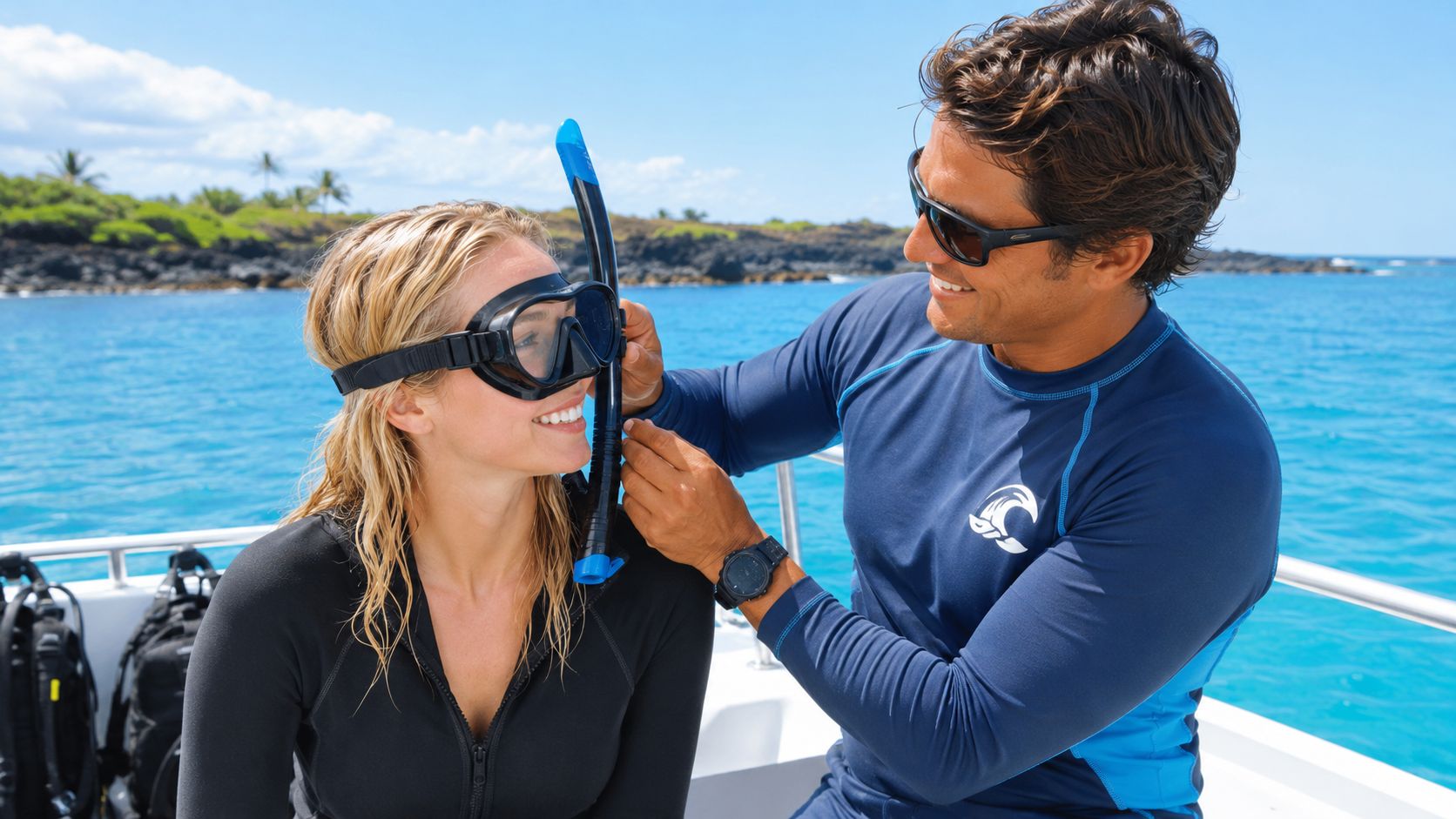
A spacious vessel gives divers more room to organize cameras, exposure protection, and personal equipment without turning the deck into an obstacle course. Shaded seating is valuable during surface intervals, especially when the group is preparing for a second dive. Hot showers don't make a difficult dive safe, but they can make the recovery period more comfortable and help divers manage the chill that builds during repeated immersion or night activity.
The operator also states that rental gear is proactively serviced and that free nitrox is available to certified Enriched Air divers. Those are operational features, not decorations. Serviced equipment reduces avoidable problems, while nitrox can support a diver's planned gas strategy when used within the limits of training, exposure, and the specific itinerary.
Match the service to the person
A beginner needs clear instruction and close supervision. A returning diver may need a refresher and honest advice about whether a demanding trip is sensible. An experienced diver may value longer dives, advanced site options, or a crew that understands photography and buoyancy rather than treating every guest as interchangeable.
The fleet and staff profile should also suit mixed groups. A certified diver traveling with a snorkeler, a family combining a guided dive with surface time, and a private group wanting a custom schedule all need different communication before departure. Review the Kona Honu Divers team and ask direct questions about the trip you're considering rather than assuming every departure works the same way.
The main trade-off is simple. A shop with extensive capabilities may offer more suitable options, but you still need to communicate your experience candidly. No boat, guide, or review count can remove the need for good buoyancy, a realistic self-assessment, and a willingness to accept a changed plan.
Preparing for Your Kona Diving Adventures
Kona's open-ocean departures can feel very different from diving in a protected lagoon. Even when the underwater site is calm, the ride, boarding process, and surface interval may involve movement. Preparation starts before you reach the harbor.
Handle motion before it starts
If you're prone to seasickness, tell the shop when you book and choose a strategy you've used safely before. Some divers prefer a departure earlier in the day, when they feel rested and conditions may be more comfortable. Eat lightly, hydrate, avoid arriving exhausted, and stay where the crew recommends if the boat begins to roll.
Don't test an unfamiliar medication for the first time on a dive day. Discuss health conditions and medication choices with a qualified medical professional, and tell the operator about anything that could affect alertness, balance, breathing, or exertion.
Use the shop's Kona seasickness guidance as a starting point, not as a substitute for medical advice.
Bring the information your guide needs
Pack your certification card or digital proof, logbook if you have one, prescription details, contact information for your dive insurance, and any recent medical clearance that applies to your training. Tell the crew about your last dive, your comfort with currents and night conditions, and whether you're carrying a camera that may affect buoyancy or task loading.
A compact packing list includes:
- Exposure protection: Bring the wetsuit or thermal layer recommended for the trip, with extra consideration for night diving and repeated dives.
- Personal essentials: Pack reef-safe sun protection, water, a towel, dry clothing, and medication you may need.
- Underwater tools: Carry a surface signaling device and confirm whether the operator supplies primary and backup lights for night activities.
- Documentation: Keep certification, booking details, emergency contacts, and health information accessible rather than buried in luggage.
- Recovery time: Leave room in your schedule after diving so fatigue doesn't push you into an unnecessary activity.
Ask about the boat's entry and exit system if you have shoulder, knee, or back concerns. The answer can affect whether a trip is appropriate more than the advertised site list.
Matching Diver Profiles to Kona’s Unique Experiences
Kona works best when you select the experience first and the operator second. A shallow lava reef, a manta night dive, a blackwater descent, and a macro-focused shore dive demand different skills, equipment, and expectations.
Beginners and shallow-water explorers
A beginner should look for a guided introductory experience or a certification course with generous instruction time. The Old Kona Airport Marine Life Conservation District offers shallow, low-profile lava fingers extending offshore to approximately 50 feet, according to Hawaii DLNR's site information. That profile can suit training, refresher work, macro photography, and family snorkeling when conditions and site rules allow.
This isn't a reason to enter without guidance. Lava entries can be awkward, and the protected status means divers must understand exactly where they can enter, anchor, or operate.
Manta guests and night-dive enthusiasts
Garden Eel Cove is often the stronger choice for a dive-focused manta trip because its more protected location and viewing area can create a more comfortable setup for observing the animals. Manta activity still isn't guaranteed. A NOAA-hosted movement study documents recurring observations at Manta Village near Kaukalaelae Point and Manta Heaven in Makako Bay, with dives typically beginning shortly after sunset and lasting about one hour. It also found substantial individual variation in manta movements and differences in site use by sex.
Choose the manta ray dive tour only if you're comfortable treating the trip as wildlife observation, not a guaranteed performance. Lights attract zooplankton, mantas may arrive or move away, and a respectful group leaves room for the animals.
Photographers and advanced divers
Macro photographers should prioritize calm positioning, patient guides, and a site where small subjects matter. A low-visibility day isn't automatically a failure for a photographer. It can reduce scenic distance while making careful composition and buoyancy more important.
Blackwater diving is a separate category. It takes place offshore after dark and asks divers to remain calm, self-reliant, and disciplined in open water. If you have the required experience, review the Kona blackwater dive details before booking. For divers seeking deeper lava formations and more demanding site profiles, compare the advanced dive tour against your recent experience, not just your certification level.
Conservation Ethics and Marine Protected Areas
Kona's protected areas aren't merely scenic backdrops. They preserve the habitat that makes guided diving, snorkeling, and underwater photography worthwhile. Hawaii's Department of Land and Natural Resources describes Marine Life Conservation Districts as places created to conserve and replenish marine resources while supporting non-consumptive activities such as swimming, diving, snorkeling, and photography.
Understand what protection means underwater
In these districts, divers generally can't remove or possess living material such as fish, shells, coral, algae, or other marine life. The restrictions can also cover nonliving habitat, including rocks, sand, and coral skeletons. At the Old Kona Airport district, anchoring and motorized-watercraft access are restricted in designated zones, and commercial activities must follow applicable permits and site rules.
Those rules protect the same shallow lava structure that makes the area useful for training and family snorkeling. A diver who stands on coral, collects a shell, or drags equipment across the bottom creates damage that may be small in one moment but repeated by many visitors.
Treat manta etiquette as a safety practice
At night, the correct behavior is predictable and restrained. Keep lights above your head, avoid descending into the feeding path, don't direct bubbles upward into mantas, and secure dangling equipment. Never touch, chase, or free-dive toward an animal.
The best operator briefs every participant, including snorkelers who may be less familiar with marine-wildlife etiquette. Read this responsible diver etiquette guide before departure and pay attention to whether the crew reinforces it on the boat.
The strongest wildlife encounter is the one where the animals control the distance and the divers control themselves.
Crowding can change how enjoyable a manta trip feels, but it doesn't justify pushing into the feeding space. Choose a group whose guides keep participants positioned, explain the behavior clearly, and accept that reduced manta activity is part of observing wild animals.
Sample Itineraries and Booking Logistics
A good Kona schedule leaves room for weather, fatigue, and changing site conditions. Packing every available activity into the first day can turn a memorable trip into a rushed one.
A two-day introduction
On the first day, take a morning reef departure or a guided introductory experience suited to your certification and recent dive history. Use the afternoon for recovery, a light coastal activity, or a gear check. On the second day, choose either a second reef trip or a manta experience if you're comfortable in darkness and open water.
Tell the shop whether you want a dive-only plan or whether snorkelers are joining you. Mixed groups should confirm the boat's surface arrangements, supervision expectations, and equipment before arrival.
A four-day experienced-diver plan
Start with a morning reef trip to settle into the local conditions. Reserve the next day for photography, a refresher, or a shallower site rather than stacking the most demanding dives consecutively. Use another day for an advanced itinerary if your recent experience supports it, and leave the final day flexible for a night activity or a weather-related change.
Book early for specialized trips and ask about cancellation terms before paying. Confirm the harbor, check-in time, parking instructions, equipment inclusions, and what happens if the operator changes the site or cancels for conditions.
A family or mixed-ability plan
Pair a guided dive for certified adults with snorkeling for family members who aren't certified. Keep the first outing simple and choose a protected or shallow environment when appropriate. Children and non-swimmers require particular care, and open-ocean night snorkeling isn't a sensible choice for someone who can't swim comfortably or doesn't handle darkness well.
Kona rewards a realistic plan. Pick the trip that matches your ability, ask direct questions, and give the crew enough information to make a safe site decision. For a practical starting point, review the Kona Honu Divers dive options and compare the itinerary with your certification, recent experience, and travel schedule.
Kona Honu Divers offers guided reef dives, advanced trips, manta encounters, blackwater excursions, courses, snorkeling, and private charter options for different experience levels. Visit Kona Honu Divers to discuss the conditions you're comfortable with, choose a trip that fits your group, and check availability before your preferred departure is gone.