
You're probably in the same spot a lot of Big Island visitors hit. You've heard that Captain Cook is the snorkel trip to do, then you search “captain cook snorkeling cruises” and suddenly every tour sounds the same.
They aren't.
A Kealakekua Bay trip can be easy, calm, educational, and full of reef life. Or it can feel rushed, crowded, and more focused on moving passengers than helping you enjoy the place. The difference usually comes down to boat style, crew approach, and how the operator thinks about the bay itself.
That matters because this isn't just another pretty cove on the Kona Coast. Kealakekua Bay blends Hawaiian history, protected water, and dense marine life in one of the most famous snorkel settings in the Pacific. Some visitors come for the history surrounding Captain James Cook's 1779 arrival. Others come to float over coral and watch reef fish work the shallows below. Good tours respect both sides of the experience.
Your Ultimate Guide to Captain Cook Snorkeling
You step onto the boat in Kona with fins in hand, and within a few minutes one thing becomes clear. Two trips to Captain Cook can head to the same bay and feel completely different once you are on board.
That is the part many visitors miss.
A good Captain Cook snorkel cruise is not just transportation to a famous spot. It is the mix of boat design, crew judgment, group size, and how the day is paced. A wide, stable catamaran can feel comfortable for families and first-time snorkelers. A smaller raft-style boat often feels faster, more adventurous, and closer to the water. Neither is automatically right. The better choice depends on who is coming with you, how confident you are in the ocean, and whether you want a relaxed outing, more guidance, or a trip with extra historical and marine education built in.
Kealakekua Bay draws heavy interest year after year because it combines striking scenery, cultural importance, and memorable snorkeling in one place, as noted in this Kealakekua Bay overview. Popularity is only part of the story, though. On the water, the experience changes a lot from one operator to the next.
Some crews treat the bay like a place to interpret and respect. Others treat it like a timed stop on a route. If you are new to booking snorkel cruises, that difference can be hard to spot from a tour page alone.
A simple way to sort your options is to look past the headline price and ask how the trip works. The boat is the classroom, and the crew sets the tone.
- Boat size and layout: Will boarding feel easy, and is there enough room to gear up without bumping elbows?
- Crew involvement: Do they offer in-water help, clear safety briefings, and reef guidance for beginners?
- Trip philosophy: Is the goal to move a big group through quickly, or give guests time to understand what they are seeing?
- Guest mix: Will your group fit the pace of the tour, especially if you have kids, older family members, or first-time snorkelers?
- Overall feel: Does the day sound personal, organized, and attentive, or more like a shuttle service?
Here is the local rule of thumb. If a company spends more time describing snacks than describing the bay, the crew, and how they run the snorkel, keep looking.
That is one reason many visitors compare options like this Kealakekua Bay snorkeling cruise from Kona Honu Divers before they book. The strongest operators usually make their approach clear. They explain who the trip is for, how they support guests in the water, and why their style fits this particular bay.
Choose the cruise the same way you would choose a guide for a hike into a special place. The destination matters. The person and platform getting you there matter just as much.
Why Kealakekua Bay is a World-Class Snorkel Spot
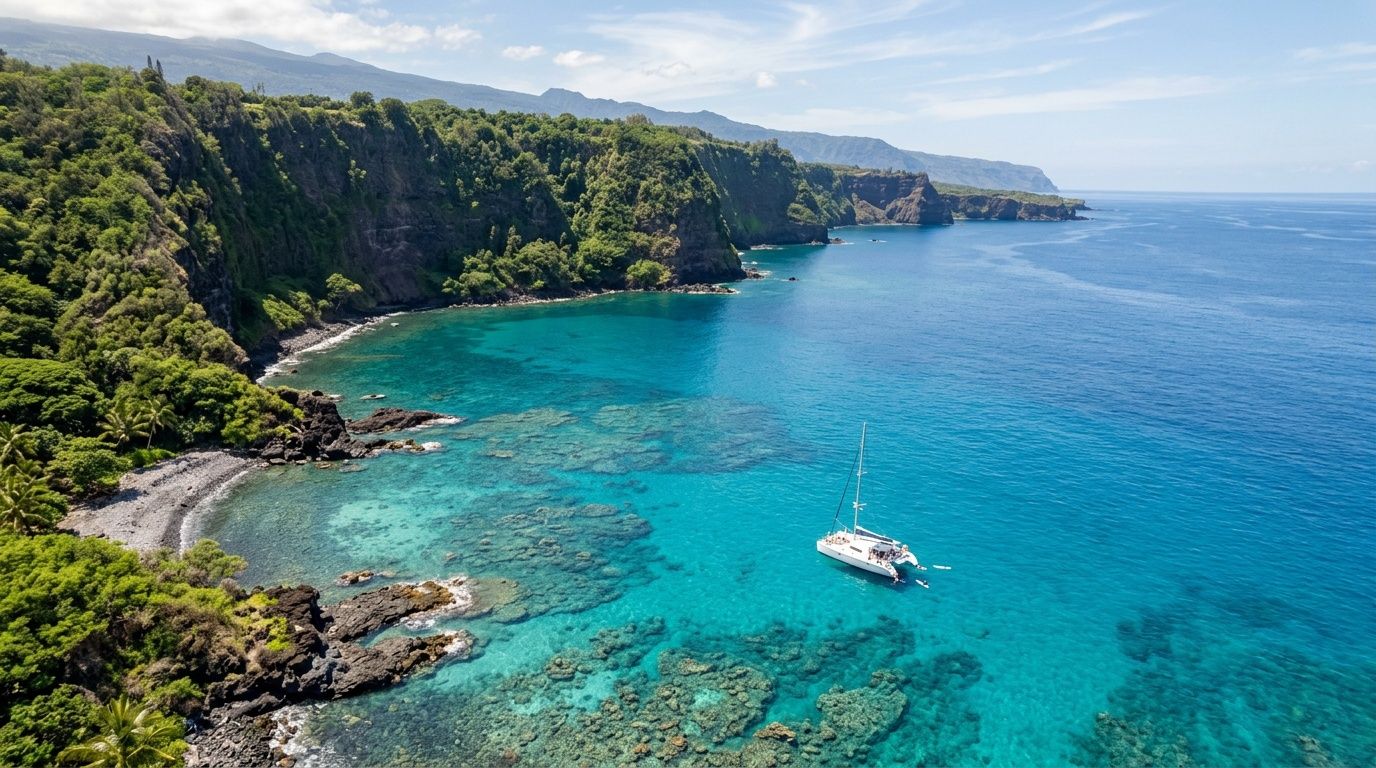
You leave Honokohau in the morning, round the coast, and the water changes color in front of you. Outside the bay, Kona can look dark blue and textured by wind. Inside Kealakekua, it often turns clear, bright, and readable. For snorkelers, that difference matters more than any brochure language.
Protected water changes everything
Kealakekua Bay is a Marine Life Conservation District, and that protection shows up in ways first-time visitors can see right away. The reef gets a break from the kind of pressure that wears down many popular snorkel spots, and the water often stays strikingly clear.
On a good day, the visibility can feel almost like looking through air instead of water, as described in this Kealakekua Bay visibility guide. That clarity does two things at once. It makes the bay beautiful, and it makes people calmer. If you can see the bottom contour, the reef edge, and the fish moving below you, the ocean feels less abstract and far less intimidating.
That is one reason experienced visitors pay attention to more than destination names. A well-run Kealakekua Bay snorkeling tour from Kona makes better use of these conditions because the crew can focus less on managing chaos and more on helping guests notice what makes the bay special.
The shape of the bay does a lot of work
Some snorkel sites are beautiful only when everything lines up perfectly. Kealakekua Bay is more forgiving. The coastline curves inward, and the surrounding land helps block some of the wind and swell that can make other spots feel busy on the surface.
A local captain notices this in small ways. Entries tend to feel easier. People spread out less. Guides can keep visual contact with guests more comfortably. New snorkelers spend more time looking down at the reef and less time fighting chop or resetting a snorkel every few breaths.
It works like a good beginner ski run. The setting still feels exciting, but the terrain gives you room to settle in and enjoy it.
World-class is not just about scenery
Plenty of places in Hawaii are pretty from the boat. Kealakekua Bay stands out because the conditions support the actual act of snorkeling. You are not working hard just to get a glimpse.
That shows up in practical ways:
- Calmer surface water helps you breathe steadily and conserve energy
- Clearer sight lines make it easier to stay oriented
- Healthy reef structure gives you more to see from the surface
- Protected conditions give crews a better environment for helping beginners
That last point often gets overlooked. The bay is excellent, but the experience still depends on who is running the trip. In a place this good, a thoughtful crew adds context, pacing, and in-water support instead of rushing people through a famous stop.
History changes the feel of the place
Kealakekua Bay also carries historical weight. Captain James Cook arrived here in 1779, and the bay became part of a major chapter in Hawaiian history. The National Park Service provides a useful overview in its information on the Captain Cook Monument at Kealakekua Bay.
You feel that difference once you are there. The shoreline is dramatic, the monument is visible from the water, and the bay does not feel like a generic snorkel stop. It feels like a place where natural beauty, cultural history, and careful trip design all matter together.
That combination is what makes Kealakekua Bay world-class. Clear water gets people in the door. The protected setting, readable conditions, and sense of place are what make the trip memorable.
The Vibrant Marine Life of the Captain Cook Monument
At the monument side of Kealakekua Bay, the reef feels busy in the best way. The first thing you notice is movement at every level. Fish graze close to the coral, others weave in and out of lava rock, and schools flash farther out over the deeper blue.
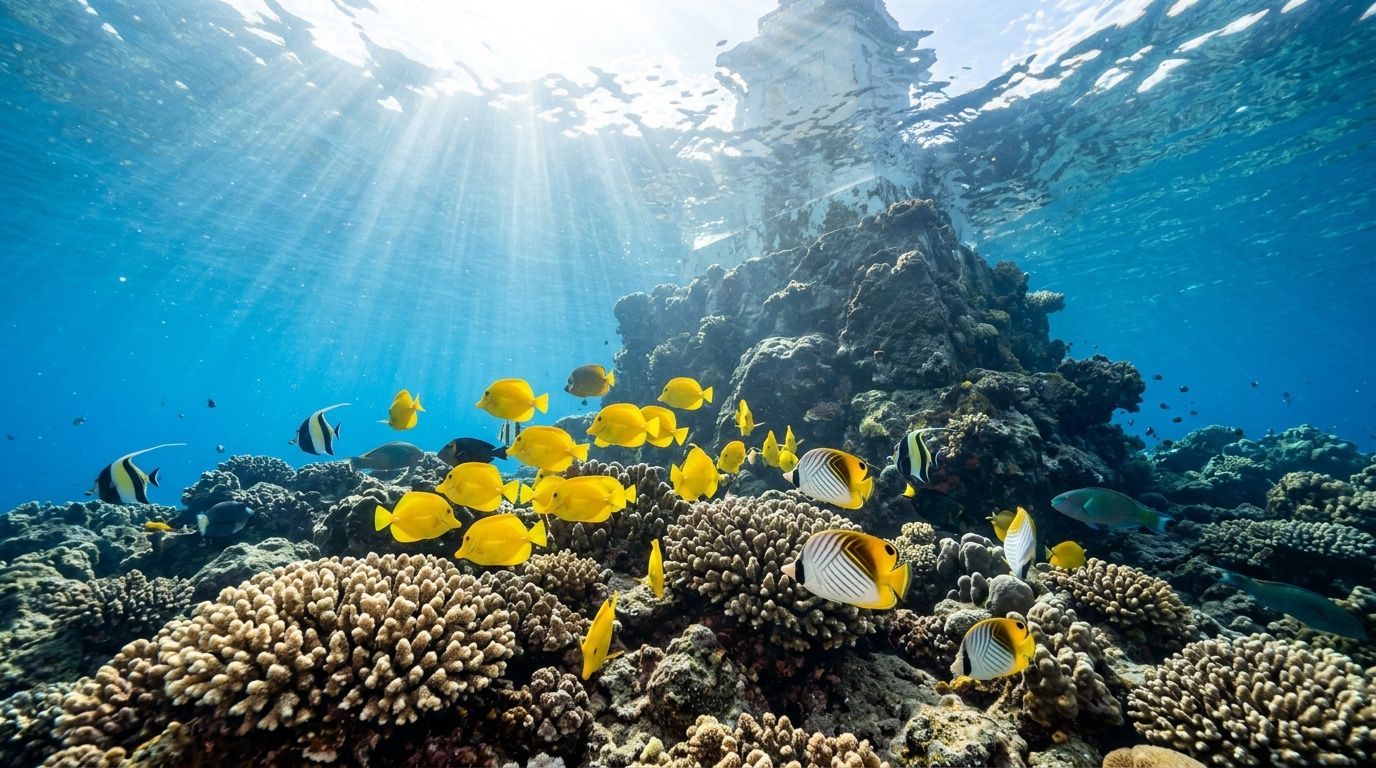
That variety is part of what makes this stop so memorable. You may spot parrotfish scraping algae from the reef, moray eels tucked into crevices, green sea turtles cruising past with almost no effort, and spinner dolphins on the ride in or out. Even without knowing every species name, you can feel that the bay is alive. Once you learn how to read the reef, the whole snorkel gets richer.
If you want a head start, this guide to Big Island endemic marine animals helps you recognize the species that make Hawaii reefs different from snorkeling spots elsewhere.
What experienced guides notice, and help you notice too
New snorkelers often look straight ahead and miss half the show. A good guide teaches you to scan in layers, almost the way you would watch a stage.
Start with the coral heads and rock pockets. That is where you are likely to find eels, smaller reef fish, and the shy species that disappear if you splash over them too fast. Then look a little farther into the water column for butterflyfish, tangs, and larger fish moving in loose groups. Every few breaths, lift your eyes toward the blue water beyond the reef edge. That is often where a turtle, a ray, or a passing school suddenly appears.
That kind of coaching matters.
On a boat with a crew that treats the bay like more than a photo stop, you learn what you are seeing instead of just drifting over it. That is one of the big differences between cruises that drop guests in the water and trips built around marine life observation.
Some animals grab your attention right away
Parrotfish are usually the first crowd-pleasers. They are colorful, easy to spot, and often close enough that you can watch them work across the reef. If you hear a faint crunch underwater, you may be hearing them feed.
Moray eels take a different kind of attention. They are the reef's hide-and-seek experts. Once your eyes adjust to the shapes of the lava rock, you start noticing heads peeking from holes that looked empty a minute earlier.
Green sea turtles change the mood every time. The water gets quiet. People stop finning so hard. Everyone settles down and watches the turtle set the pace.
Boat style affects how you experience the wildlife
The marine life stays the same. Your access to it can feel very different depending on the trip.
| Tour style | Typical feel | Good fit for |
|---|---|---|
| Small charter | More direct guidance, easier wildlife briefings, less crowding at entry points | Families, first-timers, guests who want help spotting animals |
| Larger catamaran | More social energy, more people entering together, less one-on-one natural history interpretation | Guests who enjoy a livelier boat atmosphere |
If your goal is to identify fish, understand reef behavior, and get patient in-water support, smaller boats usually have an advantage. That is where experienced crews, including the style of operation associated with Kona Honu Divers and Kona Snorkel Trips, tend to stand out. There is more room for questions, more room for timing, and more room for the kind of local insight that turns "I saw fish" into "Now I understand what I was looking at."
Wildlife etiquette shapes the quality of the sighting
Dolphins and turtles are exciting to see, but the best encounters happen when people slow down and give them space. Float. Watch. Let the animal decide whether it passes near you or keeps its distance.
That approach protects the wildlife, and it usually leads to a better experience for guests too. Calm snorkelers see more. Fast, noisy snorkelers often swim right past the interesting stuff.
How to Choose Your Captain Cook Snorkel Cruise
You book a morning trip, show up in a swimsuit and a good mood, and assume every boat to Kealakekua Bay will feel about the same. Then the day unfolds very differently depending on one simple factor: the operator's philosophy. Some trips are built around moving a crowd efficiently. Others are built around helping guests understand the bay, feel comfortable in the water, and come home saying more than, “We snorkeled.”
That difference matters more than the price gap on the booking page.
Start with the experience you want, then match the boat
Boat choice works a lot like choosing a restaurant. Two places may serve the same fish, but one feels personal and carefully paced, while the other feels busy and social. Captain Cook snorkeling cruises are similar. The destination is shared. The experience is not.
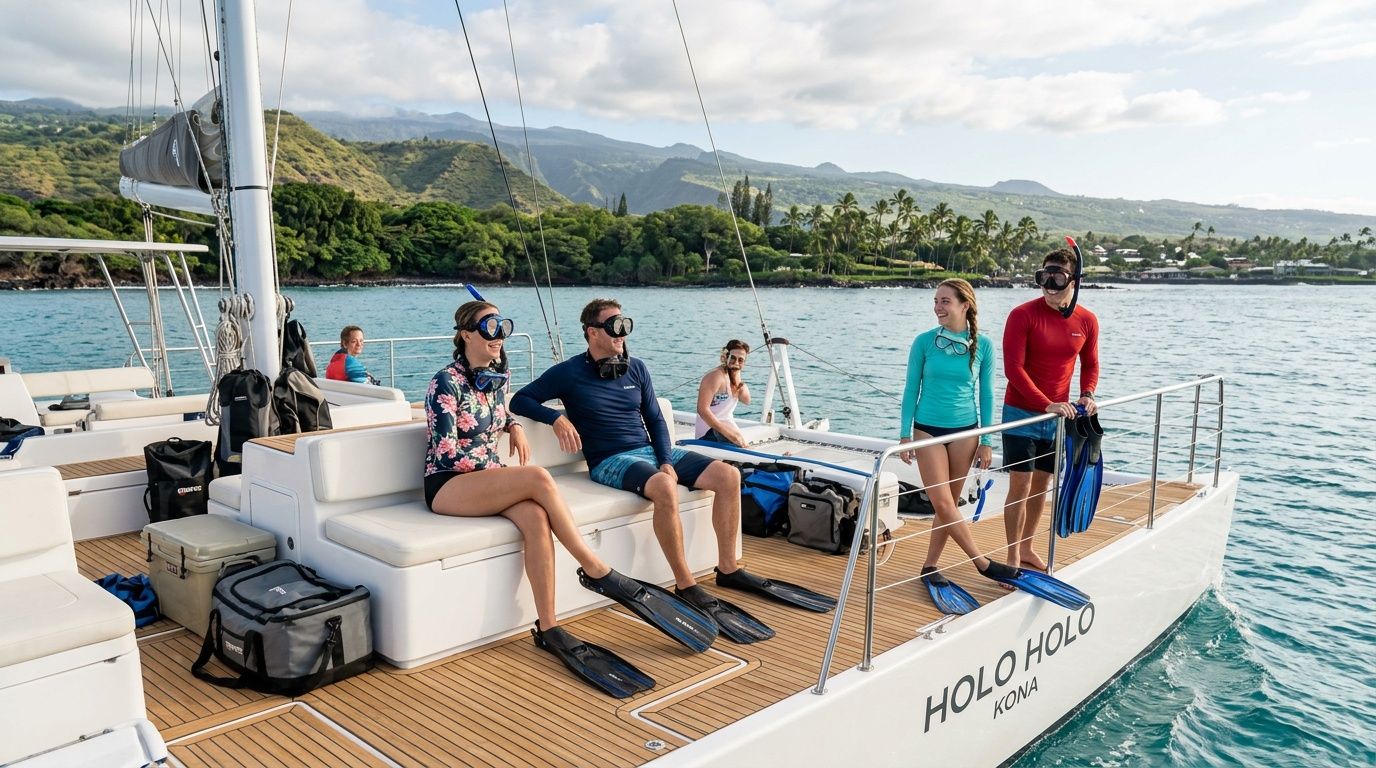
A smaller boat usually gives you more direct contact with the crew, quicker gear help, and less waiting when it is time to get in and out of the water. A larger catamaran often gives you more deck space, a more social atmosphere, and a livelier group energy.
Neither format is automatically right. The right one depends on what kind of morning you want.
If your group includes first-time snorkelers, hesitant swimmers, or anyone who asks a lot of questions, smaller charters usually make the bay easier to enjoy. If your group is already comfortable on the water and mainly wants a fun boat ride with plenty of room to spread out, a larger vessel can fit that goal.
Group size changes the whole rhythm of the trip
This is the detail visitors skip most often.
With fewer guests, the crew has more time for the things that shape your day in practical ways. Mask fitting. Fin adjustments. Calm coaching for someone who has never put their face in the water. Fish identification. Timing the water entry so it feels orderly instead of rushed.
On a fuller boat, even a good crew has to divide attention across more people. That does not make the trip bad. It changes the ratio of guidance to independence.
Guests who want a more guided style often end up happiest on smaller, destination-focused charters. That is one reason operators connected to the Kona Honu Divers and Kona Snorkel Trips style tend to stand out. Their approach generally puts more emphasis on instruction, comfort, and time spent engaging with the reef rather than just transporting guests to it.
If you already compare operators carefully for other ocean activities, the same habits apply here. This guide on how to choose a Kona dive shop mirrors many of the same questions that help you sort strong snorkel charters from average ones.
Look at crew style, not just crew friendliness
A friendly crew is great. A capable crew is what makes the trip work.
Read listings and reviews with one question in mind. Do they describe real support in the water, or just a nice boat ride? Strong crews explain conditions clearly, set expectations before anyone jumps in, and know how to help both confident snorkelers and nervous ones without making either group feel rushed.
That skill is easy to miss when you are booking online.
A good operator usually shows it in small details. Clear safety briefings. Realistic wording about skill levels. Organized gear setup. A crew member who notices a loose mask before it becomes a problem. The best trips feel easy because the crew has done a hundred small things well.
Check the details people tend to skim
This part is less exciting than photos, but it saves more disappointment.
Actual snorkel time
“Half day” can describe very different schedules. Look for how long guests are typically in the water, not just how long the trip lasts from check-in to return.Passenger limits and support level
Some charters keep numbers lower and focus on a more guided atmosphere. As noted earlier in the article, review patterns often reflect that difference.Skill-level wording
“Beginner friendly” should mean more than equipment is included. Look for signs that the crew actively helps with flotation, entry technique, and confidence in the water.Weather and cancellation clarity
Kona conditions can change by the day. Good operators explain what happens if the bay is rough, inaccessible, or unsafe.
Compare trip philosophy, not just marketing language
Readers usually get the most clarity here.
Some tours sell the boat first. Big deck, lots of seating, fun atmosphere. Others sell the in-water experience first. Smaller groups, more attention, more natural history interpretation, and a calmer pace once you reach the monument. If your main goal is to really experience Kealakekua Bay instead of simply visiting it, that second model often delivers more value.
Two examples worth reviewing are Kona Snorkel Trips Kealakekua Bay Captain Cook Monument tour and Captain Cook Snorkeling Tours. They are useful side-by-side references because they show what destination-focused Captain Cook cruises can look like when the bay itself, and the guest experience in it, is the main event.
Preparing for Your Snorkel Adventure
Good preparation fixes most common problems before they start. Sun fatigue, mask discomfort, seasickness, and mismatched expectations are the usual culprits, not the snorkeling itself.
What to bring
You don't need a giant gear bag. Keep it simple.
- Swimsuit worn under your clothes so boarding is easy
- Towel and dry shirt for the ride home
- Reef-safe sun protection because you'll get sun from above and reflected light off the water
- Hat and sunglasses for the boat ride
- Dry bag for phone, keys, and wallet
- Water bottle if your operator allows or encourages one
If you like a little extra comfort, add a rash guard. It helps with sun and reduces that tired, overexposed feeling people get after a long morning on the water.
Seasickness is easier to prevent than fix
Even people who are fine on land can get queasy on a boat. If you're prone to motion sickness, handle it before boarding. This guide on how to avoid seasickness covers the basics well.
Common options people use include Ship-EEZ Seasickness Patch, Dramamine pills, Bonine pills, Sea Band wristbands, and Ginger chews.
Practical rule: Don't wait until the boat is already moving to think about motion sickness. Prevention works better than recovery.
What “all skill levels” really means
This is one of the biggest points of confusion for families. Many tours say they welcome all skill levels, but that phrase can hide important limits. For non-swimmers, participation is typically with a lifejacket and within 10 yards of the boat, according to this explanation of non-swimmer expectations on Captain Cook tours.
That doesn't mean non-swimmers can't enjoy the trip. It means their experience is different from that of confident swimmers who can range farther from the vessel. Parents should know that upfront.
A few smart questions to ask before booking:
- Will a guide help with first water entry
- What flotation options are available
- How are kids and nervous adults supervised
- Can a weak swimmer stay close to the boat and still enjoy the reef
- How much patience does the crew have with beginners
The answers tell you a lot about the operator.
Family mindset beats bravado
The happiest family groups usually don't push everyone to do the same thing. One person may want to snorkel hard and chase every fish. Another may prefer to float with a noodle near the ladder and just look down. Both are valid.
If your group includes kids, grandparents, or hesitant swimmers, say so when you book. Good crews can prepare better when they know who's coming aboard and what support people need.
The Kona Snorkel Trips & Kona Honu Divers Advantage
Once you understand what separates a decent trip from a strong one, the pattern gets easier to spot. The operators that usually leave the best impression are the ones that treat the bay as a place to be interpreted, not just a stop on a route.
Small-group philosophy usually serves this bay better
Kealakekua Bay rewards attention. You notice more when the crew has time to talk with you, fit your gear correctly, and keep the pace calm. That's one reason smaller-format tours tend to appeal to travelers who care about the actual snorkeling, not just the boat ride.
Boat access also solves a practical problem that people sometimes underestimate. Reaching the monument area by alternatives can be tiring and logistically awkward. A professional boat tour keeps your energy for the water, which is exactly where travelers want to spend it.
Crew experience changes the feel of the day
There's a major difference between a crew that transports guests and one that reads the group well. Strong crews can spot anxiety before it becomes a problem, suggest where to enter, explain where the reef drops off, and steer beginners toward the easiest first minutes in the water.
One operator worth looking at in that context is Kona Honu Divers on the Big Island. The company is widely known for scuba operations, and it also runs snorkeling experiences through its snorkel brand. That broader water background can matter if you value organized safety culture and staff who spend a lot of time in the ocean.
For travelers who may also want to dive during their trip, there's a full overview of Big Island diving tours. If you're already certified and looking for a more demanding day on the water, the advanced long-range dive tour is another option from the same company family.
Why many experienced travelers prefer purpose over convenience
The common assumption is that any legal boat to the bay is good enough. That's not how it works in practice. Two tours can visit the same reef and feel completely different based on briefing quality, guest count, ladder design, crew patience, and how the captain manages the site.
The better trip usually gets the small things right:
- Clear pre-water briefing so nobody guesses what to do
- Attention to gear fit because a leaking mask ruins confidence fast
- Measured pace instead of rushing everyone overboard
- Respect for wildlife and reef boundaries so the outing feels responsible
- Crew visibility in the water for guests who want support
That's the kind of trip philosophy many repeat visitors seek.
Frequently Asked Questions About Captain Cook Snorkeling
Is it better to go by boat, kayak, or hike
For many visitors, a boat is the smartest way to reach Captain Cook snorkeling. The bay itself may be the destination, but how you arrive shapes the whole day. A long hike can leave you hot and tired before you even put your face in the water. A kayak trip can be rewarding for experienced paddlers, but it adds planning, physical effort, and weather considerations that many vacationers do not want.
A boat cruise keeps your energy for the part you came for. Snorkeling.
It also gives beginners a more controlled start. You usually get help with gear, an easier entry, and a crew that can watch conditions in real time. That difference matters more than first-time visitors expect.
Are Captain Cook snorkeling cruises good for beginners
Yes, many are, but not all in the same way. Kealakekua Bay often has clear, calm water, which is a good classroom for new snorkelers. The better beginner trip feels a bit like learning to swim with a patient coach instead of being waved toward the deep end.
Look for a crew that explains mask clearing, fin use, and how to float without wasting energy. Ask whether they help guests in the water, not just from the boat. A smaller group often makes that easier, especially if you are nervous or have not snorkeled in ocean conditions before.
Say something when you book. A good crew can prepare for you. A quiet guest who is anxious usually has a harder first ten minutes.
What should families ask before booking
Start with the practical questions. How easy is the ladder to use? Is there shade on board? Do they provide flotation gear that helps a child relax, not just stay afloat?
Then ask about crew style. Families usually do better with operators who are comfortable slowing the pace, fitting gear carefully, and giving kids a minute to settle in. The reef is the same reef, but the experience changes fast when the crew knows how to work with mixed ages and confidence levels.
If someone in your group is not a swimmer, ask exactly what participation looks like. The clearest operators will answer plainly and set realistic expectations.
Will I definitely see turtles or dolphins
No. You are visiting a living bay, not an aquarium.
You are very likely to see plenty of fish, coral structure, and the kind of underwater visibility that makes Captain Cook famous. Turtles, spinner dolphins, and other memorable encounters happen often enough to stay exciting, but they are never on cue. The right way to choose a trip is to value the place first, then enjoy wildlife sightings as a bonus.
That mindset usually leads to a better day on the water.
Why do some tours feel much better than others if they go to the same place
The boat ride is only part of the experience. The primary difference often comes from the operator's habits. Boat design affects how easy it is to board and reboard. Crew training affects how calm beginners feel. Guest count affects how much personal attention you get once everyone is in the water.
Trip philosophy matters too. Some operators focus on moving people through a schedule. Others focus on helping guests settle in, understand the reef, and enjoy the stop at a comfortable pace. That second style is usually what repeat Kona visitors start looking for.
If you want a team that knows Kona waters well above and below the surface, take a look at Kona Honu Divers. They're a solid starting point for visitors who want guided ocean experiences with an experienced crew, whether your trip includes snorkeling, scuba, or both.