
Can you scuba dive with manta rays? Yes, and it's an experience that will absolutely change your life. This isn't just something you see on a nature documentary; it's a real, tangible adventure. You can find yourself face-to-face with gentle giants whose wingspans stretch wider than a car, gliding just inches above your head.
Your Guide to Scuba Diving With Manta Rays
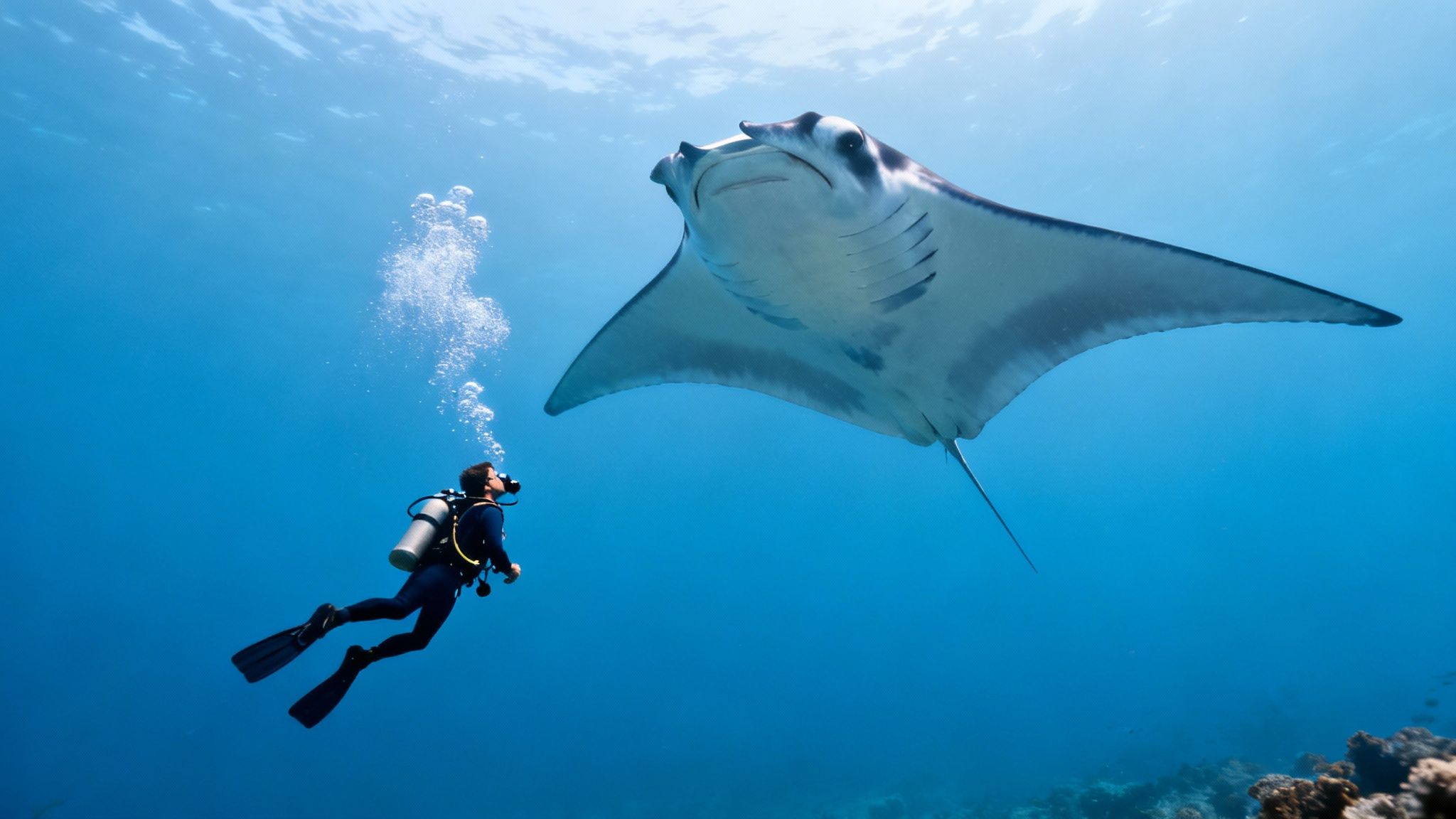
Picture this: you're submerged in the ocean as daylight fades, and then, graceful silhouettes begin to emerge from the deep blue. These magnificent creatures are filter-feeders, completely harmless to people, which makes the whole encounter both thrilling and incredibly peaceful.
This guide is your starting point for everything you need to know, from understanding these animals to joining us on the world-famous Kona Manta Ray Night Dive Tour.
Scuba diving with manta rays has become a bucket-list activity for divers worldwide, and for good reason. There are incredible destinations where you can reliably see these animals. Mantas are among the largest rays in the ocean, with some boasting wingspans up to an astonishing 9 meters (about 30 feet).
Despite their intimidating size, they are gentle and often seem just as curious about us as we are about them. In places like the Maldives, you can witness massive groups of mantas gathering for a plankton feast—a truly spectacular natural event. You can read the full research about these manta ray feeding frenzies to learn more about the science behind it.
The whole adventure is more accessible than you might think. Before we dive deeper, here's a quick look at the essentials.
Manta Ray Dive Quick Facts
| Aspect | Details |
|---|---|
| Is It Possible? | Yes, it's a popular and very safe activity. |
| Are Mantas Dangerous? | No, they are gentle filter-feeders and have no stingers. |
| Required Experience? | Perfect for certified divers of all experience levels. |
| Top Destination? | Kona, Hawaii, is world-famous for its Manta Ray Night Dive. |
Now that you have the basics, let's get into the details. Our goal is to make sure your encounter is as magical and responsible as it can possibly be.
Understanding the Gentle Giants of the Ocean

To really get the most out of a manta ray dive, it helps to see them for what they are: intelligent, complex animals, not just another pretty sight. Each manta has a unique pattern of spots on its belly, which is basically a fingerprint that lets researchers identify and track them throughout their long lives.
When you start to understand these magnificent creatures, a simple dive trip turns into a genuine connection. Knowing their habits helps you anticipate their movements and truly appreciate the graceful underwater ballet unfolding before you.
Manta Ray Behaviors and Biology
There are two main types of mantas you might encounter. The smaller reef mantas tend to hang out closer to shore, while the colossal giant oceanic mantas prefer to roam the open ocean.
Both are filter-feeders, meaning they glide through the water with their mouths wide open, scooping up massive amounts of microscopic plankton. This diet underscores the critical importance of live plankton to their very survival.
Keep an eye out for these incredible behaviors on your dive:
- Barrel-Rolling: This is a spectacular feeding move where mantas do somersaults through thick clouds of plankton to get a bigger mouthful.
- Visiting 'Cleaning Stations': Think of these as underwater spas. Smaller fish gather here to pick parasites off the mantas' skin—a win-win for everyone involved.
- Social Gliding: It’s common to see mantas swimming in "trains," gracefully following each other in a single file line.
A lot of people get manta rays mixed up with their cousins, the stingrays, but there’s a key difference. Manta rays are completely harmless to people and don’t have a stinger. We break this down further in our guide on whether manta rays can sting you.
While we get to see them near the surface, there's so much more to their world. Research has shown that oceanic manta rays are capable of extreme deep dives, plunging more than 1,200 meters (about 3,937 feet)! It's believed they do this to help them navigate across the vast, open ocean. It just goes to show how much is still left to discover about these amazing animals.
Why Kona, Hawaii is the World’s Best Spot for Manta Rays
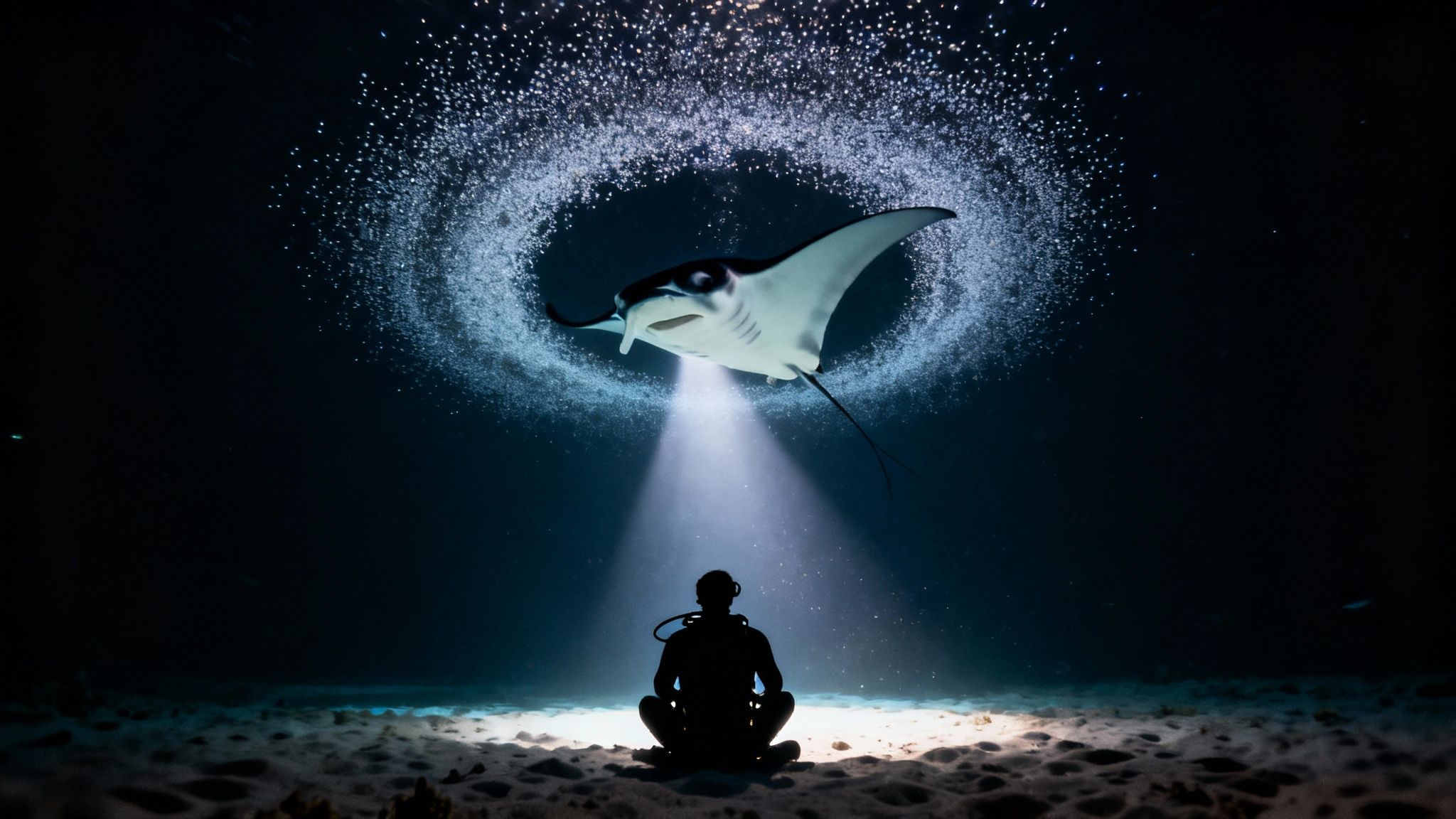
You can find manta rays in a handful of incredible places around the world, but Kona is in a class of its own. It’s hands-down the most reliable and awe-inspiring place on the planet for a manta encounter. What’s the secret? It’s a brilliant, yet simple, setup that comes to life after the sun goes down.
It all boils down to a bit of clever science. We place powerful, eco-friendly lights on the ocean floor, aiming the beams straight up to the surface. These lights act like magnets for plankton—the manta's favorite meal—creating a massive, glowing buffet in the water. The local manta population knows this and returns almost every single night to feast.
This unique feeding ground transforms the ocean into a theater for one of nature’s most breathtaking ballets. As a diver, you get a front-row seat on the sandy bottom, looking up as these gentle giants glide and perform mesmerizing barrel rolls just inches overhead.
Why The Dive Site Matters
Here in Kona, there are a couple of go-to spots for the manta dive, but Garden Eel Cove is unquestionably the superior choice. Because it’s tucked inside a protected bay, the conditions are much calmer and more predictable, which is a huge plus when you’re diving at night.
The seafloor at Garden Eel Cove is also perfectly shaped for the show. It forms a natural amphitheater, creating a better viewing area that gives every diver an amazing, unobstructed view. It's not just a better and safer place to watch the mantas; the site is also home to better reefs that are healthier and more vibrant than other locations.
Choosing the right location is everything. The protected waters, better viewing area, and healthier reefs of Garden Eel Cove make it the most comfortable, reliable, and visually stunning option for the manta ray dive tour.
As Kona's top-rated and most-reviewed dive company, we at Kona Honu Divers have this adventure down to a science. We are committed to making sure every diver has a safe, unforgettable, and downright magical night, which is why we only run our manta tours at Garden Eel Cove.
But you don't have to take our word for it. See what fellow divers have said about their experience with us.
Ready to see the underwater ballet for yourself? Our Manta Ray Night Dive Tour is truly a once-in-a-lifetime experience.
The Manta Ray Diver’s Code of Conduct
Diving with manta rays is an incredible privilege. When we enter the water, we’re not just visitors; we’re guests in their home. The whole experience hinges on a shared responsibility to protect these gentle giants and their delicate ecosystem.
It all boils down to one simple idea: passive observation. Imagine you're a quiet spectator at a magnificent natural ballet. The less you interfere, the more authentic and magical the show becomes. When we follow the rules, we get better, longer, and more natural encounters. It's a win-win.
Rules for a Respectful Encounter
How you act in the water has a direct impact on the mantas. The absolute number one, most important rule is to never, ever touch a manta ray. They have a thin, slimy coating that acts like their immune system, protecting them from bad bacteria. Touching them strips this layer away and can leave them susceptible to serious, life-threatening infections.
To keep the dive safe and unforgettable for everyone (mantas included!), stick to these core guidelines:
- Stay Low: Divers should remain on or near the sandy bottom. This leaves the water column wide open for the mantas to gracefully swoop in and feed above you.
- Lights Up: Your dive light is a plankton magnet, and plankton is what mantas eat. Always aim your light straight up toward the surface, creating a beautiful column of food that draws them in.
- Hands Off the Reef: Good buoyancy is key. The dive site is a living environment, so make sure you avoid making any contact with the fragile coral or other marine life.
- Let Them Approach You: Never chase a manta or swim into its path. If you stay still and calm, their natural curiosity often takes over, leading to breathtakingly close passes.
Research has shown time and again that our behavior makes a huge difference. Divers who stay calm and keep their distance get to witness mantas behaving naturally. But when divers are too active or aggressive, it can stress the animals and cause them to leave the area entirely.
Following this code of conduct isn't just about a single dive; it's about making sure Kona's manta population stays healthy and thriving for years to come. For a more comprehensive look at being a mindful diver, check out our guide on responsible and considerate diver etiquette.
What to Expect on Your Kona Manta Ray Dive
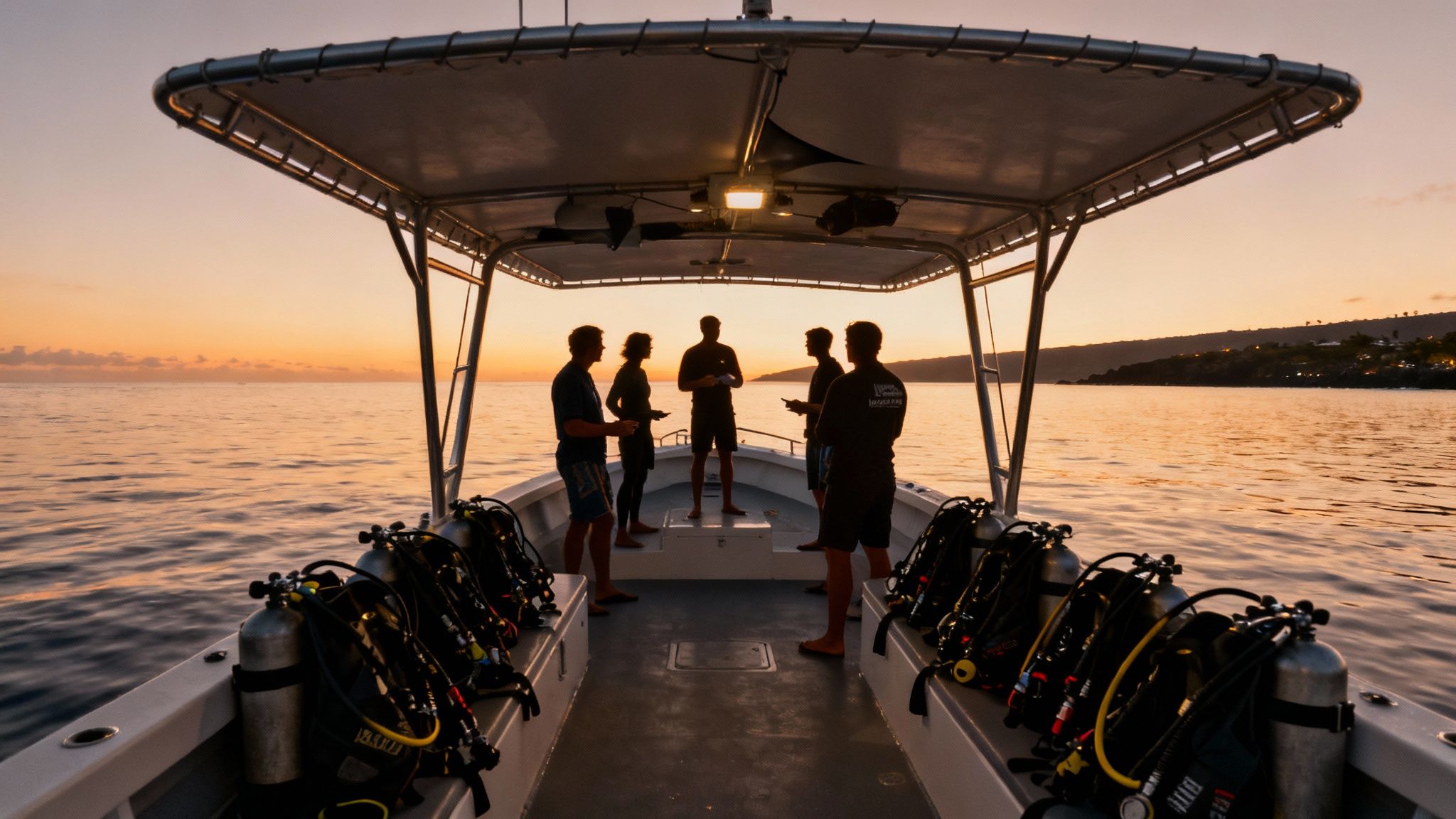
So you're ready to take the plunge. Awesome. Let me walk you through what a manta ray dive with Kona Honu Divers is really like, from the moment you step on the boat to the second you surface with a grin you can't wipe off your face.
It all starts with a beautiful sunset cruise along the Kona coast. As the sky puts on a show, our guides will give you the full rundown. This isn’t just a boring safety brief; we’ll share some incredible stories about the local manta rays we know by name and cover everything you need to feel confident and ready for the main event.
Entering the Manta Theater
When we arrive at the world-famous Garden Eel Cove, it's time to gear up and slip into the water. Your guide will lead the group down to a spot on the sandy ocean floor. It's surprisingly shallow, which is perfect for this experience. If you want the exact numbers, we have a whole article explaining how deep the Kona manta ray dive is.
We call this spot the "manta campfire." We set up a powerful light that illuminates the water, attracting clouds of plankton—the mantas' favorite meal. You and your group will find a comfortable spot, settle in, and then the magic begins.
One by one, the stars of our show will appear. These gentle giants swoop in, gliding effortlessly through the light beams and performing barrel rolls sometimes just inches above your head. It’s a surreal experience—the only sounds are the bubbles from your regulator and the silent, majestic ballet of the mantas. Trust me, it's a front-row seat to one of the greatest shows on Earth.
And for our seasoned divers craving more adventure after dark, Kona is also home to the legendary Kona blackwater dive. We also offer other advanced charters for those looking to explore the deeper, wilder side of the Pacific.
Your Manta Ray Dive Questions Answered
It's completely normal to have questions before you book a once-in-a-lifetime adventure like this. Let's run through some of the most common things people ask so you can feel totally ready for your dive.
Do I Need to Be an Advanced Scuba Diver?
Absolutely not. One of the best parts about the Kona Manta Ray Night Dive is that it's open to any certified diver. It’s a pretty shallow dive, usually only about 30-40 feet, and you’ll be stationary on a sandy patch of the seafloor. This makes for a super relaxed and controlled experience for everyone.
Our professional guides give a detailed briefing before we even get in the water, and they’re right there with you the whole time to make sure you're safe and comfortable. And hey, if you aren't certified to dive, you can still come along and experience the magic as a snorkeler!
Is Diving With Manta Rays at Night Safe?
Yes, it's incredibly safe. Your well-being is our number one priority, period. We run our diving tours at a spot called Garden Eel Cove, which is well-known for being calm and protected from any rough currents or surge.
We also bring some seriously powerful underwater lights that create a massive, well-lit area. It's more like being in an underwater stadium than a dark, spooky dive. Plus, all our dives are led by experienced guides who know this site and the mantas' behavior inside and out, and they stick to the strictest safety standards.
When Is the Best Time of Year to See Manta Rays in Kona?
This is the great news: any time is a good time! Kona is home to a resident population of manta rays that don't migrate, so they're here all year long. This gives us a sighting success rate of over 90% no matter when you visit.
What Should I Bring on the Dive Tour?
We've got you covered with all the necessary scuba gear, so you don't have to lug your own. Just focus on bringing a few personal items to make your trip more comfortable.
- Your scuba certification card
- A swimsuit (to wear under the wetsuit we provide)
- A towel for when you get out of the water
- A warm jacket or sweatshirt for the boat ride home—it can get a bit chilly!
Feel free to bring an underwater camera, but just be mindful of our guidelines on using flash. We want to keep the experience as natural and unintrusive for the mantas as possible.