
Yes, you can absolutely scuba dive with manta rays!
It’s more than just possible—for many divers, it's a pinnacle experience, the kind of underwater moment you talk about for years. These gentle giants, often called "sea angels," are incredibly curious and graceful, making any encounter with them completely unforgettable.
An Unforgettable Underwater Ballet
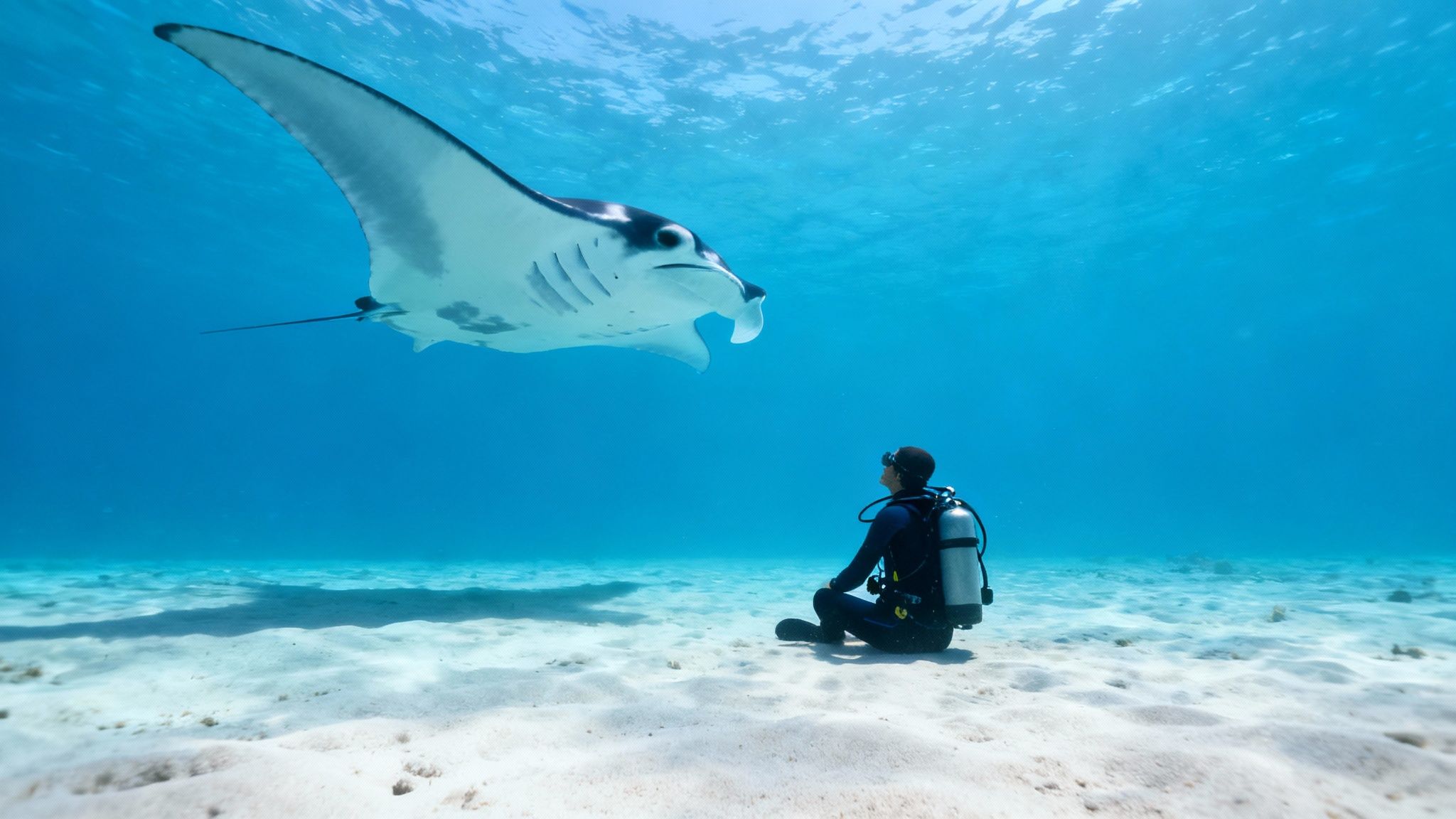
Picture this: you’re kneeling on the sandy ocean floor, and a creature the size of a small car glides effortlessly just inches above your head. That's not a scene from a movie; it's what happens on a manta dive. Getting in the water with them offers a perspective that snorkeling or boat-watching just can't touch. You're literally a guest in their world.
Despite their immense size, manta rays are completely harmless to people. They are filter feeders, dining on microscopic plankton, and they lack the dangerous stingers their stingray cousins are known for. Their calm, inquisitive nature is what makes close encounters so special—they often seem just as curious about us as we are about them.
What to Expect From This Guide
Think of this article as your all-in-one playbook for planning the ultimate manta ray dive. We're going to cover everything you need to know to turn this bucket-list dream into a reality.
Here's what we'll dive into:
- Top Global Hotspots: We’ll uncover the world's best places for manta sightings, with a deep dive into the legendary night dive in Kona, Hawaii.
- Safety and Etiquette: You'll learn the crucial do's and don'ts for a safe and respectful interaction that protects both you and the mantas.
- Finding the Right Dive Operator: We'll show you what to look for in a dive company to ensure your trip is both responsible and amazing.
- Essential Diver Info: Get clear answers on certification levels, necessary gear, and the best time of year to plan your trip.
For divers looking to explore other types of underwater adventures, you can find information on things like the general scuba diving activities in Malvan. This guide, however, is laser-focused on the unique thrill of diving alongside the ocean’s most majestic gliders.
Let’s get you ready for an adventure you’ll never forget.
Understanding The Gentle Giants of The Ocean
There's something truly special about sharing the water with manta rays. To go from seeing them on a screen to watching one glide just inches above your head is an experience that stays with you. Before you take the plunge, getting to know these magnificent creatures a little better will make your encounter that much more profound.
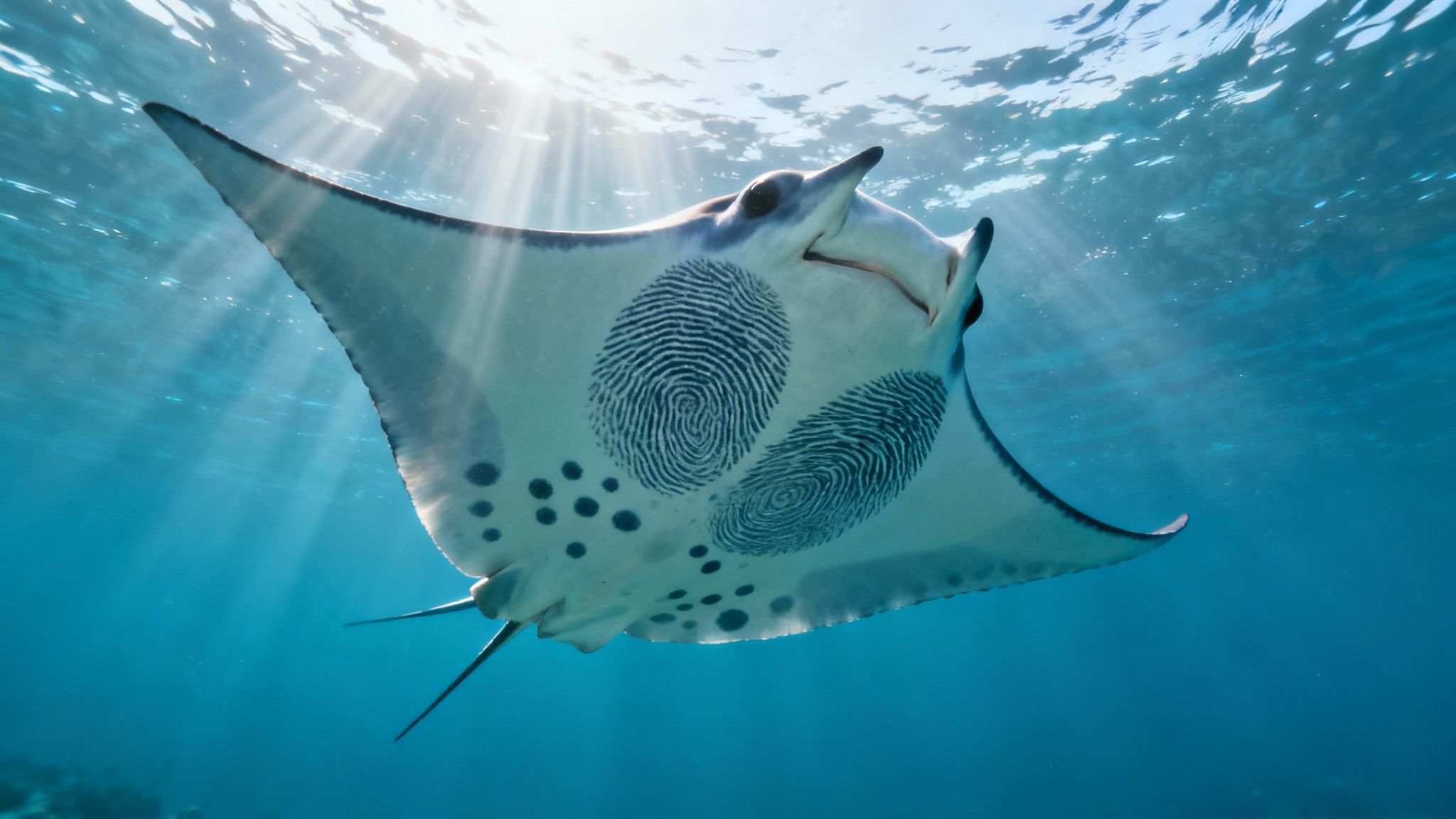
Think of the unique spot patterns on a manta's belly as its personal fingerprint. Seriously, no two are the same. This is a game-changer for researchers, who use these patterns to identify and track individual mantas over their entire lives. It's a non-invasive way to learn everything from their travel habits to their social lives.
This isn't just a local project, either. It’s a huge global effort. Divers like you and me can submit photos to worldwide databases, contributing to a massive catalog of manta rays. Thanks to years of this citizen science, especially in Hawaii, we have incredible insights into their populations and why they show up where they do. We even know how their visits correlate with the phases of the moon. If you're curious, you can learn more about how simple photos help track manta ray populations worldwide.
Two Main Types of Manta Rays
While you're out there, you'll likely run into one of two main species. Knowing which one you're looking at just adds another layer to the experience.
- Reef Manta (Mobula alfredi): This is the star of the show on most coastal dives, including the legendary Kona night dive. They’re a bit smaller, with an average wingspan of 11 feet (3.5 meters), and prefer to hang out in shallower, coastal waters.
- Giant Oceanic Manta (Mobula birostris): These guys are the true titans of the sea. True to their name, they can reach a staggering wingspan of up to 23 feet (7 meters)! They're more of a migrating, open-ocean species, so you'll usually find them in deeper waters.
Intelligent Filter Feeders
Don't let their size fool you; manta rays are incredibly intelligent. In fact, they have the largest brain-to-body size ratio of any cold-blooded fish. They aren't aggressive hunters, but gentle filter feeders. You'll see them gliding effortlessly with their mouths wide open, using specialized gill rakers to scoop up tiny zooplankton from the water.
You know those beautiful barrel rolls and looping glides they do? That’s not just for show. It’s a highly efficient feeding strategy that keeps them right in the thick of a plankton patch, getting the most food out of every pass.
This feeding behavior is exactly what makes the Kona manta ray night dive so unbelievably cool. Our powerful dive lights attract a massive cloud of plankton to one spot. This, in turn, creates an all-you-can-eat buffet that draws the mantas in for a nightly underwater ballet.
When you understand this simple relationship, the dive becomes so much more than just a pretty sight. It’s a front-row seat to a brilliant natural spectacle, and being in the know makes the whole experience far more meaningful.
Finding The World’s Best Manta Ray Dive Hotspots
Every diver dreams of that magical moment, sharing the water with a manta ray. But if you want to turn that dream into a reality, you need to know where to look. These gentle giants don't just hang out anywhere; they gather in specific spots around the world, creating legendary hotspots for divers in the know.
Sure, you can find incredible manta encounters all over the globe. The Maldives are famous for their cleaning stations where mantas line up for a spa day. Socorro Island, way out in the Pacific off Mexico, is a wild, remote paradise for giant oceanic mantas. And you can’t forget Indonesia, where places like Raja Ampat and Komodo National Park offer stunning dives with both reef and oceanic species. Each one is an adventure in its own right.
But if you’re looking for the single most reliable, jaw-dropping manta ray experience on the planet, one place consistently delivers like no other: Kona, Hawaii. Hands down, it's the top spot for a guaranteed manta encounter.
Why Kona Is a Manta Ray Magnet
So, what’s the secret behind Kona's magic? It's a brilliant combination of biology and a little human ingenuity. The key ingredient is plankton, the tiny organisms that make up a manta's favorite meal. Years ago, someone figured out that shining bright lights into the ocean at night attracts a massive swarm of plankton.
Think of it as a dinner bell. This concentrated cloud of plankton becomes an all-you-can-eat buffet that the local reef mantas simply can't resist. What follows is a nightly spectacle, a breathtaking underwater ballet where mantas swoop, glide, and perform graceful barrel rolls right in front of your eyes as they feast.
This nightly feeding frenzy has turned the Kona manta dive into a true bucket-list experience. The Kona coast is so famous for its consistent sightings that its legendary sites draw around 80,000 people every year for manta ray tours. That's not just a dive; it's a phenomenon.
Kona’s Iconic Dive Sites
On the Big Island, a few key spots have become natural "amphitheaters" for watching the nightly manta show.
-
Manta Village (Keauhou Bay): This is the original, the classic. Located just offshore from a hotel whose lights first attracted the mantas decades ago, it’s a time-tested site. Its shallow, sandy bottom makes it perfect for divers of every experience level.
-
Manta Heaven (Garden Eel Cove): Found a little further north, this site often hosts even larger groups of mantas. The underwater landscape is a bit different, but the show is every bit as spectacular. It's another world-class stage for the nightly feast.
These aren't just random dive sites; they're incredibly reliable natural aquariums. The consistent plankton, the unique volcanic geography, and the dedicated efforts to protect this environment have created the perfect home for a healthy, resident manta population. To get a feel for which spot is right for you, check out our deep dive on where is the best place to dive with manta rays. Knowing the little differences can help you plan the perfect scuba diving tours on the Big Island.
Experiencing The Famous Kona Manta Ray Night Dive
Diving with manta rays is an incredible experience on its own. But the world-famous Kona manta ray night dive? That's an adventure on a completely different level. It’s less of a dive and more of an underwater ballet, a perfectly choreographed spectacle of gentle giants and light that feels like stepping onto another planet.
The whole thing kicks off as the sun dips below the horizon, setting the Hawaiian sky ablaze with color. On the boat, your divemaster runs through the plan, explaining the dive and the simple, crucial rules of passive observation. You can feel the excitement building as you gear up and back-roll into the warm Pacific, just as the last bit of twilight vanishes.
The Underwater Amphitheater
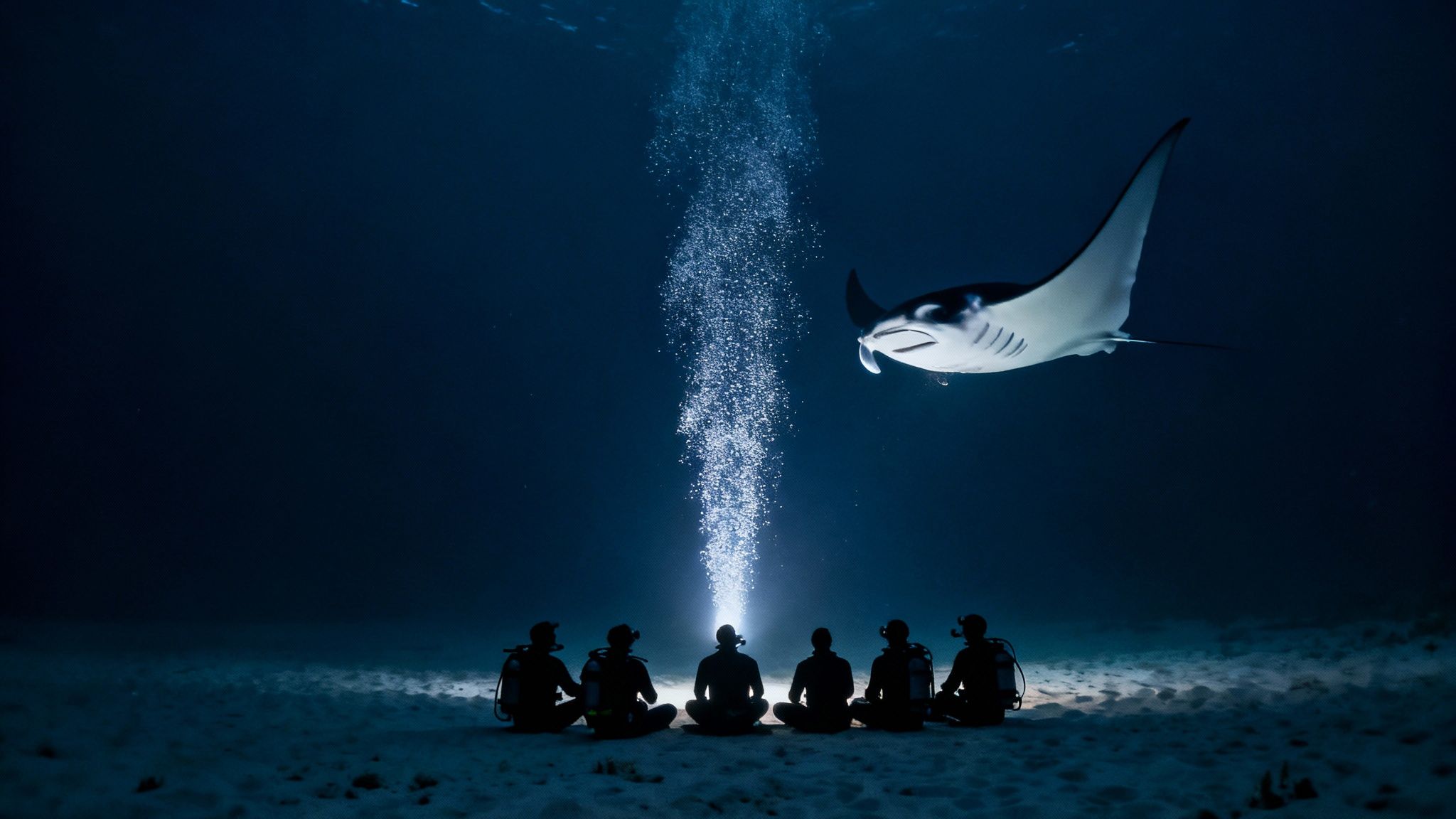
Your destination is a specific spot on the sandy ocean floor, usually no deeper than 30-40 feet. Once you're down, the divers arrange themselves into a semi-circle, almost like an underwater amphitheater. When everyone is settled and comfortable, the real show is ready to begin.
This is where the magic happens. Powerful dive lights are turned on, all pointing straight up into the water column. This powerful beam of light acts like a magnet, immediately attracting a thick, swirling cloud of microscopic plankton. You’ve basically just set the table for a world-class buffet, and the guests of honor are on their way.
You wait in the quiet darkness, the anticipation hanging in the water. Then, a shadow emerges from the deep blue. A massive, graceful shape glides effortlessly into the light. Before you know it, another one joins, and then another.
It's a surreal experience. These colossal creatures, with wingspans stretching up to 12 feet, perform mesmerizing barrel rolls just inches above your head. They swoop and glide, their huge mouths wide open to filter-feed on the plankton, completely unfazed by their captivated audience below.
Choosing Your Guide for This Bucket-List Dive
For an encounter this special, the dive operator you choose makes all the difference. You need a team that puts safety first, respects the mantas' well-being, and delivers an incredible experience. Kona Honu Divers has built a stellar reputation for doing exactly that, focusing on small groups and a conservation-first mindset. Their seasoned crew makes sure every diver is comfortable and ready for this unforgettable show.
After about 45 minutes of pure, jaw-dropping awe, it’s time to head back up, leaving the mantas to their nightly feast. The ride back to the boat is always filled with the excited chatter of divers trying to put words to what they just witnessed. It's a bucket-list dive that every certified diver should have on their list.
To get a full picture of what this adventure entails, you can learn more about the specifics of the Kona manta dive and book your own manta ray dive tour.
How To Be A Responsible Manta Ray Diver
A truly unforgettable manta ray encounter isn't just about getting a great view; it's about making sure the experience is safe and respectful for these incredible animals. When you scuba dive with manta rays, you’re a guest in their home. Being a good one is the only way to protect them for future generations.
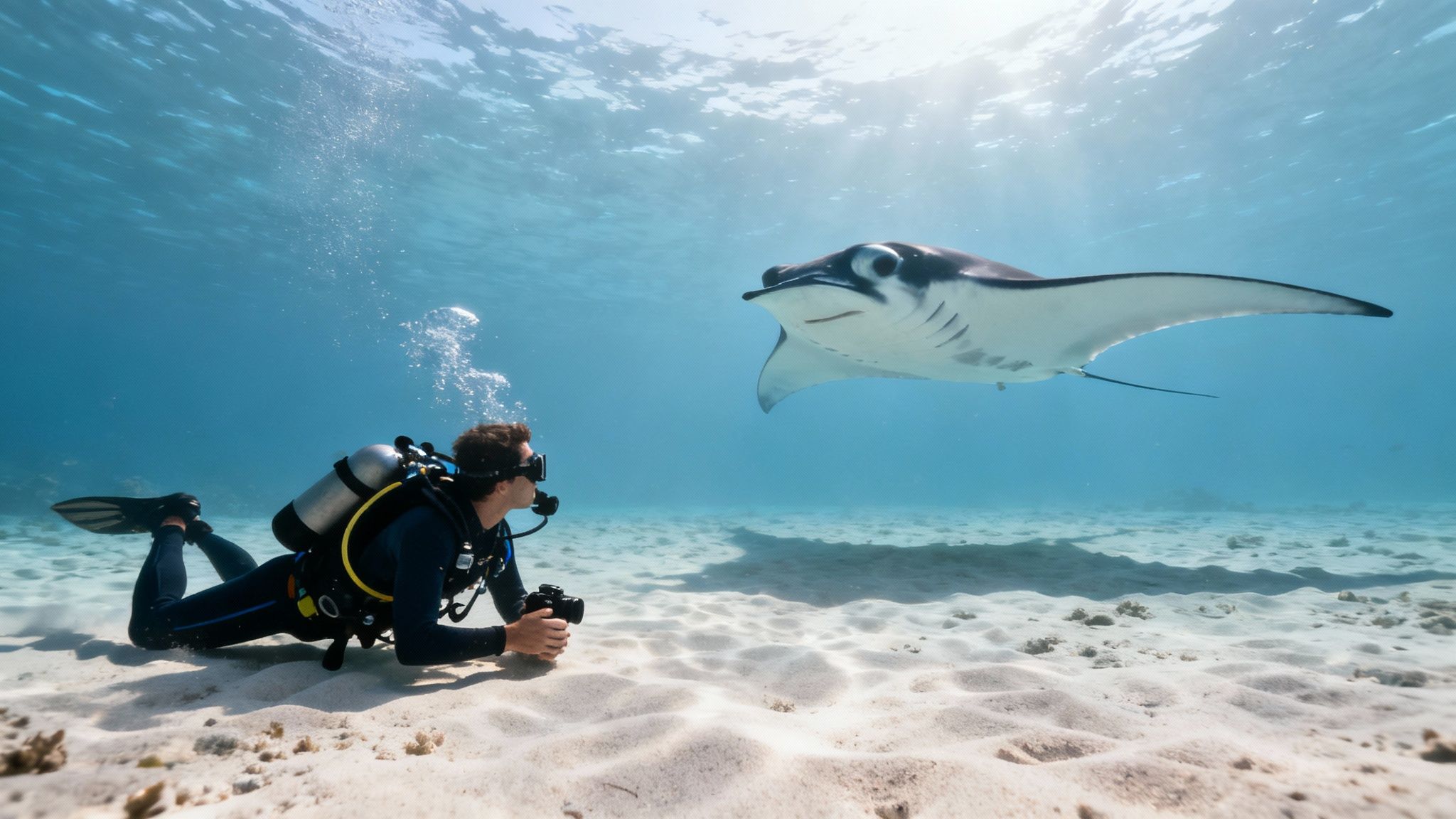
The cornerstone of every ethical manta dive is passive observation. This is a simple but absolute rule: you are there to watch, not to interact. Think of yourself as a visitor to a living museum where the exhibits are priceless, alive, and free to come and go as they please.
This simple philosophy leads to a few clear guidelines that every responsible diver needs to live by.
The Golden Rules of Manta Ray Diving
To keep the mantas safe and comfortable, professional tours operate under a strict code of conduct. Following these rules isn't optional—it's essential for preserving this incredible natural wonder.
- Observe Only, Never Touch: Manta rays have a protective mucus layer that acts like a shield against bad bacteria. Touching them, no matter how gently, can rub off this coating and make them susceptible to infections. You have to resist the urge to "pet" them, even when they glide right over your head.
- Don't Chase or Block: Never swim after a manta ray or get in its way. Let the mantas control the entire encounter and move freely. Chasing them not only causes stress but can scare them away from their vital feeding grounds.
- Stay Low on the Seafloor: When you're on the dive, you should stay on or very near the sandy bottom. This leaves the whole water column above you wide open for the mantas to swoop, turn, and feed without having to dodge divers. It's their space; we're just there to watch the show.
The goal is to become part of the environment, not an obstacle within it. By staying still and low, you allow the mantas to feel comfortable, which often leads to much closer and more spectacular encounters.
Master Your Buoyancy
Great buoyancy control is more than just a good diving skill; it’s a non-negotiable part of a responsible manta dive. If you're flailing around, you risk accidentally bumping into a manta or stirring up the bottom, which can damage the delicate marine life.
Practice holding your position so you can hover effortlessly, without kicking up sand or drifting into a manta's path. Ultimately, being a great diver means being a considerate one. For a deeper dive into underwater best practices, check out our guide to being a responsible and considerate diver.
The most important decision you'll make is choosing a reputable operator that takes these guidelines seriously. This ensures your incredible experience also helps protect these gentle giants for the long run.
Frequently Asked Questions About Manta Ray Dives
Even with all the excitement building up, it’s completely normal to have a few questions before you commit to a trip. Let’s clear up some of the most common ones so you can feel confident and ready for an unforgettable underwater experience.
What Scuba Certification Level Do I Need?
You'll be happy to know that most manta ray dives are well within reach for Open Water certified divers. This definitely includes the world-famous Kona night dive.
The dive sites are surprisingly shallow, usually around 30-40 feet (9-12 meters). Since you'll be settled on the ocean floor for most of the dive, just watching the show above, you don't need advanced navigation skills or any complex technical abilities.
Is A Manta Ray Sighting Guaranteed?
Here’s the deal: Kona has an incredible track record, with a success rate that’s often over 90%. But at the end of the day, these are wild animals, and nobody can ever promise a 100% guarantee.
Reputable dive shops are upfront about this. Many will even offer you a free spot on another night's dive if the mantas decide not to show. My advice? Try to schedule your manta dive early in your vacation—that way, you have a backup window if you need to rebook.
What Is The Best Time Of Year To Go?
This is one of the best parts about planning to scuba dive with manta rays in Kona—it’s a fantastic year-round adventure! The local reef mantas are residents, not tourists. They stick around all year, so you have a great chance of seeing them no matter when you visit.
The water temperature and visibility stay consistently great, so feel free to book your trip for whatever season works best for you.
Should I Scuba Dive Or Snorkel With Manta Rays?
Both are amazing options, but they offer completely different perspectives.
-
Snorkeling: You'll be floating on the surface, looking down at the action as the mantas swoop and feed below. It’s a great view, for sure.
-
Scuba Diving: This puts you right on the ocean floor, giving you a breathtaking, upward-facing view. Imagine these gentle giants gliding just inches over your head.
For most people, the scuba experience feels far more intimate. It’s like having a front-row seat for an incredible underwater ballet.