
Ever wondered if you can just show up in Hawaii and go scuba diving? It's a question we get all the time, and the short answer is yes… but with some pretty big asterisks.
Think of it like a tandem skydive. You wouldn't be handed a parachute and pushed out of a plane on your own for your first jump, right? Instead, you're strapped to an expert who handles all the complicated stuff. That’s exactly what an introductory scuba experience, often called a Discover Scuba Dive, is like. You get to experience the incredible feeling of breathing underwater while a professional instructor manages the gear and guides you every step of the way.
The Quick Answer: Yes, But With Important Limits
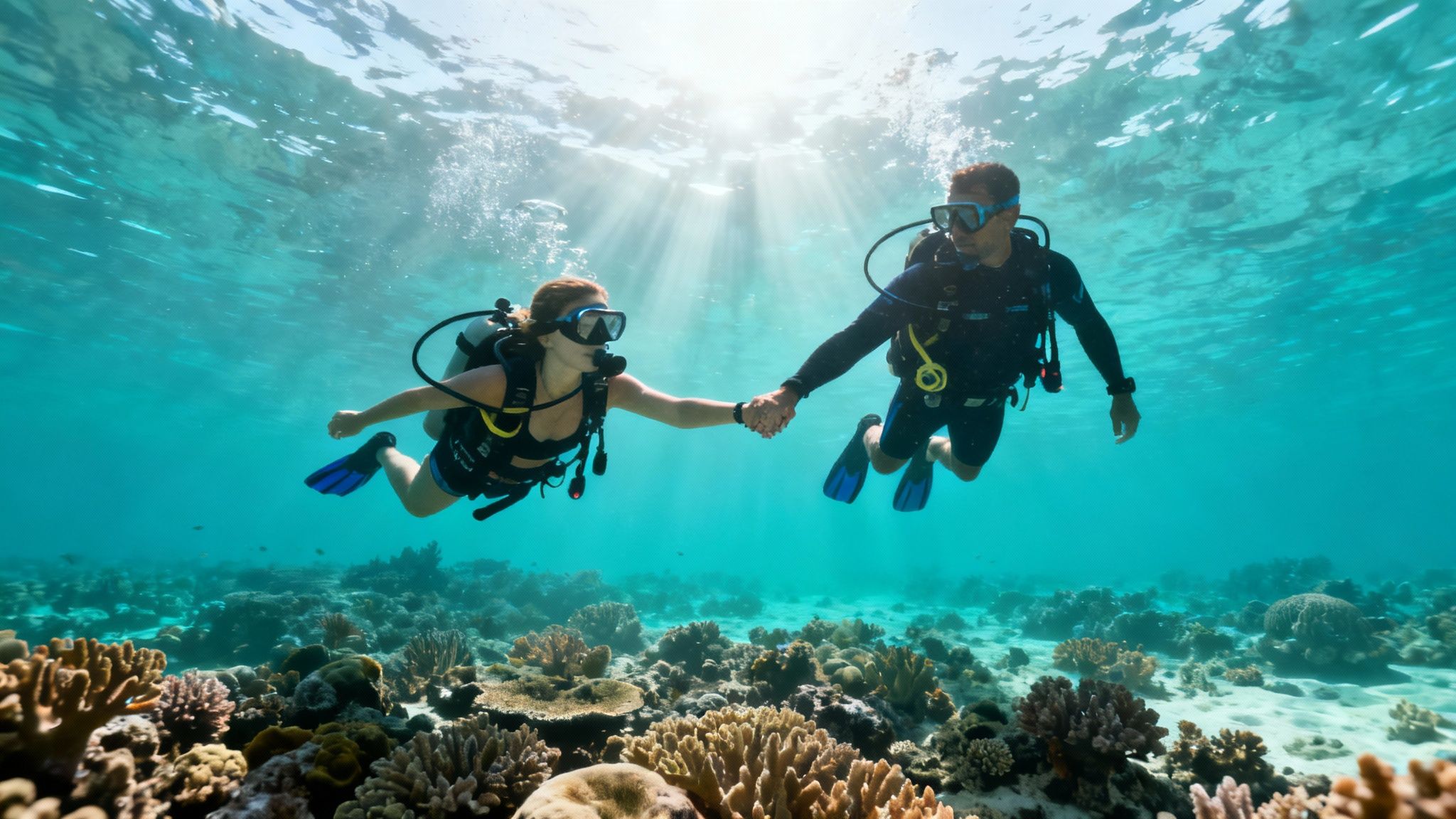
So while you can get in the water, it's crucial to understand the built-in safety limits. This isn't a free pass to explore the ocean on your own terms. An introductory dive is a carefully curated taste of the full scuba experience, always under the direct, arm's-length supervision of a certified instructor.
This is the key difference between a discovery dive and being a certified diver. Without certification, you can't just rent a tank and some gear, hop on a dive boat with your buddy, and go exploring. The entire experience is managed for you, keeping you in shallow, calm waters—typically no deeper than 40 feet (12 meters).
How An Introductory Dive Works
These beginner programs aren't just thrown together; they follow strict global standards to keep everyone safe. The world’s biggest scuba training agency, the Professional Association of Diving Instructors (PADI), has set the gold standard for these experiences. Since 1966, they’ve certified over 28 million divers, and their safety protocols are followed by every reputable dive shop in a world-class destination like Hawaii.
The whole point of a "scuba for beginners" dive is to let you see if you love it. You get to feel the absolute magic of breathing underwater and come face-to-face with Hawaii's incredible marine life without having to commit to a multi-day certification course. It’s the perfect way to, quite literally, test the waters. If you're wondering what a day like this looks like, you can learn more about the Discover Scuba Dive program in Kona.
To really understand the difference, let's break down what's possible with and without that certification card.
Diving in Hawaii: Certified vs Non-Certified Experience
This table lays out the core differences between taking the plunge on an introductory dive versus diving as a fully certified diver. It's all about the level of freedom, responsibility, and access you have.
| Feature | Without Certification (Introductory Dive) | With Certification |
|---|---|---|
| Supervision | Constant, direct supervision by an instructor | Can dive independently with a certified buddy |
| Maximum Depth | Typically limited to 40 feet (12 meters) | Can dive to 60 feet (18 meters) or deeper |
| Gear Rental | Not permitted to rent gear independently | Can rent tanks and equipment worldwide |
| Dive Site Access | Limited to specific, easy-to-access sites | Access to a wide range of dive sites, including advanced ones |
| Dive Planning | Instructor handles all planning and navigation | Responsible for your own dive planning and safety |
Ultimately, a Discover Scuba Dive is an amazing and safe introduction to the underwater world. A full certification, on the other hand, is your passport to a lifetime of underwater adventure, giving you the skills and knowledge to explore independently.
Your First Underwater Breath: What to Expect
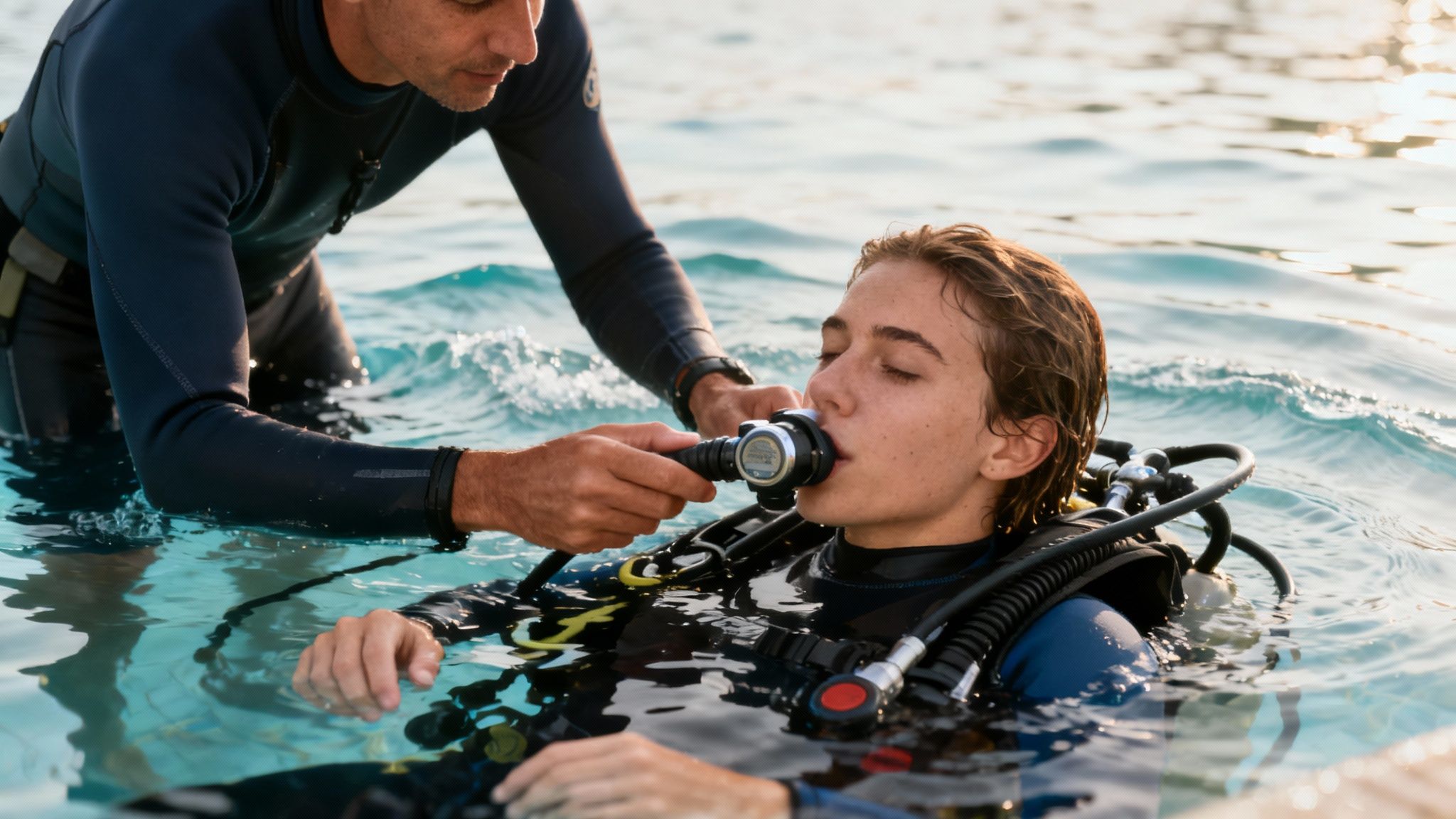
The thought of taking your first breath underwater is a wild one—a mix of pure excitement and a little bit of mystery. So, what’s it really like to do an introductory scuba dive in Hawaii? Let me tell you, it's designed from the ground up to be safe, surprisingly simple, and an absolute blast.
Your adventure doesn’t start by jumping off a boat into the deep blue. It begins on solid ground with a clear and friendly briefing. Your instructor will walk you through the essential rules of diving, show you how all the gear works in a way that makes sense, and teach you a few simple hand signals to communicate. This whole step is about making you feel confident before you even get your hair wet.
From Shallow Practice to Open Water Wonder
Next up, you’ll head into calm, shallow water where you can comfortably stand. This is where the magic happens: you'll take that first breath through your regulator. It feels a little strange for a second, then amazing. Your instructor will be right there, guiding you through a couple of basic skills, like how to clear a little water from your mask. This practice run is crucial—it makes you feel totally at ease with the gear and the new sensation of breathing underwater.
Once you’ve got the hang of it, it’s time for the main event. You and your instructor will slowly descend into Hawaii’s incredible underwater world. They handle everything—the navigation, your air supply, all of it. Your only job? To breathe, relax, and take in the stunning views of vibrant coral and fish that seem just as curious about you. For a firsthand account of this experience, check out this story about my first scuba dive in Hawaii.
Safety and Depth: The Perfect Balance
So, how deep do you actually go on one of these dives? For your safety, introductory dives are always kept in shallow water. This isn’t just a local rule; it’s a global standard. PADI, the world's leading scuba training agency, sets the limit for these "Discover Scuba Diving" experiences at a maximum depth of 12 meters (40 feet).
This isn’t a suggestion—it’s a strict rule that requires constant, direct supervision from a pro. It’s also why you can’t rent your own gear or hop on a boat with certified divers. It’s all about creating a safe, controlled environment for your first time.
The whole point of a discovery dive is to show you that with the right gear and expert guidance, you can safely explore a world you've only dreamed of. It's about empowerment, not just a lesson.
This carefully chosen depth is the sweet spot. It’s deep enough to surround you with spectacular marine life but shallow enough to keep things safe, bright, and comfortable. With your instructor acting as your personal underwater guide, the dive becomes a true exploration, not just a test.
Choosing the Best Introductory Dive in Kona
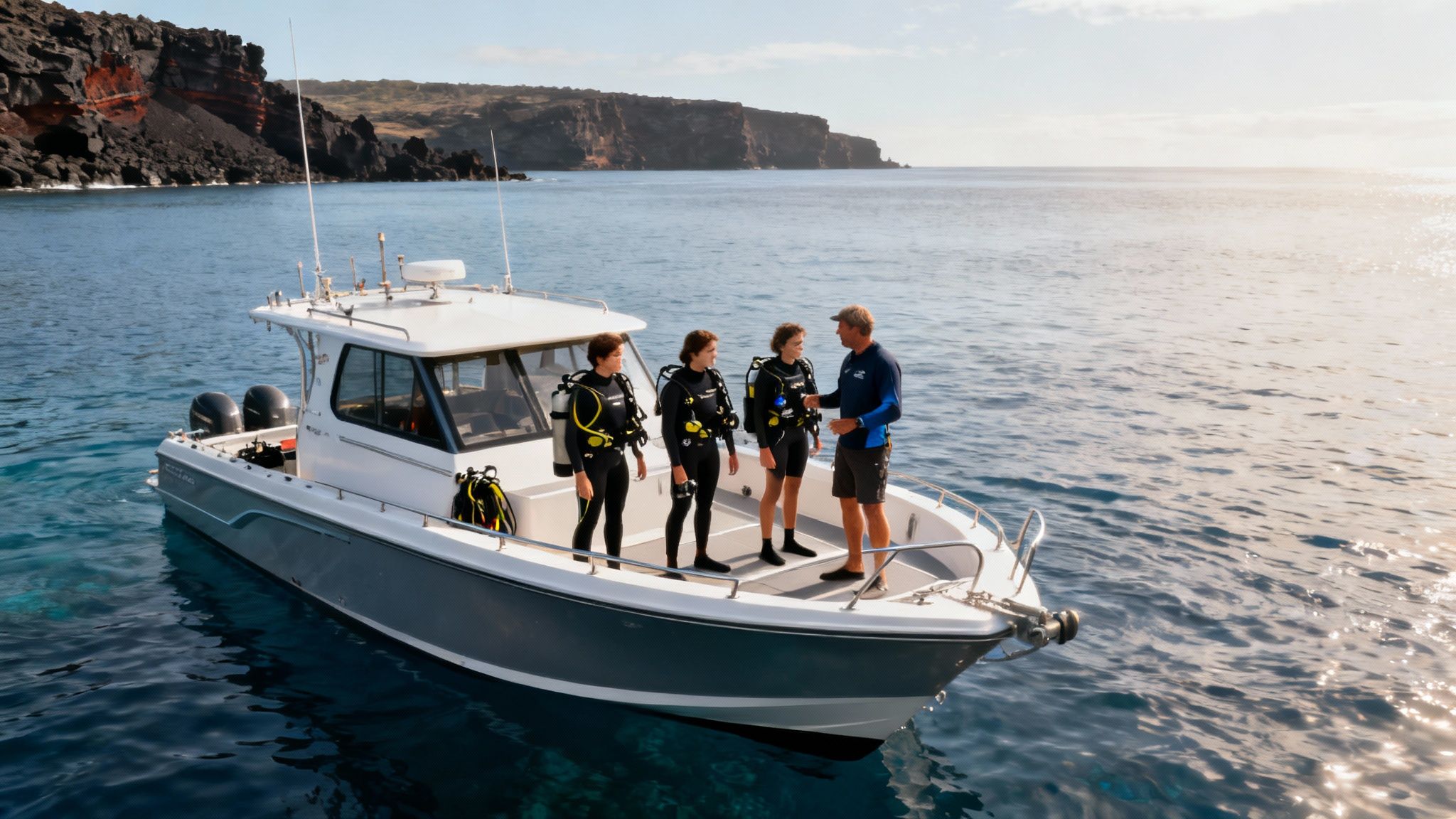
Finding the right guide for your first underwater adventure is every bit as important as the dive itself. Think of your instructor as your lifeline, your tour guide, and your teacher all rolled into one incredible package. When you're searching for the best introductory dive in Hawaii—especially in the world-class waters off Kona—there are a few things that are absolutely non-negotiable.
The biggest factor in how your dive feels often comes down to personal attention. This is why you should always look for operators who run small group sizes. A smaller group means your instructor can dedicate more time to you, making sure you feel comfortable, safe, and supported from the moment you gear up to your final ascent.
This personalized approach is what builds real confidence. The best instructors aren't just experts at diving; they live and breathe this stuff and are genuinely excited to share the magic of the underwater world with you. A great guide is what separates a decent dive from an unforgettable, life-changing experience.
What to Look for in a Kona Dive Operator
As you start comparing your options, focus on companies that have a solid, proven track record. Keep an eye out for these key signs of a top-tier operator:
- Spotless Safety Records: This is the big one. Safety always, always comes first. Scour reviews and check company websites for their commitment to safety protocols and how well they maintain their equipment.
- Experienced Instructors: Look for a crew with deep local knowledge. An instructor who knows Kona’s reefs like the back of their hand can show you the secret spots where the most incredible marine life hangs out.
- A Focus on Beginners: Find a company that genuinely loves working with first-timers. Operators that specialize in introductory dives know exactly how to calm those pre-dive jitters and create a super supportive environment.
One operator that consistently gets rave reviews for creating amazing and safe first dives is Kona Honu Divers. Their expert team is fantastic at helping beginners feel right at home as they explore the vibrant coral gardens and meet the sea life that makes Kona so famous. Their dedication to small groups and personalized instruction makes them a phenomenal choice for anyone asking, "Can you scuba dive in Hawaii without certification?"
But don't just take our word for it. See what other first-time divers have said about their own experiences.
To get a taste of the incredible underwater world that's waiting for you, check out the different diving tours in Kona they offer. A well-chosen introductory dive isn’t just a one-time activity; for many, it's the start of a lifelong love affair with the ocean.
Why Certification Unlocks the Best of Hawaii Diving
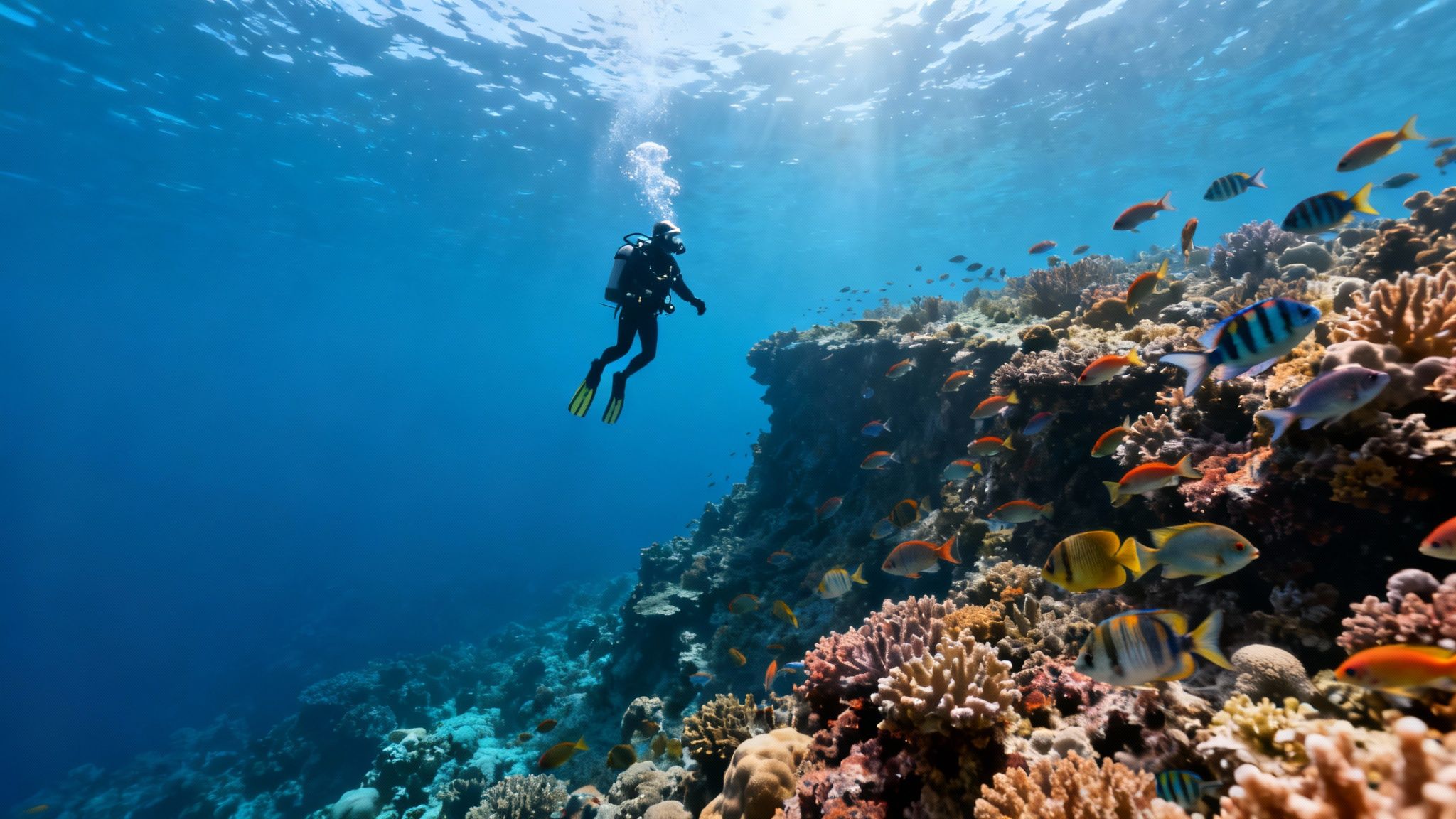
That first breath you take on a discovery dive is pure magic, a moment that often sparks a lifelong love affair with the ocean. But as incredible as that experience is, it's a bit like riding in the passenger seat of a race car—you feel the thrill, but you don't actually get to drive.
Earning your scuba certification is the moment someone hands you the keys. It’s the single most important step you can take to unlock the full, mind-blowing spectrum of underwater adventure Hawaii has to offer.
With an Open Water Diver certification, the whole game changes. You’re no longer just a guest under direct supervision; you become a genuine explorer. Think of that certification card as your global passport to rent gear, plan dives with a buddy, and finally access the incredible dive sites that are off-limits to beginners.
Instead of being confined to specific, shallow training spots, you're free to explore Hawaii's most legendary underwater landmarks. The real heart of Hawaiian diving lies far beyond the introductory tour, in places that demand the skills and confidence that only come with proper training.
Access to Hawaii's Most Iconic Dives
Once you’re certified, a world of possibility cracks wide open. You can finally experience the dives people travel from all corners of the globe to see. Imagine descending at twilight to witness one of the planet's most breathtaking spectacles: the world-famous Kona Manta Ray Night Dive.
There, you'll kneel on the ocean floor as magnificent giants, some with wingspans over 15 feet, somersault and glide through the beams of your dive light, often just inches above your head. It’s a surreal, underwater ballet that is reserved exclusively for certified divers.
Gaining your certification transforms diving from a single activity into a true hobby. It’s not just about what you can see; it's about the freedom and confidence you gain to explore the underwater world on your own terms.
Beyond the mantas, certification unlocks even more bizarre and wonderful experiences. For the truly adventurous, there's the unforgettable Blackwater Dive. You'll drift in the deep, dark ocean miles from shore, suspended over thousands of feet of water, witnessing the largest migration on Earth as strange, bioluminescent creatures rise from the abyss.
Go Deeper and Explore More
Your Open Water card is just the start. As you build skills and comfort in the water, you can pursue further training that opens up even more thrilling doors. Advanced certifications allow you to explore deeper reefs, navigate complex lava tubes, and join specialized charters designed for more experienced divers.
For those chasing the ultimate Kona diving experience, advanced dive tours will take you to remote sites that few people ever get to see. These spots are teeming with unique marine life and dramatic underwater landscapes.
While an introductory dive is an amazing first taste, getting certified is the key that truly unlocks Hawaii's underwater paradise. It’s what takes you from being a one-time participant to a lifelong adventurer, ready to explore the best diving the world has to offer.
Your Path to Becoming a Certified Diver in Hawaii
So, that first dive got you hooked, huh? If you're already dreaming of your next underwater adventure, getting your full scuba certification in Hawaii is the perfect next step. This isn't some boring classroom slog; it's a chance to turn an amazing vacation into a life-changing skill.
The PADI Open Water Diver course is the gold standard—it's the most recognized scuba certification on the planet. The whole thing is broken down into three simple, confidence-building stages. The best part? You can get a head start before you even leave home, meaning more of your precious vacation time is spent in the ocean, not behind a desk.
Step 1: Knowledge Development (The Homework)
First things first, you need to learn the theory behind the fun. This initial phase covers all the fundamentals, from understanding how water pressure affects your body to planning a dive and staying safe.
But here’s the game-changer: you can knock this all out online with PADI eLearning. By finishing the coursework from your couch before you fly to Hawaii, you'll walk off the plane ready to jump straight into the practical stuff. No beautiful, sunny days wasted indoors.
Step 2: Confined Water Training (The Pool Session)
Now it’s time to get wet. You'll take all that theory and put it into practice in a controlled environment, like a swimming pool or a calm, shallow bay that feels like one. This is where you get truly comfortable with all the scuba gear.
With your instructor right there beside you, you'll master core skills. Think clearing water from your mask, dialing in your buoyancy so you can hover effortlessly, and running through safety drills. It's all about building muscle memory in a totally stress-free setting, making the skills feel like second nature before you head out into the ocean.
Step 3: Open Water Dives (The Real Adventure)
This is the moment you've been waiting for. You'll complete four dives in the incredible Hawaiian ocean, putting everything you've learned to the test while your instructor keeps a watchful eye. These dives are the final check-off to earning your certification.
Completing your Kona scuba certification course here means your training dives are more spectacular than most people's vacation dives elsewhere. Once you nail that final dive, you'll be handed a certification card that’s basically a lifetime passport to explore the underwater world, anywhere on the globe.
A Few Last Questions Before You Dive In
Even with all the excitement of planning an underwater adventure in Hawaii, it's totally normal to have a few questions. The big one—"Can you scuba dive in Hawaii without certification?"—is a definite yes, but there are a few other details that pop up for first-timers.
We've put together the most common questions we hear to clear up any final doubts and get you ready to take the plunge.
What Is the Minimum Age for an Introductory Dive in Hawaii?
To join a PADI Discover Scuba Diving program, you need to be at least 10 years old. This isn't just a local rule; it's a global safety standard set by the pros to ensure everyone has a good, safe time.
Of course, age is just one part of it. Every diver, young or old, must be in decent physical health and comfortable in the water. You'll fill out a straightforward medical questionnaire beforehand, which is just a precaution to make sure there aren't any health issues that could pose a risk underwater.
And for any divers under 18, a parent or guardian will need to sign the waiver forms.
Is an Introductory Dive Actually Safe for a Total Beginner?
Absolutely. In fact, these experiences were designed from the ground up for people who've never even touched scuba gear before. Introductory dives have an incredible safety record because they follow strict, non-negotiable protocols.
You're never on your own. A certified and experienced scuba instructor is right by your side—literally within arm's reach—the entire time. Every single dive starts with a clear safety briefing and a chance to practice some basic skills in shallow water before you head for deeper water.
Think of it this way: your depth is limited to a maximum of 40 feet, and your instructor handles all the technical gear. All you have to do is breathe, relax, and soak in the incredible scenery.
Can I See the Manta Ray Night Dive Without Being Certified?
This is probably the most-asked question we get, and the answer is a bit of a "yes and no." You cannot scuba dive with the giant manta rays at night without a certification. That particular dive requires a certain skill set to manage safely, especially after the sun goes down.
But here’s the great news: you don't have to miss out on the magic! Most tour operators, including us here at Kona Honu Divers, run a snorkeling option on the very same boat. You get to float on the surface and watch the majestic mantas dance and feed in the lights just below you. It's a genuinely breathtaking experience and one we highly recommend.
Does a Discover Scuba Dive Count Towards a Full Certification?
It often can! Many people try a discovery dive and get completely hooked—we see it all the time. If that happens to you and you decide to get your full Open Water Diver certification, that first dive experience can give you a head start.
When you sign up for the full course with the same PADI dive shop, your Discover Scuba Dive can typically be credited as the first of your required open water dives. It’s a great way to save a little time and money on your path to becoming a certified diver. Just make sure to ask your instructor about this when you're booking.
Ready to see Kona’s incredible underwater world for yourself? Whether you’re trying a discovery dive or earning your certification, Kona Honu Divers has the expert team and top-rated tours to make your adventure one you’ll never forget.