
Picture yourself floating in outer space, completely weightless, as bizarre and wonderful creatures drift past you in the dark. That's the closest I can get to describing a blackwater dive in Kona. It's an incredible experience that takes you miles offshore to witness the largest migration on Earth, all while you're safely suspended over thousands of feet of inky-black ocean.
What Is a Blackwater Dive in Kona?
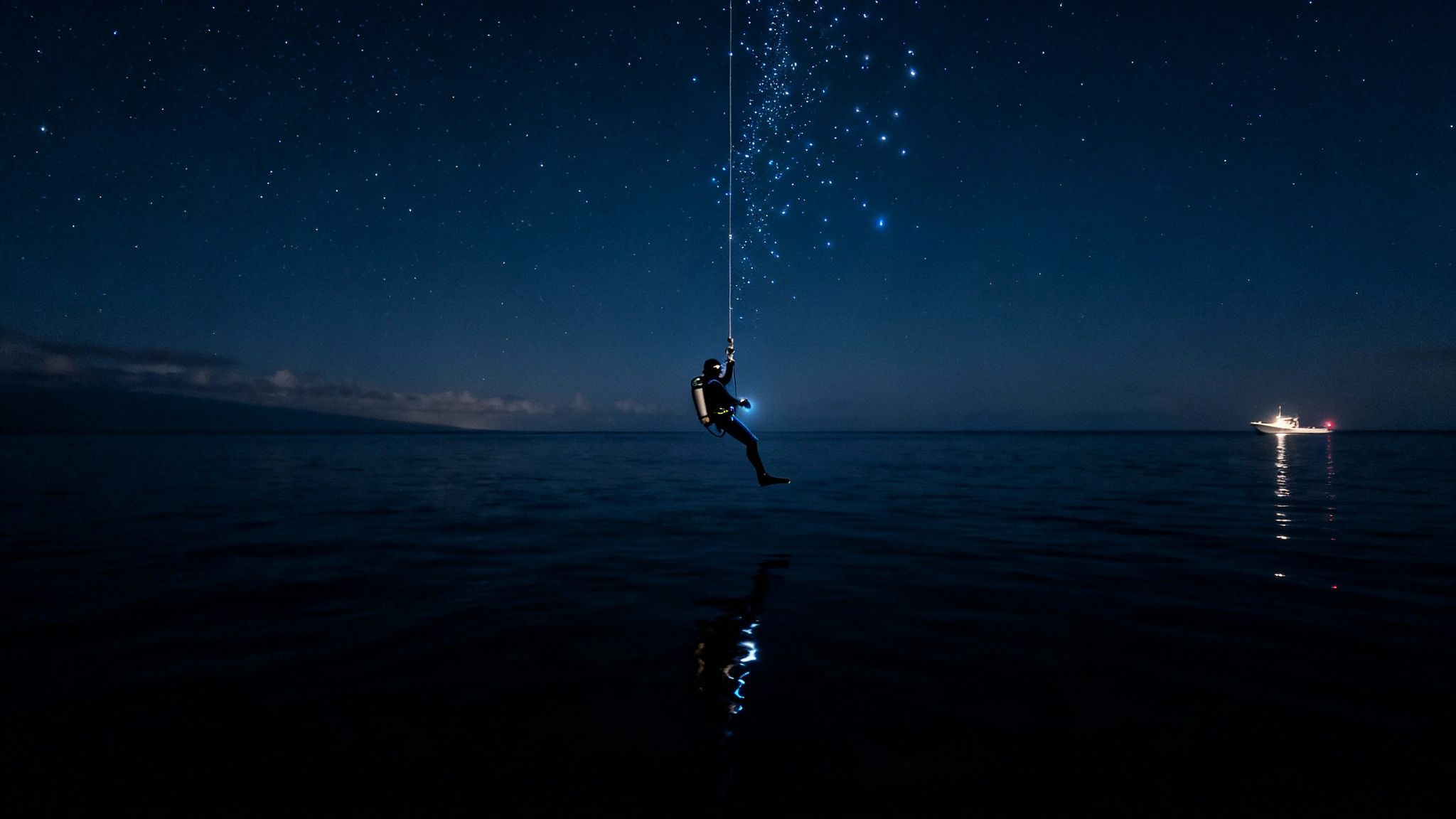
First things first: this is not your typical night dive where you're exploring a familiar reef. A blackwater dive is a true open-ocean, or pelagic, adventure. We head a few miles off the Kona coast, out over water where the seafloor plummets to depths of over 10,000 feet. It's a different world out there.
Once we reach our spot, we lower a powerful set of lights into the water, attached to a weighted downline. This becomes our anchor point in the vastness. Each diver is then connected to this line with a short tether, which keeps everyone at a consistent depth—usually around 40-50 feet—and prevents anyone from drifting away from the boat.
You essentially become a human satellite, orbiting a brilliant sun in the middle of the deep, dark ocean, waiting for the universe to come to you.
Blackwater Dive vs Traditional Night Dive
To really grasp what makes this dive so different, it helps to compare it to a standard night dive. One is about exploring a known location, the other is about drifting in the unknown.
| Feature | Blackwater Dive | Traditional Night Dive |
|---|---|---|
| Location | Miles offshore, over deep open ocean (pelagic) | Near the shore, over a reef or specific bottom structure |
| Depth | Drifting at a fixed depth (40-50 feet), tethered to a line | Varies, following the contour of the reef or seabed |
| Objective | Observe migrating planktonic and larval creatures | Explore a fixed ecosystem and see nocturnal reef life |
| Navigation | No navigation needed; stay with the light system | Divers navigate the reef using compasses and landmarks |
| Marine Life | Bizarre, translucent, and bioluminescent larval organisms | Familiar fish, corals, crustaceans, and sleeping animals |
In short, a traditional night dive shows you the reef's "night shift," while a blackwater dive introduces you to a hidden world of creatures you'd otherwise never see.
The Great Vertical Migration
So, what are we actually seeing out there? We're witnessing the Diel Vertical Migration, which is, quite literally, the largest migration of life on our planet. It happens every single night.
Countless tiny organisms—from zooplankton to larval fish and squid—journey from the crushing depths up toward the surface to feed under the cover of darkness. Before sunrise, they sink back down into the abyss. Our light system acts like a massive bug zapper (without the zapping!), attracting these creatures and creating a concentrated "campfire" for us to observe.
It's a point of pride for us that this unique type of dive was pioneered right here in Hawaii. What started as a few experimental dives back in the 1990s quickly became a phenomenon, cementing Kona's reputation as the birthplace of recreational blackwater diving. Today, it’s an accessible "extreme" adventure where science has found that an incredible 76% of the organisms we see create their own light through bioluminescence.
This dive is less about swimming and more about pure observation. You're a silent spectator in a cosmic ballet, where tiny, see-through larvae and ghostly squids materialize out of the void, dance in your light, and then vanish back into the deep.
Unlike a reef dive, which focuses on an established ecosystem, a blackwater dive in Kona is all about the unknown. Every single trip brings a completely different cast of characters, many of which are in their larval stages and look nothing like their adult selves. If you want to learn more about this unique style of diving, you can find extra details on our page dedicated to black water dives.
The Kona Honu Divers Experience
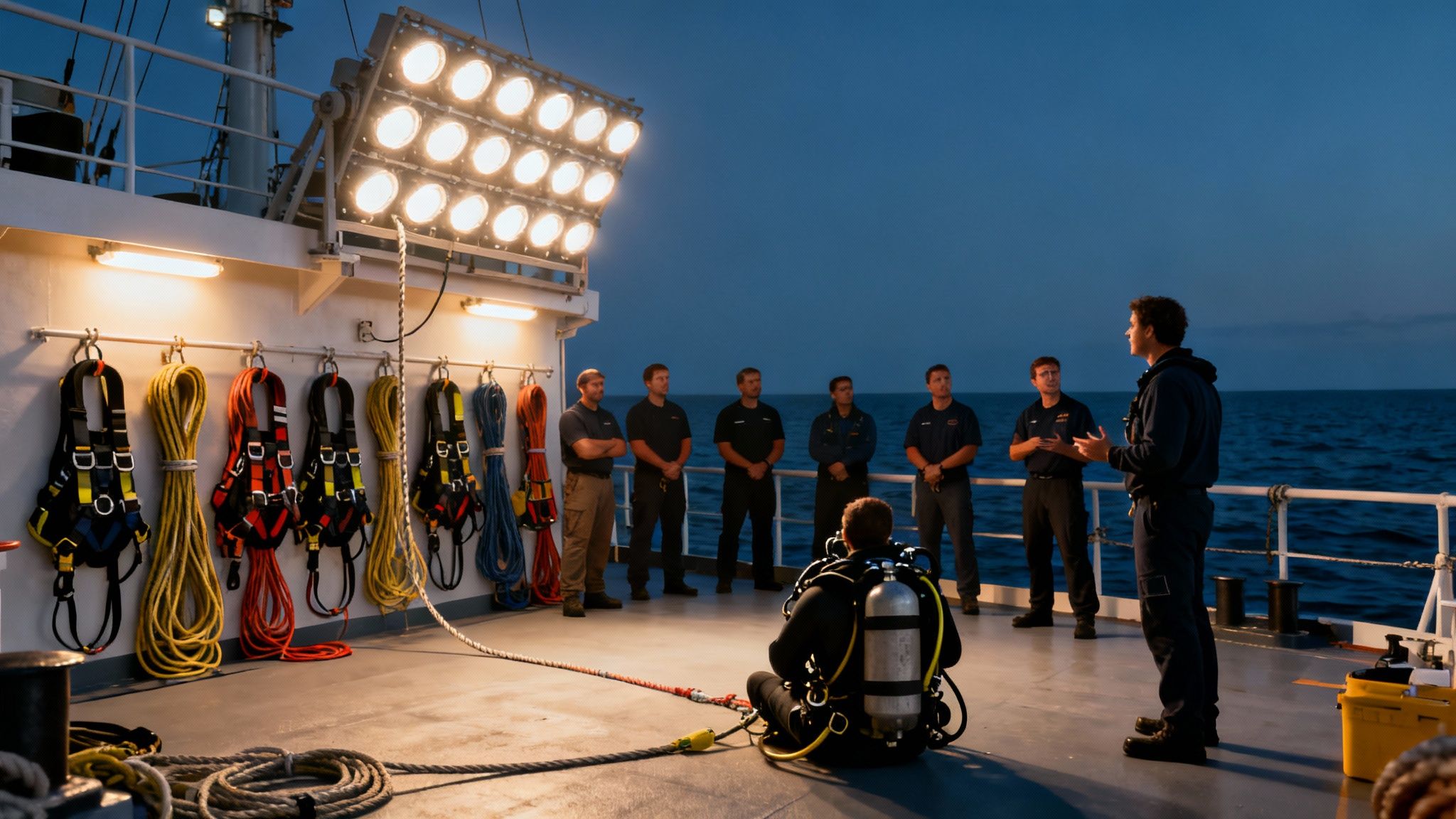
When you head out for a blackwater dive in Kona with us, you’re in for an adventure that’s as smooth as it is thrilling. Your experience starts well before you ever touch the water. Our expert crew gives a thorough briefing on the boat, walking everyone through the procedures and safety checks so you feel completely confident and ready for what’s ahead.
We set out as the sun begins to dip below the horizon, motoring a few miles offshore into the deep, dark water where the real magic happens. The ride out is part of the fun. Our boat is comfortable and spacious, with plenty of shaded seating and, maybe most importantly, hot showers for after the dive—a little touch of comfort that makes a huge difference.
It's this level of thoughtful preparation and professionalism that our divers always remember.
Into the Abyss
So, how does it all work? The heart of the entire operation is our custom downline system. We lower a heavy, stable line deep into the water, rigged with an array of powerful lights. This glowing beacon acts like a magnet, drawing in all the strange and wonderful creatures making their nightly journey up from the depths. It becomes your entire universe for the next hour—a brightly lit stage in the middle of a vast, dark ocean.
To keep you safe and focused, every diver gets a personal tether that’s about 6-10 feet long. One end clips securely to your BCD, and the other clips right onto that main downline. This simple setup is brilliant for two reasons:
- It keeps you hovering at a consistent and safe depth of around 40 feet.
- It ensures you stay connected to the group and the boat. There’s zero chance of drifting off into the dark.
The moment you clip in and descend, the feeling is just otherworldly. You're completely weightless, suspended in the water column. Since you don't have to think about navigation or buoyancy, you can pour all your attention into the incredible parade of life unfolding in the beams of light.
You can learn more about what makes diving with us so special and discover why we are considered one of the best operators as you dive the Big Island of Hawaii with Kona Honu Divers.
Your Portal to Another World
This isn't just a dive; it's a meticulously organized portal to another world. We’ve dialed in the logistics so you can witness one of nature’s most hidden events in complete comfort and safety. The crew’s expertise and specialized gear turn what could be a challenging dive into a mesmerizing adventure for any certified diver.
The Kona Honu Divers team has truly perfected the blackwater experience, making it a can't-miss dive for anyone looking for a profoundly unique encounter with the ocean's secret life.
Discovering the Aliens of the Deep
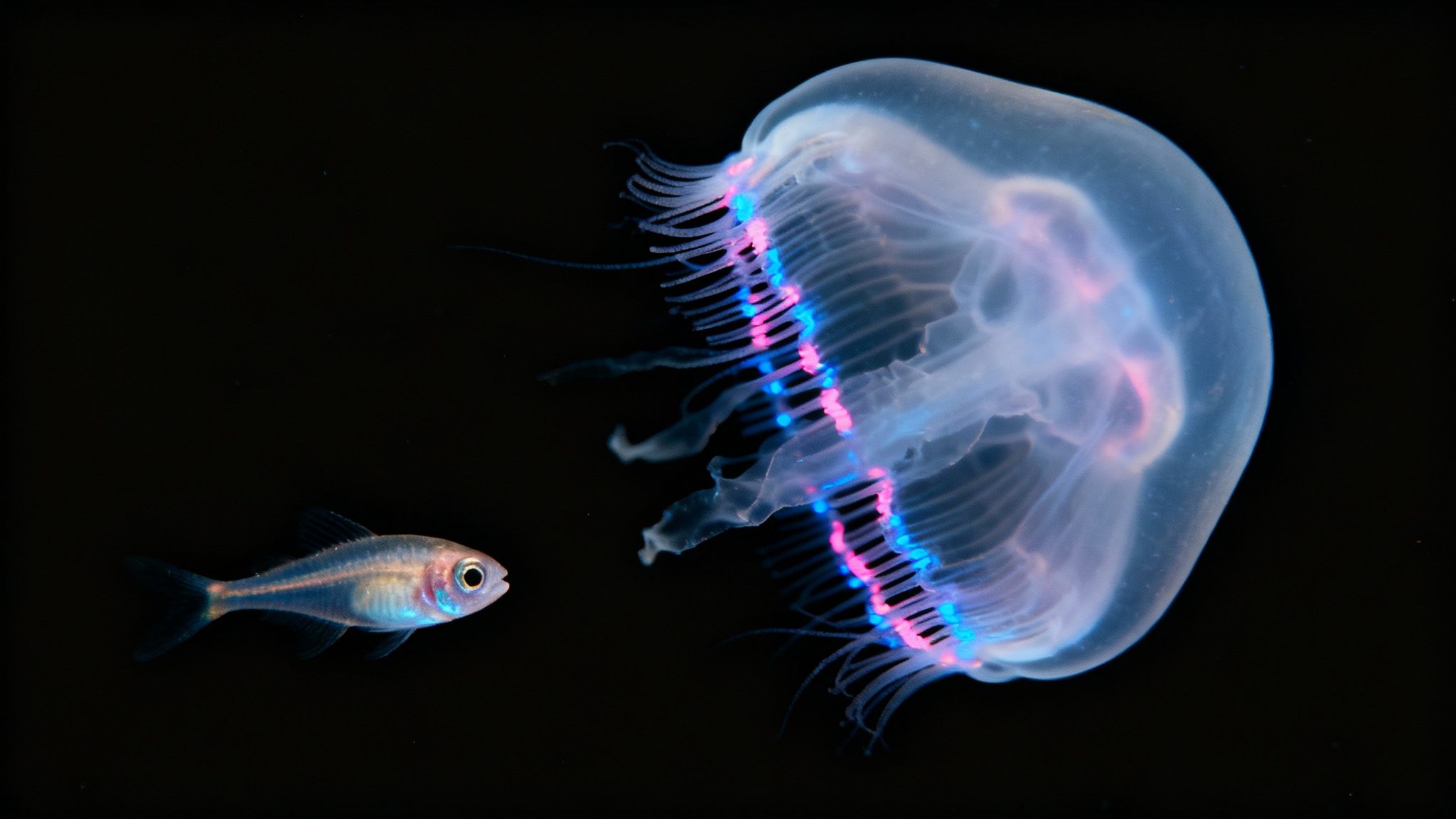
A blackwater dive in Kona isn’t your typical reef tour. Forget about the familiar parrotfish and butterflyfish. This is a journey into an ecosystem that feels genuinely alien, where the inhabitants look like they’ve drifted straight out of a science fiction film. You’re dropping into the open ocean at night to witness life forms rising from the abyss in a silent, spectacular parade.
The real draw is just how wonderfully weird it all is. Many of the critters you'll meet are in their larval, or baby, stages. They're often completely see-through and look nothing like the adults they'll one day become. It’s like getting a peek into a deep-sea nursery filled with bizarre, beautiful, and utterly unrecognizable creatures.
For one night, you're not just a diver; you're a biologist witnessing a phase of ocean life that most people don't even know exists.
A Parade of Pelagic Wonders
As you float in the dark, safely tethered to the boat, your dive light cuts through the blackness and reveals a constant stream of otherworldly organisms. Each one is a tiny marvel of evolution, perfectly built for a life spent drifting in the vast, empty water column. No two dives are ever the same, but you can count on a few regulars making an appearance.
Get ready to meet a cast of characters you won't soon forget:
- Ctenophores (Comb Jellies): Forget what you know about jellyfish. These guys are far more spectacular. As they move, their rows of cilia catch your light, refracting it into shimmering, electric rainbows that dance down their bodies.
- Larval Fish and Eels: Imagine seeing future giants as tiny, glassy versions of themselves, often just millimeters long. Spotting their minuscule eyes and brand-new fins is a true test of your focus.
- Pelagic Squids and Octopuses: You'll encounter ghostly, ethereal cephalopods who are masters of the open ocean. Watching a tiny, perfectly formed octopus drift past your mask is a moment that will stick with you forever.
- Siphonophores: These aren't single animals but colonies of thousands of individuals working as one. Some trail stinging tentacles for meters, like a living, drifting fishing net.
The experience is less about ticking species off a list and more about just surrendering to the spectacle. It’s a full-on sensory immersion into a world where bioluminescence and transparency are the rules, and life takes on forms you couldn't have imagined.
Bioluminescence: The Living Light Show
Beyond the incredible shapes and sizes, the real magic of a Kona blackwater dive is the bioluminescence. It's estimated that a staggering 76% of deep-sea creatures can make their own light. Some glow to attract a meal, others flash to scare off predators, and many do it for reasons scientists are still trying to figure out.
You might see the brilliant blue spark of a tiny copepod or the gentle, pulsing glow of a jellyfish. Sometimes, the best move is to switch off your torch, wave your hand through the water, and watch a galaxy of living stars ignite all around you.
The sheer diversity and alien beauty you’ll find on a blackwater dive in Kona will completely redefine what you think marine life is. It's a humbling, mind-bending adventure that connects you to one of the planet's most mysterious and unexplored frontiers. For any adventurous diver, this is an absolute must-do.
Gear and Photography Tips for the Abyss
A successful blackwater dive in Kona is all about preparation. Forget everything you know about reef diving, where the bottom is always there as a reference point. Out here, you’re suspended in the open ocean, and flawless buoyancy is the name of the game. You need to be completely at ease floating in the dark, with total trust in your equipment and your guide.
This is a dive that challenges you in new ways but offers rewards unlike anything else, especially if you're bringing a camera. Capturing the strange beauty of the abyss is a whole different ballgame. You’re shooting tiny, often see-through critters against a backdrop of pure black, so nailing your lighting and focus is everything.
Essential Gear for All Divers
Even though your attention will be glued to the otherworldly creatures, having the right personal gear is what lets you relax and enjoy the show safely and comfortably.
- Excellent Buoyancy Control: This is the absolute must-have skill. You'll be holding your depth steady at around 40 feet for the whole dive, with nothing but the downline for reference.
- A Good Dive Light: The boat has a powerful light array, but your own torch is crucial for spotting the smaller, more elusive organisms and for communicating with your guide.
- Comfortable Wetsuit: We recommend a 3mm or 5mm wetsuit. The water is warm, but you're not moving around much for an hour, and it's easy to get chilled.
- Mental Preparedness: Get ready for a unique sensory experience. This isn't an adrenaline rush; it’s a calm, meditative dive into the deep, dark ocean.
Mastering Blackwater Photography
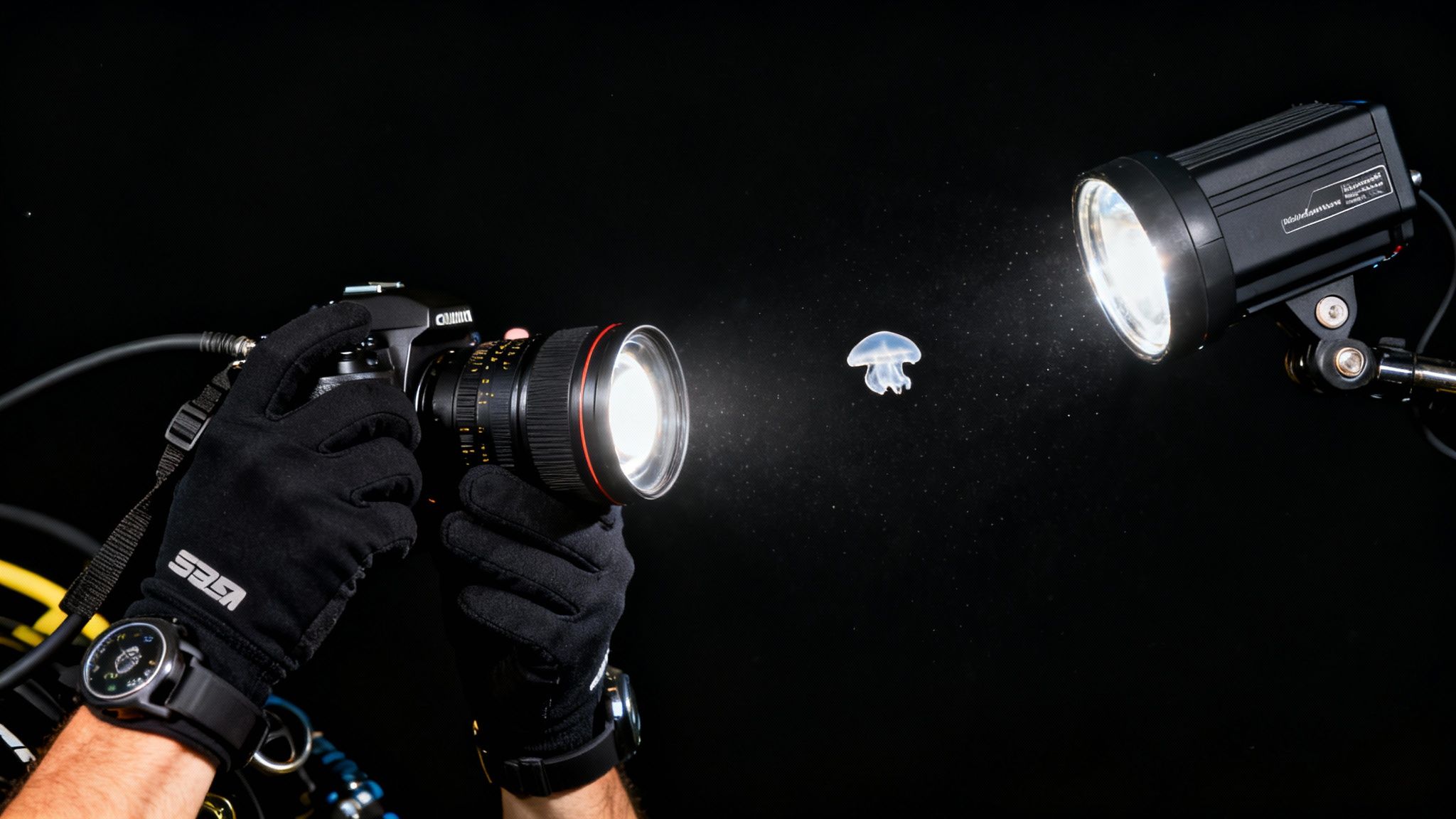
Photographing the inhabitants of the deep is a true art. The mission is to light up your subject perfectly while leaving the background completely black. That means winning the war against backscatter—those annoying white specks you get when your flash illuminates all the tiny particles floating between you and your subject.
The secret is all in your strobe positioning. You want to get them way out to the sides of your camera, pointing slightly inward. This creates a cross-lighting effect that hits your subject but avoids lighting up the water right in front of your lens. The result? A sharp, vibrant subject against a velvety black canvas.
Getting a sharp focus is the other big challenge. Many of these creatures are fast, erratic, and practically invisible to the naked eye. A strong focus light is your best friend out here; it helps your camera’s autofocus system lock on without hunting. And of course, a high-quality macro lens is non-negotiable if you want to capture the stunning, intricate details of these miniature aliens.
Blackwater diving offers an incredible challenge for photographers and a profoundly serene experience for any advanced diver. Once you've conquered the abyss, you can find other unique challenges on our premium advanced dive tours. To make sure you're ready for any dive, check out our full guide on the gear you will need for your Kona diving adventure.
Is This Once-in-a-Lifetime Dive for You?
A blackwater dive in Kona is an absolutely incredible adventure, but let's be real—it's not for everyone. This isn't the kind of dive you just show up for on a whim. It demands a solid mix of dive skill, a cool head, and a genuine thirst for the unknown. Figuring out if you've got that mix is the first step to deciding if this experience is right for you.
Picture this: you're suspended in pure darkness, miles from shore, with thousands of feet of ocean beneath you. There’s no reef, no sandy bottom for reference—just the faint glow of the downline and the vast, inky black. It’s a feeling unlike anything else, and it requires a diver who is calm and confident in the water.
Certification and Experience Requirements
Because of these unique conditions, we have some strict prerequisites. We consider a blackwater dive in Kona an advanced dive, and for good reason. Your safety and comfort are our top priorities, which is why we need every diver to meet these minimums.
- Advanced Open Water Certification: This is the non-negotiable starting point. It proves you have the foundational training for deep diving and navigation, which are essential skills for handling the challenges of an open-ocean, blue-water environment.
- A Minimum of 50 Logged Dives: This number isn't just pulled out of thin air. With 50 dives under your belt, you’ve likely encountered a variety of conditions, honed your in-water awareness, and become truly comfortable with your gear. That experience is what you’ll lean on out there.
By far, the most critical skill for a blackwater dive is flawless buoyancy control. You have to be able to hover effortlessly, holding your depth for an hour without sinking or ascending. With only the downline as your guide, rock-solid buoyancy is not just a safety requirement; it’s what allows you to stay still and let the ocean’s strangest creatures reveal themselves.
The Ideal Blackwater Diver Profile
Beyond the logbook and C-card, the perfect blackwater diver has a certain mindset. You need to be completely comfortable with night diving and the idea of being in deep, open water with no bottom in sight.
This dive is a dream come true for:
- The Adventurous Soul: If you're looking for something totally different that pushes your boundaries in a safe, controlled way, this is it.
- The Marine Life Fanatic: For those fascinated by the weird and wonderful, this is your ticket to see pelagic critters that most people don't even know exist.
- The Underwater Photographer: This is the ultimate challenge and opportunity. You can capture stunning, otherworldly images that are simply impossible to get on any other dive.
If this sounds like the adventure you've been searching for, then the alien world of a Kona blackwater dive is waiting.
Your Blackwater Dive Questions Answered
Stepping into the vast, inky-black ocean for a Kona blackwater dive is an experience that’s hard to put into words. It's totally normal to have a few questions before you take the plunge. We've gathered the most common ones we hear to give you clear, straightforward answers so you feel completely ready for this one-of-a-kind adventure.
This isn’t just another dive on your logbook; it's a chance to see a part of our planet few people ever will. Feeling prepared is the key to letting go and truly soaking in the magic of the moment.
Is the Kona Blackwater Dive Truly Safe?
Absolutely. While floating in the deep, open ocean at night sounds intense, safety is the absolute top priority on every blackwater dive in Kona. Our procedures have been refined over years to create a secure and controlled experience. The best way to think of it is like a spacewalk—it’s an epic adventure, but every move is guided by robust safety protocols.
Every diver is attached to a heavily weighted central line via their own personal tether. This simple but brilliant system does two critical things:
- It keeps you at a consistent and safe depth, usually around 40 feet.
- It ensures you can't drift away from the group, the boat, or the powerful lights that draw in the creatures.
Our professional dive guides are right there in the water with you, supervising the whole dive, and the captain is always on watch just a stone's throw away. Kona’s dive community has an impeccable safety record for these dives, built on decades of experience.
What Certification and Experience Do I Need?
This is definitely considered an advanced dive, and for good reason. To join us, you’ll need at least an Advanced Open Water certification and a minimum of 50 logged dives.
These aren't arbitrary numbers; they ensure you have the skills to handle this unique environment. Excellent buoyancy control isn't just a suggestion—it's essential. With no reef or seafloor to reference, you need to be completely comfortable holding your position in the water column. You should also be at ease with night diving and the idea of being in a deep-water setting.
Will I Get Cold or Seasick?
Kona's waters are pretty warm, but you will be hanging out and not moving much for up to an hour. Because of this, we strongly recommend a 3mm to 5mm full wetsuit to stay comfortable for the entire dive. As a little bonus, Kona Honu Divers has hot showers on board so you can warm up the second you get out of the water.
As for seasickness, remember that we're heading a few miles offshore into the open ocean. If you even think you might get motion sickness, it's a really good idea to take something before the trip. A comfortable boat ride is the perfect start to an amazing dive.
What Happens If We Don’t See Any Creatures?
Honestly, this just doesn't happen. The nightly vertical migration is the single largest movement of animal life on the entire planet. The super-powerful lights we use are incredibly effective at attracting a wild diversity of life from the deep.
While we can never promise you'll see a specific animal in the wild, every single blackwater dive turns into a mesmerizing parade of alien-like creatures. The real thrill is the unknown—you truly never know what strange, glowing organism will drift out of the darkness and into your light.
Ready to see it for yourself? The abyss is calling.
At Kona Honu Divers, our passion is sharing safe and unforgettable underwater adventures. Browse all of our scuba diving tours, or book your Blackwater Dive tour with us and come discover the secrets of the deep.