
Picture yourself floating in the deep, dark ocean, completely untethered from the world above. It’s like being an astronaut, but instead of stars, you're surrounded by otherworldly creatures glowing in the abyss. That’s the magic of a black water dive—a journey into the ocean's "inner space" to witness the largest migration on Earth.
Drifting in the Deep: A New Kind of Night Dive
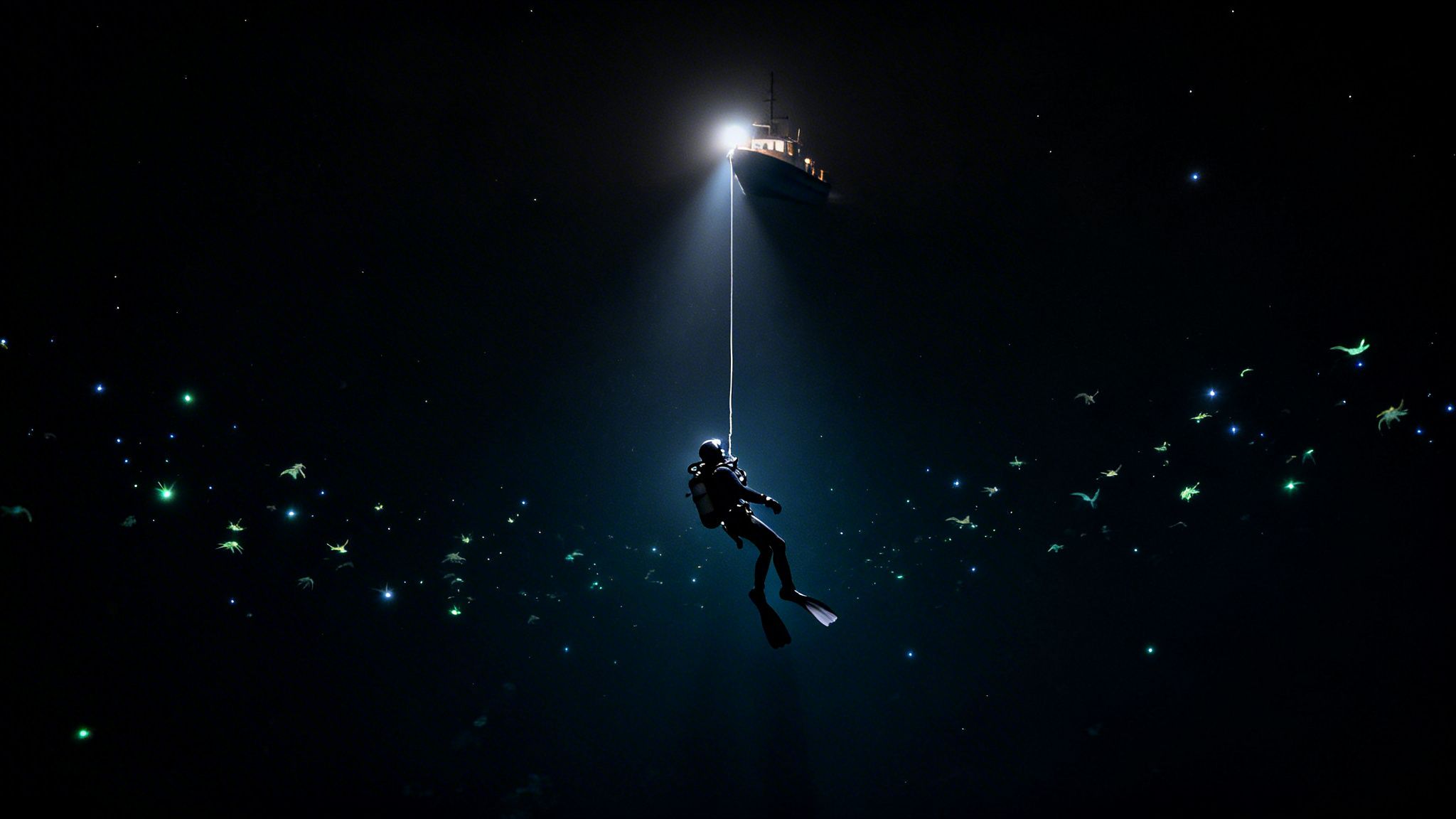
This isn't your typical night dive along a familiar reef. We head miles offshore, far from land, and suspend ourselves over thousands of feet of water. You're not exploring the seafloor; you’re hovering in the vast mid-water column, safely attached by a tether to a line dropped from the boat.
This unique setup gives you a front-row seat to one of nature's most incredible spectacles: the Diel Vertical Migration. Every single night, a countless multitude of deep-sea creatures—from microscopic larvae to bizarre, see-through squids—rise from the crushing depths to feed near the surface. By biomass, it’s the largest migration on our planet, and you get to float right in the middle of it.
Blackwater diving is where science fiction becomes reality. You feel like an astronaut exploring an alien world, watching life forms that defy imagination drift right past your mask. It completely changes your perception of what lives in the ocean.
From Scientific Method to Bucket-List Adventure
This mind-bending experience wasn't always a recreational dive. The roots of blackwater diving trace right back here to Kona in the 1990s, where a few local pioneers took what was once a purely scientific research method and turned it into an adventure for certified divers.
Kona's unique geography was the key. The seafloor drops off to over 10,000 feet just a few miles from shore, making the deep ocean incredibly accessible. Early innovators began experimenting with powerful lights and tethering systems, transforming what could be a risky open-ocean drift into a safe, controlled experience. The tether keeps you securely connected to the boat's downline, allowing you to hover at a depth of 30-60 feet over a seemingly bottomless abyss as the boat drifts with the current.
This evolution from a research technique to a guided tour is what makes black water dives so special today. It combines the raw thrill of exploration with meticulous safety protocols, resulting in a profoundly humbling and exciting adventure. You can dive deeper into this incredible experience by checking out our comprehensive guide to blackwater diving.
Black Water Diving Vs. Traditional Night Diving
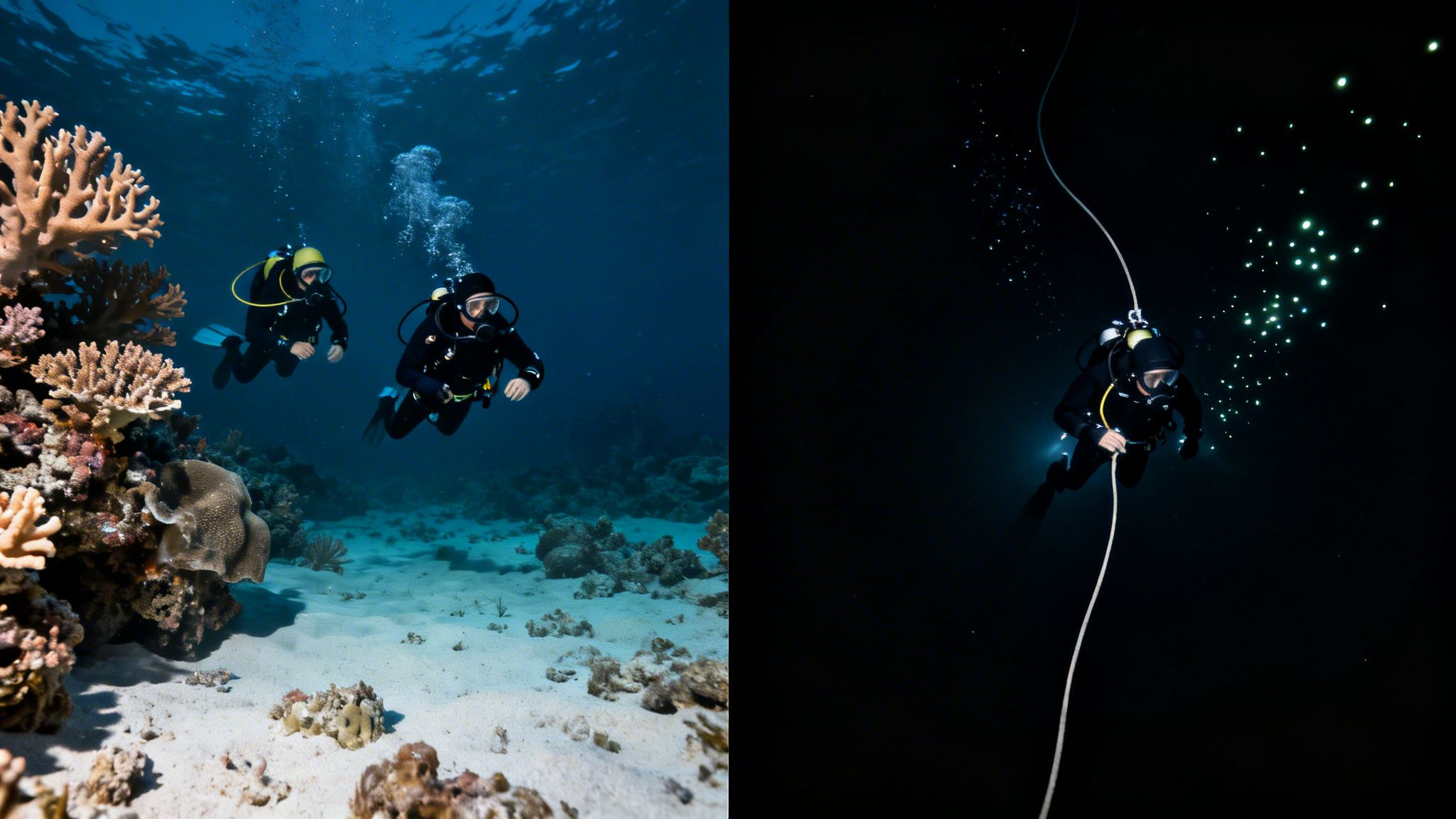
To really get what makes a black water dive so special, you have to compare it to a traditional night dive on a reef. Yes, both happen after the sun goes down, but that’s pretty much where the similarities end. The experience, the environment, and the entire goal are worlds apart.
Think of a normal night dive like taking a walk through your neighborhood after dark. You’re on familiar ground, but you get to see how everything changes. You see the "residents"—the fish, eels, and crabs—acting completely differently than they do during the day. You’ve got the solid seafloor beneath you and the reef to guide your way.
A black water dive? That's more like being an astronaut on a spacewalk in a newly discovered galaxy. You’re suspended in what feels like a bottomless void, with no landmarks and no seafloor to be seen. Your goal isn't to see familiar critters in a new light; it's to find genuinely alien-looking life forms as they drift up from the abyss.
The Mission and The Environment
The biggest difference is the setting. A typical night dive happens over a coral reef in fairly shallow water, usually somewhere between 20 and 60 feet deep. You’re focused on the reef's nightlife—an octopus out hunting, a parrotfish tucked into its sleeping bag, or lobsters crawling out from their dens. It’s a fantastic way to see a new side of an ecosystem you might already know.
On the other hand, a black water dive takes you miles offshore, drifting over thousands of feet of open ocean. The whole point is to witness the Diel Vertical Migration—the largest migration on Earth, where an unbelievable number of deep-ocean creatures swim toward the surface to feed under the cover of darkness. You aren’t exploring a place; you’re drifting with the current in the vast, open water, intercepting a parade of things most people will never see.
This completely changes the mission. One is about observing life in a defined space, and the other is about pure discovery in an infinite one.
The Gear and The Mindset
For a traditional night dive, your standard scuba kit is perfect. Just add a good primary dive light and a backup, and you're good to go. You can navigate using the reef’s layout and a compass.
Black water dives, however, demand some specialized gear to handle the unique conditions. The most important piece of equipment is the tether system. Every diver is securely clipped to a line that hangs down from the boat, and this line is your lifeline.
- It keeps you at the right depth. The tether gives you a physical reference to help you stay at your target depth, usually around 40-50 feet.
- It gives you a sense of direction. In the pitch-black of the open ocean, that tether line is your entire universe. It’s your only point of reference.
- It keeps everyone safe. The tether keeps the group together and connected to the boat as it drifts on the current.
Mentally, this is a whole different ball game. On a reef, the seafloor is comforting. In the black water, you have to put your complete trust in your gear and your guide. You have to embrace the feeling of floating in an endless void. It takes excellent buoyancy control, a calm mind, and a real sense of adventure, making it a much more advanced and distinct experience.
Black Water Dive Vs. Traditional Night Dive at a Glance
To make the differences crystal clear, here’s a quick side-by-side comparison. It really highlights how these two incredible dives offer completely different underwater adventures.
| Feature | Black Water Dive | Traditional Night Dive |
|---|---|---|
| Environment | Open ocean, miles from shore, over deep water | Coastal reef or known dive site |
| Reference Point | Tether line to the boat; no seafloor visible | Seafloor, reef structure, and landmarks |
| Primary Objective | Witnessing the Diel Vertical Migration | Observing nocturnal reef animal behavior |
| Marine Life | Pelagic drifters, larvae, deep-water organisms | Eels, octopus, lobsters, sleeping reef fish |
| Key Equipment | Specialized tether system and powerful lights | Standard dive gear with primary/backup lights |
| Psychological Feel | Like floating in outer space; exploratory | Like exploring a familiar place at night |
While both dives are incredible, the table shows they are fundamentally different. One is a journey into the known world under the stars, while the other is a true expedition into the unknown.
Encountering Otherworldly Creatures of the Deep
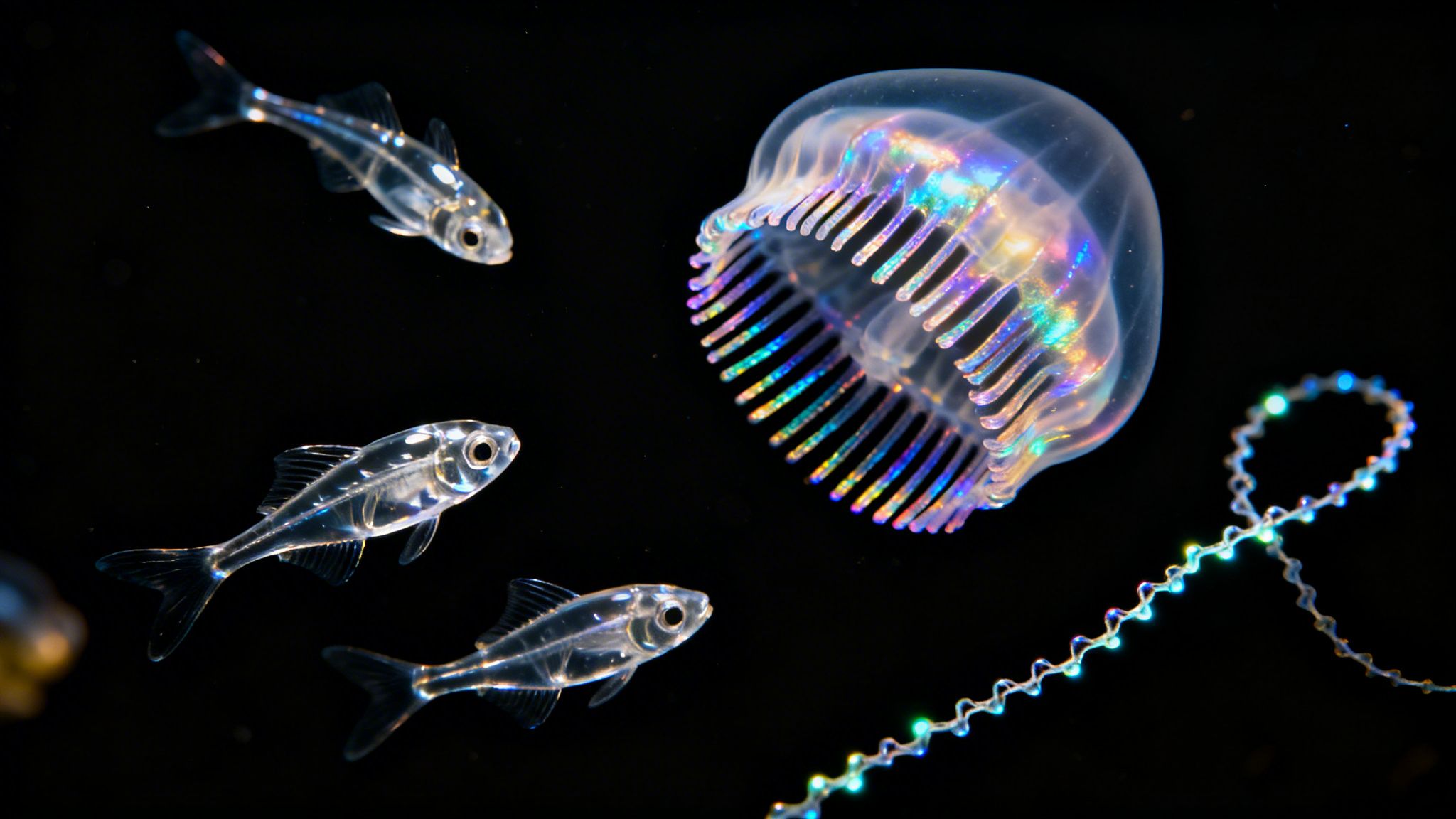
Let's be clear: the real reason we do black water dives isn't for the thrill of the dark. It’s for what comes out of it. You’re not just looking for new fish; you're meeting creatures so alien and delicate they feel like they’ve drifted in from another dimension.
You're essentially dropping into the ocean’s secret nursery. What you see is a parade of life, much of it in temporary larval forms that look nothing like the animals they’ll one day become. One minute, a larval lobster might float past your mask, looking more like a glass-blown spider than a crustacean. The next, a rare pelagic seahorse might appear, clinging to a nearly invisible bit of debris in the endless dark.
These aren't the tough, hardy animals you see on the reef. The creatures you meet out here are often gelatinous, see-through, and unbelievably fragile.
A Gallery of Pelagic Aliens
The sheer biodiversity on display is mind-boggling, and no two dives are ever the same. One night’s cast of characters will be completely different from the next. This incredible variety is what makes black water dives in Kona—a world-class scuba diving destination—an absolute dream for photographers and a fantasy for nature lovers.
You’ll see things that defy imagination. Some of the more common, yet no less stunning, encounters include:
- Ctenophores (Comb Jellies): Forget what you think you know about jellyfish. These things are otherworldly. As they move, their rows of cilia catch your dive light and refract it into pulsing, shimmering rainbows. It's like watching a silent, hypnotic light show in the middle of space.
- Siphonophores: At first glance, you might think you're seeing a single, massive creature. But siphonophores are actually colonies of thousands of tiny, individual animals working together. They can drift by like glowing, bioluminescent chains stretching for dozens of feet.
- Larval Fish: So many of the reef fish we recognize start their lives as tiny, transparent drifters. You might spot a larval flounder with one eye slowly migrating to the other side of its head, or the paper-thin, ribbon-like leptocephalus stage of an eel.
On a black water dive, it hits you just how much of the ocean's life story happens completely out of sight. You aren't just seeing animals; you're witnessing transformation and the very beginnings of life itself.
The Weird and the Wonderful
Then you get to the really weird stuff. Beyond the usual drifters lies a realm of true biological oddities. These are the encounters people talk about for years—the sightings that completely change your perspective on what's possible in the ocean.
Ever heard of a Blanket Octopus? The females can grow to over six feet long, trailing a magnificent, iridescent web behind them. Or how about a Paper Nautilus, another octopus where the female builds a delicate, paper-thin shell to carry her eggs? Finding one of these is like finding a holy grail.
You’ll also meet an incredible assortment of cephalopods, from diamond squid with huge, curious eyes to translucent octopuses that seem to pulse with their own internal light. These aren't the shy critters hiding in reef crevices; they are bold, open-ocean predators, and for a little while, you're sharing their world. It’s an experience that’s both humbling and absolutely exhilarating. At Kona Honu Divers, guiding people through this unbelievable ecosystem is what we do best.
Every sweep of your light reveals another bizarre shape or shimmering color. Each moment is a new discovery. This is your chance to see the raw, unfiltered creativity of nature in one of the planet's last true wildernesses. Ready to meet them? Our Black Water Dive tour is waiting for you.
Essential Safety Protocols and Equipment
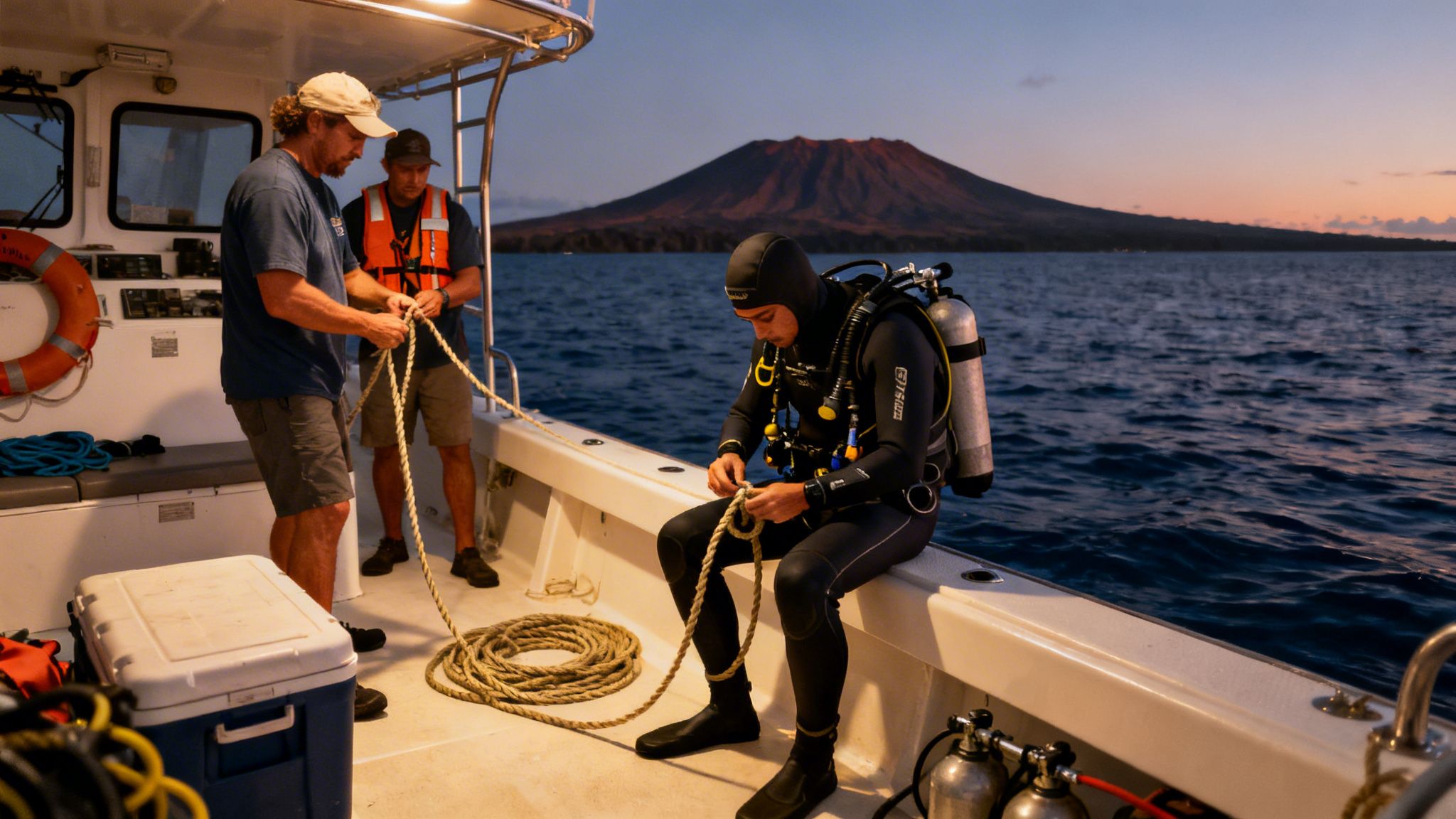
The idea of dropping into the open ocean miles from shore, at night, sounds pretty wild. I get it. But a blackwater dive isn't some reckless plunge into the abyss; it's a highly controlled and carefully managed experience. The entire operation is built on a foundation of solid safety protocols that let you focus on the magic unfolding in front of you.
Everything hinges on the tethering system. This is way more than just a rope. It's your anchor to the world above, your reference point in the darkness, and your connection to the boat and the rest of the group. Each diver clips onto a weighted line that drops straight down from the boat, keeping everyone at the right depth and drifting together with the current.
Think of the tether system as your personal safety net. It completely eliminates the risk of disorientation in a bottomless, black environment. You can relax and just immerse yourself in the experience, knowing you're secure.
Your Tools for Exploring the Deep
While the tether keeps you safe, your personal gear is what brings the darkness to life. This is one dive where a powerful light isn't just a good idea—it's absolutely essential.
- Primary Dive Light: You need a strong, bright torch. This is your window into the pelagic world. A good beam will slice through the dark and reveal the astonishing creatures floating by.
- Backup Light: Never dive at night without a backup. Ever. Lights can fail, and being left in total darkness isn't an option. It’s a non-negotiable piece of gear.
- Red Focus Light: If you’re bringing a camera, a red light is a game-changer. The critters we find out there are often tiny, translucent, and easily spooked. Red light doesn't seem to bother them, which means you can get your focus locked without scaring them away.
For a deeper look at the standard kit you'll want for any trip, check out our guide on the gear you will need for your Kona diving adventure.
Of course, safety starts before we even hit the water. The boat itself is outfitted with all the required safety equipment on a boat, because getting you out there and back safely is our top priority.
Mastering the Art of Neutral Buoyancy
Beyond your equipment, the most important skill you can have on a blackwater dive is rock-solid buoyancy control. There's no sandy bottom to use as a reference point, so you have to be able to hang perfectly still in the water column on your own.
Nailing your buoyancy is critical. It keeps you from floating up or sinking down, prevents any tugging on your tether line, and gives you a steady platform to observe and take photos. This is why we usually require an Advanced Open Water certification. That training gives divers the confidence and fine-tuned skills needed to handle an environment without reference points.
Your divemaster is there every step of the way, keeping a close eye on everyone's depth, gear, and comfort level. We run through a detailed pre-dive briefing that covers signals, emergency plans, and the whole flow of the dive, so you know exactly what to expect. That professional oversight is what makes this seemingly intense dive a truly safe and unforgettable adventure.
Your Kona Black Water Dive Experience
Your adventure with Kona Honu Divers kicks off at the harbor just as the Hawaiian sun starts its descent, setting the sky ablaze. The boat ride out is part of the magic—a calm trip over deep water as we leave the coastline and its lights far behind us. You can feel the excitement build as twilight gives way to the deep, dark blue of the open ocean.
This isn't just another night dive. It's a carefully orchestrated trip into one of the ocean's most mysterious realms. Before anyone even thinks about getting in the water, our experienced guides run a detailed safety briefing. We cover everything from how our specialized tether system keeps you connected to the boat to the hand signals we’ll use to communicate in the darkness.
Your confidence is our top priority. We take the time to answer every single question, making sure you feel completely comfortable and prepared. That way, all you have to do is focus on the incredible world waiting for you below.
Why Kona Is Perfect for Black Water Dives
There's a reason Kona is considered a world-class destination for blackwater diving, and it all comes down to geography. The island’s volcanic slopes don't stop at the shore; they plunge dramatically into the sea, giving us access to incredible depths just a few miles out. No long, bumpy boat rides necessary.
These deep, calm waters are the perfect stage for the Diel Vertical Migration, which brings an unbelievable parade of bizarre and beautiful creatures up from the abyss. Add in our professional crew and top-of-the-line gear, and you have all the ingredients for a safe, smooth, and absolutely unforgettable experience. We sweat the details so you can soak in the wonder.
Our divers always come back with incredible stories. We'd love for you to see what they have to say about their adventures with the Kona Honu Divers crew.
From the moment you board the boat to that last look down into the blackness, we’re focused on delivering an adventure that’s as secure as it is thrilling. By breaking down every step and providing constant support, we empower you to truly appreciate the alien world that comes alive in your torch beam. To see all the details and book your own trip, head over to our Black Water Night Dive tour page.
Are you ready for the adventure of a lifetime?
Frequently Asked Questions About Black Water Dives
Jumping into the deep blue after the sun goes down is bound to bring up a few questions. That's completely normal. From what cert card you need to bring to how to stay comfortable out in the open ocean, getting good answers is the first step to a great dive. We've put together the most common questions we hear about black water dives to help you feel confident and ready for this unbelievable experience.
This isn't just about checking off requirements. It’s about making sure you're prepared to fully soak in one of the most unique dives on the planet.
What Certification Level Do I Need for a Black Water Dive?
We require a minimum of an Advanced Open Water certification for all our black water dives. It’s a common misconception that this is about depth—after all, the dive itself is pretty shallow, usually between 30 and 60 feet. The real reason is all about the advanced skills you need to have dialed in.
Think about it: you're floating in the open ocean with no bottom in sight. That situation demands rock-solid buoyancy control, a high degree of self-awareness, and the ability to stay cool under pressure. Requiring the Advanced cert is our way of making sure every diver on the boat has proven they can manage their depth and stay comfortable in a more challenging setting.
If you're currently an Open Water diver, think of this as the perfect excuse to level up your skills! Taking that next step opens up a whole new world of diving. For those ready to make the jump, we run amazing trips on our premium advanced dive tour.
Can I Bring My Camera on a Black Water Dive?
Absolutely! We highly encourage it. A black water dive offers some of the most mind-blowing and rare photo ops you’ll ever get. You'll be capturing images of creatures that look like they were dreamed up for a science fiction movie.
But here’s the deal: your dive skills have to be on autopilot. Before you even think about f-stops and shutter speeds, you must be able to hold your buoyancy perfectly, monitor your gauges, and stay aware of your guide and tether. Juggling a camera adds a serious layer of task-loading to an already advanced dive.
Pro tip: Consider doing your first black water dive without a camera. It lets you get a feel for floating in the void and focus on the procedures without the distraction of trying to nail the perfect shot.
When you are ready to bring your camera rig, a strong focus light is non-negotiable—your camera’s autofocus will be lost in the dark without it. Macro lenses are also your best friend out here, perfect for all the tiny, otherworldly subjects you'll find.
What Happens If I Get Scared or Uncomfortable?
Your safety and comfort are our absolute number one priority. We've structured the entire dive to be a calm, controlled, and secure experience from the moment you leave the dock. You’re always connected to a tether line, giving you a constant, physical connection back to the main downline from the boat.
That tether is your lifeline and reference point in the darkness. Our guides are also constantly scanning the group with powerful lights, so you're never truly alone. Before we even get in the water, we'll run through a detailed briefing covering signals and procedures for any situation you can think of.
If you feel anxious or uncomfortable at any point, just signal your guide. They are experts in reading divers and can help you right away. Since you're shallow and clipped in, you can easily and safely make your way back to the boat at any time. Our surface crew will be waiting to help you. The most important thing is to communicate how you're feeling early on.
Is Seasickness a Problem on Black Water Dives?
Because we're heading miles offshore into the open ocean, seasickness can definitely be a factor. The boat drifts with the current during the dive, and while Kona’s waters are famous for being calm, you can still get some swells.
If you know you're prone to motion sickness, please take preventative measures before you get on the boat.
- Medication: Over-the-counter options like Dramamine or Bonine work wonders, but you need to take them at least an hour before we depart.
- Natural Remedies: Ginger chews, acupressure wristbands, and staying well-hydrated can also make a huge difference for many people.
- On the Boat: As we head out, find a spot where you can keep your eyes on the horizon. It helps your brain and inner ear agree on what’s going on.
It’s always better to be over-prepared than to have your trip ruined by feeling queasy. Being comfortable on the boat is the first step to having a great time in the water.
At Kona Honu Divers, we live to share the magic of Kona's underwater world. Our Black Water Dive tour is easily one of the most talked-about adventures we offer. With our seasoned crew, strict safety protocols, and a deep respect for the ocean, we make sure your journey into the abyss is as safe as it is spectacular.