
Picture yourself floating in the vast, inky blackness of outer space, completely weightless and surrounded by a sea of stars. Now, imagine those stars aren't distant suns, but strange, glowing creatures drifting past your mask. That's the feeling of a black water dive.
It’s an experience that takes you miles offshore into the deep, open ocean after sunset, giving you a front-row seat to one of nature’s most spectacular and secretive events.
So, What Exactly Are Black Water Dives?
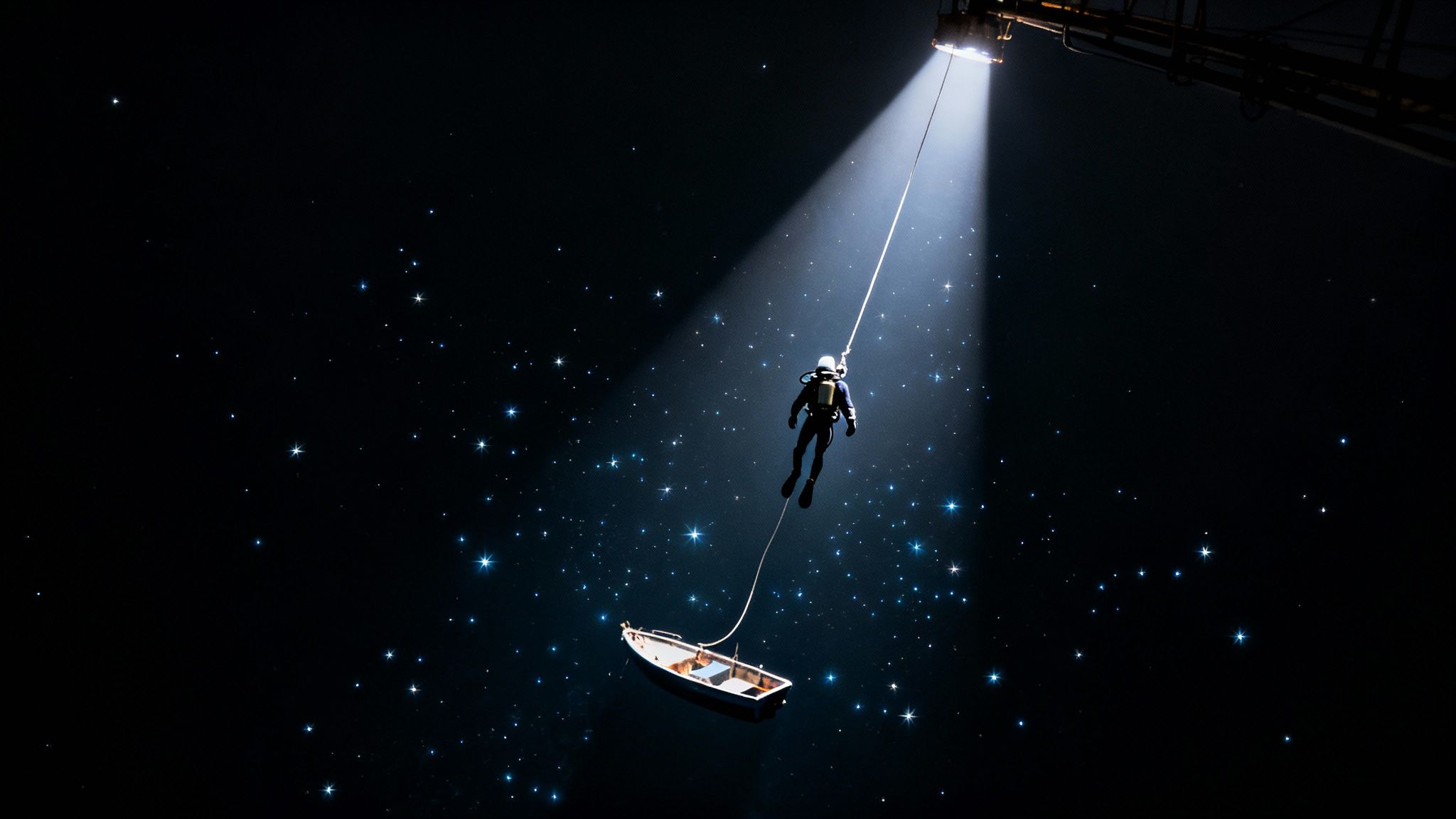
This isn't your average night dive. Forget exploring a reef—black water diving is a pelagic drift dive. We motor out over thousands of feet of water, and you, the diver, are suspended in the mid-water, safely tethered to a line connected to the boat.
Below the surface, we create a cone of light that draws up a universe of tiny, bizarre, and often bioluminescent organisms from the abyss. It’s less of a dive and more of an expedition into the ocean's twilight zone.
Every single night, the ocean hosts the largest migration on the planet: the diel vertical migration. Billions of plankton, larval fish, and jellies journey from the deep to the surface to feed. The sheer scale is staggering, with an estimated 4 to 10 billion metric tons of biomass on the move. That’s like 40 million blue whales swimming up from the depths, every single night, all over the world.
Here in Kona, the seafloor plummets to 10,000 feet just a mile from shore. We position our divers right in the middle of this highway of life, typically at a depth of 40-60 feet. Tethered to a surface float with bright floodlights, you just float and watch as translucent wonders materialize from the darkness. You can learn more about this incredible phenomenon and its direct link to blackwater diving.
Black Water Dive vs Traditional Night Dive
To really grasp what makes this so unique, it helps to see how it stacks up against a standard reef night dive. While both happen in the dark, the experience couldn't be more different.
Here's a quick comparison.
| Feature | Black Water Dive | Traditional Night Dive |
|---|---|---|
| Location | Miles offshore, over deep open ocean | Near the coast, over a reef or wreck |
| Environment | Mid-water suspension, no bottom reference | Exploring a fixed structure like coral or rock |
| Marine Life | Pelagic, larval, and deep-water organisms | Reef-dwelling creatures (eels, octopus, crabs) |
| Primary Goal | Witnessing the nightly vertical migration | Observing the nocturnal behavior of reef life |
In short, black water diving transforms the vast, dark ocean into a living aquarium filled with creatures you would otherwise never have a chance to see. It’s a surreal, mesmerizing experience that many of us consider the ultimate night dive for adventurous, certified divers.
Ready to dive into the abyss?
The Science Behind This Living Light Show
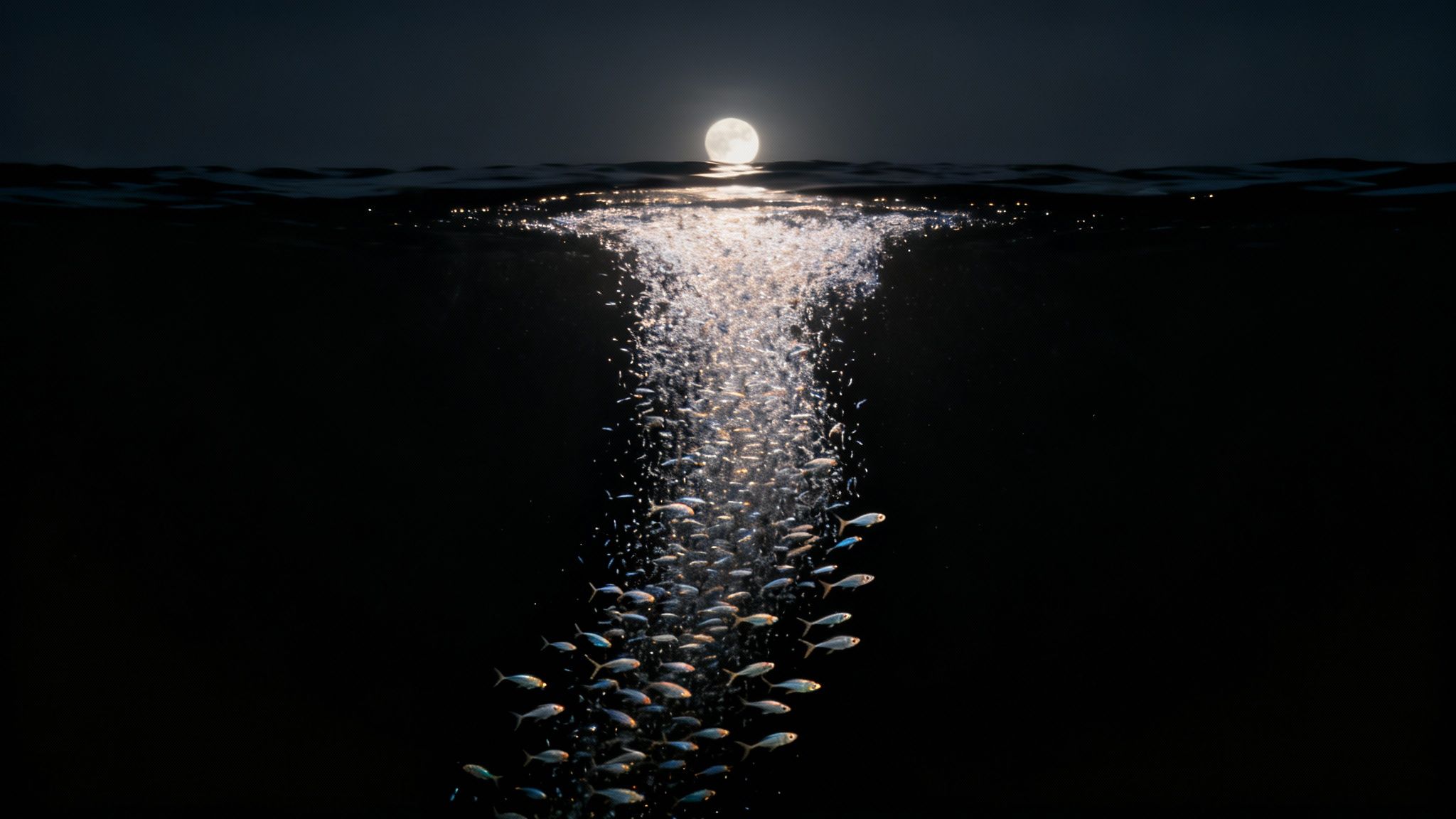
The incredible, otherworldly creatures you see on a black water dive aren't just a random occurrence. They're part of one of the planet’s most significant natural events: the Diel Vertical Migration (DVM).
This isn't some small, localized event. It's the largest migration of living things on Earth, and it happens like clockwork every single night, in every ocean across the globe.
As the sun dips below the horizon, trillions of organisms—from microscopic zooplankton to the larval forms of fish you might recognize—start a monumental journey. They travel from the crushing darkness of the deep sea all the way up toward the surface.
Why make such an epic trek? The answer is simple: food. The sunlit surface waters are teeming with phytoplankton, the base of the ocean food chain. But during the day, this area is a danger zone, patrolled by predators that hunt by sight.
By coming up only under the cover of darkness, these deep-sea residents get to feast in relative safety. Then, just before dawn, they retreat back down into the abyss to hide for the day. This nightly commute is the engine that drives the entire ocean's food web.
Why Kona is a Premier DVM Hotspot
So, what makes Kona such a spectacular place to witness this phenomenon? It all comes down to the Big Island's unique underwater geography.
The island is essentially a massive volcano rising from the seafloor. This creates an incredibly steep drop-off, where the ocean floor plummets to depths of over 10,000 feet just a few miles from shore.
This proximity to the deep sea means we don't need a long, grueling boat ride to get to the "migration highway." Kona's geography gives us a front-row seat to a spectacle that is usually far out of reach.
The naturally calm and protected waters along the Kona coast also create the perfect environment for this kind of drift dive. It allows our boat and our divers to move gently with the current, right alongside all the rising creatures. The deep offshore trenches act as a massive reservoir, funneling an unbelievable concentration of pelagic life upward every night.
It’s this perfect storm of deep, nutrient-rich water and sheltered conditions that gives us an unparalleled chance to float right in the middle of this living river. If you want to dive deeper, you can learn more about the unique marine life found on the Big Island and what makes its ecosystem so special.
This nightly parade isn't just a critical part of the marine world—for us divers, it’s a rare and precious glimpse into a hidden universe that usually exists thousands of feet below our fins.
What to Expect on Your Black Water Dive Adventure
Jumping into a black water dive feels a bit like launching into deep space. It’s an otherworldly experience, and we’ve fine-tuned every step to make sure your expedition is safe, comfortable, and absolutely unforgettable. Here’s a rundown of how the adventure unfolds.
Your mission begins in the late afternoon when you check in at our shop. You’ll be greeted by our staff—a team with over 200 years of combined experience—who will get you geared up and ready to go. From there, we’ll head down to the boat for a thorough pre-dive briefing. Your guide will walk you through everything, from the unique safety protocols to the kinds of bizarre critters you can expect to meet.
The boat ride out is part of the magic. As the sun dips below the horizon, painting the Kona coast in brilliant colors, we’ll motor a few miles offshore. Before long, you’ll find yourself floating above thousands of feet of inky-black ocean, waiting for the show to begin.
Entering the Cone of Light
Once we’ve reached the perfect spot, our crew deploys a custom-built lighting rig. This powerful setup hangs directly below the boat, casting a massive ‘cone of light’ down into the abyss. This bright beacon is what draws the deep-water migrators up toward the surface, turning a small patch of ocean into your personal theater for the next hour.
A weighted downline, complete with a series of shorter tether lines, is attached to the rig. Every diver gets their own tether, which keeps you safely connected to the group and at a constant depth. It’s a brilliant system that lets you relax and drift with the current, completely free from worries about descending too deep or losing sight of the boat. You can read a more detailed breakdown in your ultimate guide to Kona black water dives.
Dropping into the darkness is a feeling you’ll never forget. You sink slowly to a depth of about 40-50 feet and clip your tether to the line. For a moment, all you see is blackness, but then your eyes adjust, and you realize the spectacle is already underway all around you.
A Front-Row Seat to the Migration
As the light works its magic, your guide will be right there with you, pointing out the strange and wonderful creatures that emerge from the void. You’ll have a front-row seat to an incredible parade of life that most of humanity will never see.
- Larval Creatures: Spot the truly bizarre, transparent baby forms of animals like eels, flounder, and even octopus.
- Pulsating Jellies: Witness an incredible variety of shimmering comb jellies and other gelatinous creatures as they float by.
- Pelagic Invertebrates: Keep an eye out for tiny, jewel-like squid, vibrant shrimp, and other alien-looking crustaceans.
This isn't just a dive; it’s a carefully orchestrated encounter with one of the planet's greatest natural wonders. Our guides are there to ensure your safety, but just as importantly, they’re there to enrich your experience by helping you spot and identify the alien-like life forms materializing from the dark.
After an hour of suspended reality, you’ll ascend back to the boat for a warm welcome from the crew. You’ll have plenty of time to swap stories and marvel at the incredible things you just witnessed.
Essential Gear and Safety Protocols for Divers
A blackwater dive might feel like a trip to another planet, but your safety is always anchored by solid preparation and proven protocols. Heading out into the open ocean after dark demands specialized gear and a healthy respect for the deep. Here at Kona Honu Divers, we take a meticulous approach to managing every single detail, ensuring this incredible advanced dive is conducted with the highest safety standards.
First things first: gear. A full-length wetsuit is a must. Even in Hawaii’s balmy waters, you’d be surprised how quickly you can get chilled while floating relatively still for an hour. A 3mm or 5mm wetsuit will keep you warm and focused on the critters, not the cold. Lights are just as critical; you’ll need a reliable primary dive light, and we require a backup light as well—redundancy is key.
Buoyancy and Mental Preparedness
On a blackwater dive, flawless buoyancy control isn't just a nice skill to have—it's everything. With no reef or seafloor to orient yourself, you are literally suspended in the void. Being able to hold your depth without sinking or floating up is absolutely crucial for your safety and for having a good time.
Being mentally ready is just as vital as having the right gear. The sensation of floating in the vast, dark ocean can be a little disorienting at first. Our guides are masters at creating a calm, controlled setting, helping you relax and fully tune into the jaw-dropping spectacle happening all around you.
Kona is the global epicenter for blackwater diving, and for good reason. The seafloor drops off to over 10,000 feet just a few miles from shore. This extreme night dive has gone from an experimental outing in the 1990s to a bucket-list experience for serious divers. Recreational scuba has a stellar safety record, and specialized dives like this are no exception when run by experienced professionals. With over 200 years of combined staff experience, Kona Honu Divers provides the expertise that safety-conscious divers look for. For those seeking other experienced diving opportunities, we offer a range of advanced trips.
Our Robust Safety System
Our entire safety system revolves around a custom-built tether rig. Every diver is clipped in with a short tether to a main downline, which in turn is connected to the boat and a powerful lighting array. It's a simple, elegant solution that accomplishes a few very important things:
- It keeps you at a set depth. Your tether physically prevents you from descending too deep into the abyss.
- It stops you from drifting away. You are always connected to the boat and the rest of the group.
- It gives you a constant point of reference. The downline and the central lights are always there to orient you in the dark.
Our guides are in the water with you the entire time, keeping a close watch on conditions and making sure everyone is comfortable and safe. This system, combined with our thorough pre-dive briefing and boat safety procedures, creates a secure bubble for you to explore one of the ocean's last frontiers. For more tips on what to pack, you can check out our guide on the gear you will need for your Kona diving adventure.
How to Photograph Deep Sea Aliens
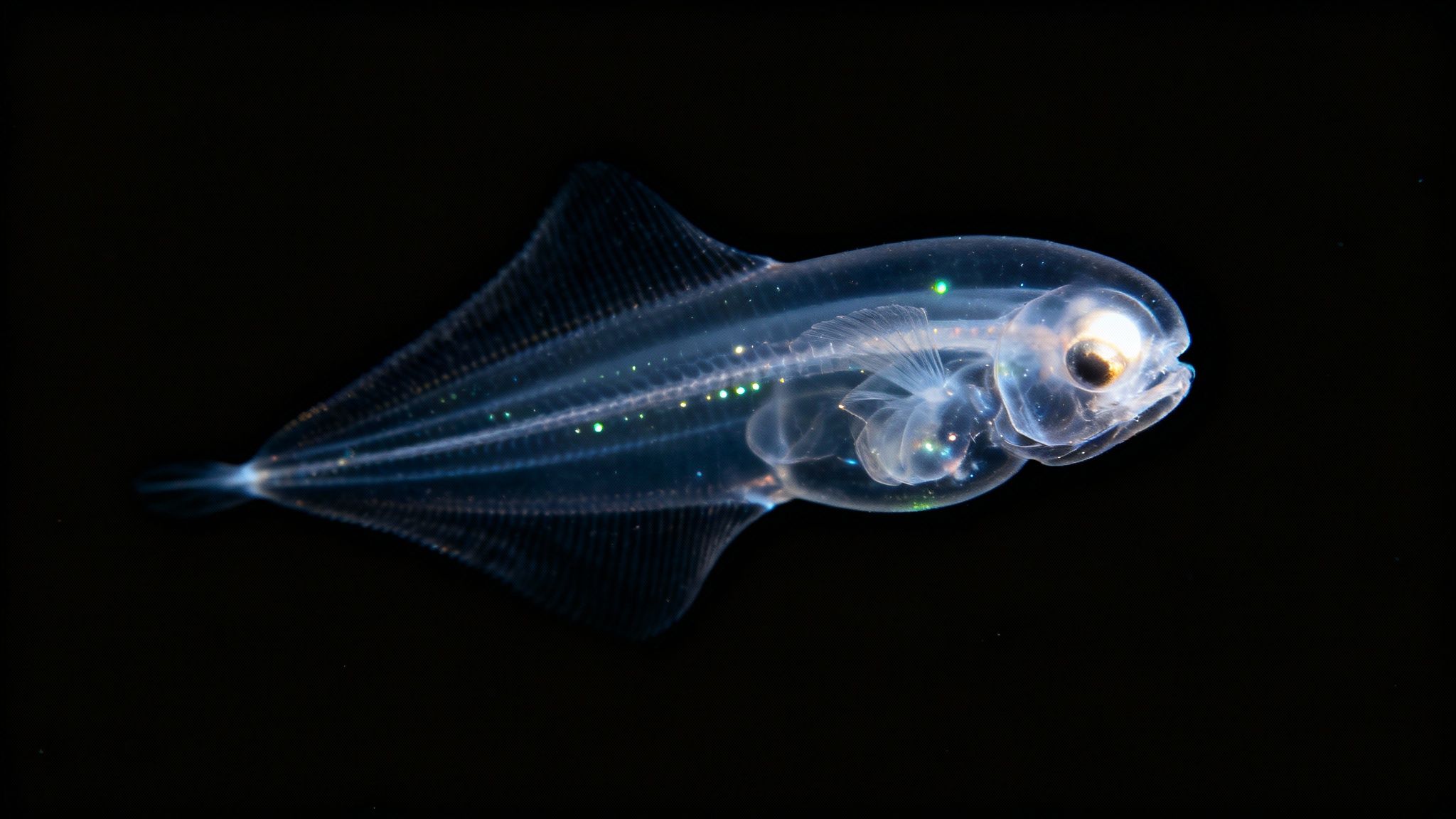
For any underwater photographer, a black water dive is the final frontier. It’s your chance to shoot creatures so strange they look like they were pulled straight from a sci-fi movie set. But capturing these tiny, zippy subjects in absolute darkness is a whole different ballgame. It demands real technical skill and, just as importantly, the right gear.
The first challenge is getting your camera settings just right to freeze the action and nail that perfectly black background. The whole idea is to kill any ambient light and let your strobes do all the heavy lifting. A good starting point is a fast shutter speed—think 1/200s or faster—to prevent motion blur. You’ll want a narrow aperture, somewhere in the ballpark of f/16 to f/22, to get a decent depth of field, which is critical for keeping these little critters sharp. Keep your ISO as low as it will go, usually ISO 100 or 200, to keep digital noise out of the picture.
Mastering Your Light
If there's one thing to get right in blackwater photography, it's controlling your light. The water column is loaded with particulate, and if your strobes are in the wrong spot, you'll end up with a photo that looks like a snowstorm.
The trick is to position your strobes way out to the sides of your camera housing, pointing them slightly inward. This creates a cross-lighting effect that hits your subject but avoids illuminating the column of water right in front of your lens. Essentially, you're creating a "dark zone" between your camera and the subject to eliminate backscatter.
A powerful focus light is absolutely non-negotiable. You need it to spot the animals and, more importantly, to help your camera’s autofocus actually lock on in the dark. Many photographers prefer a red focus light because it’s less likely to spook the more sensitive critters.
Essential Gear and Etiquette
When it comes to lenses, macro is the name of the game. You're trying to capture the stunning, intricate details of these tiny aliens, after all. A 60mm or 100mm macro lens is perfect for this, letting you fill the frame without getting so close that you scare your subject away.
Finally, a quick word on photographer etiquette. The cone of light under the boat can get a little crowded. Always be aware of where your lights are shining, and try not to swim directly under another diver. Your exhaust bubbles can easily startle a creature they've been patiently trying to photograph. Good communication and spatial awareness are key to making sure everyone on the Kona black water dive has an incredible and productive time.
From Scientific Research to Epic Adventure
The thrilling experience we now call a **black water dive** didn’t start as a tourist attraction. Its roots are firmly planted in the world of scientific exploration, where researchers needed a way to get out into the open ocean and study the mysteries of the deep. Understanding this history adds an incredible layer to your dive—it connects you to a real legacy of discovery every time you drop into the dark.The whole concept began taking shape back in the 1970s and 80s. Marine biologists were trying to figure out how to safely study life in the epipelagic zone, the sunlit top layer of the open ocean. This led to the development of "bluewater diving" protocols, and by 1986, they had published the first definitive guide for drifting in strong currents while tethered to a boat. That paper laid the groundwork for the safety principles we still rely on today. You can actually read the original research to see how these bluewater techniques were formalized.
The Kona Connection
The real "aha!" moment happened right here in Kona during the 1990s. A few local dive pioneers looked at what the scientists were doing and had a brilliant idea. What if they did it at night? And what if they hung powerful floodlights from the boat? That simple twist—using light to attract the creatures of the nightly diel vertical migration—is what created the sport of recreational black water diving.
Kona was the perfect laboratory for this new adventure. We have incredibly deep oceanic trenches just a few miles from shore, and our waters are usually calm and protected from the open ocean swells. These unique conditions made it the ideal place to experiment. By the early 2000s, operators like Kona Honu Divers were fine-tuning the process and running trips almost every night, opening up this surreal underwater world to everyone.
Your Dive Contributes to Science
This legacy of exploration isn’t just a history lesson; it’s something you become part of on every dive. Many of the creatures we see are so rarely observed that they've only been documented a handful of times. This means every photo taken by a recreational diver is potentially a valuable piece of data.
Your underwater photography can become a vital part of citizen science. Images captured on these dives often help researchers identify and study larval species, providing valuable data on organisms that are otherwise nearly impossible to observe.
So, when you join a black water dive, you're doing much more than just seeing something cool. You're stepping into a tradition of discovery that started decades ago and continues to expand our understanding of the ocean. Ready to be part of the story?
Book your own Kona black water dive and experience this scientific adventure for yourself.
Your Blackwater Diving Questions Answered
It’s completely normal to have a few questions before you decide to drop into the deep, dark ocean at night. It’s one of the most incredible dives you’ll ever do, so let's cover some of the common things people ask before booking.
What Certification Do I Need for a Blackwater Dive?
You'll need to be an Advanced Open Water diver (or hold an equivalent certification from another agency). This isn't a dive for beginners. We're in deep, open water, at night, and solid buoyancy control is absolutely essential.
It’s also a good idea to have been diving recently. We want you to feel relaxed and confident in the water so you can fully enjoy this unique experience.
Is Blackwater Diving Safe?
Absolutely. When you dive with a professional, safety-conscious crew like ours, it's a very controlled and secure experience. Our safety system is built around a simple but effective rule: every single diver gets their own dedicated tether. This keeps you connected to the main downline and helps you maintain a consistent depth without drifting off.
Our guides are right there in the water with you, and we go over everything in a detailed safety briefing before we even leave the dock. While it's definitely an advanced dive, we take every possible precaution to make it a safe one.
What Kinds of Creatures Will I See?
This is the most exciting part—every single dive is a surprise! The ocean’s vertical migration brings up a completely different cast of characters each night. But to give you an idea, we often see:
- The strange and wonderful larval stages of familiar reef fish, like tiny eels and flounder.
- All sorts of pulsating, bioluminescent jellies and ctenophores lighting up the dark.
- A huge variety of pelagic invertebrates and tiny, jewel-like squid zipping past your light beam.
And if you get really, really lucky? You might just witness an incredibly rare blanket octopus or a delicate pelagic seahorse drifting by.
What Should I Bring on the Boat?
Keep it simple. All you really need is your dive certification card, a towel, and something warm like a jacket or sweatshirt for after the dive. If you're someone who gets seasick, taking medication beforehand is always a smart move.
Don't have your own equipment? No problem. We have all the necessary dive gear available for rent. Just let us know what you need when you book your Kona blackwater dive.